USA marketing NuScam small nuclear reactors to Africa
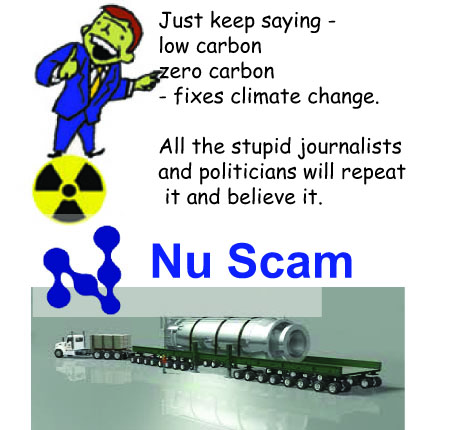 US to support new nuclear power project in South Africa https://businesstech.co.za/news/energy/441510/us-to-support-new-nuclear-power-project-in-south-africa/, Bloomberg17 October 2020 The United States International Development Finance Corp. pledged to support NuScale Power LLC, a US nuclear energy technology firm, to develop 2,500 megawatts of power in South Africa.
South Africa’s government drafted an economic recovery plan in conjunction with business and labour groups several months ago in a bargaining forum known as the National Economic Development and Labour Council, in the wake of the coronavirus pandemic.A version of the strategy that was discussed by the cabinet this week, and seen by Bloomberg, includes suggestions to secure reliable energy supply through the construction of new nuclear plants.
The draft envisages R23 billion ($1.4 billion) being allocated to galvanize private investment in infrastructure and R4.5 billion being spent on public transport over the next 12 months, but provides scant detail on where the money will come from.
The DFC, which ended its prohibition on supporting nuclear power in July, signed a letter of intent to support NuScale’s bid for South Africa’s independent power producer program, the development bank said in an emailed statement on Friday.
“If successful, NuScale would be the first US nuclear energy IPP on the continent and would help support energy resilience and security in one of Africa’s leading economies,” the DFC said.
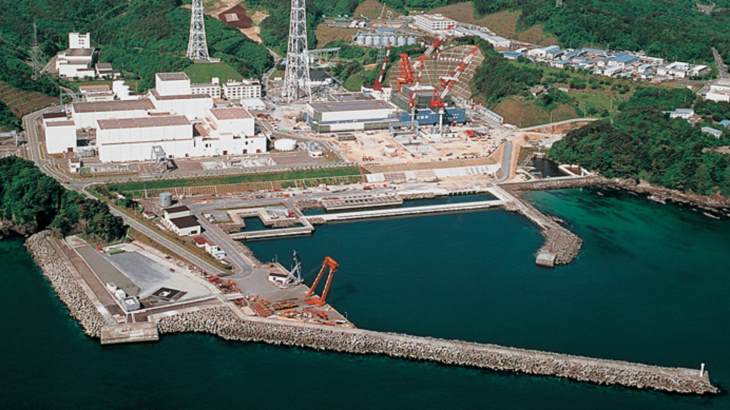
800-meter-long seawall being constructed, as Japan plans to reopen damaged Onagawa nuclear complex
|
Japan’s damaged nuclear reactor set to reopen https://www.aa.com.tr/en/asia-pacific/japan-s-damaged-nuclear-reactor-set-to-reopen/2005798, Quake-hit Onagawa nuclear complex awaits final approval by Miyagi provincial officials, Riyaz ul Khaliq |14.10.2020 ANKARAJapan’s nuclear reactor hit by a 2011 earthquake in the northeastern Miyagi province will resume operations by the end of this year, according to officials, the local media reported on Wednesday.
Miyagi Governor Yoshihiro Murai will formally announce his consent to restart the nuclear reactors at Onagawa complex by the end of the year, the Kyodo News agency said. Early this year, the 825,000-kilowatt reactor, operated by Tohoku Electric Power Company, won the approval of the country’s Nuclear Regulation Authority. All the three reactors were shut down when the massive quake and a 13-meter tsunami hit northeastern Japan on March 11, 2011, flooding the underground floors of the No. 2 unit. Nearly 10,000 people lost their lives while over 4,000 others are still missing. Onagawa nuclear reactor is the second such disaster-ravaged complex, after the Fukushima nuclear disaster, to pass stricter nuclear safety standards. The world has witnessed the worst nuclear disaster in 1986 at Chernobyl in today’s Ukraine. Unlike the Fukushima Daiichi plant of Tokyo Electric Power Company, the Onagawa plant’s emergency cooling system did not fail and underwent no meltdown after hit by the earthquake and tsunami. To restart the Onagawa nuclear reactors, the consent of local government leaders is the last remaining step needed after it cleared a national safety screening in February. Tohoku aims to restart the No. 2 unit of Onagawa nuclear complex in 2022 at the earliest. Currently, a 800-meter-long seawall at the plant is under construction. The operator has already decided to scrap unit No. 1. Murai would be the first governor of a disaster-hit province to allow resumption of a damaged nuclear reactor’s operations. The 2011 earthquake and tsunami triggered one of the world’s worst nuclear crises in Japan’s Fukushima province which caused all of Japan’s 54 reactors to halt. However, since then, nine units at five plants of the country have restarted following regulatory and local approvals. “When the plenary session [of the local assembly] shows its stance, I will make a decision upon hearing the opinions of mayors of cities, towns, and villages within the prefecture,” Murai said. |
USA to market nuclear reactor to Bulgaria
 Bulgaria to hold talks with U.S. companies over new nuclear reactor, SOFIA, Oct 13 (Reuters) – Bulgaria’s government gave state-owned energy firm Bulgarian Energy Holding (BEH) a green light on Wednesday to start talks with U.S. companies on plans to build a new nuclear reactor at its Kozloduy power plant, the energy minister said…… Bulgaria to hold talks with U.S. companies over new nuclear reactor, SOFIA, Oct 13 (Reuters) – Bulgaria’s government gave state-owned energy firm Bulgarian Energy Holding (BEH) a green light on Wednesday to start talks with U.S. companies on plans to build a new nuclear reactor at its Kozloduy power plant, the energy minister said……
On Tuesday, Prime Minister Boyko Borissov said the new reactor should be based on U.S. technology and allow diversification in nuclear energy ….
Petkova did not name the companies that would be involved in talks, but said they were developers of nuclear technology, including those who work on small modular designs. She said she would have until the end of January to present the results from the research, which will explore potential technology that could be used for the new unit at the Kozloduy plant and options for its construction. Petkova did not name the companies that would be involved in talks, but said they were developers of nuclear technology, including those who work on small modular designs. She said she would have until the end of January to present the results from the research, which will explore potential technology that could be used for the new unit at the Kozloduy plant and options for its construction. https://www.reuters.com/article/bulgaria-nuclear-kozloduy/bulgaria-to-hold-talks-with-us-companies-over-new-nuclear-reactor-idUSL8N2H44VI |
|
Struggling Japanese towns look to nuclear waste storing and the money associated
|
MANSION WITHOUT A TOILET: TOWNS IN JAPAN SEEK TO HOUSE, STORE NUCLEAR WASTE OUT OF NECESSITY, https://www.firstpost.com/tech/science/mansion-without-a-toilet-towns-in-japan-seek-to-house-store-nuclear-waste-out-of-necessity-8904851.html Radioactive waste needs to be stored away for a few centuries in thick concrete structures underground so it won’t affect humans and the environment.
Two remote towns in northern Japan struggling with rapidly graying and shrinking populations signed up Friday to possibly host a high-level radioactive waste storage site as a means of economic survival.
Japanese utilities have about 16,000 tons of highly radioactive spent fuel rods stored in cooling pools or other interim sites, and there is no final repository for them in Japan — a situation called “a mansion without a toilet.”
Japan is in a dire situation following the virtual failure of an ambitious nuclear fuel recycling plan, in which plutonium extracted from spent fuel was to be used in still-unbuilt fast breeder reactors. The problem of accumulating nuclear waste came to the fore after the 2011 Fukushima nuclear power plant disaster. Finding a community willing to host a radioactive dump site is difficult, even with a raft of financial enticements.
On Friday, Haruo Kataoka, the mayor of Suttsu town on the northwestern coast of Hokkaido, applied in Tokyo for preliminary government research on whether its land would be suitable for highly radioactive waste storage for thousands of years. Later Friday in Kamoenai just north of Kamoenai, village chief Masayuki Takahashi announced his decision to also apply for an initial feasibility study. Suttsu, with a population of 2,900, and Kamoenai, with about 800 people, have received annual government subsidies as hosts of the Tomari nuclear power plant. But they are struggling financially because of a declining fishing industry and their aging and shrinking populations. The preliminary research is the first of three steps in selecting a permanent disposal site, with the whole process estimated to take about two decades. Municipalities can receive up to 2 billion yen ($19 million) in government subsidies for two years by participating in the first stage. Moving on to the next stage would bring in more subsidies. “I have tried to tackle the problems of declining population, low birth rates and social welfare, but hardly made progress,” Takahashi told reporters. “I hope that accepting research (into the waste storage) can help the village’s development.” It is unknown whether either place will qualify as a disposal site. Opposition from people across Hokkaido could also hinder the process. A gasoline bomb was thrown into the Suttsu mayor’s home early Thursday, possibly by an opponent of the plan, causing slight damage. Hokkaido Gov. Naomichi Suzuki and local fisheries groups are opposed to hosting such a facility. One mayor in southwestern Japan expressed interest in 2007, but faced massive opposition and the plan was spiked. High-level radioactive waste must be stored in thick concrete structures at least 300 meters (yards) underground so it won’t affect humans and the environment. A 2017 land survey map released by the government indicated parts of Suttsu and Kamoenai could be suitable for a final repository. So far, Finland and Sweden are the only countries that have selected final disposal sites |
|
Big doubts about the economics of small nuclear reactors for the UK
 FT 11th Oct 2020, The big challenge facing small nuclear reactors. When Britain unveiled its
first commercial nuclear reactor back in 1956, Calder Hall in Cumbria had
the ability to generate 50 megawatts of electricity. Fast-forward four
decades to the last reactor the UK completed, at Sizewell in Suffolk. Still
functioning, it has a capacity of 1,200MW. Spot the theme? Yup, ever bigger
reactors.
Size has steadily increased because of simple nuclear economics.
Sizewell B may be able to generate 24 times as much power as a 50MW
reactor. But it doesn’t need 24 times the material inputs and staffing to
generate that extra power. Which all makes it seem faintly
counter-intuitive that Britain is considering downsizing and spending money
on a fleet of so-called small modular reactors.
The government is considering plans to put up to £2bn into developing the technology. A
number of companies, including Britain’s Rolls-Royce and GE Hitachi, are
pitching to sell their products. The aim is to fund prototypes with a view
to kick-starting a new SMR industry.
This would build perhaps dozens of
mini-reactors to [supposedly] help the UK meet its net zero emissions target while also
keeping the lights on, as well as exporting this technically advanced kit.
Large nuclear hasn’t exactly a spotless record when it comes to cost
containment. So why make it harder by forgoing those scale advantages?
Research by a team led by Tony Roulstone at Cambridge university looked at
the relative costs of building a “first of a series” SMR against a
comparable large reactor. It concluded that if you used the same project
techniques as for conventional plants, the SMR would cost (once the
interest costs incurred in construction were taken into account) roughly 70
per cent more per kilowatt (kW) to build than the larger one.
Squeezing that cost back down requires a wholly different approach to construction.
Instead of building everything in the open on a massive building site, as
with large reactors, it means making as much as possible in factories
before shipment to site. The same Cambridge team estimated that with ever
more prefabrication and standardisation of parts, you could ultimately
squeeze the cost down roughly to parity with the larger reactor.
A glance at the history of overruns and delays that plagued the Advanced Gas-cooled
Reactor project in the 1960s should suffice as a reminder. For SMRs to
avoid a similar miserable fate, the government must pick a single
commercial technology which can bring in sufficient private sector
investment and attract export orders. This cannot be some “made in
Britain” industrial exercise. If that’s what’s in prospect, then,
honestly, big is probably best.
https://www.ft.com/content/99307126-bb21-48e3-87aa-301749dec870
Will the UK government sacrifice the beautiful Suffolk coast in its misguided, uneconomic, Sizewell nuclear power push?
 East Anglian Daily Times 8th Oct 2020, As councils lose patience with EDF, will Suffolk businesses follow suit?
Today East Suffolk lies at a crossroads – the future of the east of the county now seems certain to rest in the hands of London-based civil servants and ministers – and to be honest I don’t know which way they will jump when push comes to shove. The deadline has now passed for councils, businesses, and residents to have their say on whether a two new nuclear reactors should be built on the Suffolk coast at Eastbridge, north of the existing stations at Sizewell.
landscape. But I do worry that there are some in government who do not understand the value of this area to the country as a whole who will be prepared to look on Sizewell C as a shiny investment to try to kick-start the UK economy after the pandemic and in a world no longer governed by EU rules, will pour in government subsidies to make up for the loss of Chinese money.
https://www.eadt.co.uk/ea-life/last-chance-to-stop-sizewell-c-1-6871419?s=09
BBC 8th Oct 2020, Campaigners against a new nuclear power station say they are “resolute”
after their bid to protect woodland was thrown out by the High Court. EDF
Energy, which wants to build two new reactors next to Sizewell B in
Suffolk, was given approval in 2019 to fell Coronation Wood on the site.
Together Against Sizewell C (Tasc) sought a judicial review, claiming that
decision was unlawful.
USA trying to beat China, in marketing nuclear reactors to Romania
Romania, U.S. to sign cooperation agreements over nuclear reactors, By Reuters Staff, 9 Oct 20, BUCHAREST (Reuters) – Romania’s economy ministry will sign cooperation and financing agreements with the United States
The very costly effort of trying to resuscitate the dying nuclear industry

Nuclear Energy — The High Cost Of A Dying Industry, Clean Technica, October 6th, 2020 by Johnna Crider
Nuclear energy has had a seriously rough year. In an article by OilPrice.com, the author asked a question: “Why is nuclear energy so expensive?” One answer, besides the obvious 2020 curse that was activated when Egyptian authorities opened up 30 ancient wooden coffins in 2019, is that other sources have just gotten much cheaper while nuclear hasn’t……….
As we know, in 2020, the coronavirus pandemic shut down US energy demand, and this added nuclear energy to a long list of energy industries that are begging for taxpayer money — well, in the case of nuclear, even more taxpayer money. And the Trump administration came through for this dying and expensive industry. Back in June, the Department of Energy announced that it would award more than $65 million in nuclear energy research. This would cross-cut technology development, facility access, and infrastructure awards.
PowerTechnology reported that these awards would be for these departments’ nuclear energy programs:
- The Nuclear Energy University Programme
- Nuclear Energy Enabling Technologies
- Nuclear Science User Facilities.
That $65 million will also be poured into 93 advanced nuclear technology projects in 28 states. And the Office of Nuclear Energy, which is part of the US Department of Energy (DOE), has spent more than $800 million on research since 2009. OilPrice noted that the $65 million would probably be “too little, too late for domestic nuclear energy.” CleanTechnica‘s perspective is that nuclear has been long dead and we’re just waiting for the green leaves of the tree (existing power plans) to turn brown (close down). New nuclear is financially hopeless, many times more expensive than renewable energy options even with energy storage costs included.
Global State Of Nuclear Energy
Antony Froggat, who co-authored the report and is a Senior Research Fellow at Chatham House in London, said, “At the same time, COVID-19 puts additional stress on the sector. In economic terms, renewables continue to pull away from nuclear power, over the past decade the cost estimates for utility-scale solar dropped by 89 percent, wind by 70 percent, while nuclear increased by 26 percent.”
Also in the US, force-on-force exercises were suspended. These are simulated terrorist attacks on nuclear power plants that use a mock adversary force to replicate design basis threat characteristics during an attack. These are supposed to help assess and improve readiness in case of an actual terrorist attack on a nuclear reactor.
In Russia and Sweden, control room staff were made to isolate in housing that was located onsite. They lived at their jobs. In Russia, one national operation reported weekly on infections among the nuclear staff. In July, there were a total of 4,500 cases.
Technology Costs
The report compared the costs of solar, onshore wind, and nuclear. The report looked at analyses for the US conducted by Lazard at the end of 2019, which advises on financial matters while managing investment portfolios. This is what they found out in a nutshell:
- Solar PV (crystalline, utility-scale) averaged $40/MWh, compared to $65/MWh in 2015.
- Onshore wind was $41/MWh, compared to $55/MWh in 2015.
- Nuclear is $155/MWh, compared to $117/MWh in 2015.
The report points out that over the past 5 years, the annual Levelized Cost of Energy (LCOE) for nuclear has risen by over 50%. In stark contrast, renewables have become the most inexpensive of any type of power generation. “What is remarkable about these trends is that the costs of renewables continue to fall due to incremental manufacturing and installation improvements, while nuclear, despite over half a century of industrial experience, continue to see costs rising. Nuclear power is now the most expensive form of generation, except for gas peaking plants.”
The report also states that even though Trump’s White House supports nuclear power and coal, both have not thrived at all under his presidency. This is due, the report says, to renewables being cheaper and basic economics. Lazard also assessed that the costs of renewables continue to fall. You can learn more about the nuclear report here.
Whether it’s the curse of 2020 or humans are slowly evolving, we are phasing out of the old and phasing in the new. In the case of energy, it’s renewables, which will benefit not only our planet but the health and well-being of people all across the globe. For now, though, it seems that taxpayers will continue footing nuclear’s expensive high maintenance bills. https://cleantechnica.com/2020/10/06/nuclear-energy-the-high-cost-of-a-dying-industry/
Design not even finished! But UK govt to subsidise Small Nuclear Reactors (SMRs)
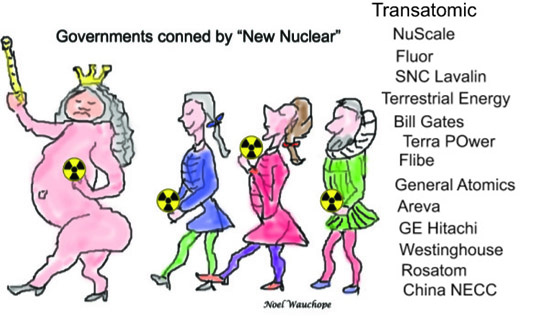
The plan is for 16 of them – at ? £2bn each?
FT 7th Oct 2020, Downing St considers £2bn support for mini nuclear reactors
Consortium wants to build up to 16 generators . Downing Street is supporting plans to spend up to £2bn of taxpayers’ money on a
new generation of mini nuclear reactors. Consortium wants to build up to 16 generators to help UK meet carbon emissions targets. The first SMR is expected to cost £2.2bn and be online by 2029.
Government and industry figures confirmed that a pledge of £1.5bn-£2bn is being discussed which could even see taxpayers acquire an equity stake in the programme.
However, discussions are still ongoing and any final decision will be subject to the Treasury’s current multiyear spending review, which is due later this year. The government could also commission the first mini power station, giving confidence to suppliers and investors. The consortium, which also includes the National Nuclear Laboratory, will seek additional funding of at least £2bn, including from private investors and the capital markets.
Support for SMR technology is expected to form part of Boris Johnson’s “10-point plan for a green industrial revolution” which he will set out later in the autumn. …….. Under the plans being considered by Number 10, the small
modular reactors would be manufactured on production lines in central plants and then transported to sites for assembly. Each mini power station would operate for up to 60 years, providing 440MW of electricity per year — enough to power a city the size of Leeds.
The government’s support “should deliver sufficient cash to get the consortium through building
factories and well on the way to construction of power stations prior to finding more money from other sources,” said one person with knowledge of the situation.
The consortium is expected to finalise the SMR design by April next year, when it hopes to launch the four-year licensing process.
During that time it hopes to begin recruiting employees for the business, and identifying the sites for powers stations and the factories to build the components and modules for the SMRs. The business department hasalready pledged £18m towards the consortium’s early-stage plans.
https://www.ft.com/content/d7016b80-e0c4-4444-a059-2daf32b9a4ab
Ohio nuclear reactors expect tax-payer subsidy, they’re making a profit anyway !
 Nuclear plants at center of Ohio subsidy fight operating above wholesale prices, S and P Global,Darren Sweeney, Gaurang Dholakia 5 Oct 20,
As the owner of two Ohio nuclear plants is pressed to open its books on the profitability of the units, the timing of subsidies at the center of a federal criminal investigation may be a larger issue.
An S&P Global Market Intelligence analysis shows Energy Harbor Corp.’s 908-MW Davis-Besse and 1,268-MW Perry nuclear plants, both in northern Ohio, have operating costs higher than wholesale electricity prices. A mid-2019 analysis showed the plants with operating costs running below wholesale electricity prices.
The most recent analysis shows wholesale prices in the PJM Interconnection rising through the end of 2020 and into 2021, which is when Ohio’s clean air credit for nuclear plants kicks in.
House Bill 6, which establishes a $9/MWh credit for clean air resources, provides $150 million in annual financial support for the Davis-Besse and Perry nuclear units beginning Jan. 1, 2021, through Dec. 31, 2027…………
Ohio Attorney General Dave Yost has reportedly told state lawmakers to bring Energy Harbor and FirstEnergy Corp. officials before legislative committees to disclose whether the nuclear plants need the subsidies.
In addition, Yost on Sept. 23 filed a civil lawsuit to halt the collection of ratepayer-backed subsidies for the state’s nuclear plants.
The lawsuit and legislative hearings come after federal prosecutors in July filed bribery charges against former Ohio House Speaker Larry Householder and four associates. They have been indicted and accused of using “more than $59 million” through a “slush fund” to steer H.B. 6 through the Ohio Legislature. An affidavit filed by an FBI special agent implies that FirstEnergy and affiliated entities, though not mentioned by name, wired funds through a 501(c)(4) nonprofit group called Generation Now to support H.B. 6 and combat a statewide referendum to repeal the law.
Former FirstEnergy subsidiary FirstEnergy Solutions Corp. emerged from bankruptcy in late February as Energy Harbor. https://www.spglobal.com/marketintelligence/en/news-insights/latest-news-headlines/nuclear-plants-at-center-of-ohio-subsidy-fight-operating-above-wholesale-prices-60569193
Cost and safety dangers should rule out nuclear power for the Philippines
A report this year placed the cost of reviving the BNPP, as estimated by a foreign group, at $3 billion to $4 billion. Reviving it will go against a trend in other countries to reduce nuclear power in their energy mix, because of safety concerns in the power plants as well as the risks posed by nuclear waste, which remains radioactive and cannot be destroyed or recycled……..
Like Japan, the Philippines sits along the Pacific Ring of Fire. Before the start of this year’s pandemic, Taal Volcano’s powerful phreatic explosion emptied surrounding communities, displaced thousands and blanketed towns and cities all the way to Metro Manila with toxic, suffocating ash. Earthquakes and aftershocks continue to be recorded in Taal, with seismologists warning of the possibility of a cataclysmic eruption.
If the BNPP is revived, at great cost to a cash-strapped government, what happens if Mount Natib also acts up, or if an earthquake hits Bataan? If all the proponents of nuclear energy will live together with their immediate families near the BNPP – and not just for show, buying a house nearby while the kids live in an exclusive village far from harm’s way – then by all means, go ahead with the project. https://www.philstar.com/opinion/2020/10/03/2046802/editorial-going-nuclear
Nano diamond batteries from nuclear waste? Impractical and not likely to ever happen
Arkenlight “surprised” by NDB’s grand nuclear diamond battery claims, New Atlas By Loz Blain, September 30, 2020 Totally safe, self-charging batteries that generate power for thousands of years … It’s an exciting thought, and when we wrote about California’s NDB in August, the story generated all kinds of feedback. A lot of people felt some of NDB’s claims were outrageously false, contravening the laws of physics and vastly overstating the capabilities of a device that was already well understood.
IWe ended up having a very informative chat with Morgan Boardman, an Industrial Fellow and Strategic Advisory Consultant with the Aspire Diamond Group at the South West Nuclear Hub of the University of Bristol.
He is also – and this is much less of a tongue twister – the CEO of a new company called Arkenlight, which has been created to commercialize the Bristol team’s diamond battery technologies, among other radioisotope-driven power sources.
In short, Boardman broadly agreed with the position that these “betabatteries” produce power far too slowly to replace the cells in your iPhone or Tesla; yes, you could build a betabattery for a phone or a vehicle, but only if you’re prepared to have the battery be several times the size of the device it’s powering.
What’s more, he pointed out that the University of Bristol took out patents covering all devices that embed radioisotopes in diamond structures, and that Arkenlight now holds those patents. So if NDB is talking about using the same kind of nuclear diamond technology – which it sure sounds like it is – it could have some licensing issues ahead of it.
So it seems it’s time to pump the brakes on some of NDB’s more exciting claims ……….. https://newatlas.com/energy/arkenlight-nuclear-diamond-batteries/
In September, French nuclear production reached its second lowest level on record
record – also its second lowest this year – at 21.6 TWh, down 21.5%
compared to 2019, while outages several reactors have been extended, RTE
data said Thursday. Nuclear output last month was thus slightly higher, by
0.3 TWh, the lowest recorded in June, at 21.3 TWh, according to Montel’s
calculations. And it has decreased by 1.2 TWh compared to August. On
average, nuclear represented 68.4% of electricity production in France,
against 69% in August. https://www.montelnews.com/fr/story/production-nuclaire-%C3%A0-un-2me-plus-bas-record-en-septembre/1153335
UK govt to give EDF a blank cheque for building Sizewell C nuclear power plant.
Dave Toke’s Blog 29th Sept 2020, It is looking increasingly likely that the British Government is about to cave-in to EDF’s demand that the British energy consumers should pay what could be massive cost overruns for building Sizewell C nuclear power plant.http://realfeed-intariffs.blogspot.com/2020/09/is-treasury-about-to-cave-in-over-edfs.html
One more Utah city withdraws from NuScam small nuclear reactor project
Kaysville withdraws from nuclear power project. Post Register, By NATHAN BROWN nbrown@postregister.com
- Sep 28, 2020 One more Utah city has withdrawn from a project to build 12 small nuclear reactors west of Idaho Falls.
The Kaysville City Council voted unanimously a week-and-a-half ago to withdraw from the Carbon Free Power Project, although the resolution left the door open for the city to hold a special meeting to rejoin the project if anything changes……….
Lehi and Logan have also withdrawn from the Carbon Free Power Project over the past month-and-a-half, citing potential risks to local taxpayers if costs go up. There are still more than 30 cities and power systems, including Idaho Falls, that are part of it, and the members have until Oct. 31 to recommit to the project’s next phase by approving the new budget. Utah Associated Municipal Power Systems is waiting for the U.S. Department of Energy to give final approval to a promised $1.4 billion to support the project. ……. https://www.postregister.com/news/government/kaysville-withdraws-from-nuclear-power-project/article_fbb6f15e-e8c6-5207-b6e9-bbf632538c85.html
1 This Month



26 September – International Day for the Total Elimination of Nuclear Weapons


PLEASE OPPOSE HR 8255 AND S.3639 – bills would accelerate satellite deployment, with no environmental review or safeguards – https://ncstd5li.quorum.us/campaign/169331/
To see nuclear-related stories in greater depth and intensity – go to https://nuclearinformation.wordpress.com
-
Archives
- September 2026 (269)
- August 2026 (330)
- July 2026 (355)
- June 2026 (287)
- May 2026 (306)
- April 2026 (356)
- March 2026 (251)
- February 2026 (267)
- January 2026 (308)
- December 2025 (358)
- November 2025 (359)
- October 2025 (375)
-
Categories
- 1
- 1 NUCLEAR ISSUES
- business and costs
- climate change
- culture and arts
- ENERGY
- environment
- health
- history
- indigenous issues
- Legal
- marketing of nuclear
- media
- opposition to nuclear
- PERSONAL STORIES
- politics
- politics international
- Religion and ethics
- safety
- secrets,lies and civil liberties
- spinbuster
- technology
- Uranium
- wastes
- weapons and war
- Women
- 2 WORLD
- ACTION
- AFRICA
- Atrocities
- AUSTRALIA
- Christina's notes
- Christina's themes
- culture and arts
- Events
- Fuk 2022
- Fuk 2023
- Fukushima 2017
- Fukushima 2018
- fukushima 2019
- Fukushima 2020
- Fukushima 2021
- general
- global warming
- Humour (God we need it)
- Nuclear
- RARE EARTHS
- Reference
- resources – print
- Resources -audiovicual
- Weekly Newsletter
- World
- World Nuclear
- YouTube
-
RSS
Entries RSS
Comments RSS

