Shadow of $25 billion Nuclear Plant Vogtle hangs over Georgia Public Service Commission elections

Nuclear costs loom over races for Georgia PSC races
Public Service Commission must deal with $25 billion Plant Vogtle’s impact on electric rates, News 4 Ajax, Jeff Amy, Associated Press, 25 Oct 20, ATLANTA – The shadow of two nuclear reactors that Georgia Power Co. is building near Waynesboro hangs over two statewide elections for the Georgia Public Service Commission. Although the reactors are now getting so close to completion that they are likely to enter service, whoever is elected will have to deal with the $25 billion project’s ultimate impact on customer bills.
Electric customers statewide and even in Jacksonville will help pay for Plant Vogtle, as Georgia Power has contracts to provide power from the plant around the Southeast.
The five-person utility regulatory body is currently all Republican, with two members up for reelection this year. ………..
Amid rising costs, the plan to add a third and fourth nuclear reactor at Plant Vogtle survived a cost-overrun scare in 2018 with the heavy support of the state’s Republican establishment. Georgia Power, the largest subsidiary of the Atlanta-based Southern Co. is now building the only new nuclear plants in the U.S. ……… https://www.news4jax.com/news/georgia/2020/10/25/nuclear-costs-loom-over-races-for-georgia-utility-regulator/
And again, it’s delay delay at the costly Vogtle nuclear project
 Progress slips again at Vogtle nuclear plant, By Matt Kempner, The Atlanta Journal-Constitution, Georgia Power has fallen months further behind on critical steps to start the first of two new nuclear reactors at Plant Vogtle, despite having last revised its schedule only three months ago. Progress slips again at Vogtle nuclear plant, By Matt Kempner, The Atlanta Journal-Constitution, Georgia Power has fallen months further behind on critical steps to start the first of two new nuclear reactors at Plant Vogtle, despite having last revised its schedule only three months ago.And measures to halt COVID-19 within the project’s massive workforce continue to complicate construction.
The utility said it still expects to meet a state regulatory deadline to have the first reactor in commercial operation in November 2021. But its wiggle room for doing so has become increasingly thin. Missing the deadline little more than a year from now would increase already soaring costs, which could end up in the electric bills of 2.6 million customers……….. The Vogtle project already is years behind schedule and billions of dollars over budget, with customers at risk of having to cover those cost. State staffers and independent monitors have warned about the potential for still more delays, even before factoring in effects from the pandemic. …….. So far, more than 1,000 Vogtle workers have tested positive during the pandemic, according to the company’s latest filing. ……… Meanwhile, Georgia Power’s continued shifts in predictions about when it will complete scheduled Vogtle milestones have made it “impossible to determine where the project really stands,” said Kurt Ebersbach of the Southern Environmental Law Center, which has represented groups critical of Vogtle’s impact on consumers and the state……… https://www.ajc.com/news/progress-slips-again-at-vogtle-nuclear-plant/OK656Q6TQFHANDQW72D2ASP76E/ |
|
USA government puts out a financial lifeline to the failing nuclear industry
But the winds of change could soon be blowing for U.S. nuclear. Last month the nuclear sector got a small but certainly not insignificant state-sponsored lifeline when the the Department of Energy (DOE) announced that “it would be awarding more than $65m in nuclear energy research, crosscutting technology development, facility access, and infrastructure awards.” According to reporting by PowerTechnology, “the awards fall under the department’s nuclear energy programs – the Nuclear Energy University Programme, the Nuclear Energy Enabling Technologies, and the Nuclear Science User Facilities.”
And now, just this week, there’s even better news for U.S. nuclear power. “After hemming and hawing for decades, the United States is taking some big steps in developing advanced nuclear reactor technologies,” Forbes reported on Wednesday. The article is referring to yet another major announcement from the DOE that took place just last week. The department will be awarding $80 million each–and that’s just in initial funding–to two different teams under the Advanced Reactor Demonstration Program (ARDP). The DOE has planned for an additional $3.2 billion in investment over the next seven years, an impressive sum that will be matched by the private sector within the nuclear industry. One of these teams is to be led by Bill Gates’ brainchild TerraPower in a joint effort with GE Hitachi. The other will be spearheaded by X-energy. …….https://oilprice.com/Alternative-Energy/Nuclear-Power/Nuclear-Energy-Granted-A-State-Sponsored-Lifeline-In-The-US.html
Trump’s USA is pushing NuScale’s small nuclear reactors for South Africa.

The US nuclear company with an eye on South Africa just got a R23 billion boost, courtesy of Donald Trump, https://www.businessinsider.co.za/nuscale-nuclear-which-has-plans-for-sa-gets-a-big-us-subsidy-to-test-its-design-2020-10 Phillip de Wet , Business Insider SA Oct 22, 2020,
- American nuclear energy company NuScale has been citing Cape Town as an example of an ideal customer for its still-theoretical generators.
- It has now received in-principle financial support from the American government to build a nuclear power station in South Africa.
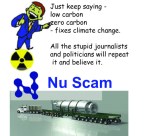 NuScale’s pathfinder project for its new technology, in Idaho, just got a promise of an infusion of US government cash worth some R23 billion.
- While South Africa abandoned plans to create next-generation PBMR systems, the administration of Donald Trump has pushed small-scale nuclear development.
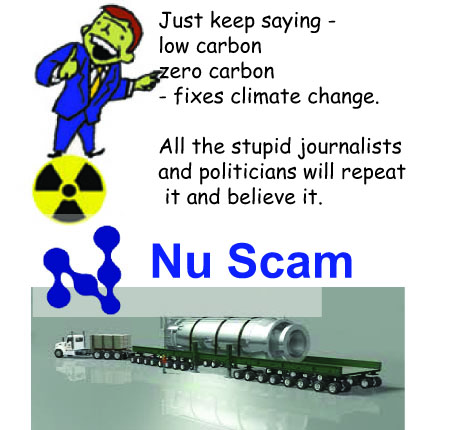
NuScale, a company with roots in US-funded research, this week received assurances that the American government will provide up to $1.4 billion (around R23 billion) in subsidies for a 12-module reactor it hopes to start building in Idaho by 2025.
The project is a commercial one, with municipal buyers lined up for the electricity, but the cash from the US department of energy is intended to bring the cost of that electricity down to $55 per MWh on a levelised cost of energy (LCOE) basis, making the project at least vaguely competitive with other forms of power generation.
Without the subsidies, the supposedly once-off cost of building a first-of-its kind power station would make the NuScale project commercially unviable, its planned customers say.
Just how once-off such costs are, and how much money the US government ends up actually spending on the project, will be closely watched in South Africa
Last week the US International Development Finance Corporation (DFC) announced it had signed a letter of intent to support NuScale “to develop 2,500 MW of nuclear energy in South Africa”.
NuScale has cited Cape Town as a purely theoretical customer for a 12-module version of its nuclear energy system, saying that such an installation could desalinate enough water to keep the entire city going.
But the 2,500MW number cited by the DFC suggests its South African ambitions are substantial. That is the full generating capability the South African government now envisages adding to the national grid from nuclear stations – but the government plan calls for a mixture of the conventional pressurised water reactors (PWRs) such as Russia’s Rosatom sells, and the type of small modular reactors (SMRs) NuScale is developing.
By seeking development finance for the full 2,500MW, NuScale appears to be signalling a plan to bid for the whole thing, rather than seeking to build only part of a new set of nuclear generators in SA alongside companies from China or elsewhere.
That matches the aggressive posture of the US government under the administration of Donald Trump. The DFC letter of intent is the first time the organisation has supported any nuclear project; a ban on its involvement in nuclear energy was lifted on the recommendation of a working group formed by the White House.
The state funding for the NuScale project in the US, meanwhile, comes after consistent and determined efforts under Trump’s presidency to “revitalise” nuclear energy in America, both in production and through research and development on next-generation systems.
South Africa, though determined to buy new nuclear power stations, has not had a similar political appetite to invest in research. In 2010 it mothballed work on the pebble bed modular reactor, a project launched in the late 1990s to create a safe, small, modular reactor system for both domestic use and sale abroad.
Russia once thought it had a done deal to build new nuclear reactors in South Africa. Half a decade later, thanks to its sheer political weight, China seems to be a serious contender for the job. Both France and South Korea have, at various points, been in the running too.
But as of this week, an American company with no track record of actually building commerical nuclear reactors yet is lining up the kind of money from the US government that could make its plans for South Africa viable – replacing a dream of home-grown next-generation nuclear with an imported version.
As of this year there are still vague plans to revive the project, in one form or another, but even if those were to succeed, the pace of development would have to be improbably fast for it to have any place in South Africa’s current round of explorations.
BHP abandons plan to expand Olympic Dam uranium mine – a sign foe the future

Wire 21st Oct 2020, The news this week that mining giant BHP will not continue with its long planned multi-billion dollar expansion of its Olympic Dam uranium and copper project is a sign that the market is turning against the controversial mineral.
It spells good news for the future of renewables but leaves the problem of leftover radioactive waste at Olympic Dam. There is no decision to change tack and mine the many many rare earths which also exist at the site.
http://thewire.org.au/story/bhps-rejection-of-uranium-a-sign-of-the-future/
USA: Millions of jobs in clean energy and infrastructure – analysis finds.
“We don’t have to choose between a strong economy or a healthy environment—we can have both,” says an EPI data analyst. Common Dreams, byJessica Corbett, staff writer – 20 Oct 20, Pursuing trade and industrial policies that boost U.S. exports and eliminate the trade deficit while investing $2 trillion over four years in the nation’s infrastructure, clean energy, and energy efficiency improvements could support 6.9 to 12.9 million “good jobs” annually by 2024, according to an analysis published Tuesday.
$40 billion cost to Poland for nuclear power – $18 billion to USA for starters
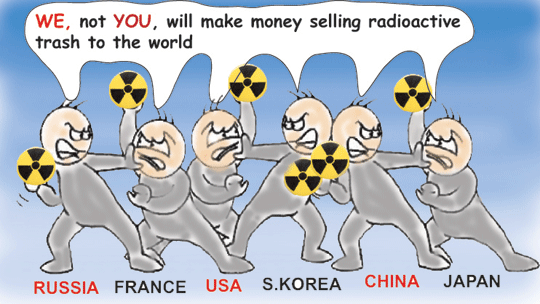 Poland Strikes $18 Billion Nuclear Power Deal With U.S. Oil Price, By Charles Kennedy – Oct 20, 2020, The United States and Poland closed a nuclear power deal potentially worth $18 billion as the Central European country seeks to reduce its reliance on coal and Russian natural gas……….
The agreement closed this week stipulates that over the next 18 months, the parties will develop a program for the construction of the reactors and how they will be financed. Per plans, the first reactors should come online in 2033. The whole program could end up costing Warsaw some $40 billion, of which at least $18 billion would go towards acquiring U.S. nuclear technology, according to a U.S. government official……. https://oilprice.com/Latest-Energy-News/World-News/Poland-Strikes-18-Billion-Nuclear-Power-Deal-With-US.html
Hinkley Point C nuclear station – construction costs $388.9 million every month
S&P 20th Oct 2020, EDF Energy is spending GBP300 million ($388.9 million) a month on the
construction of the 3.2-GW Hinkley Point C nuclear power plant that it is
building with its equity partner China General Nuclear Corp. in western
England, a company executive said at a London webinar Oct. 20.
Humphrey Cadoux-Hudson, managing director, nuclear new build at EDF Energy, was
speaking at a webinar on the future development of the UK nuclear power
industry organized by the Westminster Energy, Environment and Transport
Forum. He said that EDF Energy had been spending this amount monthly on
Hinkley Point C “since 2018” and intended to continue at the same rate of
monthly expenditure until the plant’s completion.
The two EPR Hinkley Point C plant in western England is currently scheduled to start operations
during 2025. The plant is 66.5% owned by EDF Energy and 33.5% owned by CGN.
The nuclear industry’s cunning strategy to pass its clean-up costs to the tax-payer

 The nuclear bailout nobody’s talking about, https://highlandcountypress.com/Content/In-The-News/In-The-News/Article/The-nuclear-bailout-nobody-s-talking-about-/2/20/60902, By Marty Schladen, Ohio Capital Journal, 19 Oct 20, https://ohiocapitaljournal.com/
Ohio state government continues to be gripped by an alleged $61 million bribery scandal involving a billion-dollar nuclear bailout.
But while the effort for that bailout was brewing as part Akron-based FirstEnergy’s strategy to prop up and spin off unprofitable nuclear power plants, another part of the strategy might have resulted in an additional — and potentially larger — bailout in a separate venue.
And, some observers warn, many more such bailouts throughout the country might be on the way.
In February, seven months after Gov. Mike Dewine signed the $1.3 billion ratepayer bailout that mostly would subsidize two Northern Ohio nuclear plants, FirstEnergy might have gotten an even bigger break in U.S. bankruptcy court. That’s when Judge Alan M. Koschik signed off on a settlement that largely excused FirstEnergy from footing part of the bill to clean up the aging nuclear plants in Ohio and another in Pennsylvania that it had bequeathed to to its successor, now known as Energy Harbor, in the event that company goes belly up.
If the new company can’t make a go of it with the nuclear and coal plants that had been owned by FirstEnergy, taxpayers could well be on the hook for whatever part of the estimated $10 billion nuclear cleanup that Energy Harbor and a trust fund it’s required to maintain can’t.
Those are cleanups that, for financial reasons, will take 60 years — decades during which the crumbling cooling tower of the company’s Davis-Besse plant, for example, will loom over the Lake Erie shoreline in view of South Bass Island, one of Ohio’s premier tourist attractions.
Energy Harbor’s “financial future doesn’t look bright and when we say (FirstEnergy) needs to set aside money for (shutting down and cleaning up the plants), their response is going to be, ‘The bankruptcy court approved the reorganization, FirstEnergy isn’t on the hook anymore,’” said Margrethe Kearney, senior staff attorney at the Environmental Law & Policy Center, which is appealing the bankruptcy ruling to the 6th U.S. Circuit Court of Appeals in Cincinnati. “This is a way that bankruptcy is increasingly being used by companies — to shed their environmental liability.”
And, Kearney said, companies across the country that own nuclear generators likely will try to use the bankruptcy to ease looming cleanup costs off of their books and onto the backs of taxpayers.
“Especially here in the Midwest we have a lot of nuclear power plants, a lot of them are coming to the end of their useful life, most of them are out of the money, so it doesn’t really make sense to invest in them because natural gas and renewable energy is less expensive and we’re going to have a real crisis when it comes to the decommissioning of power plants and the financial ability to pay for them,” she said.
A doozy of a scandal
The Ohio Capitol was rocked in July when the FBI arrested then-House Speaker Larry Householder and four associates in what U.S. Attorney David DeVillers said was “likely the largest bribery and money-laundering scheme ever in the state of Ohio.”
DeVillers alleged that $61 million flowed from FirstEnergy and related companies through 501(c)(4) dark money groups and into campaigns of House candidates who later elected Householder speaker, a perch from which he shepherded House Bill 6, the $1.3 billion bailout, to passage. (House Bill 6 was cosponsored by Hillsboro Republican State Rep. Shane Wilkin and Rep. Jamie Callender, a Lake County Republican.)
The money also funded a nasty, xenophic campaign to block a voter initiative to repeal HB 6, while Householder and his associates simultaneously lined their own pockets with some of the loot, DeVillers said.
It wasn’t the only such scandal to break in July. In Illinois, Commonwealth Edison and parent company Exelon admitted to an eight-year bribery scheme targeting people around Illinois House Speaker Michael Madigan, who hasn’t been charged. One of the things the company received from the legislature during that period was a $2.35 billion bailout of two struggling nuclear power plants in that state.
In Ohio, nobody from FirstEnergy has been charged. But DeVillers in July said his investigation was far from over.
In September, Ohio Attorney General Dave Yost named FirstEnergy and associated companies as defendants in a civil suit. Among other things, it demanded that bailout funds be blocked and that the companies that funded the HB 6 scheme either fire the officials involved or see the companies themselves dissolved.
Who was in charge?
The funds promised by HB 6 were far from the first ratepayer largesse enjoyed by companies related to FirstEnergy, whose name graces the stadium in which the Cleveland Browns play. Last year, Ohio Rep. Mark Romanchuk, R-Ontario, said the company’s Ohio nuclear plants had received $10.2 billion in state subsidies since 1999.
The attorney general’s lawsuit says that four years ago, what to do about the failing nuclear plants was at the heart of what he said was a corrupt scheme to obtain a bailout.
“In late 2016, FirstEnergy Corp. had a problem,” the suit says. “The nuclear power generation plants it owned through its subsidiary FirstEnergy Solutions Corp. had turned from assets to liabilities.”
It also said that by spinning off the plants, passing the bailout and sending its former subsidiary through bankruptcy, FirstEnergy did lasting harm to the state. That’s because, the suit said, FirstEnergy had potentially shifted some of the burden to clean up the Perry and Davis-Besse reactors in Ohio from itself and onto the taxpayers.
“Ohio’s environmental future has been damaged, because the costs for the ultimate decommissioning of the nuclear plants are now secured by Energy Harbor, a company with far smaller capitalization than FirstEnergy Corp.,” the suit said. “To the extent that decommissioning and environmental repair costs exceed Energy Harbor’s ability to pay, those costs will be borne by Ohio through its ratepayers or taxpayers — a scenario that already played out once in the FirstEnergy Solutions’ bankruptcy plan that created Energy Harbor.”
Yet, FirstEnergy maintains that after 2016 its leaders had no control over the former subsidiary that owns nuclear as well as coal plants in Ohio and Pennsylvania.
“FirstEnergy leadership has not had any decision-making power regarding the strategic direction of FES since November 2016, and FirstEnergy and Energy Harbor are now separate, unaffiliated companies,” FirstEnergy spokeswoman Jennifer Young said in September after the Ohio attorney general’s lawsuit was filed.
However, that claim seems hard to credit because FirstEnergy CEO Chuck Jones is also CEO of FirstEnergy Services.
Until June, First Energy Services provided the power plant-owning company that became Energy Harbor with many — if not all — of the services one would associate with running it. They include “administrative, management, financial, compliance, ethical, external affairs, and political and regulatory advocacy services. ”
For her part, Young said that the companies are independent because they have separate boards.
Long-term strategy
In late 2016, as FirstEnergy was spinning off the company that after bankruptcy became Energy Harbor, Jones announced a strategy of seeking a bailout for the spun-off company’s failing nuclear assets.
“We are advocating for Ohio’s support for its two nuclear plants, even though the likely outcome is that FirstEnergy won’t be the long-term owner of these assets,” Jones said.
In an affidavit supporting criminal charges against the former Ohio speaker and others, FBI Special Agent Blane Wetzel introduces the case for a criminal conspiracy by referring back to that time.
“In 2016, (FirstEnergy) Corp.’s nuclear generation future looked grim,” it said. “In its November 2016 annual report to shareholders, Ohio-based (FirstEnergy) Corp. and its affiliates reported a weak energy market, poor forecast demands, and hundreds of millions of dollars in losses, particularly from its nuclear energy affiliate…
“Given this backdrop, (FirstEnergy) announced future options for its generation portfolio as follows: ‘legislative and regulatory solutions for generation assets’; asset sales and plant deactivations; restructuring debt; and/or seeking protection under U.S. bankruptcy laws for its affiliates involved in nuclear generation.”
On March 31, 2018, Energy Harbor predecessor FirstEnergy Solutions exercised one of those options when it filed for Chapter 11 protection in the U.S. Bankruptcy Court of the Northern District of Ohio.
Broad immunity
By the time FirstEnergy Solutions emerged from bankruptcy in February, it had a new name, Energy Harbor, and it had largely released its former parent company, FirstEnergy Corp., from any responsibility to clean up the nuclear plants it used to own.
“It makes it really difficult to get into the pockets of the parent if the subsidiary runs out of money,” Kearney, of the Environmental Law and Policy Center said of the settlement.
In fact, the release worked out between FirstEnergy, a primary creditor, and its former subsidiary was so broad that Judge Koschik disallowed part of it, saying it would make the overall settlement legally unconfirmable.
“The only (nuclear cleanup) ‘mechanism’ offered by (Energy Harbor) is its own assumption of these long-term environmental obligations and a promise that as a reorganized debtor with new capital structure facilitated by (FirstEnergy Corp.), it will stalwartly stand by and satisfy these claims if and when they arise,” Koschik wrote.
FirstEnergy and its former subsidiary modified the “third-party releases” and Koschik signed off on the overall settlement.
But he did so without allowing Kearney’s group to put on testimony from an expert witness, Peter Bradford, a former commissioner with the U.S. Nuclear Regulatory Commission. Bradford planned to testify that there were expenses far in excess of what the commission — which is responsible only for the cleanup of radioactive material — requires nuclear operators to pay into a trust fund, Kearney said.
Koschik’s refusal to hear from Bradford is a big part of why the Environmental Law and Policy Center and associated groups are appealing the bankruptcy settlement, although they also have briefed the appellate court on the federal criminal and state civil actions surrounding the HB 6 bailout scandal.
“We are asking to have our expert heard on the nuclear decommissioning issues,” Kearney said. “That doesn’t mean that the entirety of the bankruptcy proceeding will be reopened.”
Cleanup of the century
Asked last week about what it would cost to clean up its former nuclear plants in Ohio and Pennsylvania, FirstEnergy’s Young said, “FirstEnergy’s liabilities related to nuclear decommissioning are hypothetical and comparable to any former owner of nuclear generating facilities. The bankruptcy did not change that. The other questions you asked about decommissioning would need to be directed to Energy Harbor since they are the current owners and operators of the plants and are primarily liable for decommissioning. As you’ll recall, Energy Harbor is a separate company now unaffiliated with FirstEnergy.”
Calls and emails to two Energy Harbor spokesmen were unanswered.
Young said that as of June, Energy Harbor’s nuclear decommissioning trust funds were worth about $2 billion.
The cleanup envisioned for Perry and Davis-Besse plants in Ohio and the two Beaver Valley units in Pennsylvania would extend for the better part of a century — from 2021 through 2083, according to 2018 studies performed for FirstEnergy as part of the bankruptcy. Kearney said the longevity of the process isn’t because the cleanup is so complex. It’s because the money in the trust fund isn’t enough to pay for it now, so it needs time to grow.
However, based on the estimates commissioned by FirstEnergy, it’s hard so see how $2 billion would be enough. They list four categories of costs associated with the cleanup:
• Decommissioning, including a 17% contingency;
• Hefty NRC license-termination fees (fees are a major source of the agency’s funding);
• Spent-fuel management; and
• Non-nuclear demolition.
Taken together, the combined estimated cost to shut down and clean up all the facilities is $9.6 billion in 2014 dollars. And not nearly all of the $2 billion in the trust fund will be allowed to grow until 2074 to meet it.
The total cost to clean up Beaver Valley Unit 2, for example, is estimated at just under $2 billion, or about 20% of the total.
The timeline in the estimate calls for about an eighth of that — $233 million — to be spent through 2026 preparing for a 48-year “dormancy” period. The estimate says that it will cost between $6 million and $7 million a year for the first 33 years and $3 million to $4 million a year for the next 15.
In other words, if Energy Harbor were to stop paying into the trust fund tomorrow, far less than $2 billion will be allowed to grow until the final cleanup starts in 2075.
The estimates were financed by an interested party, FirstEnergy. But even if they weren’t, Kearney stressed that they could be significantly off — especially since they’re drawn out over such a long period. She said, however, “That $2 billion represents about half of the (overall) estimated cleanup costs.”
The uncertainty over how much the nuclear cleanups will cost and whether Energy Harbor can pay for them makes it unjust that its bankruptcy let FirstEnergy off the hook — especially in light of the criminality alleged in Ohio’s other nuclear bailout, the state’s official consumer representative said.
“An inadequate funding of the future decommissioning costs for the Davis-Besse and Perry nuclear power plants would also be of concern to Ohioans who, one way or another, may ultimately be asked to pay the tab for any shortfall in funding of these costs,” the Office of the Ohio Consumer Counsel said in a brief filed with the 6th Circuit. “Such a result would be objectionable for consumers.”
The OCC needn’t have limited his claims to the potential burden to Ohioans. As things stand now, if Energy Harbor can’t cover the cost of the cleanup, it will fall on all U.S. taxpayers.
Read the federal complaint
https://assets.documentcloud.org/documents/6999130/Ohio-House-complaint.pdf
Marty Schladen has been a reporter for decades, working in Indiana, Texas and other places before returning to his native Ohio to work at The Columbus Dispatch in 2017. He’s won state and national journalism awards for investigations into utility regulation, public corruption, the environment, prescription drug spending and other matters.
Many 1000s sick in USA, but government spending priority is $billions, $trillions – for nuclear missiles!
 Pentagon estimates cost of new nuclear missiles at $95.8B Pentagon estimates cost of new nuclear missiles at $95.8B
By ROBERT BURNS, 29 Oct 20,
WASHINGTON (AP) — The Pentagon has raised to $95.8 billion the estimated cost of fielding a new fleet of land-based nuclear missiles to replace the Minuteman 3 arsenal that has operated continuously for 50 years, officials said Monday. The estimate is up about $10 billion from four years ago. The weapons, known as intercontinental ballistic missiles, or ICBMs, are intended as part of a near-total replacement of the American nuclear force over the next few decades at a total cost of more than $1.2 trillion. Some, including former Defense Secretary William J. Perry, argue that U.S. national security can be ensured without ICBMs, but the Pentagon says they are vital to deterring war. The Trump administration affirmed its commitment to fielding a new generation of ICBMs in a 2018 review of nuclear policy……… The current fleet of 400 deployed Minuteman missiles, each armed with a single nuclear warhead, is based in underground silos in Montana, North Dakota, Colorado, Wyoming and Nebraska. Their numbers are governed in part by the 2010 New START treaty with Russia, which is due to expire in February. Russia wants to extend the treaty but the Trump administration has set conditions not accepted by Moscow. The U.S. also is building a new fleet of ballistic missile submarines to replace the current Ohio-class strategic subs; a new long-range nuclear-capable bomber to replace the B-2 stealth aircraft; a next-generation air-launched nuclear cruise missile; and a new nuclear command and communications system. It also is working on updated warheads, including an ICBM warhead replacement for an estimated $14.8 billion…….. Last month the Air Force awarded Northrop Grumman a $13.3 billion contract for engineering and manufacturing development of the new missiles. The total “lifecycle” cost, including operating and sustaining the missiles over their expected lifetime into the 2070s, is set at $263.9 billion. https://apnews.com/article/politics-e4b80421be5dba5c5f5a162e55ac0d94 |
|
USA aiming to beat Russia, China etc, in marketing nuclear reactors to Poland
|
US to cooperate on Poland’s nuclear plans, Argus 9 October 2020, The US and Poland are set to sign an agreement to co-operate on Poland’s nuclear development programme, envisaging construction of 6-9GW of nuclear generation capacity, with the first unit to start in 2033.US secretary of energy Dan Brouillette and Poland’s secretary of energy infrastructure Piotr Naimski today agreed to sign a long-term agreement between the governments of both countries to co-operate on Polish nuclear development.
The agreement, which had been already signed by the US side and is to be signed by Poland in the near future, provides that over the next 18 months the countries will work together on a financial and technical report on Poland’s nuclear power programme. This report will be the basis for US long-term involvement and for the Polish government to take final decisions on construction of nuclear power plants in the country, the US Department of Energy said……….. Earlier this year a Polish nuclear consortium led by government-controlled PGE sold its stakes in the PGE EJ 1 subsidiary, which initially was to be developing nuclear plants. In 2009 PGE said it planned to develop 6GW of nuclear capacity. Since then the company has struggled to come up with a financing model, and it recently opted to abandon its nuclear plans and focus on renewables. Under the current financing model, Poland plans to set up a joint venture with strategic foreign investors for development of the plants, with the Polish government maintaining at least 51pc. Tentative partners, beyond US companies, include firms from France and South Korea. https://www.argusmedia.com/en/news/2151529-us-to-cooperate-on-polands-nuclear-plans |
|
Britain’s zero emissions policy will bring many 1000s of jobs, investing in green infrastructure
help to achieve Boris Johnson’s national renewal mission, a report
published today says. Investment in green infrastructure and technologies
will prevent long-term scarring of the labour market in the wake of the
Covid-19 crisis, the report by the London School of Economics adds.
this summer to “build back better, build back greener, build back
faster” after GDP collapsed by a record 19.8 per cent as a result of a
national lockdown.
government investment would create the maximum number of jobs while also
helping to achieve the UK’s commitment of carbon neutrality, including
renewable energy infrastructure, electric vehicle production and home
energy efficiency retrofits. The UK was the world’s first major economy
to enshrine in law a commitment to reach net zero carbon emissions by 2050.
https://www.thetimes.co.uk/edition/business/net-zero-goal-will-be-ally-of-recovery-w09wcx7hn
The frenzy to promote small nuclear reactors – shown in Google news headline articles today when you search ”nuclear”
 Google nuclear headlines today pointed to 96 articles on nuclear issues
By far the topic most covered most was the ”need” for new generation nuclear reactors for energy. – 24 articles in all, mostly enthusing about small nuclear reactors. Several of these involved the marketing of USA reactors to other countries.
The next most popular pro nuclear topic was nuclear fusion . (7 articles.) Other prominent pro nuclear themes were claims on safety, and action on climate. There were 50 pro nuclear articles in all.
There were 21 anti-nuclear articles. A few denied the claims on nuclear safety, and action on climate. Others dealt with the Fukushima nuclear waste water to be released into the Pacific ocean, with questions on nuclear economics.
There were 13 articles that didn’t ‘take sides’ – basically factual articles about nuclear wastes, safety, and international politics.
On the subject of nuclear weapons all of the articles opposed them, although one could be interpreted as suggesting that there’s a need to counteract China’s developments.
South Africa the first sucker to get American experimental nuclear reactor + $billions in bribes?
 US firm ‘aims to build a nuclear power plant’ in South Africa, https://www.thesouthafrican.com/news/us-firm-aims-to-build-a-nuclear-power-plant-in-south-africa/What pandemic? An American investment group is looking to pump billions into South Africa, with one eye on a new nuclear power plant for Mzansi.by Tom Head 2020-10-18 US firm ‘aims to build a nuclear power plant’ in South Africa, https://www.thesouthafrican.com/news/us-firm-aims-to-build-a-nuclear-power-plant-in-south-africa/What pandemic? An American investment group is looking to pump billions into South Africa, with one eye on a new nuclear power plant for Mzansi.by Tom Head 2020-10-18
The future of South Africa’s energy supply could be shaped by a cash injection from the United States of America. The government, in their ongoing discussions with NEDLAC and foreign investors, has entertained the idea of letting an international development firm finance and build a new nuclear power plant in Mzansi.
AN AMERICAN NUCLEAR POWER PLANT IN SOUTH AFRICA?As Bloomberg has confirmed, The US International Development Finance Corp (DFC) has signed a letter of intent to support plans laid out by NuScale, an American technology group that are ready to kick on with this project. Amongst the billions of dollars they’ve pledged to South Africa, a ‘secure, reliable energy supply through the construction of new nuclear plants’ is their major priority. A CONTINENTAL FIRST FOR SOUTH AFRICA?
The DFC released a statement last week, confirming that they would be pioneering in their ambitious blueprint. Should a new nuclear plant get the green light, this would be the first IPP funded by the USA throughout the whole of Africa. The future of South Africa’s energy supply could be shaped by a cash injection from the United States of America. The government, in their ongoing discussions with NEDLAC and foreign investors, has entertained the idea of letting an international development firm finance and build a new nuclear power plant in Mzansi. further R4.5 billion would be spent on public transport development over the next 12 months. |
International Monetary Fund recommends a carbon price, for the economy as well as for the climate
climate change will actually help us deal with the recession. Acting on
climate change boosts growth in the short term and massively prevents
economic destruction later.
global temperatures will increase “well above the safe levels agreed to
in the Paris agreement, raising the risk of catastrophic damage for the
planet.” the IMF report is not all doom and gloom – it actually
proposes a way out – a carbon price.
need massive investment. Together they can prevent catastrophic climate
change while also getting us out of a recession. Win-win. And no political
party has any excuse not to act.
1 This Month



26 September – International Day for the Total Elimination of Nuclear Weapons


PLEASE OPPOSE HR 8255 AND S.3639 – bills would accelerate satellite deployment, with no environmental review or safeguards – https://ncstd5li.quorum.us/campaign/169331/
To see nuclear-related stories in greater depth and intensity – go to https://nuclearinformation.wordpress.com
-
Archives
- September 2026 (269)
- August 2026 (330)
- July 2026 (355)
- June 2026 (287)
- May 2026 (306)
- April 2026 (356)
- March 2026 (251)
- February 2026 (267)
- January 2026 (308)
- December 2025 (358)
- November 2025 (359)
- October 2025 (375)
-
Categories
- 1
- 1 NUCLEAR ISSUES
- business and costs
- climate change
- culture and arts
- ENERGY
- environment
- health
- history
- indigenous issues
- Legal
- marketing of nuclear
- media
- opposition to nuclear
- PERSONAL STORIES
- politics
- politics international
- Religion and ethics
- safety
- secrets,lies and civil liberties
- spinbuster
- technology
- Uranium
- wastes
- weapons and war
- Women
- 2 WORLD
- ACTION
- AFRICA
- Atrocities
- AUSTRALIA
- Christina's notes
- Christina's themes
- culture and arts
- Events
- Fuk 2022
- Fuk 2023
- Fukushima 2017
- Fukushima 2018
- fukushima 2019
- Fukushima 2020
- Fukushima 2021
- general
- global warming
- Humour (God we need it)
- Nuclear
- RARE EARTHS
- Reference
- resources – print
- Resources -audiovicual
- Weekly Newsletter
- World
- World Nuclear
- YouTube
-
RSS
Entries RSS
Comments RSS

