Due to shutdowns, Japan has only one nuclear reactor working
Japan left with only one nuclear reactor working due to shutdown, Asahi Shimbun, By HIROKI HASHIMOTO/ Staff Writer, November 4, 2020
Electric power companies are required to construct an anti-terrorism facility at their nuclear power plants under stringent new safety regulations imposed after the triple meltdown at the Fukushima plant.
But Kansai Electric failed to meet the deadline at the Takahama nuclear power plant in Takahama, Fukui Prefecture, forcing it to take its No. 3 and No. 4 reactors offline.
In addition, pipes need to be replaced at its Oi nuclear power plant’s No. 3 reactor.
Kansai Electric submitted repair plans to the government and expects to finish the work in January so it can restart the reactor in February at the earliest.
In January this year, the Hiroshima High Court granted a provisional disposition order to stop Shikoku Electric’s Ikata nuclear power plant’s No. 3 reactor in Ikata, Ehime Prefecture, which means it is unlikely to come back online until next March at the earliest.
Kyushu Electric’s Sendai nuclear power plant’s No. 1 and No. 2 reactors in Satsuma-Sendai, Kagoshima Prefecture, were also suspended after construction of an anti-terrorism facility fell behind schedule.
The Genkai nuclear power plant’s No. 3 reactor is undergoing regular inspections, so only the No. 4 reactor is still operating.
This situation is expected to continue until Dec. 22 when Kansai Electric plans to restart the No. 3 reactor at its Takahama nuclear power plant. http://www.asahi.com/ajw/articles/13900336
Warning to UK government on Sizewell nuclear power project – is it value for money?
|
New Civil Engineer 4th Nov 2020 Energy and Climate Intelligence Unit head of analysis Jonathan Marshall has urged caution as the government looks increasingly likely to approve plans for the Sizewell C nuclear power station.
According to the BBC, talks between the government and Sizewell contractor EDF have “intensified in recent weeks”. However, Marshall emphasised that renewable energy solutions offer more flexibility than nuclear. “If you look at the amount of money involved in building nuclear power stations, it’s pretty easy to come up with something renewables-based that’s as firm and moreflexible,” he said. “There are not many people saying we should have loads of nuclear apart from the nuclear industry. There’s also the risk that by the time power stations are built the grid is running in a different way because they take so long to build.”
|
Shares in nuclear weapons company Serco crash, As UK govt nationalises the industry
 Serco shares crash as outsourcer loses role on nuclear weapons consortium, City A.M. Edward Thickness, 2 Nov 20,
Shares in Serco plummeted this morning after the outsourcing giant confirmed that the government had taken back management of its atomic weapons development facility.
Shares dropped nearly 12 per cent as markets opened as traders digested the news.
Yesterday Sky News reported that the government was due to announce that it would take over the running of the Atomic Weapons Establishment (AWE) from next year.
AWE has been run by a consortium made up of US defence giant Lockheed Martin, Serco and Jacobs since 2000.
The contract was due to expire in 2025, so the government’s decision to renationalise the facility is a considerable blow to the FTSE 250 company.
Serco said that it was expecting to make £17m in profit from its 24.5 per cent stake in AWE this year. In its last full year results the firm reported profit of £120m.
However, it said that it would stick to its full year financial forecasts for 2020/21……..
AWE, which makes nuclear warheads for the UK’s submarines, will pass back into government ownership on 30 June.
Earlier this year the facility came under fire from spending watchdog the National Audit Office (NAO).https://www.cityam.com/serco-shares-crash-as-outsourcer-loses-role-on-nuclear-weapons-consortium/
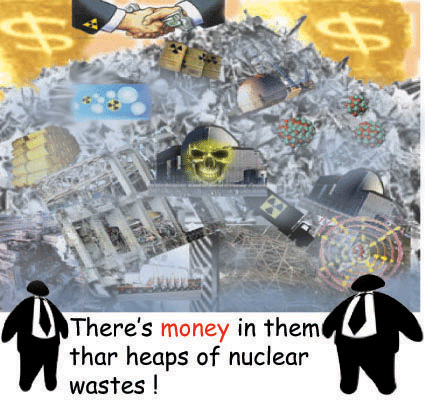
While Canadian authorities fall for “New Small Nuclear” spin, U.S. consortium rips off Canada’s nuclear waste disaster
 U.S. corporations profiting from major Canadian nuclear liability, https://rabble.ca/blogs/bloggers/views-
 expressed/2020/10/us-corporations-profiting-major-canadian-nuclear-liability Ole Hendrickson, October 30, 2020
The nearly 70-year history of the federal crown corporation Atomic Energy of Canada Limited (AECL) has left a $16 billion toxic legacy of shuttered reactors, polluted lakes and groundwater, contaminated soils, and hundreds of thousands of cubic metres of radioactive waste.
AECL’s 2018 annual report estimates its undiscounted waste and decommissioning liability at $15.9 billion as of March 31, 2018. Table 5.7 in Canada’s 2019 public accounts estimates AECL’s environmental liabilities at $1.05 billion and “asset retirement obligations” at $6.6 billion.
This $7.7 billion estimate of AECL’s total nuclear liability is heavily discounted. The accounting firm Deloitte does not recommend discounting for environmental liabilities and asset retirement obligations unless the amount of the liability and the amount and timing of cash payments are “reliably determinable.” As explained in a detailed report, neither is true for AECL’s liability.
Prime Minister Stephen Harper thought that the private sector might do a better job of addressing this massive liability than AECL itself. Just before losing power to the Liberals in the 2015 election, his government contracted an American-controlled consortium (creatively called the “Canadian National Energy Alliance”) to manage federal nuclear facilities and reduce the waste liability quickly and cheaply.
According to the main estimates, AECL’s expenditures grew from $326 million in 2014-15 (before the consortium assumed control) to $491 million in 2015-16, $784 million in 2016-17, $827 million in 2017-18 and $829 million in 2018-19. The 2020-21 main estimates for AECL are $1.2 billion.
AECL hands most of this money over to the consortium, whose current members are Texas-based Fluor and Jacobs, and SNC-Lavalin. AECL retains ownership of the waste. A 2017 special examination report of the Auditor General of Canada to AECL’s board of directors says that “approximately $866 million for contractual expenses was paid or payable by the Corporation in the 2016-17 fiscal year.”
Is this “Government-owned, contractor-operated” (GoCo) arrangement providing value for money?
The GoCo contract was supposed to have been reviewed after an initial six-year period. However, AECL — whose president is an American with past ties to consortium members — extended it to a full 10-year period in April 2020, 18 months before its September 2021 renewal date.
The centrepiece of the consortium’s approach — a million-cubic–metre radioactive waste mound on a hillside draining into the Ottawa River – was revealed in May 2016, shortly after the ink dried on the contract. Neither the public, nor Algonquin peoples on whose unceded territory this facility would be built, were consulted.

Technical problems and public opposition have put the “near surface disposal facility” — to be built at AECL’s Chalk River laboratories — years behind schedule. AECL waste management experts who left when the consortium took over have been highly critical, pointing out that an above-ground mound would not contain and isolate the types of radioactive waste that the consortium planned to put in it.
Chalk River, the focal point of Canadian nuclear research since the late 1940s, is where most of AECL’s radioactive waste legacy is found. But AECL also built reactors at four other sites in Manitoba, Ontario and Quebec. All have been shut down for decades — radioactive hulks, yet to be fully decommissioned.
AECL and its American-led consortium have announced quick and cheap plans for Manitoba and Ontario reactors: fill them up with blast furnace slag and concrete, and abandon them in place. Critics say these proposals are seriously flawed, noting that the International Atomic Energy Agency (IAEA) says that “entombment” should only be considered in the event of a serious reactor accident.
Critics say that these sub-standard schemes would pollute major Canadian waterways and could expose workers and future generations to dangerous radiation levels.
The consortium is trying to salvage its Chalk River mound proposal with a promise to reduce the amount of radiation in the wastes it would house. Less radiation would leak into the Ottawa River.
However, management practices during Chalk River’s early years were poor, accidents were frequent and records were lost in a fire. Trying to separate out lower-activity from higher-activity wastes would involve considerable expense and high worker radiation exposures. And if strict limits on the mound’s radioactivity were adhered to, much of the federal waste liability would likely remain unaddressed.
Management of Canada’s radioactive waste by for-profit corporations, combined with a lack of government oversight, creates risks of delays, excessive radiation exposures to workers and the public, and squandering of tax dollars. Critics of AECL’s GoCo contract are asking the federal government to establish a publicly acceptable strategy for addressing its nuclear liability.
In a mission to Canada in late 2019, IAEA reviewers found virtually “no evidence … of a governmental policy or strategy related to radioactive waste management.” The government agreed to their recommendation that this gap be filled, assigning the task to Natural Resources Canada.
But Natural Resources Minister Seamus O’Regan seems preoccupied with promotion of a new generation of mass-produced, “modular” nuclear reactors. Two consortium members — Fluor and SNC-Lavalin — are heavily invested in their own reactor designs. There are plans to build three new demonstration reactors at Chalk River, and talk of building as many as eight. One proposal has already reached the environmental assessment stage.
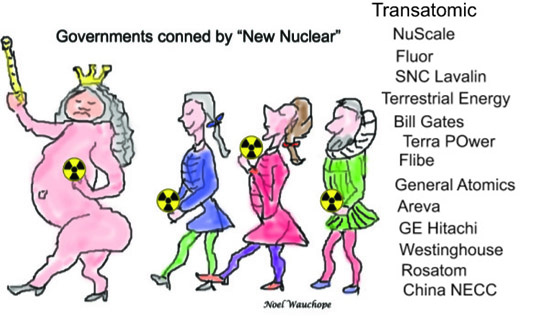
If the Liberal government caves into industry pressure to fund the building of these new reactors — instead of dealing responsibly with its existing waste liability — AECL’s $16 billion radioactive burden on Canadian taxpayers — and risks to workers and the public — will just keep growing.
Ole Hendrickson is a retired forest ecologist and a founding member of the Ottawa River Institute, a non-profit charitable organization based in the Ottawa Valley.
Superannuation funds getting out of investments on nuclear weapons
|
It would probably come as a surprise, and a disappointment, to most Australians to hear that some of their superannuation is invested in nuclear weapons. Especially given the strong community backing for nuclear disarmament, with two surveys in 2018 and 2020 (IPSOS) showing that between 71 and 79% of respondents supported Australia signing and ratifying the Treaty on the Prohibition of Nuclear Weapons. Yet the vast majority of superannuation funds have holdings in companies involved in the manufacture and maintenance of nuclear weapons. While many funds exclude investments in “controversial weapons”, astoundingly this definition often still allows nuclear weapons investment. But this is about to change. With the Treaty on the Prohibition of Nuclear Weapons (TPNW), which was endorsed by 122 countries at the United Nations in 2017, having just reached the milestone of 50 countries ratifying it, the treaty becomes international law in less than three months. Nuclear weapons, the worst of the weapons of mass destruction, will finally be on the same illegal footing as chemical and biological weapons. This means assistance of any sort, including financial assistance, towards nuclear weapons becomes illegal under international law. Only 26 companies support these weapons. Boeing, for example, the second largest weapons producer in the world, has contracts worth more than US$1.7 billion: building new nuclear weapons for the US, key components for the long-range nuclear Minuteman Intercontinental Ballistic Missiles system, sustaining the UK Trident II system and making tail-kit assemblies for the new B61 bombs. Divestment is accelerating. Globally, major investors are already ceasing their exposure to nuclear weapons activities. This includes two of the top five pension funds in the world, the Norwegian Government Pension Fund and ABP, which have divested from the 26 companies tied to nuclear weapons. Deutsche Bank and KBC are also divesting. In Japan, 16 banks (including three mega banks) have flagged ceasing investment in nuclear weapons companies. With accelerating divestment, the risks of holding nuclear weapons stocks increases. Superannuation funds in Australia are starting to consider the financial risks, reputational risks and ethical imperatives surrounding investments in nuclear weapons. Some, like Australian Ethical, Future Super and Bank Australia have already acted……… As with climate change, there is little point accumulating funds on behalf of the community if they contribute to the deaths of billions and a severely damaged future. Quit Nukes, an Australian-based campaign launched late last year, is working to get super fund portfolios out of the financing of nuclear weapons. The campaign members have met with senior executives at more than a dozen funds, the regulator APRA, several banks, index setters and a number of industry bodies. Blackrock, MSCI and other index setters have recognised the increasing demand from the public for ethical funds and have created products to suit. The full list of funds that have already acted is on the Quit Nukes website. Consumers are increasingly concerned about their funds being invested in destructive and unethical industries and super funds need to respond. https://www.michaelwest.com.au/disarmament-treaty-drops-bomb-on-super-funds-investing-in-nuclear-weapons/ |
|
|


U.S. Senate unanimously passes resolution supporting nuclear weapons workers made ill by radiation
 Senate Unanimously Passes Udall, Heinrich Resolution Honoring Nation’s Nuclear Weapons Workers, Declares National Day of Remembrance Daily Post by Carol A. Clark November 1, 2020, WASHINGTON D.C. – U.S. Senators Tom Udall (D-N.M.) and Martin Heinrich (D-N.M.) announced Thursday that the Senate unanimously passed a bipartisan resolution to designate Oct. 30, 2020, as National Day of Remembrance for workers who helped develop and support the nation’s nuclear weapons program…….. Senate Unanimously Passes Udall, Heinrich Resolution Honoring Nation’s Nuclear Weapons Workers, Declares National Day of Remembrance Daily Post by Carol A. Clark November 1, 2020, WASHINGTON D.C. – U.S. Senators Tom Udall (D-N.M.) and Martin Heinrich (D-N.M.) announced Thursday that the Senate unanimously passed a bipartisan resolution to designate Oct. 30, 2020, as National Day of Remembrance for workers who helped develop and support the nation’s nuclear weapons program……..“Today, we honor the thousands of miners, millers, maintenance workers, scientists, support staff, and families in New Mexico and across the country whose sacrifice has too often gone unrecognized,” Udall said. “During the Cold War, thousands of New Mexicans made tremendous sacrifices to build the country’s first nuclear weapons and mine the uranium to protect our national defense. Many of these brave Americans have been left out of programs Congress has designated to care for and compensate nuclear workers including the Radiation Exposure Compensation Act program and the Energy Employees Occupational Illness Compensation Program. While we can never take away the years of pain and suffering these families have endured as a result of their service, we can take action to make them whole. We will never stop fighting to expand these laws until those affected by this nation’s nuclear weapons activities are fairly compensated.”
……… I also recognize the many atomic workers who are coping with serious health problems due to their exposure to hazardous and radioactive material. I will never stop fighting for the justice and compensation that these atomic workers deserve for their service to our nation.”
Tens of thousands of Americans have worked in the nuclear weapons programs since World War II at the Department of Energy’s (DOE) Los Alamos and Sandia National Labs in New Mexico. Many of these workers became sick due to exposure from toxic or radioactive materials before proper workplace protections and scientific understanding were established. Congress has since enacted the Energy Employees Occupational Illness Compensation Program Act (EEOICPA) in October 2000. This resolution additionally provides compensation to those who were exposed in uranium mines and mills during the Cold War, some of whom are covered separately by the Radiation Exposure Compensation Act (RECA). Udall and Heinrich have long pushed to expand the RECA law to compensate not only the workers affected, but those suffering from the effects of radiation during the Cold War by these nuclear weapons facilities. https://ladailypost.com/senate-unanimously-passes-udall-heinrich-resolution-honoring-nations-nuclear-weapons-workers-declares-national-day-of-remembrance/
|
|
Financial red flags warn against Utah’s NuScale small nuclear reactor project

|
Is nuclear power Utah’s future? Red flags suggest holding off https://www-deseret-com.cdn.ampproject.org/c/s/www.deseret.com/platform/amp/opinion/2020/10/27/21535010/guest-opinion-nuclear-power-plant-idaho-utah-uamps-nuscale-red-flags?fbclid=IwAR13pzEW_7Bl0BQVlj8jN5UUIcoX9Mi_BZbgQq-22TBtjnJLSeSov8rZER, By M.V. Ramana, – on October 27, 2020 UAMPS has promised electricity at $55 per megawatt hour (MWh), down from the $65 it promised two years ago. One might imagine that the lower price is due to declining costs, but according to UAMPS, the project’s estimated costs have gone up, not down. In its 2018 Budget & Plan of Finance, UAMPS approved a construction cost of approximately $4.2 billion. This year, the UAMPS Amended Budget & Plan of Finance mentions a figure of approximately $6.1 billion. If the construction costs are going up, then why did the cost of electricity come down from $65/MWh to $55/MWh? The question arises because UAMPS and NuScale have not been transparent with the methodology used to develop figures like $55/MWh. The lack of transparency means the public does not know what assumptions are being made, let alone whether those assumptions are realistic. We do know that Pacificorp and Idaho Power have concluded that electricity from NuScale reactors would cost $94-$121/MWh. The UAMPS project also bears other red flags, and seems headed for failure. Less than 25% subscriptions. Based on public testimony, the UAMPS project has subscribers for less than 25% of the total power, leaving 75% of the output unclaimed. Communities continue to withdraw, citing the increasing costs, uncertain technology and the lack of subscribers. Several of the communities that withdrew were among the project’s largest subscribers. Project delays continue. NuScale initially claimed it could deliver the first working nuclear reactor in 2015. Now, the first UAMPS reactors aren’t scheduled to come online until 2029-2030, roughly 15 years later than originally expected — provided there are no further delays. NuScale’s experience is consistent with an independent study that showed that 175 of the 180 nuclear power projects examined took on average 64% longer than projected (and had final costs that exceeded the initial budget by an average of 117%). Unpredictable taxpayer subsidies. UAMPS and NuScale expect taxpayers to cover 25% of the project’s costs over the next nine years. Contrary to NuScale/UAMPS’ assurances about the recent U.S. Department of Energy $1.4 billion “funding vehicle,” there is no way to guarantee these funds. As the on-again, off-again Yucca Mountain project illustrates, federal funding for nuclear projects can be fickle and subject to withdrawal at any time. In the long history of failed U.S. nuclear projects, the public is almost never given an honest, transparent assessment of the likelihood of expensive overruns, lengthy scheduling delays and possible project collapse. The problems already apparent in the UAMPS project fit squarely into this history of failure. Some UAMPS members — Logan, Lehi, Kaysville and Murray, among them — seem to have realized that the risk of such failure is high enough and have pulled out of the project, cutting their losses. By the end of this week, roughly 30 Utah cities and towns will have a similar decision to make. They can either decide to continue the gamble and be tied to a contract that could leave them with millions of dollars of public debt. Or they could follow the lead of Logan, Lehi, Kaysville and Murray and vote to withdraw from this financially risky nuclear project. The sad irony is that even in the highly unlikely event of NuScale delivering on its promises, the $55/MWh figure is well above the current cost of procuring electricity for UAMPS itself, which has averaged around $29/MWh in the last two years. The $55/MWh would also far exceed the cost of renewables, which are continuing to decline in prices. Thus, a long term contract for $55/MWh is a recipe for excessive electricity costs for decades. I do think that UAMPS can achieve one of the stated goals of NuScale project promoters, namely invest in low-carbon sources of energy. But the way to do that is to pursue currently available solar, wind, energy storage (batteries) and energy efficiency. That is cheaper, safer, cleaner and more reliable than going deeper into the NuScale dead-end. Professor M.V. Ramana is the Simons Chair in Disarmament, Global and Human Security and Director of the Liu Institute for Global Issues at the School of Public Policy and Global Affairs at the University of British Columbia in Vancouver, Canada. Dr. Ramana is a member of the International Panel on Fissile Materials, the International Nuclear Risk Assessment Group and the team that produces the annual World Nuclear Industry Status Report. |
|
Another city bites the dust in regard to Utah’s NuScam small nuclear reactors plan

Seven Utah cities have now bailed out of an Idaho nuclear power project, Salt Lake Tribune, By Taylor Stevens-30 Oct 20,
Three more Utah cities voted this week not to move forward with a first-of-its kind nuclear power project that proponents have pitched as the future of clean energy but that opponents have lined up against over concerns about financial risk.
Beaver, Bountiful and Heber are the latest municipalities to exit the small modular nuclear reactor pursuit, following in the footsteps of Murray, Kaysville, Lehi and Logan, which also backed out in recent weeks. ………
The Heber Light and Power Board, which voted 5-1 to get out of the project, and the Bountiful City Council, which unanimously made the decision to back out, both did so this week largely over concerns about the subscription rate of the nuclear energy pursuit.
“There’s enough things wrong with this project that it made it really scary,” said Bart Miller, Heber Light and Power’s chief financial officer. “We’re just a bunch of little utilities in the state of Utah trying to do a $6 billion nuclear power plant.”………
Bountiful City Councilman Richard Higginson said the leaders there had similar concerns, and felt too many of the development and construction costs were falling to a small number of municipalities…….
Costs have been one of the main concerns for several of the cities that have backed out over the last few weeks, as the project’s projected price tag has ballooned significantly, from $4.5 billion a few years ago to around $6 billion now. Opponents have also raised concerns about time and cost overruns, safety considerations and an uncertain regulatory environment.
The Utah Taxpayers Association has been among the critics of the project, arguing that municipal power companies should not act as a “seed investor” for the new technology, a responsibility it’s argued should lie with the private sector.
Environmental groups, such as the Healthy Environment Alliance of Utah, have also raised concerns about the radioactive waste that would be generated by the project.
Cities participating in the Carbon Free Power Project through the Utah Associated Municipal Power Systems — a consortium of municipally owned power systems in Utah and several other Western states that has partnered with NuScale Power to study and create the nuclear technology — have until Saturday to decide whether to stay in the project or back out. https://www.sltrib.com/news/politics/2020/10/29/seven-utah-cities-have/
UK government’s economic recovery plan funds fossil fuels £3.8bn, but renewables only £121m
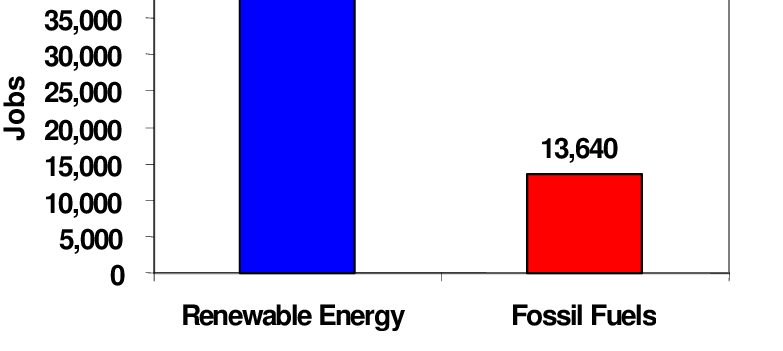
Edie 29th Oct 2020, The UK Government has earmarked £3.8bn of stimulus funding for legacy fossil fuel and nuclear generation, compared to just £121m for renewables, a damning new report has claimed. Published by global technology company Wärtsilä’s energy arm, the analysis concludes that the UK Government’s short-term plans for helping the energy sector recover from the financial impacts of Covid-19 are not aligned with the 2050 net-zero target or the interim carbon budgets.
storage capacity would be scaled up dramatically.
Putin’s Russia keen to exploit the Arctic for fossil fuels: more nuclear-powered icebreakers on the way
|
Putin decrees development of Arctic with more nuclear icebreakers – This will help Russia cash flow from fossil fuels. Russian President Vladimir Putin has signed an executive order, On the Strategy for Developing the Russian Arctic Zone and Ensuring National Security until 2035, which foresees the construction of at least five new nuclear-powered icebreakers of the Project 22220 series, and three of the Project 10510 series. The vessels are needed to ensure year-round navigation along the Northern Sea Route. Project 10510, also known through the Russian type size series designations LK-110Ya and LK-120Ya or the project name Leader, will supersede Project 22220 icebreakers as the largest and most powerful in the world…….. https://www.oilandgas360.com/putin-decrees-development-of-arctic-with-more-nuclear-icebreakers-this-will-help-russia-cash-flow-from-fossil-fuels/ |
|
|
The tangled web – well-being of communities has become dependent on the nuclear weapons industry

Nuclear disarmers can’t forget the communities that rely on military spending https://thebulletin.org/2020/10/nuclear-disarmers-cant-forget-the-communities-that-rely-on-military-spending/By Tricia White, Matt Korda | October 28, 2020 If Russia were to launch a nuclear attack against the United States, what would the targets be? You might guess the most likely targets would be major cities like Washington D.C. or New York City, and you wouldn’t be wrong. But would you have also guessed Great Falls, Montana (population: 58,505) and Cheyenne, Wyoming (population: 65,165)? These small communities are part of the United States’ “nuclear sponge”—areas in Colorado, Montana, Nebraska, North Dakota, and Wyoming that house the US arsenal of intercontinental ballistic missiles (ICBMs) and that are supposed to “soak up” hundreds of incoming nuclear warheads. Should an attack on the United States ever occur, these Midwestern states would be the first to go. And, somewhat counterintuitively, the majority of residents in these communities want to keep it that way.
It is difficult to overstate the degree to which ICBM-hosting communities rely on retaining their missiles. Missile bases like Minot in North Dakota, F. E. Warren in Wyoming, and Malmstrom in Montana are directly responsible for between eight and thirteen percent of their respective local labor forces. Additionally, the indirect economic benefits—a by-product of everyday activities like grocery shopping or school registration—certainly boost those numbers even further.
Recognizing that ICBMs could function as an economic insurance policy for local communities, politicians jockeyed to bring nuclear missiles to their states during the early stages of deployment in the 1960s.
In one particularly infamous case, Missouri Sen. Stuart Symington wrote to General Thomas Power, head of Strategic Air Command to ask, “Dear Tommy, why can’t we have one of the missile bases in Missouri?” Symington, previously the first Secretary of the Air Force, was heavily tied to weapons contractors, and his then-unique position at the intersection of business, politics, and the military prompted President Eisenhower to issue his prescient warning about the dangers of the “military-industrial complex.”
Today, this type of politicking has organized itself into the Congressional ICBM Coalition—a bipartisan collective of lawmakers from the three ICBM host states plus Utah, where ICBM sustainment and replacement activities are headquartered at Hill Air Force Base. The coalition’s members are extremely well-funded by contractors like Northrop Grumman, which spent more than $162 million on lobbying from 2008 to 2018. In a fantastic return on investment, Northrop Grumman was recently awarded a $13.3 billion contract to manufacture a replacement for the aging Minuteman III, the only land-based, nuclear-armed missile in the US arsenal.
These weapons contractors are not just funding politicians, however. They also work in concert with local community leaders to sustain and modernize the ICBM force ad infinitum. In response to potential base closures throughout the 1990s, many ICBM communities formed coalitions via their Chambers of Commerce to advocate for their neighboring bases to stay open. Today, community-led organizations like Task Force 21 (Minot), the Montana Defense Alliance (Malmstrom), and the Wyoming Wranglers Committee (F. E. Warren) meet with Pentagon officials, weapons contractors, and their Congressional representatives to advocate on behalf of their respective bases.
It’s especially notable just how integrated these groups are with their local communities: they offer career opportunities in schools, allow weapons contractors to host community events when new project bids are occurring, and guide local businesses through the ins-and-outs of subcontracting for Northrop Grumman, Boeing, or Lockheed Martin. Since many of the organizations’ activities are in turn sponsored by these corporations, it’s effectively a win-win for everyone involved.
However, these intimate relationships between local communities, corporations, and politicians come with serious ramifications. In a cruel twist of irony, it means that in order to protect their livelihoods, community leaders are encouraged to ensure that their respective cities remain—now and forever—ground zero for a future nuclear attack.
These communities are also expected to lobby on behalf of an ICBM replacement program that is dangerous, unnecessary, and very expensive. Not only do ICBMs serve little strategic purpose in a post-Cold War environment, but they are also the only weapons in the US nuclear arsenal that force the president to make potentially catastrophic decisions within mere minutes. For these reasons, as well as their astounding $264 billion estimated life-cycle costs, several nuclear experts—and a majority of both Democrats and Republicans—agree that the Pentagon should hit pause on the ICBM replacement program while officials examine cheaper life-extension options for the current arsenal. Many even argue the United States should eliminate the ICBM leg of the nuclear triad altogether.
Additionally, as Gretchen Heefner, a professor at Northeastern University, articulates in her book The Missile Next Door, “By insisting that new missions be found for old bases, that more money be spent to upgrade facilities and fortify defenses, Americans [have] long stopped resisting militarism and instead embraced it as an economic necessity.” And who could blame them? If the Minuteman ICBMs were to be phased out, the futures of Minot, Malmstrom, and F. E. Warren Air Force Bases—and the communities that serve them—would be thrown into jeopardy. Heefner quotes one ICBM community’s Chamber of Commerce president on the indirect impacts of such closures: “A lot of people probably won’t realize the impact until their soccer coach is gone and their Bible teacher is not here or their teacher’s aide is gone.” “Nothing so aptly demonstrates the dependency of American municipalities on the military,” Heefner concludes, “as the threat of its abandonment.” To that end, organizing to keep their nuclear ICBMs is a form of community self-defense, albeit one with far-reaching consequences.
This presents a challenging conundrum for the nuclear expert community. It is easy to advocate for the phaseout of the ICBM force by only examining the costs and benefits on paper. In fact, such a phaseout is a realistic and worthwhile security goal, but it may come at the cost of American jobs and rural towns.
If disarmament advocates really want to push for the retirement of the US ICBM force, we need to come prepared with answers to the economic problems it would have on these “nuclear sponge” communities. Is Congress willing to offer a guaranteed income to the constituents who will lose their jobs? Will there be an equivalent of the Paycheck Protection Program? How does a community that loses its predominant industry rebuild its economy, especially in the aftermath of a devastating pandemic? Without answers to these questions, disarmament could be the very thing that destroys them—long before a nuclear missile ever strikes American soil.
The world’s banks must start to value nature and stop paying for its destruction
The world’s banks must start to value nature and stop paying for its destruction, Guardian, Robert Watson 28 Oct 20, As a new report spells out how financial institutions contribute to biodiversity loss, the clamour is growing for a new approach.
- Banks lent $2.6tn linked to ecosystem and wildlife destruction in 2019 – report
- The scientific community has long been unequivocal about biodiversity destruction. Last month, the UN reported that the world had failed to meet fully any of the 2020 Aichi bioiversity targets that countries agreed with fanfare in 2010, even as it found that biodiversity is declining at an unprecedented rate, and the pressures driving this decline are intensifying.This week’s Bankrolling Extinction report finds that financial institutions provide the capital that is funding over-exploitation of our lands and seas, putting biodiversity in freefall. Last year, the world’s 50 biggest banks provided $2.6tn (£1.9tn) in loans and other credit to sectors with a high impact on biodiversity, such as forestry and agriculture. Bank by bank, the report authors found a cavalier ignorance of – or indifference to – the implications, with the vast majority unaware of their impact on biodiversity.
In short, this report is a frightening statement of the status quo.
- Fortunately, signs are emerging that some governments are – slowly – taking aim at financial backers of the destruction of the natural world. They must now push more forcefully. In the wake of Covid-19, treasury cupboards may be bare, but with new policies and limited recovery funds, they can steer trillions of dollars of private capital towards a nature-positive response to coronavirus, to spur growth, prosperity and resilience without returning to business as usual over-consumption and climate and biodiversity risk.
- Voices from economics and finance are starting to add impetus and rationale for such momentum. One of the world’s foremost business groups, the World Economic Forum (WEF), has recognised the economic importance of nature. In its annual Global Risks Report, published earlier this year, WEF found that for the first time environmental risks dominated perceived business threats. Biodiversity loss was considered among the five most impactful and most likely risks in the next decade, with concerns ranging from the potential collapse of food and health systems to the disruption of entire supply chains. ……………. https://www.theguardian.com/environment/commentisfree/2020/oct/28/the-worlds-banks-must-start-to-value-nature-and-stop-paying-for-its-destruction-aoe
France trying to market nuclear reactors to Romania
 World Nuclear News 27th Oct 2020, France and Romania have signed a declaration of intent on cooperation in
the civil nuclear field, which aims, among other things, to work “with
strategic partners” to build units 3 and 4 of the Cernavoda nuclear power
plant and to upgrade unit 1. The document was signed yesterday by French
Prime Minister Jean Castex and his Romanian counterpart Ludovic Orban, who
led a delegation of his ministers to Paris.
https://www.world-nuclear-news.org/Articles/France-and-Romania-plan-joint-work-on-Cernavoda-pr
Shadow of $25 billion Nuclear Plant Vogtle hangs over Georgia Public Service Commission elections

Nuclear costs loom over races for Georgia PSC races
Public Service Commission must deal with $25 billion Plant Vogtle’s impact on electric rates, News 4 Ajax, Jeff Amy, Associated Press, 25 Oct 20, ATLANTA – The shadow of two nuclear reactors that Georgia Power Co. is building near Waynesboro hangs over two statewide elections for the Georgia Public Service Commission. Although the reactors are now getting so close to completion that they are likely to enter service, whoever is elected will have to deal with the $25 billion project’s ultimate impact on customer bills.
Electric customers statewide and even in Jacksonville will help pay for Plant Vogtle, as Georgia Power has contracts to provide power from the plant around the Southeast.
The five-person utility regulatory body is currently all Republican, with two members up for reelection this year. ………..
Amid rising costs, the plan to add a third and fourth nuclear reactor at Plant Vogtle survived a cost-overrun scare in 2018 with the heavy support of the state’s Republican establishment. Georgia Power, the largest subsidiary of the Atlanta-based Southern Co. is now building the only new nuclear plants in the U.S. ……… https://www.news4jax.com/news/georgia/2020/10/25/nuclear-costs-loom-over-races-for-georgia-utility-regulator/
1 This Month



26 September – International Day for the Total Elimination of Nuclear Weapons


PLEASE OPPOSE HR 8255 AND S.3639 – bills would accelerate satellite deployment, with no environmental review or safeguards – https://ncstd5li.quorum.us/campaign/169331/
To see nuclear-related stories in greater depth and intensity – go to https://nuclearinformation.wordpress.com
-
Archives
- September 2026 (257)
- August 2026 (330)
- July 2026 (355)
- June 2026 (287)
- May 2026 (306)
- April 2026 (356)
- March 2026 (251)
- February 2026 (267)
- January 2026 (308)
- December 2025 (358)
- November 2025 (359)
- October 2025 (375)
-
Categories
- 1
- 1 NUCLEAR ISSUES
- business and costs
- climate change
- culture and arts
- ENERGY
- environment
- health
- history
- indigenous issues
- Legal
- marketing of nuclear
- media
- opposition to nuclear
- PERSONAL STORIES
- politics
- politics international
- Religion and ethics
- safety
- secrets,lies and civil liberties
- spinbuster
- technology
- Uranium
- wastes
- weapons and war
- Women
- 2 WORLD
- ACTION
- AFRICA
- Atrocities
- AUSTRALIA
- Christina's notes
- Christina's themes
- culture and arts
- Events
- Fuk 2022
- Fuk 2023
- Fukushima 2017
- Fukushima 2018
- fukushima 2019
- Fukushima 2020
- Fukushima 2021
- general
- global warming
- Humour (God we need it)
- Nuclear
- RARE EARTHS
- Reference
- resources – print
- Resources -audiovicual
- Weekly Newsletter
- World
- World Nuclear
- YouTube
-
RSS
Entries RSS
Comments RSS

