|
U.S. sees $18 billion from purchases in nuclear power agreement with Poland, By Timothy Gardner, WASHINGTON (Reuters) 16 Nov 20, – The United States and Poland have struck a nuclear power agreement in which Poland will likely buy $18 billion in nuclear technology from U.S. companies, the U.S. energy department said on Monday.
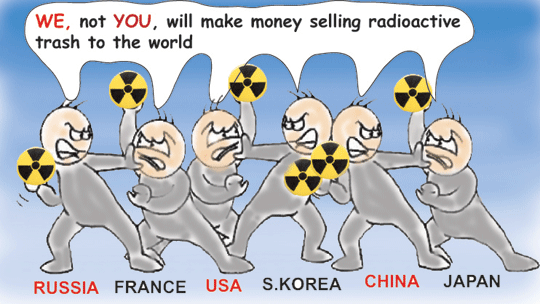
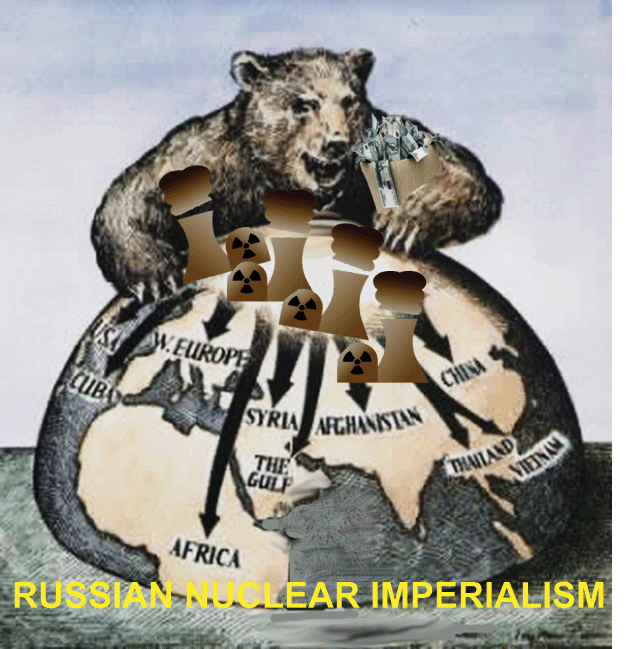
The United States has been competing with China and Russia and other countries to supply nuclear power technology to countries hoping to build their first reactors, or boost their programs.
“We are hopeful that the ultimate decisions that are made by Poland … over a period of time will result in them choosing U.S. technology,” U.S. Energy Secretary Dan Brouillette told reporters in a teleconference. ……
Over the next 18 months, the United States and Poland will work on an a report for the program that seeks to build six reactors, as well as potential financing arrangements, the department said.
The first reactors are planned to be in operation by 2033 in a program that will potentially be worth $40 billion, a senior U.S. energy department official said. Poland would buy at least $18 billion from U.S. companies, the official said.
Westinghouse, owned by Brookfield Asset Management BAMa.TO, Bechtel and Southern Co SO.N and the U.S. government, will participate in a first step in the agreement, an engineering study for planned plants, the official said.
This month the United States and Romania came to an initial $8 billion agreement on the construction of two reactors on the river Danube. Romanian state-owned nuclear power producer Nuclearelectrica ROSNN.BX ended talks with China General Nuclear (CGN) about the construction of the reactors after they had dragged on for six years.
Reporting by Timothy Gardner; Editing by Nick Zieminski and Marguerita Choy https://www.reuters.com/article/us-usa-nuclearpower-poland-idUSKBN274239
|
|
November 17, 2020
Posted by Christina Macpherson |
EUROPE, marketing, USA |
Leave a comment
……..Solar rising, By Alex Kimani for Oilprice.com 16 Nov 20,
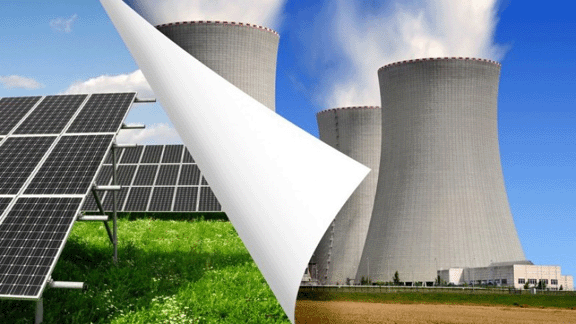
Whereas the nuclear sector comeback has its work cut out for it, solar power has clearly been on the ascendancy thanks in large part to falling costs.
Nuclear advocates have pointed to rising electricity costs in California as the reason why other states should think twice before adopting its model. Environmental Progress has reported that between 2011 and 2018, power costs in the Golden State increased by 27.9% compared to a 4% national average. This period coincided with a period when California has been aggressively ramping up its renewable generation capacity. Renewable sources currently account for ~30% of California’s electricity generation with an aim to double that by 2030 and hit 100% by 2045.
But that’s being a bit disingenuous because it fails to capture just how much solar costs have fallen over the timeframe.
According to the Solar Energy Industries Association (SEIA), solar installation costs have dropped by more than 70% over the past decade, opening up vast new markets and systems nationwide. The organization says prices as of Q2 2020 dropped to their lowest levels in history across all market segments, with utility-scale prices ranging from $16/MWh – $35/MWh, thus making it competitive with all other forms of generation. Meanwhile, costs for the average-sized residential system were cut in half from a pre-incentive price of $40,000 in 2010 to roughly $20,000 today.
And no, renewables are not to blame for California’s blackouts.
Higher Soft Costs Remain
A common complaint is that solar power is only becoming cheaper for utilities but not for residential applications.
That’s partly true but not entirely so because residential costs have actually been falling but at a slower clip than their bigger brethren.
According to SEIA, residential PV pricing fell only 20% between 2014-2020 to $2.84/Watt mainly due to soft costs, including labor, overhead costs, supply chain, customer acquisition, and permitting/inspection/interconnection costs remaining high. Further, inconsistent permitting practices and building codes and permitting practices across jurisdictions have led to some regions not being able to enjoy the full benefits of falling hardware costs.
Strongly Bullish
Despite these challenges, the solar sector remains strongly bullish.
Indeed, S&P Platts says that the shift to renewable energy is likely to continue full steam ahead regardless of fed policies noting that the energy transition has “clearly been moving forward on a regional basis,” despite lacking clear endorsement at the federal level under Trump.
It remains to be seen whether nuclear energy can command the same level of support.
November 17, 2020
Posted by Christina Macpherson |
2 WORLD, business and costs |
Leave a comment
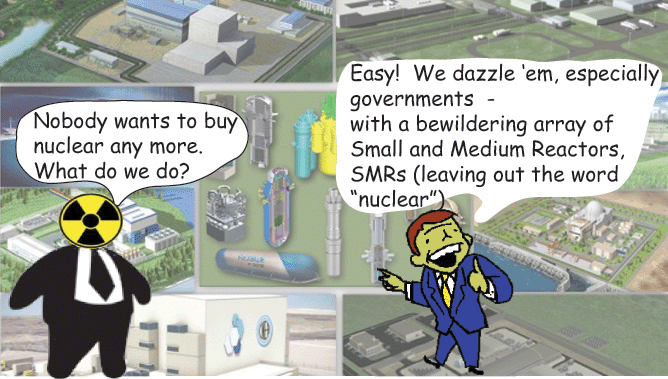
Rolls-Royce vows to create 6,000 UK jobs with nuclear power station plans, Engineering firm is part of consortium pushing for government backing, Jasper Jolly, Wed 11 Nov 2020
‘……….However,it faces opposition on the grounds of safety, security and cost.
The consortium this week signed agreements with the US company Exelon Generation and the Czech power company CEZ to consider the reactors.
Small nuclear reactors were first developed in the 1950s to use in nuclear-powered submarines. Since then Rolls-Royce has designed reactors for seven classes of submarine and two separate land-based prototype reactors.
However, to be cost-effective for civilian use the power generated by the reactors has to compete with renewable sources such as wind and solar power. The costs of installing renewables have fallen dramatically in the last decade and they do not pose the same safety concerns.
The Financial Times last month reported that the government was backing the plans to commit between £1.5bn and £2bn, and that it would form part of Boris Johnson’s 10-point plan for the environment. However, the second wave of coronavirus has caused the delay of the Treasury’s multiyear spending review. …..
a 2017 study by the consortium partner Atkins found that the electricity produced from the small reactors would be a third more expensive than traditional plants……. https://www.theguardian.com/business/2020/nov/11/rolls-royce-vows-to-create-6000-uk-jobs-with-nuclear-power-station-plans
November 12, 2020
Posted by Christina Macpherson |
business and costs, Small Modular Nuclear Reactors |
Leave a comment
Middle East nuclear ambitions stymied by financial constraints, enrichment fears, S and P Global , AuthorDania Saadi, EditorKshitiz Goliya-11 Nov 20,
HIGHLIGHTSIran, UAE producing nuclear power for electricity generation
Egypt, Jordan, Saudi Arabia, Turkey want to follow suit
But Saudi Arabia and Jordan want uranium enrichment
Dubai — While the UAE started its first nuclear reactor this year, other countries in the Middle East are stuck in their plans as they grapple with financial constraints, uranium enrichment aspirations, and Western fears amid Iran’s controversial nuclear ambitions.
he UAE, so far, is the only regional country to have agreed to the so-called “gold standard” in its nuclear cooperation agreement with the US, foregoing any plans to enrich uranium, which is the West’s main cause of concern.
The UAE’s peaceful program includes four 1.4 GW nuclear reactors, the first of which started in August, to meet up to 25% of the country’s electricity needs.
“The question of deployment of sensitive nuclear technologies has been a hot button issue in the Middle East for years, beginning in 1970s when Israel clandestinely produced nuclear weapons and the rest of the countries in the region had to respond to that development,” said Mark Hibbs, senior fellow at the Carnegie Endowment for International Peace’s nuclear policy program.
“Nuclear transparency issues in the Middle East are not confined to just to one or two or three countries but are the concern of virtually all states in a region where suspicion is widespread and where international cooperation and confidence building are limited.”
Saudi nuclear plans
In Saudi Arabia, earlier scenarios to develop 17.6 GW of nuclear power by 2032 have been scaled back to building a mix of 1.2-1.6 GW and small modular reactors without any set timeline.
However, the West has concerns about the Saudi program because of its stated intentions to mine and enrich its uranium deposits.
In a March 2018 interview with CBS, Crown Prince Mohammed bin Salman said, “Saudi Arabia does not want to acquire any nuclear bomb, but without a doubt if Iran developed a nuclear bomb, we will follow suit as soon as possible.”
Such statements have unnerved Western countries, including some US lawmakers, who have urged the US Administration to persuade Saudi Arabia to agree to the “gold standard” and foreswear enriching uranium.
Resource-barren Jordan
Turkey, which has a so-called 123 nuclear cooperation agreement with the US just like the UAE, is building its first nuclear plant Akkuyu, which will consist of four 1.2 GW reactors being supplied by Rosatom, with work on the first unit set to start in 2023………
esource-barren Jordan needs financial help to achieve its ambition to produce nuclear energy to help halt its reliance on energy imports. Jordan, which in 2015 signed with Rosatom a $10 billion deal to build a 2 GW nuclear power plant, has since scrapped this plan and is looking at small modular reactors.
Financial constraints
Jordan also wants to mine and enrich its own uranium deposits, which is another sticking point with the US in reaching a 123 agreement.
“Finances is likely to pose the biggest obstacle to fulfilling these [nuclear] dreams because nuclear energy is such a costly venture,” said Mark Fitzpatrick, associate fellow at the International Institute for Strategic Studies.
“If you look at it in terms of energy efficiency, nuclear energy is not the most efficient way of developing electricity. Solar energy probably offers better efficiency in the long-run, while in the short-run because of the depressed price of oil, countries are finding it more economic to just import oil.”
However, the elephant in the room that may thwart the region’s nuclear ambitions is Iran, which started in 1959 with a small US nuclear reactor but ended up entangled in a major standoff with the West in the 2000s……
Besides Iran, another cause for concern is the potential attack on nuclear facilities.
“Modern nuclear power plants are designed to be secure against most kinds of threats but they can’t be perfectly secure against threats such as an airplane directly attacking the plant…or in the case of an attack like the Israeli attack on Iraq’s Osirak reactor [in 1981],” Fitzpatrick said. https://www.spglobal.com/platts/en/market-insights/videos/market-movers-europe/110920-utilities-renewables-libya-oil-lockdown-lng-uniper-germany
November 12, 2020
Posted by Christina Macpherson |
business and costs, MIDDLE EAST, politics international |
Leave a comment
New Civil Engineer 11th Nov 2020, A consortium led by Bechtel is reportedly in talks with the government
about acquiring the Wylfa Newydd site on Anglesey earmarked for nuclear
development. Plans for a £20bn nuclear plant were recently scrapped by
developer Horizon after 18 months of talks with government about a funding
mechanism eventually fizzled out. The site is however still safeguarded and
the project could theoretically be restarted by a third party. Led by the
Bechtel, the consortium includes Southern Company, an electricity utility,
and Westinghouse, a nuclear engineering company.
https://www.newcivilengineer.com/latest/bechtel-led-consortium-in-talks-about-wylfa-site-11-11-2020/
City AM 10th Nov 2020, A group of US companies has reportedly approached the government about
taking over the development of a nuclear power plant at Wylfa in north
Wales. Engineering giant Bechtel will lead the consortium, and will be
joined by utility firm Southern and nuclear engineers Westinghouse.
https://www.cityam.com/us-consortium-mulls-taking-on-abandoned-wylfa-nuclear-project/
November 12, 2020
Posted by Christina Macpherson |
business and costs, politics, UK |
Leave a comment
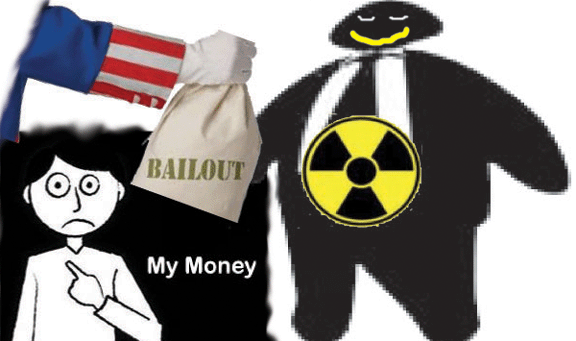
NJ Ratepayers Unite to Stop More Nuclear Corporation Bailouts, Energy Monopolies https://www.insidernj.com/press-release/nj-ratepayers-unite-stop-nuclear-corporation-bailouts-energy-monopolies/ November 9, 2020,
Diverse energy users and consumer advocate groups create NJ Ratepayers United
Trenton, N.J. –– As a $300 million annual nuclear subsidy continues to burden New Jersey consumers, a coalition has formed to oppose another proposed major energy policy initiative from PSEG and Exelon that would enable the companies to transform the state’s electricity capacity market and obtain windfall profits.
NJ Ratepayers United (NJRU) is a diverse coalition of New Jersey consumers, business groups, consumer advocates, grassroots organizations and energy providers that have joined forces to stop the proposed Fixed Resource Requirement (FRR). This proposed overhaul would transform how the state procures power, eliminating ratepayer protections and empowering select companies to leverage their market power to further increase electricity costs. Continue reading →
|
|
|
|
|
November 10, 2020
Posted by Christina Macpherson |
business and costs, opposition to nuclear, USA |
Leave a comment
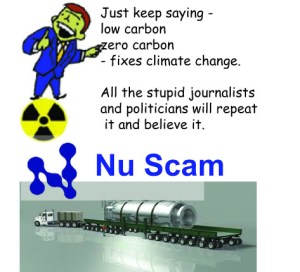 S. Africa Regulator to Consider Approving Nuclear Power Plan, Bloomberg, By Antony Sguazzin,10 November 2020,
-
- Program envisages addition of 2,500 megawatts of atomic power
- Country’s renewable-energy lobby opposes expansion of industry
The National Energy Regulator of South Africa will on Nov. 11 consider approving the procurement of 2,500 megawatts of nuclear power, marking another step toward the expansion of the industry.
The regulator will consider approving a so-called section 34 determination for the program, which enables the Department of Mineral Resources and Energy to undertake a bidding process for private producers to build nuclear-power facilities, it said in a Twitter posting outlining the agenda for the meeting.
South Africa, which destroyed its atomic weapons prior to the end of apartheid, already operates Africa’s only nuclear-power plant, the 1,800 megawatt Koeberg facility in Cape Town, as well as the Pelindaba research facility north of Johannesburg.
While the expansion of nuclear power has the support of the ministry and labor unions, it’s opposed by environmentalists and backers of the country’s expanding renewable-energy program.
NuScale Power LLC, a U.S. nuclear-energy firm, has said it will propose small, modular reactors for installation in South Africa. The U.S. International Development Finance Corp. has announced that it will support a bid by NuScale, approving the procurement of 2,500 megawatts of nuclear power, marking another step toward the expansion of the industry.
The regulator will consider approving a so-called section 34 determination for the program, which enables the Department of Mineral Resources and Energy to undertake a bidding process for private producers to build nuclear-power facilities, it said in a Twitter posting outlining the agenda for the meeting.
South Africa, which destroyed its atomic weapons prior to the end of apartheid, already operates Africa’s only nuclear-power plant, the 1,800 megawatt Koeberg facility in Cape Town, as well as the Pelindaba research facility north of Johannesburg.
While the expansion of nuclear power has the support of the ministry and labor unions, it’s opposed by environmentalists and backers of the country’s expanding renewable-energy program. https://www.bloomberg.com/news/articles/2020-11-09/south-african-regulator-to-consider-approving-nuclear-power-plan
November 10, 2020
Posted by Christina Macpherson |
marketing, South Africa |
Leave a comment
|
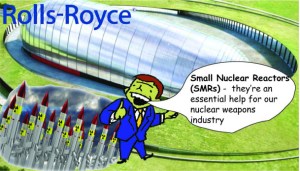 Rolls-Royce and Exelon sign MoU on nuclear power stations operations, Power Rolls-Royce and Exelon sign MoU on nuclear power stations operations, Power Technology, 9 November 2020 ,Industrial technology company Rolls-Royce has signed a memorandum of understanding (MoU) with Exelon Generation for the operation of compact nuclear power stations in the UK and overseas locations. Technology, 9 November 2020 ,Industrial technology company Rolls-Royce has signed a memorandum of understanding (MoU) with Exelon Generation for the operation of compact nuclear power stations in the UK and overseas locations.
Industrial technology company Rolls-Royce has signed a memorandum of understanding (MoU) with Exelon Generation for the operation of compact nuclear power stations in the UK and overseas locations.
Under the contract, Exelon Generation agreed to assist Rolls Royce in the development and deployment of UK small modular reactors (UKSMR)……
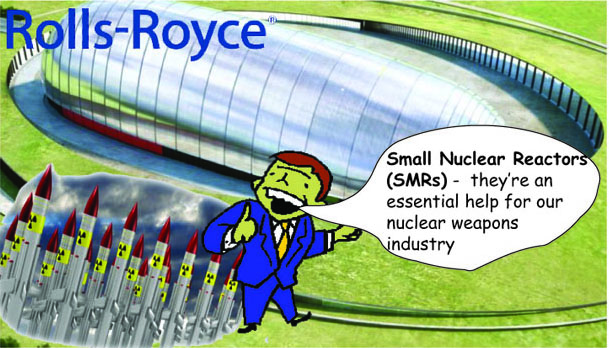
In January, Rolls-Royce announced that it will be leading a consortium to build and install small modular reactors (SMRs) on former nuclear sites to power the UK by 2029.
Members part of the consortium are Assystem, Atkins, BAM Nuttall, Jacobs, Laing O’Rourke, National Nuclear Laboratory, Nuclear Advanced Manufacturing Research Centre, Rolls-Royce and TWI.
Working with its partners, as well as the UK government, the consortium will secure a commitment for a fleet of factory-built nuclear power stations, each with a 440MW capacity, developed inside a weatherproof canopy…….. https://www.power-technology.com/news/rolls-royce-exelon-mou/
|
|
November 10, 2020
Posted by Christina Macpherson |
marketing, Small Modular Nuclear Reactors, UK |
Leave a comment

 China and Russia lead world ranking for supplying new nuclear reactors, Bloomberg, 9 Nov 20, Source: UxC ResearchThe former Cold War frontier of eastern Europe is becoming a battleground in the $500 billion business of building nuclear power plants.
Four months after lifting a prohibition on financing nuclear-energy deals overseas, the U.S. is finding an opening for companies such as General Electric Co., Westinghouse Electric Co. and Bechtel Group Inc.
In the span of a few weeks, the U.S. signed a memorandum with Romania for the financing of a new reactor and other accords with Poland as well as Bulgaria, which plans to revive an older reactor project.
The plan to win business for U.S. companies in this geopolitically key market started under Donald Trump is poised to survive the transition to a new U.S. administration under President-elect Joe Biden. That may nudge eastern European partners to move forward with stalled nuclear projects.
Greater access to financing may be the chief advantage on the American side as it pushes back against Russian and Chinese interests in the region.
“The projects in countries such as Romania, Bulgaria and Poland could be accelerated if the U.S. helps them come up with funding sources at competitive costs and, eventually, without the need for state aid or guarantees,” said Razvan Nicolescu, a Bucharest-based partner at Deloitte specializing in the energy industry.
Eastern European nations, which are dependent on fossil fuels from Russia and their own coal deposits, have even more reasons than others to seek nuclear options. Being subject to stringent European Union emissions standards also creates additional incentives.
The recent change in regulation is allowing the U.S. to compete for a larger share of the market, whose value it estimates at $500 billion-$740 billion over the next 10 years.
Barriers to expansion remain formidable.
Westinghouse, which was one of the leading nuclear industry suppliers in the U.S., went bankrupt in 2017 as it faced billions in potential liabilities related to domestic projects in Georgia and South Carolina. After the South Carolina project was canceled in 2017, the two at Southern Co.’s Plant Vogtle remained the only reactors under construction in the world using Westinghouse’s flagship AP1000 technology, though that is also behind schedule and over budget.
Political rhetoric may prevail over actual investment decisions, said Martin Vladimirov, an analyst at the Sofia-based Center for the Study of Democracy.
“While the U.S. seeks to counter Russian and Chinese economic interference, those projects may not follow the market logic and will need significant state support,” Vladimirov said.
Nuclear Love Affair in Europe’s Poorer East Is Hitting the Rocks
Russia doesn’t see current U.S. nuclear deals in Europe as a threat to its flagship Rosatom Corp. because the U.S. companies don’t have the bandwidth to build new plants now, a government official close to Russia’s nuclear industry said. The U.S. projects in Europe will likely be limited to servicing agreements, the official added, asking for anonymity as they’re not authorized to speak publicly.
State-owned Rosatom itself also played down the risk from increased competition, saying there’s room for many projects in the region.
“We believe that the U.S. nuclear sector has a great potential,” Rosatom said. “The most important thing now for the U.S. vendors is to grow skills by building more in the markets where they have presence and experience.”
Romania’s need to refurbish an existing reactor makes it the most likely candidate to tap U.S. funding or start work with backing from the U.S., Canada and France. There are bigger doubts over the economics and political will behind the nuclear push announced by Poland and Bulgaria.
Some have stuck by Russia as their main technological and financing partner, such as Hungary for its 10 billion-euro ($12 billion) nuclear expansion deal, though GE will get a chance to supply turbines there.
Others have turned away from the long-standing deals with Russia and rebuffed newer attempts by China to step in as financier and supplier.
Funding will be the key determinant whether these projects can get off the ground, according to Bloomberg Intelligence analyst Elchin Mammadov.
“It’s a very risky and expensive venture that is unlikely to be funded by anyone but the state,” Mammadov said.
Even with state backing, most of the projects flagged across eastern Europe may face years of delay and many may be eventually abandoned.
Russia and China have an edge because they offer package deals. The U.S. is “entirely absent” from the global new build reactor market, the U.S. Energy Department said in an April report.
The U.S. has “lost its competitive global position as the world leader in nuclear energy,” the American department concluded.
— With assistance by Will Wade, Zoltan Simon, Maciej Martewicz, Daryna Krasnolutska, Stepan Kravchenko, and Zoe Schneeweiss https://www.bloomberg.com/news/articles/2020-11-09/u-s-goes-nuclear-to-compete-with-russia-china-in-europe-s-east
November 10, 2020
Posted by Christina Macpherson |
marketing, Russia, USA |
Leave a comment

First major modular nuclear project having difficulty retaining backers, The complicated finances of the first major test of small modular nuclear reactors. https://arstechnica.com/science/2020/11/first-major-modular-nuclear-project-having-difficulty-retaining-backers/ JOHN TIMMER – 11/8/2020,
Earlier this year, the US took a major step that could potentially change the economics of nuclear power: it approved a design for a small, modular nuclear reactor from a company called NuScale. These small reactors are intended to overcome the economic problems that have ground the construction of large nuclear plants to a near halt. While each only produces a fraction of the power possible with a large plant, the modular design allows for mass production and a design that requires less external safety support.
But safety approval is just an early step in the process of building a plant. And the leading proposal for the first NuScale plant is running into the same problem as traditional designs: finances.
The proposal, called the Carbon Free Power Project, would be a cluster of a dozen NuScale reactors based at Idaho National Lab but run by Utah Associated Municipal Power Systems, or UAMPS. With all 12 operating, the plant would produce 720MW of power. But UAMPS is selling it as a way to offer the flexibility needed to complement variable renewable power. Typically, a nuclear plant is either producing or not, but the modular design allows the Carbon Free Power Project to shut individual reactors off if demand is low.
But keeping a plant idle means you’re not selling any power from it, making it more difficult to pay off the initial investment made to produce it and adding to the financial risks. Further increasing risk is the fact that this is the first project of its kind—the NuScale website lists it as “
NuScale’s First Plant.” All of this appears to be making things complicated for the Carbon Free Power Project.
According to one report, the US Department of Energy had originally planned to purchase the first reactor for research use, then turn it over to UAMPS. But now, the goal is apparently for the DOE to provide an annual supplement of about $130 million a year for a decade. However, that would be dependent upon annual renewals of the funding by Congress during that decade, which is yet another risk. Separately, to reach a target price for the power that is expected to be competitive with natural gas, the project has been made larger and its completion delayed by three years.
UAMPS runs a number of generating stations (many of them coal-based) that collectively serve needs throughout the US West from Wyoming and New Mexico to California. It distributes the power from these plants to small public utilities that often service a single small city. For the Carbon Free Power Project, UAMPS has been relying on those cities to buy a share of the project in return for a proportional share of the plant’s final generating capacity. With the changes in price and funding, a number of those utilities are dropping out.
There’s still plenty of time for UAMPS to find other participants among other utilities that it counts as customers, given that the plant isn’t expected to come online until 2030. But the financial challenges suggest that small modular nuclear plants may struggle to get off the ground.
That shouldn’t be unexpected, as utilities are notoriously conservative—justifiably so, considering how much their customers rely on electricity. So any new electrical technology is likely to face some struggles as its customers learn to use it effectively and understand how to extract the most value out of it. Typically, the government steps in to provide some support during this awkward phase, as it has done for wind and solar, and plans to do for NuScale.
That said, a decade is a long way out for the completion of the first plant, given the trajectories that wind, solar, and storage prices have taken. Perhaps as critically, most utilities are already done with the learning period needed to use variable renewables effectively, when that period will only start for small modular reactors in 2030. It’s entirely possible that we’ll be ready to move forward with this nuclear technology at roughly the same time we’re becoming confident that we won’t need much of it.
November 9, 2020
Posted by Christina Macpherson |
business and costs, politics, Small Modular Nuclear Reactors, USA |
Leave a comment
|
 Covid-19 divides and weakens the nuclear sector in South Africa, Daily Maverick, By Chris Yelland• 5 November 2020 Covid-19 divides and weakens the nuclear sector in South Africa, Daily Maverick, By Chris Yelland• 5 November 2020
The coronavirus crisis is undermining the business plan and turnaround strategy at the Nuclear Energy Corporation of South Africa. The resulting losses are creating debilitating divisions between labour, middle and senior management, executives and boards of Necsa and its subsidiaries – as well as wage increases
Following a tumultuous operational and management period for several years, with massive financial losses, new Nuclear Energy Corporation of South Africa (Necsa) chairperson David Nicholls and acting CEO Ayanda Myoli presented a restructuring and turnaround plan to Parliament on 20 May 2020………
While many considered the turnaround plan to be hopelessly optimistic even before the Covid-19 crisis in South Africa from March 2020, the impact of the national and international lockdowns are estimated to have resulted in the Necsa group taking a massive hit, which would increase the expected loss for 2020/21 to more than R300-million. ……
While many considered the turnaround plan to be hopelessly optimistic even before the Covid-19 crisis in South Africa from March 2020, the impact of the national and international lockdowns are estimated to have resulted in the Necsa group taking a massive hit, which would increase the expected loss for 2020/21 to more than R300-million. https://www.dailymaverick.co.za/article/2020-11-05-covid-19-divides-and-weakens-the-nuclear-sector-in-south-africa/
|
|
November 7, 2020
Posted by Christina Macpherson |
business and costs, health, politics, South Africa |
Leave a comment
No need for nuclear power, Craven Herald and Pioneer By Lesley Tate, Senior Reporter, 6 Nov 20,
Cllr David Noland, Skipton  North writes,
” ………The Green Party have been arguing for many years in recognition of the work by Friends of the Earth, the Centre for Alternative Technology (CAT) in Wales and many others, that we do not need ‘further expansion of nuclear and gas turbines’ but to be far more clever about our energy use, easy to do now that renewables are cheaper than nuclear and new gas.
CAT has been at the forefront of development of research on renewable technology and Green building for some 50 years.
Their latest report ‘Zero Carbon Britain (Rising to the Climate Emergency)’ clearly demonstrates that the UK has the tools and technology to efficiently power this country with 100 per cent renewable technology (read the executive summary, it’s only eight pages long).
By using energy more efficiently we can power down by 60 per cent with particularly large savings in heating buildings and transport.
There is absolutely no need for nuclear power in our energy mix and we cannot afford it, let alone pay for cleaning up the sites at the end which taxpayers always end up paying for.
Nuclear now costs twice the price of renewables and the gap is growing.
How many Herald readers know that the electricity from the Hinkley Point nuclear reactor will cost UK consumers £92.50 per Kwh (the most recent offshore wind turbine fields are half of this)?
The deal was signed by (former Prime Minister) Theresa May and supported by Labour and Lib Dems.
The profits are going to the Chinese government which will run it for 40 years. The French firm (EDF) that has been building Hinkley Point and wants to build more nuclear reactors in the UK wants to cushion the financial blow of future nuclear power stations in this country by charging electricity customers a few extra pounds every month on their bill even now.
This is referred to as a new funding model, I’d call it a rip-off. Are people really happy to put billions of pounds into the coffers of the Chinese government and EDF rather than invest, as part of a Green New Deal, in insulation and draught-proofing of UK homes to keep us warmer, take over two and a half million households out of fuel poverty and permanently reduce everyone’s fuel bills. https://www.cravenherald.co.uk/opinion/opinion_letters/18824349.letter-no-need-nuclear-power/
November 7, 2020
Posted by Christina Macpherson |
business and costs, politics, UK |
1 Comment
|
DOE to submit ‘nuclear power plan’ to Duterte this December, Manila Bulletin, November 6, 2020, by Myrna M. Velasco” For BNPP’s repowering, Duterte previously instructed the energy department to also undertake a study on that proposal; and to assess the cost impact that will have on consumers’ pockets.
But on that particular sphere, Senate Committee on Energy Chairman Sherwin T. Gatchalian sounded off cynicism on claims that electricity rates in the Philippines will go down with the proposed repowering of the mothballed 620-megawatt BNPP project.
“It’s not true that prices are lower because of the layers of technology that shall be integrated into the nuclear power facility to ensure its safe operations,” he claimed.
Gatchalian noted that in Vietnam’s case, that country shelved its planned nuclear power development after determining that the resulting power price will just be comparable with other electric generating facilities — and yet there’s great degree of risk that they have to manage on the safety aspect of technology deployment.
………In the Philippines, the propounded revival of BNPP’s operations had been hurdled by concerns of ‘social acceptance’ in the many years that already passed; and there are also questions on where to source the US$1.0 billion to US$2.0 billion funding for BNPP’s rehabilitation.The other major issue is which entity shall be designated to operate the plant, since the Electric Power Industry Reform Act (EPIRA) already prohibits state-run National Power Corporation (NPC) from engaging into operation or investments in power generation…
|
|
November 7, 2020
Posted by Christina Macpherson |
business and costs, Philippines, politics |
Leave a comment

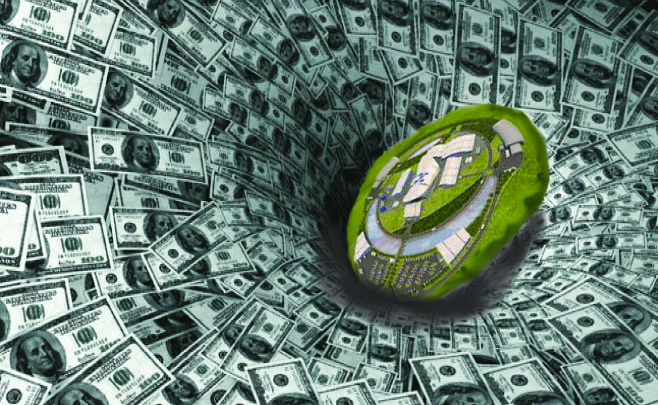
Several U.S. utilities back out of deal to build novel nuclear power plant, Science, By Adrian Cho, Nov. 4, 2020 Plans to build an innovative new nuclear power plant—and thus revitalize the struggling U.S. nuclear industry—have taken a hit as in recent weeks: Eight of the 36 public utilities that had signed on to help build the plant have backed out of the deal. The withdrawals come just months after the Utah Associated Municipal Power Systems (UAMPS), which intends to buy the plant containing 12 small modular reactors from NuScale Power, announced that completion of the project would be delayed by 3 years to 2030. It also estimates the cost would climb from $4.2 billion to $6.1 billion………. critics of the project say the developments underscore that the plant, which is designed by NuScale Power and would be built at the Department of Energy’s (DOE’s) Idaho National Laboratory, will be untenably expensive. M. V. Ramana, a physicist who works on public policy at the University of British Columbia, Vancouver, says he’s not surprised that so many utilities have opted out of the project. The question, he says, is why so many are sticking with it. “They ought to be seeing the writing on the wall and getting out by the dozens,” he says. ………
if the NuScale plant doesn’t run constantly at full output, it will be less efficient and even more expensive to operate, in terms of cost per megawatt hour (MWh) of energy, Ramana argues. Peter Bradford, a former member of the Nuclear Regulatory Commission (NRC) and former chair of the state utility commissions in Maine and New York, says renewables coupled with short-term storage in batteries would likely be a cheaper means to even out the supply…….
in the 1980s, Washington Public Power Supply System agreed to build several nuclear reactors in Washington that ran far overbudget and were never completed, leading to the biggest default on municipal bonds in U.S. history. Public utilities are particularly vulnerable to such risks, Bradford says, as other than ratepayers they have few sources of revenue that could be used to cover cost overruns. “Not only are there no deep pockets, there are no pockets,” he says.
On 28 October, Heber Light & Power in Utah withdrew from the project, just 1 day after utilities in the Utah communities of Bountiful and Beaver pulled out. Still, even critics doubt the UAMPS deal will fall apart immediately. In August, the NuScale design passed a key milestone in the NRC review process, receiving its safety evaluation report, and observers expect final “design certification” to come next year. In the meantime, UAMPS is moving to complete an application to construct and operate the plant, Webb says. That application should be submitted in 2023, construction of the plant should start in 2025, he says.
Before construction can start, however, UAMPS still has to line up customers to buy the full 720-megawatt output of the plant, Webb says. So far, UAMPS members involved in the project have agreed to take only a relatively small fraction of that output. So UAMPS may have to convince plenty of other folks that it’s a good deal. https://www.sciencemag.org/news/2020/11/several-us-utilities-back-out-deal-build-novel-nuclear-power-plant
|
|
November 5, 2020
Posted by Christina Macpherson |
business and costs, Small Modular Nuclear Reactors, USA |
Leave a comment
Exelon May Split Its Utilities From Nuclear, Generation BusinessExelon’s mulls a split for its generation business with two Illinois nuclear plants facing closure and others struggling. GTM, JEFF ST. JOHN NOVEMBER 04, 2020 Exelon Corp. confirmed Tuesday that it is exploring a plan to separate its multistate utilities businesses from its generation business, which is preparing to close two of its 21 nuclear power plants due to money-losing market conditions.CEO Chris Crane confirmed the “review of our corporate structure,” first reported to be underway by
Bloomberg last month, during the Chicago-based company’s
third-quarter earnings conference call. The move comes as Exelon is struggling with profitability at several of its nuclear plants, which face falling energy prices and challenging conditions in the capacity market run by mid-Atlantic grid operator PJM.
Exelon has secured zero-emissions credits for financially struggling nuclear plants in New York and New Jersey, two states seeking to eliminate their carbon emissions by midcentury, and has won similar credits as part of Illinois’ 2016 Future Energy Jobs Act that supply about $235 million per year in zero-emissions credits to its Clinton and Quad Cities nuclear plants.
But Exelon has not secured subsidies for four other Illinois nuclear power plants, including the Byron and Dresden facilities. In August it announced it will close those plants in 2021 and may also seek early retirement of its Braidwood and LaSalle power plants unless it can obtain state support to bolster their economics. ………
State support for zero-carbon nuclear scrambled by bribery scandal
Exelon had gathered support last year for a bill that would have created a new state capacity market structure to bolster its nuclear fleet’s revenues. This “Fixed Resource Requirement,” or FRR, structure would have pulled some plants out of
PJM’s capacity market, where they are likely to struggle to compete under
federally mandated rules that will force state-subsidized resources to adhere to minimum bids that could undermine their competitiveness against fossil-fueled power plants .
But the FRR plan contained in last year’s Clean Energy Jobs Act lost lawmaker support in the wake of Exelon utility ComEd’s connection to a federal bribery investigation alleging the utility steered jobs, contracts and payments to House Speaker Michael Madigan in exchange for favorable treatment in the state capitol. Exelon agreed to pay a $200 million fine and submit to a deferred prosecution agreement this summer.
Gov. Pritzker has so far rebuffed Exelon’s entreaties for state aid for its nuclear power plants, calling its August decision to close the Byron and Dresden plants a “threat.” Pritzker’s office has proposed a
clean energy plan laying out his preferred path for achieving the state’s decarbonization goals, after the Clean Energy Jobs Act and a rival clean energy bill, dubbed Path to 100, were unable to advance during this year’s legislative session, which was dominated by issues related to the
COVID-19 pandemic.
November 5, 2020
Posted by Christina Macpherson |
business and costs, USA |
Leave a comment