Japanese engineering firm EPC joins with NuScale in small modular reactor investment

Japanese EPC firm takes $40M stake in nuclear SMR developer NuScale Power, Power EngineeringBy Rod Walton -4.5.2021
| A Japanese energy project engineering, procurement and construction (EPC) contractor is the latest industry firm making a major investment in a nuclear small modular reactor (SMR) firm. Majority investor Fluor Corp. announced Monday that JGC Holdings Corp. invested $40 million in NuScale Power LLC. NuScale is a SMR developer which already is reachintg U.S. federal regulatory approval to move forward on project deployment. Portland, Oregon-based NuScale will advance its global development with investments and EPC partnerhips with companies like JGC and Fluor………. https://www.power-eng.com/nuclear/japanese-epc-firm-takes-40m-stake-in-nuclear-smr-developer-nuscale-power/ |
No market for small nuclear reactors, so no justification for setting up factories to make them.
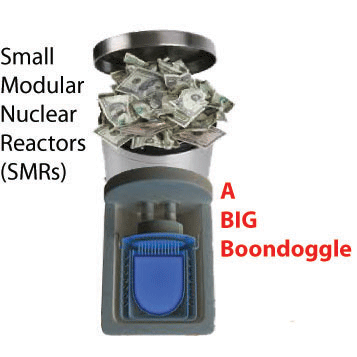
IEEE 9th March 2021, Small modular and advanced nuclear reactors have been proposed as potential ways of dealing with the problems—specifically economic competitiveness, risk of accidents, link to proliferation and production of waste—confronting nuclear power technology. This perspective article examines whether these new designs can indeed solve these problems, with a particular focus on the economic challenges.
It briefly discusses the technical challenges confronting advanced reactor designs and the many decades it might take for these to be commercialized, if ever. The article explains why the higher construction and operational costs per unit of electricity generation capacity will make electricity from small modular reactors more expensive than electricity from large nuclear power plants, which are themselves not competitive in today’s electricity markets.
Next, it examines the potential savings from learning and modular construction, and explains why the historical record suggests that these savings will be inadequate to compensate for the economic challenges resulting from the lower generation capacity. It then critically examines arguments offered by advocates of these technologies about job creation and other potential uses of energy generated from these plants to justify subsidizing and constructing these kinds of nuclear plants. It concludes with an assessment of the markets for these technologies, suggesting that
these are inadequate to justify constructing the necessary manufacturing facilities.
https://ieeexplore.ieee.org/document/9374057
German government settles disputes with nuclear plant operators
German govt decides amended nuclear law, settles disputes with plant operators, https://www.cleanenergywire.org/news/german-govt-decides-amended-nuclear-law-settles-disputes-plant-operatorsClean Energy Wire 24 Mar 21,
Germany’s government cabinet today approved an amendment to the Nuclear Energy Act which provides for financial compensation to nuclear power plant operators due to the country’s phase-out decision of 2011. Plant operators will be compensated with a total of 2.4 billion euros for the amount of electricity they couldn’t sell and devalued investments, government ministries had announced earlier this month.
An amendment of the existing compensation rules was necessary after Germany’s highest court ruled in November 2020 that the compensation clauses in the nuclear exit law are unconstitutional. While the ruling left the general nuclear phase-out decision and timetable untouched, it forced the government to revisit the law again. Now the government also announced that it had agreed with energy companies EnBW, E.ON/PreussenElektra, RWE and Vattenfall to set the actual amounts of compensation and in return have the companies settle all related legal disputes.
Environment minister Svenja Schulze, whose ministry drafted the amendment said in a press release: “It is good that we are now finally drawing a line under the protracted legal disputes. This is happening at a price that is significantly lower than the energy suppliers’ original demands.”
Germany will pay compensation totalling about 2.428 billion euros. Vattenfall will receive 1.425 billion euros, RWE 880 million euros, EnBW 80 million euros and E.ON/PreussenElektra 42.5 million euros. The compensation is granted primarily for electricity volumes that cannot be used in the group’s own nuclear power plants (RWE and Vattenfall) – a total of about 2.3 billion euros – and for devalued investments in the lifetime extension withdrawn by the German Bundestag (EnBW, E.ON/PreussenElektra and RWE).
Germany’s accelerated nuclear exit was passed by a large majority in parliament in 2011. The last nuclear reactor will go offline at the end of 2022.
Minister Svenja Schulze said that, with the accelerated nuclear phase-out, Germany has created “predictability and reliability on the energy market and cleared the way for electricity from wind and sun”. Johannes Teyssen, CEO of German energy company E.ON, told business daily Handelsblatt that days of nuclear energy are numbered, as no business-oriented company will invest in it. “If nuclear power plants are still being built anywhere, it will be by state-owned companies or with massive state support,” he said, and added it is “too expensive, too risky and too politically explosive”. Teyssen also said he was sceptical of plans for small nuclear power units.NEWS
Investment advice? Some big worries against investing in nuclear power
 IW Long Reads: Is Nuclear Energy On The Road To Ruin Or A Sustainability Silver Bullet? How the world can reach net zero target without resorting to nuclear power, Investment Week, Anna Fedorova-22Mar 21, Anyone who has seen the TV series Chernobyl knows that when things go wrong with nuclear power the consequences are dire. And while it may seem that matters have evolved since the days of the Soviet Union, the nuclear disaster in Fukushima that happened just ten years ago suggests otherwise.
For example, even when nuclear reactors are running properly, they use “tremendous amounts of water to cool the reactors”, while mining and refining the Earth’s finite resources of uranium ore also requires a large amount of energy.
And of course, there is the question of waste management over many generations, given that uranium rods remain dangerously radioactive for 10,000 years.
“There are also second order effects to investment in nuclear energy such as the certainty that this research can be used to create nuclear weapons and that plants are a high value targets should a war break out,” Stuart adds.
“Disruption in a nuclear plant invariably won’t remain within country borders so there is also the issue of diplomacy to consider. In short, nuclear is a textbook example of a controversial stock and any investor would be wise to question its place in an ESG portfolio.” ……………….
the balance is expected to shift towards renewables, which is expected to lead to a decentralisation of the power grids, posing further challenges for nuclear.
Jonathan Cohen, partner at Howard Kennedy, says: “Currently, nuclear power projects are being developed at very high costs and it is difficult to finance new projects without large state expenditure.
……………wide scale support from the private sector just is not there, with investors increasingly choosing to stay on the safe side and invest in renewables instead.
Robeco, for example, excludes electricity utilities that generate more than 30% of their power from nuclear sources from all of its sustainable strategies, and does not invest in nuclear power at all in its RobecoSAM Smart Energy Equities strategy.
This decision is driven by a combination of “unique risks”, negative environmental impacts, relatively high costs of nuclear and the “impressive technological and cost developments in both renewables and storage technologies”.
Mark Campanale, founder of the Carbon Tracker Initiative, says: “Our view is that given so many cheaper renewable energy resources available, why would anyone want to go to the expense of what is an uncompetitive technology on price, one which takes hundreds of years to clear up its waste?”
According to Eduardo Monteiro, co-CIO at Victory Hill Capital Advisors, even if nuclear is to play a “robust role” in a country’s energy supply, it has too many shortcomings as a sustainable investment alternative, and should therefore be avoided.
“The waste generated will be a legacy for future generations to deal with and as such investors need to think about the very real negative impact these holdings will have in both the broader sense but also to financial returns,” he says.
“Such managers may naturally prefer to invest in renewables to support their interpretation of ESG investing and the transition to ‘clean’ energy more widely,” he says. https://www.investmentweek.co.uk/analysis/4028635/iw-long-reads-nuclear-energy-road-ruin-sustainability-silver-bullet
US Nuclear Corp signs agreements with Chinese nuclear corporation
US Nuclear Completes $256,626 Shipment to China, Signs New Agreement With CNNC Subsidiary, Intrado, March 22, 2021 LOS ANGELES, CA, (GLOBE NEWSWIRE) — via NewMediaWire – US Nuclear Corp. (OTCQB: UCLE) recently completed a shipment to China of USN’S popular tritium and carbon-14 air samplers as well as portable tritium monitors worth a total of $256,626.
Furthermore, as part of US Nuclear’s expansion into the Chinese market, US Nuclear signed a new “Cooperation Agreement” on March 1, 2021 with Dalian Zhonghe Scientific and Technological Development Co., a subsidiary of China National Nuclear Corporation (CNNC). Together, the companies will work to design the perfect instrumentation to outfit Chinese nuclear power plants. The instruments are planned to be built at a local factory in China to be cost-competitive and will be optimized for Chinese operators based on the local regulations and procedures. This can be a game changer since currently 80% of nuclear instruments purchased are imported into China at a high cost, and the functionality often does not fit local procedures, regulations, and language.
US Nuclear already has a local sales office in Beijing, China, and this new cooperation agreement with Dalian Zhonghe will help US Nuclear capture even more of the burgeoning market for nuclear power and radiation detection equipment in China.
The China National Nuclear Corporation (CNNC) controls most nuclear sector business including R&D, engineering design, uranium exploration and mining, enrichment, fuel fabrication, reprocessing, and waste disposal. It is also said to be the major investor in all nuclear plants in China.
China’s Nuclear Power Measurement Market
China is by far the world’s most active builder of nuclear power with plans to surpass the U.S. as the world’s top producer of nuclear energy by as early as 2030…………
China National Nuclear Corporation (CNNC) designs and builds nuclear power plants and oversees all aspects of China’s civilian and military nuclear programs. ……… China National Nuclear Corporation (CNNC) designs and builds nuclear power plants and oversees all aspects of China’s civilian and military nuclear programs. https://currently.att.yahoo.com/att/us-nuclear-completes-256-626-123000822.html
Delay in construction of Vogtle nuclear station – every day extra means additional costs to customers
|
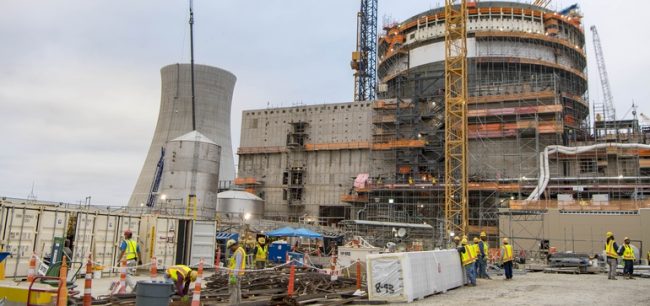
Southern Company identifies ‘likely’ nuclear construction delay on Vogtle unit, Utility Dive, 22 Mar 21, Iulia Gheorghiu @IMGheorghiu
Dive Brief:
“Every day that that unit is delayed means additional cost burdens are going to get thrust on customers,” David Rogers, Southeast deputy regional director for Sierra Club’s Beyond Coal Campaign, said. “We could find cheaper, more effective ways to meet any needs that [Unit 3] fills by using things like wind, solar, storage, [and] energy efficiency.”……. https://www.utilitydive.com/news/southern-company-identifies-likely-nuclear-construction-delay-on-vogtle-u/597095/
|
|
The economics of nuclear power plants are not favorable to future investments
Investing into third generation nuclear power plants – Review of recent trends and analysis of future investments using Monte Carlo Simulation https://www.sciencedirect.com/science/article/abs/pii/S1364032121001301 Renewable and Sustainable Energy Reviews Volume 143, June 2021, 110836 Author links open overlay panelB.WealerabS.BauerbC.v.HirschhausenabC.KemfertacL.Göke
Highlights
- •Cost escalations in the nuclear sector observed in previous research continue until today.
- •Investing into a nuclear power plant today is not a profitable business case.
- •The net present values are mainly negative, in the range of five to ten billion USD.
- •Interest during construction is a major cost driver not to be underestimated.
- •Policy debates should consider total costs including interest and construction time.
Abstract
This paper provides a review of trends in third generation nuclear power plants, and analyzes current and future nuclear power plant investments using Monte Carlo simulations of economic indicators.
We first review global trends of nuclear power plant investments, including technical as well as economic trends. The review suggests that cost escalations in the sector observed in previous research continue until today, including the most recent investment projects in the U.S. and in Europe.
In order to extend this analysis, we carry out our own investment analysis of a representative third generation nuclear power plant, focusing on the net present value and the levelized cost of electricity. We base our analysis on a stochastic Monte Carlo simulation to nuclear power plant investments.
We define and estimate the main drivers of our model: Overnight construction costs, wholesale electricity prices, and weighted average cost of capital, and discuss reasonable ranges and distributions of those parameters.
Model runs suggest that investing in nuclear power plants is not profitable, i.e. expected net present values are highly negative, mainly driven by high construction costs, including capital costs, and uncertain and low revenues.
Even extending reactor lifetimes does not improve the results significantly. We conclude that our numerical exercise confirms the literature review, i.e. the economics of nuclear power plants are not favorable to future investments, even though additional costs (decommissioning, long-term storage) and the social costs of accidents are not even considered.
Georgia’s Vogtle nuclear station likely to again miss a deadline
Georgia Power now says Vogtle nuclear ‘likely’ to bust deadline, GEORGIA NEWS, March 20, 2021, By Matt Kempner, The Atlanta Journal-Constitution GEORGIA NEWS Company cites need for ‘remediation’ work to meet standards
Many other electric providers in Georgia, including municipal systems and electric co-ops, are also contractually tied to the Vogtle expansion.
The new reactors at Vogtle, located south of Augusta, have yet to generate electricity, but monthly bills for Georgia Power customers already include charges related to
If the project is further delayed, Georgia Power faces the prospect of a short-term cut in its government-allowed profits. Long term, though, higher costs on the project
France must restructure debt-laden EDF (Electricite de France) and reform nuclear sector by October
Reuters 17th March 2021, France’s parliament must pass a bill on reforming utility EDF and the country’s sprawling nuclear sector by October if the plan is to be agreed in time for a presidential election in 2022, the prime minister’s office said on Wednesday.
The reforms, which have sparked wrangling with the European Union and labour unions, involve raising price guarantees on nuclear power that state-controlled EDF sells to third-party providers, helping the debt-laden utility cover its costs.
The government has recapitalised EDF in the past and has for now agreed to take dividend payouts in shares to alleviate pressure on the company’s finances.
A crowded parliamentary agenda is piling pressure on France to reach a deal quickly with antitrust authorities in Brussels over the restructuring of EDF, the first step needed before reforms can go ahead. Sources told Reuters last week that talks between Paris and the European Commission had entered a make-or-break phase, with end-March seen as a deadline to reach an agreement over antitrust and state aid issues or abandon the plan for now.
Nuclear power losing out in the UK – not a good omen for the global nuclear industry
 Seeking Alpha 13th March 2021, My comments on offshore wind making other forms of energy uncompetitive in 2017 have only become more clear in the past 3 years. Now the adoption ofnoffshore wind is happening elsewhere around the world including in the US, Japan, South Korea, Taiwan, China, India.
not one, but 16 of these plants with a capacity of 440 MW at a cost of 2 billion pounds each.
The Rolls Royce strategy is that by building multiple SMRs it will get good at it and the cost might go down. The reality behind this proposal is that it seems pretty ambitious to set out to build 16 plants before one has been successfully constructed. Time seems against this concept as the UK will have largely exited nuclear power by 2030.
Fukushima nuclear accident costs so far $188billion, projected final costs of $740 bn.
 David Lowry’s Blog 10th March 2021, Pediatrician Dr Alex Rosen, a leading figure in the German branch of the International Physicians for the Prevention of Nuclear War (IPPNW) said it was “luck and divine intervention” that wind from the west blew most of the radiological releases out over the Pacific Ocean, meaning the Fukushima accident released more radioactivity to the oceans than the Chernobyl accident and all the nuclear weapons tests together.
Buffett Institute for Global Affairs located in Evanston, Illinois, and the Bulletin for the Atomic Scientists, based in Chicago, to launch a new international interdisciplinary collaborative study on “Nuclear Disaster Compensation: Lessons from Fukushima: Interviews with Experts and
Intellectuals, edited by anthropology professor Hirokazu Miyazaki.
http://drdavidlowry.blogspot.com/2021/03/nuclear-fuk-ed.html
Cash-strapped Japanese nuclear company funds road plans near idle nuclear plant
Cash-strapped JAPC funds road plans near idle nuclear plant, THE ASAHI SHIMBUN
March 8, 2021, TSURUGA, Fukui Prefecture—Multibillion-yen road projects continue on a peninsula here, funded in part by a nuclear power company that has gained no income from electricity for a decade.
The roads were planned decades ago for the expected expansion of the Tsuruga Nuclear Power Plant here. Although all nuclear operations and construction at the nuclear plant have long been halted, the work on the roads has not stopped.
“We are building a new road,” said a signboard near an area where heavy vehicles were removing dirt from the site of a planned tunnel in the city of Tsuruga, Fukui Prefecture, in mid-February.
The sign included an apology for causing an inconvenience to motorists.
The city roads being built are Nishiura Route No. 1 and No. 2 on the sparsely populated eastern side of a peninsula that juts out into the Sea of Japan separating Wakasa and Tsuruga bays.Japan Atomic Power Co. (JAPC) and Kansai Electric Power Co. (KEPCO) plan to provide 1.5 billion yen ($14 million) to Tsuruga for road construction from fiscal 2018 to fiscal 2021, according to sources.
JAPC owns three nuclear reactors, including two at the Tsuruga Nuclear Power Plant. But all three reactors have been shut down since the 2011 Fukushima disaster, meaning that JAPC has had zero income from electric power generation for a decade.
The neighboring town of Mihama hosts the KEPCO-run Mihama Nuclear Power Plant, which has also been shut down since 2011.
So where does JAPC’s money for the roads come from?
JAPC had derived income from selling its electricity to five major utilities—Tokyo Electric Power Co., KEPCO, Tohoku Electric Power Co., Hokuriku Electric Power Co. and Chubu Electric Power Co. After the Fukushima nuclear disaster, JAPC’s management has relied on the basic electricity rates paid by the five major electric companies.
The basic rates come mainly from electricity bills that consumers pay.
Some experts are concerned that JAPC’s continued generous aid for road construction could affect the electricity rates charged by the five utilities.
The plans to build the two city roads were hatched around 1993, when the Fukui prefectural assembly passed a resolution to build the No. 3 and No. 4 reactors at the Tsuruga plant.
The work was expected to increase traffic of large vehicles into the peninsula………..By fiscal 2021, JAPC and KEPCO will have provided 4.06 billion yen to the city for the road construction.
After fiscal 2022, the city government said it will tell the companies how much they should pay “from fiscal year to fiscal year.”
JAPC shoulders 58 percent of the costs, while KEPCO pays 42 percent. The ratio “was decided by the business operators,” and the city government “does not know how it was decided,” an official said.
After its reactors were shut down and its business conditions deteriorated, JAPC was criticized for providing such generous donations to Tsuruga.
JAPC in 2013 demanded that the city not list its donations in the financial document, and the payments were not recorded in fiscal 2012 and fiscal 2013, the sources said.
……… KEPCO’s public relations office said the company “will be actively involved in” the city’s road construction projects, but declined to reveal the amount it has provided.
As of the end of January this year, there were 520 people living in the peninsula registered as residents of Tsuruga. The peninsula has hosted seven nuclear reactors, of which five have been under decommissioning work.
The planned city-owned Nishiura Route No. 2 will be 800 meters long. The construction site is located north of the center of the Tsuruga city.
The estimated cost to build this road is 1.46 billion yen.
A former Fukui prefectural official who was familiar with the deal-making process said.
JAPC offered the money “as a quid pro quo for the city’s acceptance of the nuclear plant’s expansion plan.”
The innkeeper who wanted the roads in the area also noted that times have changed since the start of construction.
“The traffic of vehicles related to nuclear power plants has drastically decreased compared to the times before the Fukushima accident,” the innkeeper said. “I don’t know if the roads are really needed.”
(This article was written by Hideki Muroya and Tsunetaka Sato.) http://www.asahi.com/ajw/articles/14250714
Nuclear workers plagued by leukaemia, cancers and other illnesses
Some workers developed cancer, leukemia and other illnesses. The same held true for workers at other nuclear facilities across the nation.
The number of potentially eligible workers across the nation is uncertain. Likewise, the number of employees potentially affected at West Valley could be in the thousands when accounting for temporary workers.
“This was particularly troubling if the same workers were hired repeatedly as temporaries and received high doses each time,”
In addition, the exposure of growing numbers of individuals increased the possibility of genetic consequences for the entire population.”
 Cancer plagues West Valley nuke workers https://www.investigativepost.org/2021/03/01/cancer-plagues-west-valley-nuke-workers/
“What we were doing was insane. We were dealing with so much radiation,” he told Investigative Post from his home in New Hampshire.
“I’ve got absolutely no joints left in my knees — my knees are gone, my ankles are gone and my hips are gone,” he said.
“I wonder if it’s from working in that bathtub full of radiation.”
Pyles was one of about 200 full-time employees who operated the former Nuclear Fuel Services reprocessing facility five decades ago in the hamlet of West Valley, where the company partnered with the federal government to recycle used radioactive fuel. Other workers were hired to contain and dispose of the dangerous waste the operation left behind.
Some workers developed cancer, leukemia and other illnesses. The same held true for workers at other nuclear facilities across the nation. As a result, Congress established the Energy Employees Occupational Illness and Compensation Program in 2000.
An Investigative Post review of the program found the government has paid $20.3 million over the last two decades in cases involving at least 59 people who worked at the West Valley site.
In all, individuals have submitted claims involving 280 employees who worked at the bygone reprocessing facility or during the ongoing $3.1 billion taxpayer-funded cleanup. An undetermined number of claims have been denied; the rest are being adjudicated.
Pyles said he was unaware of the program. He isn’t alone.
The Department of Labor’s Office of the Ombudsman has repeatedly criticized outreach efforts in its annual oversight reports. Most of it has been in the form of events held near former sites. Given the passage of time and people’s movement, reaching more eligible workers is a challenge.
The workforce at West Valley involved more than full-timers. About 1,000 temporary laborers were hired by the company in any given year, according to government and media reports from the time.
The use of temporary workers was a common labor practice at the time, but few operations needed to “raise quite so large an army” as Nuclear Fuel Services, according to a Science Magazine report from the era.
The industry had a nickname for them: “sponges.”
They were hired to “absorb radiation to do simple tasks,” according to Dr. Marvin Resnikoff, a radiological waste consultant who co-authored a study of West Valley.
While working at a site like West Valley does not guarantee later illnesses or genetic complications for offspring, each exposure to radiation increases the likelihood of cancer, Resnikoff said.
“It’s what I guess I would call a meat grinder,” he said.
Exposure to radiation
At its groundbreaking in 1963, the Nuclear Fuel Services reprocessing facility was thought to be a harbinger of a coming economic transformation. It closed in less than a decade, however.
Through six years of operation, at least 36 individuals in 13 incidents were exposed to “excessive concentrations” of radioactivity, according to a federal consultant’s report. Nevertheless, government officials at the time reported “no significant improvement in exposure controls or radiological safety conditions.”
The plant opened in the spring of 1966. Used fuel rods, thousands of which are assembled to power a nuclear reactor core, were transported to the plant by rail and truck. Upon arrival, containers were submerged in a 45-foot-deep cooling pool of demineralized water.
The fuel rods were then cut open, chopped up and placed in an acid bath. The solvent separated the used fuel from the reusable uranium and plutonium, which was collected for resale. The radioactive byproduct was pumped into underground tanks for storage.
The plant had handled 630 tons of fuel and produced 660,0000 gallons of liquid waste by 1972, when it was shut down in anticipation of making improvements to increase capacity and meet new regulatory standards.
That’s when Pyles quit.
The former lab supervisor said he was upset at management’s inaction concerning safety issues. Radioactive dust migrated through the ventilation system and accumulated in ducts, federal records said. A single duct was a “primary source of radiation” in the plant on three levels.
Pyles and coworkers absorbed radiation from that duct for five years, he said. They recognized that it posed a danger, but he said management ignored repeated requests to keep the airway flushed.
In response, Pyles said he and his coworkers hammered into the floor quarter-inch sheets of lead, used as temporary shields throughout the plant. When radiation levels went up, another sheet went down, he said. Finally, when the lead was an inch thick, Pyles said there were concerns they’d reached “the load bearing limit of the floor.”
Many unaware of program
Under the terms of its contract with the federal government, Nuclear Fuel Services pulled out of the operation in 1977. Federal and state officials battled over who was responsible for the site, until it was decided by Congressional action five years later.
In 1982, the newly formed U.S. Department of Energy took control of the 200 acres where the reprocessing facility operated. The New York State Energy Research and Development Authority, or NYSERDA, was charged with shutting down the site’s disposal area and stewardship of the 3,345 acres that surround it.
Nationally, the Department of Labor has received claims based on 129,488 former employees and paid $19.1 billion. While substantial, the department’s ombudsman has continually pushed for more resources and outreach efforts.
“While it is clear that those efforts have informed many individuals of the existence of the [program], it is likewise clear that there are still many who are unaware of [the program] and for whom more should be done to address this lack of awareness,” the office said in its most recent report to Congress.
The report cites an email from one frustrated former employee, who learned of the program with his wife by overhearing another couple’s conversation in the lobby of a hotel in Colorado.
“The husband was a former (energy employee),” the email said, concluding: “THIS IS HOW I WAS MADE AWARE OF THIS PROGRAM.”
The number of potentially eligible workers across the nation is uncertain. Likewise, the number of employees potentially affected at West Valley could be in the thousands when accounting for temporary workers. A 1985 report to Congress on workplace reproductive health threats noted 991 temporary workers were hired in West Valley in 1971. It was an “extreme case” of using such labor, the report said.
The 1974 report in Science Magazine said temporary laborers outnumbered operating staff 10 to 1 at times. According to federal records, media reports and interviews, temps were assigned tasks ranging from replacing light bulbs to “burying low-level nuclear waste.”
Records are typically scant for such subcontractor laborers, however. Companies, rather than the government, tended to retain those employment records, many of which no longer exist.
Science Magazine reported that former employees, members of the International Association of Machinists and Aerospace Workers, said “two contractors drew heavily on moonlighters, students and men seasonally employed at area automobile plants.”
A union official told the magazine then that between one-third and one-half of the Nuclear Fuel Services workforce were temporary hires that “could have been described as ‘down-and-out’ men from skid-row areas.”
How educated they were about the hazards of the job is an open question, according to J. Samuel Walker, a historian of the United States Nuclear Regulatory Commission whose published work includes research on nuclear transient workers. Use of the labor practice declined in time as safety concerns grew, Walker wrote in his book, “Permissible Dose.”
“This was particularly troubling if the same workers were hired repeatedly as temporaries and received high doses each time,” Walker said. “In addition, the exposure of growing numbers of individuals increased the possibility of genetic consequences for the entire population.”
Want to know more about the program? Call 716-832-6200 or visit this website.
Scottish Council calls on big pension fund to stop investing in weapons makers

The Ferret 5th March 2021, Inverclyde Council has called on Scotland’s largest council pension fund to stop investing in arms and to commit to ethical investments. A motion was passed this week after Inverclyde Council was told that Strathclyde Pension Fund (SPF) held shares in 11 of the world’s 20 biggest arms manufacturers, including some involved in the production of nuclear weapons. The council’s decision has been welcomed by Campaign Against Arms Trade, Nuclear Free Local Authorities (NFLA) and Don’t Bank on the Bomb.
https://theferret.scot/inverclyde-council-pension-fund-invest-ethically/
Despite the problems, small nuclear reactor salesmen aggressively marketing: it’s make or break time for the nuclear industry.

Entrepreneurs Look to Small-Scale Nuclear Reactors, The American Society of Mechanical Engineers, Mar 2, 2021, by Michael Abrams ‘‘……… even concepts that are predicated on being small, modular, and fast to build seem locked into decades-long development cycles.
The key to reviving the nuclear power industry is building these small reactors not as projects, but as factory-made products. That’s easier said than done. “Usually, a bunch of nuclear engineers go in a room and then they come out after a year or two, and they have a design that doesn’t have a lot of foundation in realty, and nobody can make it, and the projects dies,” said Kurt Terrani, a senior staff scientist at Oak Ridge National Laboratory………..
In terms of reactor physics, the NuScale concept is fairly bog standard: low-enriched uranium, light-water cooling. In essence, their reactor is just a smaller version of the nuclear plants already in operation. That NuScale didn’t go with a more revolutionary design to mitigate waste or utilize an alternative fuel cycle is no accident. To do so would require the Nuclear Regulatory Commission to come up with an entirely new licensing framework, said José Reyes, cofounder and chief technology officer at NuScale.
“Pressurized water-cooled reactors have benefited from billions of dollars of research and development and millions of hours of operating experience over the past 50 year,” Reyes said. “NuScale went with a more traditional approach to assure a design that is cost-competitive and capable of near-term deployment.”
So far, the concept and design have been convincing enough to win funding from the DoE and to move NuScale farther along in the regulatory process than any of its would-be competitors.
“The whole idea of SMRs is that smaller is better,” said Jacopo Buongiorno, a professor of nuclear science and engineering at MIT and the director of the Center for Advanced Nuclear Energy Systems. “But within the class of small reactors, larger is still better. If you can design a reactor that is still simple, that is still passively safe, that can still be built in a factory, but that generates 300 megawatts, that for sure is going to be more economically attractive than the same thing that generates 60 megawatts.”
Make or Break for Nuclear
Moltex is aiming for build costs at around $2,000 per kW—more than wind or solar, but less than newly built coal or gas plants, let alone competing nuclear concepts. “We’ve believe we’ve come up with a concept that can radically reduce the cost of nuclear power,” ……
1 This Month



26 September – International Day for the Total Elimination of Nuclear Weapons


PLEASE OPPOSE HR 8255 AND S.3639 – bills would accelerate satellite deployment, with no environmental review or safeguards – https://ncstd5li.quorum.us/campaign/169331/
To see nuclear-related stories in greater depth and intensity – go to https://nuclearinformation.wordpress.com
-
Archives
- September 2026 (257)
- August 2026 (330)
- July 2026 (355)
- June 2026 (287)
- May 2026 (306)
- April 2026 (356)
- March 2026 (251)
- February 2026 (267)
- January 2026 (308)
- December 2025 (358)
- November 2025 (359)
- October 2025 (375)
-
Categories
- 1
- 1 NUCLEAR ISSUES
- business and costs
- climate change
- culture and arts
- ENERGY
- environment
- health
- history
- indigenous issues
- Legal
- marketing of nuclear
- media
- opposition to nuclear
- PERSONAL STORIES
- politics
- politics international
- Religion and ethics
- safety
- secrets,lies and civil liberties
- spinbuster
- technology
- Uranium
- wastes
- weapons and war
- Women
- 2 WORLD
- ACTION
- AFRICA
- Atrocities
- AUSTRALIA
- Christina's notes
- Christina's themes
- culture and arts
- Events
- Fuk 2022
- Fuk 2023
- Fukushima 2017
- Fukushima 2018
- fukushima 2019
- Fukushima 2020
- Fukushima 2021
- general
- global warming
- Humour (God we need it)
- Nuclear
- RARE EARTHS
- Reference
- resources – print
- Resources -audiovicual
- Weekly Newsletter
- World
- World Nuclear
- YouTube
-
RSS
Entries RSS
Comments RSS
 nuclear-news