Workers at ‘most toxic place in America’ – Hanford nuclear site – in fear of coronavirus
|
A nuclear waste site where the biggest fear isn’t radiation, but coronavirus
Workers at ‘most toxic place in America’ are terrified to return to a site where there has been very little protection from the outbreak, Guardian, Hallie Golden in Seattle, 4 May, 20 For more than a month, coronavirus has brought cleanup of a 586-square-mile decommissioned nuclear production complex in south-eastern Washington state to a near standstill. Most of the more than 11,000 employees at the Hanford site were sent home in late March, with only essential workers remaining to make sure the “most toxic place in America” stays safe and secure. Now with signs that Washington has turned a corner with the virus and the state’s governor slowly starting to relax some safety measures, Hanford workers are looking at the very real possibility of returning to work. But after facing those initial few weeks of Washington’s coronavirus crisis on-site at Hanford, workers say they received little information and even fewer safety measures from leadership, and some employees are terrified by the prospect. “When you come back to work, what’s the expectation [for protections]?” asked a maintenance and operations worker at Hanford, who asked not to be identified by the Guardian to protect his job. “There are none.”…….. After Washington health officials reported the first US death associated with coronavirus in late February and then, with each passing week, were documenting the most cases in the country, employees say it remained business as usual at Hanford, where the cleanup project is run by the federal Department of Energy, with work completed through contractors. During those first few weeks, workers recall receiving little guidance on site-specific coronavirus safety measures. They say information from Hanford officials tended to be overly broad, focusing on the nationwide situation rather than the unique needs of workers in a state that was at that time at the center of the US coronavirus crisis. A radiological control technician, who has worked at Hanford for more than 15 years, said trailers continued to be shared by as many as 50 people and each Monday morning 200 employees would come together for a meeting in a single room. When workers finished at one of the many contaminated areas of Hanford, they needed to be checked for radiation before leaving. Technicians would stand next to them, without a mask on, running a handheld device over their body – being sure to stay within a quarter of an inch of their skin to ensure accurate readings. In a single hour, one of these radiological control technicians, may have surveyed as many as 30 people. “There’s no way to keep that social distancing. You’re right up in somebody’s face, they’re breathing on you, they’re sweaty,” said the technician, who asked to remain anonymous for fear of retaliation at work. Tom Carpenter, executive director of the Hanford Challenge, a not-for-profit watchdog organization in Seattle, said he received at least 10 emails and phone calls in two weeks in March from employees worried about Hanford not providing face masks or gloves or requiring social distancing to protect them from coronavirus. “Workers were highly distressed about their own health and safety, and felt that management was not taking this issue seriously,” he said. “Stop works”, a protocol at Hanford in which an employee notices something is unsafe or hazardous and work is halted until officials can fix the problem, became so frequent on issues related to coronavirus, said the radiological control technician, that little work was actually getting done. …….. It wasn’t until 25 March – after Governor Jay Inslee’s stay-at-home mandate, which involved the closure of all non-essential companies (Hanford is considered essential) – that the site switched to a state of essential mission-critical operations. The site will remain functioning in this capacity through at least Friday. It’s unclear whether this will be renewed beyond then. Carpenter said the concern over the lack of protection is about more than keeping workers safe from coronavirus. He said if the virus were to get passed throughout Hanford, it could put the highly sensitive work being done there in jeopardy. …… Carpenter said Hanford officials have reported that two workers have been diagnosed with coronavirus, but he said, “there’s almost assuredly more”….. https://www.theguardian.com/us-news/2020/may/04/hanford-nuclear-waste-site-coronavirus-washington Mon 4 May 2020 20.00 AESTLast modified on Tue 5 May 2020 02.36 AEST |
|
Workers at Connecticut’s nuclear power plant worried about coronavirus precautions
Nuclear plant workers cite lack of precautions around virus, myrecordjournal. 4 May 20, HARTFORD, Conn. (AP) — Workers at Connecticut’s only nuclear power plant worry that managers are not taking enough precautions against the coronavirus after 750 temporary employees were brought in to help refuel one of the two active reactors.
Ten employees at the Millstone Power Station in Waterford have tested positive for the virus, and the arrival of the temporary workers alarms some of the permanent employees, The Day newspaper reported Sunday.
“Speaking specifically for the guard force, there’s a lot of frustration, there’s a lot of concern, and I would say there’s anger,” said Millstone security officer Jim Foley.
Foley, vice president of the local chapter of the United Government Security Officers of America, said security personnel have had to fight for personal protective equipment and for partitions at access points to separate staff from security.
Foley also has filed a complaint with the Occupational Safety and Health Administration saying Millstone staff are using ineffective cleaning materials and citing a lack of cleaning and sanitizing. Cleaning activity was not scheduled during three weekends in April, he said.
Officials at Millstone, owned by Dominion Energy, have not heard internal criticism about the plant’s virus precautions, Millstone spokesman Kenneth Holt said……..
Millstone recently increased cleaning staff on the weekends, Holt said, and there is regular disinfecting at the plant. …….
The deaths of nearly 2,500 Connecticut residents have been linked to COVID-19, the disease caused by the virus. More than 29,000 state residents have tested positive. As of Sunday, hospitalizations had declined for 11 consecutive days, to over 1,480……. https://www.myrecordjournal.com/News/State/Nuclear-plant-workers-cite-lack-of-precautions-around-virus.html
U.S. Environmental and Labor Groups Team Up to Demand COVID-19 Relief
 Environmental and Labor Groups Team Up to Demand COVID-19 Relief, Candice Bernd,
 Truthout, 22Apr 20
This story is published as part of Covering Climate Now, a global journalism collaboration strengthening coverage of the climate story.
As the COVID-19 pandemic continues to devastate the U.S. economy, national environmental organizations are stepping up to support labor unions and frontline workers across the country in their push for personal protective equipment, sick and hazard pay, safe working conditions, and other forms of relief as the crisis intensifies.
The Labor Network for Sustainability (LNS), which partners labor and environmental groups, is facilitating a loose coalition of more than 100 unions and environmental organizations working to pressure the Trump administration to do more to protect frontline workers. The groups are also supporting nine days of action from Earth Day to May Day to demonstrate the interconnection of climate justice and worker justice……… This story is published as part of Covering Climate Now, a global journalism collaboration strengthening coverage of the climate story.
As the COVID-19 pandemic continues to devastate the U.S. economy, national environmental organizations are stepping up to support labor unions and frontline workers across the country in their push for personal protective equipment, sick and hazard pay, safe working conditions, and other forms of relief as the crisis intensifies.
The Labor Network for Sustainability (LNS), which partners labor and environmental groups, is facilitating a loose coalition of more than 100 unions and environmental organizations working to pressure the Trump administration to do more to protect frontline workers. The groups are also supporting nine days of action from Earth Day to May Day to demonstrate the interconnection of climate justice and worker justice…… https://truthout.org/articles/environmental-and-labor-groups-team-up-to-demand-covid-19-relief/?eType=EmailBlastContent&eId=de9b2e7e-e70c-405a-830f-e0ea3203ca88
16 hour days, 86 hour weeks for nuclear workers, amid pandemic panic?
 Nuclear agency clears way for long days, weeks for Palo Verde employees, azfamily.comMorgan Loew 22 Apr 20, PHOENIX (3TV/CBS 5) – The Nuclear Regulatory Commission has given the operator of the Palo Verde Nuclear Generating Station permission to work its employees 16 hours per day and as many as 86 hours in a week, according to a letter from the NRC obtained by CBS 5 Investigates.
“Palo Verde Generating Station requested and received this exemption from the Nuclear Regulatory Commission early and proactively so that the option to modify work hours is immediately available in response to an extreme circumstance. Work schedules are not changing at this time, nor is a change imminent,” stated Jill Hanks in an email. She is a senior communications consultant at APS…..
environmentalists, like Steve Brittle from Don’t Waste Arizona, say they don’t think exemptions like these are a good idea. “All of the money this industry has, this is the best they can do?” said Brittle.
He said he only found out about the changes because of a standing records request he has on file with the NRC. “Government agencies as well as potential polluters – they all need to have somebody watching over them,” said Brittle.
The NRC has granted similar exemptions to other nuclear reactors across the country and allowed some facilities to postpone scheduled maintenance. Environmental groups warn that reducing maintenance, worker’s protections, and oversight could lead to accidents.
Morgan Loew’s hard-hitting investigations can be seen weekdays on CBS 5 News at 6:30 p.m. and 10 p.m.https://www.azfamily.com/news/investigations/cbs_5_investigates/nuclear-agency-clears-way-for-long-days-weeks-for-palo-verde-employees/article_116ace1e-844a-11ea-890d-b3c0d57fab8c.html
Russia’s response to coronavirus risk for nuclear stations – isolate the nuclear workforce
 Russia’s nuclear workers isolated onsite as coronavirus spreads, Bellona, April 3, 2020 by Charles Digges, charles@bellona.no
Workers at Russia’s nuclear power plants will be isolated from the general public and required to live in onsite clinics at their respective stations as nuclear authorities tighten their response to the coronavirus after a number of industry infections.
The order came Tuesday from Rosenergoatom, Russia’s nuclear utility, and specified that both primary and back up crews of nuclear technicians, who “facilitate process continuity” would now be required check in to dispensaries at their plants, where they would be provided with daily living essentials and isolated from outside contact.
Rosenergoatom, which is a subsidiary of state nuclear corporation Rosatom, is responding to a Tuesday video address by Andrei Likhachev, the corporation’s CEO, which outlined the isolation measures.
Earlier this week, Likhachev confirmed that four Rosatom employees had tested positive for the coronavirus, the spread of which has all but ground the world economy to a halt as the number of those infected worldwide surpasses 1 million.
Russians have been told to stay home through next week on a government ordered holiday. There have been 4,149 cases of coronavirus reported by Moscow as of Friday, 34 of which have resulted in death. In his address, Likhachev asked all Rosatom employees who could feasibly work remotely had been asked to do so, though he said the corporation’s overseas reactor building projects would continue.
Rosenergoatom’s unprecedented steps to protect highly skilled nuclear specialists from falling ill from the virus mirror measures other countries are taking for their own workers to avoid power interruptions or outright plant shutdowns.
In the United States, the Nuclear Regulatory Commission is considering isolating its own workers from the effects of the coronavirus pandemic, while France – the world’s most nuclear-dependent nation – is weighing staff cuts of its own. Both France and the United Kingdom have shut down a number of their nuclear fuel reprocessing facilities in response to a spike in local infections
Rosenergoatom didn’t make clear precisely how many of Russia’s nuclear workers have been put in isolation, but its parent company Rosatom controls a sprawling network of reactors, laboratories, commercial structures and fuel fabrication facilities that employ some 250,000 people…….
Workers at the Beloyarsk nuclear power plant, 1,800 kilometers to Moscow’s east, have already been working in isolation for more than a week, after the wife of one of the plant’s technicians tested positive for the virus. https://bellona.org/news/nuclear-issues/2020-04-russias-nuclear-workers-isolated-onsite-as-coronavirus-spreads
Sailors on nuclear aircraft carrier Theodore Roosevelt applaud their fired captain
Videos have emerged on social media showing sailors on the aircraft carrier USS Theodore Roosevelt giving their fired captain a rousing sendoff as he left the ship.
Capt. Brett Crozier was relieved of duty for a “loss of confidence” following the leak of a letter in which he advocated for stronger measures to protect his crew from an outbreak of coronavirus aboard the ship.
The videos show hundreds of sailors gathered in the ship’s hangar clapping and cheering loudly for Crozier as he walked down a ramp towards the pier in Guam where the ship is docked. ……
In one of the videos capturing that moment, voices can be heard saying “We love you, too!” and “Thank you skipper!”
Later, the ship’s crew is heard rhythmically clapping and chanting, “CAPTAIN! CROZIER!”
Earlier on Thursday, Crozier was relieved of duty by acting Secretary of the Navy Thomas Modly who said he had lost confidence in his leadership abilities following the leak of a letter where Crozier advocated for stronger measures to protect his ship’s crew from further infection by the coronavirus.
Modly said Crozier had expressed valid concerns for the safety of his ship but had exercised “poor judgment” in distributing the letter to senior commanders to a broad group of people when he could have expressed his concerns to the admiral aboard the carrier.
In the letter Crozier advocated Navy leaders to speed up the removal of the nearly 5,000 sailors aboard the carrier to appropriate accommodations on Guam that met social distancing guidelines set by the Centers for Disease Control and Prevention.
The day after the letter appeared in the San Francisco Examiner the Navy announced that 2,700 of the ship’s crew were being brought ashore and that suitable housing would be found in hotel rooms on the island. …..https://abcnews.go.com/Politics/sailors-aircraft-carrier-give-fired-captain-rousing-sendoff/story?id=69957655
Work at Limerick nuclear plant threatened by rising Coronavirus death toll in Montgomery County
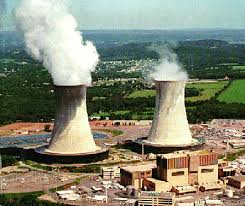
Montco coronavirus deaths at 12; officials  ‘concerned’ about work at Limerick nuclear plant, The Mercury, By Carl Hessler Jr. chessler@21st-centurymedia.com 4 Apr 20, EAGLEVILLE — The coronavirus death toll in Montgomery County rose to 12 on Thursday as officials reported the deaths of two more people, residents of Upper Providence and Springfield townships….. ‘concerned’ about work at Limerick nuclear plant, The Mercury, By Carl Hessler Jr. chessler@21st-centurymedia.com 4 Apr 20, EAGLEVILLE — The coronavirus death toll in Montgomery County rose to 12 on Thursday as officials reported the deaths of two more people, residents of Upper Providence and Springfield townships…..
Officials said there were 113 new positive cases of the virus reported on Thursday, bringing the county’s total number of cases to 707 since March 7. The new cases included residents from 35 municipalities, two of which reported their first cases – Bridgeport Borough and Red Hill Borough. To date, 55 of the county’s 62 municipalities have reported coronavirus cases. The new cases in the county included at least 48 men and 62 women whose ages ranged from 1 month to 94. Six of the individuals are hospitalized, officials said Arkoosh said county officials continue to be in contact with Exelon representatives regarding the county’s concerns that social distancing measures were “perhaps not being adhered to” during a maintenance refueling project involving more than 1,000 workers that began last month at the Limerick Generating Station operated by Exelon near Pottstown. The county’s Office of Public Health is currently reviewing information that it received from Exelon in response to questions the commissioners posed to company officials on Wednesday. The information is helpful and I remain deeply concerned that this maintenance refueling will ultimately contribute to the number of people that are exposed to the coronavirus in our region,” said Arkoosh, who was joined at the news briefing by fellow commissioners Kenneth E. Lawrence Jr. and Joseph C. Gale, and Dr. Alvin Wang, regional EMS medical director, and Dr. Brenda Weis, administrator of the Office of Public Health. Without being specific, Arkoosh said the information provided by Exelon generated more questions by the county and officials are awaiting answers to those questions….. On Wednesday, Exelon officials confirmed two cases of COVID-19 among the workforce at the Limerick plant, adding the full-time employees were sent home and were receiving care and that neither employee had been onsite since March 20. Company officials added that any employees who came in close contact with the affected persons or worked at that reporting location were notified, and that an additional deep cleaning occurred at all areas that potentially were exposed. Arkoosh said officials believe they were misled about the start date of the refueling project. “We were always told March 30. An (event of public interest alert) went out on March 27 saying that they were starting that evening. We’ve also been told by others that there were quite a large number of people here for a number of days before that,” Arkoosh said. County officials have requested the permanent address and the lodging information for all of the contractors hired to work on the refueling project. “We received information back from Exelon on about 950 of those individuals. They are staying all over the area…some people are driving from other states every day. It’s quite a lot,” Arkoosh said. Officials said the contractors, many of whom travel from one generating plant to another to work on refueling projects, are staying locally at AirBnBs, private homes, campsites, hotels and other rental units. “I believe that they have an obligation to not only the families of these workers but to whatever community they’ll be going to next to do a refuel, that these individuals should be sequestered for 14 days before they leave here so that at least when they leave they can be fairly assured that they have no disease,” Arkoosh explained. County officials said they are concerned that contractors where coming from other states into the county which was an area of community spread of COVID-19. Arkoosh said that situation could put the workforce at the Limerick plant at risk as well as local first responders…….. https://www.pottsmerc.com/news/montco-coronavirus-deaths-at-12-officials-concerned-about-work-at-limerick-nuclear-plant/article_dd37f986-7522-11ea-8daa-73c6d383e3e3.html |
|
Worker fatigue is a worry at U.S. nuclear stations, as NRC allows longer shifts
|
US allowing longer shifts at nuclear plants in pandemic, Taiwan News, By ELLEN KNICKMEYER , Associated Press, Associated Press
2020/04/03 WASHINGTON (AP) — U.S. nuclear plants will be allowed to keep workers on longer shifts to deal with staffing problems in the coronavirus pandemic, raising worries among watchdogs and some families living near reactors that employee exhaustion will increase the risks of accidents.
The Nuclear Regulatory Commission’s decision to temporarily allow longer worker shifts is one way the industry is scrambling to keep up mandatory staffing levels through what will be weeks or months more of the outbreak. The shift extensions would allow workers to be on the job for up to 86 hours a week. Currently, they’re generally allowed to work up to 72 hours in a seven-day period. As part of the waiver, workers could be assigned to 12-hour shifts for as many as 14 days in a row. Nuclear plant workers already are having their temperatures checked on arrival for each shift, and employers are studying options including having workers temporarily live at plants full-time…… “This is highly specialized work that needs a lot of attention and focus,” Treat, a nuclear safety activist, said by telephone. It’s a problem, she said, “if people are fatigued or sick….. The NRC closely regulates total staffing and staff hours as a condition of reactors’ continued operation. Fatigue has often been deemed a factor in accidents at nuclear plants, as in the former Soviet Union’s 1986 Chernobyl disaster, where key plant staffers had worked multiple shifts. In the United States in recent days, nuclear plants are reporting some of the first coronavirus cases among their workers. Over the weekend, the NRC said it would consider on a plant-by-plant basis 60-day exemptions that would let plants keep workers on the job for up to 86 hours in a seven-day period, including up to 12 hours a day for 14 days straight. No plant had received a work-hour waiver as of Thursday, regulators said……. But Edwin Lyman, a nuclear power expert with the Union of Concerned Scientists watchdog group, called proposals like Basso’s “alarming.” “I hope that the NRC will conduct due diligence on industry claims that the best way to reduce the potential for COVID-19 spread among its personnel is to force them to work fourteen 12-hour days in a row,” he said in an email. He called that solution likely “untenable.” If a plant fails to keep up minimum staffing requirements in the pandemic, regulators could order it to shut down, something that has happened rarely, if ever, to an operating plant, regulators said. Besides the kind of crew consolidation Basso described, individual nuclear plants also are looking at the possibility of bringing former plant operators back into service. Another option is sequestering crews on site — keeping workers fed and bunked down at the plants during the pandemic, NEI spokeswoman Mary Love said…… https://www.taiwannews.com.tw/en/news/3909533 |
|
US Navy fires captain who sought help for coronavirus-stricken nuclear aircraft carrier
 US Navy fires captain who sought help for coronavirus-stricken ship, ABC News, 3 Apr 20 The US Navy has fired the captain of an aircraft carrier who faced a growing outbreak of the new coronavirus on his ship, saying he created a panic by sending his memo pleading for help to too many people. US Navy fires captain who sought help for coronavirus-stricken ship, ABC News, 3 Apr 20 The US Navy has fired the captain of an aircraft carrier who faced a growing outbreak of the new coronavirus on his ship, saying he created a panic by sending his memo pleading for help to too many people.
Key points:
In a four-page memo to Navy leaders, the captain of the nuclear-powered warship said the spread of the disease was ongoing and accelerating, and said that removing all but 10 per cent of the crew was a “necessary risk” in order to stop the spread of the virus. Navy Secretary Thomas Modly said the ship’s commander Brett Crozier “demonstrated extremely poor judgment” in the middle of a crisis……. That decision was immediately condemned by members of the House Armed Services Committee, who called it a “destabilising move” that would “likely put our service members at greater risk and jeopardise our fleet’s readiness”. ….. Captain Crozier graduated from the US Naval Academy in 1992 and later attended the Nuclear Power School, a prerequisite to command a nuclear-powered aircraft carrier. The USS Theodore Roosevelt, with a crew of nearly 5,000, is docked in Guam, and the Navy has said as many as 3,000 people will be taken off the ship and quarantined by Friday. More than 100 sailors on the ship have tested positive for the virus, but none have been hospitalised. ….. Democrats in support of Captain CrozierDemocrats on the House committee issued a joint statement in support of Captain Crozier. They said that while the captain went outside his chain of command, the pandemic presented a new set of challenges. “Captain Crozier was justifiably concerned about the health and safety of his crew, but he did not handle the immense pressure appropriately,” the statement said. Captain Crozier, in his memo, raised warnings the ship was facing a growing outbreak of the coronavirus and asked permission to isolate the bulk of his crew members on shore, an extraordinary move to take a carrier out of duty in an effort to save lives. He said that removing all but 10 per cent of the crew would be a “necessary risk” in order to stop the spread of the virus. “We are not at war. Sailors do not need to die. If we do not act now, we are failing to properly take care of our most trusted asset: our sailors,” Captain Crozier wrote. https://www.abc.net.au/news/2020-04-03/navy-fires-captain-who-sought-help-for-coronavirus-stricken-ship/12117534 |
|
|
U.S. Nuclear Regulatory Commission (NRC) may exempt some nuclear stations from work-hour controls
NRC to Consider COVID-19 Exemptions for Nuclear Plant Work-Hour Controls https://www.powermag.com/nrc-to-consider-covid-19-exemptions-for-nuclear-plant-work-hour-controls– Sonal Patel , POWER senior associate editor (@sonalcpatel, @POWERmagazine). 30 Mar 20,
The Nuclear Regulatory Commission (NRC) on March 28 told industry that it is prepared to grant requests from individual nuclear generators for exemptions from work-hour controls specified in its rules to help provide more flexibility to the sector as it grapples with workforce issues related to the COVID-19 public health emergency.
The objective of the exemptions from Title 10 of the Code of Federal Regulations (10 CFR 26.205(d)(1)-(7)) is to ensure that the “control of work hours and management of worker fatigue do not unduly limit licensee flexibility in using personnel resources to most effectively manage the impacts of the COVID-19 [public health emergency (PHE)] on maintaining the safe operation of these facilities,” NRC Director of Nuclear Reactor Regulation Ho Nieh wrote in letters sent to the Nuclear Energy Institute (NEI), Entergy Nuclear, and Florida Power and Light over the weekend.
Nieh wrote that the exemptions will apply narrowly—only to nuclear plants whose staffing levels are affected by the pandemic. Licensees must also show they can no longer meet the work-hour controls outlined in the rules, and they can institute site-specific administrative controls for pandemic fatigue-management for personnel as outlined in the rules.
Alternative fatigue-management controls, for example, should ensure employees do not work more than 16 work-hours in any 24-hour period and not more than 86 work-hours in any 7-day period, excluding shift turnover; a minimum 10-hour break is provided between successive work periods; 12 hour shifts are limited to not more than 14 consecutive days; and a minimum of six days off are provided in any 30-day period.
Nuclear licensees that cannot meet the rule’s requirements should notify the NRC in writing, including by email, no less than 24 hours before they would be out of compliance with the rules, Nieh said. The NRC plans to consider requests on a case-by-case basis and, if approved, provide exemptions for a period of 60 days. “If the COVID-19 PHE condition does not improve before expiration of the exemption, then the NRC may consider an additional exemption period,” he added.
(This story is being updated; check back later for more details.)
—
Nuclear stations having difficulties with staffing; one station has workers positive for Covid19
 Coronavirus could disrupt normal refueling practices for nuclear facilities as staffing concerns grow, Utility Dive, By Iulia Gheorghiu March 26, 2020, The nuclear sector has sprung into action to screen employees for signs of the novel coronavirus and prepare for potential disruptions to their typical refueling practices in light of pandemic-related travel restrictions……..
The plight of Fukushima nuclear workers getting leukaemia
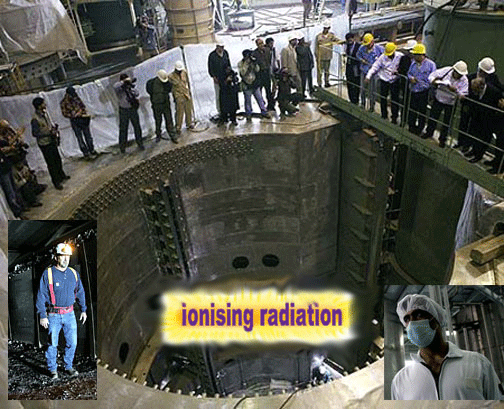 Fukushima Workers Battle Leukemia – and Bureaucracy Unseen Japan Fukushima Workers Battle Leukemia – and Bureaucracy Unseen Japan
by Hiro Ugaya, November 13, 2019 The March 2011 tsunami, and the subsequent meltdown of three reactors at the Fukushima nuclear power plant, has had a devastating impact on Japan. Eight years later, and most journalists – in Japan and abroad – have forgotten about the story. But for many, the struggle continues.
This is especially true of workers who helped assist in the cleanup effort at Fukushima. Some Fukushima workers have contracted severe diseases – including cancer and leukemia – since their work concluded. The government of Japan has even certified that some cases are a result of recovery work. But workers who are fighting for their lives also find themselves fighting the system. Tokyo Electric (TEPCO), which led the recovery effort, refuses to admit any connection between the cleanup work and subsequent diseases in workers. And many insurance companies are pointing to the fine print in private insurance contracts stating they don’t cover accidents at nuclear facilities. Unseen Japan has been pleased to partner with photojournalist Hiro Ugaya (烏賀陽弘道) to translate his interviews with evacuees and former evacuees, and to document the ongoing struggle of the victims of this tragedy. We previously published Hiro’s interview with a mother in the city of Minamisoma. In this installment, we share the first part of Hiro’s interview with Mr. Ikeda (pseudonym), a Fukushima nuclear reactor cleanup volunteer who now finds himself fighting two uphill battles. Translation from an article originally published on Note.mu. Translation by Jay, Editor/Publisher, Unseen Japan. All photos used with permission of Hiro Ugaya.) Ikeda’s StoryFor this installment of the Fukushima Report, I visited Northern Kyushu City in Fukuoka prefecture. I departed from Tokyo and flew west, in the direction opposite Fukushima. I went to Fukuoka, which is quite far from Fukushima. That’s where the leukemia-stricken Ikeda Kazuya (age 44; pseudonym) has lived since participating in the Daichi Nuclear Reactor reconstruction efforts. I had visited Ikeda once in 2017 to hear his story. Among all my interviews here in the Fukushima Report, it’s the one that’s reverberated the loudest. Mr. Ikeda volunteered to participate in the restoration work at the Fukushima Daiichi nuclear power plant. By trade, he’s an independent welder. In March 2011, when so many people died due to the tsunami, he looked at the report of the death of a small child and thought, “I need to do something useful for Tohoku” [Editor: the region of Japan hit by the tsunami]. He asked permission from his boss and threw himself into the reconstruction effort. The interior of the heavy machinery room of Reactor 4 butts up against the nuclear fuel rod pool. But in 2013, Mr. Ikeda came down with leukemia. Mr. Ikeda is one of the first cancer patients that the country recognizes as a work-related accident connected to the Fukushima Daiichi nuclear power plant. Two Fukushima workers contracted leukemia (bone marrow cancer), and one contracted thyroid cancer. The first case of leukemia was recognized in October 2015. The second was recognized in August 2016. The third person, who had thyroid cancer, was certified in December 2016. As of May 2019, there are six patients in the country whose cases have been recognized as occupational accidents caused by work at the Fukushima Daiichi nuclear power plant. To tell the truth, I was quite surprised that the country recognized them as occupational accidents. Judging from the history of pollution diseases, such as Minamata disease and Itai-itai disease, I predicted the government would probably prevaricate and not admit a causal relationship. But the government admitted it readily (employing a lot of rhetoric, of course, such as “This is not an admission of a scientific, causal relationship”). From a global and historical perspective, the admission is rare. In the Three Mile Island nuclear accident (1979) in the US, more than 2000 lawsuits have been filed, but no relationship between health damage and exposure has been admitted in even a single case. The state government naturally won’t admit it, and the courts don’t either. Due to this admission, the assertion that “the radiation leakage from the Fukushima Daiichi nuclear accident is mild enough not to damage health” fell apart. In the Chernobyl nuclear accident in the former Soviet Union, the first to suffer serious harm were the so-called “Liquidators,” the firefighters and soldiers who were the first responders. Nearly 5,000 people died. Naturally, people who are close to radiation-intensive sites will become seriously ill. The same phenomenon occurred in the Fukushima Daiichi nuclear power plant accident. While the case was recognized as a workplace injury, Mr. Ikeda filed a lawsuit against Tokyo Electric (TEPCO), which ran the restoration project. That’s because TEPCO doesn’t “recognize a causal relationship between Mr. Ikeda’s leukemia and exposure to radiation at the Fukushima Daiichi nuclear power plant.” I’ve long found it mysterious that not a single TV station, weekly newspaper, web media or other news outlet has done an article on those like Mr. Ikeda who contracted deadly diseases from the nuclear reactor recovery work. Since the government’s announcement certifying them as workplace injuries, there’s been dead silence. Those affected can’t be heard in their own voices. ……. Mr. Ikeda pointed out something important. People who work in nuclear facilities such as nuclear power plants are not covered by private insurance, even if they have an accident or get sick. It’s in the so-called “disclaimer.” If People who engaged in the dangerous work of recovering the nuclear power plant post-meltdown have been left naked and defenseless. And few people notice it. Even insurance companies don’t care. I want to fix this abnormality…… (Interview: -) There are six people, including yourself, who have been certified as workplace accidents due to cancer or death from overwork in the recovery work of the Fukushima Daiichi nuclear power plant accident. Any contact from them? No, none. I’ve caught sight of the wife of one of the Fukushima workers who died from overwork (karoshi) at rallies in Tokyo. It seems that TEPCO employees and primary subcontractors who got sick will receive 30 million yen [around USD $274,000]. But in return, they can’t sue. That’s what my lawyer emphasized at trial. But that offer doesn’t extend to us (second-tier subcontractors). The owner who hired me also had business owner insurance. Just in case we have an industrial accident. However, we found out later that it wasn’t valid in nuclear facilities, such as nuclear power plants. The insurance companies say it’s too dangerous a place to cover via employer insurance. And yet TEPCO denies responsibility for my leukemia. That’s what you’re contesting in court. That’s right. They’re denying everything. They say it was too low of a dose to bear any relationship. In the previous trial, TEPCO says I developed leukemia due to smoking, drinking, and a vegetable deficiency. That took me aback (laughs). They talk to us like we’re alcoholics…… What evidence is TEPCO presenting to refute you? Search for the stories of scholars who kowtow to the government, you’ll find it (laughs). Who’s providing testimony, besides you? There are various people I think. TEPCO won’t recognize the causal relationship between your leukemia and radiation exposure, correct? If they did, it’ll become a serious obstacle to future nuclear power policy. I was the first person certified, and there’ve been a number since. So there has to be a causal relationship, right? What total dose did you receive? A total of 19.8 millisieverts. Others received more. TEPCO is terrible. It’d be better if they just copped to it. “Others Will End Up Like Me”Why do you think TEPCO should admit responsibility? When this happens to someone else, this won’t be any guarantee, but it’ll give them peace of mind, you know? I mean, it’s not like you can tell people, “Don’t help with recovery efforts.” Other industries offer insurance – who’s going to guarantee workers who enter a nuclear facility if the employer’s primary insurance won’t? That’s what I want to tell people. Fukushima workers who entered the facility had no idea their employer’s primary insurance wouldn’t cover it……. https://unseenjapan.com/fukushima-workers-leukemia-bureaucracy/ |
|
FirstEnergy Solutions moves to ditch union contracts for bailed out nuclear plants, drawing Democrats’ ire
FirstEnergy Solutions moves to ditch union contracts for bailed out plants, drawing Democrats’ ire
FirstEnergy Solutions’ veteran nuclear plant workers would lose traditional pensions if a bankruptcy court agrees with the latest FES restructuring plan, Utility Dive, John Funk Aug. 15 2019, “…….
In a reference to the FES reorganization plan filed July 23 — less than 12 hours after House Bill 6 had been approved by the legislature and signed by Republican Gov. Mike DeWine — the unions argue that the company intends to use the court to emerge from bankruptcy without its union contracts. And that contradicts the testimony of David Griffing, the company’s vice president of governmental affairs, the union filing to the court charges.
Griffing assured lawmakers in April before an Ohio House subcommittee that “that new [collective bargaining agreements] were in essence agreed upon … Both parties … believe the negotiations were acceptable.” But Friday’s filing on behalf of the union locals indicates that the company has neither agreed to assume the existing contracts nor reached new ones with the unions at two of the three FES nuclear plants, Perry, east of Cleveland and Beaver Valley, near Pittsburgh.
The union is basing its position in the bankruptcy struggle to remain viable at the power plants on the argument that “successorship clauses” in the contracts obligate FES to require any new company — including a reorganized FirstEnergy Solutions — to assume the contracts as they were agreed to. The unions point out that FES abided by that contract language when it sold other power plants to outside companies.
FES: Can’t assume the contract
The company position, as laid out in its July 23 reorganization plan, is that the reorganized FES cannot assume the contract because “the collective bargaining agreements require the Debtors to provide benefits to their employees under health care, severance, welfare, incentive compensation, and retirement plans sponsored by FirstEnergy Corp.”
The unions are countering that under the bankruptcy code and existing case law, the company must declare before reorganization whether it is rejecting the contract. “They simply want the benefit of plan confirmation, without deciding whether to assume or reject,” the union attorneys wrote. “However this is not what the law provides.”
The union filing reveals that in bargaining talks over the past few months the company has contended that the benefits in the existing union contracts, particularly the pension benefits, “are non-replicable.”
Unions play key role in HB 6
“HB 6 was problematic because I thought it was a bad idea to direct rate payer money to a corporation who refused to unequivocally agree to protect and support union contracts and the men and women who rely on those contracts to put food on their table,” Sykes wrote.
Brexit proving a problem for the nuclear industry – shortage of welders for Hinkley Point C project,
likely to take a hit if Brexit jeopardizes a crucial supply of welders. The
skilled workers have been in short supply for years, a strain that will
likely worsen as new nuclear projects are built.
to the Migration Advisory Committee, which keeps a list of occupations with
a shortage of workers.
become more difficult and costly to build and operate multi-billion-dollar
atomic plants, which are crucial to the U.K.’s target to produce net-zero
carbon emissions by 2050.
France SA’s 19.6 billion-pound ($24 billion) Hinkley Point C project, the
only nuclear plant now under construction in Britain. “Hinkley requires a
large number of welders,” said Peter Haslam, who retired on Friday as
head of policy at the Nuclear Industry Association. “They come from
Europe. We need these people to have easy access to the U.K.”
1 This Month
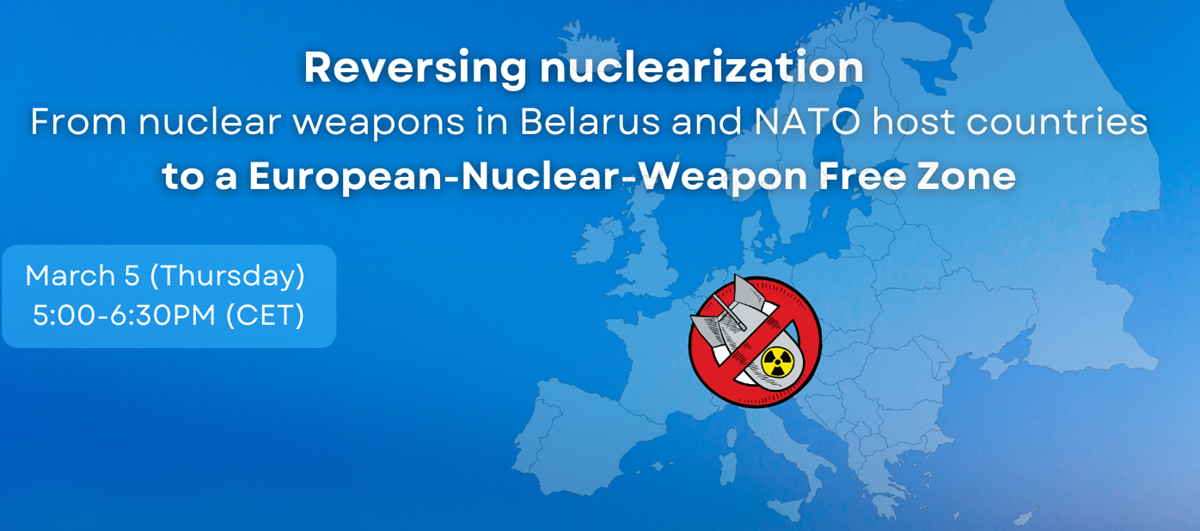
5 March -Online – Reversing nuclearization:
From nuclear weapons in Belarus and NATO host countries to a European-Nuclear-Weapon Free Zone
11am-12:30pm Eastern Time USA / 5pm-6:30pm CET

of the week – Advocating for a
nuclear free beach – https://www.samuellawrencefoundation.org/
The Samuel Lawrence Foundation advocates for a Nuclear Waste Free Beach at San Onofre, join us and take action!

10 March A LIVE WEBINAR THE REAL EFFECTS OF NUCLEAR POWER
What the Industry Isn’t Telling Us
1:00 PM Mountain, 2 pm Central, 3 pm Eastern. Live on the Keepers of the Water Facebook page

18 March Webinar @ 1 PM EST: An Assessment of SMR Projects: The Case of Canada
register for the zoom:
https://us02web.zoom.us/webinar/register/WN_o8BIIOUvQ2ONJR1nta65DQ#/registration

of the week – STOP SMALL MODULAR REACTORS IN CANADA
To see nuclear-related stories in greater depth and intensity – go to https://nuclearinformation.wordpress.com
-
Archives
- March 2026 (51)
- February 2026 (268)
- January 2026 (308)
- December 2025 (358)
- November 2025 (359)
- October 2025 (376)
- September 2025 (258)
- August 2025 (319)
- July 2025 (230)
- June 2025 (348)
- May 2025 (261)
- April 2025 (305)
-
Categories
- 1
- 1 NUCLEAR ISSUES
- business and costs
- climate change
- culture and arts
- ENERGY
- environment
- health
- history
- indigenous issues
- Legal
- marketing of nuclear
- media
- opposition to nuclear
- PERSONAL STORIES
- politics
- politics international
- Religion and ethics
- safety
- secrets,lies and civil liberties
- spinbuster
- technology
- Uranium
- wastes
- weapons and war
- Women
- 2 WORLD
- ACTION
- AFRICA
- Atrocities
- AUSTRALIA
- Christina's notes
- Christina's themes
- culture and arts
- Events
- Fuk 2022
- Fuk 2023
- Fukushima 2017
- Fukushima 2018
- fukushima 2019
- Fukushima 2020
- Fukushima 2021
- general
- global warming
- Humour (God we need it)
- Nuclear
- RARE EARTHS
- Reference
- resources – print
- Resources -audiovicual
- Weekly Newsletter
- World
- World Nuclear
- YouTube
-
RSS
Entries RSS
Comments RSS
 nuclear-news