USS Calhoun County sailors dumped thousands of tons of radioactive waste into ocean

|
They asked the dying Pasco County man about his Navy service a half-century before. He kept talking about the steel barrels. They haunted him, sea monsters plaguing an old sailor.”We turned off all the lights,” George Albernaz testified at a 2005 Department of Veterans Affairs hearing, “and … pretend that we were broken down and … we would take these barrels and having only steel-toed shoes … no protection gear, and proceed to roll these barrels into the ocean, 300 barrels at a trip.”
Not all of them sank. A few pushed back against the frothing ocean, bobbing in the waves like a drowning man. Then shots would ring out from a sailor with a rifle at the fantail. And the sea would claim the bullet-riddled drum.
Back inside the ship, Albernaz marked in his diary what the sailors dumped into the Atlantic Ocean. He knew he wasn’t supposed to keep such a record, but it was important to Albernaz that people know he had spoken the truth, even when the truth sounded crazy. For up to 15 years after World War II, the crew of Albernaz’s ship, the USS Calhoun County, dumped thousands of tons of radioactive waste into the Atlantic Ocean, often without heeding the simplest health precautions, according to Navy documents and Tampa Bay Times interviews with more than 50 former crewmen. Albernaz began a battle for his life in 1988 when part of his brain began to die, mystifying doctors who eventually concluded the rare ailment might be linked to radiation. He filed a VA claim for benefits in 2001 that was repeatedly rejected, often with tortured government reasoning.
The VA and Navy told Albernaz he was not exposed to radiation on the Calhoun County, a vessel the Navy ordered sunk in 1963 because it was radioactive. The VA ignored Navy documents discovered by a former congressional aide proving the ship’s radioactivity, telling Albernaz they were “unsubstantiated.” And the Navy today points to Cold War records that are incomplete and unreliable as proof crewmen were not exposed to dangerous radiation. The Navy and VA’s insistence that atomic waste on the Calhoun County was not dangerous comes 15 years after the VA linked the death of a crewman who served with Albernaz to radiation…….
Up to 1,000 men served on the Calhoun County in the years it dumped radioactive waste, a practice that continued until about 1960 — two years before the ship’s decommissioning. It’s impossible to know how many suffered unusual health problems after they left the ship. The VA and Navy never followed up on their health. Some got sick and never filed VA claims. And after more than a half-century, much of the crew has died………
The opening of the Atomic Age brought a vexing problem — how to dispose of radioactive waste. The Atomic Energy Commission, which then managed most aspects of U.S. atomic energy policy, settled on a cheap, convenient fix: ocean dumping. The Calhoun County soon became the only Navy ship on the East Coast dumping radioactive waste. The containers looked like ordinary 55-gallon steel drums. Nobody on the ship was quite sure what was in them.
They arrived by the hundreds by train and truck at the ship’s home port at Sandy Hook Bay, N.J. or the ship picked them up at Floyd Bennett Field on Long Island. Less often, waste was picked up at other ports, including Boston. The hottest waste came from Floyd Bennett. At times, the barrels were marked with color-coded dots or a painted X. The “red dot” barrels were said to be the most dangerous.
Not that it mattered. Few if any of the crewmen, according to interviews, received any special training on handling the waste. They said they handled the “red dot” barrels the same as all the rest. Much of the waste, which was packed in concrete, came from Brookhaven National Laboratory, a government research facility on Long Island that had a reactor and generated radioactive material. Several shipments emitted 17 rems per hour of radioactivity even after the waste was encased in concrete, Calhoun County‘s deck logs show. That is the equivalent of about 1,700 typical chest X-rays. Two sailors would place each barrel on its side and roll it to the edge of the ship. The Calhoun County, with its flat, shallow bottom, always shifted crazily in the waves, back and forth, a metronome marking time for a dangerous waltz.
As the ship tilted in their direction, the men released their barrel with a push and let gravity help take it overboard. The ship carried the waste out off the continental shelf several times a year to waters of varying depths, usually 6,000 to 12,000 feet. The designated dumping areas were a full day’s trip up to 200 miles out to sea, though several men said in interviews that the ship would dump much closer to the coast when the weather was bad. After they handled the barrels, the men went below deck to drink coffee or eat.
No documents appear to exist showing what exactly the Navy dumped. Deck logs list dumping coordinates, tonnage handled and drum radiation levels — but often, even that information is missing. And from 1946 to 1953, the Calhoun County‘s officers were not recording any dumps in deck logs at all………
On the Calhoun County, according to documents and interviews, radiation was neither feared nor respected. “We had no supervision,” said Bob Berwick, 82, of Laguna Niguel, Calif., an officer on the ship in 1952 and 1953. “We were on our own.”…….
None of the crew interviewed for this story recall getting special clothing or gear during dumping operations. An exception were the cotton gloves provided to the crew in the early to mid-1950s. “We threw the gloves overboard into the ocean when we were done with them,” said Richard Tkaczyk, 85, of Buffalo, N.Y., who served on the ship from 1949 to 1951. Several men said they were told to shower and take off clothing for washing after dumps. But for much of the ship’s history, this was not done, according to crewmen.
Albernaz told the VA in 2007 he recalled a trip when an AEC worker came through the crew quarters with a Geiger counter. “It would go off like a machine-gun and he would say to us, ‘Okay. Get your pillow, blanket and mattress. We’re moving you to the tank deck,’ ” Albernaz said. But the tank deck was under barrels, too. “So actually, there was really no place on that ship that was safe,” Albernaz said……….
the ship was radioactive. On June 5, 1956, according to Navy memos, Naval Research Laboratory technicians took radiation readings on the Calhoun County before barrels were loaded on its deck. Parts of the ship were radioactive, a memo to the Third Naval District commandant said. The ship’s captain, Herbert Hern, was ordered to “decontaminate affected areas” as soon as possible. The discovery prompted a more thorough examination of dumping operations. Navy brass did not like what they found. The ship’s handling of this dangerous waste was sloppy, haphazard………..
George Albernaz, then 22, was excited to be on the Calhoun County as its newest quartermaster. He was born in Fall River, Mass., and had hardly been away from home. He thought he was going to be part of the Navy’s storied amphibious force. He took a diary with him and recounted his adventure in the words of a wide-eyed sailor. “This is the story of the most fascinating experience of my life … doing a job I never dreamed existed, serving on a ship whose days as a man of war are but a story in the past but today she is engaged in a service equally important as any fighting ship in the Navy,” he wrote. It wasn’t long before Albernaz began keeping a different kind of diary. He titled this new log “Nuclear Waste Dumping Diary.”
Jan. 20 1957: “371 tons atomic waste.” Feb. 7, 1957: “368 tons atom waste.” Nov. 13, 1957: “299 (tons) poison gas (and) A.W.” One of Albernaz’s last entries was on June 12, 1958: “200 tons. Spec. weapons,” or special weapons. That was the day, Albernaz later told his wife, that he helped dispose of an atomic bomb. The Calhoun County sailed out of Norfolk, Va. with two giant crates. The ship’s log noted it dumped “confidential material” at 2:31 a.m.
Albernaz’s wife said he told her about that trip. He said the crew was told the crates contained two atomic bombs. Other sailors interviewed said the occasional dumping of disassembled atomic bombs occurred several times in its history. • • •…….. On March 10, 1958, one of the Calhoun County‘s crew, Harvey Lucas, was ordered to a Navy hospital. He was in pain and vomiting a brownish liquid, hospital records show. Two months later, the ship’s muster rolls show, Albernaz was hospitalized for two weeks. His wife said he later told her he had severe nausea. The two men were among a handful that year with long hospitalizations, records show. Albernaz later said doctor’s diagnosed them with stomach ulcers………..
A Dec. 13 memo by the chief of the Navy’s Bureau of Ships doubted radiation on the Calhoun County could ever be reduced to levels then considered safe. The memo noted the Navy had never been able to decontaminate a radioactive ship. “Complete paint stripping and sandblasting have failed to accomplish this (on the Calhoun County) and in the cases of ships contaminated in nuclear weapons tests,” the memo said. So the Navy ordered the Calhoun County sunk……….
Navy officer George Self, 83, of Pahrump, Nev., got the job to ready the Calhoun County for sinking. …………
Self did not go out on the second trip, so he is unsunsure how the ship met its end. The Navy said demolition charges sent the old LST to the bottom.
The years after his 1960 Navy discharge were cruel to Calhoun County crewman Harvey Lucas.
Lucas, a Denver man who spent more than three years on the ship, had always been suspicious of the Calhoun County‘s mission even while still a deckhand. Like Albernaz, Lucas tried to document the ship’s work. He stole a radiation badge and took pictures of the barrels. “He documented everything,” said daughter Jeanine Lucas. His family said he wondered if the work had been far more dangerous than the Navy let on. Those concerns could only have been stoked when his uncle, George Dutcher, who served on the ship with Lucas, died of cancer in the late 1960s still in his 40s. Lucas left the Navy and developed osteoporosis. It was so severe that a doctor said he had the bones of a 95-year-old, his family told the VA. He and his wife had five children born with birth defects or health problems. Cancer took Lucas, too. He died on June 17, 1985, at age 47 of leiomyosarcoma, an aggressive soft-tissue cancer. It has been documented in women who in the 1950s and 1960s received radiation treatment for excessive menstrual bleeding. Damage from the disease was so bad a funeral home couldn’t embalm him. Lucas was buried in a body bag. Lucas, and then his wife after his death, battled the VA for benefits, arguing the radiation caused his cancer and brittle bones. The VA repeatedly denied a link, at first saying the ship hadn’t carried radioactive waste………….. William Kemper, a retired Naval physicist, estimated Lucas had been exposed to radiation five times greater than the legal limit when he served. Kemper told the VA, “it seems most likely that he had ingested some cobalt 90 or other (radioactive) waste in . . . his duties.” In 1998, the VA finally ruled Lucas’s death was caused by radiation he was exposed to on the Calhoun County and approved benefits for his widow………… Civilian workers at Brookhaven, the lab that packaged much of the waste dumped by the Calhoun County, found it difficult to prove their on-the-job exposure to radiation in the Cold War led to cancers some of them suffered. Records were too incomplete. Some workers were never monitored. o in 2010, the federal government decided they would no longer have to prove their specific radiation exposure to get financial compensation and medical care. If they worked at the lab at least 250 days from 1947 to 1979 and were diagnosed with one of 22 radiation-related cancers, they qualified. Congress protects military personnel in much the same way. But none of the men who served on the Calhoun County are eligible for automatic VA benefits for radiation illnesses because they did not participate in underwater or atmospheric atomic tests and related activities, the government says. Thus, the crewmen do not meet their country’s definition of “Atomic Veteran.” https://www.tampabay.com/news/military/veterans/the-atomic-sailors/2157927/?fbclid=IwAR2LJbkpgGf3wFer8x96o_60n2EMtJ8hS-JREmkbBp_EkER9sl_iAxJuDkA |
|
USA government resists paying compensation to nuclear workers made ill by ionising radiation
the labor department ignored overwhelming evidence that her husband became sick from working at SRS
the system has become hard to navigate, with the government often fighting tooth-and-nail against the workers they were supposed to help
More than 2,200 workers had spent five years or more going through the exhaustive claims process, according to McClatchy’s 2015 “Irradiated’’ series. Some workers who filed for benefits died while awaiting decisions from the government, McClatchy found.
 Death and despair. How the feds refused to help a nuclear worker’s family in SC, The State,
 BY SAMMY FRETWELL, December18, 2020 Every time Jerry Bolen came home from a construction job at the local nuclear weapons complex, he took off his dusty coveralls before stepping into the house he shared with his wife and children.
It was a precaution against tracking hazardous, radioactive materials into the family’s home in rural Barnwell County, says his widow, recalling how she would gingerly place the contaminated garment into the washing machine.
But while the effort protected the couple’s three kids, Jerry Bolen suffered. The long days he spent working at the Savannah River Site, exposed to chemicals and radiation, eventually killed him, his widow says.
Now, an exasperated Carolyn Bolen has sued the U.S. Department of Labor following a 13-year battle with the government over whether the family should receive compensation for the cancer that took Jerry Bolen’s life in 2006.
Her story is a familiar one. Many people who worked at SRS have complained for years that a federal compensation program for sick workers and their families is a bureaucratic morass that takes too long to maneuver and often doesn’t provide the benefits they were promised.
In Carolyn Bolen’s case, however, she was turned down so many times for benefits through the federal program that she exhausted all her appeals, prompting the federal lawsuit, she and her lawyers say.
The Nov. 20 suit against the labor department is among a handful of cases in South Carolina by ex-SRS workers and their families who were denied benefits in recent years through the federal compensation program, said Bolen’s lawyers, who specialize in helping sick workers.
Bolen’s attorneys said the labor department ignored overwhelming evidence that her husband became sick from working at SRS. They are seeking $275,000, the maximum she can get under the program. Other suits are expected as more workers or their loved ones are turned down by the government, said attorneys Warren Johnson and Josh Fester.
The federal government launched the compensation program two decades ago after conceding that employment at nuclear weapons sites likely made some of the workers ill. It was designed to help former employees who got sick working in U.S. nuclear sites during the Cold War.
To receive compensation, workers or their families must show that radiation on the site was as likely as not to have caused cancer or a handful of other ailments. Or, in some cases, they must show that people worked on the site during times when records of exposure are difficult to find.
The nuclear compensation program provides benefits to sick workers, but in some cases, covers their families after the person has passed away, such as with Bolen.
Unfortunately, the system has become hard to navigate, with the government often fighting tooth-and-nail against the workers they were supposed to help, Johnson said. Taking legal action to force federal compensation shouldn’t be necessary, said Johnson and Fester, whose law practice has represented sick SRS workers for years.
“This was supposed to be a way to make up for, or show our gratitude to these patriotic workers,’’ Johnson said of the compensation program. “They gave their health for our sake for the Cold War. We can at least offset the burden, by giving financial security, knowing they aren’t leaving a burden on their wives and children.’’………..
In 2015, the labor department told The State and the McClatchy Co. the program had approved more than 40 percent of the claims made by nuclear workers and their families, far more than the 25 percent the government anticipated when the program launched in 2001. The labor department said Friday the approval rate nationally is now more than 50 percent.
Even so, many claims don’t get approved and the wait for answers can be time-consuming. More than 2,200 workers had spent five years or more going through the exhaustive claims process, according to McClatchy’s 2015 “Irradiated’’ series. Some workers who filed for benefits died while awaiting decisions from the government, McClatchy found.
Earlier this month, a federal panel considered a proposal, advocated by Johnson, that could make it easier for thousands of workers and their families to receive benefits. But the board put off a decision until next year…………
he never complained about the long hours or said much about hazardous conditions at the site. That was important to the federal government because, during the Cold War, much of the work on the Savannah River Site needed to be kept confidential, family members say.
Tim Bolen, his son, said he never knew his father worked at SRS until just a few weeks before his death. But Carolyn Bolen did.
She remembers the days her husband came home with his coveralls coated in “white stuff’’ that she says came from the Savannah River Site. Bolen never knew what the material was, but she was always wary of the potential danger. And her husband occasionally offered clues that the white material came from SRS, she said……….
The site, a 310-square-mile complex, contains an array of nuclear production areas with some of the most toxic substances in the world.
Among them is a tank farm, which houses nuclear waste deadly enough to rapidly kill a person directly exposed to it. Carolyn Bolen’s lawsuit says her husband worked for a while in the tank farm area and another section where radioactive material is used.
The Savannah River Site, located near the Georgia border outside Aiken, was part of the national effort to produce atomic weapons between World War II and the early 1990s. Nationally, the effort employed some 600,000 people, according to the U.S. Government Accountability Office……
After working periodically at SRS through the years, Jerry Bolen began to feel an uncomfortable sensation in the late 1990s that he couldn’t shake.
Something was wrong with his bladder. During trips to the bathroom, bloody urine flowed into the toilet and a sharp sting caused him to gasp. The pain was so bad, at times, that Carolyn Bolen could hear her husband’s cries throughout the house.
“He just screamed for mercy,’’ she said.
The discomfort sent him to a doctor, where the family learned the man who had faithfully kept a roof over their heads and food on the table was gravely ill. He had bladder and prostate cancer…….
In August 2006, Jerry “Little Mac’’ Bolen died at the age of 60, leaving his wife and family wondering how the once robust man could slip from their world. It didn’t seem right that a man so young and energetic had become so sick, family members say. …….
MISSING RECORDS
Jerry Bolen’s time at SRS, and his devotion to his family, haven’t impressed federal officials who have considered whether his family is eligible for benefits through the labor department’s sick worker compensation program. They’re skeptical an award to his widow is warranted, saying they need more evidence.
An obstacle some workers face is gaining access to records that could show there is at least a 50 percent chance radiation caused cancer they developed after working at the Savannah River Site, a complex developed in the early 1950s.
Many records either can’t be located, are inaccurate or don’t exist, meaning workers can’t prove how many days they worked on site, or the amount of radioactive material they might have been exposed to.
That’s a particular concern for subcontractors like Bolen, who did not work directly for the government or for the major contractors hired by the U.S. Department of Energy to run the site. Subcontractors often were local construction companies brought in to do specific jobs.
Johnson and Fester said records of subcontractors often are harder to find than those for energy department workers.
In Bolen’s case, the labor department turned down the family’s claim for benefits because “the submitted documentation does not establish covered SRS employment for the employee,’’ according to the federal lawsuit Carolyn Bolen filed. In declining comment on the Bolen case, a Department of Labor spokeswoman said Friday that claims can be turned down for a variety of reasons…..
Bolen’s lawsuit, however, said the labor department simply dismissed credible evidence that would prove the case. Jerry Bolen, for instance, worked with acquaintances or for his brothers’ construction businesses in the late 1960s, 1970s and 1980s, according to five affidavits filed in Carolyn Bolen’s federal lawsuit last month.
Those affidavits, provided by family and friends who worked with Jerry Bolen, were combined with SRS identification badges issued in his name, and records of radiation doses the family ran across in his belongings. Some material was unearthed and provided to the government after the labor department had initially denied requests for compensation.
Despite the evidence, the Department of Labor ruled against the Bolen family’s request for reconsideration this past summer. Her case had been turned down at least three times before 2020.
“The department simply ignored additional evidence that Mr. Bolen was present at the site before 1968 and after Jan. 24, 1969,’’ the lawsuit said. “Mrs. Bolen’s request for reconsideration further asserts the department misapplied the law in determining covered employment by holding Mrs. Bolen to an impossible burden of proof.’’
While the Bolens have been turned down repeatedly in seeking compensation, Johnson and Fester are hoping the lawsuit will succeed. Fester said one of the five other cases the firm has filed resulted in a verdict that would have required payment to a sick worker. But the worker died before benefits were dispersed.
In the meantime, Fester and Johnson are pushing the federal government to approve a proposal that could open up benefits to thousands of people who worked at the Savannah River Site.
Under federal law, the government can acknowledge that it is too difficult to find records during certain years that would prove a person’s case for compensation for radiation-related cancer. As a result, the government can declare periods of years free of the need to provide records showing that a person likely got cancer from working at SRS.
The government already has done that for the time from 1953 to fall 1972. Some ex-workers at SRS, who were employed there for at least 250 days between these times, are eligible for benefits without producing extensive documentation about exposure to radioactive materials.
Now, a federal advisory board is considering whether to extend that to cover up to 1990 for some types of workers at SRS. It’s clear that Jerry Bolen worked well above 250 days between 1972 and 1990 at the site, so it’s possible his family could gain compensation if the time period is expanded to 1990, Johnson and Fester said.
A decision, under consideration for years, could be rendered as early as February if the federal advisory board recommends expanding the period. Such a decision ultimately would be made by the U.S. Department of Health and Human Services, the labor department said Friday.
Carolyn Bolen said a favorable decision — and her lawsuit — would mean a lot to many people who need help after they or their loved ones got sick at SRS.
“There are a lot of poor people in this world, and they don’t have the money like the president or the people in the White House,’’ she said. “I ain’t just talking about myself. There are people with needs.’’
This story has been updated with information provided Friday Dec. 18, 2020 by the U.S. Department of Labor. https://www.thestate.com/news/local/environment/article247828620.html
The cover-up of workers’ illnesss in radioactively polluted clean-up of Kingston coal ash spill
A Legacy of Contamination, How the Kingston coal ash spill unearthed a nuclear nightmare, Grist By Austyn Gaffney on Dec 15, 2020 This story was published in partnership with the Daily Yonder.
………………………………….The apparent mixing of fossil fuel and nuclear waste streams underscores the long relationship between the  Kingston and Oak Ridge facilities………… .
 ……….In 2017, a former chemist named Dan Nichols stumbled upon a news story that revealed the existence of the additional health problems TVA feared. High levels of uranium had been measured in the urine of a former cleanup worker named Craig Wilkinson. Like Thacker, Wilkinson had worked the night shift. After dredges piped the coal ash back onshore, Wilkinson used heavy equipment to scoop, flip, and dry the wet ash along the Ball Field.
Although Wilkinson worked at the Kingston site for less than a year, he quickly developed health issues, including chronic sinus infections and breathing problems that eventually led to a double-lung transplant. Frustrated by his sudden decline in health, Wilkinson shelled out over $1,000 for a toxicology test because he wanted to know what occupational hazards might be lingering in his body.
After reading Wilkinson’s story, Nichols sat stunned. Though he was not associated with the spill, he’d been unable to shake his obsession with the Kingston disaster. Nichols had worked as a Memphis-based field chemist for a wastewater technology company, and he was used to studying lab reports on industrial water supplies and samples. For years he’d been trying to solve a mystery that no one else seemed to be aware of: why Kingston regulators deleted and then altered a state-sanctioned report showing extremely high levels of radiation at the cleanup site.
Roughly a month after the spill, Nichols read a Duke University press release stating that ash samples collected at Kingston by a team led by Vengosh, the geochemist, showed radium levels well above those typically found in coal ash. Nichols knew that the state environmental regulator, the Tennessee Department for Environment and Conservation, or TDEC, was also testing soil and ash samples at the site. After seeing Vengosh’s high radium readings, he wondered if TDEC’s report would also show high levels of either radium or uranium. (Radium is a decay element of uranium.) Later that spring, Nichols visited TDEC’s website and discovered the test results.
“I opened it up and went to uranium, and it was just off the charts,” Nichols recalled. In a 2020 affidavit, Nichols reported that these levels were “extremely high so as to be alarming.” At least 27 soil and ash samples were collected from at least 20 different sites surrounding Kingston beginning January 6, 2009. The levels ranged from 84 parts per million (ppm) to 2,000 ppm. The average level was over 500 ppm, as much as 50 times the typical uranium content found in coal ash.
The next morning, when Nichols slumped back into his computer chair and refreshed TDEC’s website, he saw that the report had been changed. The high uranium readings had plummeted. Now the average uranium levels in the ash were 2.88 ppm, a tenth of the typical uranium content found in coal ash and illogically, below levels naturally occurring in soil. Luckily, Nichols had downloaded the unaltered report the night before.
A month later, Nichols sent the two lab reports to one of the attorneys representing Tennessee residents affected by the spill in a lawsuit they’d brought against TVA. According to Nichols, the lawyers weren’t interested. Nevertheless, Nichols was determined to find more proof of the unusually high levels of on-site radiation. In between cutting hay and spraying weeds on his family farm, he spent years poring over information online about TVA, coal ash, and uranium before he stumbled across Wilkinson’s story.
Back in 2014, Wilkinson’s urine tested for unusually high levels of both mercury and uranium. The mercury is more easily explained: The most common cause of mercury contamination, according to the EPA, is coal-fired power plant emissions, which account for 44 percent of all man-made mercury pollution. The 2008 spill released 29 times the mercury reported at the Kingston site for the entire decade before it, and TVA documents show high levels of additional legacy mercury were present in the Clinch River and could have migrated into the Emory. Today, Wilkinson has symptoms attributable to methylmercury poisoning including blurry vision, fatigue, a hearing impairment, memory loss, and loss of coordination that caused him to fall out of the machines he operated until retiring on disability in 2015.
But most shocking to Nichols was the high level of uranium in Wilkinson’s body — it was 10 times the U.S. average, and identical to the median levels that one study found in workers exposed to the substance. Prolonged occupational exposure to uranium is strongly linked to chronic kidney disease, which Wilkinson suffers from. Because Wilkinson’s toxicology results were taken four years after he left Kingston, they likely show lower uranium levels than what he and other cleanup workers initially had.
Wilkinson’s results left no doubt in Nichols’ mind that the original uranium readings he’d saved were significant. A reporter for the Knoxville News-Sentinel, Jamie Satterfield, contacted him after the report he saved showed up in court proceedings. Satterfield published a story about the altered uranium readings in May of this year.
In response to her story, TDEC told the News-Sentinel that its updated uranium readings, which plummeted by 98 percent, were due to a change in the sampling method used for the tests. (Satterfield also reported that radium levels had been lowered between the initial TDEC report Nichols downloaded and the updated one; the department attributed this to a “data entry error.”) In an email response to Grist and the Daily Yonder, a TDEC spokesperson elaborated that the sampling lab, which was neither staffed nor supervised by TDEC, “discovered there were interferences in the analysis of soil and ash samples for uranium” and subsequently changed the method of analysis from one EPA-approved protocol to another. The new results were then published without public notice of the alteration.
“Changing lab reports is a very serious thing,” Nichols said. “But I can assure you data entry errors don’t cause a man to test for unusually high levels of uranium. That’s [TDEC’s] big problem.”
Unbeknownst to Nichols, Russell Johnson, the district attorney with jurisdiction over Roane County, where Kingston is located, had informed TDEC’s commissioner in 2017 that he was beginning a criminal probe into the Kingston cleanup. “I am deeply concerned with the apparent intentional conduct of the cleanup contractors and their supervisors, actions that took place in Roane County, conduct that may indeed have caused serious bodily injury or possibly even death to a number of people,” Johnson wrote in a letter to TDEC.
In concert with the Tennessee Bureau of Investigation, Johnson began investigating whether TVA or its contractors “suppressed information” as part of the coverup alleged in the 2013 worker lawsuit against Jacobs. They now have Nichols’ evidence as well. But despite this ongoing investigation, it’s unclear if workers will ever learn for certain whether or not they were exposed to dangerous substances besides the coal ash itself. (Bob Edwards, an assistant district attorney working under Johnson, told Grist and the Daily Yonder that the district attorney’s office could not comment on a pending investigation.)………………….https://grist.org/justice/tva-kingston-coal-ash-spill-nuclear/
Is Energy Harbor cutting nuclear plant workers’ benefits in violation of labor deal?
|
Energy Harbor is cutting nuclear plant workers’ benefits in violation of labor deal, union says
By Jeremy Pelzer, cleveland.com, Ohio—A labor union is claiming that Energy Harbor is cutting health benefits for its employees at the Perry Nuclear Power Plant in violation of a 2019 deal that allowed the company to emerge from bankruptcy.
Utility Workers Union of America Local 270 is seeking arbitration with Energy Harbor after the company notified the union that, starting next month, it would no longer pay into about 30 plant workers’ health coverage at the same rate it did when it was part of FirstEnergy Corp., according to emails provided by the union. Under Energy Harbor’s proposal, these employees — who include mechanics, plant operators, and warehouse and maintenance workers — would have to pay amounts ranging from an additional $61.06 per month for single employees to $168.78 more per month for family coverage, according to the emails. William W. Thompson, Energy Harbor’s compensation and benefits manager, justified the change to the union on the grounds that the 2019 labor deal states that employee premiums should be calculated using the same methodology that was being used at the time……….
Joyce Goldstein, an attorney representing Local 270, noted in an interview that the dispute comes as state lawmakers are considering what to do about House Bill 6, a scandal-ridden energy law that, if left untouched, would start collecting fees from ratepayers next month to fund a $1 billion-plus bailout to Energy Harbor’s Perry and Davis-Besse nuclear plants. “I mean, their greed never stops,” Goldstein said. As Energy Harbor — then called FirstEnergy Solutions — went through bankruptcy proceedings last year, it attempted to replace workers’ pension plan with a 401(k) plan. The dispute led a federal judge to hold up approval of Energy Harbor’s bankruptcy restructuring plan until the company reached a deal to guarantee the pension plan and existing employee benefits. https://www.cleveland.com/open/2020/12/energy-harbor-is-cutting-nuclear-plant-workers-benefits-in-violation-of-labor-deal-union-says.html
|
|
U.S. Senate unanimously passes resolution supporting nuclear weapons workers made ill by radiation
 Senate Unanimously Passes Udall, Heinrich Resolution Honoring Nation’s Nuclear Weapons Workers, Declares National Day of Remembrance Daily Post by Carol A. Clark November 1, 2020, WASHINGTON D.C. – U.S. Senators Tom Udall (D-N.M.) and Martin Heinrich (D-N.M.) announced Thursday that the Senate unanimously passed a bipartisan resolution to designate Oct. 30, 2020, as National Day of Remembrance for workers who helped develop and support the nation’s nuclear weapons program…….. Senate Unanimously Passes Udall, Heinrich Resolution Honoring Nation’s Nuclear Weapons Workers, Declares National Day of Remembrance Daily Post by Carol A. Clark November 1, 2020, WASHINGTON D.C. – U.S. Senators Tom Udall (D-N.M.) and Martin Heinrich (D-N.M.) announced Thursday that the Senate unanimously passed a bipartisan resolution to designate Oct. 30, 2020, as National Day of Remembrance for workers who helped develop and support the nation’s nuclear weapons program……..“Today, we honor the thousands of miners, millers, maintenance workers, scientists, support staff, and families in New Mexico and across the country whose sacrifice has too often gone unrecognized,” Udall said. “During the Cold War, thousands of New Mexicans made tremendous sacrifices to build the country’s first nuclear weapons and mine the uranium to protect our national defense. Many of these brave Americans have been left out of programs Congress has designated to care for and compensate nuclear workers including the Radiation Exposure Compensation Act program and the Energy Employees Occupational Illness Compensation Program. While we can never take away the years of pain and suffering these families have endured as a result of their service, we can take action to make them whole. We will never stop fighting to expand these laws until those affected by this nation’s nuclear weapons activities are fairly compensated.”
……… I also recognize the many atomic workers who are coping with serious health problems due to their exposure to hazardous and radioactive material. I will never stop fighting for the justice and compensation that these atomic workers deserve for their service to our nation.”
Tens of thousands of Americans have worked in the nuclear weapons programs since World War II at the Department of Energy’s (DOE) Los Alamos and Sandia National Labs in New Mexico. Many of these workers became sick due to exposure from toxic or radioactive materials before proper workplace protections and scientific understanding were established. Congress has since enacted the Energy Employees Occupational Illness Compensation Program Act (EEOICPA) in October 2000. This resolution additionally provides compensation to those who were exposed in uranium mines and mills during the Cold War, some of whom are covered separately by the Radiation Exposure Compensation Act (RECA). Udall and Heinrich have long pushed to expand the RECA law to compensate not only the workers affected, but those suffering from the effects of radiation during the Cold War by these nuclear weapons facilities. https://ladailypost.com/senate-unanimously-passes-udall-heinrich-resolution-honoring-nations-nuclear-weapons-workers-declares-national-day-of-remembrance/
|
|
UK government’s economic recovery plan funds fossil fuels £3.8bn, but renewables only £121m
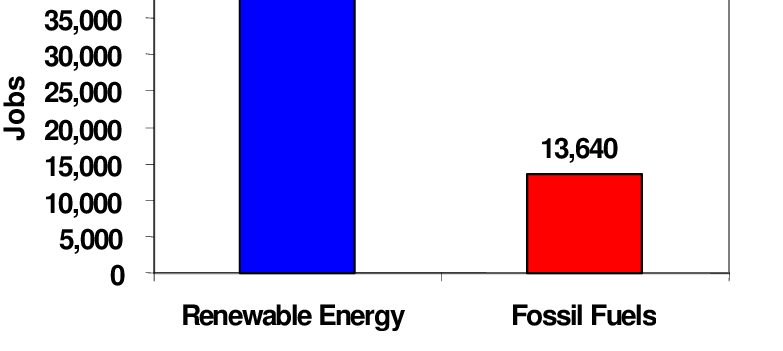
Edie 29th Oct 2020, The UK Government has earmarked £3.8bn of stimulus funding for legacy fossil fuel and nuclear generation, compared to just £121m for renewables, a damning new report has claimed. Published by global technology company Wärtsilä’s energy arm, the analysis concludes that the UK Government’s short-term plans for helping the energy sector recover from the financial impacts of Covid-19 are not aligned with the 2050 net-zero target or the interim carbon budgets.
storage capacity would be scaled up dramatically.
USA: Millions of jobs in clean energy and infrastructure – analysis finds.
“We don’t have to choose between a strong economy or a healthy environment—we can have both,” says an EPI data analyst. Common Dreams, byJessica Corbett, staff writer – 20 Oct 20, Pursuing trade and industrial policies that boost U.S. exports and eliminate the trade deficit while investing $2 trillion over four years in the nation’s infrastructure, clean energy, and energy efficiency improvements could support 6.9 to 12.9 million “good jobs” annually by 2024, according to an analysis published Tuesday.
Britain’s zero emissions policy will bring many 1000s of jobs, investing in green infrastructure
help to achieve Boris Johnson’s national renewal mission, a report
published today says. Investment in green infrastructure and technologies
will prevent long-term scarring of the labour market in the wake of the
Covid-19 crisis, the report by the London School of Economics adds.
this summer to “build back better, build back greener, build back
faster” after GDP collapsed by a record 19.8 per cent as a result of a
national lockdown.
government investment would create the maximum number of jobs while also
helping to achieve the UK’s commitment of carbon neutrality, including
renewable energy infrastructure, electric vehicle production and home
energy efficiency retrofits. The UK was the world’s first major economy
to enshrine in law a commitment to reach net zero carbon emissions by 2050.
https://www.thetimes.co.uk/edition/business/net-zero-goal-will-be-ally-of-recovery-w09wcx7hn
Wind and solar power, energy efficiency – THAT’s where the jobs are!

As fossil fuel jobs falter, renewables come to the rescue, BY JEFF BERARDELLI CBS News, SEPTEMBER 25, 2020 “…………. Professor Jay Johnson runs the Wind Energy Technician Program at Lake Region State College in eastern North Dakota, and recently he’s seen a big increase in demand. “Wind energy development has been on a tear the last few years as wind turbines have become unbelievably efficient,” he said.
According to Logan Goldie-Scot, the head of clean power research at Bloomberg New Energy Finance (BNEF), combined solar and wind power capacity has quadrupled since 2010. And in that time, installed wind capacity has increased by 260%, from 41 gigawatts to 106. BNEF expects another 60 gigawatts of wind power to be added in just the next five years.
“The amount of money being invested in wind is staggering, and people don’t realize it, but there is a 100% renewable revolution going on right underneath our feet,” says Johnson, “This all means the cost of wind-generated electricity to homeowners and businesses is the low-cost solution.”
Prices of renewable energy have indeed fallen dramatically. According to BNEF, the cost of generating power from solar photovoltaic (PV) modules has fallen by 90% since 2010, and the price of wind power has been cut in half. In fact, the prices of onshore wind and solar are now even with gas and cheaper than coal and nuclear.
Professor Jeffrey Sachs, a world-renowned economist and sustainable development expert at Columbia University, says clean energy now has several advantages over traditional fuels.
“Renewable energy now is at what is called grid parity. That means it is no more expensive to put up a solar field than it is to put up a coal plant,” explains Sachs. “The only difference is the coal plant will pollute the air, kill the people nearby and create incredible climate damage, while the solar will enable clean air and a safe and stable environment and actually put a lot more people to work.”
Recent figures show renewable energy employs about 850,000 people in the U.S. (not including some 2.3 million jobs in energy efficiency), as compared to a little more than 1 million in traditional oil, gas and coal. But most of the future job growth is projected to come from clean energy sources.
In fact, the fastest growing occupation in the U.S., according to the U.S. Bureau of Labor Statistics, is wind turbine service technician, with a median salary of about $53,000 per year. In total, the wind industry employs 120,000 U.S. workers. Solar installer is the third fastest growing occupation on the list, with a median salary of nearly $45,000.
The growth in renewable energy jobs can be explained by the fact that it is a newer, expanding industry and requires more workers per unit of energy than fossil fuels. Research shows that job creation is inherent in the transition required to combat climate change. “Such episodes of ‘creative destruction’ are often associated with innovation, job creation and growth,” as one study put it. A report by the UK Energy Research Centre concluded that for the same amount of energy produced, renewables required two to five times as many workers as compared to fossil fuels.
A poll released this week by Climate Nexus, conducted by Yale and George Mason University, finds that a large majority of registered voters in the U.S. believe combating climate change would be good for the economy. About 7 in 10 people surveyed expressed the view that government action on climate change would bolster renewable energy, create jobs and help the economy. Only about one-third thought government action on climate would impose burdensome regulations, weakening the economy and job creation.
CBS News asked Goldie-Scot how much the outcome of the 2020 presidential election would matter for the future of renewables. He says that while the industry would undoubtedly benefit more from a Democratic administration due to Joe Biden’s pledge to invest $2 trillion in clean energy and related infrastructure, “the fundamental advantages of renewables will persist despite politics. Renewables are the lowest [cost] form of generation in much of the country and renewables are popular in a number of Republican, and windy, states.”
As just one example, the typically red state of Texas is the clear leader in wind energy, generating three times as much as its nearest competitor. Sachs agrees that Republican-leaning states have the most to gain from the surge in renewables. “They could be the leaders in building the new green economy,” he said. “This is exactly a heartland issue for the United States.”
And back in the heartland, as Johnson sees more and more trainees walking through his door, he says the renewable revolution is well underway. “That’s where the jobs are, that’s where the wind energy is. It’s just free money flying across the sky.” https://www.cbsnews.com/news/renewable-energy-jobs-replacing-fossil-fuel-jobs-oil-wind/?fbclid=IwAR1aPeyOQTnh5UlpQKkRvonfkMOxT4cFwLn7uYMO-T1ckd-ldGCkOGlNNeU
As fossil fuel jobs falter, renewables come to the rescue
 As fossil fuel jobs falter, renewables come to the rescue, BY JEFF BERARDELLI CBS News, SEPTEMBER 25, 2020 In 2011, Don Williams made the long trip from Michigan to North Dakota hoping to capitalize on the Bakken oil boom — to, as he says, “chase oil and make quick cash.” It paid off; for years Williams worked in operations on the oil fields, watching over production and maintaining pump jacks.
To say that Williams worked hard would be an understatement. Putting in 12-hour days, 7 days a week — 84-hour work-weeks were typical. And the work was lucrative. The money flowed as fast as the oil did — until it didn’t. In May, Williams was laid off, along with most of the Bakken workforce, when boom went bust.
But within a week, he made a huge career leap — 300 feet up, to be exact — ascending from the firm grounds of the Bakken Oil Fields to the top of a giant wind turbine to take part in a 12-week training course to become a wind energy technician. In his words, he no longer wanted to “ride the oil waves, the highs and lows,” anymore.
While the jobs are on opposite ends of the energy spectrum — from dirty to clean and from old to new — the mechanical skills Williams gained from his time working in oil helped him navigate the career transition. And lately, many ex-oil workers are taking that same leap in hopes of finding long-term stability — something that is becoming scarcer in fossil fuels.
In the past year, two seismic shocks — a price war between Russia and Saudi Arabia, followed by global pandemic lockdowns — tanked oil demand and prices too, devastating oil and gas production in the Bakken Formation.
From June 2019 through June 2020, U.S. crude oil production fell 38% and natural gas production fell 31%. The unemployment rate in North Dakota rose to 11.3% in June. For the month of August, continued claims of unemployment in North Dakota were nearly 100,000, and about a quarter of those were tied directly to mining, quarrying and oil & gas extraction — the highest unemployment of any sector in the state.
But as luck would have it, fossil fuels aren’t the only energy source North Dakota is rich in. With an average wind speed of 20 mph 300 feet above the ground where the wind turbines churn, North Dakota is prime real estate for wind power. It ranks 10th in wind production in the U.S. with more than 3,000 megawatts (MW) of installed capacity.
Williams says he sees evidence of a renewable revolution right in his backyard, with wind turbines popping up all around his community.
He received his wind technician training at Lake Region State College, a couple hours’ drive east from the Bakken oil fields. To earn a one-year college credit certificate, the cost of the course is about $5,000. Less than a month out of the training program, Williams has already landed a wind technician job at Gemini Energy Services.
Although he says the starting salary does not quite measure up to what the oil fields paid, the trade-off of more time with his family and more stability is well worth it to him. Besides, he’s optimistic about his future financial prospects because he says the industry offers a lot of upward mobility and areas to specialize in…….. https://www.cbsnews.com/news/renewable-energy-jobs-replacing-fossil-fuel-jobs-oil-wind/?fbclid=IwAR1aPeyOQTnh5UlpQKkRvonfkMOxT4cFwLn7uYMO-T1ckd-ldGCkOGlNNeU
EDF made exaggerated and unrealistic claims about local jobs to be provided by Sizewell nuclear power project
Ipswich Star 7th Sept 2020, Independent consultants have challenged the jobs and economic benefits that building a new twin reactor nuclear power station on the Suffolk coast will bring – labelling the claims as “exaggerated” and “unrealistic”.
EDF Energy has said that Sizewell C will give the county’s economy a £125million a year boost and create 25,000 job opportunities during the 10-year construction period and 900 skilled jobs when the power plant is operational. But an independent review of EDF’s Economic Statement, assessing the impacts of Sizewell C on Suffolk’s economy, by research and analysis consultancy Development Economics – commissioned by the Stop Sizewell C campaign – has criticised key aspects of the research and evidence submitted to the Planning Inspectorate.
EDF though insists its project will deliver investment, jobs, skills, education and training for decades to come. And it says its Economic Statement in its planning application is fully compliant with relevant national policy. Development Economics though claimed some aspects were “exaggerated” and “unrealistic”. It questioned EDF’s claim of up to “2,410 jobs for Suffolk residents”, saying this included people travelling from up to 90 minutes away, which covers large population centres in Norfolk and Essex.
It said these local workers will be the overwhelming source of lower skilled roles, expected to fill 90% of jobs in ‘Site Support’ –
cleaners, bus drivers and security guards – compared with only 8% ofroles in professional and management. At peak construction 76% of the workforce will come from further away still and will have to be accommodated in the area.
https://www.ipswichstar.co.uk/news/sizewell-c-independent-economy-report-1-6824930
Bill in USA Senate to help nuclear workers made ill by radiation exposure
 Bill would expand access to comp for federal nuclear site workers https://www.businessinsurance.com/article/20200731/NEWS08/912335900/Bill-would-expand-access-to-comp-for-federal-nuclear-site-workers#, Angela Childers, July 31, 2020
A bill introduced in the U.S. Senate Wednesday would help workers at federal radioactive sites obtain workers compensation for work-related cancers and other health issues.
S.B. 4363, introduced Wednesday by Sen. Patty Murray (D-Washington), would establish an occupational disease presumption for employees at the U.S. Department of Energy’s Radioactive Waste Management Complex.
The bill is aimed at helping cleanup workers at Washington State’s Hanford Nuclear Site and other nuclear sites more easily claim workers compensation benefits when they suffer from medical conditions as a result of exposure to toxic substances, Sen. Murray’s office said Thursday in a news release.
While the state of Washington created a presumption law for Hanford workers in 2018, the federal legislation would cover workers at other Energy Department nuclear sites. The Hanford site is a 560-square-mile federally operated site known for having manufactured plutonium used in one of the atomic bombs dropped on Japan in 1945.
The U.S. Department of Justice filed a lawsuit in late 2018 over the state’s presumption law, claiming that the law discriminated against the federal government and its Energy Department contractors and aimed to directly regulate the federal government by imposing extra cleanup costs on the decommissioned site. However, a federal judge dismissed the lawsuit in June 2019.
The bill has been referred to the Senate Committee on Health, Education, Labor and Pensions.
China’s government-run nuclear institutions are experiencing a brain drain.
 Mass resignations at state-run nuclear institute alarms China https://www.wionews.com/world/mass-resignations-at-state-run-nuclear-institute-alarms-china-315515 Mass resignations at state-run nuclear institute alarms China https://www.wionews.com/world/mass-resignations-at-state-run-nuclear-institute-alarms-china-315515
WION Beijing, China Jul 23, 2020, Edited By: Palki Sharma
STORY HIGHLIGHTSReportedly, ‘China’s best minds’ had access to extremely sensitive information and their sudden resignation has raised many conspiracies and theories regarding the exodus. A crisis has erupted in a major Chinese research institute in the form of mass resignation of 90 nuclear scientists. The Communist Party has launched an investigation after calling it ”brain drain”. However, the incident has become a major concern because of the massive number that have tendered their resignation. ”China’s best minds” reportedly had access to extremely sensitive information and their sudden resignation has raised many conspiracy theories regarding the exodus. The scientists of the Institute of Nuclear Energy Safety Technology(INEST) in China’s eastern city of Hefei are now in the headlines. This institute is part of the Hefei institutes of physical science that’s under the state-run Chinese Academy of Sciences – China’s top research body. INEST specialises in advanced nuclear energy and safety technology which participates in more than 200 national and international projects. It has about 600 members and 80 per cent of the researchers have PhD degrees. Last year, INEST was in the news for developing a virtual nuclear power planet, something that can be used for safety assessment. However, the tables have turned and some serious systemic issues have come to light due to this year’s incident. In June, INEST employees clashed with the staff of their parent institute. Reports say they fought over who gets to control access to their facilities. As per a theory, the institute was unable to get big projects due to lack of funding and the researchers were poached by private companies. China’s Vice Premier Liu He has announced that a team will be sent to investigate the mass resignations. The seriousness of event can also be assessed by the fact that 90 out of the 500 members have left. Last year, the figure had dropped to 200, it is now believed that only 100 researchers work there. The fact is that scientific research in China is largely in the hands of state-run universities and research institutes. While outwardly the premise of research and innovation is the freedom to explore, it is controlled by Beijing and managed by the Communist Party of China. The jobs at state-run institutes promised stability, better benefits but young researchers are now more than willing to give up these jobs and move to the private sector for more money and more freedom. The state run institutions are the like brain trust of China and now they are witnessing a brain drain. |
|
Why did over 90 nuclear safety scientists resign en masse from an institute under the Chinese Academy of Sciences (CAS)?

 90 CAS nuclear scientists who resigned were allegedly ‘poached’
Source: Global Times 2020/7 More than 90 nuclear safety scientists with an institute under the Chinese Academy of Sciences (CAS) resigned enmasse according to media reports, with the unusual high number of resignation drawing public attention, considering the essential service the scientists provide.
An employee at the Institute of Nuclear Energy Safety Technology (INEST) under The Hefei Institutes of Physical Science (CASHIPS) of CAS said the more than 90 researchers who voluntarily left their jobs were “poached” and the resignations were part of “normal staff turnover,” the Shanghai-based news website thepaper.cn reported Thursday.
The employee didn’t identify which company or institute may have recruited the researchers.
INEST, located in Hefei, capital of Central China’s Anhui Province, a hub of China’s scientists, has about 600 members and 80 percent of researchers have PhD degrees, according to the institute’s website………Earlier media reports show the resignations were triggered by a conflict with new security staff hired in mid-June at INEST.
According to the official website, INEST was established in September 2011. It is devoted to the design and R&D of advanced nuclear energy and safety technology, and also an independent nuclear safety assessment center with the aim of promoting the sustainable development of nuclear science and technology.
The employee said the 90-plus researchers submitted their resignations in June. https://www.globaltimes.cn/content/1194812.shtml
1 This Month
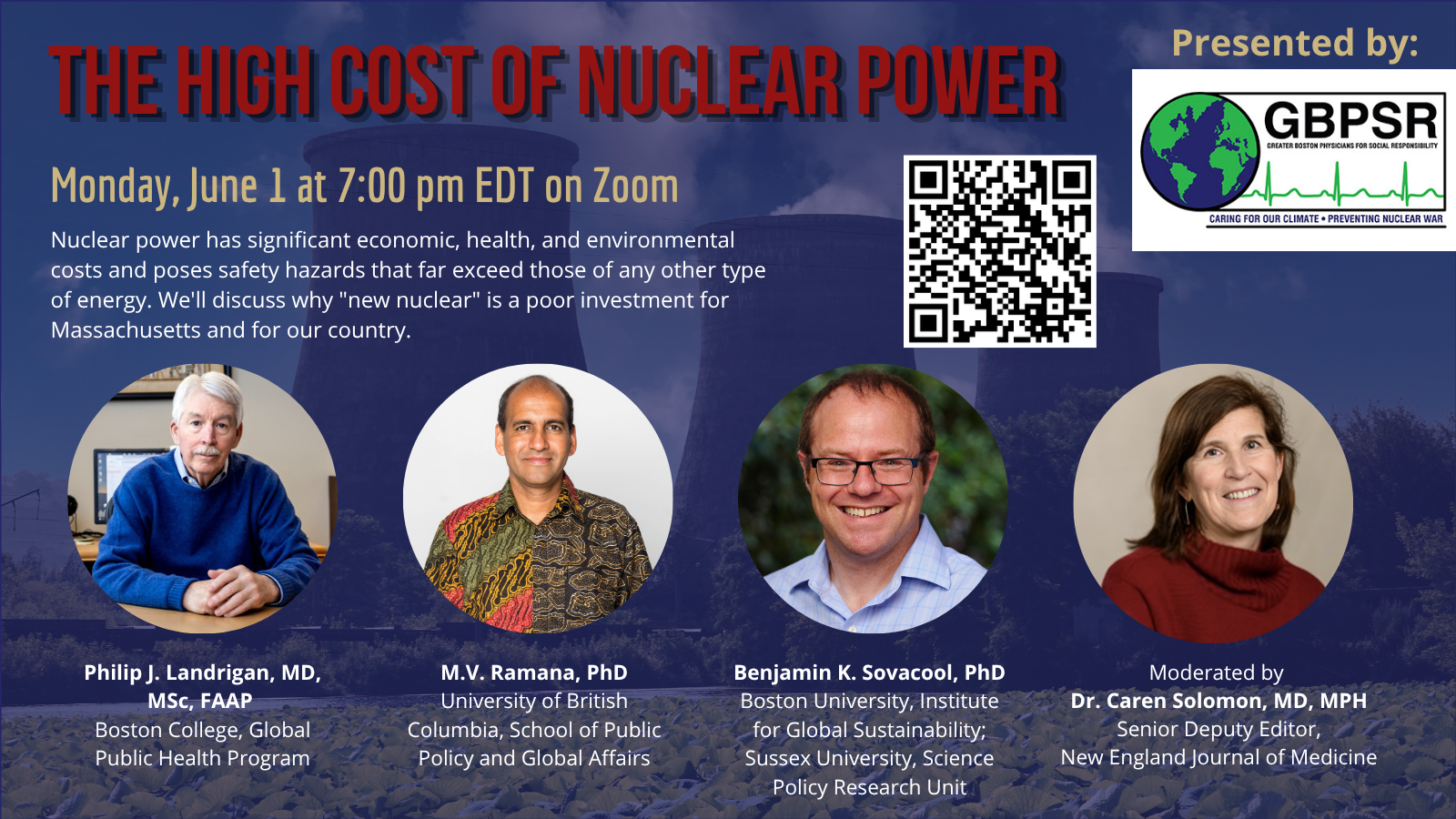
1 June Webinar – The High Cost of Nuclear Power – Register
6 June – WEBINAR- Get Inspired by Protests Against Military Bases!


Cuba Is Not a Failed State – It Is a Besieged State
PETITION: “Global Appeal to Endorse Palestinian Right of Return of Refugees”



of the week– Nuclear Reactor Information Task Force
To see nuclear-related stories in greater depth and intensity – go to https://nuclearinformation.wordpress.com
-
Archives
- June 2026 (27)
- May 2026 (306)
- April 2026 (356)
- March 2026 (251)
- February 2026 (268)
- January 2026 (308)
- December 2025 (358)
- November 2025 (359)
- October 2025 (376)
- September 2025 (257)
- August 2025 (319)
- July 2025 (230)
-
Categories
- 1
- 1 NUCLEAR ISSUES
- business and costs
- climate change
- culture and arts
- ENERGY
- environment
- health
- history
- indigenous issues
- Legal
- marketing of nuclear
- media
- opposition to nuclear
- PERSONAL STORIES
- politics
- politics international
- Religion and ethics
- safety
- secrets,lies and civil liberties
- spinbuster
- technology
- Uranium
- wastes
- weapons and war
- Women
- 2 WORLD
- ACTION
- AFRICA
- Atrocities
- AUSTRALIA
- Christina's notes
- Christina's themes
- culture and arts
- Events
- Fuk 2022
- Fuk 2023
- Fukushima 2017
- Fukushima 2018
- fukushima 2019
- Fukushima 2020
- Fukushima 2021
- general
- global warming
- Humour (God we need it)
- Nuclear
- RARE EARTHS
- Reference
- resources – print
- Resources -audiovicual
- Weekly Newsletter
- World
- World Nuclear
- YouTube
-
RSS
Entries RSS
Comments RSS
 nuclear-news