Fukushima Disappearing? An on-the-ground report by Beverly Findlay-Kaneko

November 20, 2019
Fukushima Disappearing? An on-the-ground report by Beverly Findlay-Kaneko. She lived in Yokohama, Japan for 20 years until March 2011 after the Great Eastern Japan Earthquake. She worked at Yokohama National University and The Japan Times. Beverly has a Master’s degree in East Asian Studies from Stanford University, and speaks Japanese fluently.
Since returning from Japan, Beverly and her husband, Yuji Kaneko, have been active in raising awareness about nuclear issues, including the nuclear accident at Fukushima. Their main activities have included organizing speaking tours, giving presentations, networking in activist and nuclear-impacted communities in the U.S. and Japan, and co-producing the annual Nuclear Hotseat podcast “Voices from Japan” special on Fukushima.
South Korea nuclear regulator wants information on radioactive Fukushima water release
 A geiger counter measures a radiation level of 54.0 microsievert per hour near the No.2 and No.3 reactor buildings at Tokyo Electric Power Co’s (TEPCO) tsunami-crippled Fukushima Daiichi nuclear power plant in Okuma town, Fukushima prefecture, Japan February 18, 2019
November 20, 2019
SEOUL (Reuters) – Japan’s reluctance to disclose information about the release of radioactive water from its damaged Fukushima nuclear plant is hampering neighboring countries’ efforts to minimize the impact, the head of South Korea’s nuclear safety agency said on Wednesday.
Since the 2011 earthquake and tsunami caused a meltdown at some of the reactors the Fukushima plant, owner Tokyo Electric Power Co (Tepco) has been storing radioactive water in tanks at the site from the cooling pipes used to keep the fuel cores from melting. The utility will run out of space for the water in 2022.
Japan has not yet decided how to deal with the contaminated water, but its environment minister said in September that radioactive water would have to be released from the site into the Pacific Ocean.
“We have been raising Japan’s radioactive water issue to the international community to minimize the impact … but as Japan hasn’t disclosed any specific plan and process we would need more details to run simulations and study,” Uhm Jae-sik, chairman of the Nuclear Safety and Security Commission, told Reuters.
In addition to the Fukushima crisis, safety concerns about nuclear energy have increased in South Korea following a 2012 scandal over the supply of faulty reactors parts with forged documents, prompting a series of shutdowns of nuclear reactors.
South Korea, the world’s fifth-largest user of nuclear power, targets a long-term phase out of atomic power to allay public concerns.
“Regardless of the government’s energy policy change, our primary goal is ensuring the safety of nuclear power,” Uhm said.
South Korea operates 25 nuclear reactors, which generate about a third of the country’s total electricity. Of the 25 reactors, 10 are offline for maintenance, according to the website of Korea Hydro & Nuclear Power.
(This story corrects the word “specific” to clarify meaning in translated quote in paragraph 4)
Japan grapples with serving Fukushima food at Olympics

November 20, 2019
For years, Japan’s government has sought to convince consumers that food from Fukushima is safe despite the nuclear disaster. But will it serve the region’s produce at the Tokyo Olympics?
It’s a thorny subject for the authorities. They pitched the Games in part as a chance to showcase the recovery of areas affected by the 2011 tsunami and nuclear disaster.
Government officials tout strict checks on food from the region as evidence that the produce is completely safe, but it remains unclear whether athletes and sports teams from around the world will be convinced.
In the Fukushima region, producers are keen to see their products served at the Olympic village and have submitted a bid to the organisers.
“The Fukushima region has put forward food from 187 producers and is second only to Hokkaido when it comes to meeting the specified criteria in terms of range of products,” said Shigeyuki Honma, assistant director general of the local government’s agriculture and forestry planning division.
“Fukushima wants to serve athletes its rice, its fruits, beef and vegetables. But the committee still has to decide.”
In the years since the nuclear disaster, when tsunami waves overwhelmed the Fukushima Daiichi nuclear plant, strict measures have been in place to screen all manner of local products.
And officials say the figures speak for themselves.
Japan allows a maximum of 100 becquerels of caesium radioactivity per kilogramme (Bq/kg). The European Union, by comparison, sets that level at 1,250 Bq/kg and the US at 1,200.
From April 2018 to March this year, 9.21 million bags of rice were examined, with not a single one exceeding the Japanese limit.
The same for 2,455 samples of fruit and vegetables, 4,336 pieces of meat and 6,187 ocean fish.
“Only river fish and wild mushrooms have on just six occasions been found to exceed the limits,” said Kenji Kusano, director of the Fukushima Agricultural Technology Centre, in Koriyama, the government’s main screening site.
– ‘Objective data’ –
But the figures have only gone some way to reassuring foreign officials: numerous countries including China, South Korea, and the United States maintain restrictions on the import of some or all produce from Fukushima.
South Korea, which is currently locked in a dispute with Japan over wartime issues, has been vocal about its concerns ahead of the Olympics, even raising the possibility of bringing in its own kitchen and food.
“We have requested the Olympic organisers to provide objective data verified by an independent third body,” the South Korean Sports and Olympic Committee said in a statement earlier this year.
“Since Japan repeatedly said its food from Fukushima is safe, we have demanded they provide statistics and data to back up their claims,” an official with the committee told AFP.
The position underlines a long-running problem for Japan: while it points to its extensive, government-mandated checks as proof of safety, many abroad feel the government is not an objective arbiter.
“Generally, Japanese citizens have faith in the government, and we haven’t felt the need to have checks carried out by independent parties,” said Kusano.
But lingering questions have left some officials feeling “perhaps (third-party checks) may be important from the point of view of foreigners,” he added.
– ‘Completely safe’ –
The International Olympic Committee said it was still weighing how to handle the matter.
“Food menus and catering companies for the Olympic Village are under discussion and have yet to be defined,” a spokesman told AFP.
The Tokyo 2020 organisers said promoting areas affected by the 2011 disaster remains a key goal.
“Supporting the area’s reconstruction efforts through the sourcing of its food and beverage products is one of our basic strategies; we are therefore seriously considering doing this,” 2020 spokesman Masa Takaya told AFP.
He said rules on what food and drink could be brought in independently by teams were still being reviewed.
And, pointing to the strict standards of Japanese checks, he said the organisers “are confident the food we will serve to athletes will be completely safe.”
In Fukushima, producers can only wait and hope for the best.
Tomio Kusano, a pear farmer in Iwaki on the Fukushima coast, struggled enormously after the disaster.
“My world really collapsed, but I never thought for a second of quitting,” he said.
And his perseverance is finally paying off, he said.
“I don’t get subsidies any more. My pears are inspected and there are no problems. They are selling well again in Japan, and Vietnam has started to import them.”
https://news.yahoo.com/japan-grapples-serving-fukushima-food-olympics-021559562–oly.html
Fukushima operator accused of cover-up over ‘contaminated’ water set to be poured into the Pacific
 Fukushima Dai-ichi operator Tepco said that concerns over security prevented independent testing of the water being stored in vast tanks
Fukushima operator accused of cover-up over ‘contaminated’ water set to be poured into the Pacific
19 November 2019
The Japanese government has been accused of a cover-up after it refused to allow independent testing of water from the Fukushima power plant that is likely to be released into the Pacific Ocean.
Officials at the industry ministry on Monday said the water stored at the crippled nuclear site was “safe” to release into the Pacific Ocean, despite concerns about radioactive material from environmental and citizens’ groups.
Following a recent visit to the plant, the Tokyo Electric Power Co (Tepco) told The Telegraph that concerns over security prevented independent testing.
“Other organisations are not permitted to carry out tests of the water”, Hideki Yagi, a spokesman for Tepco, told The Telegraph.
“If we are going to allow external organisations to test the treated water then we would need to go through very strict procedures and due process because that water is contaminated. If it is taken outside this facility, then there need to be strict regulations”.
Both Greenpeace and the Citizens’ Nuclear Information Centre (Cnic), an anti-nuclear lobbying group, suggested that Tepco may be trying to cover up the true scale of contamination of water stores at the site.
Shaun Burnie, senior nuclear specialist for Greenpeace, says the refusal to permit third-party testing only serves to raise new concerns about plans to discharge the water into the ocean.
“Moving nuclear material always carries risk, but for the purpose of independent analysis it would be justified”, he said. “Tepco has lost trust across society in Japan as well as in the international community, including in South Korea, and providing samples for analysis would be in their best interests – unless they are covering something up.
“There are many questions about the effectiveness of Tepco’s … technology so providing samples that could verify their reports on content would go some way to demonstrating their commitment to transparency”, Mr Burnie added.
“It won’t remove doubts that they are covering up major issues at the site – but would be an improvement on the current situation”.
Hideyuki Ban, co-director of Cnic, said: “There would need to be lots of checks because there is a lot of water, but right now it looks very much to the outside world that they are trying to cover something up – as they have a long history of doing – and it would be very much in their best interests to be transparent on this.
“If they don’t, how will they ever get back any of the public trust that they have lost completely since the accident?” Mr Ban said.
During a recent visit to the plant, Tepco officials told The Telegraph that a decision on how to dispose of the water must be made soon as tanks at the site are already near capacity and there is limited space to construct new storage facilities. The company estimates that capacity will be reached in the summer of 2022.
The industry ministry on Monday told a government committee considering methods to dispose of the more than a million tons of water presently being stored in hundreds of tanks at the site that the risk to humans associated with releasing the water into the ocean would be “small”.
Discharging the water into the Pacific over the course of a year would amount to between just one-1,600th and one-40,000th of the radiation to which humans are naturally exposed, the ministry officials told the committee.
Estimates indicate that annual radiation levels near the release point after a release would be between 0.052 and 0.62 microsieverts at sea, the officials said, and 1.3 microsieverts in the atmosphere. That compares with around 2,100 microsieverts that humans come into contact with each year in everyday life.
The ministry how emphasised that no final decision has been reached on how or when the water will be disposed of.
The water became contaminated with radiation when it was used to cool three of the six reactors at the plant that suffered melt-downs after being damaged in the March 2011 earthquake and tsunami. Ground water is also seeping into the basement levels of the reactor buildings, with an additional 120 tons of water accumulating every day.
Tepco was forced to admit earlier this year that efforts to remove varying amounts of 62 radionuclides – including strontium, iodine, caesium and cobalt – from the water through the ALPS equipment had not been completely successful.
Officials of the company have added that testing of the water is presently carried out by Tokyo Power Technology Ltd, which it claims has advanced analytical skills and “very high” reliability. Tokyo Power Technology is a subsidiary of Tepco that was set up two years after the Fukushima disaster.
Monitoring is also conducted by the government-funded Japan Atomic Energy Agency and the Japan Chemical Analysis Centre.
Azby Brown, lead researcher for Tokyo-based monitoring organisation Safecast Japan, a group that monitors radiation, said the lack of transparency means the risks to marine life of releasing the water are relatively unknown.
“We don’t have enough data to evaluate the impact that any release with those concentrations will have on marine life,” he said.
“The expected doses that they are talking about are quite low and therefore the amount of radiation that is absorbed into marine life and then into humans when they eat fish would also be quite low.
“But that has to be full of caveats because the way that information has been presented is confusing and not transparent so ordinary people do not understand and cannot make informed decisions.”
 Tepco has been accused of shielding up the trusty scale of contamination of water stores at the positioning
Fukushima accused of cover-up over ‘contaminated’ water set to be poured into the Pacific
November 19, 2019
The Eastern authorities has been accused of a quilt up after it refused to enable honest checking out of water from the Fukushima vitality plant that is doubtless to be launched into the Pacific Ocean.
Officers at the industry ministry on Monday said the water saved at the crippled nuclear plan used to be “capable” to release into the Pacific ocean, despite concerns about radioactive cloth from environmental and citizens’ groups.
Following a most modern consult with to the plant, the Tokyo Electrical Energy Co (Tepco) instructed The Telegraph that concerns over security prevented honest checking out.
“Assorted organisations are now not permitted to internet exams of the water”, Hideki Yagi, a spokesman for Tepco, instructed The Telegraph.
“If we’ll enable exterior organisations to take a look at the treated water then we would deserve to struggle thru very strict procedures and due route of because that water is rotten. If it is taken originate air this facility, then there wish to be strict rules”.
The corporate estimates water storage ability will seemingly be reached within the summer season of 2022
Both Greenpeace and the Electorate’ Nuclear Files Centre (Cnic), an anti-nuclear lobbying community, instructed that Tepco might perhaps well perhaps be attempting to quilt up trusty scale of contamination of water stores at the positioning.
Shaun Burnie, senior nuclear specialist for Greenpeace, says the refusal to permit third-internet collectively checking out only serves to fetch unique concerns about plans to discharge the water into the ocean.
“Transferring nuclear cloth repeatedly carries possibility, but for the unbiased of honest diagnosis it might perhaps perhaps truly perhaps be justified”, he said. “TEPCO has misplaced belief across society in Japan moreover within the worldwide community, including in South Korea, and providing samples for diagnosis might perhaps well perhaps be in their most efficient interests – unless they are maintaining something up.
“There are a form of questions regarding the effectiveness of Tepco’s … technology so providing samples that can additionally voice their reports on affirm material would scamper some technique to demonstrating their dedication to transparency”, Mr Burnie added.
“It will additionally now not settle away doubts that they’re maintaining up foremost points at the positioning – but might perhaps well perhaps be an development on the sizzling worry”.
Hideyuki Ban, co-director of Cnic, said: “There would deserve to be tons of assessments because there is a form of water, but decent now it looks to be very powerful to the originate air world that they’re attempting to quilt something up – as they bear a lengthy history of doing – and it might perhaps perhaps truly perhaps be very powerful in their most efficient interests to be clear on this.
“In the occasion that they don’t, how will they ever internet attend any of the general public belief that they bear misplaced fully since the accident?” Mr Ban said.
The tsunami water engulfed the vitality plant
Credit:
AP
During a contemporary consult with to the plant, Tepco officers instructed The Telegraph that a resolution on easy suggestions to internet rid of the water desires to be made rapidly as tanks at the positioning are already advance ability and there’s dinky suppose to create unique storage facilities. The corporate estimates that ability will seemingly be reached within the summer season of 2022.
The industry ministry on Monday instructed a authorities committee brooding about suggestions to internet rid of the higher than 1 million a form of water presently being saved in tons of of tanks at the positioning that the possibility to humans connected to releasing the water into the ocean might perhaps well perhaps be “small”.
Discharging the water into the Pacific over the route of a yr would quantity to between decent one-1,600th and one-40,000th of the radiation to which humans are naturally exposed, the ministry officers instructed the committee.
Estimates conceal that annual radiation phases advance the release level after a release might perhaps well perhaps be between 0.052 and nil.62 microsievert at sea, the officers said, and 1.3 microsieverts within the ambiance. That compares with spherical 2,100 microsieverts that humans reach into contact with each and each yr in everyday lifestyles.
The ministry how emphasised that no final resolution has been reached on how or when the water will seemingly be disposed of.
The water turned rotten with radiation when it used to be used to frosty three of the six reactors at the plant that suffered soften-downs after being broken within the March 2011 earthquake and tsunami. Ground water is additionally seeping into the basement phases of the reactor buildings, with an further 120 a form of water collecting each and on daily basis.
Tepco used to be compelled to admit earlier this yr that efforts to settle away varying quantities of 62 radionuclides – including strontium, iodine, caesium and cobalt – from the water thru the ALPS instruments had now not been fully a hit.
Officers of the corporate bear added that checking out of the water is presently implemented by Tokyo Energy Technology Ltd, which it claims has evolved analytical expertise and “very high” reliability. Tokyo Energy Technology is a subsidiary of Tepco that used to be arrange two years after the Fukushima catastrophe.
The magnitude 9 earthquake caused a large natural catastrophe
Credit:
EPA
Monitoring is additionally performed by the authorities-funded Japan Atomic Energy Agency and the Japan Chemical Prognosis Centre.
Azby Brown, lead researcher for Tokyo-essentially based totally mostly monitoring organisation Safecast Japan, a community that shows radiation, said the dearth of transparency technique the dangers to marine lifetime of releasing the water are quite unknown.
“We blueprint now not bear ample recordsdata to deem the affect that any release with these concentrations might perhaps well perhaps bear on marine lifestyles”, he said..
“The anticipated doses that they’re talking about are fairly low and attributable to this truth the quantity of radiation that is absorbed into marine lifestyles after which into humans after they eat fish would additionally be fairly low
“Nevertheless that must be paunchy of caveats for the reason that technique that recordsdata has been provided is confusing and now not clear so traditional of us carry out now not understand and might perhaps well perhaps now not assemble instructed decisions.”
Undersea survey for new nuke plant deferred due to protests in western Japan
When will the Japanese government and big utilities ever learn? Aren’t three meltdowns at Fukushima Daiichi enough to teach them that there is NO future in building new nukes!
 A planned construction site for the Kaminoseki nuclear power station is seen in the foreground, while Iwaishima Island lies in the background, in the town of Kaminoseki, Yamaguchi Prefecture, on May 29, 2019.
November 15, 2019
SHUNAN, Yamaguchi — An undersea boring survey for the construction of a nuclear power plant on a planned land reclamation site off Kaminoseki, Yamaguchi Prefecture, has been deferred due to protests by local residents opposing the project.
Chugoku Electric Power Co. had originally planned to start the survey on Nov. 14 in waters off Kaminoseki in western Japan, and complete it by Jan. 30 next year. However, daily protests by anti-nuclear power residents aboard fishing boats and inclement weather had delayed measurements and other preparation work, prompting the power company to postpone the survey.
The Hiroshima-based utility intends to study whether there are active faults in the area by drilling the seabed to a depth of about 60 meters. The survey falls under preparations for safety screening accompanying construction of the Kaminoseki nuclear plant under new regulatory standards for nuclear complexes introduced in the wake of the 2011 Fukushima nuclear disaster. The Yamaguchi Prefectural Government had granted permission for the boring survey on Oct. 31.
The power company plans to start boring after ensuring safety in the area. Residents, meanwhile, say they will continue their protests.
https://mainichi.jp/english/articles/20191115/p2a/00m/0na/010000c
Radioactive soil spilled over into roads, rivers, during Typhoon Hagibis, report says

TEPCO estimates tritium volume for disposal from Fukushima plant

Experts warn against fires from disaster waste after Typhoon Hagibis

Japan’s METI says it’s ‘safe’ to dump radioactive water from Fukushima nuclear disaster into ocean

Dangerous radioactive hot particles span the globe
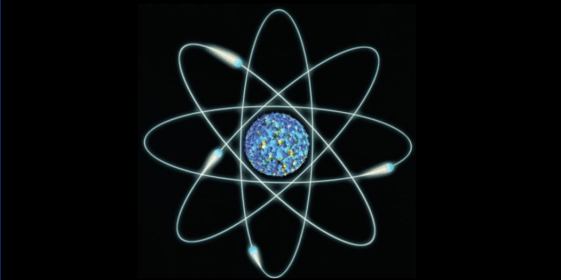
Citizen scientists are uncovering risks that governments would rather cover up
By Cindy Folkers
When reactors exploded and melted down at the Fukushima nuclear power complex in March 2011, they launched radioactivity from their ruined cores into the unprotected environment. Some of this toxic radioactivity was in the form of hot particles (radioactive microparticles) that congealed and became airborne by attaching to dusts and traveling great distances.
However, the Fukushima disaster is only the most recent example of atomic power and nuclear weapons sites creating and spreading these microparticles. Prior occurrences include various U.S. weapons sites and the ruined Chernobyl reactor. While government and industry cover up this hazard, community volunteer citizen science efforts – collaborations between scientists and community volunteers – are tracking the problem to raise awareness of its tremendous danger in Japan and across the globe.
After the Fukushima nuclear disaster began, one highly radioactive specimen, a particle small enough to inhale or ingest, was found in a private home where it should not have been, hundreds of miles from its source, in a vacuum cleaner bag containing simple house dust.
This “high activity radioactively-hot dust particle” came from a house in Nagoya, Japan – after it had traveled 270 miles from Fukushima. The only radioactive particle found in the home’s vacuum cleaner bag, it was an unimaginably minuscule part of the ruined radioactive core material from Fukushima – many times smaller than the width of a human hair. We know it came from Fukushima because it contained cesium-134, meaning that the particle came from a recent release, and we know it is a piece of core material specifically because it was so radioactive that it could not have come from any other material.
 (Image courtesy of Arnie Gundersen/Fairewinds)
Most of the particle’s radioactivity came from cesium-134 and cesium-137. By the time it was collected, some of the particle’s radioactivity, mostly from iodine-131, had already decayed. Named “corium” by scientists, it was still thousands of times more radioactive (5,200,000,000,000,000 disintegrations per second per kilogram — that’s 5.2 quadrillion more than the average activity (26,000 disintegrations per second per kilogram) found in dust and soil samples collected through community volunteer efforts from across Japan — with a focus on areas around Fukushima — since the 2011 nuclear disaster began. By way of comparison, in the U.S., average soil and dust activity is thousands of times lower.
Due to privacy concerns, we are not permitted to know the identities of the Nagoya residents who participated in the dust sampling collection and in whose home the particle was found. Nor do we know how many people lived in the home; if there were children or babies present; or pets; or pregnant women. And we will never know if there were any other radioactive microparticles in the home that did not make it into that vacuum cleaner bag.
We do not know how the particle got there. No one in the home (nor the vacuum cleaner) had any connection to the Fukushima reactors or the exclusion zone. Was the particle transported by a car tire into their city? On someone’s shoes? Did it fly in through a window after being lofted by air currents? Did it arrive by a combination of forces? We do not know if other particles like this travelled just as far in all directions, or who may have taken a breath at just the wrong moment, so that a similar microparticle might be lodged in their lungs.
We do know the residents in Nagoya were notified about the particle’s presence, and that if it had been inhaled or ingested, it could have proven lethal over time. This corium particle would have destroyed tissue near it, potentially threatening the function of any organ that tissue was part of. But the particle’s additional danger would come from what it didn’t destroy – that is tissue that is damaged but survives and can go on to mutate into cancer or non-cancer diseases.
 A map showing the distance between Nagoya, where the radioactive “hot particle” was found, and Fukushima.
We also know that had scientists and citizens not worked together to collect samples, we would never have known a microparticle of corium existed at all at a distance so far away from the Fukushima meltdowns. If the presence of this particle – and its potential for inhalation – had gone unnoticed, any calculations of the doses to residents of this home would have been significantly underestimated. And while the Nagoya particle may simply be an outlier, it shows how inaccurate radiation risk assessment has turned out to be. All of these microparticles, even ones less radioactive, may pose significant health risks inside the body that are currently uncalculated.
Citizen and scientists collaborations show us that radioactive microparticles are a worldwide problem. Yet action by public health advocates and government officials has been slow to nonexistent in recognizing this danger, much less working to protect people against exposure from it. Detecting radioactive microparticles is extremely difficult, in part because detecting them and proving their danger requires specialized techniques and equipment. But this is no excuse for governments to ignore the problem altogether as they continue to do. When experts tell us what our risks are from radiation exposure, risks from these microparticles remain unaccounted for in every country in the world. Speculation swirls around these particles and whether the rapid-onset cancers occurring in Japan are possibly due to their presence.
Radioactive particles across the globe
Collections of various samples (home air filters, vehicle engine intake filters, soils, samples of dust from vacuum cleaner bags) have revealed radioactive microparticles from Fukushima made it as far as Seattle, WA and Portland, OR in the U.S.,and to the Western coast of Canada.
Not surprisingly, microparticles in Japan were much more radioactive than those that made their way to the U.S. and contained more varied radioisotopes, thus posing a much greater health risk. In the case of some filters in Japan, contamination was high enough to be classified as “radioactive waste.”
In addition to catastrophic releases from nuclear power facilities, these particles come from atomic detonations, other nuclear industry processes such as mining and atomic fuel fabrication, and nuclear facility releases of radioactivity, as well as leaking atomic waste dumps. Nuclear workers, First Nations Tribes, and local residents have submitted samples for testing around such facilities. Particles have been detected in the environment and in house dusts in communities around weapons facilities in Los Alamos, NM; Hanford, WA; and Rocky Flats, CO. Thorium, plutonium, and uranium from nuclear facilities were found “outside of radiation protection zones,” including workplaces, workers’ homes and cars. “Given the small respirable size of these radioactive microparticles, they are a potential source of internal exposure from inhalation or ingestion,” according to Dr. Marco Kaltofen of Worcester Polytechnic Institute.
 A traditional sacred Japanese shrine, whose backdrop is covered bags of radioactively contaminated soil. (Photo courtesy of Arnie Gundersen/Fairewinds)
In some cases, radioactive particle releases can be higher from nuclear power catastrophes than disasters at atomic bomb facilities. In 1986, Chernobyl also released radioactive particles that still contaminate the environment today. . Forest fires are spreading them further. Current community volunteer citizen science efforts are underway in the environs of the Santa Susana Field Laboratory (SSFL) – a former reactor test site adjacent to Simi Valley, CA – and the site of several unanticipated and unmonitored nuclear releases, a meltdown, and the November 2018 Woolsey forest fire.
Similar work is being carried out in Pike County, OH, host to a uranium enrichment facility for military and civilian nuclear reactors that has spread radioactive contamination to a nearby middle school, the grounds of which have now been quarantined. The U.S. Department of Energy hid the school contamination for two years, prompting public outrage and calls for health investigations into the high incidence of local childhood disease.
Ignoring danger to human health, environment
The U.S. Nuclear Regulatory Commission (NRC) currently has an existing 10-mile emergency planning radius around commercial nuclear power reactors, a zone the NRC does not place around other nuclear facilities. This 10-mile zone is not large enough to account for exposures that often occur well outside of it.
While the NRC is aware of the radioactive microparticle threat, its dose models fail to provide the extensive, detailed calculations required to actually protect anyone working at or living near these sites. Since radioactive microparticles remain a threat for generations after a catastrophe begins, the NRC should account for continuing exposure to communities and their people for the decades or centuries it takes for such materials to be safe for human or animal exposure.
The author wishes to thank Arnie and Maggie Gundersen at Fairewinds Energy Education for technical and editorial input. Cindy Folkers is the radiation and health specialist at Beyond Nuclear.
Headline photo: “3S0578” by Billy and Lynn is licensed under CC BY-NC-ND 2.0
Work at reactors to be suspended during 2020 Games

Japan nuclear plant safety costs increase 5-fold over 6 years to 5.4 trillion yen

Fukushima Workers Battle Leukemia – and Bureaucracy

November 13, 2019
Editor’s Note
The March 2011 tsunami, and the subsequent meltdown of three reactors at the Fukushima nuclear power plant, has had a devastating impact on Japan. Eight years later, and most journalists – in Japan and abroad – have forgotten about the story. But for many, the struggle continues.
This is especially true of workers who helped assist in the cleanup effort at Fukushima. Some Fukushima workers have contracted severe diseases – including cancer and leukemia – since their work concluded. The government of Japan has even certified that some cases are a result of recovery work. But workers who are fighting for their lives also find themselves fighting the system. Tokyo Electric (TEPCO), which led the recovery effort, refuses to admit any connection between the cleanup work and subsequent diseases in workers. And many insurance companies are pointing to the fine print in private insurance contracts stating they don’t cover accidents at nuclear facilities.
Unseen Japan has been pleased to partner with photojournalist Hiro Ugaya (烏賀陽弘道) to translate his interviews with evacuees and former evacuees, and to document the ongoing struggle of the victims of this tragedy.
We previously published Hiro’s interview with a mother in the city of Minamisoma. In this installment, we share the first part of Hiro’s interview with Mr. Ikeda (pseudonym), a Fukushima nuclear reactor cleanup volunteer who now finds himself fighting two uphill battles.
(Translation from an article originally published on Note.mu. Translation by Jay, Editor/Publisher, Unseen Japan. All photos used with permission of Hiro Ugaya.)
Ikeda’s Story
For this installment of the Fukushima Report, I visited Northern Kyushu City in Fukuoka prefecture. I departed from Tokyo and flew west, in the direction opposite Fukushima.
I went to Fukuoka, which is quite far from Fukushima. That’s where the leukemia-stricken Ikeda Kazuya (age 44; pseudonym) has lived since participating in the Daichi Nuclear Reactor reconstruction efforts. I had visited Ikeda once in 2017 to hear his story. Among all my interviews here in the Fukushima Report, it’s the one that’s reverberated the loudest.
Mr. Ikeda volunteered to participate in the restoration work at the Fukushima Daiichi nuclear power plant. By trade, he’s an independent welder. In March 2011, when so many people died due to the tsunami, he looked at the report of the death of a small child and thought, “I need to do something useful for Tohoku” [Editor: the region of Japan hit by the tsunami]. He asked permission from his boss and threw himself into the reconstruction effort. The interior of the heavy machinery room of Reactor 4 butts up against the nuclear fuel rod pool.
 Mr. Ikeda during Fukushima cleanup.
But in 2013, Mr. Ikeda came down with leukemia.
Mr. Ikeda is one of the first cancer patients that the country recognizes as a work-related accident connected to the Fukushima Daiichi nuclear power plant. Two Fukushima workers contracted leukemia (bone marrow cancer), and one contracted thyroid cancer. The first case of leukemia was recognized in October 2015. The second was recognized in August 2016. The third person, who had thyroid cancer, was certified in December 2016.
As of May 2019, there are six patients in the country whose cases have been recognized as occupational accidents caused by work at the Fukushima Daiichi nuclear power plant. To tell the truth, I was quite surprised that the country recognized them as occupational accidents. Judging from the history of pollution diseases, such as Minamata disease and Itai-itai disease, I predicted the government would probably prevaricate and not admit a causal relationship. But the government admitted it readily (employing a lot of rhetoric, of course, such as “This is not an admission of a scientific, causal relationship”).
From a global and historical perspective, the admission is rare. In the Three Mile Island nuclear accident (1979) in the US, more than 2000 lawsuits have been filed, but no relationship between health damage and exposure has been admitted in even a single case. The state government naturally won’t admit it, and the courts don’t either.
Due to this admission, the assertion that “the radiation leakage from the Fukushima Daiichi nuclear accident is mild enough not to damage health” fell apart.
In the Chernobyl nuclear accident in the former Soviet Union, the first to suffer serious harm were the so-called “Liquidators,” the firefighters and soldiers who were the first responders. Nearly 5,000 people died. Naturally, people who are close to radiation-intensive sites will become seriously ill. The same phenomenon occurred in the Fukushima Daiichi nuclear power plant accident.
While the case was recognized as a workplace injury, Mr. Ikeda filed a lawsuit against Tokyo Electric (TEPCO), which ran the restoration project. That’s because TEPCO doesn’t “recognize a causal relationship between Mr. Ikeda’s leukemia and exposure to radiation at the Fukushima Daiichi nuclear power plant.”
I’ve long found it mysterious that not a single TV station, weekly newspaper, web media or other news outlet has done an article on those like Mr. Ikeda who contracted deadly diseases from the nuclear reactor recovery work. Since the government’s announcement certifying them as workplace injuries, there’s been dead silence. Those affected can’t be heard in their own voices.
For a nuclear accident to occur and three reactors to meltdown (even at Three Mile Island and Chernobyl, two such past events, only one reactor melted down) is an event of worldwide and historic proportions. In addition, 200,000 people becoming refugees from the area is a war-level crisis. In addition, there’s the damage toll on six people, starting with Mr. Ikeda, who’ve contracted fatal diseases. I can’t think of any news that’s more important to record in the annals of history than the actual voices of these victims.
The silence of the mass media in the face of such a reality astonishes me. I ‘m tempted to think they all, through some shared intent, decided to suppress the story.
If Mr. Ikeda refuses interviews, I’d get that. But that’s not the case. Since the legal proceeding began, Mr. Ikeda has traveled from Kitakyushu to the Tokyo District Court once every few months. He leaves the courthouse, after which there’s a public briefing session. I also went there and was granted leave to interview people.
If other reporters did this, they could hear Mr. Ikeda’s story too.
I try and attend whenever there’s a court session. In Tokyo, Mr. Ikeda is busy with supporters and lawyers, so he doesn’t have time to interview. So I went to his home in Kitakyushu, where I soaked up his story. This was in March 2017 – two years ago.
During that time, every time I met Mr. Ikeda and talked with him, I realized he was recovering little by little. Let’s talk about what’s happened since. It was April 2019 when I flew back to Kitakyushu again.
This time, Mr. Ikeda pointed out something important. People who work in nuclear facilities such as nuclear power plants are not covered by private insurance, even if they have an accident or get sick. It’s in the so-called “disclaimer.”
If if you can’t work and fall into hard times, unless the country certifies it as a workplace accident, there’s no path to salvation. For subcontractors who are not in-house employees, TEPCO and other electric power companies have denied any compensation or even causality.
People who engaged in the dangerous work of recovering the nuclear power plant post-meltdown have been left naked and defenseless. And few people notice it. Even insurance companies don’t care. I want to fix this abnormality.
Here’s what Mr. Ikeda told me.
A Return to Normalcy?
 A set of fishing lures at the Ikeda home. For Mr. Ikeda and his kids, fishing is an important family pastime.
It’s been two years since I’ve seen you. When I last saw you, you told me, “I have to make memories with my kids,” and you’d planned to go skiing or fishing or whatnot in spite of your illness. I heard that and thought, “This is someone who’s truly prepared to die.”
I think, before, I had contracted leukemia, and I’d thought, it’ll probably recur again. But recently I’ve come to think more in terms of doing things for my kids’ future. Things like helping my kids with their hobbies, or helping my wife develop their potential. Kids can’t grow without their parents’ cooperation. In hobbies, or in sports.
What hobbies do your kids have?
Fishing, mostly. Baseball, golf, track & field.
Your eldest does track and field, right?
Since middle school. Some say he should do baseball as well because he’s so physically gifted.
Is it a local public middle school? Or a private school somewhere that focuses on sports?
Nah, we’re in the sticks (laughs). There are no private schools that are big on sports.
You said you’re a baseball coach. What do you coach?
I’m a scorer. I volunteer. And I help develop the kids.
You must get up early. Do you go on away trips? Isn’t that tough?
Several middle schools gather together and we drive. We can fit seven kids in a minivan. The kids love riding like that.
How’s your body?
It’s fine. There are times I get tired, but the kids are enjoying themselves, so I’m like, it’s fine. On days when there’s no practice, I play catch with kids from the team. No matter how hard I toss it, those kids laugh at me. “You’re slow!”
Two Battles for Fukushima Workers
Do you have to go to the hospital regularly?
I go to Kitakyushu Medical Center once a month. Get blood drawn. It’s to check if there’s any recurrence. The doctor tells me, “Don’t go back to work yet.” I became depressed and started going to the psychiatric clinic once a week.
You told me last time that you had to take gritty pills that were like marble chocolate.
Yeah, I did. They had antibacterial agents. I take about six a day now.
(He takes out the pills and shows them to me)
Wow, there are a lot.
Taking depression meds is tough. I lost my cool with my wife during these last two months. So I consulted a doctor, and he switched me to Chinese medicine.
You were in the middle of leukemia treatments when you became depressed, right?
I mean, I thought I’d die during leukemia treatment. I was certified Level 2 on my disability card. [Editor: disability cards, which enable their holders to additional assistance, are classified levels 1 through 6.]
They gave me medical morphine after because the pain was so bad. I felt like my body was floating off of the bed. After I asked them to stop, my stomach got really sore for seven hours.
The Diagnosis
It was December 2013 when Mr. Ikeda noticed an abnormality in his body. It started with cold-like symptoms. Eventually, he was too winded to climb the stairs at the construction site.
The next month, January 2014, he received a blood test using an “ionizing radiation screening” (a screening received after returning from a workplace exposure to radiation). That night, a doctor called him. “This may be leukemia.” 20% of the venous blood in his body was teeming with cells.
When surgeons opened a hole in the lumbar spine and examined it, they found his bone marrow was 70-80% cancer cells. Doctors told him in January 2014 that “Your cancer is spreading gradually,” and he was swiftly admitted to the Kitakyushu Medical Center.
He was hospitalized for seven months. His red blood cells and platelets declined. he had to have over 50 blood transfusions. In August 2014, he underwent an “autologous peripheral blood transplant” to transplant his healthy blood components. In order to reduce his immune strength, doctors isolated him in a sterile room. He couldn’t come face to face with his family.
The side effects of the anti-cancer drugs combined with the fear of death drove him to the brink. When he says he’s being treated for depression, it’s a consequence of that period.
He underwent an ionizing radiation screening in September 2013. Doctors found no abnormalities. The canceration of hematopoietic cells progressed rapidly in the following 3 months.
Experts say that the incubation period of leukemia (time from exposure to onset) is two years. Mr. Ikeda’s case matches that. And the five-year survival rate for leukemia is around 30%. His doctor said, “If you’d waited two weeks, it’d have been too late.”
“No One Will Listen”
 Mr. Ikeda’s son running track.
There are six people, including yourself, who have been certified as workplace accidents due to cancer or death from overwork in the recovery work of the Fukushima Daiichi nuclear power plant accident. Any contact from them?
No, none. I’ve caught sight of the wife of one of the Fukushima workers who died from overwork (karoshi) at rallies in Tokyo.
It seems that TEPCO employees and primary subcontractors who got sick will receive 30 million yen [around USD $274,000]. But in return, they can’t sue. That’s what my lawyer emphasized at trial. But that offer doesn’t extend to us (second-tier subcontractors).
The owner who hired me also had business owner insurance. Just in case we have an industrial accident. However, we found out later that it wasn’t valid in nuclear facilities, such as nuclear power plants. The insurance companies say it’s too dangerous a place to cover via employer insurance. And yet TEPCO denies responsibility for my leukemia.
That’s what you’re contesting in court.
That’s right. They’re denying everything. They say it was too low of a dose to bear any relationship. In the previous trial, TEPCO says I developed leukemia due to smoking, drinking, and a vegetable deficiency. That took me aback (laughs). They talk to us like we’re alcoholics.
When I petition to declare this an industrial accident, I was interviewed by the Labor Standards Control Board. I didn’t know quite what was happening, so when they asked me about my health, I was straight and said, “I drink two beers a day,” and “I smoke 20 cigarettes a day.” TEPCO must have requested disclosure of the Labor Board’s data. Who knows where they got “vegetable deficiency” (laughs). They’re just making stuff up.
Do you have a timeframe for a ruling?
No, not yet. We’re on the 11th round of oral arguments. The last one was in January and the next one’s July. We’re getting our strategy in order.
What evidence is TEPCO presenting to refute you?
Search for the stories of scholars who kowtow to the government, you’ll find it (laughs).
Who’s providing testimony, besides you?
There are various people I think.
TEPCO won’t recognize the causal relationship between your leukemia and radiation exposure, correct?
If they did, it’ll become a serious obstacle to future nuclear power policy. I was the first person certified, and there’ve been a number since. So there has to be a causal relationship, right?
What total dose did you receive?
A total of 19.8 millisieverts. Others received more. TEPCO is terrible. It’d be better if they just copped to it.
“Others Will End Up Like Me”
Why do you think TEPCO should admit responsibility?
When this happens to someone else, this won’t be any guarantee, but it’ll give them peace of mind, you know? I mean, it’s not like you can tell people, “Don’t help with recovery efforts.” Other industries offer insurance – who’s going to guarantee workers who enter a nuclear facility if the employer’s primary insurance won’t? That’s what I want to tell people.
Fukushima workers who entered the facility had no idea their employer’s primary insurance wouldn’t cover it.
Yep, yep…We ask who’s going to cover this, but TEPCO is the only company that makes people work in an environment not covered by insurance. People will think, “If TEPCO won’t guarantee it, why should I take the risk?”
That’s what I want to say, to communicate to the world. But no one will listen….If workers have the right to insurance, they know they can get compensation if something happens. I mean, that’s how the old coal miners thought. “I’ going into a dangerous place, but, well, at least I have insurance.”
Is work accident insurance insufficient?
It’s not a matter of it being insufficient. I want to see a proper system established for the people who come after me. Unskilled workers like me have these jobs like nuclear power plant cleanup shoved on them. If something happens, and you’re a TEPCO employee, you’re covered. The rest of us are kicked to the curb. It makes me sick. Many of us have no idea who’ll take care of things if something happens.
The company that hired me took out high premiums for us to have round the clock coverage. It covers us even when we’re in dorm rooms outside of works hours from aftershocks and tsunamis. However, they didn’t know the insurance wasn’t applicable inside of a nuclear facility. The CEO complained, and a rep came and apologized.
I heard that they changed that text from small print to large print after my case was certified.
So there are gaps in the current system?
That’s what I want people to know. I want the media and others to know. And I want people who enter a nuclear facility to work to know this as well. Private insurance won’t cover you if something happens. Do people think that’s right? If I don’t say something, others will end up like me.
https://unseenjapan.com/fukushima-workers-leukemia-bureaucracy/
As Fukushima food export barriers fall, Japan aims to persuade China

Hotspots in East Tokyo’s Mizumoto Park


1 This Month
Chernobyl: The Lost Tapes – A good documentary on Chernobyl on SBS available On Demand for the next 3 weeks– https://www.sbs.com.au/ondemand/tv-program/chernobyl-the-lost-tapes/2352741955560

of the week–London Campaign for Nuclear Disarmament

Tell the Ukrainian Government to Drop Prosecution of Peace Activist Yurii Sheliazhenko
To see nuclear-related stories in greater depth and intensity – go to https://nuclearinformation.wordpress.com
-
Archives
- April 2026 (126)
- March 2026 (251)
- February 2026 (268)
- January 2026 (308)
- December 2025 (358)
- November 2025 (359)
- October 2025 (376)
- September 2025 (257)
- August 2025 (319)
- July 2025 (230)
- June 2025 (348)
- May 2025 (261)
-
Categories
- 1
- 1 NUCLEAR ISSUES
- business and costs
- climate change
- culture and arts
- ENERGY
- environment
- health
- history
- indigenous issues
- Legal
- marketing of nuclear
- media
- opposition to nuclear
- PERSONAL STORIES
- politics
- politics international
- Religion and ethics
- safety
- secrets,lies and civil liberties
- spinbuster
- technology
- Uranium
- wastes
- weapons and war
- Women
- 2 WORLD
- ACTION
- AFRICA
- Atrocities
- AUSTRALIA
- Christina's notes
- Christina's themes
- culture and arts
- Events
- Fuk 2022
- Fuk 2023
- Fukushima 2017
- Fukushima 2018
- fukushima 2019
- Fukushima 2020
- Fukushima 2021
- general
- global warming
- Humour (God we need it)
- Nuclear
- RARE EARTHS
- Reference
- resources – print
- Resources -audiovicual
- Weekly Newsletter
- World
- World Nuclear
- YouTube
-
RSS
Entries RSS
Comments RSS
 nuclear-news