Coronavirus poses a risk to 2020 Olympics, Tokyo City Governor says

Japan’s effort to downplay any #radioactive problems to health and safety and forge ahead with the Olympics

Kepco to halt two nuclear reactors after missing counterterrorism deadline

Could the Coronavirus Mean that the Tokyo 2020 Olympic Games are Cancelled?
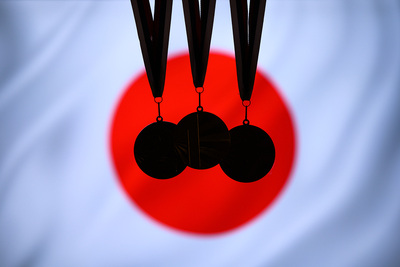
Japan could decide on fate of radioactive waste water before the Olympics in July
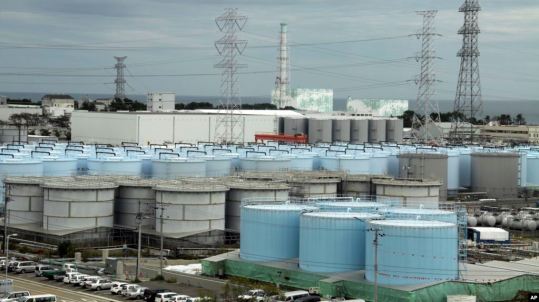


Shikoku Electric not to appeal injunction over Ikata nuclear plant
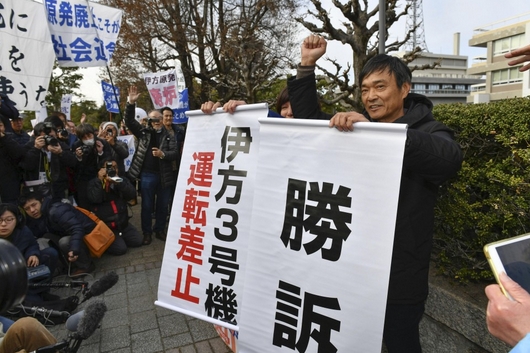
Mayor in Kyushu admits to ‘bribe’ from company in nuclear business
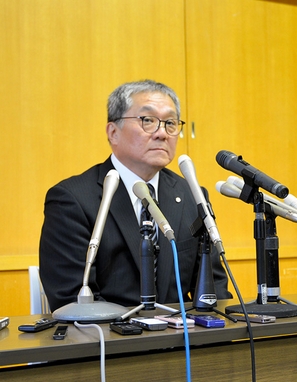
Tepco estimates 44 years to decommission Fukushima No. 2 nuclear plant
They say that the first stage, comprising radiological surveys, will take ten years. The second stage, which will involve clearing the equipment from around the nuclear reactors, will last 12 years. Removal of the reactors (stage 3) and demolition of the reactor buildings (stage 4), will each last 11 years.
But these estimates are useless. The U.S. has been cleaning up Hanford, WA, site of the reactors that made the plutonium in the Alamagordo bomb, and then the Nagasaki bomb, for decades, at an every mounting cost and an ever-receding completion date. Turns out that generating large amounts of high-level nuclear waste turns out to be a bit more challenging to deal with than the techno-optimists ever dreamed. If there’s anyone around with the consciousness to care several hundred years from now, the creation of nuclear waste is going to be a very nasty reminder of how stupid we were.
Vladivostok customs stopped a radioactive Toyota Prius that arrived from Japan
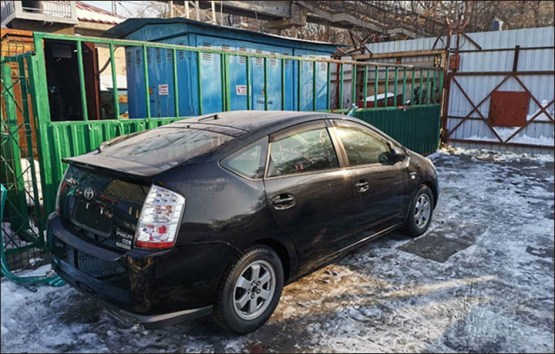 The contaminated Toyota Prius will be shipped back to Japan. Picture: Vladivostok customs
Japan faces decision over contaminated Fukushima water
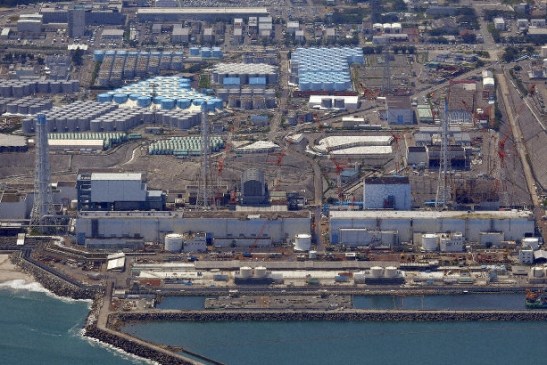
 The dismantling of Fukushima No. 1 nuclear power plant continues in Okuma, Fukushima Prefecture, on Dec. 5, 2019.
January 21, 2020
OKUMA, Fukushima Prefecture—At the wrecked Fukushima No. 1 nuclear power plant north of Tokyo, workers in protective suits are still removing radioactive material from reactors that melted down after an earthquake and tsunami knocked out its power and cooling nearly nine years ago.
On an exclusive tour of the plant, spread over 3.5 million square meters, Reuters witnessed giant remote-controlled cranes dismantling an exhaust tower and other structures in a highly radioactive zone while spent fuel was removed from a reactor.
Officials from Tokyo Electric, which owns the plant, also showed new tanks to hold increasing amounts of contaminated water.
About 4,000 workers are tackling the cleanup, many wearing protective gear, although more than 90 percent of the plant is deemed to have so little radioactivity that no extra precautions are needed. Photography was highly restricted and no conversations were allowed with the workers.
Work to dismantle the plant has taken nearly a decade so far, but with Tokyo due to host the Olympics this summer–including some events less than 60 kilometers from the power station–there has been renewed focus on safeguarding the venues.
“TEPCO tries to disclose all information to the public as soon as possible. If something happens at the site, we let people know by email, for example,” said Kan Nihonyanagi, risk communicator at Fukushima, said in an interview at the site.
The buildup of contaminated water has been a sticking point in the cleanup, which is likely to last decades, and has alarmed neighboring countries. In 2018, TEPCO said it had not been able to remove all dangerous material from the water – and the site is running out of room for storage tanks.
Officials overseeing a panel of experts looking into the contaminated water issue said in December choices on disposal should be narrowed to two: either dilute the water and dump it in the Pacific Ocean, or allow it to evaporate.
The Japanese government may decide within months, and either process would take years to complete, experts say.
“The Olympics are coming, so we have to prepare for that, and TEPCO has to disclose all the information not only to local communities but also to foreign countries and especially to those people coming from abroad,” said Joji Hara, a Tokyo-based spokesman for the power company who accompanied Reuters during the visit.
TEPCO has opened English-language Twitter and Facebook accounts, he said. It is also preparing to put out basic emergency information in Korean and Chinese, he added.
Athletes from at least one country, South Korea, are planning to bring their own radiation detectors and food this summer.
Baseball and softball will be played in Fukushima city, about 60 km from the destroyed nuclear plant. The torch relay will begin at a sports facility called J-Village, an operations base for Fukushima No. 1 in the first few years of the disaster, then pass through areas near the damaged station on its way to Tokyo.
In December, Greenpeace said it found radiation “hotspots” at J-Village, about 18 km south of the plant.
When Tokyo won the bid to host the 2020 Summer Olympics, Prime Minister Shinzo Abe declared that Fukushima was “under control” in his final pitch to the International Olympic Committee.
In 2016, the Japanese government estimated that the total cost of plant dismantlement, decontamination of affected areas, and compensation would be 21.5 trillion yen ($195 billion)–roughly a fifth of the country’s annual budget at the time.
http://www.asahi.com/ajw/articles/AJ202001210037.html
Japan’s Aeon aims to serve ‘eco-certified’ sushi in time for Olympics
‘Eco-certified’ my @ss, radiation contaminated sushi much more likely…. Lying lunatics!
 A meat sushi plate is seen at Nikuzushi restaurant in Tokyo, Japan
January 21, 2020
TOKYO (Reuters) – Japanese supermarket chain Aeon Co Ltd, Asia’s biggest retailer by sales, said it aims to start selling eco-certified sushi this year amid growing demand for sustainable seafood and in time for an expected surge in tourists during the Tokyo Olympics.
Japan is one of the world’s biggest consumers of seafood. While its consumers are known for paying a premium for high-quality food products, and for setting global food trends, Japan has lagged behind Europe and the United States in adopting policies on traceability and sustainable fisheries.
“I would say awareness has really improved in recent years,” Kinzou Matsumoto, general manager in charge of Aeon’s seafood merchandising planning, said on Tuesday as the company unveiled an expansion of its eco-certified lineup of seafood to include oysters approved by the Marine Stewardship Council (MSC).
“Right now, certified items make up around 15% of our entire seafood products. Ideally we want to bring it to around 20%,” he said, adding that it would soon have enough types of certified fish to assemble assorted sushi packs.
“We want to sell certified sushi to visitors coming to the Olympics, too… and that would have to be by June.”
The MSC said Aeon’s scale would help expand recognition for sustainable seafood among Japanese consumers, and encourage fisheries.
“A commitment from Aeon is critical in driving change,” said MSC’s Asia-Pacific regional director Patrick Caleo.
Japanese businesses including beer makers and hotels are making preparations to cater for record numbers of foreign visitors to Japan this summer as Tokyo hosts the Olympic Summer Games beginning in late July.
Kura Sushi, among Japan’s largest conveyer belt sushi chains, is opening its biggest branch this week – a store with 272 seats expected to draw 2,000 customers a day.
It forecasts that the number of foreigners visiting its restaurants in Tokyo to rise by about a third compared to a usual year.
Kura Sushi President Kunihiko Tanaka also defended the safety of seafood in Japan, including those from Fukushima, the site of the 2011 nuclear disaster.
Government data shows Fukushima seafood is “absolutely” safe, Tanaka said, adding that Kura Sushi planned to open a restaurant in Fukushima.
South Korea’s Olympic committee said in December that it plans to buy radiation detectors and ship homegrown ingredients to Japan for its athletes because of its concerns over food.
https://finance.yahoo.com/news/japans-aeon-aims-serve-eco-085713242.html
Forgetting Fukushima

21st January 2020
By Jim Green – Nuclear Monitor
Irresponsible tactics are being used to bury social and environmental problems associated with the Fukushima nuclear disaster as Olympics approach in Japan.
Japanese prime minister Shinzō Abe assured the International Olympic Committee in 2013 that “the situation is under control” in and around the stricken Fukushima nuclear plant.
Now, with the 2020 Summer Olympics approaching, and some events scheduled to be held in Fukushima prefecture, all sorts of irresponsible and cruel tactics are being used to bury a myriad of social and environmental problems associated with the nuclear disaster.
Most evacuation orders have been lifted around the Fukushima plant, but 337‒371 sq kms remain classified as restricted entry zones or ‘difficult to return’ zones. There are hopes that all remaining evacuation orders could be lifted within a few years.
Return
Lifting an evacuation order is one thing, returning the area to something resembling normality is quite another. Only 23 percent of those living in nine areas that were declared off-limits after the Fukushima disaster had returned as of March 2019, according to government figures.
Most people aged under 50 who used to live in the towns of Futaba, Namie and Tomioka have no plans to return, an official survey found in early 2019.
The partial lifting of evacuation orders in the town of Okuma in April 2019 illustrates how the rhetoric of progress masks inconvenient truths. Even after the lifting of the order, about 60 percent of the town’s land area ‒ covering 96.5 percent of the pre-Fukushima population ‒ remains off-limits.
A 2018 survey found that only 10 percent of respondents expressed a desire to return to Okuma, while 60 percent had no plans to return. Few people have returned since the evacuation order was lifted.
About 17 million cubic metres of contaminated waste material has accumulated during decontamination work according to the Japanese ministry of the environment. A new occupant in Okuma is a ‘temporary storage facility‘ for some of the contaminated waste.
Contamination
Decontamination work (outside of the Fukushima nuclear plant) has cost an estimated ¥2.9 trillion (US $26.5 billion). A report by the European Geosciences Union, based on approximately 60 scientific publications, gives this assessment of decontamination efforts.
“This synthesis indicates that removing the surface layer of the soil to a thickness of 5 cm, the main method used by the Japanese authorities to clean up cultivated land, has reduced cesium concentrations by about 80 percent in treated areas. Nevertheless, the removal of the uppermost part of the topsoil, which has proved effective in treating cultivated land, has cost the Japanese state about €24 billion.
“This technique generates a significant amount of waste, which is difficult to treat, to transport and to store for several decades in the vicinity of the power plant, a step that is necessary before it is shipped to final disposal sites located outside Fukushima prefecture by 2050. By early 2019, Fukushima’s decontamination efforts had generated about 20 million cubic metres of waste.
“Decontamination activities have mainly targeted agricultural landscapes and residential areas. The review points out that the forests have not been cleaned up ‒ because of the difficulty and very high costs that these operations would represent ‒ as they cover 75 percent of the surface area located within the radioactive fallout zone.
“These forests constitute a potential long-term reservoir of radiocesium, which can be redistributed across landscapes as a result of soil erosion, landslides and floods, particularly during typhoons that can affect the region between July and October.”
Health risks
Greenpeace coordinated a study in the exclusion zone and lifted evacuation areas of Namie and Iitate and published the results in March 2019. The study found high levels of radiation ‒ ranging from five to over 100 times higher than the internationally recommended maximum of 1 mSv/yr ‒ in both exclusion zones and in areas where evacuation orders have been lifted.
The Greenpeace report documents the extent of the government’s violation of international human rights conventions and guidelines, in particular for decontamination of workers and children (who are more vulnerable to radiation-related diseases than adults).
Associate Professor Tilman Ruff, an Australian public health expert and co-founder of the International Campaign to Abolish Nuclear Weapons gives a sense of the scale of the risk.
He states: “To provide a perspective on these risks, for a child born in Fukushima in 2011 who was exposed to a total of 100 mSv of additional radiation in its first five years of life, a level tolerated by current Japanese policy, the additional lifetime risk of cancer would be on the order of one in thirty, probably with a similar additional risk of premature cardiovascular death.”
Moreover, there is evidence of sinister behaviour to give artificially low indications of radiation levels, for example by placing monitoring posts in areas of low radiation and cleaning their surrounds to further lower the readings.
Risks
Maxime Polleri, a PhD candidate in the Department of Anthropology at York University, wrote in The Diplomat: “In the end, state-sponsored monitoring and decontamination are remedial measures that manage the perception of radiation in the environment.
“However, this does not imply that radioactive contamination is gone – not at all. When we look at the official maps of radiation of northeastern Japan, levels are low, but there are many ways to make them appear low.”
Ryohei Kataoka from the Tokyo-based Citizens Nuclear Information Centre said: “The government’s insistence in lifting evacuation orders where heightened radiation-related health risks undeniably exist, is a campaign to show that Fukushima is ‘back to normal’ and to try to make Japan and the world forget the accident ever happened.”
The Japanese government is promoting next years’ Olympic Games as the “Reconstruction Olympics”. Hence the haste to lift evacuation orders and to skirt around the truth of residual contamination from radioactive Fukushima fallout and the health risks associated with that fallout.
And yet, despite the spin, a poll conducted in February 2019 found that 60 pecent of Fukushima region residents still felt anxious about radiation exposure.
Deflation
Approximately 165,000 people were forced to evacuate because of the Fukushima nuclear disaster in 2011, in addition to an estimated 26,600 ‘voluntary evacuees’.
More than 30,000 of the involuntary evacuees are still unable to return. Those now in permanent accommodation have returned to their former homes (either willingly or because they had no choice), or resettled elsewhere, and some have purchased their previously temporary accommodation.
The number of evacuees has been artificially deflated. For example, the Japanese government’s Reconstruction Agency sent a notice to prefectures in August 2014 stating that only those people who moved to different places because of the nuclear disaster and have the “will” to return to their original homes will be counted as evacuees.
The notice said that if it is difficult to determine people’s will to return, they should not be counted as evacuees. Those who have purchased a home outside their pre-disaster locale, and those in public restoration housing or disaster public housing, are no longer counted as evacuees even if they want to return to their previous homes but can’t for various reasons.
An April 2019 Asahi Shimbun editorial said that the number of people who regard themselves as evacuees is believed to be far higher than the official figure of 40,000 ‒ but nobody knows the true figure.
Akira Imai, chief researcher of the Japan Research Institute for Local Government, told Asahi Shimbun: “This is an act to socially hide the real number of evacuees, which could lead to a cover-up of the seriousness of the incident. The evacuee number is an index that is used to consider measures to support evacuees. The current situation should be reflected properly in the numbers.”
Trauma
The typical experience of Fukushima evacuees has been a collapse of social networks, reduced income and reduced employment opportunities, endless uncertainty, and physical and mental ill-health.
A growing number of evacuees face further trauma arising from the end of housing subsidies, forcing them out of temporary accommodation and in some cases forcing them back to their original homes against their will.
Around 16,000 people who refuse to return to their original homes had been financially abandoned as of January 2019, according to the Citizens’ Nuclear Information Center.
In addition to fiddling with the numbers to artificially deflate the number of evacuees, an increasingly hostile attitude is being adopted towards evacuees to pressure them to leave temporary accommodation and thereby to reduce the evacuee count. The reduction and cessation of housing subsidies is the main component of this problem.
Some years ago, the support structure was modest at best, and many evacuees fell through the cracks. Now, evacuees are being forced through the cracks to reduce expenditure and to create a sense of normality ahead of the ‘Reconstruction Olympics’.
Poverty
The human impact of government policies ‒ national and prefectural governments ‒ are detailed by Seto Daisaku from the Evacuation Cooperation Center. Some evacuees face a doubling of rental payments, some have been deemed “illegal occupants“, some face legal action to have them evicted.
National and local governments promote these policies as necessary to foster independence among evacuees, but as Seto Daisaku notes, “since their income in the places they have evacuated to has dropped precipitously, far from becoming independent they will fall deeper into poverty.”
The April 2019 Asahi Shimbun editorial noted: “After years of living away from home, many evacuees are also struggling with problems such as reduced incomes, the difficulties of finding jobs, deteriorating health and isolation.
“Some are suffering from poverty, anxiety about losing their housing due to the termination of public financial support and physical and mental illness. … The government’s response to the problem has been grossly insufficient.”
Rights
In an October 2018 report, United Nations Special Rapporteur Baskut Tuncak urged the Japanese government to halt the ongoing relocation of evacuees who are children and women of reproductive age to areas of Fukushima where radiation levels remain higher than what was considered safe or healthy before the nuclear disaster in 2011.
Tuncak said the Japanese government’s decision to raise by 20 times what it considered to be an acceptable level of radiation exposure was deeply troubling, highlighting in particular the potential impact on the health and wellbeing of children.
Tuncak said: “It is disappointing to see Japan appear to all but ignore the 2017 recommendation of the UN human rights monitoring mechanism (UPR) to return back to what it considered an acceptable dose of radiation before the nuclear disaster.”
TEPCO is also worsening the evacuees’ plight. Yamaguchi Yukio, co-director of the Citizens’ Nuclear Information Center, wrote in March 2019: “Although the fathomless suffering of the people affected by the accident cannot be atoned for by money, TEPCO has shown no intention of taking any responsibility for the consequences of the accident.
“In the incidents surrounding the petitions by Namie Town, Iitate Village and others to alternative dispute resolution (ADR), TEPCO has refused to agree to the compensation amounts, and rejected the mediated settlement proposal.
“The outlook for resolution of the compensation problem is bleak. This is in complete violation of the three pledges proclaimed by TEPCO: 1) Carry through compensation to the very last person, 2) Carry through rapid and detailed compensation, and 3) Respect mediated settlement proposals.”
This Author
Dr Jim Green is the national nuclear campaigner with Friends of the Earth Australia and editor of the Nuclear Monitor newsletter.
Olympics: Tokyo torch relay to add another Fukushima reactor town
Dentsu Corporation, the hired PR company to calm the fears of the Japanese public, is using every gimmick in the book to deny the existing radiation risks to promote the 2020 Tokyo Olympics
 Japanese actress Satomi Ishihara, center, attends a promotional event for the 2020 Tokyo Olympic and Paralympic torch relays at an elementary school in Tokyo, on Jan. 16, 2020.
January 18, 2020
TOKYO (Kyodo) — The 2020 Tokyo Olympic Games torch relay is likely to pass through the town of Futaba, which hosts the disabled Fukushima Daiichi nuclear plant in northeastern Japan, as the government plans to lift the mandatory evacuation order for the town on March 4, sources familiar with the matter said Friday.
The town of Okuma, a co-host of the nuclear plant, was already included in the first day of the torch relay. Fukushima Prefecture aims to highlight on the global stage its reconstruction from the world’s worst nuclear accident since Chernobyl in 1986.
Organizers announced in July 2018 that Fukushima would be the starting point for the torch relay in the country. Last March, Yoshiro Mori, the organizing committee’s president, revealed that the relay would begin some 20 kilometers from the Fukushima plant at the J-Village national soccer training center, which was used as an operational base for handling the nuclear crisis.
The Olympic torch will arrive in Japan on March 20 and the flame will be taken to Ishinomaki Minamihama Tsunami Recovery Memorial Park in Ishinomaki, Miyagi Prefecture.
It will then travel by train through Miyagi and Iwate prefectures before making its way to Fukushima. The three prefectures were hit hardest by the powerful earthquake and tsunami on March 11, 2011.
The Japan leg of the relay will begin on March 26, 2020, two weeks after the flame lighting ceremony in Greece, and will carry the torch across all 47 prefectures in the country over a period of 121 days.
The Tokyo Olympics are scheduled to be held between July 24 and Aug. 9, followed by the Paralympics from Aug. 25 to Sept. 6.
https://mainichi.jp/english/articles/20200118/p2g/00m/0sp/034000c
S. Korea, US Discuss Fukushima Wastewater, Marine Issues

January 17, 2020
South Korea and the U.S. held a director-level meeting on maritime and environment issues in Seoul on Thursday.
According to the Foreign Ministry on Friday, the two sides discussed the possibility of Japan releasing contaminated water from the Fukushima Daiichi nuclear power plant disaster site into the ocean.
They also shared views on ways to preserve marine environments.
The two sides discussed how they plan to reduce marine debris and ways to open the Seventh International Marine Debris Conference in South Korea in 2022.
During the meeting, South Korea called on the U.S. to swiftly take steps to remove South Korea from its preliminary list of countries that engage in illegal, unreported, and unregulated(IUU) fishing.
South Korea was designated as a preliminary IUU fishing country by the U.S. after two South Korean fishing boats violated closed fishing grounds and operated near Antarctica in 2017.
http://world.kbs.co.kr/service/news_view.htm?lang=e&Seq_Code=150721
Fukushima Daiichi Frozen Wall Leaks

Fukushima nuclear plant’s frozen wall leaks
Jan. 17, 2020
Tokyo Electric Power Company says coolant has seeped out from an underground frozen soil wall built around its crippled Fukushima Daiichi nuclear plant.
The frozen soil wall came into operation four years ago. It was built to keep groundwater from flowing into reactor buildings. They were damaged by the March 2011 earthquake, tsunami and subsequent nuclear meltdowns.
The utility firm, TEPCO, says it found coolant leaking at three locations from components that connect pipes in the wall. The company had noticed a reduction in coolant in its tank earlier this month and was searching for the cause.
TEPCO says it believes 20,000 of 1.1 million liters of the coolant has leaked, but that this will not affect the operation of the wall.
The company says it will replace the components in the wall and repair another leak that was found in December.
https://www3.nhk.or.jp/nhkworld/en/news/20200117_10/
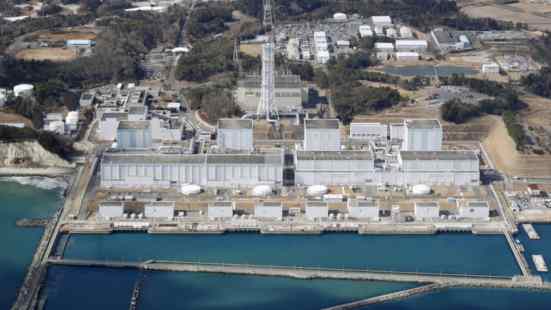
 Fukushima Daiichi Nuclear Power Station is seen in Okuma, Fukushima Prefecture, in this photo taken from a Mainichi Shimbun helicopter in August 2019.
Four coolant leaks found in Fukushima nuke plant ‘ice wall’ pipes
January 17, 2020
TOKYO — Coolant has been found leaking from pipes in the underground wall of frozen soil surrounding reactor buildings at the tsunami-ravaged Fukushima Daiichi Nuclear Power Station at four locations, its operator said.
According to Tokyo Electric Power Company Holdings, Inc. (TEPCO), the coolant liquid contains calcium chloride, commonly used as a snow-melting agent, and is not an environmental contaminant.
The utility has confirmed that a total of about 20 cubic meters of the coolant has leaked from the pipes. Though the coolant supply to the leaking pipes has been halted, TEPCO does not expect the ice wall to suffer any loss of function. The pipes concerned are between the plant’s No. 2 and No. 3 reactor buildings.
TEPCO noticed the problem in late 2019 when the volume in a coolant tank dropped abnormally. Workers examined the ice wall piping and found leaks in the joints. The company is poised to investigate the cause of the leak and replace the problematic parts.
The utility started the operation of the underground wall of frozen soil at the stricken complex in 2016. Coolant chilled to minutes 30 degrees Celsius is circulated through buried pipes, freezing the soil around the reactor buildings to prevent ground water from flowing into the structures
https://mainichi.jp/english/articles/20200117/p2a/00m/0na/022000c
1 This Month

of the week – Shut Down Drone Warfare!


Tell the Ukrainian Government to Drop Prosecution of Peace Activist Yurii Sheliazhenko

Petition to revoke the licensing of the Near Surface Nuclear Disposal Facility (NSDF) at Chalk River. https://www.ourcommons.ca/petitions/en/Petition/Details?Petition=e-7247
To see nuclear-related stories in greater depth and intensity – go to https://nuclearinformation.wordpress.com
-
Archives
- April 2026 (68)
- March 2026 (251)
- February 2026 (268)
- January 2026 (308)
- December 2025 (358)
- November 2025 (359)
- October 2025 (376)
- September 2025 (257)
- August 2025 (319)
- July 2025 (230)
- June 2025 (348)
- May 2025 (261)
-
Categories
- 1
- 1 NUCLEAR ISSUES
- business and costs
- climate change
- culture and arts
- ENERGY
- environment
- health
- history
- indigenous issues
- Legal
- marketing of nuclear
- media
- opposition to nuclear
- PERSONAL STORIES
- politics
- politics international
- Religion and ethics
- safety
- secrets,lies and civil liberties
- spinbuster
- technology
- Uranium
- wastes
- weapons and war
- Women
- 2 WORLD
- ACTION
- AFRICA
- Atrocities
- AUSTRALIA
- Christina's notes
- Christina's themes
- culture and arts
- Events
- Fuk 2022
- Fuk 2023
- Fukushima 2017
- Fukushima 2018
- fukushima 2019
- Fukushima 2020
- Fukushima 2021
- general
- global warming
- Humour (God we need it)
- Nuclear
- RARE EARTHS
- Reference
- resources – print
- Resources -audiovicual
- Weekly Newsletter
- World
- World Nuclear
- YouTube
-
RSS
Entries RSS
Comments RSS
 nuclear-news