Mounting Tokyo 2020 postponement calls put pressure on defiant Olympic chiefs
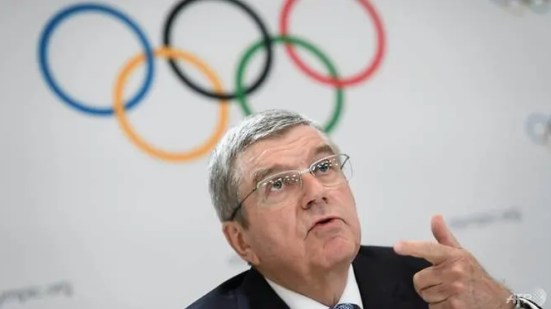 IOC President Thomas Bach insists that it is too early for the Olympics to be postponed, as the start is four months away
March 22, 2020
PARIS: Pressure mounted on Olympic organisers to postpone the 2020 Tokyo Games on Saturday (Mar 21) after the powerful US track and field federation urged this summer’s event be pushed back due to the coronavirus pandemic.
USA Track and Field became the latest influential sports body to ask for the Games to be called off after its head Max Siegel “respectfully requested” in a letter that the US Olympic and Paralympic Committee (USOPC) “advocate … for the postponement of the 2020 Olympic Games in Tokyo”.
USOPC had said it was too soon to axe the Jul 24 to Aug 9 Games, much like International Olympic Committee (IOC) head Thomas Bach, who said that it would be “premature” to make such a big decision.
“The right and responsible thing to do is to prioritise everyone’s health and safety and appropriately recognise the toll this difficult situation has, and continues to take, on our athletes and their Olympic Games preparations,” wrote Siegel.
USATF joined a growing chorus of calls from sports organisations to push back the Olympics, a day after the country’s swimming federation asked USOPC to back a postponement until 2021.
“We urge the USOPC, as a leader within the Olympic Movement, to use its voice and speak up for the athletes,” USA Swimming CEO Tim Hinchey said in a letter.
That request for a delay was echoed on Saturday by France’s swimming federation which said that the Games could not be organised properly in the “current context”.
World Athletics president Sebastian Coe told AFP Saturday that the sporting world was in “uncharted territory”.
“We have another meeting early next week to discuss the work, given the number of athletes who are struggling to train in various countries due to measures put in place to reduce the spread of the coronavirus,” said Coe.
“I don’t think we should have the Olympic Games at all costs, certainly not at the cost of athlete safety and a decision on the Olympic Games may become very obvious very quickly in the coming days and weeks.
“The issue of competition fairness is paramount. We are all managing the situation day by day and increasingly hour by hour.”
The Norwegian Olympic Committee (NOC) quickly followed, saying that it had sent a letter to the IOC on Friday, motivated in part by a Norwegian government ban on organised sports activities which had created “a very challenging time for the sports movement in Norway”.
“Our clear recommendation is that the Olympic Games in Tokyo shall not take place before the COVID-19 situation is under firm control on a global scale,” the NOC said in the letter.
IOC “PUTTING US IN DANGER”
The new chairman of the United Kingdom’s athletics governing body also questioned the need to hold the Olympics this summer given the uncertainty surrounding the spread of COVID-19, which has now killed over 12,000 people worldwide according to an AFP tally.
“To leave it where it is is creating so much pressure in the system. It now has to be addressed,” head of UK Athletics Nic Coward told the BBC.
On Friday, Bach defended the IOC’s refusal to cancel the Olympics by saying that the Games were further away than other shelved events, such as football’s European Championship which was due to start in mid-June and has been moved to 2021.
“We are four-and-a-half months away from the Games,” Bach told the New York Times.
“For us, (postponement) would not be responsible now.”
Athletes lashed out at IOC advice to continue training “as best they can”, with Olympic pole vault champion Katerina Stefanidi accusing the body of “putting us in danger”.
“The IOC wants us to keep risking our health, our family’s health and public health to train every day?” asked Stefanidi.
World champion fencer Race Imboden of the United States said on Twitter that he was “worried” about the prospect of the Olympics going ahead.
“We keep being told the Olympic Games are happening. Starting to realise it’s more important to have the games go on than the athletes be prepared or mentally healthy.”
But USOPC chairwoman Susanne Lyons insisted on Friday that organisers had time on their side.
“We don’t have to make a decision. Our games are not next week, or two weeks from now. They’re four months from now,” Lyons said.
Thousands flock to see Olympic flame in Japan despite COVID-19 fears
If you want a definition of denial, this is it. “More than 50,000 people on Saturday (Mar 21) queued to watch the flame displayed at Sendai station in Miyagi, chosen as part of the “Recovery Olympics” to showcase the region’s revival after the 2011 earthquake, tsunami and nuclear meltdown.” Yes, this despite covid-19, and despite the fact that, incredibly, the Abe government is only “considering” not holding the Olympics, a decision that should have been taken months before the outbreak, given the level of radiological contamination in some regions, lingering on long after the March 2011 nuclear disaster.
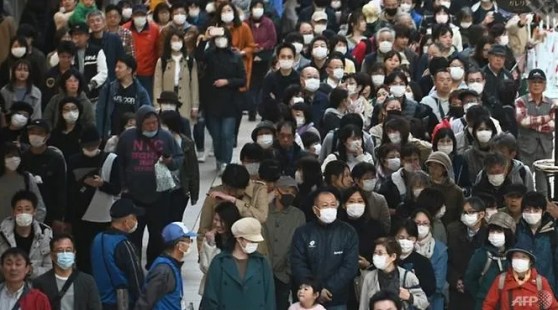 Tens of thousands queued at Sendai station to see the Olympic flame
March 22, 2020
SENDAI: Tens of thousands of people flocked to a cauldron with the Olympic flame in northeastern Japan over the weekend despite concerns about the COVID-19 pandemic.
The flame arrived in Japan to a scaled-down welcoming ceremony on Friday as doubts grew over whether the 2020 Tokyo Olympics will go ahead on schedule as the deadly virus causes chaos around the world.
The pandemic has already shredded the global sports calendar, with top sports leagues suspended and major tournaments postponed.
More than 50,000 people on Saturday (Mar 21) queued to watch the flame displayed at Sendai station in Miyagi, chosen as part of the “Recovery Olympics” to showcase the region’s revival after the 2011 earthquake, tsunami and nuclear meltdown.
Some had to stay in a 500m queue for several hours, local media said.
Many of them wore masks as they took pictures with the cherry blossom-shaped cauldron.
“I queued for three hours but watching the Olympic flame was greatly encouraging,” a 70-year-old woman told public broadcaster NHK.
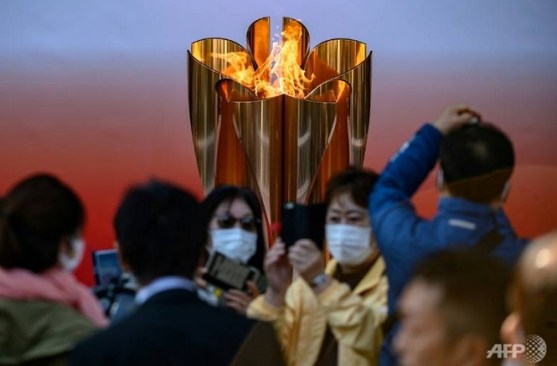 Organisers are under pressure to postpone the Tokyo 2020 Games because of the coronavirus pandemic.
But organisers, concerned about the bigger-than-expected gathering, have warned the viewing event could be suspended if a crowd becomes “extremely dense”, local media reported.
The nationwide torch relay begins on Mar 26, starting from the J-Village sports complex in Fukushima that was used as a base for workers during the 2011 nuclear disaster.
But organisers have been forced to scale back the relay, closing daily ceremonies to the public and urging spectators to “avoid forming crowds” along the route.
Tokyo 2020 Olympics on their way to be postponed…
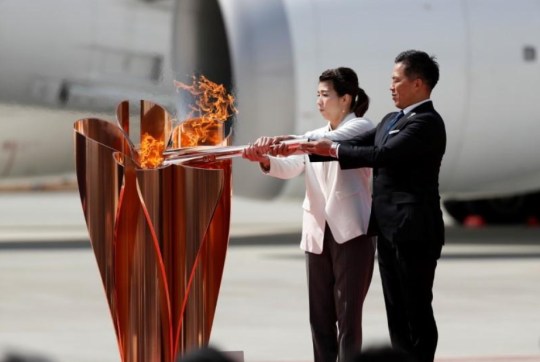
Canada and Australia will not send athletes to Tokyo Olympics
March 23, 2020
(CNN)Canada and Australia will not send athletes to the 2020 Olympic Games in Tokyo because of the risks associated with the coronavirus outbreak, the Olympic committees for both countries said in separate statements.
Both countries’ Olympic committees also are calling for the Games to be postponed until 2021.
“While we recognize the inherent complexities around a postponement, nothing is more important than the health and safety of our athletes and the world community,” the Canadian Olympic Committee and Canadian Paralympic Committee said in a joint statement Sunday. “This is not solely about athlete health — it is about public health.”
The Australian Olympic Committee’s executive board met by teleconference Monday and unanimously agreed that an Australian Olympic team could not be assembled given the changing circumstances across the world, the committee said in a statement.
The committee also said “our athletes now need to prioritise their own health and of those around them, and to be able to return to the families.”
“It’s clear the Games can’t be held in July,” said Ian Chesterman, Australian Team Chef de Mission for Tokyo. “Our athletes have been magnificent in their positive attitude to training and preparing, but the stress and uncertainty has been extremely challenging for them.”
Australian Olympic Committee CEO Matt Carroll said athletes should prepare for the Tokyo Olympics in 2021.
“The athletes desperately want to go to the games…but they also take onboard their own personal health,” Carroll told reporters in Sydney on Monday. “We need to give our athletes that certainty and that’s what we’ve done.”
IOC says its not canceling the Olympics
The committees’ decisions came hours after International Olympic Committee’s executive board said it is considering postponing — but not canceling — this summer’s Olympic Games in Tokyo because of the coronavirus pandemic.
The IOC board said it is considering several options to deal with the ongoing outbreak, including modifying plans to allow the 2020 Tokyo Games to begin on schedule on July 24 or changing the start date for the Games.
The IOC executive board ruled out canceling the Games, saying it would “destroy the Olympic dream of 11,000 athletes” and all those who support them, according to a letter to athletes from IOC President Thomas Bach.
The Canadian statement thanked the IOC for saying it would not cancel the games, saying the IOC appreciates the “the importance of accelerating its decision-making regarding a possible postponement.”
Japanese Prime Minister Shinzo Abe said that a decision to postpone the Tokyo Olympics and Paralympics may be needed if the Games cannot be held in a complete form.
Abe made the remark during a parliamentary session Monday after the IOC announced Sunday that the group has decided to step up scenario-planning for the 2020 Tokyo Games in reaction to the coronavirus pandemic.
IOC faces more pressure to postpone games
The IOC has faced increasing pressure to postpone the Games as people across the world have gotten sick and died from Covid-19. Tracks, gyms and public spaces are closed in much of the world and major qualifying events have been canceled.
Japan Olympic Committee member Kaori Yamaguchi broke ranks on Friday, saying the Games should be postponed because some athletes had been unable to train.
The heads of USA Swimming and USA Track and Field both called for the Olympics to be postponed to 2021 over the weekend.
IOC must face coronavirus reality and postpone 2020 Olympics
 New York Post back page
March 22, 2020
We are all, all of us, going through various stages of denial where sports are concerned. We are entering Week 3 of our games-free world and we are all here to report that the sun still comes up every morning, it still sets every evening, and every single time they replay the Duke-Kentucky game from 1992, Rick Pitino still doesn’t guard the inbounds pass.
(Perhaps he was distracted by the Iona job 28 years in his future.)
There is a part of us, all of us, that has to beat down the delusional optimist lurking inside. Logically, we know that it’ll be awhile before we see a live sporting event, but even as we start to dream of ordering $12 Heinekens at a ballpark, we turn on the television and there is Gov. Cuomo, saying plainly of COVID-19: “It’s going to work its way through society. But it’s going to be four months, six months, nine months. We’re in that range. Nobody has a crystal ball, no one can tell you.”
Four months. Six months. Nine months.
It’s hard for that potential reality to sink in.
It’s exponentially more fun to see Bill James, the godfather of modern baseball analysis, post on Twitter as he did this weekend: “Pick the day on which you think the major-league baseball season will begin. My pick: May 15.”
(Unless he meant May 15, 2021. That seems more reasonable.)
Of course James, like the rest of us, is a fan. We are allowed our spasms of optimism, even when that bleeds into delusion. There is, after all, nothing rational about living and dying with a hockey team; why should there be anything rational about wanting to SEE a hockey game?
It’s different when you’re talking about the people who run things. We saw a lot of that two weeks ago, when the folks who run sports leagues and basketball tournaments and other such operations came to slow, deliberate and ultimately regret-filled (but proper) decisions to shut things down. The absurdity of that St. John’s-Creighton game going on for a half is something the Big East, specifically commissioner Val Ackerman, will have to answer to in time, when we hold public and private inquests on how all of this went down.
And now there is the International Olympic Committee, which should already have reached the sad conclusion that the upcoming Tokyo Games should be, at least, postponed a year. The U.S. swimming and track and field committees have already called for that. So has a growing number of nations.
Forget the dubious possibility that the world will feel properly scrubbed and sanitized by July 24, when the parade of nations and 11,000 athletes are scheduled to march into Olympic Stadium for the Opening Ceremonies. Let’s say the optimists among us prevail, and we start seeing live sports again sometime in late June or early July.
Even that makes the notion of an on-time start silly. Only 4,000 of those 11,000 athletes have properly qualified for the Games. The trials that would determine the competitors have largely been postponed already, or are certain to be. Travel restrictions are fluid, at best. The Olympics, in optimal times, are a logistical quagmire; amid a global pandemic they would be catastrophic.
Yet the IOC reiterated Sunday that it will wait as long as four weeks before deciding what to do about the Games, with postponement until 2021 the likeliest alternative. And even that concession was only reached after the mounting pressures of local Olympic committees begging the IOC to do the right thing — but before the Canadian and Australian Olympic and Paralympic committees declared they simply won’t send contingents to Tokyo this year, in the strongest show of force — and common sense — yet.
Sometimes, the right thing is simply obvious. It is here. The Olympics, after all, have mostly known their place in world affairs. The 1916 Summer Games were canceled because of World War I, and both the summer and winter games of 1940 and ’44 were canceled due to World War II. The IOC should probably have halted the ’72 Games after terrorists bloodied the Munich Olympiad, but it has had to answer harsh questions about that for 48 years, and rightly so.
Now?
Look, this falls in line with everything else. Everything about our world stinks right now, from our daily small sacrifices (staying home, staying away from friends, honoring quarantines and social distance) to our greater concerns, the workers losing their jobs, the victims felled by this insipid virus, the heroic doctors and nurses and EMTs fighting it on the front lines.
We grapple with these things every day. We bargain in our brains how to cope. It stinks to go through that every day. But we do, all of us, every day. The IOC must do the same, and be quick about it, and smart about it.
Delusion in these times is neither a good strategy nor a good look.
Dramatizing the reality of a nuclear meltdown
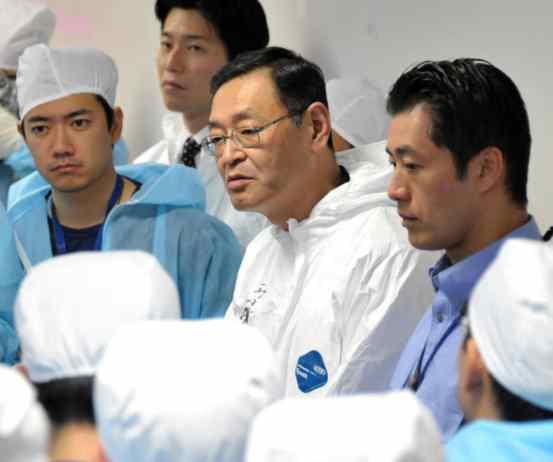 We can be heroes: “Fukushima 50” offers a dramatic account of real-life on-site manager Masao yoshida (pictured here with reporters in 2011) and his team as they fought to prevent the crippled nuclear plant from melting down in the wake of the Great East Japan Earthquake and tsunami.
March 21, 2020
As with many feature films based on real-life incidents, “Fukushima 50,” which opened nationwide March 6 and depicts the actions of the men who struggled to contain the disaster at the Fukushima No. 1 nuclear power plant following the Great East Japan Earthquake of March 2011, is a blend of factual exposition and dramatic enhancement. Stories require conflict to keep them interesting, usually with a hero fighting an adversary. In “Fukushima 50,” the hero is plant manager Masao Yoshida (Ken Watanabe), who makes life-and-death decisions in resistance against higher-ups rendered as incompetents.
One of these “villains,” as pointed out by writer and editor Yusuke Nakagawa in the March 6 online edition of Gendai Business, is Naoto Kan, who was the prime minister at the time of the disaster. In the movie, Kan’s name is never uttered and, as Nakagawa points out, the actor who plays him, Shiro Sano, doesn’t look like him, but that’s not what concerns Nakagawa. Sano portrays Kan as a puddle of hysteria whose decisions threaten lives because they make Yoshida’s job more difficult. Kan has an infamous temper and Nakagawa acknowledges that he made mistakes during the course of the emergency, but the movie fails to detail the reasons for his actions. Turning him into a babbling fool makes the filmmakers’ job easier, which is to show Yoshida as a towering figure of courage and resourcefulness in the face of a crisis that could have ended in the destruction of eastern Japan.
Nakagawa admits to having a horse in this race, as he helped Kan write his own account of what went down at the Prime Minister’s Office during those fateful days, and he concurs with the conclusion that Yoshida and the men who worked at the plant are heroes and that Yoshida’s employer, Tokyo Electric Power Company Holdings Inc. (Tepco), was the main problem. However, he can’t help but think that the film’s pillorying of Kan was due to more than dramatic license. There was something political about it. Kan has since become a pariah to many people. As much as any other matter, it was Kan’s handling of the Fukushima disaster that led to the destruction of his party. The Democratic Party of Japan no longer exists.
Nevertheless, Kan has no problem with the portrayal, according to the film’s director, Setsuro Wakamatsu, who said so during a news conference at the Foreign Correspondents’ Club of Japan following a press screening of “Fukushima 50” on March 4. Kan’s magnanimity is noble, perhaps, but it should be noted that he has his own film to promote, or, at least, a film that shows him in a more sympathetic light. “The Seal of the Sun,” originally released in 2016, had a much smaller budget than “Fukushima 50” and no marquee stars. It looks at the disaster from the vantage point of the Prime Minister’s Office, focusing on Tepco’s lack of cooperation with the government, and while it doesn’t contradict the Yoshida hero narrative, it does complicate it with points that “Fukushima 50” downplays or doesn’t even bring up.
Kan has made himself available to discuss those points at public screenings of “The Seal of the Sun.” Such local events aren’t going to counteract the message of “Fukushima 50,” and they aren’t meant to, but the narrative distinctions do show how uneven the coverage of the Fukushima disaster has been. The most glaring example of this unevenness is a 2014 story by the Asahi Shimbun’s special investigative team based on an interview that Yoshida gave to the government. The report undermined the Fukushima hero narrative by saying that 90 percent of the plant workers fled the facility in fear for their lives. The Asahi Shimbun management, already smarting from other recent scandals, eventually retracted the piece after receiving complaints saying the article implied the workers were cowards, effectively ending the special investigative team in the process. Ryusho Kadota, the journalist who wrote the book that was the basis for the “Fukushima 50” script, wrote another book refuting the Asahi Shimbun’s coverage, though, as former New York Times Tokyo bureau chief Martin Fackler points out in an article he wrote for the Asia-Pacific Journal, there was nothing essentially untrue in the Asahi Shimbun story. In fact, Tepco admitted that about 650 workers had fled, but said many were not regular company employees. The legendary “Fukushima 50” (in reality, they numbered 69), a term coined by foreign media, remained at the plant.
The argument about what really happened isn’t over facts. It’s over how those facts are interpreted. In “Fukushima 50,” Kan’s desperation is presented as a danger to the country. In “The Seal of the Sun,” it shows how hard he is trying to grasp the actual situation on the ground. Before the Yoshida report in 2014, the Asahi Shimbun’s editorial slant was generally critical of nuclear power. Afterward, it became neutral.
Nakagawa thinks these differences are politically influenced. Almost all of Japan’s nuclear power capacity has been off-line since the Fukushima incident, a situation the present government wants to reverse but finds difficult to do because of public resistance. In that sense, the story of the men who saved Japan from nuclear catastrophe can be exploited by both sides. Anti-nuclear forces say it proves how dangerous nuclear power is, while pro-nuclear forces say that it shows how Japanese ingenuity and dedication prevails.
However, even that distinction is subject to dispute. Retired Fukui District Court Chief Justice Hideaki Higuchi was one of the few judges to find in favor of plaintiffs suing to stop resumption of nuclear power plants. Higuchi reached these decisions after carefully studying the Fukushima No. 1 disaster and concluding that it was averted as much by serendipity as by Yoshida’s and the Fukushima 50’s bravery. These “miracles,” which had to do with the availability of cooling water and quake-related damage to the reactor housing, have been openly discussed, but they aren’t emphasized as much because it takes something away from the hero tale. As a judge, Higuchi had to pay closer attention to all the facts than a feature film script writer does.
Crowds form at Olympic torch event in Japan despite coronavirus caution
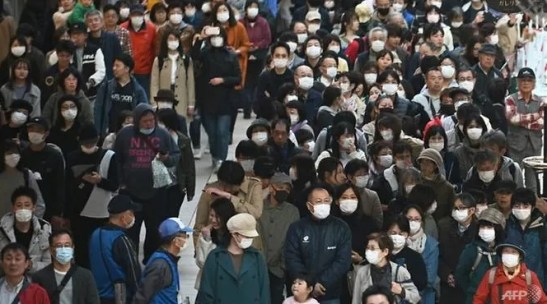 People wear protective face masks following the outbreak of the coronavirus disease as they try to watch the Olympic cauldron during the Tokyo 2020 Olympic’s Flame of Recovery tour at Ishinomaki Minamihama Tsunami Recovery Memorial Park in Ishinomaki, Miyagi prefecture on Friday
March 20, 2020
ISHINOMAKI (Reuters) An Olympic torch event in Japan drew hundreds of spectators on the day of the flame’s arrival on Friday, creating the type of packed gathering the government and Tokyo 2020 organizers have warned against to prevent coronavirus from spreading further.
About 500 people gathered in a jostling crowd to look at the flame and popular comedians taking part in a ceremony in Ishinomaki, 335 km north of Tokyo.
The Greek part of the torch relay began last week, but a day later the remainder was canceled to avoid attracting crowds.
It is not a good decision [to come here] but I am not sure if I will get another chance to see the cauldron, Ishinomaki resident and teacher Kiyotake Goto, 44, told Reuters.
Earlier in the day, a plane carrying the torch from Greece arrived at Japan Air Self-Defence Force Matsushima airbase, which was devastated by a powerful earthquake and tsunami in 2011.
No spectators were present for the arrival ceremony at the base, where officials pledged the Tokyo 2020 Games will proceed despite mounting pressure to halt the world’s biggest sporting event due to the coronavirus pandemic.
“We originally planned to have children here to welcome the flame. But, prioritizing their safety, we’ve decided to do without them, Tokyo 2020 chief Yoshiro Mori said.
That was an agonizing decision … We will do our utmost in preparing for a safe and secure event, said Mori, a former prime minister.
Organizers have repeatedly said the Games, due to run from July 24 to Aug. 9, will go ahead, but as the rapid spread of the virus brings the sports world to a virtual standstill, fears are growing that the Olympics may be postponed or canceled.
I think it’s impossible [to hold the Games]. It’ll be a global issue if the virus spreads even further, Koichiro Maeda, a 55-year-old company employee, told Reuters in downtown Tokyo.
The respiratory disease, which emerged in China late last year, has killed more than 10,000 people worldwide.
Japan is grappling with pressure to avoid a health crisis among 600,000 expected overseas spectators and athletes at an event that could see $3 billion in sponsorships and at least $12 billion spent on preparations evaporate.
The plane with the torch arrived nearly empty after the Tokyo 2020 organizing committee decided not to send a high-level delegation that was originally to have included Mori and Olympics minister Seiko Hashimoto.
This is a tough time. I hope the torch relay will bring people vigor and hope, Saori Yoshida, three-times gold-medal winning wrestler, told the welcome ceremony.
The flame will travel round the Tohoku region hit by the 2011 tsunami and earthquake, in what organizers call a recovery flame tour before the official kick-off ceremony in Fukushima on March 26.
Organizers have urged the public not to crowd the relay route, canceling many events along the way and restricting public access to others. Runners and staff will have their temperatures and health monitored, organizers said.
Some athletes, including reigning Olympic pole vault champion Katerina Stefanidi, said the International Olympic Committee’s decision to go ahead was putting their health at risk when entire countries have shut down to curb the virus.
The torch relay will begin at J-Village, a soccer training center in Fukushima that served as an operations base for workers who battled triple meltdowns at the Fukushima Daiichi nuclear power plant after the 2011 tsunami.
It is due to pass many of Japan’s most famous landmarks over a 121-day journey to Tokyo’s Olympic stadium, including Mount Fuji, Hiroshima’s Peace Memorial Park and Kumamoto Castle.
Cancel. The. Olympics.
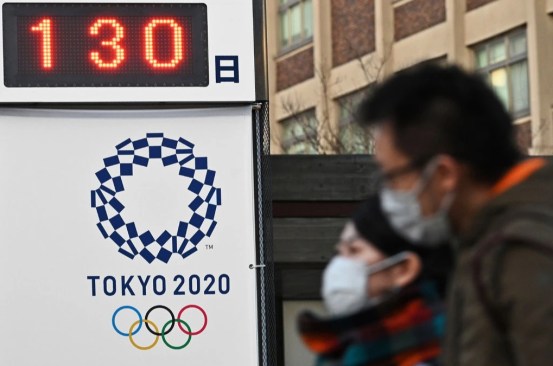 A board in Yokohama, Japan, on Monday showed the number of days until the Tokyo 2020 Olympic Games.Credit…
Amid a pandemic, it would be wildly irresponsible for the Games to go on.
March 18, 2020
Despite the coronavirus pandemic, the International Olympic Committee and Tokyo 2020 Olympic organizers insist that the Tokyo 2020 Summer Games will go on. Even with widespread cancellations in European soccer, Formula One auto racing, and professional and collegiate basketball in the United States, Prime Minister Shinzo Abe of Japan vowed, “We will overcome the spread of the infection and host the Olympics without problem, as planned.”
While sports can create an escape hatch from the grit and grind of daily life, there is no escaping the fact that the coronavirus pandemic presents an extraordinary challenge that cannot be overcome with mere platitudes and prayers. Pressing ahead with the Tokyo Games means creating a massive, potentially perilous petri dish. For the sake of global public health, the Tokyo 2020 Olympic Games should be canceled.
The Olympics are not slated to commence until July 24. But the International Olympic Committee’s response to the coronavirus has not been forward-thinking. After a recent meeting of the executive board, the I.O.C.’s president, Thomas Bach, stated that the board had not even mentioned the words “postponement” or “cancellation.” But organizers have delivered mixed messages. A Tokyo 2020 executive board member suggested delaying the Games, only to backpedal and apologize, while the organizing committee chairman, Yoshiro Mori, said, “Our basic stance is to proceed with our preparation and to hold a safe Olympics.” Japan’s Olympic minister, Seiko Hashimoto, hewed to a similar script: “The I.O.C. and 2020 organizers are not at all considering canceling or postponing the Games.”
In a communiqué issued Tuesday, the I.O.C. noted that its task force overseeing the situation was considering possible “adaptations” but that the I.O.C. “remains fully committed to the Olympic Games Tokyo 2020,” adding, “with more than four months to go before the Games there is no need for any drastic decisions at this stage; and any speculation at this moment would be counterproductive.”
Refusing to even consider alternatives is reckless. Measured, evidence-driven speculation is the responsible course. Epidemiologists have been clear that the coronavirus is a potentially historic pandemic. Each day, the World Health Organization reveals more countries and territories with reported cases of the virus. The W.H.O. recently declared that Europe, where many Summer Olympians live and train, is the pandemic’s epicenter. According to experts at the U.S. Centers for Disease Control and Prevention, the pandemic could infect between 160 million and 214 million people in the United States.
With athletes and spectators coming from around the world, the Olympics could become a dystopic coronavirus hot zone. As a Stanford University infectious disease specialist, Yvonne Maldonado, put it, with the Olympics, “You bring a lot of people together, and then you ship them back all over the world: That’s the perfect way to transmit.”
But the Olympic spectacle is a powerful drug. Last week, despite the coronavirus mayhem, the Olympic torch relay commenced in Greece, where an actor dressed as a pagan priestess ignited the Olympic flame in Ancient Olympia. Within hours, however, the torch relay was canceled over public-health concerns.
And yet, Tokyo 2020 Olympic organizers contend the torch relay will proceed on schedule, starting on March 26 in Fukushima, the prefecture decimated by the triple-whammy earthquake, tsunami and nuclear meltdown in 2011. This decision has not only raised eyebrows in light of the pandemic but also because Greenpeace has found radiation hot spots along the torch relay route.
While participants in the Olympic torch relay may be putting themselves in harm’s way, personnel at the I.O.C.’s headquarters in Lausanne, Switzerland, will not. This week, most of them began teleworking. According to the I.O.C., this measure aims “to protect the health of its staff and their families” from the coronavirus. Workers with the Tokyo torch relay are not being accorded the same precautions.
The I.O.C. has a history of pressing through catastrophe to stage the Games, adopting the mantra “the Games must go on.” In a fractious world, the Olympics symbolize international cooperation and good will. But must they in the age of coronavirus? Much remains unknown about Covid-19, and one study, forthcoming in Swiss Medical Weekly, projects the disease won’t reach its peak until winter 2020-21. Insisting that the Olympics take place while the world wobbles to the rhythms of a pandemic requires real hubris.
There are powerful interests that are keen to make sure the Tokyo 2020 Games are staged on schedule. Television broadcasters, while insured, will see profits melt away. Japanese politicians like Prime Minister Abe have sunk enormous sums of political capital into the Games. The I.O.C.’s Olympic brand could suffer damage. And there is added pressure to recoup funds after the price for the Tokyo Olympics skyrocketed from $7.3 billion at the time of the bid to more than $26 billion, according to an audit by the Japanese government. But fiscal irresponsibility does not justify exacerbating a global public-health emergency.
President Trump recently suggested that the Games should not take place this summer, although Japan’s Olympic minister immediately rebuffed postponement. Delaying the Games involves significant complications and costs. For broadcasters like NBC it means having to compete for eyeballs in a crowded sports calendar, including its own cash-cow programming like football. Postponement also adds costs to an already bloated budget for venue maintenance and the Tokyo 2020 payroll. Then there is the Olympic Village, slated to be turned into apartments, many of which have already been sold.
The Olympics have long been mired in a slow-motion crisis, with doping, athlete abuse and a dwindling number of cities keen to host. The way that Olympic power brokers have responded has been distressing. They do not deserve the benefit of the doubt.
Cancellation may appear ominous. But in reality, it would be a remarkable act of global solidarity. Pierre de Coubertin, the French aristocrat who revived the modern Olympics in the 1890s, referred to “the noble spirit of chivalry” as the foundation for sport and society. To confront the coronavirus crisis, a hefty dose of selfless chivalry is required. Amid a global pandemic, holding the Games is unconscionable. It’s time to hit the five-ring pause button and cancel the 2020 Tokyo Olympics.
Fukushima compensation guidelines need further revision
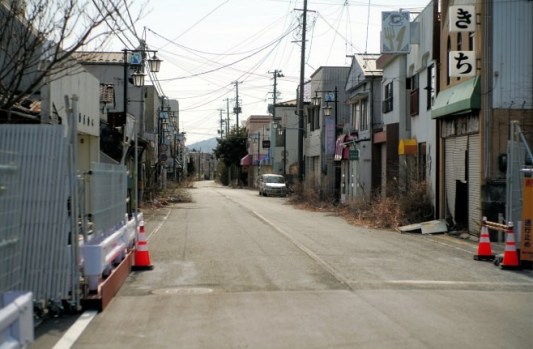 The difficult-to-return-zone around Ono Station on the JR Joban Line in Okuma, Fukushima Prefecture is empty on March 1. A part of evacuation order was lifted on March 5, but most of the area remains eerily the same as when the nuclear disaster happened in 2011.
March 19, 2020
The Sendai and Tokyo high courts recently said in separate rulings that Tokyo Electric Power Co. should pay more in compensation to victims of the 2011 accident at the company’s Fukushima No. 1 nuclear power plant.
Some 30 class action lawsuits have been filed by people who were forced to evacuate from their homes in the wake of the nuclear disaster to seek damages beyond the amounts the electric utility has agreed to pay.
The fact that the two rulings, the first high court decisions concerning these cases, both questioned the adequacy of the existing Fukushima compensation program is highly significant in its legal and policy implications.
During the trials, the plaintiffs argued that it is difficult to return to their homes even if the evacuation orders are lifted. Even if they return, they claimed, they will face local towns and communities that have been radically altered by the accident.
The two high courts acknowledged the seriousness of the corrosive effects of what these victims call “the loss and transformation” of their hometowns and ruled that they deserve to be compensated for this problem in addition to damages for being forced to flee their homes and the mental anguish caused by their lives as evacuees.
The courts awarded the plaintiffs additional damages beyond the amounts the company has already paid.
The utility has adamantly refused to pay any blanket compensation to victims beyond the amounts based on the guidelines set by the Dispute Reconciliation Committee for Nuclear Damage Compensation, a panel established within the government to settle disputes over compensation for victims of the Fukushima disaster.
TEPCO has also rejected deals to settle these class action suits proposed by the Nuclear Damage Compensation Dispute Resolution Center, a body created to help resolve such disputes through simplified procedures.
The company has even turned down a compromise recommendation issued by the Fukushima District Court based on arguments during a trial over a compensation dispute it had heard.
Clearly, the company fears that accepting such a deal would affect the entirety of its compensation talks and cause the total of damages it has to pay to soar.
After the devastating accident, however, TEPCO made “three vows.” It pledged to pay compensation to all victims without leaving a single one uncompensated, ensure that compensation will be paid quickly according to individual circumstances and respect proposals to settle disputes.
As the company that is responsible for the unprecedented nuclear accident, TEPCO has a duty to make sincere responses to the high court rulings in line with its own vows.
The government, which has promoted nuclear power generation as a national policy and is effectively the largest shareholder of the utility, has the responsibility to provide strict guidance for the company’s actions concerning the matter.
The two rulings have also brought to the fore some shortcomings of the guidelines set by the dispute reconciliation committee.
Established immediately after the accident, the guidelines are obviously out of tune with the complicated realities of the accident’s aftermath despite several revisions that have been made.
The “loss and transformation” of hometowns is a consequence of the accident that has become clearly visible over the nine years that have passed since that day in 2011.
It is time for the government to have some in-depth debate on the effects of this problem on affected people and embark on a sweeping review of the guidelines.
The high court rulings are not totally acceptable, however. Arguing that the money TEPCO has already paid covers part of the additional damages owed to the victims, the rulings only awarded the plaintiffs 1 million yen to 2.5 million yen ($23,000) per head in additional compensation.
Many victims have criticized the amounts for being “too small to be fitting compensation for the actual damage” suffered by the victims.
There is no easy solution to this complicated problem. But that does not justify inaction in the face of such gross injustice.
All the parties concerned need to offer ideas and ingenuity to spare the victims the need to spend any more effort and time with regard to compensation issues.
http://www.asahi.com/ajw/articles/13227560
State funds to be juggled to cover cleanup costs from Fukushima
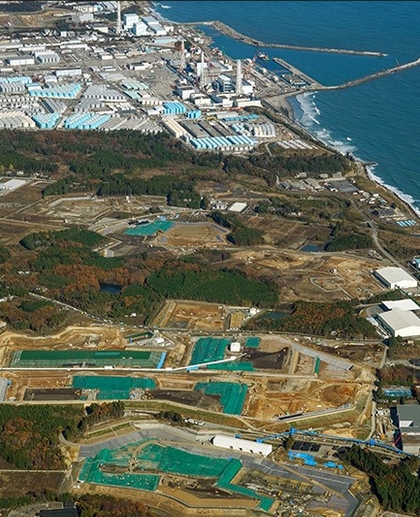 Interim storage facilities for radioactive waste from the Fukushima No. 1 nuclear disaster are shown in the foreground in Okuma, Fukushima Prefecture. Seen in the background is the nuclear complex.
March 18, 2020
The government has moved to revise a law to allow for the diversion of budgetary funds set aside for the promotion of renewable energy to help cover ballooning costs related to the storage of radioactive waste produced during cleanup work after the Fukushima nuclear disaster.
Tax revenues appropriated for renewable-related projects are not permitted to be used for nuclear power programs under the special account law, which governs budgets allocated for specific purposes.
Earlier this month, however, the government submitted a bill to the Diet to revise the law to make the diversion of funds legal. It plans to enact the legislation during the current Diet session and put the revised law into force in April 2021.
This would be the first time for a revenue source earmarked for a specific expenditure to be diverted to a different purpose.
But the revision bill is likely to draw criticism from the public as it concerns the divisive issue of nuclear power and raises further questions about the government’ longstanding insistence that nuclear power is an inexpensive energy source.
Energy-related expenditures are booked under the government’s special account, separately from the general account.
These expenditures are grouped into more categories, such as one for nuclear energy and another for renewable energy sources.
About 300 billion yen ($2.78 billion) a year is allocated for programs associated with nuclear energy, including grants to local governments hosting nuclear power plants, while 800 billion yen or so is set aside to promote renewable energy, energy saving efforts and ensuring a stable energy supply.
Revenues for nuclear energy-related programs are collected under the promotion of power resources development tax, which are levied on electricity rates. Those for renewables are collected from businesses importing petroleum and coal under the petroleum and coal tax.
They are project-specific tax revenues, meaning they cannot be used for other purposes. The amount of those budgets remains at similar levels each year.
The government’s move was prompted by runaway costs to process a vast volume of contaminated waste due to the 2011 disaster at the Fukushima No. 1 nuclear plant and maintain them in interim storage facilities in Fukushima Prefecture.
The government decided to shoulder some of the costs to help Tokyo Electric Power Co, operator of the stricken plant, and gained Cabinet approval to do so in December 2013.
Since fiscal 2014, it has set aside about 35 billion yen annually for the interim storage facilities. The funds come from revenues earmarked for nuclear energy-related projects in the special account.
But expenditures concerning the storage facilities are running a lot higher than initially envisaged.
An estimate released in late 2016 by the Ministry of Trade, Economy and Industry showed that the project will eventually cost 1.6 trillion yen, compared with an initial projection of 1.1 trillion yen.
The government has allocated an additional 12 billion yen annually for the storage facility project since fiscal 2017.
Government officials say the price tag could further increase in coming years, likely leaving the government with scant financial resources to cover the project.
The revision bill has a clause stipulating that funds diverted to nuclear energy-related programs must eventually be returned to renewable energy project-specific tax revenues.
But it remains unclear if the clause will ease objections from opponents of nuclear energy, even if the fund diversion is a temporary measure.
Yoshikazu Miki, former president of Aoyama Gakuin University and a specialist of the tax system in Japan, called on the government to justify its proposed fund diversion by providing a full explanation of the issue.
“A special account budget has rarely been scrutinized during Diet debate, unlike the general account,” Miki said. “The revision bill requires special attention as it is related to a nuclear power plant. Some members of the public may raise objections to the revision. The government needs to explain the matter to taxpayers to defend its need to act in this way.”
Tokyo High Court slashes damages to Fukushima nuclear disaster evacuees
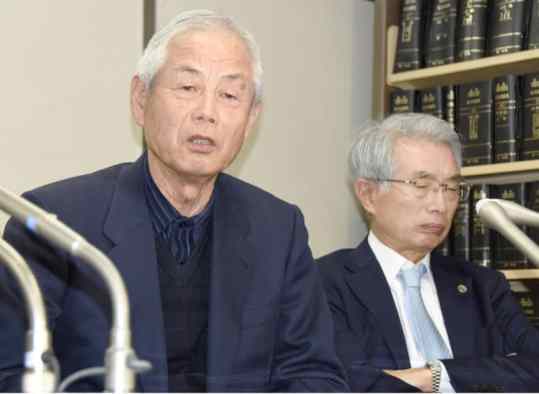 Isao Enei (left), head of a group of plaintiffs seeking damages for evacuating after the 2011 Fukushima No. 1 nuclear power plant accident, speaks at a news conference Tuesday in Tokyo alongside their attorney Junichiro Hironaka.
March18, 2020
The Tokyo High Court on Tuesday ordered ¥1 million in additional damages be paid each to some 300 evacuees from the 2011 Fukushima nuclear disaster, down by two-thirds from the amount awarded by a lower court ruling.
The total amount of additional compensation Tokyo Electric Power Company Holdings Inc. must pay was reduced to about ¥360 million from the ¥1.1 billion awarded by the Tokyo District Court in 2018.
The nuclear accident occurred at the Fukushima No. 1 nuclear power plant operated by Tepco, after it was affected by the March 2011 earthquake and tsunami.
In their petition, the plaintiffs, including former residents of the Odaka district in Minamisoma, Fukushima Prefecture, sought additional damages of ¥10.9 billion in total.
The ruling was the second by a high court on a collective damages lawsuit filed by those displaced by the nuclear accident, following one issued by Sendai High Court last week.
On Tuesday, presiding Judge Wataru Murata said Tepco must pay additional damages on top of the ¥8.5 million it paid per person based on estimates calculated under government-set interim standards.
The additional damages have to be paid to compensate for the loss of hometowns, as “the foundations of residents’ lives have changed greatly and have yet to be restored,” Murata said.
But the amount of the additional damages should be reduced because individual circumstances of the evacuees should not be taken into account, Murata said, denying the need for such consideration as had been recognized by the lower court.
“The reduction is unavoidable, also considering that returning to hometowns is possible,” the judge concluded.
Plaintiff Isao Enei criticized the latest ruling at a news conference, saying that actual circumstances in areas hit by the nuclear disaster were completely ignored.
“There is no point in filing a collective suit if individual damages are ignored. The ruling is inconceivable,” said Junichiro Hironaka, an attorney for the plaintiffs.
Japan Olympics Official Tests Positive For COVID-19 As Training Camps Canceled Across Country
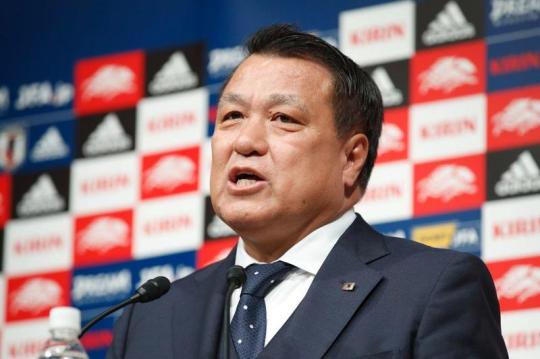 The deputy head of Japan’s Olympics Committee has coronavirus after reportedly experiencing a mild fever on Sunday after returning from a trip to Europe and the United States, according to the Wall Street Journal.
March 17, 2020
Kozo Tashima, who is also the president of Japan’s Football Association, was in Orlando, Florida on March 5 where he watched the Japanese women’s soccer national team play against Spain. While in the US he lobbied for Japan to host the women’s soccer World Cup during meetings held in New York – before returning to Japan on March 8.
“My symptoms didn’t start until March 14, so I wasn’t a major infection risk to others, but I apologize to those who were in meetings with me, JFA executives, the media and others I may have been in close contact with,” said Tashima in a statement, adding that his condition isn’t serious.
Mr. Tashima is almost certain to be unable to attend the next executive board meeting for the Olympic organizing committee at the end of this month, at which the impact of the coronavirus pandemic is likely to be on the agenda. Mr. Tashima is one of 25 executive board members who attend meetings every few months to review Olympic planning. –Wall Street Journal
While government officials said on Tuesday that they intend to hold the Olympics during the pandemic, with spectators and without changes to the scale of the event scheduled to begin July 24, Prime Minister Shinzo Abe has begun to change his tone, according to TIME.
Abe and his cabinet, as well as the organizers and Tokyo Governor Yuriko Koike, had until days ago been unanimous in insisting the Games would be staged as scheduled. But, following a G-7 leaders’ video conference on the coronavirus Monday, Abe avoided comment on the timing of the event.
“I want to hold the Olympics and Paralympics perfectly, as proof that the human race will conquer the new coronavirus, and I gained support for that from the G-7 leaders,” he told reporters after the event.
…
Asked whether the timing of the event was discussed, Abe repeated the same phrases without answering directly. He also used similar words when asked about the issue in parliament Monday. –TIME
Meanwhile, NHK reports that foreign countries’ national team training camps for the Olympic and Paralympic games have been canceled or postponed in 16 cities across Japan.
Cancellations include the table tennis and gymnastics team from Colombia, which planned on training in the western city of Kitakyushu, as well as Britain’s wheelchair basketball team which had scheduled practice in Urayasu City near Tokyo.
NHK also reports that events or projects to promote exchanges between foreign athletes and local residents have been canceled or postponed in approximately 60 municipalities throughout Japan – including a project by Matsukawa Town in Nagano Prefecture which planned to send high school students to Costa Rica.
Japanese Prime Minister Gives First Hints Tokyo Olympics Could Be Postponed

March 17, 2020
Japanese Prime Minister Shinzo Abe has begun to shift his messaging on the Tokyo Olympics, in a sign he may have accepted that the deadly coronavirus will make it necessary to postpone the event planned to start in July.
Abe and his cabinet, as well as the organizers and Tokyo Governor Yuriko Koike, had until days ago been unanimous in insisting the Games would be staged as scheduled. But, following a G-7 leaders’ video conference on the coronavirus Monday, Abe avoided comment on the timing of the event.
“I want to hold the Olympics and Paralympics perfectly, as proof that the human race will conquer the new coronavirus, and I gained support for that from the G-7 leaders,” he told reporters after the event.
Sporting events around the globe have been called off, delayed or held without spectators because of the virus, raising questions on whether it would be safe to bring hundreds of thousands of athletes, officials and spectators together in Tokyo. Last week, U.S. President Donald Trump suggested the Tokyo Olympics should be pushed back a year.
Asked whether the timing of the event was discussed, Abe repeated the same phrases without answering directly. He also used similar words when asked about the issue in parliament Monday.
Abe’s comments come after a poll showed almost two thirds of Japanese voters thought the Olympics should be postponed due to the pandemic. Japan’s prime minister had been closely associated with Tokyo hosting the games — flying to Buenos Aires in 2013 to make a bid for Japan’s case in person and appearing at the closing ceremonies for the Rio Games four years ago dressed as the Super Mario video game character to promote Tokyo 2020.
“The politics of delaying the games have shifted. In the early days of the crisis, delaying would have been an admission that Abe had failed to manage it. Now that it’s a global crisis, delaying may be what’s necessary to defend the Japanese people,” Tobias Harris, a Japan analyst for Teneo Intelligence in Washington, wrote on Twitter.
Proceed As Planned?
With a growing number of qualifying events already canceled, the summer start date is looking increasingly impracticable. The Tokyo Organizing Committee is asking that spectators stay away from Japan’s torch relay beginning at the end of the month, Kyodo News reported, an event usually expected to drum up excitement for the games.
Olympics Minister Seiko Hashimoto later denied that Abe’s comments meant any delay to the event.
“Holding it perfectly means preparing properly to hold it as planned, and working together to that end,” she said Tuesday. Chief Cabinet Secretary Yoshihide Suga also said there was no change to Japan’s preparations.
The French Olympic committee chief was reported as saying earlier that the virus must be on the wane by late May to allow the Tokyo Games to take place in July.
In response, Hashimoto reiterated that the International Olympic Committee had the authority to make the decision.
“I am aware of various individual opinions, but the government’s position is to provide support in close cooperation with the IOC, the organizing committee and the Tokyo metropolitan government,” she said.
The Olympic Games haven’t been canceled since the summer of 1944, when they were called off due to World War Two.
Japan’s Sendai nuclear reactor 1 offline because not meeting safety requirements
March 16, 2020
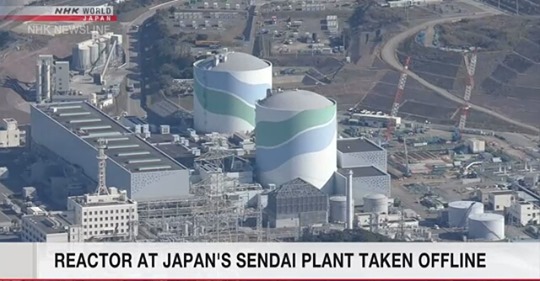
The operator of a nuclear power plant in southwestern Japan has suspended one of its reactors as it cannot meet the deadline for building mandatory facilities to deal with emergencies.
Kyushu Electric Power Company began work to reduce output at the No.1 reactor at the Sendai plant in Kagoshima Prefecture at 2:30 a.m. on Monday. The reactor went offline at 1:01 p.m.
Kyushu Electric will start regular inspections on the reactor earlier than scheduled.
This is the first time for a reactor to go offline because of its failure to meet the government’s new regulations.
The regulations were drawn up in 2013 after the nuclear accident at the Fukushima Daiichi plant two years earlier.
They require nuclear plant operators to construct facilities to ensure the safety of reactors in the event of emergencies such as acts of terror and aircraft crashes.
The Nuclear Regulation Authority, or NRA, obliges the operators to erect such facilities within five years of construction plans being approved.
Kyushu Electric says it aims to put the reactor back online after completing the necessary facilities by December and gaining approval from the NRA.
The utility also plans to shut down the No.2 reactor at the Sendai plant in May for failing to meet the deadline.
Kansai Electric Power Company is also expected to suspend the No.3 and No.4 reactors at the Takahama nuclear plant in Fukui Prefecture in August and October respectively for the same reason.
70% do not expect Tokyo Olympics to be held as scheduled: Kyodo poll

March 15, 2020
A total of 69.9 percent of people do not expect the Tokyo Olympic and Paralympic Games this summer to be held as scheduled amid the global outbreak of the novel coronavirus, a Kyodo News survey showed Monday.
The poll, conducted from Saturday to Monday by phone, comes as Japan continues with preparations for the Olympics, from July 24 to Aug. 9, and the Paralympics, from Aug. 25 to Sept. 6, with Abe saying he has no immediate plan to declare a state of emergency, and that the Summer Games will go ahead as scheduled.
Even though public opinion is split on how well the government has responded to the crisis, the approval rating for Prime Minister Shinzo Abe’s Cabinet rose to 49.7 percent from 41.0 percent in February.
Of those who said they approved of the administration, 53.4 percent responded that it was because there were no other appropriate choices besides Abe.
Since the previous opinion poll in mid-February, steps have been taken by Abe’s government to combat the spread of the virus, including requesting large events be canceled, and schools be shut through the start of the new academic year in April, relief measures for businesses and tougher border control measures, especially for travelers from China and South Korea.
In the survey with 1,032 respondents, 48.3 percent said the government measures against the virus are appropriate, while 44.3 percent said they disapprove of them.
The spread of the pneumonia-causing virus has halted a significant amount of international and domestic travel.
To ease the adverse effects of the outbreak, Abe has introduced zero-interest loans for small and midsize companies that are in a cash crunch due to sharp falls in sales as part of funding packages totaling 1.5 trillion yen ($14 billion).
Still, 90.7 percent of the respondents said they are worried or somewhat worried about the economic impact of the new coronavirus outbreak, an increase from 82.5 percent in the previous poll.
A total of 71.8 percent answered that the school closures aimed at preventing a further spread of the virus were appropriate or somewhat appropriate, while 83.1 percent supported the implementation of tougher border control measures for travelers from China and South Korea, a move which has hit Japan’s tourism industry hard.
The virus has claimed the lives of at least 31 people in Japan, and more than 1,500 people have been infected with it, including about 700 cases from a cruise ship that was quarantined near Tokyo.
As Abe has been facing severe criticism over the handling of documents related to publicly funded annual cherry blossom viewing parties that are at the center of yet another scandal alleging cronyism, 82.5 percent said he failed to explain himself to the public over the issue sufficiently.
The survey, covering 739 randomly selected households with eligible voters and 1,219 mobile phone numbers, obtained responses from 512 and 520 people, respectively.
https://english.kyodonews.net/news/2020/03/c44332182570-urgent-70-do-not-expect-tokyo-olympics-to-be-held-as-scheduled-kyodo-poll.html?fbclid=IwAR2OkeV6C-aL7x_W7DlMUmsSBift5sozEdExA8xhw-ULZGeECHbcn6PdhOE
JR East’s Joban Line fully reopens after nine long years following Fukushima disaster
 A train stops at Ono Station on the Joban Line in the town of Okuma, near the crisis-hit Fukushima No. 1 nuclear plant, on Saturday as the long-suspended train line connecting Tokyo and Miyagi Prefecture fully resumes service.
Mar 14, 2020
FUKUSHIMA – After nine long years, service on the Joban Line is fully back on track.
The reopening of a 20.8 kilometer stretch between Tomioka and Namie near the crippled Fukushima No. 1 nuclear plant means that all Tohoku train lines have now completely reopened following the March 2011 triple disaster.
While some anticipate that the improvement of public transport in disaster-hit areas along Fukushima Prefecture’s Pacific coast will lead to an increase in visitors and regional revitalization, others say the impact will be limited as cars remain the mode of transportation of choice for most residents.
Prior to reopening, JR East had offered bus services for the closed section of the Joban Line, a 344-kilometer route that connects Tokyo and Miyagi Prefecture.
Nine JR and private railway lines took more than a year to reopen following the disaster, according to the transport ministry.
The Rias Line, operated by Sanriku Railway Co., had been repaired following the 2011 disaster but was again damaged by Typhoon Hagibis last October.
With services fully resumed, limited express trains linking Tokyo with Sendai, the capital of Miyagi, will make three round-trips per day.
Among the five stations along the recently reopened section, three are in the towns of Futaba and Okuma, which host the crippled plant of Tokyo Electric Power Company Holdings Inc., as well as Tomioka.
The three municipalities had been designated by the government as a no-go zone due to high radiation levels. The entry ban was gradually lifted in Okuma and Tomioka and the restrictions for areas near the stations in the three towns were newly removed earlier this month.
As of March 1, only 1,943 people reside in Okuma and Tomioka, while no one lives in Futaba. The three towns had a combined population of around 34,000 prior to the disaster.
Repair work on the damaged stretch of the Joban Line was long-delayed as most of it was located in a zone marked as having high levels of radiation, JR East said.
1 This Month

of the week – Shut Down Drone Warfare!


Tell the Ukrainian Government to Drop Prosecution of Peace Activist Yurii Sheliazhenko

Petition to revoke the licensing of the Near Surface Nuclear Disposal Facility (NSDF) at Chalk River. https://www.ourcommons.ca/petitions/en/Petition/Details?Petition=e-7247
To see nuclear-related stories in greater depth and intensity – go to https://nuclearinformation.wordpress.com
-
Archives
- April 2026 (68)
- March 2026 (251)
- February 2026 (268)
- January 2026 (308)
- December 2025 (358)
- November 2025 (359)
- October 2025 (376)
- September 2025 (257)
- August 2025 (319)
- July 2025 (230)
- June 2025 (348)
- May 2025 (261)
-
Categories
- 1
- 1 NUCLEAR ISSUES
- business and costs
- climate change
- culture and arts
- ENERGY
- environment
- health
- history
- indigenous issues
- Legal
- marketing of nuclear
- media
- opposition to nuclear
- PERSONAL STORIES
- politics
- politics international
- Religion and ethics
- safety
- secrets,lies and civil liberties
- spinbuster
- technology
- Uranium
- wastes
- weapons and war
- Women
- 2 WORLD
- ACTION
- AFRICA
- Atrocities
- AUSTRALIA
- Christina's notes
- Christina's themes
- culture and arts
- Events
- Fuk 2022
- Fuk 2023
- Fukushima 2017
- Fukushima 2018
- fukushima 2019
- Fukushima 2020
- Fukushima 2021
- general
- global warming
- Humour (God we need it)
- Nuclear
- RARE EARTHS
- Reference
- resources – print
- Resources -audiovicual
- Weekly Newsletter
- World
- World Nuclear
- YouTube
-
RSS
Entries RSS
Comments RSS
 nuclear-news