Tepco telling California 9th Circ. To Send Sailors’ $1B Fukushima Suit To Japan
TEPCO trying to block the hearing of this case in California under US law.
Watch recording for case: Lindsay Cooper v. Tokyo Electric Power Co., No. 15-56424
http://www.ca9.uscourts.gov/media/view_video.php?pk_vid=0000010155
9th Circ. Told To Send Sailors’ $1B Fukushima Suit To Japan
Law360, Los Angeles (September 1, 2016, 5:47 PM ET) — Tokyo Electric Power Co. urged the Ninth Circuit on Thursday to dismiss a $1 billion putative class action on behalf of 70,000 U.S. sailors allegedly exposed to radiation while responding to the Fukushima nuclear disaster, arguing the claims belong in Japan.
During oral arguments in Pasadena, California, Daniel Collins of Munger Tolles & Olson LLP, representing Tokyo Electric Power Co. Holdings Inc., the owner of the Fukushima nuclear plant, urged a three-judge panel to reverse U.S. District Judge Janis L. Sammartino’s refusal to dismiss the suit….
http://www.law360.com/articles/835597/9th-circ-told-to-send-sailors-1b-fukushima-suit-to-japan
VOX POPULI: A curse that lasts 100,000 years: buried nuclear waste
Homo sapiens sapiens, or anatomically modern humans, emerged on the African continent about 200,000 years ago. They started migrating to various parts of the globe around 60,000 years ago with some eventually reaching the Japanese archipelago.
The Paleolithic era came and went, and rice cultivation began in the Neolithic era.
I started thinking about these prehistoric times after a recent news report mentioned “100,000 years” in connection with radioactive waste that must be disposed of when nuclear reactors are dismantled.
It takes a mind-boggling number of years for nuclear waste, stored deep underground, to decrease in radioactivity to a level that is no longer a health hazard.
With respect to highly radioactive waste such as reactor control rods, the Nuclear Regulation Authority has just set its basic policy, which is that electric power companies will be responsible for the management of such waste for 300 to 400 years, and then the government will take over for the next 100,000 years.
Every precaution must be taken to prevent future humans from accidentally entering sites where the waste is buried and digging the ground. The potential effects of earthquakes and volcanic eruptions on the stored waste also has to be considered.
In determining the extent of responsibility to be shouldered by utilities, it was agreed that it would not be realistic to expect them to manage the storage sites for tens of thousands of years to come.
According to “Hyakunen Tsuzuku Kigyo no Joken” (Conditions necessary for businesses to last 100 years) compiled by Teikoku Databank, a corporate credit research and database service company, there are some, but not many, Japanese companies that have remained in business for more than 400 years.
They include Sumitomo Metal and Mining Co., Yomeishu Seizo Co., and Matsuzakaya, which were founded before or during the Edo Period (1603-1867).
Are Japan’s electric power companies also destined to join their ranks?
But whether it’s 400 years or 100,000 years from now, nobody in our present generation can remain responsible for all those years. I shudder at this “ultrarealistic” reality.
Incidentally, Japan’s first nuclear reactor commenced commercial operation 50 years ago.
Test fishing for flounder begins off Fukushima coast
Flounders surely vacuum well the radionuclides from the ocean floor, and the government-imposed limit of 100 becquerels per kg does no mean no contamination.
There is no such a thing as a low dose when it comes to internal radiation such as the one from ingested contaminated food. Any radioactive contamination may cause harm.
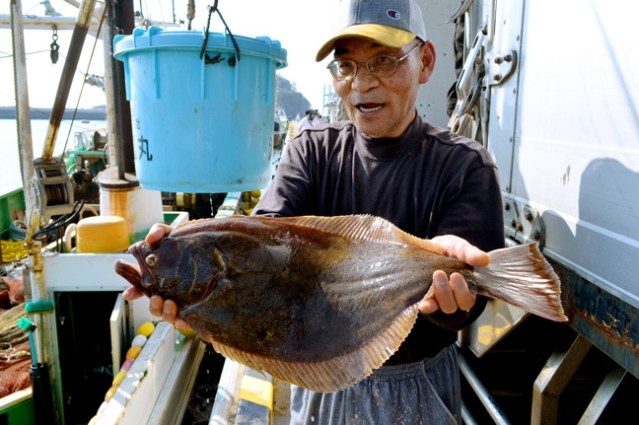
This flounder was caught on Sept. 2 off the coast of Iwaki, Fukushima Prefecture, during the first test fishing for the species since the 2011 disaster at the Fukushima No. 1 nuclear plant.
Test fishing for flounder begins off Fukushima coast
IWAKI, Fukushima Prefecture–Fishermen here caught flounder for sales on Sept. 2 for the first time since the 2011 disaster at the Fukushima No. 1 nuclear plant.
Eleven boats equipped with dragnets left Hisanohama wharf in the morning, and they snared five of the bottom-dwelling flatfish, previously a specialty of Fukushima Prefecture.
“It is a big step (for flounder fishing),” said Akira Egawa, 69, head of the Iwaki city fishery association. “We are going to recover one by one.”
On Aug. 25, 10 kinds of fish, including flounder, were added to the list for “test fishing” off the coast of Fukushima Prefecture. These fish can be caught for the resumption of sales of “safe” fish.
In 2010, 734 tons of flounder were caught in Fukushima Prefecture, the third most in Japan.
The peak season for flounder fishing is around the end of October.
http://www.asahi.com/ajw/articles/AJ201609020065.html
Japan authorizes commercial flounder ‘test-fishing’ off Fukushima
The sales of flounder caught in Fukushima Prefecture might soon resume, with fishermen already “test-fishing” for the first batches of the flatfish. The five-year-long halt in flounder fishing and sales was prompted by the deadly nuclear disaster.
On Friday fishermen caught flounder off the coast of Iwaki, Fukushima Prefecture, during the first test fishing since the 2011 nuclear disaster, Japan’s Asahi Shimbun reports. Flounder along with ten other kinds of fish was added to the list for “test-fishing” last week, meaning it is “safe” for sales.
As many as five flatfish were captured with the help of 11 boats equipped with dragnets.
“It is a big step [for flounder fishing],” said Akira Egawa, head of the Iwaki city fishery association. “We are going to recover one by one.”
Following the nuclear disaster the government issued an outright ban on more than 35 kinds of fish including flounder, angler fish and rockfish which were said to contain high levels of radioactive substances.
The ban has had a huge effect on Fukushima’s fishing industry which has significantly gone down after 2011. Around 5,600 tons of fish were caught off Fukushima coast last year compared to about 38,600 tons before March, 2011.
After March 2011, 50 percent of the fish samples tested for radiation levels exceeded the government-imposed limit of 100 becquerels per kg. However, after April 2015, no fish exceeded that number, according to The Japan Times.
However, after April 2015, no fish exceeded that number, according to The Japan Times.
https://www.rt.com/news/358095-flounder-test-fishing-fukushima/
Tokyo Hopes To Lift No Go Zone Order In Fukushima In Next Five Years
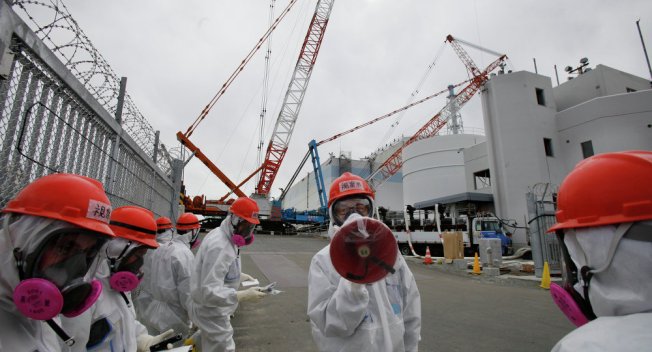
By the end of the 2021 fiscal year, the Japanese government intends to repeal an evacuation order on the remaining “no go zone” around the Fukushima no.1 nuclear plant, the site of one of the worst nuclear accidents in history.
Tokyo announced Wednesday that it aims to conduct infrastructure restoration and radiation clean ups in reconstruction bases built within the zone, which was highly contaminated when the plant, operated by Tokyo Electric Power Co. Holdings Inc. (TEPCO), was shut down during a March 2011 tsunami and earthquake.
Prime Minister Shinzo Abe, at a joint meeting of the Reconstruction Promotion Council and Nuclear Emergency Response Headquarters, where the proposal was adopted, said, “Based on the basic policy, we will embark on reconstruction work in the zone as soon as possible.” In June 2015 the government decided it would lift the ban on areas of Fukushima with lower contamination levels by March of 2017.
Headquarters also announced that the decontamination of Fukushima would be paid for with state funds. It was estimated in 2013 that cleanup would cost upwards of 2.5 trillion yen (about $24 billion), and the decontamination efforts would be financed with funds collected from selling state-owned shares of TEPCO.
Tokyo hopes to profit 2.5 trillion yen from selling the shares, but TEPCO stock would have to trade at about 1,050 yen for that to happen, and shares are currently valued at around 360 yen. After evacuation and some rearranging, Tokyo has been gradually lifting no-go zones restrictions in Fukushima since 2013.
53-year-old Toshiko Yokota, who was able to return to clean up her home in Naraha in 2015 said, “My friends are all in different places because of the nuclear accident, and the town doesn’t even look the same, but this is still my hometown and it really feels good to be back. I still feel uneasy about some things, like radiation levels and the lack of a medical facility,” she said. “In order to come back, I have to keep up my hope and stay healthy.”
According to Jiji Press, the public cost of decontamination and cleanup of the nuclear accident exceeded 4.2 trillion yen by the end of the 2015 fiscal year. Factoring in costs for reactor decommissioning, compensation payments to people and organizations affected by the accident and radioactive decontamination, the government spent about 33,000 yen per capita.
http://sputniknews.com/asia/20160902/1044873179/tokyo-lift-no-go-zone.html
Japan may invest $10 bln in Russian oil firm Rosneft – Nikkei
Japan will propose a broad cooperation in the energy sector with Russia that could include a nearly $10 billion investment in Russian state-owned oil giant Rosneft, the Nikkei newspaper reported on Friday.
The report comes as Prime Minister Shinzo Abe plans to meet Russian President Vladimir Putin on the sidelines of a two-day business conference beginning Friday in Vladivostok.
The two are expected to discuss closer cooperation in such areas as energy and technology, with Japan hoping to strengthen economic ties and create a breakthrough in a decades-long territorial dispute.
The Nikkei said the Ministry of Economy, Trade and Industry (METI) is considering investing as much as 1 trillion yen ($9.7 billion) to buy 10 percent of Rosneft through the government-backed Japan Oil, Gas and Metals National Corp, or Jogmec.
In addition, Japan will consider joint surveys for oil and gas projects in Eastern Siberia and the Russian Far East. It will also seek technical cooperation in decommissioning the Fukushima Daiichi power plant, the site of the 2011 nuclear disaster, the paper said.
METI was not immediately available for comment.
Japan may invest $10 bln in Russian oil firm Rosneft – Nikkei
Steel in Troubled French Nuclear Reactor Used in 13 Japanese Reactors
Thirteen Japanese nuclear reactors were constructed with steel from the same company used in a French power plant that’s under scrutiny for anomalies found in the reactor vessel’s structure.
Six utilities used steel from Japan Casting & Forging Corp., they all said in separate statements on Friday. The steelmaker was identified by Japanese authorities last month as supplying steel to the Flamanville nuclear plant, developed by Electricite de France SA and Areva SA, where the French safety authority last year found weaker-than-expected steel.
Japan’s nuclear regulators asked utilities last month to examine reactor parts manufactured by the same companies as the Flamanville facility. Utilities must now evaluate whether their reactor pressure vessels meet Japan’s standards and report the results to the Nuclear Regulation Authority by Oct. 31.
The Japanese facilities affected include Kyushu Electric Power Co.’s Sendai No. 1 and 2 reactors, the company said Friday. The plant was restarted last year and is facing opposition from the region’s new governor, who has demanded they be temporarily shut for inspections.
Reactors that are currently operating don’t need to be shut down, Yoko Kobayashi, an official with the NRA’s planning division, said Friday. The affected utilities are now required to submit manufacturing reports and past evaluation results, she said.
Nuclear Challenge
The steel scrutiny is latest hurdle for nuclear power in Japan and the government’s goal of having it account for as much as 22 percent of its energy mix by 2030 in the wake of the 2011 Fukushima disaster. Local court challenges have threatened reactor operations, and even those restarted under new post-Fukushima safety rules have faced a rocky road. Only three of the nation’s 42 operable reactors are online.
Parts manufactured by JCFC met rigorous standards requested by the utilities, and the company will provide support going forward, Seigo Otsubo, an official at the company, said Friday.
EDF and Areva are conducting additional tests to determine whether the anomalies are a safety issue. The two companies said in April that the submission of their report to French regulators about the Flamanville reactor has been delayed until year-end.
EDF has also determined that steam generator channel heads at 18 French reactors contain anomalies similar to those at Flamanville, Autorite de Surete Nucleaire, the safety regulator, said in June.
Japanese reactors that used steel from JCFC, according to statements from the companies:
- Tokyo Electric Power Co. Holdings Inc.’s Fukushima Dai-2 No. 2, No. 4
- Kansai Electric Power Co.’s Takahama No. 2, Oi No. 1 and No. 2
- Kyushu Electric Power Co.’s Genkai No. 2, No. 3, No. 4, Sendai No. 1, No. 2
- Shikoku Electric Power Co.’s Ikata No. 2
- Hokuriku Electric Power Co.’s Shika No. 1
- Japan Atomic Energy Agency’s Tsuruga No. 2
Typhoons cause ‘ice wall’ to melt at Fukushima nuclear plant
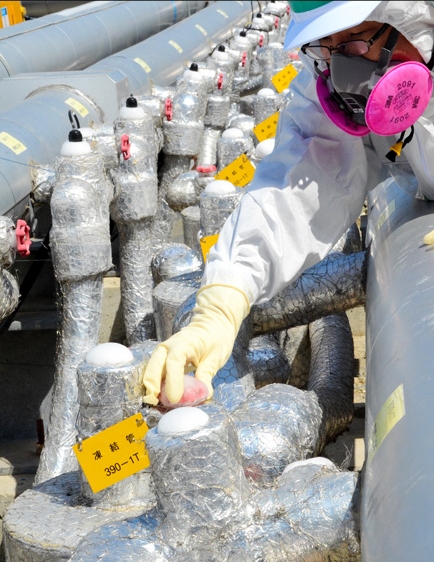
Workers examine pipes for the wall of frozen soil at the embattled Fukushima No. 1 nuclear power plant.
Rainfall from recent typhoons caused partial melting of the “ice wall” at the Fukushima No. 1 nuclear plant, allowing highly radioactive water to leak from around the damaged reactor buildings, the plant’s operator said Sept. 1.
Tokyo Electric Power Co. said melting occurred at two sections of the ice wall, which is designed to divert groundwater away from the reactor buildings.
TEPCO officials believe that during the latest typhoon, contaminated water from around the reactor buildings flowed through openings of the ice wall created by the deluge and reached downstream toward the sea.
The groundwater level near a seaside impermeable wall temporarily rose to 28 centimeters below the ground surface when Typhoon No. 10 passed the area on Aug. 30.
Before the typhoon hit, the water level was 35 cm below the surface.
Around 5.5 cm of rainfall a day fell in the area when the typhoon hit.
The groundwater level, however, actually rose by 7 cm, although 740 tons of groundwater was pumped out of the section.
“If there had been an additional 15 cm of rain, (the contaminated water) could have poured out over the ground surface” and spilled into the sea, a TEPCO official said Sept. 1.
The Meteorological Agency’s initial forecast said Typhoon No. 10 would bring a maximum 20 cm of rain a day at some locations in the Tohoku region.
The 34.5-billion-yen ($335 million) frozen wall was completed in spring to prevent groundwater from entering the reactor buildings and mixing with highly radioactive water.
TEPCO admitted the underground wall of frozen dirt is not working.
The company said the temperatures at the two sections of the frozen wall have climbed above zero since Typhoon No. 7 approached Fukushima Prefecture on Aug. 17.
The company believes that the partial melting was caused by the influx of water brought by the typhoons and heavy rain in between.
TEPCO plans to freeze the wall again by pouring chemicals into pipes that extend underground.
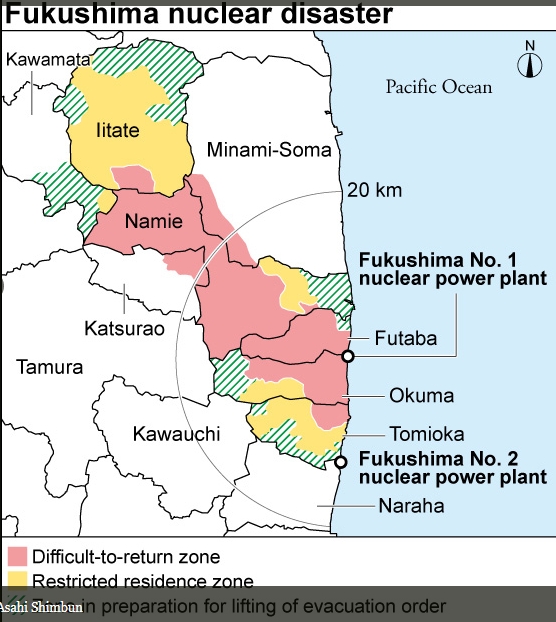
Ban to be lifted on Fukushima’s worst-affected zone in 2022

A barrier set up at the difficult-to-return zone as Typhoon No. 10 approaches Okuma, which co-hosts the Fukushima No. 1 nuclear power plant, in Fukushima Prefecture on Aug. 30
Some of the most contaminated areas of Fukushima Prefecture rendered uninhabitable by the 2011 nuclear disaster will be declared safe to live in again in 2022.
The government’s decision to lift the partial ban on repatriation to the “difficult-to-return zone” was announced Aug. 31 after Prime Minister Shinzo Abe called a joint meeting of the government’s Nuclear Emergency Response Headquarters and Reconstruction Promotion Council.
By 2022, the area’s 24,000 or so residents will have been displaced for more than a decade and there is no way of knowing how many will choose to return to their hometowns.
The difficult-to-return zone encompasses seven municipalities situated in a 20-kilometer radius of the crippled Fukushima No. 1 nuclear power plant as well as a spur of land northwest of the radius.
Partial lifting of the ban, in the eyes of the government, is reasonable as “radiation levels in the zone have dropped” even though no decommissioning work has been done there.
The government said the move is aimed at bolstering efforts to rebuild the prefecture, adding that leaving the zone intact would only perpetuate negative images of the area and sully the reputation of local products.
The ban will initially be lifted for areas where local government buildings, train stations and community halls are located, and eventually the rest of the zone.
There was no word, however, on how many years it will take for that to happen.
The government envisages enacting a law to designate areas earmarked as rebuilding hubs so as to encourage residents to return. The government will try to give priority to decisions by local officials as to which areas fall into that category.
In preparation for the lifting of the partial ban, the government will start extensive decontamination work in the zone from fiscal 2017, which begins next April.
The government estimates it would take 1 trillion yen ($9.7 billion) to clean up the entire zone, and is balking at making such an outlay on grounds of time and cost.
Even if the operation done on a limited basis, it is bound to come with a hefty price tag.
Funds needed for construction of housing and makeshift shops in the hub areas will be set aside in the government’s budget, starting from fiscal 2017.
According to government officials, some municipalities will likely to set up more than one rebuilding hub.
But one of the villages in the zone may end up having no hub at all due to depopulation.
A 2015 survey by the Reconstruction Agency found that the share of displaced people from Okuma, Futaba, Namie and Tomioka who expressed their intention to return to their hometowns varied from 11.4 percent to 17.8 percent. While the ratio was 32.8 percent for Iitate, no figures were available for Katsurao and Minami-Soma.
TEPCO has applied to return reactors No. 6 and 7 to production at Kashiwazaki-Kariwa.
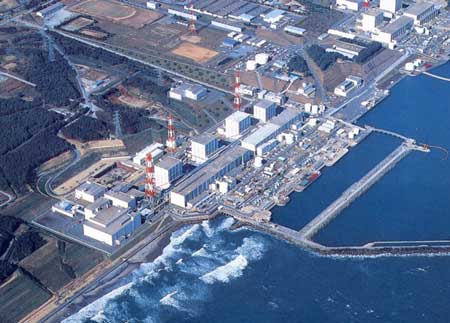
Tokyo Electric Power Co. Holdings Inc.’s (TEPCO) plan to restart the defunct Kashiwazaki-Kariwa nuclear power plant has an increased chance of being implemented after the prefecture governor, who has campaigned against its reopening, decided against running for re-election, according to a new report by Bloomberg.
TEPCO shares rose as much as 12 percent Wednesday morning – the largest price jump since May 2015, presumably in reaction to the announcement.
Niigata prefecture governor Hirohiko Izumida said he would not pursue a bid for a fourth term for the October 16th elections, according to a personal statement posted on his fan page.
The governor has long opposed plans to return the Kashiwazaki-Kariwa nuclear power plant – the largest of its kind in the world – to production. Japanese laws do not require that utility companies obtain the approval of local leaders before commencing operations, but it is the expected practice.
Izumida has previously demanded that TEPCO conduct further investigations into the causes of the triple meltdown at the Fukushima Dai-Ichi plant in 2011 before proposing plans to restart any of the firm’s reactors.
“The next Niigata governor will likely not make as many relentless demands as Izumida,” Japanese analyst Hidetoshi Shioda said.
According to the World Nuclear Association, the 2011 meltdown led to highly radioactive releases over days 4-6 after the incident originally occurred on March 11th.
The organization reports no deaths or cases of radiation sickness from the incident, though 100,000 citizens had been evacuated from the area to ensure minimal health effects.
The New York Times reported on Monday that Japanese government has funded the construction of a $320 million block of man-made permafrost that would continue 100 feet underneath the Dai-Ichi plant to solve “an unrelenting flood of groundwater” that had been headed into the damaged reactors.
The project will stop the leak of radioactive water into the Pacific Ocean, which may be continuing at low levels to this day, The Times said.
TEPCO has applied to return reactors No. 6 and 7 to production at Kashiwazaki-Kariwa. The company expects to boost profits by $97 million a month for each reactor it restarts, TEPCO spokesperson Tatsuhiro Yamagishi said earlier this week.
New Hope For Nuclear Power In Japan: http://oilprice.com/Latest-Energy-News/World-News/New-Hope-For-The-Fukushima-Nuclear-Power-Plant.html
Post-scriptum: A factually incorrect article published at OilPrice.com (Update: they have corrected the erroneous claim about restarting Fukushima Daiichi but left a photo of Fukushima Daiichi on their somewhat corrected story a copy of the original version can be found here) has begun propagating across the internet. TEPCO is NOT trying to restart reactors at Fukushima Daiichi.
Credit to Nancy Foust of Fukuleaks who caught the Oilprice incorrection: http://www.fukuleaks.org/web/?p=15719
Japan Extends Reactor Lifetimes for First Time Since Fukushima
Japan’s Nuclear Regulation Authority (NRA) this June approved 20-year license extensions for the aging Takahama 1 and 2 reactors, a first for the power-strapped country that has been conflicted about the future of its nuclear power plants since the Fukushima Daiichi catastrophe in 2011.
A regulatory system established in the aftermath of Fukushima limits the operating lives of Japanese nuclear units to 40 years, though it allows a one-time extension of no more than 20 years. The NRA’s approval to allow the 40-year-old Takahama 1 and 39-year-old Takahama 2 to operate an additional 20 years was carried out as an “extraordinary case.” Kansai Electric Power Co., which owns the two 826-MW reactors, filed applications for the extensions in April 2015, as well as for its 826-MW Mihama 3 reactor in November 2015, saying that they were “important” for its business.
Under its revised long-term energy plan, Japan anticipates getting between 20% and 22% of its total generated electricity from nuclear power by 2030, and industry groups like the Japan Atomic Industrial Forum have argued that the lifetime extensions will be integral to meeting that target.
Four of the nation’s nuclear power plants idled after Fukushima have so far cleared the new regulatory standards required to resume operations, but only Sendai 1 and 2, which are owned and operated by Kyushu Electric Power Co., are online. Kansai started up its Takahama 3 reactor on January 29 and Takahama 4 on February 26, but it took Unit 4 offline just three days later following a “main transformer/generator internal failure” (Figure 1). It was then forced to halt operations at Unit 3 on March 10 after Japan’s Otsu District Court issued a temporary injunction against the operation of both reactors because, the court said, the safety of the units could not be guaranteed. On July 12, Otsu District Court Judge Yoshihiko Yamamoto rejected Kansai’s request to lift the injunction. Kansai now says that—though it has filed to appeal the court’s decision to the Osaka High Court—it will begin removing nuclear fuel from the reactor cores.
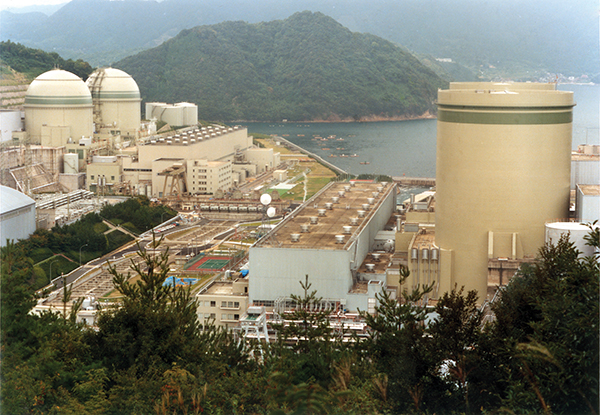
One step forward, two steps back. While Japan’s Kansai Electric Power Co. received Nuclear Regulation Authority approval to extend the lifetimes of Units 1 and 2 at its Takahama Nuclear Power Plant in Oi District, Fukui Prefecture, to 60 years, it has been forced to halt operations at Units 3 and 4 by a temporary injunction issued by a district court.
Meanwhile, applications for 22 more nuclear plant restarts have been filed with the NRA. According to a 2017 economic and energy outlook released by the Institute of Energy Economics of Japan (IEEJ) in late July, at least 12 nuclear power plants should be restarted next year. The research group notes, however, that those projections are clouded by a number of issues, including court judgments and local agreements. That uncertainty could come at a significant cost to the nation, it added.
“Because of the judicial ruling that ceased operations at the Takahama Unit No. 3 and 4, it is important to analyse the effect of stopping operations of nuclear power plants from a local point of view,” the IEEJ’s outlook says. “As a rule, if one nuclear plant with the capacity of 1 MW stops operation for one year in an area where annual demand is about 100 TWh, total fossil fuel costs increase by [$594 million] and the energy-related [carbon dioxide] emissions increases by 4 Mt-CO2 (7% increase for the local emissions). The average electricity unit cost will increase by [$3.96/MWh] (1.8% rise of the average power unit price).”
http://www.powermag.com/japan-extends-reactor-lifetimes-first-time-since-fukushima/
Damage caused only by misconceptions about the nuclear incident not by the nuclear accident itself, according to the Yomiuri Shimbun, a pro-government newspaper
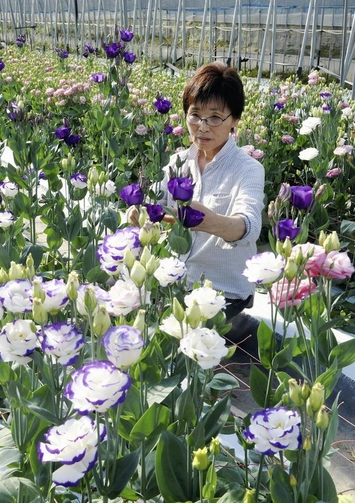
Fukushima farmers plant flowers to revive agriculture
Tomoko Horiuchi checks eustoma she grows in Minami-Soma, Fukushima Prefecture, in early August.
FUKUSHIMA — Farmers from Fukushima Prefecture’s municipalities who have received the government’s evacuation directives in the wake of the 2011 disaster at the Fukushima No. 1 nuclear power plant are cultivating flowers as a new agricultural business to rebuild their lives.
The climate in these areas is suited to growing colorful flowers, as it has abundant sunshine and a relatively large change in temperature between day and night.
After the nuclear crisis, the price of rice harvested in the prefecture has hovered at low levels because of the damaged perception of crops grown in the area.
But because growing flowers is less susceptible to damage caused by misconceptions about the nuclear incident, an increasing number of local farmers actively cultivate eustoma and other popular ornamental flowers.
Junichi Futatsuya, 65, from the Haramachi district in Minami-Soma, began cultivating eustoma in the spring of 2014 using an idle greenhouse where he used to raise rice seedlings. In 2015, a local agricultural cooperative that covers Minami-Soma formed a section to grow eustoma, with Futatsuya participating in the project. Membership has now grown to 25 people.
Stable prices
In July, the evacuation directives were lifted in most areas of Minami-Soma, and many farmers now sell their flowers in Tokyo in the hopes of gaining recognition for them in areas that are major markets.
Futatsuya, who restarted cultivating rice this year, said, “I’m expecting to secure income by growing rice and flowers.”
Kawasaki Flora Auction Market Co. trades in flowers produced by Futatsuya and other farmers from the prefecture.
“We don’t hear any dealers in the market saying they would shy away from the products because the flowers are produced in Fukushima Prefecture,” said Manabu Aishima, 49, a section chief of the Kawasaki-based company. “Farmers can expect all-year shipping with adequate investment in plants and equipment.”
Tomoko Horiuchi, 69, also grows eustoma in the district. She said she did not experience a wide fluctuation in prices before or after the crisis.
“It made me realize that flowers are not susceptible [to damage caused by misconceptions]. I would like fellow producers to increase to more stably supply flowers to the market,” she said.
Supporting ambition
Daytime entry is allowed in areas where evacuation directives have been issued as long as these areas are not designated as “difficult-to-return zones” due to high levels of radiation exposure.
In July last year, six farmers in the town of Namie formed a study group to grow flowers, and one of the farmers was able to grow and ship eustoma to customers.
The Namie town government plans to conduct a survey to find places suitable for flower cultivation and is considering consolidating greenhouses near the town office.
Meanwhile, in the village of Iitate, evacuation directives are scheduled to be lifted in most places at the end of March 2017. Four farmers will build greenhouses in the village to grow baby’s-breath flowers on a trial basis.
The Fukushima prefectural government is also financially supporting farmers if they build greenhouses and purchase equipment to make flower cultivation a new business in the Hamadori area, which is close to the nuclear plant.
“We’d like to support ambitious farmers,” said Masatoshi Kanno, vice chief of the prefectural government’s horticulture section.
Former senator pledges to support vets in Fukushima lawsuit
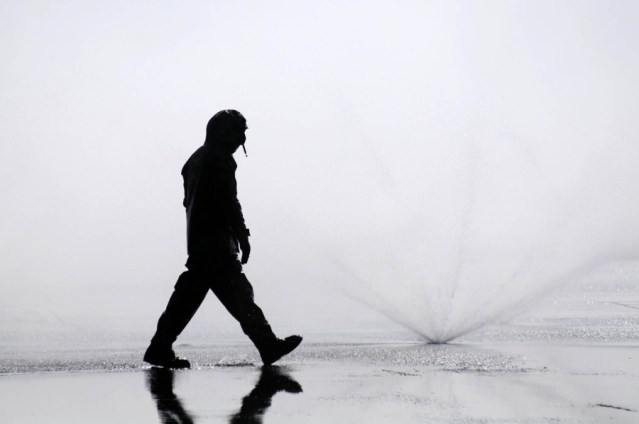
A sailor checks sprinklers on the flight deck of the aircraft carrier USS Ronald Reagan during Operation Tomodachi in 2011. Sailors scrubbed the external surfaces on the flight deck and island superstructure to remove potential radiation contamination.
Former Sen. John Edwards has pledged to support hundreds of U.S. sailors, Marines and airmen who say they were sickened by radioactive fallout from the 2011 disaster at the Fukushima Dai-ichi nuclear power plant.
U.S. forces participated in relief efforts after a 9.0-magnitude earthquake triggered a tsunami that battered swaths of northeastern Japan, including the plant.
Edwards — the 2004 Democratic nominee for vice president who ran for president that year and in 2008 — has offered his “legal and personal assistance” to the plaintiffs after hearing about their lawsuit against the Tokyo Electric Power Co., which operates the plant, according to a statement from the plaintiffs’ attorneys.
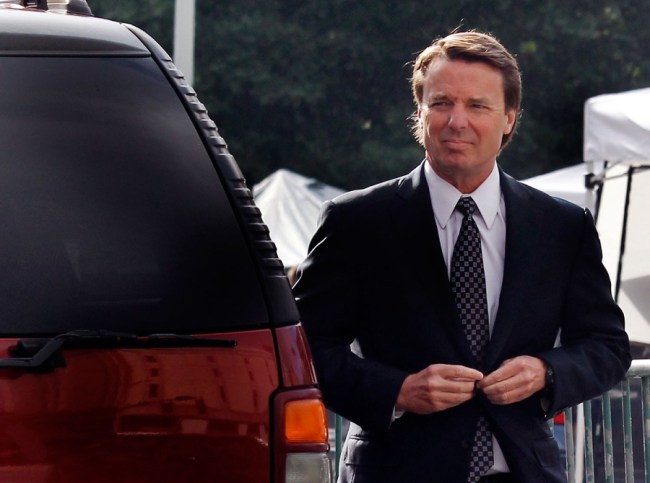
Former Sen. John Edwards arrives at the Federal courthouse in Greensboro, North Carolina, Tuesday, May 29, 2012.
The lawsuit against TEPCO and several other co-defendants, including General Electric, EBASCO, Toshiba Corp. and Hitachi, is scheduled to proceed to trial pending appeals. Oral arguments in the appeals case are due to begin Thursday in the 9th Circuit Federal Court in Pasadena, Calif. The plaintiffs’ lawyers don’t expect a ruling before November.
The plaintiffs maintain that TEPCO lied about the risk of radiation exposure, luring American forces closer to the affected areas and lulling others at bases across Japan into disregarding safety measures. The other defendants are accused of making faulty parts for reactors that contributed to Fukushima’s meltdown in March 2011.
The plaintiffs allege they have developed cancers, ulcers, uterine bleeding and thyroid issues as a result of radiation exposure. The U.S. government has said the radiation levels servicemembers encountered were too low to cause any maladies.
Edwards is now a partner at Edwards Kirby, a Raleigh law firm specializing in personal injury, economic justice and property rights. He could not be immediately be reached for comment.
News of Edwards’ support comes just months after another ex-politician, former Japanese Prime Minister Junichiro Koizumi, pledged his support after meeting with several of the plaintiffs during a visit to the United States.
In July, he called on his countrymen to donate to a fund for the plaintiffs, saying “it is not the kind of issue we can dismiss with just sympathy,” according to the Asahi Shimbun.
After Typhoon Lionrock landed in Fukushima
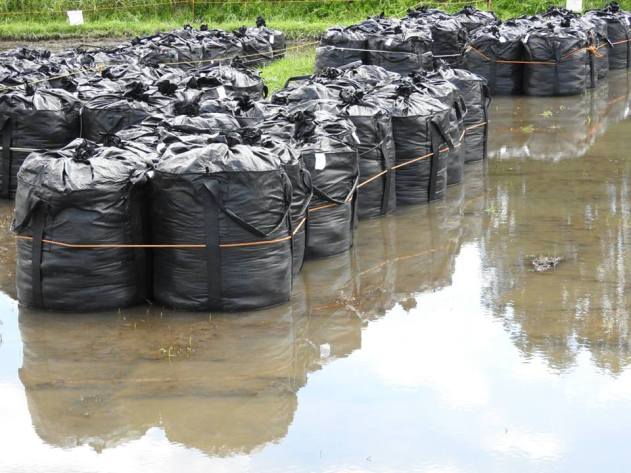

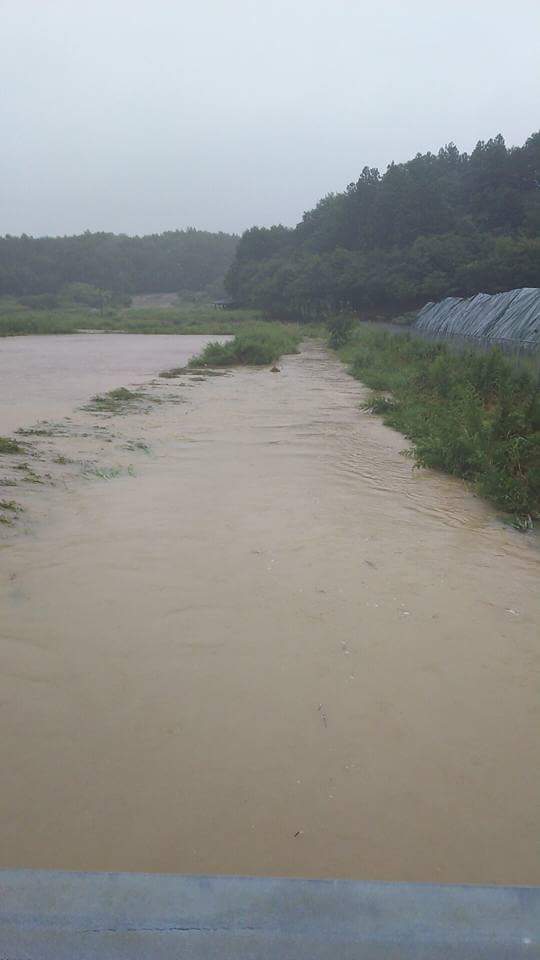
Flexible container bags filled with radioactive soil in flooded water in Iidate, Fukushima.
Credit to Hiroki Suzuki
Niigata Pref. Nuclear Power Opponent Governor Out of The Way
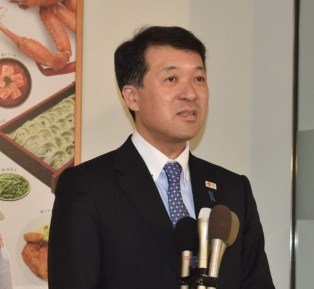
Was he pressured to drop out?
Hirohiko Izumida, governor of Niigata prefecture, said he won’t run for a fourth term and dropped out of the gubernatorial election scheduled for October 16.
The move may affect Tokyo Electric Power Co. Holdings Inc.’s efforts to restart its Kashiwazaki-Kariwa nuclear plant in the prefecture. According to Bloomberg, Tokyo Electric rose as much as 12 percent to 417 yen, the biggest intraday increase since May 2015, and traded at 394 yen at 9:32 a.m. Tokyo time. The Topix index rose as much as 1 percent.
Tepco Rises Most in Year After Governor Opposing Restart Retires
Tokyo Electric Power Co. Holdings Inc., operator of the wrecked Fukushima nuclear power plant, jumped the most in more than a year after a prefecture governor opposing the restart of one of its reactors abandoned his bid for re-election.
Tokyo Electric rose as much as 12 percent to 417 yen, the biggest intraday increase since May 2015, and traded at 394 yen at 9:32 a.m. Tokyo time. The Topix index rose as much as 1 percent.
Hirohiko Izumida, governor of Niigata prefecture, said he won’t run for a fourth term and dropped out of the gubernatorial election scheduled for October 16, according to a personal statement posted on a website of supporters. Izumida opposed Tokyo Electric’s plan to restart its Kashiwazaki-Kariwa nuclear power plant, the world’s largest facility, located in Niigata prefecture. Local government approval is typically sought by Japanese utilities before they restart nuclear reactors, though not required by law.
With Izumida out of the picture, the chance of Kashiwazaki-Kariwa’s reactors restarting has increased, said Hidetoshi Shioda, an analyst at SMBC Nikko Securities, who views the retirement as a positive for Tokyo Electric shares.
Izumida had demanded that Tokyo Electric further investigate the cause of the triple meltdown at its Fukushima Dai-Ichi plant in 2011 before restarting any reactors.
“The next Niigata governor will likely not make as many relentless demands as Izumida,” SMBC’s Shioda said.
Tepco, as the company is known, has applied to restart No. 6 and 7 reactors at Kashiwazaki-Kariwa. Running one reactor boosts Tepco’s profits by as much as 10 billion yen ($97 million) a month, company spokesman Tatsuhiro Yamagishi said Monday.
Niigata Pref. nuclear power opponent governor won’t stand for re-election
NIIGATA — Gov. Hirohiko Izumida has retracted his announcement that he will run in the upcoming gubernatorial election to seek a fourth term.
Since Izumida has adopted a cautious stance toward the restarting of the Kashiwazaki-Kariwa Nuclear Power Plant in Niigata Prefecture, his decision not to run in the election will likely have a huge impact on the issue. All seven reactors at the power station, owned by Tokyo Electric Power Co., have been idle since March 2012 in the wake of the 2011 Great East Japan Earthquake, tsunami and the ensuing crisis at the Fukushima No. 1 nuclear plant.
The campaign for the Oct. 16 Niigata gubernatorial election is to kick off on Sept. 29.
Izumida’s decision not to run in the election is linked to his criticism of a report in the Niigata Nippo regional daily over a dispute involving a subsidiary of a shipping company funded by the prefectural government.
In an interview with news organizations, Izumida said, “It’s important to have prefectural residents know the facts, but I feel my appeal never reached the residents. Even if I requested the newspaper to correct its report, the daily would never do so, which prompted me to abandon running in the race.”
At a prefectural assembly session in February this year, Izumida announced that he would run in the gubernatorial election to seek a fourth four-year term. However, his retraction of his candidacy leaves Nagaoka Mayor Tamio Mori, 67, who heads the Japan Association of City Mayors, as the only person who has announced his candidacy.
It came to light this past July that Japan Shipping Exchange Inc., an arbitration organization, had ordered a shipping company’s subsidiary funded by the prefectural government to pay 160 million yen to a South Korean company following a dispute over the purchase of a ferry.
The Niigata Nippo published a series of articles holding the Niigata Prefectural Government responsible for the case.
In response, the prefectural government has dismissed the accusations saying, “The daily’s coverage is incorrect,” and repeatedly urged the newspaper to correct its reports.
The Niigata Nippo is set to release a statement to express its views on the case.
http://mainichi.jp/english/articles/20160831/p2a/00m/0na/008000c
Nuclear Hotseat #271: How Radiation in Oceans Contaminates Our Food Supply – Tim Deere-Jones
This Week’s Featured Interview:
- Tim Deere-Jones is an independent marine pollution consultant and a specialist in the behavior and fate of marine pollutants in ocean, coastal and estuarine environments. He explains how radiation in the ocean from Fukushima and the UK’s Sellafield nuclear facility have impacted food safety at tremendous distances, as far away as the US West Coast. A jaw-dropping eye-opening report. This is an Encore presentation originally presented on Nuclear Hotseat #225 from October 13, 2015.
Numnutz of the Week:
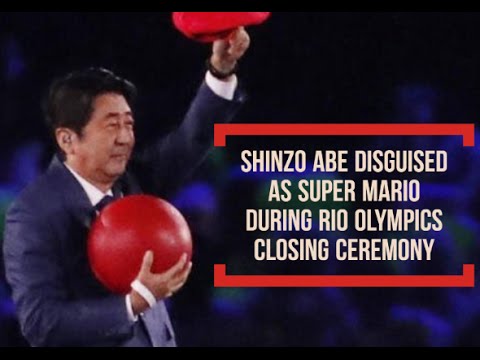
The only thing “super” about Japanese Prime Minister Shinzo Abe-Baby showing up dressed as Super Mario at the Rio Olympics is his gall at continuing to lie about the nuclear contamination awaiting anyone who dares to attend the 2020 Tokyo Radioactive NOlympics. (And that ball he’s holding is pure projection, if not delusion…)
Listen Here:
1 This Month





PLEASE OPPOSE HR 8255 AND S.3639 – bills would accelerate satellite deployment, with no environmental review or safeguards – https://ncstd5li.quorum.us/campaign/169331/
To see nuclear-related stories in greater depth and intensity – go to https://nuclearinformation.wordpress.com
-
Archives
- October 2026 (81)
- September 2026 (339)
- August 2026 (330)
- July 2026 (355)
- June 2026 (287)
- May 2026 (306)
- April 2026 (356)
- March 2026 (251)
- February 2026 (267)
- January 2026 (308)
- December 2025 (358)
- November 2025 (359)
-
Categories
- 1
- 1 NUCLEAR ISSUES
- business and costs
- climate change
- culture and arts
- ENERGY
- environment
- health
- history
- indigenous issues
- Legal
- marketing of nuclear
- media
- opposition to nuclear
- PERSONAL STORIES
- politics
- politics international
- Religion and ethics
- safety
- secrets,lies and civil liberties
- spinbuster
- technology
- Uranium
- wastes
- weapons and war
- Women
- 2 WORLD
- ACTION
- AFRICA
- Atrocities
- AUSTRALIA
- Christina's notes
- Christina's themes
- culture and arts
- Events
- Fuk 2022
- Fuk 2023
- Fukushima 2017
- Fukushima 2018
- fukushima 2019
- Fukushima 2020
- Fukushima 2021
- general
- global warming
- Humour (God we need it)
- Nuclear
- RARE EARTHS
- Reference
- resources – print
- Resources -audiovicual
- Weekly Newsletter
- World
- World Nuclear
- YouTube
-
RSS
Entries RSS
Comments RSS

