The UK/Ireland Nuclear Free Local Authorities have joined forces with local campaigners in protesting against the destruction of the local environment around the Sizewell C site now being carried out by developer, EDF.
The Chair of the NFLA Steering Committee, Councillor Lawrence O’Neill has written to the Secretary of State for the Environment, Dr Therese Coffey, asking her to intercede to stop the destruction.
The Sizewell C project has yet to receive site approvals from the Office of Nuclear Regulation and the Environment Agency or achieve financial close (the so-called Financial Investment Decision) and the decision by government ministers to give the go-ahead last year is being challenged in the High Court by Together Against Sizewell C in late March.
Despite this, developer EDF has been busy felling ancient trees and destroying wet woodland, in a Protected site of Special Scientific Interest, despite previously promising to only carry out preparatory works that were ‘reversible’ at this time. Councillor O’Neill said: “It appears that EDF are playing fast and loose with the word ‘reversible’. It is way too early to be carrying out such drastic acts of destruction against the natural environment, such as uprooting irreplaceable ancient trees, when there are still many uncertainties about whether Sizewell C will go ahead and when the plans are still subject to a major legal challenge.
Conservative former Prime Minister Boris Johnson faced claims of wanting his “old job back” as he accused Labour of being anti nuclear. Mr Johnson urged the Energy Secretary, Grant Shapps, to “accelerate the tech selection process” as he backed the rollout of British nuclear power. His comments prompted Labour former Opposition leader, and shadow climate change secretary, Ed Miliband, to joke: “It’s important to welcome ex-party leaders to their place, but my only piece of advice is it’s important to not want your old job back.” Mr Johnson said: “I congratulate (Grant Shapps) on his continuing commitment to Great British Nuclear, but is it not vital that we reaffirm the target of 24 gigawatts by 2050 and that we also accelerate the tech selection process, so that small modular reactors whether made by Rolls Royce or anybody else (can commence operating). “I think it would be wonderful if they came from this country, are on contract with Great British Nuclear by the end of the year, so that we can get back to the nuclear tradition that this country once had and undo the baleful, luddite, Atomkraft Nein Danke legacy of the party opposite.” Commons Speaker Sir Lindsay Hoyle intervened during Mr Johnson’s comments, saying: “I want to get everybody else in as well.” Mr Shapps replied: “(Mr Johnson) is of course absolutely right about this. He will know as the whole House will know that every single nuclear reactor currently operational in the UK was given permission under the Conservative Party and he is right to champion Great British nuclear and we will get the nuclear industry going again. “Indeed, I was the first energy secretary to put money, £700 million, into nuclear power since 1986.”
It’s not just Zaporizhzhia we have to worry about: There are 14 other nuclear power plants in the war zone. By Joshua Frank , TOMDISPATCH, February 28, 2023
In 1946, Albert Einstein shot off a telegram to several hundred American leaders and politicians warning that the “unleashed power of the atom has changed everything save our modes of thinking and we thus drift toward unparalleled catastrophe.” Einstein’s forecast remains prescient. Nuclear calamity still knoc
“………………………………………………………………………………………………………………………. here’s the true horror story lurking behind the war in Ukraine. While a nuclear tit-for-tat between Russia and NATO — an exchange that could easily destroy much of Eastern Europe in no time at all — is a genuine, if frightening, prospect, it isn’t the most imminent radioactive peril facing the region.
Averting a Meltdown
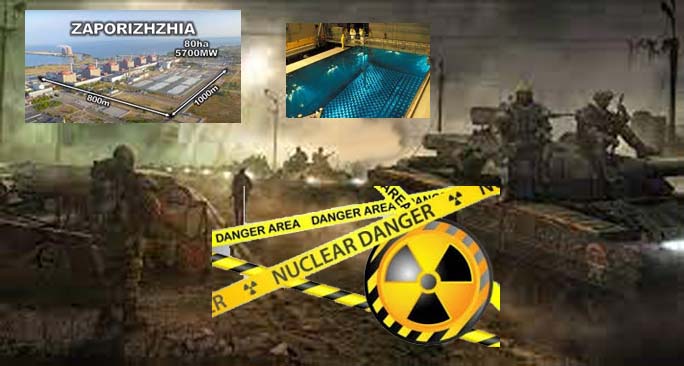
By now, we all ought to be familiar with the worrisome Zaporizhzhia nuclear complex (ZNPP), which sits right in the middle of the Russian incursion into Ukraine. Assembled between 1980 and 1986, Zaporizhzhia is Europe’s largest nuclear-power complex, with six 950-megawatt reactors.
……………………. In September 2022, due to ongoing shelling in the area, Zaporizhzhia was taken offline and, after losing external power on several occasions, has since been sporadically relying on old diesel backup generators. (Once disconnected from the electrical grid, backup power is crucial to ensure the plant’s reactors don’t overheat, which could lead to a full-blown radioactive meltdown.)
However, relying on risk-prone backup power is a fool’s game, according to electrical engineer Josh Karpoff. A member of Science for the People who previously worked for the New York State Office of General Services where he designed electrical systems for buildings, including large standby generators, Karpoff knows how these things work in a real-world setting. He assures me that, although Zaporizhzhia is no longer getting much attention in the general rush of Ukraine news, the possibility of a major disaster there is ever more real. A backup generator, he explains, is about as reliable as a ’75 Winnebago.
“It’s really not that hard to knock out these kinds of diesel generators,” Karpoff adds. “If your standby generator starts up but says there’s a leak in a high-pressure oil line fitting, it sprays heated, aerosolized oil all over the hot motor, starting a fire. This happens to diesel motors all the time. A similar diesel engine fire in a locomotive was partly responsible for causing the Lac Megantic Rail Disaster in Quebec back in 2013.”
Sadly enough, Karpoff is on target. Just remember how the backup generators failed at the three nuclear reactors in Fukushima, Japan, in 2011. Many people believe that the 9.0 magnitude underwater earthquake caused them to melt down, but that’s not exactly the case.
It was, in fact, a horrific chain of worsening events. While the earthquake itself didn’t damage Fukushima’s reactors, it cut the facility off from the power grid, automatically switching the plant to backup generators. So even though the fission reaction had stopped, heat was still being produced by the radioactive material inside the reactor cores. A continual water supply, relying on backup power, was needed to keep those cores from melting down. Then, 30 minutes after that huge quake, a tsunami struck, knocking out the plant’s seawater pumps, which subsequently caused the generators to go down.
“The myth of the tsunami is that the tsunami destroyed the [generators] and had that not happened, everything would have been fine,” former nuclear engineer Arnie Gunderson told Amy Goodman on Democracy Now! “What really happened is that the tsunami destroyed the [sea] pumps right along the ocean… Without that water, the [diesel generators] will overheat, and without that water, it’s impossible to cool a nuclear core.”
With the sea pumps out of commission, 12 of the plant’s 13 generators ended up failing. Unable to cool, the reactors began to melt, leading to three hydrogen explosions that released radioactive material, carried disastrously across the region and out to sea by prevailing winds, where much of it will continue to float around and accumulate for decades.
At Zaporizhzhia, there are several scenarios that could lead to a similar failure of the standby generators. They could be directly shelled and catch fire or clog up or just run out of fuel. It’s a dicey situation, as the ongoing war edges Ukraine and the surrounding countries toward the brink of a catastrophic nuclear crisis.
“I don’t know for how long we are going to be lucky in avoiding a nuclear accident,” said Rafael Grossi, director general of the IAEA in late January, calling it a “bizarre situation: a Ukrainian facility in Russian-controlled territory, managed by Russians, but operated by Ukrainians.”
Bad Things Will Follow
Unfortunately, it’s not just Zaporizhzhia we have to worry about. Though not much attention has been given to them, there are, in fact,14 other nuclear power plants in the war zone and Russia has also seized the ruined Chernobyl plant, where there is still significant hot radioactive waste that must be kept cool.
Kate Brown, author of Plutopia, told Science for the People last April:
“Russians are apparently using these two captured nuclear installations like kings on a chessboard. They hold Chernobyl and the Zaporizhzhia nuclear power reactor plants, and they are stockpiling weapons and soldiers there as safe havens. This is a new military tactic we haven’t seen before, where you use the vulnerability of these installations, as a defensive tactic. The Russians apparently figured that the Ukrainians wouldn’t shoot. The Russians noticed that when they came to the Chernobyl zone, the Ukrainian guard of the Chernobyl plant stood down because they didn’t want missiles fired at these vulnerable installations. There are twenty thousand spent nuclear fuel rods, more than half of them in basins at that plant. It’s a precarious situation. This is a new scenario for us.”
Of course, the hazards facing Zaporizhzhia and Chernobyl would be mitigated if Putin removed his forces tomorrow, but there’s little possibility of that happening. It’s worth noting as well that Ukraine is not the only place where, in the future, such a scenario could play out. Taiwan, at the center of a potential military conflict between the U.S. and China, has several nuclear power plants. Iran operates a nuclear facility. Pakistan has six reactors at two different sites. Saudi Arabia is building a new facility. The list only goes on and on.
Even more regrettably, Russia has raised the nuclear stakes in a new way, setting a distressing precedent with its illegal occupation of Zaporizhzhia and Chernobyl, turning them into tools of war. No other power-generating source operating in a war zone, even the worst of the fossil-fuel users, poses such a potentially serious and immediate threat to life as we know it on this planet.
And while hitting those Ukrainian reactors themselves is one recipe for utter disaster, there are other potentially horrific “peaceful” nuclear possibilities as well. What about a deliberate attack on nuclear-waste facilities or those unstable backup generators? You wouldn’t even have to strike the reactors directly to cause a disaster. Simply take out the power-grid supply lines, hit the generators, and terrible things will follow. With nuclear power, even the purportedly “peaceful” type, the potential for catastrophe is obvious.
The Greatest of Evils
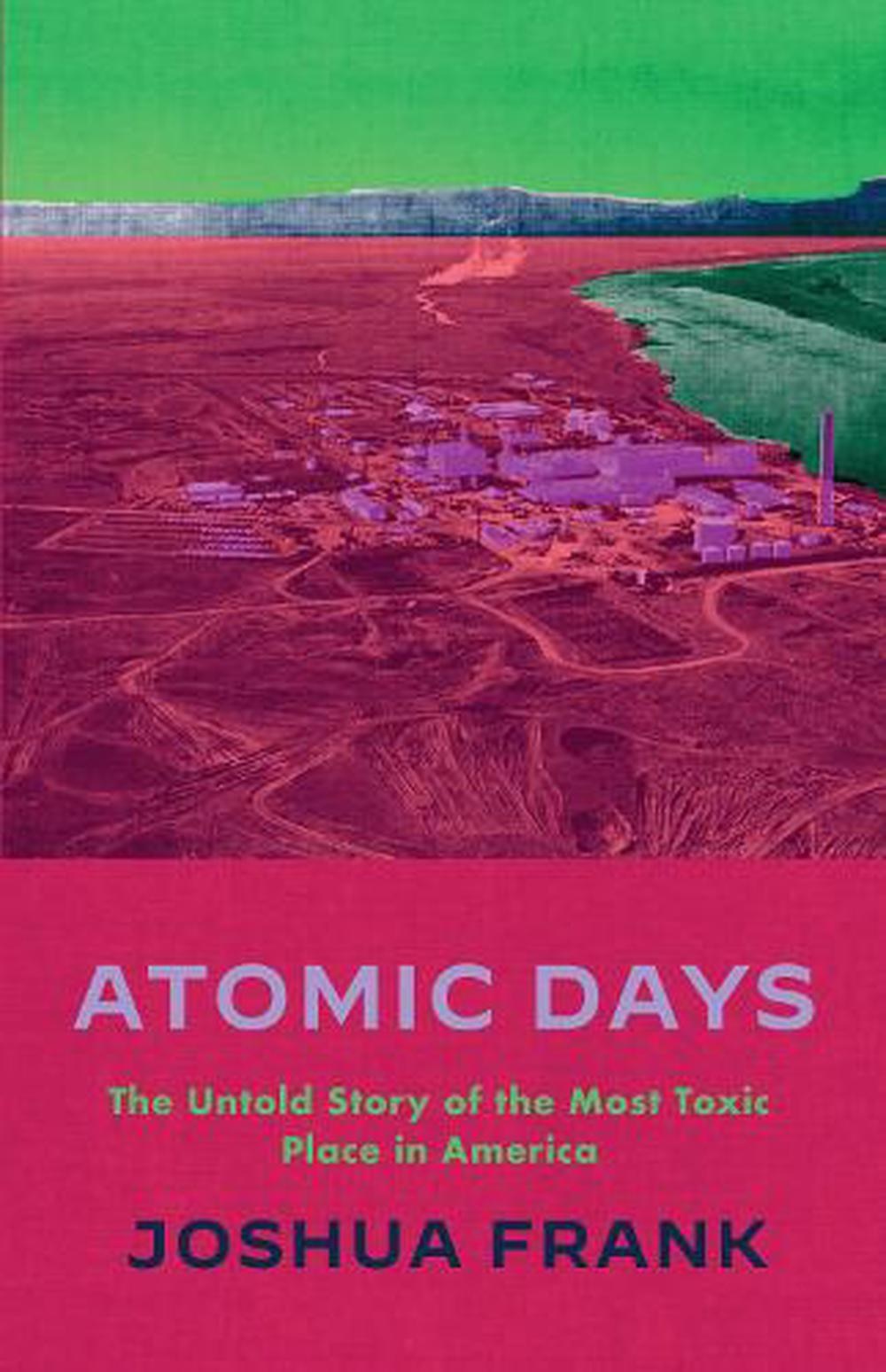
In my new book Atomic Days: The Untold Story of the Most Toxic Place in America, I probe the horrors of the Hanford site in Washington state, one of the locations chosen to develop the first nuclear weapons for the covert Manhattan Project during World War II. For more than 40 years, that facility churned out most of the plutonium used in the vast American arsenal of atomic weapons.
Now, however, Hanford is a radioactive wasteland, as well as the largest and most expensive environmental clean-up project in history. To say that it’s a boondoggle would be an understatement. Hanford has 177 underground tanks loaded with 56 million gallons of steaming radioactive gunk. Two of those tanks are currently leaking, their waste making its way toward groundwater supplies that could eventually reach the Columbia River. High-level whistleblowers I interviewed who worked at Hanford told me they feared that a hydrogen build-up in one of those tanks, if ignited, could lead to a Chernobyl-like event here in the United States, resulting in a tragedy unlike anything this country has ever experienced.
All of this makes me fear that those old Hanford tanks could someday be possible targets for an attack. Sabotage or a missile strike on them could cause a major release of radioactive material from coast to coast. The economy would crash. Major cities would become unlivable. And there’s precedent for this: in 1957, a massive explosion occurred at Mayak, Hanford’s Cold War sister facility in the then-Soviet Union that manufactured plutonium for nukes. Largely unknown, it was the second biggest peacetime radioactive disaster ever, only “bested” by the Chernobyl accident. In Mayak’s case, a faulty cooling system gave out and the waste in one of the facility’s tanks overheated, causing a radioactive blast equivalent to the force of 70 tons of TNT, contaminating 20,000 square miles. Countless people died and whole villages were forever vacated.
All of this is to say that nuclear waste, whether on a battlefield or not, is an inherently nasty business. Nuclear facilities around the world, containing less waste than the underground silos at Hanford, have already shown us their vulnerabilities. Last August, in fact, the Russians reported that containers housing spent fuel waste at Zaporizhzhia were shelled by Ukrainian forces. “One of the guided shells hit the ground ten meters from them (containers with nuclear waste…). Others fell down slightly further — 50 and 200 meters,” alleged Vladimir Rogov, a Russian-appointed official there. “As the storage area is open, a shell or a rocket may unseal containers and kilograms, or even hundreds of kilograms of nuclear waste will be emitted into the environment and contaminate it. To put it simply, it will be a ‘dirty bomb.’”
Ukraine, in turn, blamed Russia for the strike, but regardless of which side was at fault, after Chernobyl (which some researchers believe affected upwards of 1.8 million people) both the Ukrainians and the Russians understand the grave risks of atomically-charged explosions. This is undoubtedly why the Russians are apparently constructing protective coverings over Zaporizhzhia’s waste storage tanks. An incident at the plant releasing radioactive particles would damage not just Ukraine but Russia, too.
A cluster of reactors that are just 9 feet in diameter is supposed to start a nuclear energy resurgence. Mounting costs may doom the project.
JORDAN GARCIA, A deputy utilities manager in Los Alamos, New Mexico, is facing an energy crunch that is typical in the American West. For decades, the county-run utility relied on a cheap and steady mix of coal and hydroelectric power. But the region’s dams are aging and drought-parched, and its coal plants are slated to retire.
The county is aiming to fully decarbonize its grid by 2040, and the city has been tapping more solar lately, but batteries are arriving slowly, and Garcia worries about heat waves that strain the grid after the sun goes down. Wind power? He’d take more of it. But there aren’t enough wires stretching from the state’s windy eastern plains to the mesa-top community. “For us it’s pretty dire,” he says.
For the past few years, Garcia has been counting on a unique nuclear experiment to come to the rescue. In 2017, Los Alamos signed up to join a group of other local utilities as an anchor customer of the first small modular reactors, or SMRs, in the US, created by a company called NuScale. The design, which calls for reactors only 9 feet in diameter, had never been built before, but the initial cluster planned in Idaho Falls, Idaho, was promised to be much cheaper than a full-scale reactor and to offer affordable carbon-free energy 24/7.
To Garcia, this felt like a homecoming. Los Alamos, a town with the motto “Where discoveries are made,” is the birthplace of the atom bomb, and experimental reactors ran not far from downtown for much of the 20th century. But it had never actually used nuclear power to keep the lights on.
This month, Los Alamos and other local utilities across the West were facing a weighty decision: whether to pull the plug on their nuclear dream. NuScale had informed members of the group, Utah Associated Municipal Power Systems, or UAMPS, that the estimated costs of building the six 77-MW reactors had risen by more than 50 percent to $9.3 billion. For Garcia, that translated into a jump in the cost of energy from $58 to $89 per megawatt-hour.
…………… Without extra subsidies from the new Inflation Reduction Act—on top of $1.4 billion already committed to the project by the US Department of Energy—the price to energy users in places like Los Alamos would have doubled.
…………. The project’s power output is only 20 percent subscribed, and UAMPS says it will need to reach 80 percent for planning and construction to proceed next year.
Many a “nuclear renaissance” has fizzled.
…………….. Only two [large nuclear] reactors are being built in the US: a pair of 1100-MW units at the Vogtle plant in Georgia, now seven years delayed and $20 billion over their $14 billion budget.
NuScale hopes its smaller reactors can avoid that fate……… Last month, the company was the first of dozens of companies working on SMRs to have a design approved by US regulators. That makes NuScale first in the race to leap from a “paper napkin” reactor, as critics sometimes deride SMRs, to a real one, though the Idaho project involves a revised design that will need its own approval.
The project has hit roadblocks before. It began with 36 utilities signed on, but that number has fluctuated and dropped to 27 last year. In 2020, several municipal utilities dropped out in response to a construction delay and cost increases. Some later rejoined the project after the US Department of Energy upped its commitment to offset some of the costs.
Critics say those price revisions are a sign SMRs are heading down the same path as projects like Vogtle. For nearly a century, the nuclear power industry’s mantra was that building bigger plants would drive down costs. While existing plants aged and new construction withered, SMR companies began promoting a different philosophy, says David Schlissel, an analyst at the Institute for Energy Economics and Fiscal Analysis, claiming that constructing many small reactors would teach builders how to make them more cheaply.
But the evidence for progress is flimsy, says Schlissel, who notes that his 50-year career has spanned many a “nuclear renaissance” that fizzled. When that philosophy was applied in France, where dozens of reactors were built in the 1980s, costs still increased. Claims that “modularity” will help make construction construction more efficient are also suspect, he adds. The new Vogtle reactors involved nearly 1,500 “modular” components that were largely constructed offsite.
Schlissel also believes that NuScale’s current estimates are rosy because they rely on the approval of its newer design that uses less steel, one of the materials driving the cost increases. But regulators may not back that approach, he says. Towns should get out while they can, he advises, before costs climb higher still, and seek out alternatives like geothermal and battery storage. “Let the buyer beware,” he says.
……………….. officials in Morgan, Utah, a small town in the Wasatch Mountains north of Salt Lake City, decided to make a quick exit from the project…….
This year, the city realized it had new alternatives to the rising costs of nuclear power. While the Inflation Reduction Act is expected to help offset the costs of the Idaho plant, it also includes funds to help rural communities start their own energy projects. Bailey wants the city to become more self-reliant, installing its own solar panels and batteries that reserve power overnight.
In this round, Morgan was the only defector, though another Utah city, Parowan, reduced its commitment from 3 MW to 2 MW—just enough to cover the loss of its coal power. But the new agreement with utilities, negotiated during a two-day meeting with UAMPS members this winter, sets the project under a ticking clock. It includes requirements that the price hold steady at $89 per megawatt-hour, and—most worrying to utilities that want the project to succeed—that the project be at least 80 percent subscribed by next year. If it doesn’t hit that threshold, towns will get a refund on most of their expenses so far.
At this point, the utilities have sunk relatively little of their own money into the project, but that will change in 2024 as the project begins to seek site-specific building approvals followed by actual construction. To get the project fully subscribed, the group is talking with utilities elsewhere in the Northwest, where NuScale is competing with other SMR startups, including the Bill Gates–backed TerraPower, which recently signed a feasibility agreement with PacifiCorp, a private utility. Webb of UAMPS says he is optimistic about where the negotiations are headed.
…………………….. For now, the Los Alamos county council voted to formalize a long-planned increase of their share of the NuScale plant’s power, from 1.8 MW to 8.6 MW. Garcia hopes it will help encourage other utilities to take a chance on sparking a nuclear renaissance. https://www.wired.com/story/the-dream-of-mini-nuclear-plants-hangs-in-the-balance/—
France is building an alliance of pro-nuclear states to advocate for expanding nuclear power in the bloc.
EU energy ministers are meeting on Monday and Tuesday (27 and 28 February) to discuss issues ranging from security of supply to the upcoming electricity market reform.
But on the sidelines, French energy minister Agnes Pannier-Runache has invited 12 other countries on Tuesday to discuss a “nuclear alliance.”
“I would like to remind you that nuclear power represents 25 percent of European electricity production”, said Pannier-Runache. “It will be one of the important low-carbon energy sources next to wind and solar power that will help us achieve carbon neutrality.”
She later explained that the meeting would be an occasion to discuss “research, supply chain and nuclear waste issues.”
Countries in attendance include traditionally pro-nuclear members Romania, Bulgaria, Slovakia, Czech Republic, Hungary, Poland, Slovenia and Finland. Newly-joined Croatia, plus the Netherlands, Italy and Sweden will also attend.
It is the latest move in an ongoing spat with Germany which is phasing out nuclear power and whose negotiators have stressed nuclear electricity should not be equated to electricity derived from solar and wind.
Other countries not attending the meeting include Belgium and Luxembourg, whose energy minister Claude Turmes said nuclear power “is very slow.”
“It takes 12 to 15 years to build a new nuclear facility,” he said. “If we want to win the race against climate change, we need to be fast.”
The French meeting follows intense French lobbying to include nuclear power in a recent EU Commission rules for green hydrogen, which is made with electricity derived from wind and solar but now also allows nuclear power as energy source…………. https://euobserver.com/green-economy/156759
Saudi Arabia moves forward with bids for nuclear plant
The kingdom has received bids to build its first nuclear power plant and South Korea is reportedly expressing interest.
AL-MONITOR, February 27, 2023
Saudi Arabia is progressing with its plans to build its first nuclear power plant and has received a number of bids.
The Saudi Ministry of Finance’s 2023 budget statement published Feb. 15 notes that bids to build the plant were received last December, reported the Dubai-based business intelligence outlet Middle East Economic Digest on Monday.
Background: Saudi Arabia has had an interest in nuclear power for decades. The kingdom was a major investor in Pakistan’s nuclear weapons program that began in the 1970s, for example. In 2009, the late Saudi King Abdullah bin Abdulaziz told the Obama administration that the country would obtain nuclear weapons of its own if Iran were to do so. In 2018, Crown Prince Mohammed bin Salman said the same thing to the US news outlet CBS.
More recently, Saudi Arabia has been considering developing nuclear energy for peaceful purposes. In 2018, the Saudi government announced its intention to add nuclear power to its energy mix.
Saudi Arabia’s nuclear ambitions have been gaining momentum. Korea JoongAng Daily reported in November that South Korea was interested in building Saudi Arabia’s first nuclear power plant.
Last December, the International Atomic Energy Agency (IAEA) held a nuclear law workshop with Saudi officials in Riyadh. The IAEA’s purpose was to “support the implementation of its nuclear energy program in a safe, secure and transparent manner,” according to a press release.
Originally posted on Keep Cumbrian Coal in the Hole: Russian Government has a large slice of West Cumbria Mining New Director’s Coal Pie. Our government are ignoring calls for diplomatic negotiations with Russia to take precedent over increasingly dangerous (and lucrative) war games while endorsing developments with ties to the Russian government. ?Makes no sense…
Article from The Construction Index Hinkley Point C’s first reactor arrives on site [– with video] The first new nuclear reactor for a British power station for more than 30 years has arrived in Somerset. With the cranes of Hinkley Point C in the background, the 500-tonne load completes the last few miles of its […]
Defense PostFebruary 27, 2023 Canada Sending Four More Leopard Tanks to Ukraine Canada is sending four additional battle tanks to Ukraine – doubling its commitment – and sanctioning an additional 192 Russian individuals and entities, Prime Minister Justin Trudeau announced Friday. “Canada has stood in solidarity with Ukraine since the beginning of the conflict,” Trudeau […]
Ukrainian Army War Crimes Include Shelling of Ambulances, Firetrucks, and Rescue Workers in the Donbass Republics—Similar to Israelis and U.S. Backed Terrorists in Syria
Local residents describe the perpetrators of these crimes—who have received lavish U.S. funding—as “shameless,” “scumbags” and “terrorists.”
Heroic rescue workers in Donbas should be accorded rights under international law to help people without being targeted.
Covert Action Magazine, Eva Bartlett, 27 Feb 23 In the more than eight years of bombing the civilians of the Donetsk and Luhansk People’s Republics, Ukraine has committed untold numbers of war crimes. These include bombing residential areas, markets, hospitals, schools, parks—including with prohibited heavy weapons and banned cluster munitions—and, since late July, raining banned “Petal” mines down on populated civilian areas, including the very center of Donetsk, including as recently as September 7.
A lesser-known war crime is Ukraine’s routine targeting of ambulances, fire trucks, medics and rescuers, and their headquarters and stations. Many of the times Ukraine bombs such heroic rescuers, it is when they are on the way, or already on site, to help civilians often themselves just bombed by Ukraine.
The day prior, Ukrainian shelling targeted an ambulance station in the LPR’s Lysychansk, wounding several and damaging some of the ambulances.
On June 23, the Kievskiy District of Donetsk came under repeated shelling over the course of the two hours I was visiting the Emergency Services headquarters there. On the grounds, I saw the remnants of a “Hurricane” missile from a previous Ukrainian attack.
The previous day, Ukrainian forces targeted an Emergency Services fire truck on call, leaving the driver hospitalized in critical condition. According to his colleagues, they saw a drone above them just prior to Ukraine’s strike. The targeting was unquestionably deliberate.
On June 18, Ukraine targeted a central Donetsk district after Emergency Services had arrived, killing a firefighter and the driver, and injuring three more rescuers.
In early June, heavy Ukrainian shelling of Kuibyshevsky District, Donetsk, destroyed an ambulance and seriously injured the driver.
Ukraine’s attacks on emergency workers is not new; Ukraine has been doing so for years.
In June 2021, during a humanitarian cease-fire, Ukrainian forces targeted an ambulance which had arrived to evacuate three injured DPR soldiers.
In October 2019, Ukrainian forces fired an anti-tank guided missile at a DPR military ambulance en route to help a child, wounding the driver and a paramedic.
In August 2018, Ukrainian forces fired a missile at a DPR ambulance, killing the driver and two female paramedics.
When I first visited the DPR in September 2019, going to hard-hit areas around Gorlovka, I was told by Zaitsevo administration that ambulances could not reach the villagers.
“The paramedics don’t go farther than this building; it’s too dangerous. If somebody needs medical care near the front lines, someone has to go in their own car and take them to a point where medics can then take them to Gorlovka. The soldiers also help civilians who are injured.”
This is something I was very familiar with in Gaza, occupied Palestine, where Israeli soldiers routinely fire at Palestinian farmers and other laborers on agricultural land, a policy of harassment to drive Palestinians off their land. In most cases, ambulances likewise could not reach the injured due to Israel’s policy of targeting ambulances. Consequently, seriously injured Palestinians bleed to death.
In Zaitsevo, I was told this had happened there, too. “A woman died due to huge blood loss because no one could reach her house to take her away in time. She was injured in the shelling and bled to death.”
Targeting medics and other rescuers ensures those in need of help are deprived of it, and increases the likelihood that people who might have lived instead die of their injuries.
The intentional targeting of ambulances and medics, as well as fire trucks and other emergency services vehicles and workers, is against international law.
Speaking to DPR Rescuers
During my last two visits to the DPR, in June and August 2022, I interviewed a number of Emergency Services workers and medics.
According to Konstantin Zhukov, the Chief Medical Officer of Donetsk Ambulance Services, the ambulance services workers face shelling daily, constantly, and many employees have been wounded while working. One of the ambulance stations was completely destroyed by Ukrainian shelling.
Outside, I spoke with Tatyana Golota, an emergency physician, and Alena Kondrasheva, a paramedic.
Both reiterated that it is normal coming under repeated Ukrainian fire. They spoke of Ukraine shelling after medics and emergency services workers had arrived to help civilians.
They showed me an ambulance completely destroyed by Ukrainian shelling. It was new and had only been operational a few months before being destroyed.
That day we were at work and heard about the brigade coming under fire. The doctor had gone to help people, and the driver, by chance, walked away to try to get a mobile signal. At that moment, there was a direct hit on the vehicle.”
Also in Donetsk, I spoke with Sergei Neka, Director of the Department of Fire and Rescue Forces of the Ministry of Emergency Situations.
He likewise said rescuers increasingly come under fire when they go out on a call, sometimes making it impossible to reach the people in need………………………………………………………………………………………………
Of Ukraine’s heightened shelling over the past many months, Levchenko said it was constant and daily. “Before, if we speak about 2014-2015, twenty minutes, one hour maximum. Now six-seven hours non-stop, every day.”
He said that the Ukrainian forces shell, wait until rescuers arrive and then shell again. “They wait for 30 minutes for us to arrive. We arrive there, start assisting people, and the shelling resumes.”
This is something I witnessed for myself when, on August 4, Ukraine bombed the hotel in which I was staying, the fourth and fifth shells landing 50 meters away and then directly beside the hotel, respectively. When the fifth struck, shattering inwards the lobby glass doors, I had fortunately just stepped out of the lobby where 30 seconds earlier I had been speaking to journalists who had run in from the street.
When it seemed the shelling had stopped, journalists went outside to document the damage. Sadly, a young woman outside the hotel had been killed by the shelling. Five others just two streets away were also torn apart by the bombs, including a promising 12-year-old ballerina, her grandmother, and her world famous former ballerina ballet teacher.
Emergency Services arrived and, not long after, Ukraine resumed its shelling. Fortunately, they were able to get inside, but this is just one example of Ukraine’s double strikes.
According to Levchenko, Ukraine does not only shell two times, but that they sometimes shell three times: “They wait again, our guys hide in the shelters, as soon as we go out, put out the fire, help people, there could be people under the debris, doors stuck, people can’t get out and get to the basement…then shelling resumes.”
He described the people engaging in this sort of warfare against civilians and rescuers as “Shameless. Scumbags. Terrorists.”
He is not wrong.
Targeting Rescuers: A Terrorist Tactic Adopted by U.S. Allies in Ukraine, Israel and Syria…………………………………………………………………………………………………………….
Ukraine Continues Killing Donbas Rescuers
On September 1, 13 DPR Emergency workers were killed and 9 injured from Ukrainian shelling. According to a representative of the Emergency Situations, the shelling was intentional.
“The missiles exactly hit residential buildings. The vehicle was outside and it was hit with shrapnel and pieces of the destroyed building. But again, you can see it’s an emergency vehicle—a fire vehicle. This is a war crime.”
The following day, two more Emergency Services workers were killed and two injured by Ukrainian shelling of their fire truck, in Makeevka. They were en route to put out a fire. Images accompanying the news show a mangled bright red fire truck, unmistakably a rescue services vehicle.
When in August I spoke with the Director of the Donetsk Department of Fire and Rescue of the Ministry of Emergency Situations, he told me that, at that time, four Emergency Services workers had been killed and 40 injured by Ukrainian shelling.
With Ukraine’s targeting of Emergency Services in September, the number of rescuers Ukraine has killed is now at least 19, with another 51 injured……………………………………………………………………….
The Kievskiy Emergency Ministry Chief, Andrey Levchenko, said of the rescuers, “They are all heroes. If it were possible, I would give a medal to every one of them, to honor their work, to support them. But they don’t do that for the medals, no way. Nobody ever said, ‘we’re not going, we don’t want to,’” he said, referring to when rescuers go out on calls.
Ontario sites short-listed for nuclear waste storage, The organization developing a place to store spent nuclear fuel in Canada has settled on two potential sites in Ontario. The move rules out 20 other potential sites across Canada, including three in northern Saskatchewan.
The Nuclear Waste Management Organization recently announced the Wabigoon Lake Ojibway Nation-Ignace area in northwestern Ontario, and the Saugeen Ojibway Nation-South Bruce area in southern Ontario, are both under consideration.
“These communities are now working through their timelines to determine willingness,” Russell Baker, manager of media relations for the NWMO, said in an e-mail.
Baker said the NWMO hopes to settle on one of the two Ontario sites by the fall of 2024, but only “with informed and willing hosts, where the municipality, First Nation and Métis communities are working together to implement it.”
Disposing of spent nuclear fuel has been an issue for the nuclear industry for decades. A variety of countries, including Canada, are looking at deep geological repositories, where the waste can be safely stored for thousands of years within stable rock formations, like the Precambrian Shield. Finland is already building one.
Back in 2010, the NWMO announced there were 22 potential sites for underground storage across Canada, including sites near Pinehouse, English River First Nation, and Creighton, in northern Saskatchewan.
According to Guy Lonechild, executive director of the First Nations Power Authority (FNPA), coming up with a shortlist of potential sites is another step.
“There were some previous sites looked at in northern Saskatchewan but there’s been a lot of time and energy put into a deep geological repository in the province of Ontario. And those are the two viable options that that we would support for further study,” Lonechild, who is also a former FSIN chief, said.
Lonechild added the FNPA has been looking seriously at the possibility of Small Modular Nuclear Reactors (SMNR) for Indigenous and northern communities for several years.
……………. However, even though SMR’s are relatively small, the cost could easily be a billion dollars or more. Which is why FNPA would be looking for partnerships to help Indigenous communities get involved.
“So it is going to take a significant amount of capital. And so we’re looking at developing consortium groups to participate on an equity basis.”
………………….. “The only way we’re going to get there is if First Nations that are informed, that give free prior informed consent. And they identify ways that they want to participate in, in clean energy jobs and in the nuclear industry,” he said.
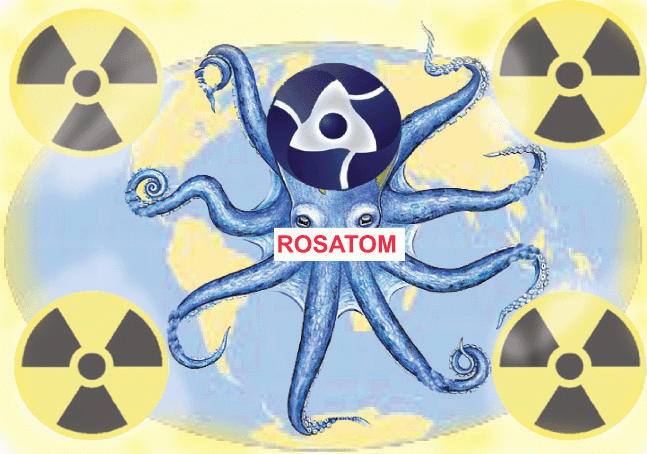
Since Russia invaded Ukraine in February 2022, the possibility of reducing Europe’s energy dependence on Russian resources has been hotly debated. The fossil fuel industries received most attention as European Union leaders first introduced gradual sanctions on Russian coal and later on oil and gas, while Russia responded with supply cuts. However, Russia’s role as a major player in the global nuclear power sector has remained largely below the sanctions radar, despite dependencies on Russian nuclear technology, uranium supplies and handling of spent nuclear fuel. Here we analyse the state nuclear company Rosatom and its subsidiaries as tools of Russian energy statecraft. We map the company’s global portfolio, then categorize countries where Russia is active according to the degree and intensity of dependence. We offer a taxonomy of long-term energy dependencies, highlighting specific security risks associated with each of them. We conclude that the war and Russia’s actions in the energy sector will undermine Rosatom’s position in Europe and damage its reputation as a reliable supplier, but its global standing may remain strong.
…………………………………………………………Russia is the world’s largest exporter of natural gas, second-largest exporter of oil and third-largest exporter of coal8. However, media coverage and political debates have generally omitted another sector where Russia is a major player and that is vital for Russia’s global economic and diplomatic posture: nuclear energy. While the Russian shelling and takeover of Ukrainian nuclear power plants has caused an outcry, Russia’s portfolio of foreign orders, including reactor construction, fuel provision and other services, spans 54 countries and is claimed by Rosatom to be worth more than US$139 billion over a ten year period9 and has thus far not been covered by Western sanctions. Although the financial figure is in all likelihood inflated, Russia’s involvement in and use of nuclear energy as a tool of energy diplomacy deserves scrutiny.
In this Analysis, we present a dataset of all current and planned international engagements of the Russian nuclear energy supplier Rosatom and its subsidiaries AtomStroyExport and TVEL. The dataset includes information on the different types of agreement, business models, scales of investments, types of reactor being built or planned and their nameplate capacity. As a gauge of the level of dependency upon the Russian nuclear sector that is or will be brought about by these reactors, we registered their share of the future electricity supply in the countries where they are located or planned for construction. Because the degree of influence achieved through energy statecraft is conditioned by the character and level of (inter)dependence, we discuss the firmness of dependence of different client states, formulated as ‘intensity.’ Finally, we propose a categorization of dependency types (Methods).
Rosatom’s rise, expansion and comparative advantages
Rosatom—the Russian State Atomic Energy Corporation—is the direct heir to the Soviet Ministry of Atomic Energy, which was established in the aftermath of the Chernobyl nuclear accident. Reorganized as a state corporation in 2007, Rosatom is fully owned by the Russian state, and the president of the Russian Federation determines the company’s objectives10,11. Since its inception, Rosatom has become increasingly active in the international nuclear power market12,13 and has become a leading provider of key services12,14,15. Construction of as many as ten reactor units started between 2007 and 2017, and between 2009 and 2018, the company accounted for 23 of 31 orders placed and about a half of the units under construction worldwide11. Through its subsidiary TVEL, Rosatom also provides fuel supplies, controlling 38% of world’s uranium conversion and 46% of uranium enrichment capacity16,17 in addition to decommissioning and waste disposal. In sum, Russia was the supplier in around half of all international agreements on nuclear power plant construction, reactor and fuel supply, decommissioning or waste between 2000 and 2015. Its main nuclear power competitors—China, France, Japan, Korea and the United States—accounted for another 40%, combined18.
…………………………………………. Rosatom’s main advantage lies in its capacity to be a ‘one stop nuclear shop’ for all needs, the only supplier providing an ‘all-inclusive package’12. This comprises reactor construction know-how, training, support related to safety, non-proliferation regime requirements and flexible financing options, including government-sourced credit lines22. The company is also uniquely able to offload spent nuclear fuel from overseas customers.
The way Rosatom designs its projects also makes it a convenient partner for nuclear newcomers23,24. While details of contractual agreements vary from case to case, the developer takes care of the entire process until the plant is ready to use and can be handed over to local (Russian-trained) nuclear experts to operate. For that reason, nuclear energy can be considered by countries for which it was previously unattainable, especially in the Middle East25,26, sub-Saharan Africa27,28 and South America.29
Rosatom is also able to make special offers to strategically important partners, such as Turkey30,31. ………………………………….
Its comparative advantages as a supplier allowed Russia to launch a global campaign of nuclear energy diplomacy33 in which Rosatom and Russian government institutions such as the Ministry of Foreign Affairs work in tandem. This potentially gives Russia the capacity to use the broad network of international projects it is involved in34 and the direct control over reactors and strategic energy infrastructure to exert political pressure and to project power globally35.
Minin and Vlček, having studied the behaviour of Rosatom and its relationship with the Russian state, argue that the company is primarily a profit-seeking entity with a high degree of autonomy and growing self-sufficiency15. According to Thomas, whatever its grandiose expectations, Rosatom could simply be unable to deliver all the projects that it has agreed to, let alone expand further13. On the other hand, Aalto et al. observe that ‘potential foreign policy influence’ by Russia was noted by Finnish and Hungarian opponents of collaboration with Rosatom33, while Jewell and colleagues argue that some nuclear sector dependencies display more pervasive energy security impacts, long-lasting and difficult to deal with (due to lack of flexibility) than those usually analysed by energy security experts in the petroleum sector18,36.
Here we consider Rosatom’s potential as a tool for the Russian state and debate whether this constitutes a ‘nuclear energy weapon’ or simply a projection of soft-power diplomacy. We find that Russian nuclear energy statecraft can be seen as a spectrum between these two extremes, but that soft-power diplomacy creates dependencies that can be further expanded and exploited and thus should not be overlooked.
Analysing Rosatom’s international activity
Our research, gathered in the dataset available in the Supplementary Data, indicates that upon Russia’s invasion of Ukraine, Rosatom boasted as many as 73 different projects in 29 countries. The projects were at very different stages of development from power plants in operation; through construction of reactors ongoing, contracted, ordered or planned; to involvement in tenders, invitations to partnerships or officially published proposals. On top of that, Russian companies have bilateral agreements or memoranda of understanding (MoUs) with 13 countries for services or general joint development of nuclear energy.
Rosatom’s projects and involvement have varied in ambition and cost—from India’s Tarapur nuclear power plant (NPP) (US$700 million) and Iran’s Bushehr-1 (US$850 million) to a gargantuan project in South Africa (US$76 billion) and those in Egypt (US$30 billion) and Turkey (US$20 billion). Finally, 13 countries have a variety of research-oriented agreements with Russian nuclear service providers related to nuclear research centres. Altogether, Russia’s nuclear energy diplomacy has been formalized in 54 countries.
While this is impressive, looking into the details of these agreements (particularly the NPP construction projects) reveals a more modest level of international engagement. Many of the projects have been stuck at the planning stage for several years or are merely visions laid out in non-committal MoUs………………………………………………………
However, most cooperation and plans have not been cancelled, and even EU member states Bulgaria and Hungary have, as of January 2023, not cancelled their planned nuclear plants…………………………………………………………………………………………….
Following the 2014 annexation of Crimea and particularly after the 2022 invasion of Ukraine, Russian economic, political and energy influence has become a fundamental concern in European countries.42 In countries that plan to base their decarbonization efforts primarily or entirely on nuclear energy (that is, Hungary and Slovakia), the Russian NPP share of the electricity supply can underrepresent Russia’s influence: dependencies on nuclear fuel imports from TVEL/Rosatom (which also continues to supply Bulgaria, Czechia and Finland and Poland’s research reactor), combined with power-system inflexibility and overreliance on a single large nuclear power plant, exacerbates the vulnerability to supply disruptions…………………………………………..
Egypt, Iran and Turkey are all nuclear newcomers, energy hungry and populous (with between 82 and 100 million inhabitants each). Such states are lucrative markets for low-carbon electricity development…………………………………………………………………………………………………………
The big question for the future is whether non-Western countries will also turn away from Russian nuclear power. Currently, many developing countries take a positive view of Russia and tilt towards its view of the conflict in Ukraine. Immediately after the invasion of Ukraine, seven of the 14 countries with high- or medium-cooperation levels in our analysis did not approve United Nations Resolution ES 11/1 condemning Russian aggression, and several of these (for example, Bangladesh, China, India, Iran) were categorized as ‘neutral or Russia-leaning’ shortly after the war began58. Over time, however, the interruption of energy supplies to the European Union may undermine the reputation of Russian energy companies as primarily economic actors independent of national security politics, also outside Europe. Non-Western perspectives on the war in Ukraine and the reliability of Russia and Russian technology may also change over time……………………………………………………………………………………………………………………………………… more https://www.nature.com/articles/s41560-023-01228-5
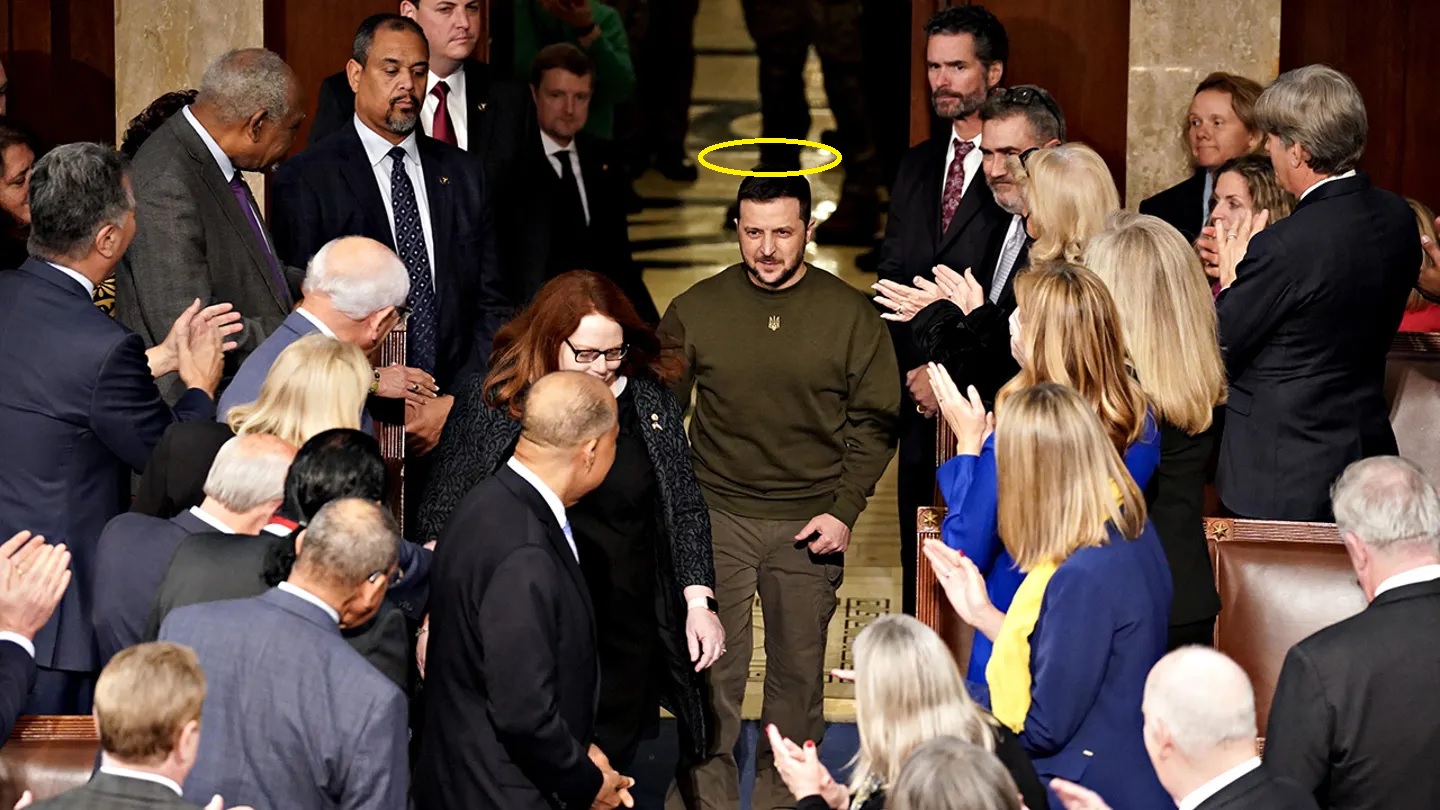
Ukrainian President Vladimir Zelensky has warned Americans to keep supporting Kiev or risk geopolitical irrelevance, during a press conference on the anniversary of Russia’s military operation in the country. Should it stop funding the war effort, the US will “lose the leadership position that they are enjoying in the world,” the Ukrainian leader declared on Friday.
“If they do not change their opinion…they will lose NATO, they will lose the clout of the United States, they will lose the leadership position they are enjoying in the world,” Zelensky declared, following a speech in which he declared 2023 the “Year of Invincibility” and vowed to unite the world against Russia.
The warning was a response to a reporter asking what Zelensky would tell the “growing number of Americans” who believe their country is giving too much money and support to Ukraine. The president made sure to thank his American supporters – a group he hinted included not just Congress and President Joe Biden but also “the TV channels” and “the journalists” – before threatening those who held the “dangerous” opinion that the US should “give up” on Kiev………………………………………….
The Republican Party regained control of the House of Representatives in last year’s midterm elections in part on a promise to curtail the Biden administration’s blank check to Kiev. While Congress has not yet passed any legislation to rein in spending on the conflict, Rep. Marjorie Taylor Greene (R-Georgia) promised earlier this week to introduce a bill to force an audit of the Ukraine aid program and the House Oversight Committee demanded the administration turn over documents proving the military and economic aid being sent to Ukraine was not being lost to “waste, fraud, and abuse.”
Dmitry Medvedev is currently the deputy chairman of the Security Council of the Russian Federation (SCRF), a consultative body that supports Russian President Vladimir Putin’s decision-making on national security affairs. In April 2010, when the United States and Russia signed the New Strategic Arms Reduction Treaty (New START) in Prague, limiting the nuclear offensive capabilities of both countries, the man in charge in Moscow, at least on paper, was Medvedev, then the president of the country. In late February, Putin suspended the treaty that Obama and Medvedev signed almost 13 years ago. At the New START signing ceremony, Medvedev said, “This will turn a new page for cooperation between our two countries and will create safer conditions for life here and around the world.” Not anymore.
Medvedev is one of the best examples of how nuclear security has changed since the Cold War between the US and Russia. He now fervently supports suspending the treaty he signed in 2010
and said in a Telegram post, “If the US intends to defeat Russia [by providing military support to Ukraine], then we are on the brink of a global conflict. We have the right to defend ourselves with any weapon, including nuclear ones.”
EL PAÍS consulted four arms control and security policy experts on the consequences of Putin’s suspension of the New START treaty. They all concurred that both countries had been complying with limits on warheads, missiles and delivery systems and felt that controlling such weapons would become complicated and potentially lead to a new arms race. Moscow’s move is an attempt to curb Western support for Ukraine, and without New START, there will be more uncertainty, instability and potential nuclear miscalculations. These same words and scenarios defined the Cold War geopolitical tension that dominated US-Russian relations for 40 years after World War II.
“Without the treaty, [the US and Russia] can do whatever they want,” said Olga Oliker, an expert on Russian and Ukrainian security policy for the International Crisis Group. “They can build whatever strategic offensive weapons they feel like and can afford. They won’t be able to verify what the other is or isn’t doing. They will still have intelligence-collecting capabilities but not the inspections, data exchanges and consultations to ensure compliance. Theoretically, they could deceive each other more easily.” Oliker believes the most significant risk in suspending the treaty lies in the potential “misunderstandings” arising from a lack of information.
New START limits the number of immediately deployable nuclear weapons owned by the US and Russia, which account for 90% of the world’s nuclear arsenal. They can only have a maximum of 1,550 deployed warheads and 700 long-range missile delivery systems between ground launchers, submarines and bombers. According to the US State Department, as of September 2022, both countries were below those numbers. It was a drastic reduction compared to the 1991 treaty Ronald Reagan and Mikhail Gorbachev signed. New START also initiated a compliance mechanism that permitted up to 18 inspections a year, regular information exchange and a monitoring commission, all of which are now suspended.
Non-compliance with inspections
Todd Sechser is a professor at the University of Virginia (USA) and a scholar at the Carnegie Endowment for International Peace. “The treaty is important not only because it limits the number of strategic nuclear warheads,” said Sechser, “but because it provides a way for the two countries to build trust. This move undermines that trust.” ……………………………………………………………………….. more https://english.elpais.com/international/2023-02-27/the-world-returns-to-an-era-of-nuclear-angst.html—
Ukraine is readying an offensive to try and seize Russia’s Crimean peninsula, President Vladimir Zelensky said on Friday at a press conference. Kiev is forming new units specifically for the task, with servicemen undergoing training abroad, he revealed.
“We’re taking military steps, we are preparing for them. We are mentally prepared already. We prepare technically, with weapons, forces, we form new brigades, we form offensive units of various kinds and types, we are sending people for training not only in Ukraine, you know, but also in other countries,” Zelensky stated.
The president, as well as other top officials, has repeatedly pledged to re-capture all of the former Ukrainian territories from Russia, including Crimea. The peninsula broke away from the country back in 2014 in the aftermath of the Maidan coup in Kiev, joining Russia after a landslide referendum.
Four other formerly-Ukrainian territories, namely the Donetsk and Lugansk People’s Republics, as well as Zaporozhye and Kherson Regions, were incorporated into Russia after the overwhelming majority of their populations voted in favor of the idea last September.
Neither reunification with Crimea, nor the latest incorporations of other regions got Western recognition, with Kiev and its backers considering these lands part of Ukraine.
Russia has repeatedly warned Kiev against plotting an assault on Crimea. Early in February, former Russian president Dmitry Medvedev, who now serves as Deputy Chair of the Security Council, said that any attack on Crimea would be interpreted as a direct attack on the country itself and would be “met with inevitable retaliation using weapons of any kind.”
Read the Public Inquiry Report, the Commissioners’ report, Surrendering Australia: The AUKUS Deception is available to download for free at aukuspublicinquiry.com. Or just watch the replay of the National Press Club Luncheon.
19 November – Webinar – The Reality of Reprocessing
Time: 11:00 AM Pacific Time (US & Canada) / 2:00 PM Eastern / 7:00 PM UK / 8:00 PM CET