Office of the Prosecutor, Iwaki Branch, Fukushima Japan: Support Mari Takenouchi and Radiation Protection
“Perhaps because everyone believes people telling them on television that everything is fine, they don’t seem so worried,” 281 Antinuke told Reuters.“I hope by leaving my art I can remind people that we’re not safe at all … and that they will do something to protect themselves.”
“We don’t know what will happen in the future, whether children will get cancer or leukemia,” he said. “So I want to keep making noise and making a fuss.”
“The nuclear accident allowed us to realize that Japan had hidden a lot of things,” he said. “I want to make images that express doubts about what’s going on in politics – like a label that says ‘This is happening, pay attention’!” http://www.dailykos.com/story/2013/11/30/1259294/-Masked-Artist-Forces-Japanese-to-Think-About-Fukushima

Why this is important!!

Mari is facing charges stemming from speaking out on radiation in Japan and advocacy for families relocating children out of the areas contaminated by radioactivity from the damaged Fukushima Daiichi reactor site, operated by TEPCO. Radioactivity continues to leave that site. It is well established that while lower levels of exposure to radioactivity lowers risk, the greatest hazard from radiation comes when children are exposed, raising the risk of cancer manifold over their entire lives.
The group ETHOS in Japan supports the decision by some to stay and live in contaminated areas. Sadly, some of these families feel they have no choice due to economics and other factors. Certainly young children have no choice. ETHOS advocates monitoring radioactivity, but well established science supports Mari’s views that there is no safe dose of radiation and that children need to be protected. We support open discussion, access to information and free choice. We ask the Prosecutor to agree that writing and speaking about these issues are not a crime.
Please Stand With Mari as she stands for precaution, protection and the rights of children to a healthy future. THANK YOU.
UK anti-nuclear energy activists – will have to be “monitored” carefully after Fukushima – Courtesy of STRATFOR/tempora/prism – use TOR Browser people!
For London, the issue ultimately is one of energy independence. British reserves of North Sea natural gas – which in 2008 supplied the United Kingdom with 45 percent of its electricity generation – are dwindling, going from 760 bcm at the end of 1998 to 340 bcm at the end of 2008. The
United Kingdom will increasingly have to rely on imports from Norway to satisfy its natural gas needs. Nonetheless, importing natural gas from Norway is far different than importing it from Russia, which means that nuclear energy is less of a national security issue for the United
Kingdom than it may be for other European countries. This means that the United Kingdom has alternatives to nuclear power, which casts the fate of the nuclear industry in the United Kingdom into doubt. Despite the strong interparty consensus on the issue, therefore, the United Kingdom remains a country where public opinion – and anti-nuclear energy activists – will have to be “monitored” carefully to gauge which way the country will go following the Fukushima incident.
Nuclear Power in Europe after Fukushima: A Special Report
Released on 2012-10-18 17:00 GMT
| Email-ID | 1346076 |
|---|---|
| Date | 2011-03-16 01:33:45 |
| From | noreply@stratfor.com |
| To | allstratfor@stratfor.com |
Stratfor logo
Nuclear Power in Europe after Fukushima: A Special Report
March 16, 2011 | 0026 GMT
Nuclear Power in Europe after Fukushima: A Special Report
RALPH ORLOWSKI/Getty Images
The Emsland nuclear power plant in Lingen, Germany, in 2010
Related Special Topic Page
* Japanese Earthquake: Full Coverage
The 27 countries in the European Union derived 31 percent of their
electricity needs and 14.6 of their primary energy consumption from
nuclear power in 2010. In roughly the last eight years, there has been a
considerable momentum on the Continent to boost that capacity. Countries
that had halted the construction of new reactors (Germany and Sweden) or
effectively abandoned nuclear power altogether (Italy and Poland) had
been considering reversing their moratoriums, phase-outs and outright
bans.
Three factors spurred the momentum toward a nuclear Renaissance in
Europe: Almost 25 years of accident-free nuclear industry since the
Chernobyl disaster in 1986; technological improvements in the design of
reactors; and a geopolitical impetus to wrestle the Continent from the
grip of Russian energy exports following a number of politically
motivated Russian natural gas cutoffs. There has also been a concerted
push by Europe’s indigenous nuclear energy industry to open up the
potential EU market of 400 million people for the sale of its latest
generation of nuclear reactors.
The March 11 9.0-magnitude Tohoku earthquake in Japan and its subsequent
effect on the Fukushima Daiichi and Daini nuclear power plants has
dampened – and even ended – enthusiasm for nuclear power in some
European nations, however.
The combination of the powerful earthquake and massive tsunami that hit
Japan’s Pacific Coast where the two affected power plants were situated
sparked the nuclear crisis in Japan. The Fukushima accident is still
ongoing and developing. It is at this point assumed that the reactors in
the nuclear plants in question were shut down immediately following the
seismic activity, as they were designed to. The onsite backup generators
that were supposed to cool down the core also shut down about an hour
after the earthquake, however. The leading theory is that they were
damaged by the subsequent tsunami.
Nuclear Power in Europe after Fukushima: A Special Report
(click here to enlarge image)
Europe is un likely to see an earthquake of similar proportions and even
less likely to see a similar tsunami. Even so, a tradition of
anti-nuclear industry activism in a number of European countries and
contemporary political dynamics could engender a move against a European
nuclear revival post-Fukushima. It is important to emphasize that not
all European countries are similarly situated. France and Germany, for
example, approach nuclear energy from diametrically opposed
perspectives. In France, the nuclear power industry – and military
capacity it spawned – for decades has been perceived as a guarantor of
French independence and global relevance, whereas in Germany, nuclear
power has negative connotations due to the country’s nearly 50-year
status as the likely nuclear battlefield between the Cold War
superpowers. Environmental movements accordingly have evolved along
different lines, and national psyches approach nuclear power from
starkly different perspectives.
The European countries below are listed from most to least likely to see
plans for nuclear projects altered in the wake of the Fukushima
accident.
Germany
Nuclear detectors in the USA, a $4 billion rip off just before the Fukushima disaster – information courtesy of Stratfor
“We are mindful of getting something delivered that has a credible basis for the implementation plan that follows,” Homeland Security Deputy Secretary Jane Holl Lute told the Senate Homeland and Governmental Affairs committee
https://wikileaks.org/gifiles/docs/15/1575221_nuclear-detectors-a-4-billion-bust-gao-says-.html
On Monday February 27th, 2012, WikiLeaks began publishing The Global Intelligence Files, over five million e-mails from the Texas headquartered “global intelligence” company Stratfor. The e-mails date between July 2004 and late December 2011. They reveal the inner workings of a company that fronts as an intelligence publisher, but provides confidential intelligence services to large corporations, such as Bhopal’s Dow Chemical Co., Lockheed Martin, Northrop Grumman, Raytheon and government agencies, including the US Department of Homeland Security, the US Marines and the US Defence Intelligence Agency. The emails show Stratfor’s web of informers, pay-off structure, payment laundering techniques and psychological methods.
Nuclear detectors a $4 billion bust, GAO says
Released on 2013-11-15 00:00 GMT
| Email-ID | 1575221 |
|---|---|
| Date | 2010-09-16 16:23:18 |
| From | sean.noonan@stratfor.com |
| To | ct@stratfor.com |
Nuclear detectors a $4 billion bust, GAO says
By Jeff Stein September 16, 2010; 5:05 AM ET
http:=
//blog.washingtonpost.com/spy-talk/2010/09/nuclear_bomb_detectors_a_4_bil.h=
tml?wprss=3Dspy-talk
The Department of Homeland Security spent billions of dollars on machines to intercept nuclear terrorists that were too big for border inspection lanes, the Government Accountabiity Office reported Wednesday.
Why? Because during the first year or more of the program,the auditors said, the two DHS units involved — the Domestic Nuclear Detection Office and Customs and Border Protection — had few discussions about operating requirements at ports of entry.
officials said they made it clear to DNDO, the report= said, that they did not want the [nuclear detecting] machines because they would not fit in primary inspections lanes and would slow down the flow of commerce through these lanes and cause significant delays.
Software for the Cargo Advanced Automated Radiography Systems, CAARS, as they are called, also was not up to snuff, the GAO said. Or as the
auditors put it, key part of the machine needed to identify
shielded nuclear materials automatically did not mature at a
rapid enough = pace to warrant acquisition and deployment.
Moreover, DHS budget proposals also hide the actual status of the
program, the GAO said.
For example, the fiscal years 2010 and 2011 DHS budget
justifications both cited that an ongoing CAARS testing campaign would lead to a cost-benefit analysis,” the report said. “However, DNDO officials told GAO that when they cancelled the acquisition part of the program in 2007, they also decided not to conduct any associated cost benefit analysis.
The leaders of the Senate Homeland Security and Governmental Affairs
Committee, Joseph Lieberman, I-Conn., and Susan Collins, R-Maine,
slammed the department for not having a strategic plan to develop
critical technology that could prevent a nuclear terrorist attack on the
U.S., the Associated Press reported.
“We’re not happy or satisfied with progress on the whole nuclear detection
architecture,” Lieberman said.
DHS nuclear detection program has been troubled for years,
having spent more than $4 billion since 2003 with nothing to show for it.
DHS said it’s working on it.
“We are mindful of getting something delivered that has a credible basis
for the implementation plan that follows,” Homeland Security Deputy
Secretary Jane Holl Lute told the Senate Homeland and Governmental Affairs committee, the AP reported.
—
Sean Noonan
Tactical Analyst
Strategic Forecasting, Inc.
Tokyo Bay radioactive contamination is equivalent to the sea at the Fukushima nuclear power plant to within 20km – 東京湾放射能汚染は福島原発20km圏内の海と同等 NHKスペシャル
Published on 20 Feb 2014
もう忘れてるでしょ?福島沖の魚を危険というなら、東京湾は同じぐらいやばいってこと。ま、当然ですが。高級江戸前寿司で東京湾のアナゴ食ってる場合じゃない
Team to Do Assessment at New Mexico Nuclear Site
CARLSBAD, N.M. February 20, 2014
http://abcnews.go.com/Technology/wireStory/team-assessment-mexico-nuclear-site-22602425
The U.S. Department of Energy has appointed a team to investigate the detection of radiation in and near a southeastern New Mexico facility that is the nation’s only underground nuclear waste repository in operation.
The assessment of the Waste Isolation Pilot Plant will be conducted by an accident investigation board consisting of department officials and representatives of health and safety agencies, the department said in a statement released late Wednesday.
The board will be assisted by experts in fields such as fire protection, ventilation, and mine safety, the department said.
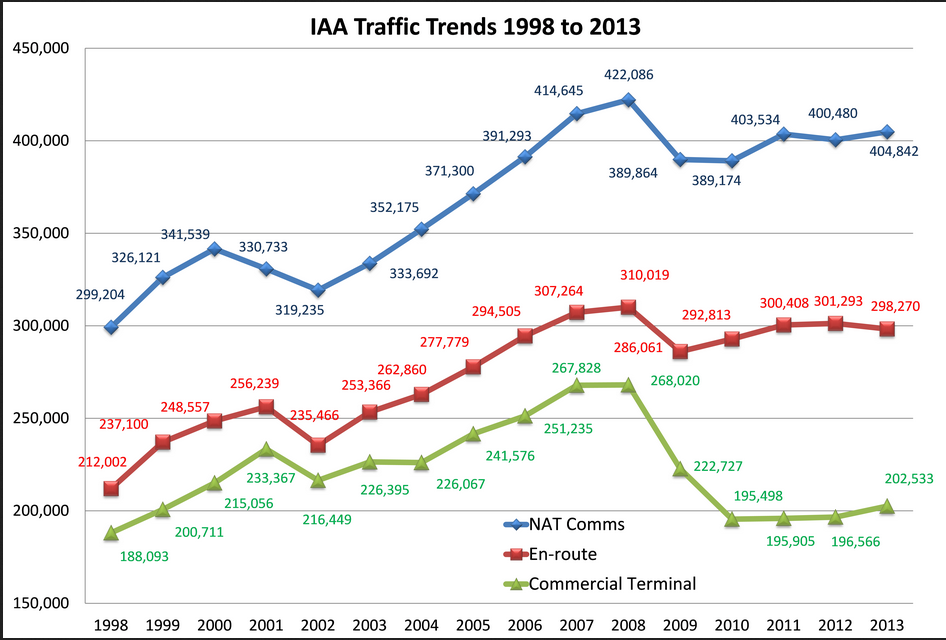
Aircraft threaten nuclear power plants and other industrial plants – Global dimming effects over the Atlantic due to contrails increasing severe rainfall
NATS is the UK’s leading provider of air traffic control services. Each year we handle 2.2 million flights and 220 million passengers in UK airspace.
http://www.nats.aero/about-us/what-we-do/our-control-centres/
OpEd
Arclight2011
20 February 2014
This post attempts to answer the question of what mechanism is causing the large amounts of record breaking levels of rainfall in Norway and the UK over recent years. Whilst global warming is an obvious answer as clouds hold more water if the atmosphere is warmer but the facts remain that increased flights across the Atlantic and increased particulates from various sources are responsible for this.
This dimming effect has repercussion concerning reports that use data that expects no quick changes to the earths climate (ref MET Office UK). In planning large projects such as nuclear power plants, waste/fuel processing work and storage sites, I have noticed that they refer to the incorrect information on the MET Office site and do not include the obvious recent data showing record breaking severe weather.
Of course this localised dimming effect causes the clouds to empty quicker in Europe and has reported to be causing droughts in Iran for instance.
Severe rainfall also can flood deep nuclear waste repositories as well as undermine buildings.
David Cameron on Sky TV yesterday did not say that climate change was definite and a done deal in answer to why is the flooding so severe. David Cameron decided to concentrate on the here and now and not worry about the future (even with more storms heading towards the UK).
So as part of my research i will place the links and info that is helping to inform me.. I think many flights are not reported (rendition and military but bear in mind that most flights to the wars from the USA to the middle east fly either to Ireland or across the top of Scotland).
Below are some links concerning localised global dimming in the context of global warming.
Extreme Weather in parts of the world (Updated 14 February 2014)
Parts of the world have witnessed a series of extreme weather conditions in the first six weeks of 2014, continuing a pattern that was set in December 2013.
Much of the United States of America has experienced cold waves and major winter storms, whilst California remains gripped by drought.The United Kingdom has seen its wettest December-January period on record, with severe, widespread and prolonged flooding. A combination of strong winds, storms and high tides caused damage and flooding in other coastal areas of Europe. There has been unusually heavy snowfall in the southern Alps.
Monthly mean temperatures were extremely high from eastern Mongolia to eastern China. In the Southern hemisphere, Australia, Argentina and Brazil experienced extended heatwaves.
Throughout this period, national meteorological and hydrological services provided forecasts and regularly-updated warnings.
http://www.wmo.int/pages/mediacentre/news/index_en.html
Tuesday, 8 January 2013: 9:15 AM
Relating the climate impact of trans-Atlantic flights to typical north Atlantic weather patterns
Room 17A (Austin Convention Center)
Emma A. Irvine, Univ. of Reading, Reading, Berkshire, United Kingdom; and K. P. Shine and B. J. Hoskins
Video of talk here that discusses the connection between contrails and the jet stream and high pressure ridges as well as the connection between dimming (cloud cover) and rain.
https://ams.confex.com/ams/93Annual/flvgateway.cgi/id/23305?recordingid=23305
Martin Wild
ETH Zurich, Institute for Atmospheric and Climate Science, Zurich, Switzerland
Coherent periods and regions with prevailing declines (“dimming”) and inclines (“brightening”) in surface solar radiation have been detected in the worldwide observational networks, often in accord with anthropogenic air pollution patterns
http://journals.ametsoc.org/doi/abs/10.1175/BAMS-D-11-00074.1
By Kharunya Paramaguru
Oct. 30, 2013
A new report on extreme-weather events by the Norwegian Meteorological Institute and the European national science academies suggests that “some of the extreme weather phenomena associated with climate change are increasing in frequency and intensity within Europe.” They also say that
“human activity has been the cause of more profound and rapid change”
for the earth’s climate.
Using computer modeling, the authors have found a “consensus” on “the likely future pattern of extreme weather events in Europe.” This includes more frequent and intense heat waves, as well as a reduction of rainfall and average temperatures for southern Europe.
For northern Europe, the authors say that “high intensity and extreme precipitation are expected to become more frequent……
Read more: Europe Hit by Powerful Storm: More Extreme Weather Is Likely in Future | TIME.com http://science.time.com/2013/10/30/bad-news-for-storm-battered-europe-theres-more-extreme-weather-on-the-horizon/#ixzz2tsKnjFg2
2011: world’s 10th warmest year, warmest year with La Niña on record, second-lowest Arctic sea ice extent
“Norway also had its wettest summer on record, and record summer rainfalls also occurred in many parts of Denmark and northeast Germany. “
http://www.wmo.int/pages/mediacentre/press_releases/gcs_2011_en.html
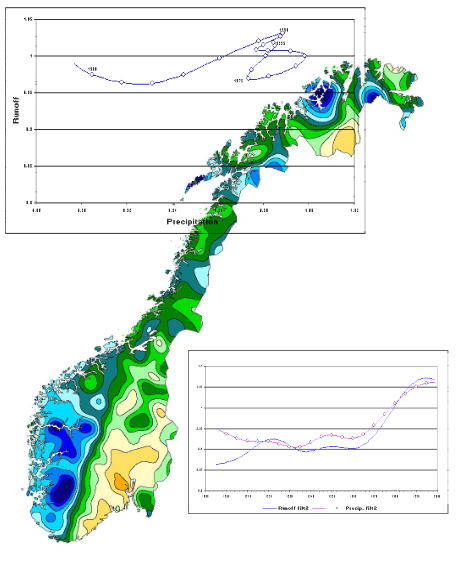
Past and future variations in climate and runoff in Norway
8 Nov 2000 – “….but in most regions there is a substantial increase in precipitation….”
What Tokyo has to look forward to when the fascist Olympics come to town – Persecution!

Yevgeny Vitishko, the Russian environmentalist who drew damning attention to gross ecological violations surrounding the Sochi 2014 Olympics today was transferred from administrative custody to an unknown prison colony to serve three years for spray-painting a fence.
But for several hours, he his whereabouts were completely unknown to activists, his family and police and corrections officials refused to discuss it. His release from jail in Tuapse, 72 kilometers northwest of Sochi – where he was held for 15 days on trumped up charges of swearing in public – was supposed to have occurred at 1:20 pm local time.
He would have then been allowed to return to his home, see his family and collect his personal affairs before being transferred to the prison colony for the next three years.
Instead, it was finally tentatively confirmed three hours later that he had been transferred earlier in the day to Krasnodar, the capital of the Russian region where the Olympics are being held – a violation of the conditions of his transfer as established by the Krasnodar regional court on February 12.
Judges in Krasnodar said Vitishko would not only be allowed to return home prior to going to the penal colony, but that he would be released from the Tuapse jail on his own recognizance to see his family, collect his things and then turn himself into penal colony correctional officials.
According to Dmitry Shevchenko, a fellow activist of Vitishko’s at the Environmental Watch on the North Caucasus, Vitishko should have been released at 1:20. Activists and well wishers as well as Norway’s TV2 had gathered for his release.
But when he failed to appear, no one could get a straight answer from jail officials as to Vitishko’s whereabouts.
Shevchenko told Bellona in a telephone interview that Vasily Vinishenko, the head of the local detention center in Tuapse where Vitishko was being held, told waiting activists that Vitishko had already been sent to Krasnodar.
During a call to the duty officer at the Tuapse jail by Shevchenko, he was told Vitishko was still in the custody of the detention facility.
The duty officer told Shevchenko in yet a later telephone call to the jail that Vitishko had been released at 1:24 pm local time.
At the same time, Vitishko’s wife, Larisa, received a call from the Tuapse jail. She told Bellona that a duty officer there had informed her Vitishko had been freed, but then immediately detained again.
Øystein Bogen, a reporter with TV2 news in Norway, who had been sent to cover the release of Vitishko, posted on his twitter account at 2:10 pm local time that, “Vitisko vanished without a trace from remand detention in Tuapse. The police cannot account for where he is.”
URGENT! LOCK THE GATE ON NUCLEAR WASTE: LILLYHALL LANDFILL

Beneath the Dark Mountain, lies the Dark Secret… the earth is Unearth – and can never be unearthed.

TODAY Workington made a stand against higher activity low level nuclear waste arriving in tipper trucks to be dumped in plastic bin bags into Lillyhall landfill.
Over 100 people stopped to sign letters to Cumbria County Council ”why should we have it on our door step!” was the cry !
Secretary of State Ed Davey has told campaigners that the landfill site has already been awarded a permit by the Environment Agency (over the heads of local councillors and the public) to take High Volumes of building rubble from decommissioning activities “primarily from Sellafield”. Asbestos laced with tritium will also be arriving from Chapel Cross in Scotland with a “controlled release of radioactivity to ground waters.” This is acceptable to government so long as it does not leak to other European countries: “The proposal was also subject to Article 37 of the Euratom Treaty which requires Member States to provide the Commission with general data so that they may give an opinion on whether the proposal is likely to have an impact on other Member States. The opinion of the Commission in this case was that it would not. The Commission visit ion the site in 2013 and reported that they were content with what they saw.” WE ARE NOT CONTENT WITH WHAT WE SEE which is the dispersal of radioactivity to our environment by all means possible including dumping radioactive wastes into landfill.
PLEASE TAKE ACTION TO PREVENT CONTAMINATION OF OUR GROUNDWATER WITH RADIOACTIVE WASTES
JOIN THE DEMO OUTSIDE COUNTY OFFICES KENDAL from 10am Wednesday 26th February
Public “relatively safe” from Fukushima, IAEA says
Feb. 18, 2014
VIENNA, Feb. 18 (UPI) — The International Atomic Energy Agency said work remaining at Japan’s crippled Fukushima nuclear site will be challenging but the public is “relatively” safe.
“In general, it is expected that the situation onsite will remain very challenging as the recovery operations progress,” the United Nations’ nuclear watchdog group said in a statement Monday.
“Based on “the information” that has been made available, the IAEA considers that all members of the public are safe and that the food supply is safe and is being appropriately managed.”
Last week, Tokyo Electric Power Co., the plant’s operator, reported high levels of the radioactive element Cesium in groundwater samples near monitoring wells associated with the plant.
A 13-page report from the IEA said Monday monitoring of the air around the plant detected “no significant” increase in radiation levels.
A 9-magnitude earthquake and tsunami crippled the nuclear facility in 2011. Environmental groups like Greenpeace accused the Japanese utility company of failing to manage cleanup operations effectively.
REFILE -Japan to fast-track some nuclear restarts; may break logjam
..NRA chairman Shunichi Tanaka said comments by Motegi or pressure from utilities did not affect decisions by the regulator. “This has absolutely no impact on our review,” he said. “There is no chance we will be swayed.”…
http://www.reuters.com/article/2014/02/19/japan-nuclear-restarts-idUSL2N0LO0DQ20140219
Feb 19 (Reuters) – Japan will fast-track the restart of some nuclear reactors, the regulator said on Wednesday, potentially breaking a logjam that has kept the country without nuclear power in the wake of the 2011 Fukushima disaster.
Making a priority list for a few nuclear plants will move them forward in an approval process that has become bogged down in laborious safety checks and paperwork.
It remains unclear when any of Japan’s 48 reactors could come back on-line, but fast-tracking the process is good news for the nuclear industry, which had been hoping to begin the restarts by the middle of this year.
The Nuclear Regulation Authority (NRA), an independent body created in 2012, said it will craft a priority list of plants that meet its earthquake and tsunami criteria as early as next month, selecting a few to expedite from six pressurised water reactors run by Kansai Electric Power Co, Kyushu Electric Power, Hokkaido Electric Power and Shikoku Electric Power.
Japan’s nuclear shutdown has forced the resource-poor nation to import costly fossil fuel, pushing the economy into a record 18 months of trade deficits.
Post-tsunami deaths outnumber disaster toll in Fukushima caused by depression
….However, with the aid of magnetic resonance imaging (MRI), EEG and positron emissions tomography (PET) it is possible to prove that cerebral changes in Chernobyl liquidators and veterans of the first Gulf War, as well as the war in Bosnia, are very similar….(Ratical article below)
…Campaigners say the sense of impermanence and the fracturing of families and communities has led to a marked increase in medical problems among evacuees, especially mental illnesses like depression….
….While both Iwate and Miyagi suffered higher tolls in the initial disaster, the number of indirect deaths in both prefectures is lower than in Fukushima, at 434 and 879 respectively.
The small Fukushima city of Minamisoma has been the worst-hit, with 447 deaths indirectly blamed on the disaster, followed by 317 in Namie town and 225 in Tomioka town….
http://www.channelnewsasia.com/news/asiapacific/post-tsunami-deaths/1006448.html
Health complications stemming from Japan’s 2011 tsunami have killed more people in one Japanese region than the disaster itself, the local authority said on Thursday.
TOKYO: Health complications stemming from Japan’s 2011 tsunami have killed more people in one Japanese region than the disaster itself, the local authority said on Thursday.
Data compiled by officials and police show that almost three years after the huge waves smashed ashore, 1,656 people living in Fukushima prefecture have died from stress and other illnesses related to the disaster, compared with 1,607 who were killed in the initial calamity.
“The biggest problem is the fact that people have been living in temporary conditions for so long,” Hiroyuki Harada, a Fukushima official dealing with victim assistance, told AFP.
“People have gone through dramatic changes of their environment. As a result, people who would not have died are dying,” he said.
Along with the prefectures of Miyagi and Iwate, Fukushima was one of the worst hit parts of Japan when a huge 9.0 undersea earthquake sent a wall of water barrelling into the coast.
The waves swept more than 18,000 people to their deaths across the country, and destroyed entire communities.
Fukushima was also hit with the resulting nuclear disaster after cooling systems at the Daiichi nuclear plant were knocked out, sending reactors into meltdown and forcing the evacuation of tens of thousands of people.
Almost three years on, many people remain displaced, whether because their homes around the power plant have not been declared safe or because rebuilding along the coast has been slow.
Officials say that as well as those who died in the early stages of the disaster, through lack of initial care because medical facilities were hobbled, a growing number of people are dying from the physical and mental stress of staying at shelters, including through suicide.
Physical and mental stress
Arnold Gundersen : Fukushimas mystery leaks explained and most toxic leak to date, now stopped with a plastic garbage bag!
From Fairewinds Energy Education on Vimeo.
TEPCO is behaving as though it is the victim of the largest industrial accident in the history of time rather than the perpetrator. Fairewinds Energy Education’s Arnie Gundersen analyzes new leaks at Fukushima Daiichi Unit 3 and discusses TEPCO’s negligence in not applying engineering rigor to its analysis of the leaks.
Link to Fairewinds Speech at the New York Academy of Medicine: bit.ly/1lnUCEa
Please support our work: fairewinds.org/donate/
http://asiancorrespondent.com/119786/japan-highly-radioactive-fukushima-leak-doesnt-reach-ocean/
Japan: Highly radioactive Fukushima leak ‘doesn’t reach ocean’ – stopped with plastic bag!
By AP News Feb 20, 2014
TOKYO (AP) — Highly radioactive water has overflowed from a storage tank at Japan’s crippled nuclear power plant, but the operator says it did not reach the Pacific Ocean.
The operator, Tokyo Electric Power Co., said Thursday that the leak involved partially treated water from early in the crisis, meaning it was more toxic than previous leaks. Three reactors melted at the Fukushima Dai-ichi plant following the 2011 earthquake and tsunami, with radioactive water partially recycled and stored in more than 1,000 tanks.
TEPCO says about 100 tons of the contaminated water overflowed through a rainwater drainage pipe, where plant workers attached a garbage bag to contain the leakage. TEPCO says the leak has since stopped after workers closed the valves and did not escape into the Pacific.
Special Delivery! Greenpeace demonstrators deliver 5 tonnes of coal, two containers of nuclear waste to European leaders in Paris

Greenpeace demonstrators dumped coal on the doorstep of French President Francois Hollande Wednesday morning, February 19, 2013. (Photo: Greenpeace)Greenpeace activists delivered a truckload of nuclear waste and five tonnes of coal to the home of French President François Hollande at daybreak Wednesday, hours before German Chancellor Angela Merkel was set to arrive at the site.
Unfurling a banner that read “Energy Transition in Europe, here and now!” the activists were calling on the two leaders to abandon their current use of “dangerous” energy sources, such as coal and nuclear, and to commit to a “real energy transition.”
“France and Germany talk the talk on the switch to a renewable energy future, but now they must show that they will walk the walk,” said Sébastien Blavier, Greenpeace France nuclear campaigner, in a press statement following the action. “The only way to achieve the energy transition that Europe needs is to set a binding 45% renewable energy target for 2030.”
According to the Associated Press, at 6:30 AM, the protesters drove a truck carrying the coal as well as two containers of nuclear waste water up to the presidential palace and proceeded to dump the coal onto the palace grounds. Activists said that although the waste water contained tritium with “above-normal levels of radioactivity, it was not a threat to cleanup crews or police as long as it wasn’t spilled.”
Paris police arrested 12 of the protesters.
Despite both countries’ pledge to an energy transition, the protesters say that their continued reliance on these energy sources undermines their climate ambitions.
NTDTV posted a video of the action online:
This work is licensed under a Creative Commons Attribution-Share Alike 3.0 License.
Anonymous U.S. Gov’t Nuclear Expert: Fukushima radiation levels were “astronomical… nothing containing release of radioactivity, it’s an unmitigated, unshielded number” — Monitor detected 100,000 Sv/hr
Published: February 18th, 2014 at 4:11 pm ET
By ENENews
The Asia-Pacific Journal, Feb. 17, 2014: A U.S. government nuclear expert who was directly involved in the U.S. government’s radiation assessment of this situation said: “At 100 meters away it (the helicopter) was reading 4 sieverts per hour. That is an astronomical number and it told me, what that number means to me, a trained person, is there is no water on the reactor cores and they are just melting down, there is nothing containing the release of  radioactivity. It is an unmitigated, unshielded number.” –Confidential communication, Sept. 17, 2012
Email from Defense Threat Reduction Agency on March 17, 2011 (pdf): “Please take note of the new ‘Containment monitor reading’ on slide 10.”
Slide 10
- Continuous Release – Steam released for decay heat removal […]
- >> NFAC [Nuclear Forensics Analysis Center] Reactor Accident
- >> >> Containment monitor reading: 10,000,000 R/hr [100,00 Sv/hr] (unconfirmed), tried to replicate the reported high radiation levels at site gate and computed and reported 375 R/hr [3.75 Sv/hr] from helicopter at 100 meters above spent fuel pools.
Using the inverse square law formula a dose rate of 3.75 Sw/hr at 100 meters, means from 0.5 meters away the dose rate equals 150,000 Sv/hr, very close to the 100,000 Sv/hr reported.
See also: NHK: 3.75 sieverts per hour was detected above Reactor 3 by helicopter
Donna Busche – Hanford nuclear whistle-blower fired
….Busche has filed complaints with the federal government alleging she has suffered retaliation since filing her original safety complaint in 2011….
AP | Spokane (US)
A whistle-blower who raised safety concerns at the most polluted nuclear weapons production site in the US has been fired from her job at the Hanford Nuclear Reservation.
Donna Busche’s complaints are part of a string of whistle-blower and other claims related to the design and safety of an unfinished waste treatment plant at Hanford, created by the federal government in the 1940s as part of the top-secret project to build the atomic bomb. Today, it is the nation’s most contaminated nuclear site, where cleanup costs about USD 2 billion each year.
Busche, 50, said she was called into the office yesterday morning and told she was being fired for cause.
“I turned in my key and turned in my badge and left the building,” Busche told The Associated Press in a telephone interview from Richland, where Hanford is located.
Busche worked for URS Corp., which is helping build a USD 12 billion plant to turn Hanford’s most dangerous wastes into glass. Construction of the plant has been halted over safety concerns. Busche has filed complaints with the federal government, alleging she has suffered retaliation since filing her original safety complaint in 2011.
1 This Month
Chernobyl: The Lost Tapes – A good documentary on Chernobyl on SBS available On Demand for the next 3 weeks– https://www.sbs.com.au/ondemand/tv-program/chernobyl-the-lost-tapes/2352741955560

of the week–London Campaign for Nuclear Disarmament

Tell the Ukrainian Government to Drop Prosecution of Peace Activist Yurii Sheliazhenko
To see nuclear-related stories in greater depth and intensity – go to https://nuclearinformation.wordpress.com
-
Archives
- April 2026 (126)
- March 2026 (251)
- February 2026 (268)
- January 2026 (308)
- December 2025 (358)
- November 2025 (359)
- October 2025 (376)
- September 2025 (257)
- August 2025 (319)
- July 2025 (230)
- June 2025 (348)
- May 2025 (261)
-
Categories
- 1
- 1 NUCLEAR ISSUES
- business and costs
- climate change
- culture and arts
- ENERGY
- environment
- health
- history
- indigenous issues
- Legal
- marketing of nuclear
- media
- opposition to nuclear
- PERSONAL STORIES
- politics
- politics international
- Religion and ethics
- safety
- secrets,lies and civil liberties
- spinbuster
- technology
- Uranium
- wastes
- weapons and war
- Women
- 2 WORLD
- ACTION
- AFRICA
- Atrocities
- AUSTRALIA
- Christina's notes
- Christina's themes
- culture and arts
- Events
- Fuk 2022
- Fuk 2023
- Fukushima 2017
- Fukushima 2018
- fukushima 2019
- Fukushima 2020
- Fukushima 2021
- general
- global warming
- Humour (God we need it)
- Nuclear
- RARE EARTHS
- Reference
- resources – print
- Resources -audiovicual
- Weekly Newsletter
- World
- World Nuclear
- YouTube
-
RSS
Entries RSS
Comments RSS
 nuclear-news