Tepco received 27th payment of financial support from Nuclear Damage Fund totals 26 Billion Euros, so far
Posted by Mochizuki on April 23rd, 2014
On 4/23/2014, Tepco announced they received the 27th financial support from the Nuclear Damage Liability Facilitation Fund.
The value of the support is 191.8 billion yen. They have received 3,687,000,000,000 yen of financial support from this fund and 120 billion yen of compensation in accordance with the “Act on Contract for Indemnification of Nuclear Damage Compensation”.
Tepco states the total of the financial support that Tepco has received so far is not sufficient to cover the compensation payouts until the end of May 2014.
The announcement to the press is below.
Press Release (Apr 23,2014)
Financial Support from the Nuclear Damage Liability Facilitation FundToday, we have received 191.8 billion yen from the Nuclear Damage Liability Facilitation Fund (hereafter the Fund) based on the revised Special Business Plan (New Comprehensive Special Business Plan) approved on January 15, 2014.
This financial support was given in response to the 27th request made in order to cover the compensation payouts up until the end of May 2014, as the sum of the compensation received in accordance with the “Act on Contract for Indemnification of Nuclear Damage Compensation” (120 billion yen) and the financial support provided by the Fund (3.6870 trillion yen) will not be sufficient for the amount of payouts estimated to be required by that time.
With the financial support received from the Fund, we will continue our utmost efforts in implementing the “compensation payouts with courtesy and compassion” in consideration of those afflicted by the nuclear damage.
http://www.tepco.co.jp/en/press/corp-com/release/2014/1235803_5892.html
http://www.tepco.co.jp/cc/press/2014/1235802_5851.html
Iori Mochizuki You read this now because we’ve been surviving until today.
Fukushima Ground Sinking Beneath Reactor? Ice Wall Put On Hold
Part1
Part2
Top Nuclear Official: “Ground sinking” beneath Fukushima reactor buildings a concern — Gov’t experts looking closely at risks from changes to flow of underground water
http://enenews.com/top-nuclear-offici…
Disabled lose local support due to Fukushima nuclear disaster
http://mainichi.jp/english/english/ne…
Fukushima evacuees discuss whether to go back home
Residents of a town in Fukushima Prefecture who fled the accident at Fukushima Daiichi nuclear plant in March 2011 are considering whether to go back home.
Officials of Naraha have begun hosting town meetings to discuss return, now that the government has finished removing radioactive material from living areas.
The first meeting was held on Monday in Iwaki city, where 80 percent of the town’s residents have evacuated.
Tsunami test facility for nuclear plants
A Japanese research institute has a new facility that can create artificial tsunami waves to test the safety of nuclear power plants.
The new facility at the Central Research Institute of Electric Power Industry in Abiko City, near Tokyo, features a water pool 20 meters long and 4 meters wide.
The waves it generates can travel as fast as 7 meters per second — the speed of the tsunami that devastated northeastern Japan in March of 2011.
It can also create continuous waves as high as 2 meters for 3 minutes and simulate various wave shapes.
Researchers will test several types of breakwaters and study the strength of collisions of objects drifting in tsunami.
They say these experiments will contribute to improved safety at nuclear power plants.
Japanese power companies are learning from the Fukushima Daiichi disaster and stepping up safety measures at their nuclear facilities against possible earthquakes and tsumani.
Scientists: Plutonium released from Fukushima “is of radiological concern”; Reactor must be source, not spent fuel pool — Study: Plutonium found 120 km from plant; “Pu and non-natural uranium certainly increased in environment”
http://enenews.com/scientists-release…
Concerned officials now considering ban on Japan food items — Nuclear scientists previously told gov’t to halt all imports after finding high radiation levels — Never implemented due to fear of hurting bilateral relationship
http://enenews.com/concerned-official…
3 radiation monitors down for 3 days in the pool to accept fuel assemblies from reactor4 SFP
http://fukushima-diary.com/2014/04/3-…
Tepco considers to track workers by location information in Fukushima plant having series of suspicious “accidents”
http://fukushima-diary.com/2014/04/te…
“Mitsubishi Heavy Industries trying to quit being in cooperate with Areva”, a Fukushima worker
http://fukushima-diary.com/2014/04/mi…
Marcellus Waste Radioactivity In Water Leaching From Landfills
http://www.publicnewsservice.org/2014…
Paper: WIPP workers “not permitted to speak” — “Their jobs won’t ever be the same… will face new paradigm” — Concerns plutonium contaminated surrounding salt — Preparing for radiation levels so high, only robots can be used (VIDEO)
http://enenews.com/paper-wipp-workers…
WIPP officials close to knowing cause of radiation leak
Read more: http://www.koat.com/news/wipp-officia…
http://www.koat.com/news/wipp-officia…
Nuclear Hotseat #148: Chernobyl Anniversary Special + Voices from Japan: The Chernobyl/Fukushima
Please support Libbe Halevey and future Nuclear Hotseat Podcasts here by donating;
http://www.nuclearhotseat.com/
Connection DOWNLOAD HERE:
http://lhalevy.audioacrobat.com/download/8620ad78-a400-f4dc-aaf2-3906fce9f250.mp3
Interviews with:
Dr. Janette Sherman on the medical consequences of Fukushima and ;
Dr. Alexey Yablokov, editor of Chernobyl: Consequences of the Catastrophe for People and the Environment
Download his draft copy here;
http://www.strahlentelex.de/Yablokov_Chernobyl_book.pdf
Bonnie Kouneva, Chernobyl downwinder living in Bulgaria, on the personal impact of the disaster on her life and the lives of her family
“Voices from Japan” features Japanese photojournalist Ryuichi Hirokawa, the first non-Soviet journalist to document the Chernobyl disaster and one of the first journalists on the scene at Fukushima.
3906fce9f250
lhalevy.audioacrobat.com
Also, From the JANUK site this;
Chernobyl London meeting (27 April 2013) Speech by Tamara Krasitskava from Zemlyaki
On Sunday the 27 April 2013 in a little room somewhere off Grays Inn road London, a meeting took place. In this meeting was Ms Tamara Krasitskava of the Ukrainian NGO “Zemlyaki”.
In this meeting she quoted that only 40 percent of the evacuees that moved to Kiev after the disaster are alive today! And lets leave the statistics out of it for a moment and we find out of 44,000 evacuated to Kiev only 19,000 are left alive. None made it much passed 40 years old
…..3.2 million with health effects and this includes 1 million children…
T .Kraisitskava
“….I was told to not talk of the results from Belarus as the UK public were not allowed to know the results we were finding!….”
A.Cameron (Belarus health worker from UK)
Uploaded on 1 May 2013
* Tamara Krasitskava is a chairperson of Zemlyaki, Ukraine NGO in Kiev to represent those who had to collectively evacuate from Pripyat
* Speech was done by Russian, and interpreted into English.
* Chernobyl Day London Public Meeting was organized by “JAN UK” on Sat 27 April 2013.
http://www.JANUK.org
http://twitter.com/JAgainstNukesUK
http://www.facebook.com/JapaneseAgain…
* The nuclear accident happened on Saturday 26 April 1986, 1:23am. It was, for the most of he residents, midnight of Friday 25 April.
Those outside Fukushima receive no help with health monitoring although contamination has spread far beyond the prefectural border 福島県外の被曝健康調査は全て自助努力となっており、国は必要性を認めていない。
This is a badly translated version of the article that was posted to Face book by https://www.facebook.com/kodomo.zenkokunet/posts/811383438890181?notif_t=notify_me
from this article in Japanese
http://www.tokyo-np.co.jp/s/article/2014042290071034.html
Dated ; 2014年4月22日 07時10分
The original article in Japanese has been posted below for our Japanese speakers to disseminate fully…
Here is the rough translation in English by arclight2011part2
Extract
[…]
Concerning the TEPCO nuclear power plant nuclear disaster, the health testing in the Fukushima prefecture, this is not reproduced in other areas where high levels of radiation have been found. There are not funds made available to these other contaminated areas.
Last September a co-operative was formed and an ultrasound device was purchased for some 3 million Yen to voluntarily check in Ibaraki and Chiba prefectures supported by 3 volunteer doctors.
To support this effort a charge of 1,000 Yen is charged to individuals who undergo the tests. The testing was inundated by requests and 816 people had been examined by March 2014
A high dose of radioactivity area at the same level as Fukushima is had. I am going to inspect the fund in future in the other main prefecture including Tochigi.
In the metropolitan area, I observe 0.40 0.30 an mcSv/h ( 0.23 mcSv/h is the decontamination target of the country) even after space radiation dose comes in districts such as Yorii, Nasumachi, Tochigi or Nasu-Shiobara-shi Sekiya in this year.
The self-governing body supports the expense that inhabitants are examined on an original budget at hospitals.
In Nasumachi, inTochigi, the total amount supports examination of thyroid gland costs for children 18 years or younger. Tsukuba-shi or Joso City supports a 3,000 yen cost in the upper limit in Ibaraki prefecture. Matsudo-shi begins the furtherance of the same amount soon, for the first time in Chiba prefecture.
As for all the inhabitants who were younger than 18 years old, it received an examination of thyroid gland at the time of a nuclear plant accident at no cost in Fukushima by the assistance of the govenment. In the other areas with no assistance, it is forced to a self fund through private enterprise and a NGO`s.
The Government didn’t specify health investigation enforcement outside of Fukushima in a basic policy of the child / victim support method in a cabinet decision last October.
An opinion said [you should carry testing out out of the prefecture] was sent, but the government didn’t accept that opinion as there isn’t the possibility that increase is accepted because of the health advice concerning radiation by the report of the World Health Organization (WHO) of last February 2014.
I demanded it, but the governement doesn’t accept the opinion, so that nine mayors of Chiba guarantee Fukushima and the health care of the residents such as pregnant women who had a child since last October.
Shoji Sawada / the Masaru Nagoya honorary professor points it out with [the country may be afraid that inspection costs could become enormous]. [there is the person who shows a problem with a very small amount of radiation.] It is the abandonment of the responsibility of the government and the present conditions that a self-governing body (NGO) and the volunteers that a nuclear plant accident is cannot fully test for prooblems.
The seminar that it obeyed a basic policy to leave slight possibility for examination with public funds out of Fukushima, and was installed in Ministry of the Environment……
I reexamine the ideal method of the health care and give a conclusion by the end of 2014….. snip ends
[…]
Full article in Japanese – 日本語記事全文
東京電力福島第一原発事故を受け、福島県以外の地域で、住民団体が被ばく検査を自主的に実施したり、自治体が支援したりする動きが広がっている。背 景には、首都圏などでも局所的に空間放射線量が高い地域があるのに、福島県のように国費で被ばく検査する制度がないので自助努力せざるを得ないという、苦 渋の現実がある。 (大野暢子(まさこ)、写真も)
首都圏の母親や常総生協(茨城県守谷市)が、昨年九月「関東子ども健康調査支援基金」を設立。三百万円を出し合ってエコー検査機を購入し、茨城、千葉両県の公民館などで毎月、子どもの甲状腺検査を続けている。医師三人がボランティアで活動を支える。
受検者から千円のカンパをもらうが、「郊外の会場でも、定員がすぐに埋まってしまう」と荻(おぎ)三枝子共同代表(60)。三月までに計八百十六人が受検した。
UK campaign against Rolls Royce`s nuclear folly – Details 1st May 2014

10:30-12:00 Thursday 1st May
QEII Conference Centre
(Opposite Westminster Abbey/Central Hall)
Come and Tell Rolls Royce:
No New Nuclear Weapons!

Rolls Royce’s Annual General Meeting is on 1st May. It has a key role in designing and making the nuclear reactors to power the ‘Successor’ nuclear-missile-carrying submarines. The go-ahead is not officially due until 2016, but work on them worth £3 billion is under way.
For more than 40 years Britain has agreed to negotiate the abolition of its nuclear weapons. But it has never begun to do so. 14 years ago Britain further undertook to ‘totally eliminate’ its nuclear weapons.
Yet the Defence Secretary told Parliament that the ‘Successor’ submarine programme would ensure that Britain’s nuclear weapons would remain effective into the 2060s – 100 years after it agreed to get rid of them!
Come and tell Rolls Royce to have nothing to do with it.
London and East Midlands CND
Email for confirmation or questions cid:X.MA1.1398172479@aol.com
Court action against Rolls Royce, over radiation safety issue
 Rolls-Royce facing legal action over alleged radiation safety failings at Derby site By RJohnson_dt | February 03, 2014 ROLLS-ROYCE is being taken to court over alleged safety failings at one of its Derby sites The allegations brought by the Health and Safety Executive and the Environment Agency relate to the firm’s Marine Power Operations business, in Sinfin Lane. The charges centre on the management of risk of exposure to employees of ionising radiation from radioactive sources used in industrial radiography.
HSE and the Environment Agency will be charging Rolls-Royce Marine Power Operations Ltd under the Environmental Permitting Regulations 2010, the Health and Safety at Work Act 1974, the Management of Health and Safety at Work Regulations 1999 and the Ionising Radiations Regulations 1999.”
The case is due to be heard at Derby Magistrates’ Court on Thursday. http://www.derbytelegraph.co.uk/Rolls-Royce-facing-legal-action-alleged-safety/story-20550563-detail/story.html#ixzz2sNXeLsBG
Rolls-Royce Expands Nuclear Operations With US Buyout
Plant Operation
8 Jan 2013 (NucNet): Rolls-Royce Holdings is expanding its nuclear energy operations with the purchase for an undisclosed sum of US engineering company PKMJ Technical Services.
The acquisition aims to accelerate growth in nuclear services, London-based Rolls-Royce said in a statement today.

Rolls-Royce already has nuclear services facilities in Williamson, New York state, and Peterborough, in Canada, and a nuclear instrumentation and control facility based in Chattanooga, Tenessee. Last year Rolls-Royce acquired R Brooks Associates, a leading specialist civil nuclear reactor services business in the US.
The company also announced last year a collaboration with Hitachi to work on new nuclear reactors in the UK. In September 2011, Rolls-Royce signed a memorandum of understanding and cooperation covering nuclear energy with Russia’s state nuclear corporation Rosatom.
Rolls Royce website;
Former Official: Fukushima radiation is killing children… heart problems, leukemia, thyroid — Terrible things are going on — Authorities hiding truth from world — We need to admit many people are dying, but we’re not allowed to say that (VIDEO)
Published: April 21st, 2014 at 7:16 am ET
By ENENews
Interview with Katsutaka Idogawa, former mayor of Futaba, Fukushima Prefecture, April 21, 2014:
At 9:30 in
- Katsutaka Idogawa, former mayor of Futaba in Fukushima Prefecture: There are still about 2 million people living in the prefecture, who have all sorts of medical issues. The authorities claim this has nothing to do with the radiation fallout from Fukushima. I demanded that the authorities substantiate their claim in writing, but they ignored my request. There are some terrible things going on in Fukushima. […] The biggest problem is that there is no one to help us. […] I talked to local authorities in different places in Fukushima, but no one would listen to me. They believe what the government says, while in reality radiation is still there — and it is killing children. They are dying of heart conditions, asthma, leukemia, thyroid complications. Lots of kids are extremely exhausted after school, others are simply unable to attend PE classes. But the authorities are still hiding the truth from us, and I don’t know why. Don’t they have children of their own? It hurts so much to know they can’t protect our children.
At 22:30 in
- Sophie Shevardnadze, host: The United Nations report on the radiation fallout from Fukushima says no radiation-related deaths or acute diseases have been observed among the workers and the general public exposed. So it’s not that dangerous after all? Or is there not enough information available to make proper assessments?
- Idogawa: This report is completely false. The report was made by a representative of Japan – Professor Hayano. Representing Japan, he lied to the whole world from the UN podium. When I was mayor, I knew many people who died from heart attacks, and then there were many people in Fukushima who died suddenly, even among young people. It’s a real shame that the authorities hide the truth from the whole world, from the UN. We need to admit that actually many people are dying, we are not allowed to say that, but TEPCO employees also are dying. But everyone is keeping mum about it.
Mayor in Fukushima during 3/11: Officials lied to everyone and hid the truth — It’s a violation of human rights to expose people to radiation like this, it’s terrible — Evacuees are forced to return, I’m really ashamed for my country (VIDEO)
Published: April 21st, 2014 at 4:47 pm ET
By ENENews
Interview with Katsutaka Idogawa, former mayor of Futaba, Fukushima Prefecture, April 21, 2014:
At 8:00 in
- Katsutaka Idogawa, former mayor of Futaba, Fukushima Prefecture: I’d like to show you a table with radiation levels around Chernobyl. Radiation levels [for evacuation] around Fukushima are four times higher than in Chernobyl, […] Exposing people to the current levels of radiation in Fukushima is a violation of human rights. It’s terrible. […] In many cases, evacuees are forced to return.
At 21:30 in
- Idogawa: I’m really ashamed for my country, but I have to speak the truth for the sake of keeping our planet clean in the future. […] The same thing happened with Hiroshima and Nagasaki. The authorities lied to everyone. They said it was safe. They hid the truth. That’s the situation we are living in.
Nuclear Hotseat #118: Allison Katz interview
Libbe Halevey website still blocked! but you can make a donation to her new site here http://www.nuclearhotseat.com/
How the World Health Organization came under the domination of the pro-nuclear International Atomic Energy Agency – the first of two exclusive Nuclear Hotseat reports on the unholy alliance that underlies our global misunderstandings of the dangers of nuclear radiation.
DOWNLOAD HERE:
http://lhalevy.audioacrobat.com/download/eb5073ca-87ee-356e-9812-2ac8eb4367b1.mp3

INTERVIEW: Special full-length interview with Alison Katz of Independent WHO on the history, politics and criminal negligence of the World Health Organization. She is a sociologist and psychologist who worked for WHO for 18 years and now is a spokesperson for the organization that wants WHO to do its job regarding nuclear dangers and international public health. Even if you think you understand this issue, you will be shocked by the specific instances where WHO has abdicated its power. You’ll also be inspired by an international tactic Katz proposes that has the potential to turn this issue around.
CONTACT: www.IndependentWHO.org

- Independent WHO Hippocratic vigil in front of World Health Organization headquarters in Geneva, Switzerland – 10 hours a day, 5 days a week for 7 years.


CALL OUT: Help Netpol’s legal challenge of secret police databases
CALL OUT: Help Netpol’s legal challenge of secret police databases.
Any UK based activists with an address can get support from this crowd of dedicated human rights supporters.. They are trying to challenge the UK slip into fascism.. well worth supporting.. A bit late for me though..
Update – Lawyer Yabe, Mr Hosami, Ms.Shimotani and friends target Mari Takenouchi in a disgusting campaign of hate and sexual abuse! With no comment from the ETHOS child killers!
Err… some slight editing of this article has been done by Arclight2011 (So sue me Yabe! Grr call yourself a man? you have NO honour! ) .. And here is a picture of Ms. Shimotani 
“We know through serious research that there is a subtle but real connection between the objectification of women and violence against women..” ; http://www.independent.co.uk/voices/comment/women-are-complicit-in-misogyny-too-8877406.html
Heres is a picture of Mr Hosami and Yabe baby….

Question – Are these “gentlemen” misogynists? (arclight2011part2)
“I’ve been doing some research on misogyny lately; mainly its symptoms and characteristics. Firstly, I should explain that misogyny is a deep hatred or contempt for women. It is a mental/psychological disorder which affects more men than I realized, and it can manifest itself in a variety of ways ranging from chauvinism or sexism to physical abuse and rape.” More here ; http://health.wikinut.com/The-Twisted-Mind-of-the-Misogynist/t87p4922/
Some days ago, a Kyoto resident, Mr. Koichi Hosomi who has been continuously harassing Mari Takenouchi sometimes in combination with the lawyer Yabe sent the following tweet.
“Fly to Okinawa (where Takenouchi lives) and go suck Takenouchi’s nipples.”
Original article is here in Japanese and English ; http://savekidsjapan.blogspot.ie/2014/04/2nd-consulation-to-kyoto-bar.html?spref=tw
12 April 2014
2nd consultation to Kyoto Bar Association of Japan

Image source courtesy of ETHOS 🙂 ; http://ethos-fukushima.blogspot.ie/
I, Mari Takenouchi-is a freelance Japanese journalist. I have been supporting ideas that are designed to save children of Fukushima. Thus, my main targets have been UN agencies, the Japanese government and the Fukushima ETHOS group. (Though, some people have laughed at me, a single mother for challenging these organisations)..
Accordingly, lawyer Yoshiro Yabe who has been harassing me on twitter, is not my actual target at all. However, since his harassment has been malicious and continuous, I talked today with the vice president of Kyoto Bar Association, Lawyer Kenji Akiyama. I talked to another lawyer in Kyoto Bar Association, but the situation has not been dealt with by this person at all.
I asked Mr. Akiyama to notify Mr. Yabe regarding the 6 points I informed him of. However, as I spoke, my voice became spontaneously loud with rage. I added my apologies to Mr. Akiyama who had heard my angry tone of voice.
As I write this blog, Mr. Yabe is making an excuse saying that his initial advice on my petition (to be forwarded to prosecutors not to indict me) was actuallyfor the sake of me. This was a blatant lie.
The petition is not legally binding and the format is not specified. Yet, Mr. Yabe repeatedly tweeted that Mari Takenouchi’s petition is null and void, though I had asked him repeatedly to stop. That was the beginning of my communication with the lawyer Yabe, and there was much more…
Please read 6 points I offered below..
UK`s MoD report reveals over 260 safety incidents at Clyde nuclear bases

from Sunday Herald, 20 April 2014
Over 260 nuclear safety incidents have been reported at the Clyde naval bases in less than five years, according to an internal Ministry of Defence (MoD) report seen by the Sunday Herald.
Three quarters of the incidents are blamed on human error, and are likely to include fires, leaks and procedural blunders. There have been “issues” with a system meant to protect an explosives store from lightning strikes as well as problems caused by staff and resource shortages.
The MoD has also revealed that it is planning a new conventional explosives handling facility at Coulport to deal with the growing number of nuclear submarines due to be based on the Clyde over the next few years.
The revelations on safety have been described as “chilling”, “shocking” and “simply unacceptable” by the Scottish National Party (SNP), which opposes nuclear weapons. But the MoD said it was “entirely misleading” to focus on the number of reported incidents.
An MoD report on its annual review of safety at the Faslane nuclear submarine base and the Coulport nuclear bomb store in Argyll has been released under freedom of information law. Dated September 2012, it discloses how many “nuclear safety events” have occurred in recent years.
Between April 2008 and August 2012 there were 262 such events, most of which were attributed to “human factors”. More than 50 incidents have been logged every year (see table below).
The report does not describe any of the events, but MoD safety reports released for earlier years have revealed that they can include radioactive contamination, small fires and failing to follow safety rules.
The figures do not include incidents involving nuclear weapons, for which no numbers are given. The report does say, however, that there have been “false alarms and system failures” with an “environmental hazard detection system” for the warheads.
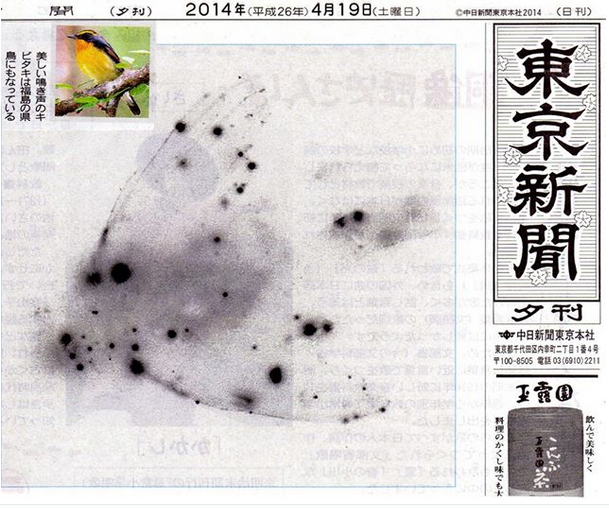
Tokyo Shimbun and the flycatcher contaminated with hot particles
20 April 2014
Today’s Tokyo Shimbun evening paper has picked up on this bird from a barn in Iitate which is in Fukushima Prefecture, This local bird, the flycatcher is from the ficedula family and seems to be systemically exposed with hot particles.
The black spots are radioactive substances, we can guess where the radiation in the body is from. It is from eating insects and plants containing radioactive material and also you can see part of the abdomen is uniformly black.

Pakistan may ban Japan edible items, Senate told – 3 years too late!
…The scientists had advised the government after they detected high levels of Iodine from the consignments imported from Japan…. (in 2011)
[Arclight2011part2 note: I have made some small changes to the grammar of this article and will contact Kawar Klasra, the journalist, (to confirm I have not manipulated the meaning of the article) whose original article can be found on the link below ]
http://www.nation.com.pk/islamabad/18-Apr-2014/pakistan-may-ban-japan-edible-items-senate-told
ISLAMABAD – Pakistan has cautioned it may impose a ban on the import of edible items from Japan if traces of radioactive material are found in them,
Federal Minister of Commerce Khurum Dastgeer Khan told the Senate on Thursday, who is currently the Minister of National Food Security and Research. He is tasked to conduct thorough research to determine if the edible items from Japan were/are affected by radioactive contamination or not.
“Concerned officials have been advised to investigate the matter relating to the import of edible items from Japan following the release of radioactivity in Japan. It is up to Ministry of Food Security and Research to advise Ministry of Commerce whether to continue the import of edible items from Japan or impose a ban on it,” Dastgeer told Senate in a written statement.
He was responding to question asked by Senator Suriya Amiruddin who was interested to know whether there is any proposal under consideration of the Government to impose a ban on the import of edible items from Japan so as to avoid the negative effect of radiation in those items.
Almost three years back in April 2011, the Pakistan Nuclear Regulatory Authority, had directed authorities dealing with Cargo arriving directly or indirectly from Japan to screen all types of consignments including edible/non-edible items, for radiation.
The directives were issued from the country’s well-reputed institution, the Pakistan Nuclear Regulatory Authority (PNRA) following serious crisis of Fukushima Nuclear Power Plant. The PNRA made clearance mandatory for every consignment being imported from Japan.
It is worthy of mentioning here that country’s nuclear scientists had advised the federal government three years back to halt all types of goods from Japan to minimize the threat of radiation following the Fukushima Nuclear Crisis in Japan. The scientists had advised the government after they detected high levels of Iodine from the consignments imported from Japan.
Although India, Pakistan’s immediate neighbour, had banned imports from Japan following the Fukushima Nuclear Plant tragedy, the view that the move to ban imports from Japan could hurt bilateral relationship between the two friendly countries meant that the Pakistani government never imposed a ban on the import of goods from Japan.
OpEd by David Polden – CND UK
OP Ed by David Polden of CND UK
20 April 2014
A series of comments and information from D Polden on the state of the nuclear industry
JAPANESE GOVERNMENT CALLS FOR NUCLEAR RE-START
On April 11th,
Japan
http://topics.nytimes.com/top/news/international/countriesandterritories/japan/index.html?inline=nyt-geo
Cabinet approved a new national energy strategy calling for the restarting of
nuclear power stations that meet new safety standards. This restart was first
proposed by the government of Prime Minister Shinzo Abe http://topics.nytimes.com/top/reference/timestopics/people/a/shinzo_abe/index.html?inline=nyt-per
Two months ago, and scraps a promise made by a previous government after the 2011 Fukushima nuclear disaster to phase out atomic energy. Under the new plan, Japan could start as early as August to restart at least some of its 48 operable commercial reactors which were all progressively shut down
after the Fukushima accident spread nuclear radiation across northern Japan. Two reactors at the Oi nuclear power station had in fact been re-started in July 2012, but were both shut-down again in September 2013 for “routine inspections”, but have not re-opened since, so there are currently none operating..
However hostility continues to this policy among the majority of Japanese.
According to an opinion poll conducted on 15th and 16th of March by the newspaper Asahi Shimbun, 59% of the Japanese population now oppose the restart of any or all 48 nuclear reactors as against 28% who would support it. This is an increase on a parallel poll in January when 56% were opposed. Opposition is much stronger among women (66% to 18%) against than among men (51% to 39%). Also, 77% of the population would like all nuclear power plants to be shut down either immediately or gradually;
only 14% would not.
HINKLEY REACTOR SHUT DOWN OVER FEARS OF FUKUSHIMA-STYLE SHUTDOWN
The Daily Mail reported on March 19th that, unreported at the time, one of the two reactors at Dungeness nuclear power station were shut down for five months by its owners EDF last year over fears that it could be flooded – the event that caused the melt-down of three reactors at Fukushima.
This was after the flood defences at Hinkley were reviewed in an official government report in reaction to the Fukushima disaster. The report found that its shingle bank flood defences were “not as robust as previously thought” and could be breached during a catastrophic weather event. Indeed the Daily Mail reported that EDF told the Office for Nuclear Regulation in December 2012 that it “no longer has confidence” in its sea defences being able to defend against rare weather events such as the Japanese tsunami, but the reactor was not shut down till May 22nd 2013.
It re-opened again in October after a new barrier wall was built. A new permanent wall around the site was expected to be completed by the end of March 2014, which it was claimed would upgrade the defences from protecting against a one-in-a-thousand year weather event to a one-in-a-ten-thousand year event. But, as we all know, climate change is increasing the frequency of extreme weather events.
Dungeness is not the only nuclear power station threatened by the sea. In 2010 a
survey of UK nuclear stations by the Department of Energy, Food and Rural Affairs found that the flood risk was “high” at existing Sizewell and Hartlepool nuclear stations as well as Dungeness, and “medium” at Oldbury and Sellafield. It was predicted that by 2080 it would also be “high” at Bradwell and Hinkley. Earlier plans to build new nuclear reactors at Dungeness have been shelved; not so at these other sites.
CZECH POWER PLANT PLANS SCUPPERED BY “PRICE GUARANTEE” DEMANDS
Let us re-cap: last October, the UK government agreed a deal with EDF to guarantee EDF a price of £92.5/Megawatt-hour for the electricity it produces from its planned Hinkley C nuclear power station for a period of 35 years from the time it starts delivering electricity to the grid, this price to be index-linked against inflation.
This year bidders for the contract to build the two reactors at the Temelin nuclear
plant got a very different reaction when they demanded a much smaller price
guarantee from the Czech government in order for it to be prepared to go ahead and build the reactors.
CEZ, the Czech utility 70% owned by the Czech government, put out the contract to build the two reactors to tender as long ago as 2009 and received bids from Areva, Westinghouse and a Russian-Skoda consortium.
Just like the UK government in the Hinkley case, the previous Czech government was planning to offer a cost-difference guarantee for electricity from the two new
reactors “to ensure that investment was viable”. This would cover the difference
between wholesale electricity prices and price levels claimed to be needed to cover construction costs. The Ministry of Industry and Trade wanted this guarantee written into a new long-term Czech energy framework, but this was opposed by the Ministry of Finance. Estimates of its impact varied up to 10% extra on retail power bills. The Industry Ministry was working on €60/MWh; others suggested that €90 would be needed, indexed. CEZ claimed it required €70/MWh for the new units to be profitable, compared with mid-2013 forward prices of under €40.
Faced with this demand the Prime Minister of the new coalition government said it was not open to providing price guarantees that would “dramatically burden” consumers, such as the one being demanded.
Following government confirmation at the beginning of April that it would not
provide any future price guarantees, CEZ informed the bidders that it had cancelled the procurement process.
However the Czech government continues to support in principle in its draft energy policy the development of nuclear power and a new plan for this is to be prepared for this by the Minister of Finance and the Minister of Trade by the end of the year. Info from World Nuclear News, 10/4/14.
HINKLEY PLANS UNDER TRIPLE THREAT
1) In March, Vesna Kolar Planinsic, Chair of the UN’s Implementation
Committee on the Convention on Environmental Impact Assessment in a Transboundary Context wrote to the UK’s Department of Communities and Local Government to say that there was “profound suspicion” that the UK failed to properly consult neighbouring countries, including Norway and Spain, over the possible environmental impact that Hinkley Point C could have on them and told the Department to send a delegation to be questioned by the Committee in December.
2) On 19th March, Joan Halley, Chair of the Parliamentary Environmental
Audit Committee, wrote to the European Competition Commissioner, Joaquin Almunia, to dispute government claims that the price guarentee offered to EDF over Hinkley was the same as that offered for electricity generated from renewables and also further government claims that caps on contractors’ liability for decommissioning, waste management and nuclear incidents did not constitute subsidies.
3) On 27th March, An Taisce – the National Trust for Ireland obtained leave
to take its Hinkley Point legal challenge to the Court of Appeal in London. An
Taisce argues that the UK government’s decision to approve Hinkley Point C nuclear plant (on England’s west coast) without first consulting the public in Ireland is contrary to international, EU and English law.
The High Court in London found against An Taisce’s arguments in December 2013, ruling that there was no need to consult the public in Ireland in the circumstances.
However, the letter relaying the views of the UN Implementation Committee referred to in 1) above seems to support An Taisce’s case.
NTAG SUPPLEMENT 2: NUCLEAR POWER STATIONS IN SOUTHERN EUROPE
In the February edition of Nuclear Trains & Nuclear Power I set out the current
situation with nuclear power stations in Britain, Japan, France, the US, China and Germany. In the March edition I included Supplement 1, covering the nuclear power station situation in the rest of Western Europe. The details relating to countries already covered available at request.
PORTUGAL
Portugal has one research reactor located in the National Nuclear Research Centre. Further nuclear energy activities are not planned in the near future. In 1971, Portugal planned to build an 8,000 MW nuclear power plant to be completed by 2000. Plans were delayed until 1995 when it was decided to not proceed with the project. Since the military coup in April 1974, projects for the construction of nuclear power plants have been postponed or dismissed by the government.
SPAIN
Spain has seven nuclear reactors producing 21% of the country’s electricity, or 7,416 net megawatts. A nuclear power moratorium was enacted by the Socialist government in 1983. For a time the country had a policy of phasing out nuclear power in favour of renewables. The oldest unit (at José Cabrera nuclear power
plant
http://en.wikipedia.org/wiki/Jos%C3%A9_Cabrera_nuclear_power_plant )
was shut down at the end of 2006, 40 years after construction. In December 2012, the Garoña plant
http://en.wikipedia.org/wiki/Santa_Mar%C3%ADa_de_Garo%C3%B1a_Nuclear_Power_Plant
was also shut down. In 2011, the government lifted the 40-year limit on all
reactors, allowing owners to apply for license extensions in 10-year increments.
However, there are no plans for new nuclear plants.
ITALY
Italy started to produce nuclear energy in the early 1960s, but all plants were closed by 1990 following a nuclear power referendum http://en.wikipedia.org/wiki/Italian_nuclear_power_referendum,_1987.
An attempt to change the decision was made in 2008 by the government, which called the nuclear power phase-out a “terrible mistake”. The Minister of Economic Development
http://en.wikipedia.org/wiki/Ministry_of_Economic_Development_(Italy),
Claudio Scajola, proposed to build as many as 10 new reactors, with the goal of increasing the nuclear share of Italy’s electricity supply to about 25% by 2030. However, following the 2011 Japanese nuclear accident , the Italian government put a one-year moratorium on plans to revive nuclear power and then in June 2011, in a referendum, 94% of the electorate voted to cancel plans for new reactors. As 55% of eligible voters participated this made the ban binding on
the government.
SWITZERLAND
Switzerland has five operating nuclear reactors at four stations. Nuclear power accounts for about 40% of the total production of electricity in the country.
There have been many Swiss referenda on the question of nuclear power which have all supported nuclear power except one in 1990 which supported a 10-year moratorium on new nuclear power plant construction. However a 2003 referendum voted against extending this moratorium. Nevertheless in May 2011, as a consequence of Fukushima, the Swiss government abandoned plans to build new nuclear reactors. The country’s five existing reactors will be allowed to continue operating, but will not be replaced at the end of their life spans. The last will go offline in 2034.
AUSTRIA
Started building a nuclear power plant in 1972. This was never opened, as large
demonstrations against the plant were followed by a vote in the Austrian Parliament in 1978 in favour of a 10-year ban on nuclear fission being used to produce energy as well as bans on the storage and transport of nuclear materials in and through the country. In 1997, the Parliament voted to continue the ban indefinitely and remain a non-nuclear country.
GREECE
Has one operational nuclear research reactor but has never shown an
interest in building a commercial one. In 2007 its Finance Minister announced that nuclear was not part of Greece’s plans for future electricity generation.
TURKEY
Though it has had plans for nuclear power stations since 1970, none have as yet
started construction. Nevertheless Turkey has ambitious plans to open 20 nuclear reactors by 2030, the first five of which are planned to start construction by 2018, and be opened by 2023.
MALTA & CYPRUS
No nuclear power stations
Column: How my trip to a children’s mental asylum in Belarus made me proud to be Irish
I left thinking that what I had witnessed was a drop in the ocean. There are 300 orphanages in Belarus and this is the best one.
I thought about the mundane lives of these children and how the only bit of hope they have is the groups of volunteers that travel over, and the lucky ones who get to come to Ireland during the summer or over Christmas.
Mar 18 2014
Clíodhna Russel
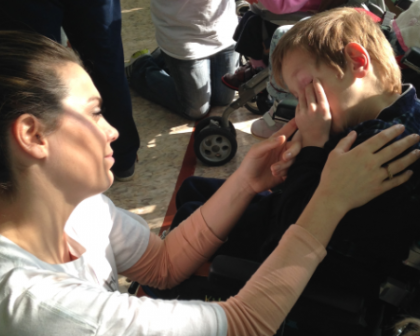
A trip volunteering at a children’s asylum in Belarus showed me the harsh reality for many children affected by the Chernobyl disaster but it also let me see the hope that Irish people have brought to their lives, writes Cliódhna Russel
CHILDREN ROCKING BACK and forth for hours on end, hitting their heads against walls, grinding their teeth, scraping their faces and putting their hands down their throats.
Some of the children’s teeth were in very bad condition and they were offered very little love, affection – or indeed care – by many of the nurses minding them.
This is what I witnessed when I volunteered at Vesnova Children’s Mental Asylum in Belarus last month.
I was expecting children with physical and learning disabilities. I was expecting to see the physical effects that the Chernobyl disaster has caused.
I wasn’t expecting to see children treated as if they weren’t human or didn’t count.
I wasn’t expecting to hear about the adult institutions where people are beaten and abused.
Disaster
The Chernobyl disaster happened in 1986 when an explosion and fire at a nuclear plant released large amounts of radioactive particles.
A new UN Report now states that Chernobyl released over 400 times (and not 100 times as originally quoted) the amount of radiation that was released in the Hiroshima bombing.
Children born in Belarus since 1986 are affected by a 200 per cent increase in birth defects and a 250 per cent increase in congenital birth deformities.
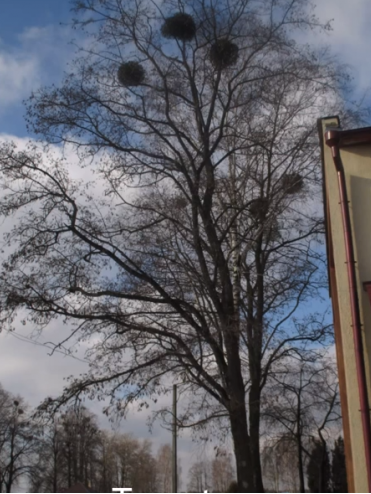
Walking around the asylum, it was pointed out to me that the trees have also been contaminated. What I thought were nests, were actually radioactive growths.
Founder of the Chernobyl children international charity, Adi Roche said,
Radiation knows no territorial boundaries, it doesn’t apply for an entry or an exit visa, it travels wherever the winds take it. At 1.23 am on 26 April 1986 a silent war was declared against the innocent peoples of Belarus, Western Russia and Northern Ukraine. A war in which they could not see the enemy, a war in which they could send no standing army, a war in which there was no weapon, no antidote, no safe haven, no emergency exit. Why? Because the enemy was invisible, the enemy was radiation.
Reality of life
There were about 160 children aged between four and 20 years old at the orphanage that I was in.
The children have beds, they are fed and are changed but that’s where their care ends.
I saw a child being fed a full bowl of what I can only describe as slop in 46 seconds.
It took myself and those who travelled with me at least 10 minutes to feed a child. In one case, I saw the child lie down and the food was literally poured into his mouth.
That was the case for the children who couldn’t feed themselves due to physical disability.
The children who could were brought into a large cafeteria – where the sight of them gulping down food as quickly as they could was actually horrifying.
Adi Roche was with us on the trip and she lined up our group so we could witness the speed at which these children ate.
It was clear by looking at them that food wasn’t something they enjoyed, it was just another part of their day were they had to fight to survive.
At one stage, I saw an older girl move towards an extra piece of fish that was on a plate a few tables away. She got up from her seat and made a run for it with a spoon in her hand. A nurse ran after her and the girl began shaking badly, she dropped the plate in the panic and the food fell to the floor.
She then got on her hands and knees and began eating from the ground.
Attitude
The orphanage itself is in good condition and is kept extremely clean. There’s even a sensory room where lighting and music and exercise toys can be used to relax the children.
This was one of the most rewarding parts of the trip; I would walk into a unit (there were eight units in the asylum) and pick a child, feeling awful that I couldn’t attend to every one and I’d bring that child into the sensory room and spend as long as I could giving them my full attention.
One little boy, Zgorik, who spent his days with his fingers in his ears and rocking his body at speed relaxed so much he started singing.
To see a child enjoy himself like this, even for just a few minutes, means so much when you consider that he never gets hugged or held or any affection until the next group of volunteers come in.
CHILDREN ROCKING BACK and forth for hours on end, hitting their heads against walls, grinding their teeth, scraping their faces and putting their hands down their throats.Some of the children’s teeth were in very bad condition and they were offered very little love, affection – or indeed care – by many of the nurses minding them.
This is what I witnessed when I volunteered at Vesnova Children’s Mental Asylum in Belarus last month.
I was expecting children with physical and learning disabilities. I was expecting to see the physical effects that the Chernobyl disaster has caused.
I wasn’t expecting to see children treated as if they weren’t human or didn’t count.
I wasn’t expecting to hear about the adult institutions where people are beaten and abused.
Disaster
The Chernobyl disaster happened in 1986 when an explosion and fire at a nuclear plant released large amounts of radioactive particles.
A new UN Report now states that Chernobyl released over 400 times (and not 100 times as originally quoted) the amount of radiation that was released in the Hiroshima bombing.
Children born in Belarus since 1986 are affected by a 200 per cent increase in birth defects and a 250 per cent increase in congenital birth deformities.
Walking around the asylum, it was pointed out to me that the trees have also been contaminated. What I thought were nests, were actually radioactive growths.
1 This Month

of the week – Shut Down Drone Warfare!


Tell the Ukrainian Government to Drop Prosecution of Peace Activist Yurii Sheliazhenko

Petition to revoke the licensing of the Near Surface Nuclear Disposal Facility (NSDF) at Chalk River. https://www.ourcommons.ca/petitions/en/Petition/Details?Petition=e-7247
To see nuclear-related stories in greater depth and intensity – go to https://nuclearinformation.wordpress.com
-
Archives
- April 2026 (91)
- March 2026 (251)
- February 2026 (268)
- January 2026 (308)
- December 2025 (358)
- November 2025 (359)
- October 2025 (376)
- September 2025 (257)
- August 2025 (319)
- July 2025 (230)
- June 2025 (348)
- May 2025 (261)
-
Categories
- 1
- 1 NUCLEAR ISSUES
- business and costs
- climate change
- culture and arts
- ENERGY
- environment
- health
- history
- indigenous issues
- Legal
- marketing of nuclear
- media
- opposition to nuclear
- PERSONAL STORIES
- politics
- politics international
- Religion and ethics
- safety
- secrets,lies and civil liberties
- spinbuster
- technology
- Uranium
- wastes
- weapons and war
- Women
- 2 WORLD
- ACTION
- AFRICA
- Atrocities
- AUSTRALIA
- Christina's notes
- Christina's themes
- culture and arts
- Events
- Fuk 2022
- Fuk 2023
- Fukushima 2017
- Fukushima 2018
- fukushima 2019
- Fukushima 2020
- Fukushima 2021
- general
- global warming
- Humour (God we need it)
- Nuclear
- RARE EARTHS
- Reference
- resources – print
- Resources -audiovicual
- Weekly Newsletter
- World
- World Nuclear
- YouTube
-
RSS
Entries RSS
Comments RSS
 nuclear-news