Author’s note: Paul Craig Roberts held top security clearances. He has repeatedly warned that a US-Russian nuclear war would wipe out the human race, along with all other complex forms of life. As a scientist with expert knowledge, I wish to echo and explain his warning.
The Lethality of Nuclear Weapons
Posted by Steven Starr
Nuclear war has no winner. Beginning in 2006, several of the world’s leading climatologists (at Rutgers, UCLA, John Hopkins University, and the University of Colorado-Boulder) published a series of studies that evaluated the long-term environmental consequences of a nuclear war, including baseline scenarios fought with merely 1% of the explosive power in the US and/or Russian launch-ready nuclear arsenals. They concluded that the consequences of even a “small” nuclear war would include catastrophic disruptions of global climate[i] and massive destruction of Earth’s protective ozone layer[ii]. These and more recent studies predict that global agriculture would be so negatively affected by such a war, a global famine would result, which would cause up to 2 billion people to starve to death. [iii]
These peer-reviewed studies – which were analyzed by the best scientists in the world and found to be without error – also predict that a war fought with less than half of US or Russian strategic nuclear weapons would destroy the human race.[iv] In other words, a US-Russian nuclear war would create such extreme long-term damage to the global environment that it would leave the Earth uninhabitable for humans and most animal forms of life.
A recent article in the Bulletin of the Atomic Scientists, “Self-assured destruction: The climate impacts of nuclear war”,[v] begins by stating:
“A nuclear war between Russia and the United States, even after the arsenal reductions planned under New START, could produce a nuclear winter. Hence, an attack by either side could be suicidal, resulting in self-assured destruction.”
In 2009, I wrote an article[vi] for the International Commission on Nuclear Non-proliferation and Disarmament that summarizes the findings of these studies. It explains that nuclear firestorms would produce millions of tons of smoke, which would rise above cloud level and form a global stratospheric smoke layer that would rapidly encircle the Earth. The smoke layer would remain for at least a decade, and it would act to destroy the protective ozone layer (vastly increasing the UV-B reaching Earth[vii]) as well as block warming sunlight, thus creating Ice Age weather conditions that would last 10 years or longer.
The topic of radiation sickness and death from nuclear power plants is controversial, and causes heated argument from both sides of the nuclear power issue. Over the decades, the nuclear proponents’ position has changed from “no one has ever been injured”, to “no
member of the public has ever been injured”, to “no member of the public has died”, to “nuclear power is safer than coal or natural gas.” That is an interesting progression, as it implies that people HAVE been injured, and have died from nuclear plant radiation. This article, number 19 in The Truth About Nuclear Power series, explores the injuries and deaths from nuclear plants radiation releases.
Previous articles on The Truth About Nuclear Power emphasized the economic and safety aspects by showing that (one) modern nuclear power plants are uneconomic to operate compared to natural gas and wind energy, (two) they produce preposterous pricing if they are the sole power source for a grid, (three) they cost far too much to construct, (four) use far more water for cooling, 4 times as much, than better alternatives, (five) nuclear fuel makes them difficult to shut down and requires very costly safeguards, (six) they are built to huge scale of 1,000 to 1,600 MWe or greater to attempt to reduce costs via economy of scale, (seven) an all-nuclear grid will lose customers to self-generation, (eight) smaller and modular nuclear plants have no benefits due to reverse economy of scale, (nine) large-scale plants have very long construction schedules even without lawsuits that delay construction, (ten) nuclear plants do not reach 50 or 60 years life because they require costly upgrades after 20 to 30 years that do not always perform as designed, (eleven) France has 85 percent of its electricity produced via nuclear power but it is subsidized, is still almost twice as expensive as prices in the US, and is only viable due to exporting power at night rather than throttling back the plants during low demand, (twelve) nuclear plants cannot provide cheap power on small islands, (thirteen) US nuclear plants are heavily subsidized but still cannot compete, (fourteen), projects are cancelled due to unfavorable economics, reactor vendors are desperate for sales, nuclear advocates tout low operating costs and ignore capital costs, nuclear utilities never ask for a rate decrease when building a new nuclear plant, and high nuclear costs are buried in a large customer base, (fifteen) safety regulations are routinely relaxed to allow the plants to continue operating without spending the funds to bring them into compliance, (sixteen) many, many near-misses occur each year in nuclear power, approximately one every 3 weeks, (seventeen) safety issues with short term, and long-term, storage of spent fuel, (eighteen) safety hazards of spent fuel reprocessing, (nineteen) health effects on people and other living things, (twenty) nuclear disaster at Chernobyl, (twenty-one) nuclear meltdown at Three Mile Island, (twenty-two) nuclear meltdowns at Fukushima, (twenty-three) near-disaster at San Onofre, (twenty-four) the looming disaster at St. Lucie, (twenty-five) the inherently unsafe characteristics of nuclear power plants required government shielding from liability, or subsidy, for the costs of a nuclear accident via the Price-Anderson Act, and (twenty-six) the serious public impacts of large-scale population evacuation and relocation after a major incident, or “extraordinary nuclear occurrence” in the language used by the Price-Anderson Act. Additional articles will include (twenty-seven) the future of nuclear fusion, (twenty-eight) future of thorium reactors, (twenty-nine) future of high-temperature gas nuclear reactors, and (thirty), a concluding chapter with a world-wide economic analysis of nuclear reactors and why countries build them. Links to each article in TANP series are included at the end of this article.
Introduction
This article explores two types of illness or death due to nuclear radiation. First, acute radiation sickness, and second, long-term effects such as cancer from radiation exposure.
With acute radiation sickness the question is, how much radiation can a human tolerate, until illness or death occurs? From the Mayo Clinic definition of radiation sickness: see link
“Radiation sickness is damage to your body caused by a large dose of radiation often received over a short period of time (acute). The amount of radiation absorbed by the body — the absorbed dose — determines how sick you’ll be.
Radiation sickness is also called acute radiation sickness, acute radiation syndrome or radiation poisoning. Common exposures to low-dose radiation, such as X-ray or CT examinations, don’t cause radiation sickness.
Although radiation sickness is serious and often fatal, it’s rare. Since the atomic bombings of Hiroshima and Nagasaki, Japan, during World War II, most cases of radiation sickness have occurred after nuclear industrial accidents such as the 1986 fire that damaged the nuclear power plant at Chernobyl or the 2011 earthquake that damaged the [Fukushima] nuclear power plant on the east coast of Japan.”
Symptoms of radiation sickness include: nausea and vomiting, headache, diarrhea, fever, dizziness and disorientation, weakness and fatigue, hair loss, bloody vomit and stools, infections, poor wound healing, and low blood pressure.
Radiation dosage is measured in G-ray, which is one joule of energy deposited in one kilogram of mass. The abbreviation is Gy. An older measurement unit is the “rad” or abbreviation for “radiation absorbed dose.” One Gy is equal to 100 rad.
Nuclear medicine, dentistry x-rays, and medical x-rays are not included here. Only radiation releases from nuclear power plants, nuclear fuel processing, and fuel research labs, but not from military power plant such as on submarines or surface ships are discussed in this article.
Disasters and Deaths
From an article by Wada, K, et. al., in Occupational Environmental Medicine, Aug. 2012 69(8): 599-602, “In the Chernobyl disaster, 134 plant staff and emergency workers received high doses of radiation ranging from 0.8 to 16 Gy resulting in acute radiation syndrome, and 28 of them died within the first 4 months. In contrast, no workers have exhibited illness due to acute radiation syndrome in the Fukushima Dai-ichi NPP accident. Almost 99% of the workers at Fukushima were exposed to a radiation dose of [less than] 100 mSv and the possibility of future adverse health effects is uncertain.”(reference is United Nations Scientific Committee on the Effects of Atomic Radiation Sources and Effects of Ionizing Radiation. 2008 see link note: this article by Wada has excellent references for further reading) (emphasis added)
A famous case in the US is that of Karen Silkwood, who died before her trial but was exposed to plutonium at her workplace, allegedly due to inadequate and illegal work practices. Karen sued her employer, Kerr-McGee but died in a car accident.
Long-term Chronic Effects – Cancers
One of the greatest fears, or concerns, of people is contracting cancer or having children with birth defects due to nuclear power plant radiation exposure. A recent case on point is a lawsuit brought by nearly 80 US sailors against the Japanese government (dismissed for inability to sue a foreign government), and later amended to sue only the Japanese utility company, TEPCO, that owns the Fukushima nuclear plants that melted down in 2011. The sailors worked on USS Ronald Reagan, an aircraft carrier involved in humanitarian efforts after the earthquake and tsunami. The sailors allege that they now suffer from cancer, and at least one had a baby with birth defects. See link
There is a story flying around the web and on main stream media sources that comments on Irish seaweed from the northern Ireland’s being exported to Japan for Miso soup etc.
Whilst i was unable to get seaweed from the north of Ireland to test, I decided to show you a comparison using seaweed from the cleaner western coastline soaked with sea salt. The northern islands seaweed might be contaminated with Americium 241 from Sellafield in the UK as recent reports have shown.
The western part of Ireland should only have radioactive potassium (sea salt) which is a natural radioactive substance which our bodies have learned to assimilate and regulate.
here is the link to the article explaining the export. with the added Geiger reading from Japan; https://nuclear-news.net/2014/06/08/rathlin-island-family-plan-to-export-irish-seaweed-to-japan/
Here is the link to the report of contamination from Sellafield in the Irish sea that is going to get worse over coming decades;
“…At Garlieston there was an increase in concentrations in mud from 1985 -1997, and at Carlingford in Northern Ireland the concentration of Am-241 in mud appears to be increasing still. This effect of the spread of activity away from Sellafield may continue, at least into the near future…..”
Video showing the Irish reading taken as of the date of this post.
Japanese reading above and Irish reading below (you will need to move the decimal place to the right on the Irish reading to work out comparison though this is explained on the video)
If you would like to contribute to the researcher who did this article for materials and costs, please follow this link;
A small island off the north coast has emerged as an unlikely potential supplier of edible seaweed to Japan – a country whose own stocks have been hit by the Fukushima nuclear disaster.
A mother and son team from Rathlin, the isolated island with a population of around 100, are trying to exploit the gap in the market caused by the contamination of the waters around the ruptured reactor.
Kate Burns and her son Benji McFaul are growing thousands of tonnes of kelp on ropes that extend out from the shoreline into the sea around Rathlin.
They have found conditions are optimum for growing the fine species used in traditional Japanese miso soup and the thicker variety used in noodle recipes.
“Due to the Fukushima nuclear disaster in Japan, a lot of the seaweed production in that part of the world has been closed down,” said Ms Burns.
“Combine that with the growth of the Asian population who eat seaweed, plus the growth in the European population who now are interested in seaweed, and sushi is a big growth market. So we will be pursuing the European and Asian markets.”
Ms Burns, who lived on Rathlin for 20 years before settling on mainland Co Antrim after a stint working at a marine science centre in the US, explained why the island was proving a great source of kelp.
“The waters around Ireland and Britain are particularly suitable because of the Gulf Stream as it means our temperatures are near optimum the year round,” she said.
“But especially round Rathlin – Rathlin is a very strong tidal place and kelp like strong tides. If the tides are too strong the kelp gets too coarse, but there are places in Rathlin where the tides are ideal, between one and two knots.”
She said the waters are all but free of minuscule organisms that harm seaweed.
Having initially relied on natural spores in the water to spawn the seaweed plants that grow on the ropes, the company has now set up a laboratory on the shore to germinate their own miniature kelp, before transferring them on to the ropes.
The lab employs four Rathlin residents as technicians.
The continuing series of workplace safety incidents at Hanford — just last weeksix more workers received medical attention after breathing toxic vapors — shines a light on a little-known exception for the government-owned nuclear waste site in southeastern Washington.
Unlike every other workplace in the state — from the BP oil refinery at Cherry Point to corporate offices in downtown Seattle — the 586 square mile Hanford Site is exempt from federal and state workplace safety oversight and enforcement. http://www.king5.com/news/investigato…
The dangers posed by radioactive waste from the Los Alamos National Laboratory, as well as other US cities that exemplify America’s nuclear waste problems. http://rt.com/shows/breaking-set-summ…
NBC stations reveal nuclear workers suffering severe brain damage, dementia — Toxic waste raining down from sky, wore baseball caps for protection — Brains being eaten away, teeth falling out — Workers raising safety issues framed using false evidence, fired — Gov’t not allowed in to investigate (VIDEO) http://enenews.com/nbc-stations-revea…
Waste Isolation Pilot Plant Biennial Environmental Compliance Report
“14.2.10 Special Requirements for Plutonium Shipments, 10 CFR §71.63
Shipments containing plutonium must be made with the contents in
solid form if the contents contain greater than 0.74 TBq
[terabecquerel] (20 Ci [curies]) of plutonium.
The applications for the TRUPACT-II, the HalfPACT, the RH-TRU 72-B Cask, and the
CNS 10-160B Cask describe the allowable plutonium contents of the packaging. The
NRC reissuance of the C of C confirms that the packaging continues to meet the
applicable requirements.”
Health Effects Message Testing: Detonation of Improvised Nuclear Device
National Center for Environmental Health
Radiation Studies Branch http://cryptome.org/2014/05/health-me…
“… The people of Fukushima are not being helped by false claims and premature reassurances that no health effects are to be expected. They need proper information, health monitoring, support and most of all, they need acknowledgment of their right to a standard of living adequate…”
“….radioactive contamination knows no boundaries, and fallout has not been confined to Fukushima Prefecture alone. Parts of Tochigi, Miyagi, Ibaraki, Gunma, Saitama and Chiba have also been contaminated. At present, government programs responding to the nuclear disaster are largely limited to Fukushima Prefecture. A national approach based on contamination levels, not prefectural boundaries is needed…”
“….Currently, the absence of both effective cancer registries in most prefectures in Japan and comprehensive registers of exposed persons with close estimates that can be used to assess long term health outcomes means that potential impacts will go undetected….”
“….Through the combination of a man-made nuclear disaster, corrupt operators, regulatory institutions and politicians, inadequate emergency measures, and finally through the systematic underestimation of radiation closes and expected health effects, the people of Fukushima are being deprived of their right to a standard of living adequate for their health and wellbeing….”
Comment by Shaun McGee
Contributer to Nuclear-news.net
Posted on 7 June 2014
This report has been put together by health professionals from around the world. This is the summary to that report that challenges the UNSCEAR report that has minimised and confounded debate on the health effects from the Fukushima nuclear disaster and placed the victims at the mercy of corrupt officials and greedy corporations that want to save money without regard to the human and environmental consequences of their actions and inactions. The full report is on this link;
The Fukushima nuclear disaster is far from over. Despite the declaration of “cold shutdown” by the Japanese government in December of 2011, the crippled reactors have not yet achieved a stable status and even UNSCEAR admits that emissions of radioisotopes are continuing unabated. TEPCO is struggling with an enormous amount of contaminated water, which continues to leak into the surrounding soil and sea. Large quantities of contaminated cooling water are accumulating at the site. Failures in the makeshift cooling systems are occurring repeatedly.
The discharge of radioactive waste will most likely confinue for a long time.
Both the damaged nuclear reactors and the spent fuel ponds contain vast amounts of radioactivity and are highly vulnerable to further earthquakes, tsunamis, typhoons and human error. Catastrophic releases of radioactivity could occur at any time and eliminating this risk will take many decades. Moreover, many of Japan’s other nuclear power stations are just as sensitive to seismic catastrophes as the Fukushima Daiichi plant.
Attempts to make reliable forecasts for the next decade seem futile against the backdrop of so much uncertainty.
While much ofthe UNSCEAR report represents useful and important groundwork for future assessments, it does not in any wayjustify the type of ‘all-clear’ that UNSCEAR is proposing.
It is impossible at this point to come up with an exact prognosis of the effects that the Fukushima nuclear disaster will have on the population in Japan. However, based on the arguments presented in this paper, it has to be stated that the UNSCEAR report represents a systematic underestimation and conjures up an illusion of scientific certainty that obscures the true impact ofthe nuclear catastrophe on health and the environment.
In its report, UNSCEAR calculates the collective effective doses and absorbed thyroid doses for the Japanese population. However, the admitted uncertainties regarding exposure closes, questionable data selection, faulty assumptions and the fact that ongoing radioactive emissions were not considered undermine the validity of these calculations. The resulting close estimates are most likely underestimated and do not reflect the true extent of radiation received by the affected population.
By utilizing more neutral sets of data, acknowledging inherent uncertainties in close estimates, citing the full range of possible exposure rates rather than the best-case scenarios, and by incorporating the latest information about ongoing radioactive emissions, UNSCEAR could have presented a more realistic picture of what effects people can expect from the radioactive fallout in the coming decades, including thyroid cancer, leukemia, solid tumors, non—cancer diseases and genetic defects, all of which have been found in the population affected by the Chernobyl nuclear catastrophe.
Even with more realistic data, however, the number of cancer cases induced by Fukushima radioactive fallout may still be considered insignificant to the members of UNSCEAR, especially given the relatively high baseline in cidence of cancer in Japan. From a physician’s perspective however, every preventable case of cancer is one too many and the tragic consequences that cancer has on a person’s physical and mental health, as well as the situation of the entire family have to be considered.
To reduce the horrible effects of the Fukushima nuclear disaster on tens of thousands of families to a statistical problem and to dismiss these individual stories of suffering by stating that “radiation exposure following the nuclear accident at Fukushima—Daiichi […] is unlikely to be able to attribute any health effects in the future among the general public and the vast majority of workers” is inappropriate for a committee of the United Nations, an organization that prides itself on the Declaration of Universal Human Rights.
“…There are also some other inconsistencies in the UNSCEAR report regarding the Fukushima thyroid examinations.
While the report was released in April of 2014, it only used the data ofthe thyroid examinations up to July 31st, 2013. More current publications by Fukushima Medical University from November 12th, 2013 and February 7th, 2014 were not included, even though the number of diagnosed thyroid cancers has increased from the 9 cases mentioned in UNSCEAR’s report to the current number of 33…”
“….UNSCEAR fails to mention, however, that the cohorts were not matched for age, sex or other demographic characteristics and consisted primarily of students from institutions associated with national universities, not representative of the general population…..”
“….”The prevalence of clinically occult small papillary thyroid cancers could be as high as 35% in many parts of the world,” suggesting that the high rates of cancers found in the Fukushima thyroid examinations are simply screening effects and that other pediatric populations would have similar rates of cancer if screened . This statement, however, is solely based on a Finnish autopsy study, which, interestingly enough, mentions a prevalence of 27% and not 35% and specifically found no clinically occult thyroid cancers in children under the age of 18….”
These are extracts from a new report that has analysed the UNSCEAR 2013 fukushima report on the health effects from the Fukushima nuclear disaster of 2011. This critique of the methodology employed by UNSCEAR to form their report was done by a number of health professionals from around the world. This part of the report looks at the issues concerning the reports of “no health effects on children from radiation from the nuclear disaster” that is claimed by many pro nuclear officials. The full report is here;
A recent meta-analysis found that “qualitative and quantitative physiological and epidemiological evidence supports infants being more vulnerable to cancer” and estimated that infants have about 10 times higher radiation risks per unit close when it comes to radioactive fallout than adults,265 while the more conservative International Commission on Radiological Protection (ICRP) assumes that the sensitivity to ionizing radiation in young children and fetuses is higher than in adults by only a factor of 3.266 Several international studies also found that thyroid nodules in children have a much higher malignancy rate than in adults, between 2 and 50%.
It becomes clear that any assessment of thyroid pathologies in the wake of a nuclear disaster needs to adopt a differentiated approach towards the different age groups. Looking at the methodology of the UNSCEAR close assessments, it is highly questionable whether all of these factors were appropriately taken into consideration.
While it is often claimed by the nuclear lobby that the rise of thyroid cancer is of relatively small concern clue to
good treatment options, we should not underestimate the impact of such diseases on children and their families.
The necessary operation and removal of the entire thyroid carries with it notjust a psychological impact, but also
certain perioperative risks connected with general anesthesia and the close proximity of the vagus nerve to the
operation field.
The lifelong need to take artificial thyroid hormones, frequent medical follow-ups, blood tests, ultrasounds, possibly fine-needle biopsies and the constant fear of a possible relapse are all very serious issues for the individual patients and their families. The US National Council on Radiation Protection and Measurements (NCRP) estimates that 7% of thyroid cancers caused by radiation would be fatal. This would mean that of the approximately 1,000 estimated excess cases of thyroid cancers, about 70 would lead to death. The number of non-fatal cases, which lead to substantial hospitalization and loss of quality of life cannot be adequately assessed, but also have to be taken into consideration.
In addition to the predictions of future thyroid cancer cases on the basis of close estimates, there is already epidemiological data available from the first round of thyroid examinations on children aged 18 or less on 11 March
2011, performed between October 2011 and March 2014. It is important to note that from this first round
of screening, it is not possible to make assertions regarding the incidence of thyroid cancer, as the screening of
the entire cohort of children in the prefecture yields the prevalence (i.e. the total number of cases in the population) of thyroid cancers and only future screenings will reveal the incidence (i.e. the rise in numbers from year to year).
So far, the prevalence of tumor-suspect thyroid biopsies in Fukushima is 29.1 per 100,000 children under the age of 18 (absolute number: 74) and the prevalence of confirmed cases of thyroid cancer 13.0 per 100,000 (absolute number 33). In comparison, the incidence of thyroid cancer in Japanese youths (< 19 years) in the years 2000 to 2007 was 0.35 per 100,000.22” While we cannot directly compare the prevalence found in the screening program to the incidence levels before the Fukushima disaster, this is nonetheless a worrying number, with the numbers of detected thyroid cancers higher than expected.
“We are asking prime minister Shinzo Abe to abandon the way of nuclear energy. But in order to really choose an alternative route to renewable energy our people must be ready to change their lifestyle. Otherwise it is just hypocrisy”. The Japanese bishop Isao Kikuchi touches upon a very sensitive point and denounces the risk of a purely ideological approach to the nuclear issue.
A Divine Word Missionary, 56 year-old Kikuchi is the bishop of Niigata and the president of the Japanese Caritas agency, which has assumed an increasing role and prestige in the country of the Rising Sun thanks to its efforts during the last three years after the earthquake, tsunami and disaster at the Fukushima power plant. Approximately 267 thousand people are living in temporary shelters in the affected areas, and Caritas continues its laudable work of aid, rehabilitation of displaced persons and reconstruction, and has just announced that its support will continue for another three years.
On the eve of Japanese Prime Minister Shinzo Abe’s arrival at the Vatican, in an exclusive conversation with Vatican Insider bishop Kikuchi intervenes in the ongoing countrywide debate in the aftermath of the nuclear disaster which, three years from that fateful March 11th, 2011, has once again returned to centre stage. Also on account of the about-face by the Tokyo-based government; on the emotional wave of the damage caused by the Daiichi plant, the executive branch –then led by Naoto Kan– publicly announced the abandonment of nuclear energy and the launch of a plan for the conversion to renewable energy sources.
A year and a half after his rise to power, his successor Abe has clarified the vague promise of “rethinking the national energy policy in the post-Fukushima era”. In the new Basic Energy Plan, presented in February 2014, nuclear power is defined as “an important source of electricity” also for the long term, and the reactivation of a dozen of the 50 nuclear reactors still shut down for upcoming renovations is planned. Already in November 2011 the Japanese Bishops officially asked for “the immediate abolishment of all the [nuclear] power plants in Japan” and to “invest in alternative energy sources”.
Today, faced with the blatant reversal and the nuclear choice of the Abe government, they confirm their position, without hiding perplexity and dissent. “The national debate was serious and in depth”, recalls Kikuchi, “and it involved all segments of society.
The Christian Bishops and the leaders of other religious communities expressed strong support in the choice of alternative energy sources, to protect humans and the environment. Promoting renewable energy sources is the only choice we have and it is the only responsible path to follow for the good of new generations in Japan”. Furthermore, “this idea”, he explains, “must go hand in hand with the reform of our lifestyle” in order to not remain a mere declaration of principle. “If we continue to maintain the current lifestyle, with a very high energy consumption, the promotion of alternative energy sources seems to me quite hypocritical. Each person must be truly willing to give up something for the common good of humans, their children and of all of God’s creatures”.
The second of two special encore presentations on the World Health Organization’s “Unholy Alliance” with the pro-nuclear International Atomic Energy Agency (IAEA).
Joseph Mangano of Radiation and Public Health Project (radiation.org) shreds the International Atomic Energy Agency’s (IAEA) stranglehold on the World Health Organization’s (WHO) ability to present honest information on radiation dangers to public health. A point-by-point analysis of IAEA’s flawed epidemiological mandate to WHO, based on the late Dr. Rosalie Bertell’s analysis. Core information on how the entire world has been tricked into believing radiation is no big deal.
Last weeks full podcast featuring Allison Katz and other previous podcasts can he accessed here;
That the feathers of the tail of migratory birds small that Oojurin , in the autumn of 2011 , abnormal length or was irregular or lacked the worm-eaten -like spreads is confirmed in research Yamashina of ( Yamashina ) birds Institute were . Cause is not known , but it is mentioned as a possibility and impact of radioactive material released infection and unknown parasite , TEPCO Fukushima Daiichi nuclear power plant accident .
Order to know the route of migration and ecology , survey caught once , to Hocho it with a leg ring is continuing in various locations from 1961 to Oojurin . According to the research team , October 24, 11 , abnormal tail feathers were first identified in the study area of Niigata Prefecture . For this reason , it was an emergency survey of 17 stations in 14 prefectures from Tohoku to Kyushu .
Then , abnormality has been identified in the study area of all . Of the 5541 birds were examined to March 12 , abnormalities of the tail feathers of the same is found in the 767 birds which corresponds to 13.8% . 97.3% of birds with abnormal , the young bird was born in ’11 .
Last fall , the team reported in the Journal of the Ornithological Society of Japan these findings . From the fact that while the phrase “ could not be determined ” , abnormality was observed in all the study area , and the cause was pointed out the risk of changes in the environment of the region to use the route of migration , such as in common is impact . Potentially , I was considered and the influence of parasites, infection, malnutrition, thyroid abnormalities and radioactive material .
Hearing on the NRC`s Implementation of the Fukushima Near Term Task Force Recommendations and other Actions to Enhance and maintain nuclear safety.
US Senate committee on environment and public works
4 June 2014
Senator boxer began by highlighting her concerns about the Spent Fuel Pool safety at San Onofre and the major fire that caused the decommissioned plant to evacuated in the recent fire that threatened the nuclear plant. She also asked if the plants operator`s request to waiver their commitments on plant safety would be upheld as the NRC had not turned down a request for a waiver in all the years that this procedure had been in place.
Senator Boxer brought up the fact the plants had been shut down and took the NRC to task when they said that there have been no major safety issues. Senator Boxer said that the Japanese said the same thing before Fukushima.She also had concerns about the seismic testing post Fukushima and confirmed that no new reviews had been put in place. She asked how long before the new seismic report would be completed and was told 2018.
Senator Marky brought up the fact that these assessments were problematic and said it was irresponsible to wait until 2018 with the fuel pool in place.
Senator Marky then mentioned the issue of Chinese hacking and the NRC rules on letting the Chinese workers from the shadow program walk around. The NRC denied that it would let them walk around according to its rules but didnt understand how they were able to walk around.
During the question and answer session Senator Marky brought up the issue of whistleblowers from the NRC being persecuted by staff and managers. He came up with some shocking statistics
Whilst the NRC said that there was a free and open procedure for complaints and issues to be raised by whistle-blowers, Senator Marky said that he had received many complaints from NRC staff and held an NRC report that had not been made public. In that report he said that ;
“A staggering 75 percent who used the procedures said they received a poor performance appraisal after they raised their whistle-blower concerns” “ Two thirds said they were excluded from work activities by the management” “25 percent were past over for promotion” “25 percent were even verbally abused by their colleagues and their supervisors”
He went on to say that “These results are shameful”
And then commented that “I had an oversight committee in 1981 and an on-site at San Onofre in 1983 and this whole pattern just continues at the agency and it is troubling, especially since Fukushima. It is important for this culture to change and I am afraid that it has not”
The full 2 hour debate can be found on this link.
Lots of interesting comment and rebuffs and the pro nuclear lobbyists want nuclear to combat climate change without mentioning the wind solar hydro thermal words once..
“My daughter died because of the thorium and depleted uranium. She’d regularly visit her in-laws in the Salto di Quirra. Once, on the drive back from there, a missile exploded in a quarry nearby, raising a huge cloud of yellow dust that got in the car. For days after that, she’d wash her hair but the dust would not go away. That’s how she got leukaemia. She died, her brother in law died, her son got sick – the only one who survived. It took the doctors 16 months from the time of her death to provide us with her medical records. After her body and that of her brother in law were exhumed, I have finally had confirmation of my doubts.”
“The military bases are Europe’s dump place: they killed the territory, they killed the people. They are causing an extermination by leukaemia.” – Mariella Cao, President, Comitato Gettiamo le Basi.
Sardinia, an Autonomous Region of Italy, is the second largest island of the Mediterranean. Although it is scarcely populated, with roughly 1.7 million inhabitants, it is host to 60% of Italy’s military lands, comprising a total of 24,000 hectares. This land is used by the military for live fire exercises and weapons testing, with activity taking place in 3 main areas: Quirra (which is host to the “Poligono missilistico sperimentale Interforze Salto di Quirra” (PISQ), the biggest scientific military base in Europe), Capo Teulada and Capo Frasca.
Despite NATO regulations requiring that after each experiment areas are cleaned to eliminate contamination, this is not taking place. Italian laws acknowledge the economic and social impact of the experiments on populations involved and call for an equal distribution of scientific military bases on the national territory. Yet, as demonstrated by the percentage of land used, the impact of the experiments is markedly higher in Sardinia than elsewhere in Italy. It is suspected that these tests are having an adverse health impact on the local population, and recently, the term “Quirra Syndrome” has been used to refer to the increase in deaths and diseases now affecting a large number of people and animals living in areas used by NATO forces to run scientific experiments.
The PISQ is built in a scarcely populated area, used by local sheperds to graze their sheep, as agreed in a contract with the military. Analysis run by the Azienda Sanitaria Locale (ASL, the State medical and veterinary authority) and subsequently leaked to the press shows a clear link between the deaths and deformities registered in animals and the military experiments. Medical investigations also indicate a clear link between the experiments and the high incidence of leukaemia and other tumours among local shepherds and their families. Out of less than 150 inhabitants, lymphoma and leukaemia have killed 21 in the Quirra area. Davide Utzeri, a resident of San Vito, in the Quirra area, interviewed by Marco Corrias recalls:
“My daughter died because of the thorium and depleted uranium. She’d regularly visit her in-laws in the Salto di Quirra. Once, on the drive back from there, a missile exploded in a quarry nearby, raising a huge cloud of yellow dust that got in the car. For days after that, she’d wash her hair but the dust would not go away. That’s how she got leukaemia. She died, her brother in law died, her son got sick – the only one who survived. It took the doctors 16 months from the time of her death to provide us with her medical records. After her body and that of her brother in law were exhumed, I have finally had confirmation of my doubts.”
Research begun by ASL in 2010 shows that 65% of shepherds working within 2.7km of the shooting range of the PISQ and 30% of those having flocks in the military area of the plateau have contracted a tumor, confirming a serious health concern that continues to be denied by the authorities.
The publicity to the case given by the local press and the Committee Gettiamo le Basi (an organisation whose goal is the demilitarisation of Sardinia, and the protection of its environment and the health of the Sardinian minority) led the Public Attorney Mr. Domenico Fiordalisi to start an investigation in January 2011 (there had been no reaction to requests for investigation up until this point). This investigation sought to exhume the bodies of shepherds in the area for further analysis and as an interim measure the grazing of animals in polluted areas was prohibited. According to this investigation, out of 167 suspect deaths in the area, at least 100 can be linked to the military experiments. In 2013, it was also discovered that toxic waste was illegally being disposed of in the land where animals were taken to pasture by local shepherds. A 2013 study (Air Pollution and Cancer)by the International Agency for Research on Cancer of the World Health Organisation underlines the link between cancer and the presence of polluting agents.
The local inhabitants initially protested against the prohibition on grazing of animals, as this left already impoverished shepherds with no source of income. However, consequent to the initial investigations by the Public Attorney, the inhabitants of the area have no more doubts about the responsibility of the State and the military for the deaths and illnesses and have started a civil action.
Concurrent to the civil measures being undertaken Gettiamo le Basi has forwarded a report and a number of supporting documents to the European Parliament, with the aim of bringing the issue to the EU forum and of demanding that the EU take responsibility for investigating the Quirra Syndrome and its impact on the health of Sardinians and for its role and the role of its members in what it calls the ‘genocide’ of the Sardinian people, since EU and NATO members also benefit from the use of the military bases.
Having viewed the reports, and monitored the situation and recent developments I would argue that a number of the rights of the Sardinian minority have been violated, first and foremost the right to health and the right to life, but also the right to enjoy their own culture and follow a traditional lifestyle and the right to receive information. Investigations are currently ongoing to assess the extent of the environmental damage, and on 18 November 2013 the Court of Lanusei asked for an adjournment, to allow the appointed expert to conduct further research in the area (see here). So far, twenty persons are under investigation, for allegedly allowing en environmental disaster, and for allegedly contributing to the use of dangerous armaments, and the illegal disposal of dangerous toxic waste. Among them, there are high officers of the Italian army and the former mayor of Perdasdefogu. Although investigations are ongoing, I cannot feel optimistic for a swift trial, given how long these normally take in Italy and due to the continuous adjournments in order to allow more investigations. It almost seems that calling for more investigations is a tactic to make sure that the trials do not take place. Meantime, Sardinians are beginning to accetp the existence of the Quirra syndrome as a normal part of life. Ironically, as Gettiamo le Basi points out, the basis of Teulada and Quirra are currently being strengthened.
Disclaimer: The views expressed herein are the author(s) alone.
“….it is interesting that if there has been an incident in the Chernobyl work site or other that no one has been told about it. A complete lack of transparency exists and the public is denied the right to know. Some food for thought for those countries deciding on nuclear energy as a way to get” cheap” and “safe” electricity. If a bird hits a wind turbine we are told about it, if a nuclear accident or incident occurs we are not!…”
UPDATE h/t Karen from rainbow warriors on face book..
“From May 9-25, 2014, Minsk will host the World Ice Hockey Championship.” says it all !! just as the radiological incident occurred .. what is it with the nuclear corporations and their state sponsored psychopaths wanting to irradiate athletes and sportsmen??
“Background levels of radiation were previously monitored by the U.S. Embassy and other organizations and, to date, have not exceeded levels found on the Eastern seaboard of the United States.”(BS detected!!)
“Belarus has no operating commercial nuclear reactors but is constructing one 30 kilometers from the Lithuanian border with financing and technical support from Moscow.” https://www.osac.gov/Pages/ContentReportDetails.aspx…
Op Ed by arclight 2011part2
Date 3 may 2014
posted to nuclear-news.net
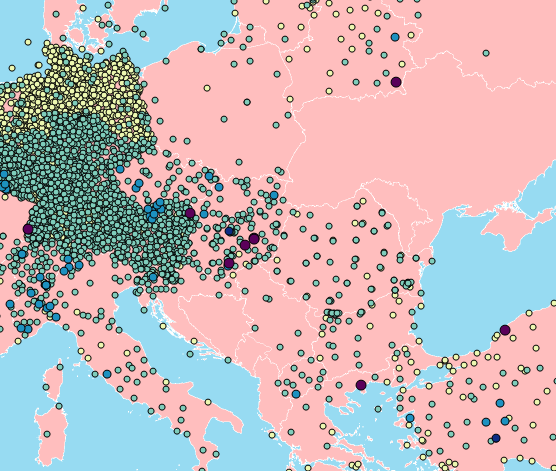
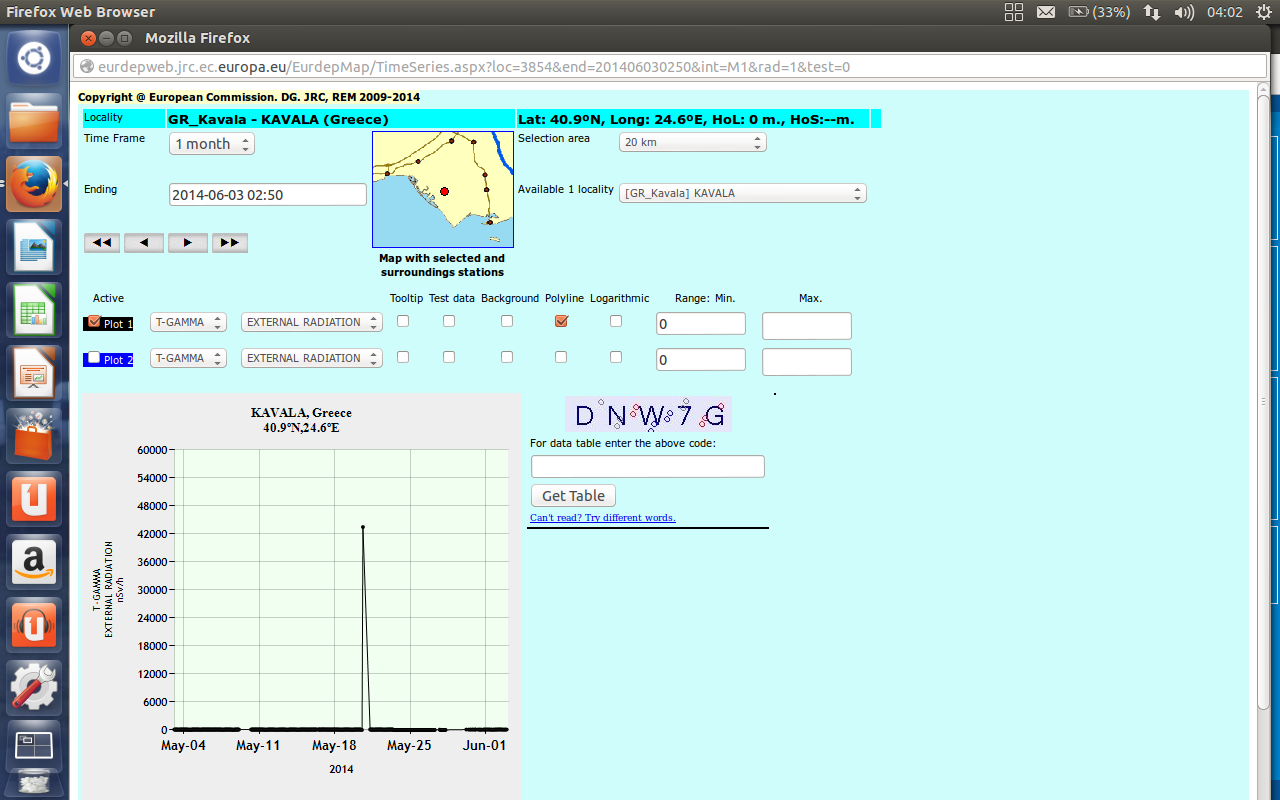
Today I looked at EURDEP radiation mapping and got an interesting surprise. Belarus came up as having a high reading but when i tried to access the data there was nothing there. Usually Belarus does not have its radiation mapping available on EURDEP but this last month of May it did. The reason for this might be that an incident occoured at the Chernobyl site and that the emergency mapping was switched on so that various radiological organisations and emergency services would be able to use it.
It is likely that the incident is now past but it might be worth noting that a well publicised international hockey match was being played in May. In fact anti nuclear and democratic activists were rounded up and imprisoned as early as April. Of course this would mean that an international consensus of nuclear organisations let this hockey match go on even though a radiological incident was underway.
If there was an incident it might explain the delay in construction of the sarcophagus as a clean up would have to be done before construction resumed.
Of course you might want to wonder what evidence there is for this.
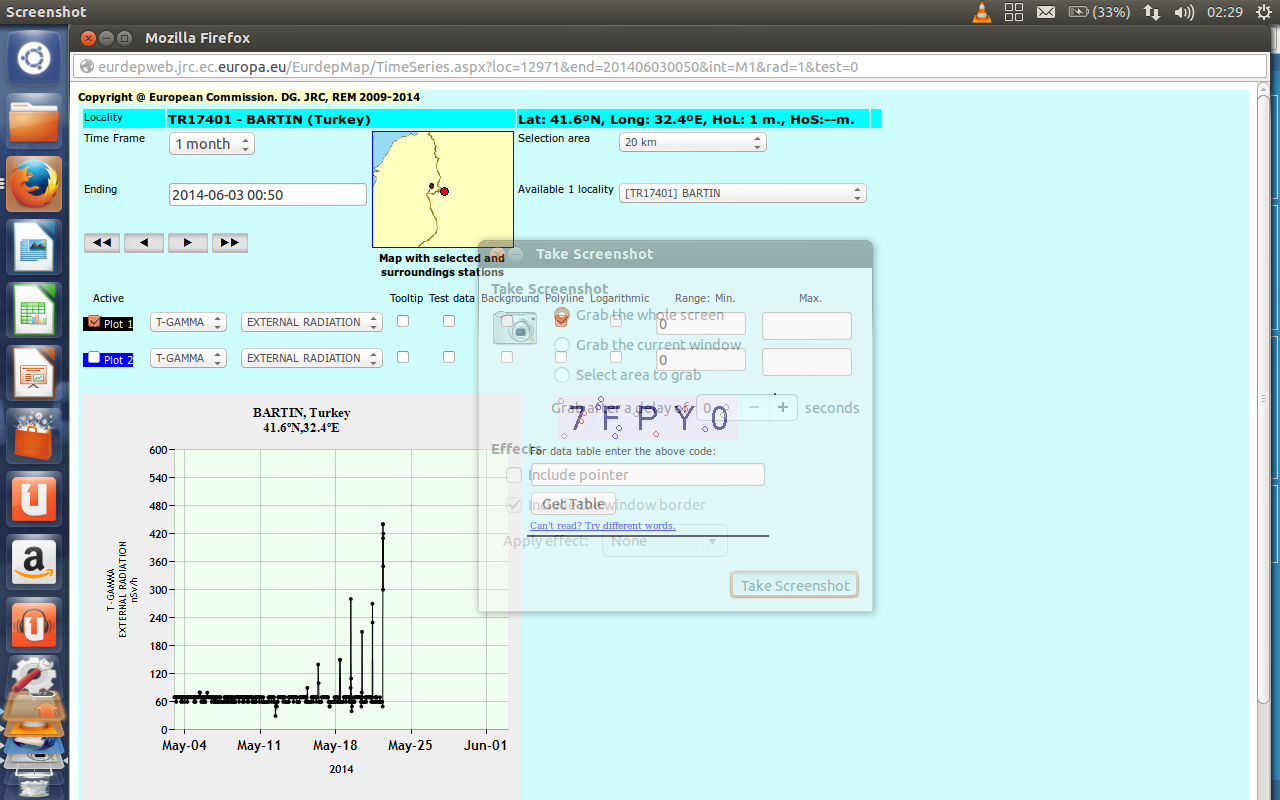
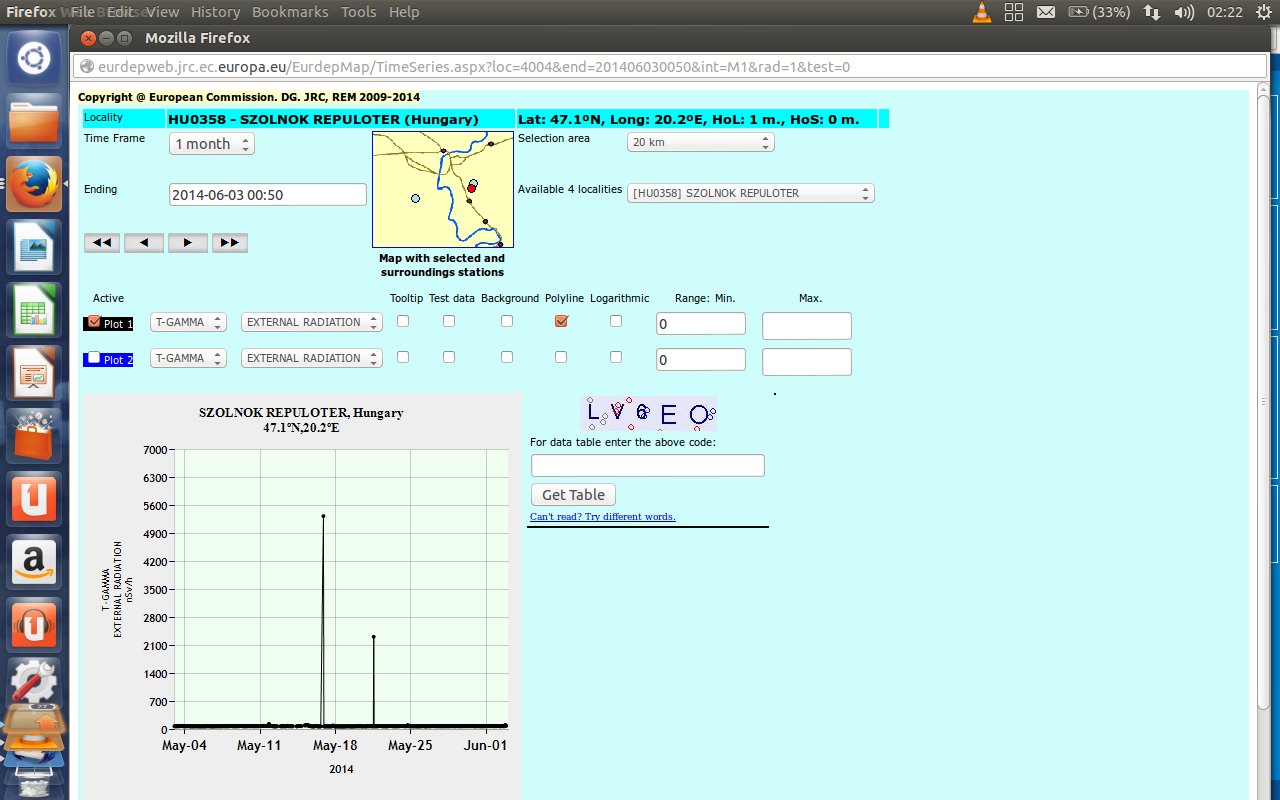
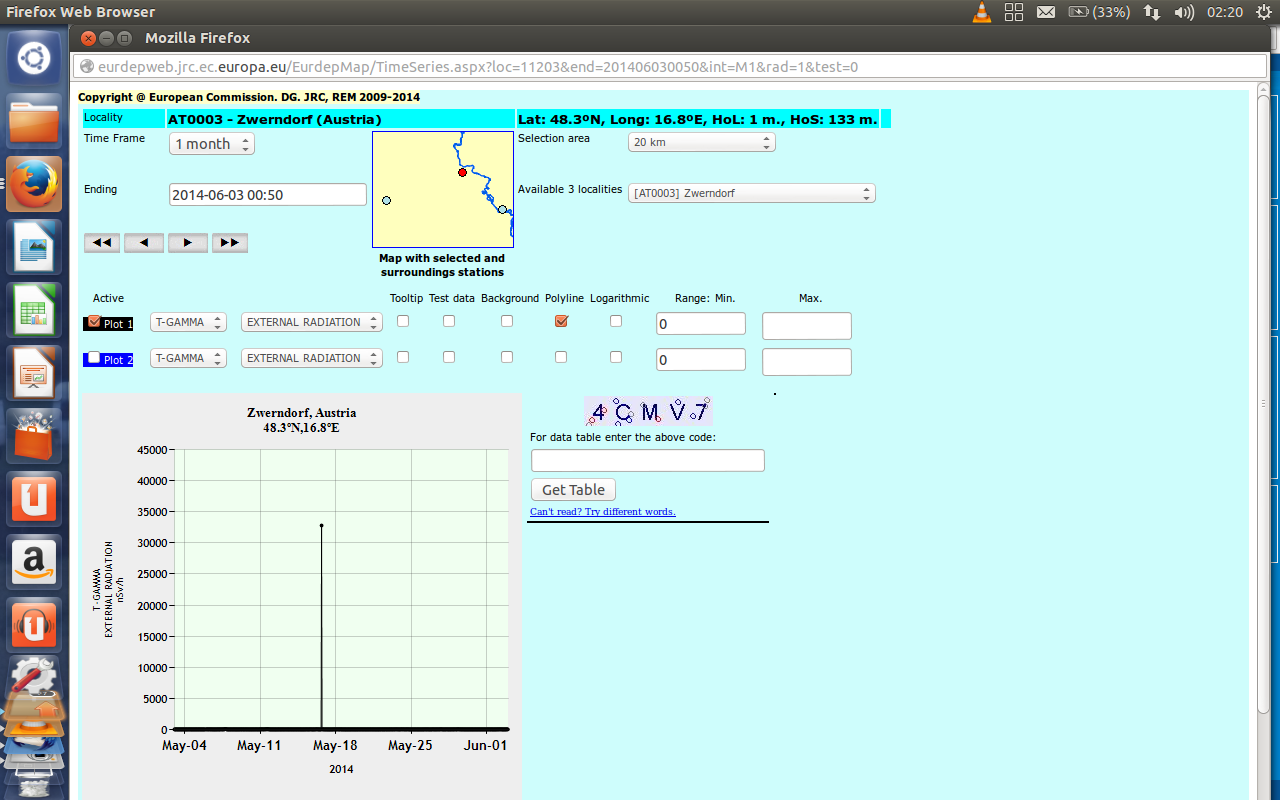
Firstly, other odd monitoring sites around eastern Europe such as in Austria, Greece and Hungary showed high peaks in mid May and about a week later. On the northern border of the Black Sea another monitoring site in Turkey showed very high peaks. Also in eastern France.
Secondly, all the monitoring sites in Belarus that were switched on had the data stripped. This is because there is a parallel monitoring server with more detail run by the IAEA and associates and the EURDEP public monitoring map is only for the emergency services.
I might point out that the IAEA usually asks monitoring station operators to delete these spikes in radiation as NORM or normal radiation. Some monitors such as the UK comply and some such as Ireland leave a gap and a few others leave the spikes. (In fact the east coast of ireland had on such incident a few days ago but it does no show up on the UK monitors across the channel where the radiation was likely to have come from)
Setting the map from 1 month to 1 week and looking at the Belarus section of EURDEP I could see that the “purple spot” disappeared which allowed me to ascertain that no high peaks were seen by the system, so the spot could relate to the other peaks around the eastern end of Europe.
Questions remain of course and as their is a severe lack of transparency in the nuclear industry as it tries to resalvage its losses since the triple nuclear meltdowns in Fukushima in Japan where bad news comes out weekly if not daily even though the government has threatened up to ten year prison sentences and other punitive actions to those that release this information to the outside world. There are many similarities to Japan and Belarus as both are using dictatorial laws to repress dissent with the blessings of the international community of corporations.
As an aside there are no radiations available from Ukraine and that is a country that might get severely hit by a major release from Belarus. I also wonder if the Russian troop pullback from the Ukrainian border might have been to protect the Russian troops from fallout contamination (if the incident is on going).
There is much conjecture in my above posit I admit but I was struck with the way everything connected and thought i would share my thoughts with you all. Below is some screenshots that i compiled and i will leave a link so you can play with the EURDEP mapping system your selves to see what posits you might come up with.
Finally, it is interesting that if there has been an incident in the Chernobyl work site or other that no one has been told about it. A complete lack of transparency exists and the public is denied the right to know. Some food for thought for those countries deciding on nuclear energy as a way to get” cheap” and “safe” electricity. If a bird hits a wind turbine we are told about it, if a nuclear accident or incident occurs we are not!
Link to the EURDEP public and emergency services mapping system:
(Click on “I agree” set the dropdowns to |”maximum” and 1 month to see the purple dots appear. Right click the mouse until you see the hand, then narrow in on any areas of interest by scrolling the mouse and then click on the monitoring post that you are interested in. There are drop downs on the page that comes up with the chart. I would recommend ” ticking “polyline” to clearly see the peaks).
Measurements in nano sieverts per hour (nSv/h).. move decimal point over to left by 3 decimal places to convert to microsieverts per hour (mcSv/h).
The president of the federal commission in charge of monitoring radiation, which was not informed of the incident, said the various authorities had made a “mistake”.
A highly radioactive substance, emitting in some places radiation 100 times the permitted amount, has been discovered in Switzerland, local media reported, saying the hazard was known about for 18 months.
Le Matin Dimanche and Sonntags Zeitung reported on Sunday that federal, regional and local officials decided not to reveal the discovery of radium in an old dump in the town of Bienne in case it scared the 50,000 residents.
“120kg of radioactive waste was obtained after sorting. We measured doses of several hundred microsieverts at the source,” Daniel Dauwalder, a spokesman for the Swiss federal office for public health, told Le Matin Dimanche.
In certain places, measurements of 300 microsieverts per hour were taken, more than 100 times the permitted amount for an old dump, the newspapers reported.
Anyone exposed for three hours would absorb the equivalent of a year’s permitted dose.
The waste came from a paint used by the watch-making industry to illuminate the numbers on watch faces.
The substance, which has been banned since 1963 due to its radioactive nature, was discovered when roadworks were started at the site.
The OFSP judged the risk to public health “weak”, although Sonntags Zeitung said that tests on the water table would begin next month.
The president of the federal commission in charge of monitoring radiation, which was not informed of the incident, said the various authorities had made a “mistake”.
“This will all come back to bite us and it is much more difficult to stay credible and win back the public’s trust,” Francois Bochud told Le Matin Dimanche.
Please share this Japanese documentary, chronicling the story of Vermont’s citizens and state government to shut down the Vermont Yankee nuclear power plant, with all of your Japanese friends and colleagues. It features Fairewinds’ Arnie Gundersen:

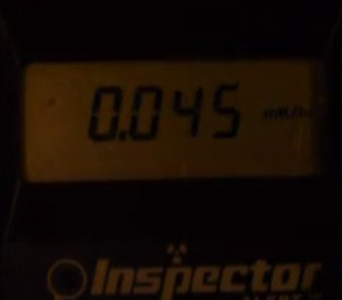
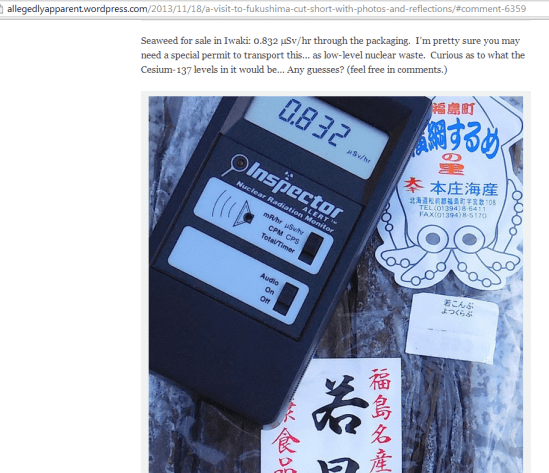
 Image source ;











 nuclear-news