[BEIJING] China is willing to discuss”possibilities” with India on its bid to become a fully fledged member of the Nuclear Suppliers Group (NSG), a senior Chinese diplomat said on Monday, holding out an olive branch ahead of a summit in India.
India last month said it had held “substantive” talks with China on its attempt to join the NSG, a 48-member grouping of countries that trades in civil nuclear technology.
Indian Prime Minister Narendra Modi is campaigning to join the NSG to back a multi-billion-dollar drive to build nuclear power plants in partnership with Russia, the United States and France, and reduce India’s reliance on polluting fossil fuels.
Yet his bid to win accession to the group, founded in response to India’s first atomic weapons test in 1974, has failed to win over strategic rival China, which enjoys a de facto veto because it operates by consensus.
Speaking to reporters ahead of a visit to India this week by Chinese President Xi Jinping for a summit of the Brics group of emerging nations, Vice Foreign Minister Li Baodong said new NSG members needed to be agreed upon by all existing members.
“On the issue of joining the NSG, China and India have all along had very good communications, and (China) is willing to have further communications with the Indian side, to increase consensus,” he said.
“On this, China is willing to jointly explore all kinds of possibilities with India, but this must accord with the charter of the NSG, and certain rules need to be respected by all sides,” Mr Li said, without elaborating.
The nuclear Non-Proliferation Treaty (NPT) recognises the five permanent members of the United Nations Security Council – the United States, Russia, China, Britain and France – as nuclear weapons powers but not others.
India has ruled out signing the NPT but says its track record of non-proliferation should entitle it to join the Nuclear Suppliers Group.
India was granted an NSG waiver in 2008 that allows it to engage in nuclear commerce, but deprives it of a vote in the organisation’s decision making.
Backers of India’s NSG bid, who include the United States, hope a deal can be reached despite a setback at the group’s annual meeting in Seoul in June.
Mr Xi will also visit Bangladesh and Cambodia on his Asian trip.
The Brics group of emerging nations include Brazil, Russia, India, China and South Africa.
REUTERS
http://www.businesstimes.com.sg/energy-commodities/china-says-willing-to-discuss-possibilities-with-india-on-nuclear-group/
February 5, 2017
Posted by arclight2011part2 |
Uncategorized |
Leave a comment

Kingdom is now ready to roll out robust plans to develop nascent solar and wind power capabilities that could have far-reaching effects.
http://www.thearabweekly.com/Economy/7767/Saudis-take-new-interest-in-renewable-energy
2017/02/05 by Jareer Elass
Washington – Plans to develop renewable energy sources in Saudi Arabia are gaining new life as part of Saudi Vision 2030, the massive economic revamping brainchild of Saudi Deputy Crown Prince Mohammed bin Salman bin Abdulaziz.
Fledgling efforts during former King Abdullah bin Abdulaziz Al Saud’s era began six years before he was installed in office. With King Fahd’s incapacitating illness, Crown Prince Abdullah’s role to introduce renewables, such as solar and wind power, were moving at a snail’s pace. They were effectively put on hold in the first two years of King Salman bin Abdulaziz Al Saud’s reign as the kingdom prioritised making fundamental changes to how the Saudi government works and shifting its oil-centric economy towards a more diversified one with an enhanced private sector.
The kingdom is now ready to roll out robust plans to develop nascent solar and wind power capabilities that could have far-reaching effects outside its borders.
In mid-January, Saudi Oil Minister Khalid al-Falih announced that the government was weeks away from introducing a renewable energy programme that would involve investment of $30 billion-$50 billion by 2023. Falih said the first round of bidding for projects under the programme would begin within weeks. The first tender is reportedly for 400 megawatts (MW) of wind capacity and 300MW of solar capacity, valued at $700 million.
Saudi Arabia’s domestic power demand is growing 8% each year and the kingdom burns as much crude oil products as it does natural gas to generate electricity. The Saudis are thus motivated to develop renewables and other energy sources so as to not lose potential export revenue from crude that is currently used to meet domestic consumption.
Unwilling to assume the full financial burden that these energy projects will require, the Saudi government wants to work with domestic and foreign firms that will take on much of the cost and risk.
When Saudi Vision 2030 was unveiled last April, it pointed to renewable energy as an essential component of the diversification away from an oil-dependent economy. The 5-year National Transformation Programme (NTP) announced in June established a target of 3.45 gigawatts (GW) — 4% of total power consumption — from renewable energy by 2023, though Saudi Aramco recently stated that the 3.45GW goal was being accelerated to 2020.
The kingdom generates less than 1% of its total energy from renewable energy. In May 2012, the King Abdullah City for Atomic and Renewable Energy announced its plan to install 41GW of solar power by 2032, which was considered far-fetched given that the kingdom was essentially starting from scratch. In January 2015, it pushed back that timeframe from 2032 to 2040. It is unclear whether that 41GW target for 2040 is still in play in the latest plans that have been announced.
King Salman’s government says the effects of cultivating Saudi solar and wind power can extend beyond the kingdom’s borders and benefit not only the government’s coffers but meet the electricity needs of other regions. Speaking January 20th at the World Economic Forum in Davos, Switzerland, Falih suggested that Saudi Arabia could become a “major exporter” of renewable energy, saying, “solar that is produced in Saudi Arabia can be exported all the way to Europe through a network”.
Speaking at an energy conference in Abu Dhabi a few days earlier, Falih pointed to Africa as a potential recipient of Saudi renewable energy, saying that the kingdom was developing ways to connect its renewable energy projects with Yemen, Egypt and Jordan. The Saudi government hopes not only to export power from its renewable energy sources but also supply other regions with solar panels and wind turbines.
The Saudi government, Falih said, is also planning to make “significant investment in nuclear energy”. He said the government was in the early stages of feasibility and design studies for the construction of two commercial nuclear reactors that together would produce 2.8GW. Although Saudi Arabia has in recent years signed a number of nuclear energy cooperation accords with other governments, agreements with France, South Korea and Russia go further by including feasibility studies for atomic power plants and fuel cycle work in the kingdom.
In 2011, King Abdullah City for Atomic and Renewable Energy announced its intention to build 16 nuclear power reactors by 2032 to produce up to 17.6GW of power. It estimated that the cost of constructing that number of nuclear plants would be $80 billion and Saudi Arabia’s recent financial constraints have dampened momentum on making that type of commitment.
King Salman’s government has not indicated whether it is sticking to the proposed schedule and nuclear power generation target. It is also unclear how much of a stake the Saudis would allow private domestic firms or foreign state companies in partial ownership of the nuclear power facilities.
February 5, 2017
Posted by arclight2011part2 |
Uncategorized |
Leave a comment
Jared Anderson
Feb 3, 2017
The local communities that will be most impacted when the Indian Point nuclear power plant closes in five years have been left with few answers regarding several critical issues including tax stabilization, job losses and environmental concerns. The Town of Cortlandt and local villages were blindsided by last month’s announcement that the plant would close more than a decade earlier than planned, and NY Governor Cuomo’s office has yet to present an action plan to address detrimental impacts to residents and businesses.
Town of Cortlandt Supervisor Linda Puglisi and Hendrick Hudson School District Superintendent Joe Hochreiter have expressed continued disappointment at not being given advanced notice about losing the largest tax payer in the area. “The Entergy [plant owner] CEO just told us that they needed to keep it confidential, not an adequate response to us since we are the main stakeholders,” Ms. Puglisi said in a statement.
Indian Point has the capacity to generate about 2,000 megawatts of electricity – about 25% of the power consumed by New York City and Westchester County – and employs 1,200 permanent workers, along with hundreds of contractors and part-time employees. The loss of these jobs will have knock-on effects for local businesses.
http://www.forbes.com/sites/jaredanderson/2017/02/03/indian-point-nuclear-plant-closure-leaves-locals-scrambling-to-deal-with-major-economic-loss/#1a3688922088
Continue reading →
February 3, 2017
Posted by arclight2011part2 |
Uncategorized |
Leave a comment
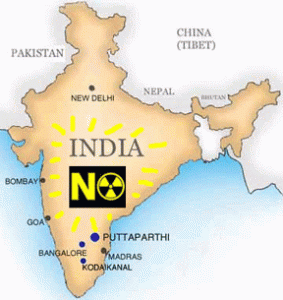
Toshiba – OUT OF INDIA
In India, Westinghouse has also been in talks with state-owned Nuclear Power Corporation of India about a contract to build six AP1000s, a project strongly backed by both Prime Minister Narendra Modi and former US President Barack Obama.
The three sources said that was now almost impossible.
“The Indian government was happy to have one sole counterpart, but this cannot continue,” the first source said, adding that either an Indian civil engineering group or a foreign, possibly American, group would have to step in to negotiate, oversee and eventually finance the project.
Westinghouse would instead just provide nuclear equipment, the source said.
Representatives for India’s state-run nuclear body and the Ministry of External Affairs did not immediately respond to requests for comment.
Westinghouse has traditionally been a builder of nuclear reactors, not entire nuclear power plants including steam turbines, generators and transformers.
But as tightening safety regulations following Fukushima made building nuclear plants more expensive, nuclear reactor builders and their shareholders have been increasingly forced to take on the civil engineering side too.
The source said Westinghouse will return to its roots as a nuclear specialist, while Toshiba will stop taking on projects to build entire nuclear plants just so that Westinghouse can sell its AP1000 reactors.
“Toshiba will withdraw from being a general contractor for nuclear plants,” the source said.
http://energy.economictimes.indiatimes.com/news/power/battered-toshiba-seeks-exit-from-uk-india-in-nuclear-retreat-sources/56962319
February 3, 2017
Posted by arclight2011part2 |
Uncategorized |
1 Comment
Decades after a uranium mine is shuttered, the radioactive element can still persist in groundwater at the site, despite cleanup efforts.
February 2, 2017
https://www6.slac.stanford.edu/news/2017-02-02-slac-study-helps-explain-why-uranium-persists-groundwater-former-mining-sites.aspx
A recent study led by scientists at the Department of Energy’s SLAC National Accelerator Laboratory helps describe how the contaminant cycles through the environment at former uranium mining sites and why it can be difficult to remove. Contrary to assumptions that have been used for modeling uranium behavior, researchers found the contaminant binds to organic matter in sediments. The findings provide more accurate information for monitoring and remediation at the sites.
The results were published in the Proceedings of the National Academy of Sciences.
In 2014, researchers at SLAC’s Stanford Synchrotron Radiation Lightsource (SSRL) began collaborating with the DOE Office of Legacy Management, which handles contaminated sites associated with the legacy of DOE’s nuclear energy and weapons production activities. Through projects associated with the Uranium Mill Tailings Radiation Control Act, the DOE remediated 22 sites in Colorado, Wyoming and New Mexico where uranium had been extracted and processed during the 1940s to 1970s.
Uranium was removed from the sites as part of the cleanup process, and the former mines and waste piles were capped more than two decades ago. Remaining uranium deep in the subsurface under the capped waste piles was expected to leave these sites due to natural groundwater flow. However, uranium has persisted at elevated levels in nearby groundwater much longer than predicted by scientific modeling.
In an earlier study, the SLAC team discovered that uranium accumulates in the low-oxygen sediments near one of the waste sites in the upper Colorado River basin. These deposits contain high levels of organic matter—such as plant debris and bacterial communities.
During this latest study, the researchers found the dominant form of uranium in the sediments, known as tetravalent uranium, binds to organic matter and clays in the sediments. This makes it more likely to persist at the sites. The result conflicted with current models used to predict movement and longevity of uranium in sediments, which assumed that it formed an insoluble mineral called uraninite.
Different chemical forms of the element vary widely in how mobile they are—how readily they move around—in water, says Sharon Bone, lead author on the paper and a postdoctoral researcher at SSRL, a DOE Office of Science User Facility.
Since the uranium is bound to organic matter in sediments, it is immobile under certain conditions. Tetravalent uranium may become mobile when the water table drops and oxygen from the air enters spaces in the sediment that were formerly filled with water, particularly if the uranium is bound to organic matter in sediments rather than being stored in insoluble minerals.
“Either you want the uranium to be soluble and completely flushed out by the groundwater, or you just want the uranium to remain in the sediments and stay out of the groundwater,” Bone says. “But under fluctuating seasonal conditions, neither happens completely.”
This cycling in the aquifer may result in the persistent plumes of uranium contamination found in groundwater, something that wasn’t captured by earlier modeling efforts.
“For the most part, uranium contamination has only been looked at in very simple model systems in laboratories,” Bone says. “One big advancement is that we are now looking at uranium in its native environmental form in sediments. These dynamics are complicated, and this research will allow us to make field-relevant modeling predictions.”
The study combined the expertise of researchers at SLAC, Pacific Northwest National Laboratory and the Canadian Light Source. The research team used a blend of techniques to analyze samples of sediments in the experiment. They performed X-ray spectroscopy at SSRL to identify the chemical form of uranium. Capabilities at the Canadian Light Source and at the Environmental Molecular Science Laboratory (EMSL) at Pacific Northwest National Laboratory were used to map the locations of the elements in the samples at the nanometer scale. This additional information allowed the researchers to determine whether or not the uranium was bound to carbon-containing, or organic, materials. SSRL and EMSL are DOE Office of Science User Facilities.
The DOE Office of Science funded the project.
Citation: Bone et al., Proceedings of the National Academy of Sciences, 09 January 2017 (doi: 10.1073/pnas.1611918114)
For questions or comments, contact the SLAC Office of Communications at communications@slac.stanford.edu.
SLAC is a multi-program laboratory exploring frontier questions in photon science, astrophysics, particle physics and accelerator research. Located in Menlo Park, Calif., SLAC is operated by Stanford University for the U.S. Department of Energy’s Office of Science.
SLAC National Accelerator Laboratory is supported by the Office of Science of the U.S. Department of Energy. The Office of Science is the single largest supporter of basic research in the physical sciences in the United States, and is working to address some of the most pressing challenges of our time. For more information, please visit science.energy.gov.
February 3, 2017
Posted by arclight2011part2 |
Uncategorized |
Leave a comment

03 February 2017
http://www.world-nuclear-news.org/NN-Putin-Russia-ready-to-fund-entire-Paks-II-project-03021703.html
Russia is prepared to provide all of the funding required for Hungary’s Paks nuclear power plant expansion project, President Vladimir Putin told journalists in Budapest yesterday, following talks with Hungarian Prime Minister Viktor Orban. A transcript of the press briefing was posted on the Russian presidential website.
An inter-governmental agreement signed in early 2014 would see Russian enterprises and their international sub-contractors supply two new units at Paks – VVER-1200 reactors – as well as a Russian state loan of up to €10.0 billion ($11.2 billion) to finance 80% of the project.
“The project costs €12 billion, 80% of which was supposed to come from a Russian loan. I apprised the prime minister of other options. We are prepared to finance 100% of it, but then the terms and conditions of the agreement should be slightly different. We can do this as well,” Putin said, according to the transcript.
The project will create 10,000 “new well-paid high-tech jobs”, he said, adding it would improve Hungary’s energy security and help grow its economy.
Russia places “great importance”, he said, on the Paks II construction project, which is being managed by state nuclear corporation Rosatom.
Paks currently comprises four Russian-supplied VVER-440 pressurized water reactors, which started up between 1982 and 1987.
The existing Paks plant “has been operating for a long time in Hungary”, he said, “and today produces close to 40% of all electricity produced in that country”.
The launch of the two new units will “make it possible to double electricity production and satisfy the demand for electricity that is essential in order to develop new production facilities in Hungary”, he added.
The European Commission cleared Hungary’s award of a contract to Rosatom to build the two new units at Paks in November last year. It had been examining until recently two matters related to Paks II – procurement and whether funding of the project amounts to state aid. On 17 November, it closed the infringement procedure it had launched against Hungary over public procurement rules in connection with the project, but it is still investigating whether there is state aid.
Orban referred to the remaining EU approval required for the project.
“One issue remains open and we are waiting for an EU decision on it. We are convinced that our agreements are fully in compliance with EU requirements and we very much hope that this year we will be able to begin preparations and go ahead with construction in 2018,” he said.
“We are waiting for the construction work to finally begin, because what kind of nuclear power station is it that everyone is talking about but no one has seen? They haven’t even dug the first hole yet. We are waiting for work to start.”
But Orban also said that a review of the 2014 intergovernmental agreement “is not currently on the agenda”.
He added: “We want to go ahead with what President Putin and I signed previously.”
Project company MVM Paks II received an environmental licence in late September and in October submitted a site licence application for the two new units.
Researched and written
by World Nuclear News
February 3, 2017
Posted by arclight2011part2 |
Uncategorized |
Leave a comment
Peter Fabricius | Fin24
http://m.fin24.com/fin24/Economy/frances-trump-card-to-win-sas-nuclear-deal-20170203-2
Pretoria – France has a “trump card” up its sleeve to help South Africa afford the planned giant nuclear power plant project – and therefore to help France win the bid.
Visiting French Minister of Economy and Finance Michel Sapin met his SA counterpart Pravin Gordhan on Friday.
He explained to Gordhan that “France has the capacity to finance and bring guarantees to the financing of this [nuclear] project.”
Sapin was asked at a press conference if Gordhan had told him that the fleet of reactors – which could be as many as six and could cost at least one trillion rand – was affordable.
Gordhan is believed to have strong reservations about the affordability of the project and this is thought to be a major bone of contention between him and President Jacob Zuma.
Sapin said it was legitimate that the SA government was asking questions about the affordability of the project. But if one assessed electricity consumption in the country it was clear there would be a need for more electricity in coming years.
The SA government had told him several companies had the capacity to answer the government’s “request for information” and its “request for proposals” to build the power plants.
He said he had reminded the SA government of the quality and the know-how of the French companies in nuclear energy sector.
“I explained to the minister that France has the capacity to finance and bring guarantees to the financing of this project. There are several important aspects of the French offer, its technical quality and also the way the French offer will fit into the South African socio-economic balance, and how it will respond to the needs of South Africa.”
He added that he had asked Gordhan to maintain “full transparency on the process” with France.
“France is not afraid of competition and is not afraid of transparency. The best for South Africa should win. And we have trump cards up our sleeve to be able to meet those challenges.”
Sapin’s request to Gordhan seemed to refer to the persistent rumours in South Africa that Zuma had already given the nuclear contract to Russia and that his government is just going through the motions of requesting bids from other countries.
But Sapin said he believed the competition for the contract was still open and still at the very beginning and that it would be fair.
He also explained that the two French companies involved in the bid, EDF (Electricité de France) and Areva, who were working on the project together, had not yet responded to the SA government’s request for information because the deadline for doing so had not yet expired. “But they will. And they have the will to win the contest.”
February 3, 2017
Posted by arclight2011part2 |
Uncategorized |
Leave a comment
Francois de Beaupuy
February 3, 2017, 6:25 pm
http://www.bloombergquint.com/business/2017/02/03/france-s-next-president-said-to-face-3-billion-nuclear-hangover
(Bloomberg) — Whoever succeeds Francois Hollande as France’s president may find one of their first tasks in office will be selling off some of the nation’s prized assets to prop up the state’s nuclear industry.
That’s because the government is as much as 3 billion euros ($3.2 billion) short of the 7.5 billion euros it has said it needs this year to fix the financial problems of Areva SA and Electricite de France SA, said two government officials with direct knowledge of the matter. Hollande will try to find an answer before he leaves office in June, one of the people said. If he can’t, his successor must decide how to plug the gap, said the other person.
France is preparing to rescue its nuclear industry after EDF was weakened by falling European power prices and Areva lost billions on a long-delayed project in Finland. The president must either increase the national debt or weigh politically sensitive privatizations of holdings in anything from automakers such as Renault SA to the former phone monopoly — a tall order with the first round of presidential elections just three months away.
“It’s not that simple to raise these funds, either because of market conditions or for strategic or social reasons,” said Senator Maurice Vincent, a member of the ruling Socialist Party who sits on the finance committee. “Half of the holdings are in the depressed energy sector which needs to be bailed out, and a quarter is in the defense sector where you have limited divestment leeway, so that doesn’t leave much wiggle room.”

While the government has enough in its privatization account for the 3 billion-euro stimulus it plans for EDF this quarter, it remains almost 3 billion euros short of the 4.5 billion euros it wants to help its near-bankrupt reactor maker, Areva, complete its restructuring and meet debt repayments this year, said the officials. Areva shareholders on Friday voted in favor of a 5 billion-euro state-backed bailout, which includes 500 million euros from Japanese investors.
France depends on nuclear reactors for about three-quarters of its electricity, and the two state-controlled companies were supposed to be leading the charge to export the technology around the world. All three leading presidential candidates have said they will support the nuclear industry, at least in the medium term, as the best guarantee of energy security and a low-carbon future.
Hollande’s spokesman didn’t answer messages seeking comment for this story. Representatives of Francois Fillon, the Republican Party candidate, Socialist Benoit Hamon and Emmanuel Macron, an independent, also declined to comment.
Marine Le Pen of the National Front wouldn’t sell state assets but instead ask state-controlled Caisse des Depots et Consignations to invest in Areva, her economic adviser Bernard Monod said in a text message.
The winner of the election runoff due May 7 faces a difficult choice between increasing the national debt or selling stakes in public companies, valued at a total of about 90 billion euros. While the government owns a piece of everything from the postal service to carmakers Renault and PSA Group, manufacturer of Citroen and Peugeot, its privatization options are constrained by shareholder pacts, politics and the financial circumstances of some of the companies.
Those holdings include an 11 percent stake in aircraft maker Airbus, which can’t be reduced without ceding some control to Germany, and a 26 percent stake in defense company Thales SA, which is bound by a shareholders’ pact with Dassault Aviation.
Similarly the government has been reluctant to sell down its stake in former phone monopoly Orange SA and would face obstacles to selling shares in airplane-engine maker Safran SA because of a pending deal.
In its haste to raise money, the government sold a stake in energy group Engie SA for 1.14 billion euros last month when the shares were near an all-time low. The state retains about 29 percent of Engie, but now “is the worst moment to sell,” said Regis Turrini, who ran the agency that manages government holdings in public companies from 2014 to 2015.
Hollande had pledged to reduce the government holding in Renault SA to about 15 percent from 19.7 percent. However, Renault’s share price remains lower than when the president increased the government’s stake in 2015.
A potentially more lucrative sale would be a 13.7 percent stake in Peugeot, but Hollande, who came to the rescue of Peugeot by buying an 800 million-euro stake in 2014, is unlikely to abandon the carmaker to market forces just before an election. On a visit to a factory last month, he promised not to sell the shares.
“Choices made by the state are sometimes curious,” said Herve Mariton, a Republican party lawmaker who also sits on the finance committee. “It’s selling Engie shares at a very low level, and taking a doctrinaire stance on Peugeot, which is a good candidate for divestment.”
Bloomberg
February 3, 2017
Posted by arclight2011part2 |
Uncategorized |
Leave a comment

[2/3/17] SPUTNIK– The US National Nuclear Security Administration (NNSA) is unable to quantify the results of $1 billion spent on projects to prevent nuclear proliferation during a four-year period ending in 2015, the General Accountability Office (GAO) said in an audit report on Friday.
The audit examined 88 projects in foreign countries, including 17 that resulted in transferring technology such as a uranium enrichment monitoring tool that is used in Iran, the report stated.
“By not consistently tracking and documenting technology transition and deployment outcomes, NNSA is unable to demonstrate the full results of its projects,” a press release explaining the report stated.
The audit also examined software used to analyze nuclear detonations, according to the report.
https://sputniknews.com/us/201702031050328095-us-nuclear-agency-investment/
February 3, 2017
Posted by arclight2011part2 |
Uncategorized |
1 Comment

According to the budget papers presented in the Lok Sabha on Wednesday, the government may have to allocate $80 million (Rs 544 crore approximately) for setting up of the fifth and sixth 1,000 MW nuclear power plant with Russian technology at Kudankulam in Tamil Nadu.
Already two 1,000 MW units have been set up at Kudankulam and construction work for two more similar units have begun. A total of six 1,000 MW units are planned at Kudankulam and will be owned by Nuclear Power Corporation of India Ltd (NPCIL).
Meanwhile NPCIL has been requested to prepare detailed project report (DPR) for setting up of 10 units of 700 MW Pressurised Heavy Water Reactors over the next 10-15 years.
IANS
– See more at: http://news24online.com/rs-544-cr-may-be-allocated-for-nuclear-units-87/#sthash.43ywJ7WH.dpuf
After getting a firm commitment of Rs 3,000 crore allocation over the next two decades for atomic power projects in the last Union Budget, the nuclear power sector is not expecting anything new in the upcoming 2017-18 budget, said the Atomic Energy Commission chief.
Chennai:
February 2, 2017
Posted by arclight2011part2 |
Uncategorized |
Leave a comment

PARIS (Reuters) – China National Nuclear Corporation (CNNC) has decided against taking a stake in the capital increase and restructuring of French nuclear group Areva, a source close to the discussions said on Tuesday.
http://finance.yahoo.com/news/china-decides-against-taking-stake-080252294.html
“The talks did not work out with the Chinese,” the source said.
Officials at the French Economy Ministry could not be immediately reached for comment on the move, which was first reported by the broadcaster BFM Business. BFM said negotiators had been reluctant to grant the Chinese a seat on the board.
Earlier this month, France said it would buy out minority shareholders in Areva and delist the troubled nuclear group, as talks with potential investors in a new nuclear fuel company being spun out of Areva neared a conclusion.
The state, which owns 87 percent of Areva, said it would offer 4.5 euros per Areva SA share to minority investors which include Kuwait’s investment fund, French utility EDF and French energy group Total.
Japan’s Mitsubishi Heavy Industries and JNFL have also been looking into taking a stake in Areva.
EDF and Areva needed to bring in foreign investors in order to secure the approval of the European Commission under its state aid regulations.
(Reporting by Jean-Michel Belot, Matthieu Protard and Sudip Kar-Gupta; editing by Michel Rose)
February 2, 2017
Posted by arclight2011part2 |
Uncategorized |
Leave a comment
The Swiss people will go to the polls on May 21st to decide whether the government’s ‘energy strategy 2050’ should go ahead.
The policy, which will instigate a gradual withdrawal from nuclear power in favour of renewable resources, is opposed by the right-wing Swiss People’s Party (SVP) which in October launched a campaign to gather enough signatures to force a referendum on the matter.
On Tuesday the government confirmed that the SVP had gathered 68,390 valid signatures, well over the necessary threshold of 50,000,
reported news agencies.
Consequently, in May the Swiss people will get the chance to have their say on the government’s energy plans.
The
Energy Strategy 2050 was devised following the Fukushima nuclear disaster in 2011 and is spearheaded by energy minister and current Swiss President Doris Leuthard.
Under the plans no new nuclear power plants will be built in Switzerland and the five that do exist – including the world’s oldest operating reactor, Beznau I – will be decommissioned at the end of their technically safe operating life.
The strategy will also see a new focus on exploiting hydropower and other renewable resources such as wind and solar power, measures which require changes to the existing energy law.
Writing on its
campaign website the SVP-led alliance against the strategy said Switzerland’s current energy provision was efficient and proven, and that the government’s plans were “a utopian, dangerous and excessive project”.
Renewable sources would never produce enough reliable energy at a cost-effective price to enable the country to abandon nuclear power, it added.
Last November t
he Swiss voted against a more extreme plan, backed by the Green Party but opposed by the government, which would have seen some of Switzerland’s nuclear power plants shut down as soon as this year.
The government argued that it needed more time to develop renewable energy sources sufficiently to be able to replace nuclear power.
Currently around 39 percent of Switzerland’s electricity needs are met by nuclear power, while 56 percent is generated through hydropower – the country’s most important domestic source of energy.
Historically that figure has been far higher; in the 1970s almost 90 percent of Swiss electricity was produced through hydropower, prior to the construction of most of the country’s nuclear power plants.

February 1, 2017
Posted by arclight2011part2 |
Uncategorized |
Leave a comment
“…..Two main drawbacks have limited its use. 1) Its melting point is substantially higher than sodium. 2) Nickel, a common alloying material in stainless steel, is soluble in hot lead, leading to serious material concerns in a relatively short period of time……..By limiting operating temperature to 450 C the designers are confident that SEALERs using the new alloy will be able to operate reliably for as long as 30 years. That confidence, of course, will be something that LeadCold will have to demonstrate to the satisfaction of the regulatory agency……”
http://www.forbes.com/sites/rodadams/2017/02/01/200-million-more-invested-into-right-sized-advanced-nuclear-power/#16e665523a31
LeadCold and Essel Group ME have announced an agreement for a $200 million (USD) investment to build uranium-fueled power sources. Their systems, trademarked SEALER, are designed to compete with diesel generators to supply dependable power to communities and industries in remote areas of the world.
SEALER (Swedish Advanced Lead Reactor) is a fast spectrum nuclear reactor that uses low enriched uranium oxide fuel (19.5%) cooled by molten lead.
The companies involved describe their agreement as enabling “…LeadCold to license and construct the first privately-funded lead-cooled nuclear power plant.”
Who Are These New Players In The North American Advanced Nuclear Industry?
LeadCold is a Swedish-Canadian company spun out of the Royal Institute of Technology (KTH) in Stockholm. VINNOVA (The Swedish Innovation Agency) has been supporting applied science, materials research and systems engineering at KTH for lead-cooled systems since 1996.
That long-term effort resulted in a materials breakthrough that now supports a commercial product development effort. Lead has been an intriguing nuclear plant coolant option since the beginning of the Atomic Age, but it has a few characteristics that have – up to now – limited its utility.
Essel Group ME is a wholly owned subsidiary of Essel Group, a 90-year old multinational conglomerate headquartered in India with a wide array of subsidiary companies that operate in high technology, infrastructure, logistics, media and packaging.
Essel Group ME focuses its investments in subsidiaries companies in natural resources, education, logistics and industrial supply in the Middle East, Europe and Africa.
Their business focus gives them ample opportunities to experience both the importance of reliable power and the logistical challenge of supplying it to remote areas of the world. They know that electricity often costs ten times as much in a mining outpost in northern Canada or central Africa than it does even in high-cost grid-connected areas.
Why Canada?
Continue reading →
February 1, 2017
Posted by arclight2011part2 |
Uncategorized |
Leave a comment
From Dr Paul Dorfman, University College London, UK
1 Feb 2017
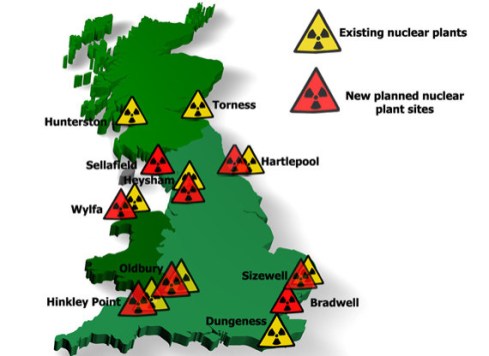
Sir, Tom Greatrex (Letters, January 31) says that the UK quitting the European nuclear safety regime Euratom won’t impact on our nuclear safety. I find it hard to share his optimism. This is because we will not be part of the new EU nuclear accident liability regime — which will be €2.5bn per accident. Given current UK nuclear accident liability cover is a meagre £164m, one wonders how we remain better protected?
https://www.ft.com/content/d3c237b6-e7b5-11e6-893c-082c54a7f539
UK nuclear groups whinging like F&^K!! UK Government tries to defend itself against nuclear compensation claims regardless!
The pro nuclear organisations are panicking and showing symptoms of Brexitphobia (such as whining) as the UK prepares to withdraw from Euratom Treaty and are pulling out all the stops to reverse the situation. In the article below from the Weinberg Next Nuclear Foundation they even claim that leaving Euratom is not necessary even if the UK commits to Brexit. Research foundations and even anti nuclear assessments are included in their press release below.
The question is why is the UK are leaving the treaty? One reason could be that according to the new EU radiation protection legislation just being enacted by the German Government which rolls all the present legislation into one law and next year it will include making parts of the Euratom treaty Legal and binding.
A second point to note is that a new “Medical Physics Expert” (MPE) position has been accepted and that this will be an expert who will have cross boundary recognition which means that a German, Italian etc Expert checking out the UK`s compliance with the provisions of all new EU nuclear regulations (and Vise Versa).
Thirdly by withdrawing from Euratom and the EU, there is another treaty that the UK is being recently queried about called ESPOO (The cross border contamination treaty). The UK is being asked to explain itself by Norway and some other countries in relation to the nuclear reprocessing plant Sellafield and the UK`s new nuclear builds. [ I will leave copy and pastes to the links to the ESPOO treaty regulation and MPE issues under the Weinberg panicking article].
Given all the above it would seem that the UK has some secrets to hide and pulling out of these treaties would be to its advantage (The ESPOO treaty 1991 states that non EU state members need not fulfill the requirements).
When we consider the moves by UK experts to minimise the threat of radiation allowing 100 mSv/y instead of the normal 1 mSv/y because of the risk of legal actions against UK nuclear contaminated sites and interests in Japan (after the Fukushima nuclear disaster in 2011) etc, we should consider this to be a defensive move against litigation, such as the British Nuclear Test Veterans legal challenges where foreign experts were dismissed out of hand by the UK supreme court (The report was released a week before Christmas day) and the same battle is being fought over the increased Thyroid cancer cases in Japan (That the UK experts are supporting the “no damage due to radiation” defense).
It is interesting that the UK will risk research funding for the new reactor in Oxford etc to save itself (and the Japanese government) against the possibility of massive compensation damages. The UK is presently using its expert Geraldine Thomas to reduce the thyroid cancer checks in Fukushima prefecture and stopping the expansion of these tests to surrounding prefectures just when an increase is likely to be found and Japanese experts are rallying against this move by the Japanese and UK government experts. Another one of tne of the defenses for their position is the Radiophobia argument that has been debunked by many independent radation experts in articles and papers (reference WHOi the Independent World health Organisation for instance).
Lastly, the European commission is challenging tender procedures for renewables and gas energy sources and Euratoms right to overide this aspect of EU regulation (reference search terms on Euratom Belarus Hungary commission in the http://www.euractiv.com website for updated information). And of course the EURATOM considerations on health effects is being challenged because of new scientific evidence that has come to light (re-justification of Euratom link below).
Arclight2011 aka Shaun McGee
UK nuclear groups whinging like F&^K!! UK Government tries to defend itself against nuclear compensation claims regardless!
February 1, 2017
Posted by arclight2011part2 |
Uncategorized |
Leave a comment

It is coming up to 31 years since Mordechai Vanunu was dramatically kidnapped in Italy for his part in letting the world know about Isreals nuclear bomb activities. The information was known about by the UK and USA at the very least.
Since then groups like the IAEA have discovered that Isreal will not co-operate on the safety of its nuclear program and a recent push for Isreali transparency on this issue is underway by alternative media.
A recent resolution was beaten back (in December 2015) by pro nuclear countries but the game is on for the IAEA to push for transparency Arclight aka Shaun McGee
Here is a brief plea for help and statement Mordechai made after todays “final”court session in Tel Aviv concerning his bid for freedom and justice;
Nothing Changes,today the court heard my appeal, asking the the 3 judges to intervene to allow me to leave this country.
The israel government via its lawyers repeated the same accusations “that I am a security risk for them because of all the nuclear secrets from 35 years ago”.
The court will make its decision in the coming weeks. No change as I continue to wait for;
Freedom Now!
Time spent in prison and under house arrest 1986-2017 Mordechi Vannunu 30 January 2017 https://www.facebook.com/vanunumordechai?hc_ref=NEWSFEED&fref=nf
Israel Must Now Open Its Nuclear Program to IAEA Inspection, or Face Sanctions
Iran has currently met its obligations to the IAEA under the 2015 US-led agreement with the UN and now IT is the time for Israel to submit its nuclear program to UNSC inspection or face international sanctions. The imperative is for:
1. The Negev Nuclear Research Center at Dimona to be fully opened to inspection by the IAEA and its estimated undeclared stockpile of up to 400 nuclear warheads be put under UN supervision for eventual destruction other than those required for legitimate defence purposes, estimated not to exceed five warheads (5) in total.
2. Israel’s capacity for uranium enrichment to be severely limited for a minimum of 15 years and that all its centrifuges in excess of 5000 to be dismantled under IAEA supervision
3. That all supplies of heavy water be shipped to the US or other approved recipient, apart from the minimum required for legitimate medical isotopes
4. That inspections teams from the IAEA continuously monitor all Israeli nuclear sites and to verify all fissile materials thereupon.
5. That the state of Israel to become a party to the nuclear Non-Proliferation Treaty (NPT) with immediate effect.
The timescale for all such specified actions to be approved by the United Nations Assembly in General Session.
Note
1. http://fas.org/nuke/guide/israel/nuke/farr.htm
The original source of this article is Global Research
Copyright © Anthony Bellchambers, Global Research, 2016
http://www.globalresearch.ca/israel-must-now-open-its-nuclear-program-to-iaea-inspection-or-face-sanctions/5502024
‘Great victory’? Israeli nuclear program resolution voted down by IAEA
Published time: 18 Sep, 2015 00:25
A resolution calling for the inspection of Israeli nuclear sites has been defeated at the IAEA General Conference, with Tel Aviv, which led an intensive campaign against the Arab states’ proposal, hailing the result of the vote as a “great victory” in the international arena.
The International Atomic Energy Agency’s (IAEA) General Conference voted 61-43 against the resolution put forward by Egypt and backed by Turkey, Syria, Iran, Libya, and Iraq, as well as Russia, China. And South Africa.
The resolution called for the international monitoring of the Israeli nuclear reactor in Dimona which is suspected of developing fissile material for Israel’s alleged nuclear arsenal that poses “a permanent threat to peace and security in the region.”
Israel’s long term allies such as the US, some EU members, Australia, Japan South Korea and Canada voted against the motion calling for nuclear inspection. Tel Aviv and pro-Israel states worked endlessly behind the scenes to sway the votes in Israel’s favor on the subject of “Israel’s nuclear capabilities” ahead of the IAEA vote.
https://www.rt.com/news/315787-israel-iaea-nuclear-inspection/
Foreign Ministry bans contact between diplomats, local press
Prohibition issued following leak about Arab states’ decision to refrain from crackdown on Israel’s nuclear program
By Stuart Winer August 18, 2016
…….The prohibition came after Haaretz reported earlier in the day that Arab states were planning, during the upcoming general conference of the International Atomic Energy Agency in September, to refrain from an annual vote on monitoring Israel’s nuclear program.
The information was leaked to Haaretz by Foreign Ministry officials, who put the development down to the recent warming of ties between Israel and Egypt.
According to a senior source in the Foreign Ministry, Gold was furious over the leak and called an urgent meeting, after which a communication was sent to all Foreign Ministry employees in Israel and abroad detailing the new procedures……..
http://www.timesofisrael.com/israel-prohibits-contact-between-diplomats-local-press/
Israel presents: Rays of Hope
Israel Atomic Energy Commission highlights its work in nuclear applications at the IAEA General Conference in Vienna.
Contact Editor
Arutz Sheva Staff, 28/09/16 03:12
….The pavilion, entitled Rays of Hope, presents the work of the State of Israel in the field of nuclear applications. This is the first time that Israel has made an international presentation in this area.
The Israeli pavilion highlights innovative research capabilities and their uses in various nuclear-related fields for educational, scientific and agricultural purposes, as well for the production of clean energy…..
….”The Israeli developments in the nuclear field have led to ‘Rays of Hope’ and have inspired many people. In nuclear science we are exporting essential know-how and equipment for medical treatment, agriculture, security and safety around the world….
http://www.israelnationalnews.com/News/News.aspx/218411
January 30, 2017
Posted by arclight2011part2 |
Uncategorized |
1 Comment






 nuclear-news