What was that nuclear accident?
The investigation into the nuclear accident is continuing at a snail’s pace. This is because it is still impossible to get a clear understanding of just what the accident entailed.
There have been countless incomprehensible moves surrounding the accident, and while a large number of issues remain unresolved, only the obliteration of memory moves forward. Smothering over errors is tantamount to the abandoning of a determination of the causes of the accident and the pursuit of liability, and because of this there is a lack of opportunity for self-reflection, which is likely to be the reason why the same errors are repeated over again. If so, this in itself can be said to be another error. In this sense, the expression the “erosion of memory” is not necessarily correct, and there are doubts that anything such as “understanding” worthy of erosion existed in the first place.
One example would be the explosion that occurred in Unit 4 during the accident at Fukushima Daiichi Nuclear Power Station (FDNPS), in spite of it being shut down for regular inspections. The reasons given for this are absolutely incomprehensible. Tokyo Electric Power Company (TEPCO) “estimates” that the explosion occurred “because vent gasses, including hydrogen, associated with a vent of the Unit 3 containment vessel, flowed into Unit 4 through an exhaust pipe,” (“Why did a hydrogen explosion occur in Unit 4?” TEPCO website) but this cannot be readily accepted. There are many other issues that need to be investigated, such as the tangled information regarding the “explosion” in Unit 2, information regarding pipe ruptures before the arrival of the tsunami, and whether or not, in the first place, the operations to bring the emergency at FDNPS to an end were carried out in accordance with the procedure manuals.
Neglect of these facts seems to have created an atmosphere where horrifying claims such as “It cannot be proven that shut down nuclear reactors are safer than those in operation” are allowed to become widespread, albeit on the net.
The investigation of errors gets put on the backburner when people are up to their eyebrows in issues that appear without limit from one day to the next. That is why unearthing of the true causes and problems of the nuclear accident is not carried out and liability becomes ambiguous, leaving countermeasures to fall behind, ending up with the current reality of permitting nuclear restarts. As plainly indicated by the example of Monju, which was operated without any decommissioning technology being available, it has now become the norm to “think while running” even with issues that pose serious risks to people’s life and health.
Isn’t it just at this time that we should be pausing for thought, and finding it necessary to engage in self-reflection and investigation of the errors? If we did so, as the investigation of the accident progressed, the difficulties of getting at the truth of the causes would probably become more apparent, and if that happened, it should be impossible to do anything like permit facile restarts of nuclear power plants.
3/11 as a Big Bang
One of the important pillars of the nuclear accident investigation is verification of the damage and suffering involved. The complexity of the damage has been emphasized, and that trend is deepening even today. However, if the realities are untangled one by one, the actual situation is not really all that complex. The haphazard handling of the situation in the wake of the nuclear accident has contributed to the confusion, but if we look back and consider the origins of the incident, the essential matters come into view. With the accident’s first instant as the point of departure, problems spread, people moved around, and it became difficult to see what was happening. Disorganized and inconsistent handling of the accident occurred repeatedly. These became the causes for the inconsistent conclusions that were drawn.
Therefore, in the investigation of the damage and suffering caused by the nuclear accident, if we liken the first instant of the accident to a “big bang,” the complexity can be overcome by probing into what occurred after that in chronological order.
In contrast, if we peer at the situation from the stated premises of “the evacuation zones determined by the government” or the various “safety standards,” and so on, the problems (here, the “damage”) become obscured, and it would be necessary to add the processes by which these responses were made to the list of items for investigation.
What the “three-hour blank” brought about
The tsunami arrived at FDNPS at around 50 minutes after the earthquake struck at 14:46 on March 11 2011. (There are several views about the precise time of the arrival of the tsunami.) At around 15:37 to 15:41, all AC power was lost to Units 1, 3, and 2 in that order. This caused TEPCO to issue, at 15:42, an “Article 10 notification” to the government based on Article 10 of the Act on Special Measures Concerning Nuclear Emergency Preparedness (hereafter, “Act on Special Measures”). Following that, it was judged that the power station was now experiencing a station blackout (SBO – loss of all power) when, at 16:36, DC power (from batteries) was lost in Units 1 and 2, and thus TEPCO issued, at 16:45, an “Article 15 notification” to the government (based on Article 15 of the Act on Special Measures). This signified the occurrence of a severe accident.
Strangely, in March 2016 (around the same time that the manual on the assessment of a meltdown was “discovered”), it was “found” that the batteries had been submerged when the tsunami arrived, and thus the DC power had also been lost at the time when all the AC power was lost. We can therefore see that, by rights, the Article 15 notification should have been issued at that point (around 15:40). A delay of around one hour occurred at the stage of the report by TEPCO to the government.
It is stipulated in the Act on Special Measures (Article 15, paragraph 2) that the Prime Minister, upon receiving an Article 15 notification, must “immediately” announce a Declaration of a Nuclear Emergency Situation (hereafter, “Declaration”). Furthermore, it is also stipulated that the Prime Minister should take such action as issue instructions on evacuation and indoor sheltering to the mayors or governors of the relevant municipalities and prefectures.
In fact, however, the Declaration was announced at sometime after 19:00, more than two hours after the Article 15 notification had been received. Why was that?
Since the main membership of the Nuclear Emergency Response Headquarters had been prescribed in advance by law (Act on Special Measures, Article 17), it was not because there was a delay in selecting the members. In addition, since the actual Declaration made no mention of “zones where emergency response measures should be implemented,” it was not that the delay was caused by determination of the scope within which emergency response measures were to be implemented. So, what was the hesitation in the delay of the announcement all about?
Naturally, since everyone was rushing about responding to the earthquake and tsunami, one possible explanation is that there was simply no time to issue the Declaration. However, with just that eventuality in mind, the Act on Special Measures calls for an “automatic” response that allows no margin for rumination.
Even today, the reason for the delay has not been made clear. What we know is that in the process of announcing the Declaration TEPCO and the government brought about delays of one hour and two hours, respectively. The “unlawful handling of the nuclear power plant accident” began as a continuation from this point onwards.
“Derailment” due to double standard
In contrast to the Basic Act on Disaster Control Measures, a general law, the Act on Special Measures is a special law that takes the stance of the precautionary principle by containing provisions that handle some matters in advance if there is a “probability” of the occurrence of a nuclear accident. The reason is that taking measures after an accident occurs would make it impossible to protect the livelihoods, lives and health of local residents. The “automatic implementation” of the Declaration is adopted for just that reason, but this crucial measure was not carried out according to the rules.
Once “derailment” begins, the next derailment occurs in the cover-up and justification of the first. The Declaration that was announced carries no specification of the announcing body, nor the time of announcement (which is an anomaly for an administrative document), and is written as if it had been automatically announced on receipt of the notification of the station blackout at “16:36.” This chain of derailments was later not limited to cover-ups and falsification of information, but induced a simultaneous, but contradictory, double handling of the situation.
Already on the day of the earthquake disaster, March 11, evacuation buses were arranged in Ohkuma Town by the Ministry of Land, Infrastructure, Transport and Tourism (MLIT), and this was communicated to the General Affairs Department at Ohkuma Town Office sometime after 20:00 that day. At the chief cabinet secretary’s press conference, begun at 19:42, however, it was stated that “At the present time, there is no confirmation of impacts outside the facility due to radioactive materials. Thus, it is not necessary for residents and others present inside the relevant zones to take any immediate special action now. Please stand by in your homes or in your current location and act according to latest information from the administrative disaster prevention wireless, television, radio and so on, without beginning to evacuate in a hurried manner” (Office of the Prime Minister website). In the evening of March 12, at Tsushima, Namie Town, it is reported that people wearing “full protective clothing and gas masks of a kind never seen before” were encouraging people to evacuate by yelling out, “Please get out of here! You are in danger!” (Owada, T., Kitazawa, T., (ed.) Nuclear Refugees: Shrieking Notes, Akashi Shoten).
Despite clear knowledge of a large-scale release of radioactive materials, the government issued a contradictory press release that emphasized the “soundness of the nuclear reactor.” A local newspaper reported that “The government Nuclear Emergency Response Headquarters has stated that ‘it is unlikely that serious damage has occurred to the containment vessels’” (Fukushima Minpo, March 17, 2011).
Fudging safety standards
At the accident site, safety standards were altered in a haphazard manner. These, however, were not changes based on laws or regulations, but literally case-by-case changes made to fit local convenience. For instance, the decontamination “screening level” for residents in the affected area was raised from 13,000 cpm (counts per minute) to 100,000 cpm. Since this standard is linked to the standard for taking iodine tablets, the alteration had the effect of dramatically reducing the number of people who need to take the tablets. Relaxation of the safety standards eliminated the necessity itself of making accident responses. “Experts” gave their approval to this.
Very early on the decision was made that when serious contamination was confirmed, the evacuation zones and those to be evacuated were not to be expanded, but the safety standards relaxed to give an underestimation. It was the people at the accident site who shouldered the risks.
This is how the responses to the nuclear accident cleaved into the “window-dressing scenario” that attempted to underestimate the damage and suffering, and the dire “back-room scenario” at the accident site. This signified the fact that the various types of safety standards that were established before the nuclear accident to protect people’s lives and health were relegated to the “back-room scenario,” and underestimation of the accident became the “window-dressing scenario.”
The actual responses, having issued the Declaration, were such as to explain the “current exposure situation,” and the “front” and “back” scenarios have continued to meander in confusion to this day. In addition, in contaminated areas, 20 mSv/y (millisievert per year) was set as the new standard for the public exposure dose limit, while in other areas it was maintained at the previous 1 mSv/y. This double standard has also become the norm. The doubt arises as to what the pre-accident standard meant.
In the midst of this confusion there arose the “custom” of not keeping minutes even at meetings where important decisions were taken. This is a topic that is also continuing to this day, as everyone knows. Hide anything inconvenient; if it gets out, evade responsibility; falsify information, etc., etc. If this is the premise we are to go on, then it would be no surprise if someone said that minutes were meaningless in the first place.
The derailment that began from the March 11 point of departure continued to expand in scale across all sectors. Take, for instance, the Act on the Protection of Specially Designated Secrets, the security-related legislation and clauses on emergency responses, the Okinawa base construction and the issue of interference in local government, and so on; it is necessary to understand these as a “series of events flowing” (towards collapse) along a line extrapolated out from the original derailment.
What was “completely under control”? (1)
Looking back in this way, what was under control was not the radioactive material or the contaminated water, and certainly not the nuclear reactors involved in the accident, but the media and information, the views of “experts,” and the actions of the residents in the affected areas.
Despite the “emergency,” large numbers of residents not evacuated from the contaminated areas were forced to continue their daily lives without any panic occurring and with no ostensible opposition movement arising. One can only say that it was absolutely “brilliant.”
What probably made this rare feat possible was the daily exercise of “risk management.” In the context of media control, for example, under the regional electric power monopoly (which granted ten privately-owned regional power companies a monopoly on power supply in each region), which was in place from 1931 until last year (2016), we can discern the reason why the power companies shouldered huge advertising costs to continually bombard the public with unnecessary commercials. It was “insurance” against just such a crisis as we have now. This “media countermeasure cost” was also included in the “overall costs” as one of the items passed on to the power users, but with this mechanism being set up in 1931, advertising on this basis has a long history.
More importantly, many Japanese people swallowed whole the information given out by the government and “experts” without any doubts. This is also a blessing ensuing from long years of “education.” In studying for entrance exams, conducted on the principle that for each question there is only one correct answer, what you end up with is people who think that “in a crisis, we are assisted by the correct and uniform information that the government provides.” There is also a long history of various forms of favored treatment for the research carried out by “experts.”
In contrast, social pressure not to cause a panic probably generates a normality bias. Indeed, the “safety declaration” issued by the administration was precisely the “words we want to hear,” “the required response” for the local residents that wanted to believe it. In this sense, also, these psy chological mechanisms were nothing more than a normality bias.
At the time of a tsunami or other such event, this normality bias will magnify the damage and suffering by suppressing the sense of crisis, but for the stratum that wishes to control people’s behavior, it is desirable that the people are “rational” human beings who act with “composure.” The fact that elementary schoolchildren were made to sit in a schoolyard for a headcount in the face of an oncoming tsunami (2) is symbolic of this kind of society. The fable ofChumon no Ooi Ryoriten (The Restaurant of Many Orders) was written by Kenji Miyazawa a century ago, but contains warnings about this kind of social atmosphere that are valid even now.
The Anti-nuke movement
At first glance, the administration’s and media’s responses – the window-dressing responses mentioned above – that began with the 3/11 “derailment” appear to have been abrupt phenomena brought about by the occurrence of a huge and unprecedented accident. As we have seen above, however, isn’t it more likely that they were the “prefabricated” responses to an accident that was waiting to happen? In other words, it was perhaps true to say that the two kinds of responses were already built into the preparations themselves.
The larger the accident, the greater will be the responsibility associated with it. In the case of nuclear power, therefore, there would have been the necessity to create a mechanism for “evading responsibility” in order not to expose errors in national policy.
At the time of an investigation of a nuclear accident, the actual knowledge of and an inquest on the process of preparation of these kinds of responses (which are, unfortunately, the “window-dressing responses”) is essential. Although it doesn’t bear thinking about, without knowing how the “responses” that sacrificed the residents of the affected areas and exposed their lives and health to critical risks, the ultimate significance of the nuclear accident may never become clear. This is the way the author (Arakida) perceives the situation now, at the beginning of 2017.
3/11 brought us the end of “a society which protects local residents at the time of an accident.” It was already nothing more than a “public position” anyway, but this abandonment of society became clearly apparent in the attitude of those in power. Thus, the manifestation of the “big bang” was perhaps the opening of Pandora’s box. The author’s conclusion is that the “three-hour blank” was the time it took to make the decision to turn the rudder in that direction. I have said earlier that the notion of “not protecting local residents at the time of an accident” is not simply an issue of the nuclear accident and local residents. The proof of this is amply illustrated by the example of the sole application of the provisions of Article 9 of the Japanese Constitution being brought to the brink of death by the security-related legislation, symbolized by the clauses on emergency responses. Thus, the issue of the nuclear accident was not simply an issue of the nuclear accident alone.
At present, with the true intentions and undisguised violence of power holders taking society by storm, this is not the time for a restoration of the “public position.”
The nuclear phase out/anti-nuke movement has been accorded new meaning after 311: The regeneration of the world we live in. I believe that from now on it will be necessary to conduct our activities with our eyes on the horizon of the “building of a new world” beyond the issues of nuclear restarts and local consent.
<Takeru Arakida, Associate Professor, Faculty of Administration and Social Scientists, Fukushima University>
Endnotes
( 1) Prime Minister Abe used the phrase “completely under control,” (referring to Fukushima Daiichi) in his address to the International Olympic Committee in September 2013 when urging them to select Tokyo for the 2020 Olympics.
(2) This refers to Okawa Elementary School in Miyagi Prefecture, where 74 children and 10 staff lost their lives, failing to evacuate the school before the tsunami engulfed them.
Recent commentary on Japan’s energy policies seems stuck in an outmoded narrative of government, particularly “pro-nuclear” Prime Minister Shinzo Abe, depicted as singularly bent on restarting nuclear plant and building coal-fired power stations.
The discussion suggests Japan’s central government is little changed by the country’s March 11, 2011, natural and nuclear disasters. However, what’s being missed in this narrative is the hundreds of districts across Japan that are building local distributed energy systems that maximize efficiency and use of local renewable-energy resources.
To be sure, Japan’s energy policy includes nuclear restarts, but in a dramatically downsized fleet compared to what was operating and planned prior to the disaster in what is known as 3/11 in Japan. And any restarts are likely to come at the expense of coal and other fossil fuels rather than renewables and efficiency.
More importantly, Japanese government policy is explicitly committed to restructuring the geography of the energy economy through a rapidly expanding program of “smart communities.” Other evidence suggests Japan’s post-3/11 energy and environmental governance is much more engaged with renewable energy than the dominant narrative holds.
Let’s start with the so-called “Higashi-Matsushima City Smart Disaster Prevention Eco Town” and then turn to the institutional context that fostered it and other similar cases.
Higashi-Matsushima City on the north-east coast of Japan’s main island of Honshu had a population prior to 3/11 of 43,142. More than 1,130 residents died in the disaster, which saw 65% of the city inundated by the sea. As described by Nikkei BP Clean Tech Institute’s Kenji Kaneko, the disaster led to the official opening of Japan’s first microgrid-based smart community on June 12, 2016. The microgrid allows the community’s power network to “island” from the regional power grid in the event of a disaster.
Higashi-Matsushima’s renewable generation assets, complete with battery storage, are linked through the microgrid. Even in a protracted disaster, this system will provide power to critical-care facilities and others.
Higashi-Matsushima’s project is not the product of top-down, cookie-cutter policymaking. The driver of this citizen-centred city management is Mayor Hideo Abe who has led a bottom-up rebuild with the ambition of energy autonomy.
City residents are fully in support, having direct experience of the death and prolonged suffering that results when critical infrastructure fails. The residents, local businesses and other stakeholders are organized in the “Higashi-Matsushima Organization for Progress and Economy, Education and Energy (HOPE),” which was inaugurated as a company on October 1, 2012.
In a January 2017 Japanese book on Community Energy, Yomiuri Newspaper environmental journalist Hiroko Kono investigates both the extensive community engagement and the crucial role of the central government in Higashi-Matsushima and other cases.
Kono’s research reveals that Japan’s Ministry of the Environment recognized Higashi-Matsushima’s local capacity and suggested city officers apply for a distributed energy subsidy. The city got the funds, and was able to use them along with other investment to cover 75% of the 500 billion yen cost of the eco-town’s power system.
Renewable Energy in Higashi-Matsushima City, 2011-2015
The town’s 460 kilowatts of solar is just part of the story. As shown above, the deployment of renewable energy in Higashi-Matsushima as a whole multiplied by nearly 20 times between 2011 and 2015, rising to 35% of the city’s power consumption. The city aims at a lofty 120% target by 2026, and might actually come near it.
Moreover, in April last year the City began operating a local power company, “HOPE Electricity.” HOPE Electricity’s power sales are expected to reap a 10 million yen profit to be reinvested in the local community.
Japanese Smart Communities and Disaster Resilience
Higashi-Matsushima’s microgrid is one example of hundreds of smart energy management systems being deployed in Japan’s residential districts, industrial clusters, roadside stations, and other areas designated for disaster-resilience and local revitalization.
The projects stress strong stakeholder engagement and are a focal point for Japan’s robust and integrated policies for disaster-resilience, local revitalization, compact cities, and the deployment of alternative energy.
And the Japanese public is on-board. The country’s strongest consensus for anything related to energy and the environment is the 77.8% support for use of public funds to build resilience in the face of climate change, the Environmental Consciousness Survey released in September by the National Institute for Environmental Studies shows.
Japan’s diffusion of smart communities is accelerating as green technology and collaborative governance gel in the face of climate change, energy insecurity and the search for local sustainability.
For example, at a January 27 symposium the expansion of fiscal and regulatory support for decarbonizing smart communities was described in detail, along with the strategy to link these discrete smart-community districts into regional smart-city systems.
These energy and related policy developments in Japan have attracted the attention of the OECD.
The OECD’s 2016 Territorial Review of Japan says that Japan’s 2015 strategy on smart communities was developed through an “intensive exercise in inter-ministerial coordination and consultations extending beyond the government itself.”
The lessons of Japan’s smart communities is they are built around central policies that work in concert with local governments, large and small businesses, academe, and civil society. This point on collaboration is stressed by policymakers in convincing detail.
Budgets and other hard evidence indicate that this year will see Japan ramp up its deployment of advanced and decarbonizing technology through this networked governance. So perhaps it’s time to rethink the stereotype of the Japanese state, and pay closer attention to the mushrooming of its smart communities and renewable energy industrial policy.
Andrew DeWit is a professor at the School of Economic Policy Studies in Rikkyo University, Tokyo.
Power producers are set to announce Tuesday their opposition to legislation that would guarantee markets for the Millstone nuclear plant, calling it special treatment for one energy source in Connecticut.
Legislation has yet to be drafted, but it could follow a measure that failed last year, proposing to boost Millstone’s access to electricity markets. The General Assembly’s energy and technology committee has scheduled a public hearing Tuesday.
Calpine Corp., Dynegy, NRG Energy and the Electric Power Supply Association say state assistance to Millstone could drive up energy costs for businesses and residents. The companies and trade association say the legislature should require Dominion Resources Inc., Millstone’s parent company, to make public its financial records to prove it needs a change in state law.
“This legislation would carve out a significant part of the market in the region for one company under different terms than anything we could hope for,” said John E. Shelk, president and chief executive officer of the Electric Power Supply Association.
Thomas F. Farrell II, chief executive officer of Dominion, told investor analysts on a conference call to discuss fourth-quarter earnings last week that power prices have been “under some pressure.”
Referring to the possibility of favorable legislation, Dominion is “hopeful that things will improve there,” he said.
Shelk said Farrell’s comment is an admission that “this is all about the drag Millstone is having on the corporate parent.”
“The Connecticut legislature has proposed a competitive process to reduce retail electric rates only if state energy officials determine it is in ratepayers’ best interests,” Dominion spokesman Kevin Hennessy said.
Several nuclear plants around the country, unable to compete with low natural gas prices, have shut. Rep. Lonnie Reed, the House chairwoman of the legislature’s energy and technology committee, has said legislation helping Millstone in Waterford would preserve a valuable asset.
“There was a trend and a very distressing trend,” Reed, D-Branford, said at a public hearing last month.
The plan that failed last year would have allowed nuclear energy to participate in a competitive purchase of renewable or low-carbon electric power in a process administered by the state. If Millstone were to be selected, it would be guaranteed a market as natural gas prices decline.
Dan Weekley, vice president of corporate affairs at Dominion, rejected a proposal that the company’s financial records be opened for public inspection, saying any information would be irrelevant.
“What is in the customers’ and the ultimate ratepayers’ best interests?” he asked at the public hearing. “What is the best price for consumers?”
AARP Connecticut said it also will oppose Millstone legislation. A legislative proposal could reclassify power generated by the plant as renewable fuel, allowing Dominion to undercut the cost of other renewable fuels and receive a higher price for its power, AARP said.
Local officials are headed to Washington, D.C. at the end of February to vie for Hanford funding under the Trump Administration.
“It’s such a huge effort,” says Alex Smith, referring to the cleanup of nuclear waste left just north of Richland. “It has to go to a deep national repository.”
Smith joined the Department of Ecology as program manager at the Richland Nuclear Waste Office in April, bringing with her years of legal experience from the Attorney General’s office handling Hanford issues.
She is one of several local officials and experts going to Washington, D.C. to advocate for continued funding and cleanup of the site.
“It’s not like it’s going to take a decade or two to happen,” says Smith. “It’s multi-generational, so the hard part is just keeping the momentum going over such a long period of time.”
According to Smith, while the new presidency raises questions about Hanford’s future, the budget is almost always stable and given a lot of funding. The next steps are ironing out the details and reiterating the site’s needs.
“We need to get it cleaned up,” asserts Gary Petersen with the Tri-City Development Council.
Petersen has been in the fight for a long time, even joining state attorney general Bob Ferguson and Lampson International president Bill Lampson in a federal lawsuit to get the waste moving out of Washington.
“The Hanford site has the highest concentration off nuclear waste materials of any place in the United States,” he explains.
Petersen’s suggestion – send the waste to storage in Yucca Mountain in Nevada.
“Yucca Mountain is the law of the land passed by the Nuclear Rights Policy Act of 1982,” says Petersen. “Documents…showed Yucca Mountain would be safe for storage of nuclear waste for one million years.”
However, the project was halted under the Obama Administration because of Nevada’s pushback. To date, Petersen says it has likely cost $15 billion.
Now that congress is controlled by the GOP, Petersen is optimistic the Yucca Mountain plan can move ahead.
Meanwhile, nuclear waste nationwide continues to sit where it is.
“We end up leaving all that spent fuel and nuclear waste all the way across the country in 144 different locations,” he says. “And worse, we have all of the operating working nuclear reactors, most of them alongside our rivers and oceans and so on.”
In a letter to the president (pictured below), state representatives say 54.6 million gallons of that waste sit in tanks at Hanford.
“The good thing about the tank farm is that they’re right in the middle of the site, and they are 250 feet above the ground water level,” says Smith. “But that said, over a million gallons have already leaked from those tanks. And the tanks are not getting any younger, they just continue to degrade over time.”
In addition to the presidential letter sent by a dozen Washington state representatives, officials continue to push government agencies to keep Hanford cleanup in mind. Senator Maria Cantwell is a big proponent of this, pushing the issue during energy secretary nominee Rick Perry’s vetting process.
“I am committed to working with you to prioritize one of the most dangerous, most polluted sites that we have in this country,” Perry responded.
Construction of the vitrification plant to convert liquid waste into glass is already underway at Hanford, but without Yucca Mountain’s storage guaranteed, officials say the big question remains: what happens to the waste next?
“There’s no immediate concern,” says Smith. “But there is some sense of urgency around getting the waste out of those tanks before they degrade and we get additional leaks. We want to make sure we’re protecting the Columbia River.”
And as Smith says, she’s ready to take on the task.
“It’s a lot of really hard challenges, and a chance to interact with the community and make a difference.”
————————————————————————————–
The trip by local officials to D.C. will last from February 23-24. Afterward, members will bring back their findings and present their experiences to local city councils. [WATCH FULL VIDEO REPORT ON KAPP-KVEW’S FACEBOOK PAGE]
The letter to President Donald Trump by Washington State officials is below:
Pakistan wants India to bring its entire civilian nuclear programme under the safeguards laid out by the International Atomic Energy Commission, the Director-General Disarmament at the Foreign Office said on Monday.
“It is incumbent on us to stand up for our own interest. We want an assurance that India’s whole three stage nuclear power programme would be under safeguards,” DG Disarmament at Foreign Office Kamran Akhtar was quoted as saying by Dawn.
Akhtar was speaking at a round-table discussion in Islamabad on Fissile Material Cut-Off Treaty (FMCT), organised to prepare for the upcoming Conference on Disarmament (CD).
Experienced FMCT experts also participated in the meeting. Pakistan will not agree to FMCT until it gets the assurance from India, he said.
He said negotiating a treaty that only bans future production of fissile material without taking into account the existing stockpiles would freeze “the existing asymmetries”.
The DG Disarmament was of the opinion that India has been given “discriminatory waivers”, which add to Pakistan’s security concerns, the report said.
He said eight of the Indian reactors, its fast breeder programme and approximately five tonnes of reactor-grade plutonium were included in the safeguards of dictated by the IAEA.
The FMCT would put Pakistan at a permanent disadvantage and undermine its security interests, Akhtar added.
There is a fear that the reactors not mandated by the safeguards might be used clandestinely for plutonium production and the existing stockpiles might be diverted to a military programme at a subsequent stage, the DG said.
He further said, “Pakistan should not be asked to agree to something that is not in its strategic interest.” “We have to factor into consideration possible actions by India that could undermine credibility of our nuclear deterrence,” he added.
Calls on Civil Society to Play Active Role in Nuclear Disarmament Talks
Daisaku Ikeda, president of the Soka Gakkai International (SGI) Buddhist association, issued his 35th annual peace proposal titled “The Global Solidarity of Youth: Ushering in a New Era of Hope” on January 26, 2017.
While acknowledging numerous global challenges from armed conflict to the refugee crisis, Ikeda rejects pessimism, citing his faith in young people who embody hope and can catalyze chain reactions of positive change in their communities. He states: “Young people and their energetic engagement represent the solution to the global challenges we face.”
He also sees youth as the key to achieving the Sustainable Development Goals (SDGs) adopted by the United Nations toward 2030. He emphasizes that globally shared action, as seen in recent efforts to fight climate change, is essential in promoting these goals.
Ikeda expresses concern about divisive rhetoric and the growth of hate speech, commenting that xenophobic thinking is propelled by a stark division of the world into good and evil. He echoes former German President Richard von Weizsacker, who described the Berlin Wall as “the politics that deny humanity made into stone,” and stresses that we must never allow this kind of division to occur again.
Ikeda discusses the bodhisattva spirit stressed in Mahayana Buddhism as one means of developing a spiritual foundation for building solidarity, describing the bodhisattva as someone motivated by the spirit of empathy to respond to grave social crises, wherever they are and whether or not they are directly impacted.
He discusses the importance of education for global citizenship and calls for fostering a culture of peace through expanding friendship that transcends ethnic and religious differences. He is confident that bonds of friendship among youth can be powerful enough to turn back the “sullied currents of divisiveness” and give birth to a culture of peace rooted in respect for diversity.
Addressing the problem of nuclear weapons, Ikeda urges that the leaders of the United States and Russia, which together possess more than 90% of the world’s nuclear arsenal, hold a summit meeting at the earliest opportunity to establish a global trend toward nuclear disarmament.
He stresses the significance of a call for the abolition of nuclear weapons issued by his mentor, second Soka Gakkai president Josei Toda, 60 years ago in 1957. Toda sought to reveal the illusory nature of nuclear deterrence and forcefully stated that the use of nuclear weapons can never be justified.
Ikeda welcomes the adoption of a UN General Assembly resolution last year mandating the start of negotiations for a treaty that will prohibit nuclear weapons. Recognizing the difficulty of convincing nuclear-weapon states to participate in these negotiations, slated for March and June 2017, he stresses that Japan, as the only country to have experienced nuclear bombings in war, has a moral responsibility to work to gain the participation of as many states as possible.
He urges that the establishment of such a legal instrument be a global enterprise with the goal of preventing the horrors of nuclear war from ever being visited upon any country, and emphasizes that this initiative is fully congruent with the Nuclear Non-Proliferation Treaty (NPT) and its Article VI that requires each state party to pursue good faith negotiations toward complete nuclear disarmament.
Ikeda emphasizes that the actions of civil society during the negotiation process will help build momentum toward the treaty being a form of “people-driven international law.”
Regarding the needs of refugees and the countries, mainly in the developing world, that host them, he suggests that the UN take the initiative in developing a new aid architecture that creates better coordination between emergency assistance and development work: a partnership for solving humanitarian challenges and protecting human dignity. This could include vocational training to enable forcibly displaced persons to work in fields that contribute to enhancing resilience and promote the achievement of the SDGs in the host communities.
Ikeda concludes his annual proposal by calling for increased efforts to build a culture of human rights. He suggests activities promoting human rights education to mark the 70th anniversary of the Universal Declaration of Human Rights in 2018, and expresses high expectations for a new human rights exhibition to be launched during the convening of the Human Rights Council in February and March, which the SGI is creating together with other groups.
Daisaku Ikeda
He stresses the need to promote gender equality to end all forms of discrimination, stating that gender equality is vital to opening the path for all people to bring forth the light of their inner dignity and humanity in a way true to their own unique self.
Finally, Ikeda reconfirms the commitment of the members of the SGI, centered on youth, to work toward creating a global society where no one is left behind.
Daisaku Ikeda has issued proposals to the international community addressing global issues every year since 1983. Philosopher, author and peacebuilder, he has been president of the Soka Gakkai International Buddhist association since 1975. His annual peace proposals are issued on January 26 to commemorate the founding of the SGI. See http://www.daisakuikeda.org The full proposal in English will be available on February 16.
SCRAPPING the nuclear energy plan is the single most important announcement that President Jacob Zuma can make in his State of the Nation address, and anything less than its complete dismantling will be a monumental failure of the president’s duty and responsibility to South Africans.
This is the view of former Anglican Archbishop of Cape Town and elder statesman Njongonkulu Ndungane, ahead of the delivery of the address in Parliament this week.
“We are very quickly and surely sliding towards a future of nuclear energy. I call on all citizens to become fully informed about the insidious process that is unfolding under our noses, and raise their voices in protest against the government’s nuclear energy plan,” the archbishop said.
One of the most fundamental problems with the nuclear energy plan, says Ndungane, is its unaffordability.
“The price tag is estimated at R1 trillion for setting up of the plants. Our current debt stands at R1.89 trillion. When we borrow money to pay for the nuclear deal, our country will owe R3 trillion – an increase of more than 50%! Anyone with the most basic ability to balance a budget can see that increasing one’s debt by more than half is financial suicide,” the archbishop said.
Ndungane said the nuclear procurement process had been mired in obfuscation for at least the past three years since the then-minister of energy signed the determination to procure nuclear energy in November 2013.
However, the country was only informed of this in December 2015 – more than two years after the minister gave the go-ahead with his signature.
Archbishop Ndungane quoted South African energy expert Chris Yelland on the costs of the various types of energy: “Yelland has calculated that new wind, solar PV and gas will cost R1.00/kW. New coal energy will cost between R1.05 and R1.19/kW. New nuclear energy will cost between R1.30 and R1.52/kW. It’s a no-brainer!”
Ndungane was also critical of Minister of Energy Tina Joemat-Pettersson’s apparent disregard of her own advisers, whose report was made public in December at the IRP public hearings.
The minister’s advisers said: “A least-cost IRP model, free of any artificial constraints and before any policy adjustments, does not include any nuclear power generators. The optimal least cost mix is one of solar PV, wind and flexible power generators.”
He added: “What is the point of appointing a panel of experts if you are going to ignore them?”
The archbishop said the decision late last year to give the procurement of the nuclear new build to Eskom was further evidence of the cynicism of the current government.
“As a company with its own board, Eskom requires no mandate and no consultation from the state or the public to carry out its business and the spending of public funds – this for the largest procurement deal that South Africa has seen since the advent of democracy! This cannot be good governance,” he said.
According to the South African Faith Communities’ Environment Institute (SAFCEI), the Department of Energy’s base case for nuclear makes a number of nuclear-friendly assumptions and has an almost linear focus on nuclear.
SAFCEI adds that there is “absolutely no evidence” that government investigated renewables and no comparable costs were provided for other energy choices.
Ndungane adds that the country is already seeing the impact of Eskom’s decision last year to sign no further agreements to purchase renewal energy from independent power producers.
“I am appalled at this glitch in our efforts to promote renewable energy, which has frequently been touted as a shining example of government’s industrialisation programme,” he said.
This Jan. 23, 2017 staff file photo shows the shuttered San Onofre Nuclear Generation Station in San Clemente. Photo by Jeff Gritchen, Orange County Register/SCNG/File
Federal regulators killed a rigorous examination of cancer in millions of Americans living near nuclear plants because they were convinced the study couldn’t link reactors to disease and would be too costly, newly released records show.
Doubts over the study’s usefulness ran deep at the Nuclear Regulatory Commission, the agency overseeing America’s aging fleet of nuclear plants. But some study skeptics pushed to save it nonetheless, arguing that modern science could help address public concerns over possible health risks related to the plants. They couldn’t convince their bosses, however, who concluded that the $8 million price tag for the pilot study — which would have examined San Onofre and six other sites — couldn’t be justified.
The previously unreported rift is captured in more than 1,000 pages of NRC documents obtained by Southern California News Group under the Freedom of Information Act. Some officials worried that killing the study would be “a PR fiasco,” reigniting questions about the demise of what some saw as the most significant federal examination of nuclear plant safety in a generation.
The push for this new probe was driven by dissatisfaction with the U.S. government’s reliance on an unsophisticated 27-year-old study — employing even older data — to assure Americans there are no health risks associated with living near nuclear power plants.
Several recent European studies found disturbing links between childhood cancers and kids living close to nuclear plants, and NRC staffers traded emails citing them. A senior agency adviser dismissed the methodology used in those studies. “Publish or perish,” she wrote to her colleagues.
NRC staffers began pressing for an update of the old U.S. study a decade ago. The NRC contracted with the National Academies of Sciences, a separate agency, to design a modern scientific assessment in 2010. The NRC spent five years and $1.5 million on the effort before abandoning it two years ago.
“Most people realize that all the evidence shows you’re not going to find anything,” said Brian Sheron, retired director of the NRC’s Office of Nuclear Regulatory Research, who supported the study.
“There are so many variables. The point was, even if you found something that looked like a relationship, you wouldn’t know what to attribute it to. Did the person live their whole life near the nuclear plant? Or did they live somewhere downwind of an asbestos factory for 20 years? In order to get all the facts, it was going to be prohibitively expensive.”
Assumptions about the outcome enraged some critics.
“That is what they said: ‘We don’t need to do the study because we already know the answer,’ ” said Roger Johnson of San Clemente, a retired neuroscience professor who followed the proceedings closely. “How could they possibly know the answer?”
The scientific method begins with a hypothesis, but it needs to be tested by experimentation.
“You do not know whether the study will find something unless you do the study,” said Ourania Kosti, who headed the aborted study at the National Academies of Sciences.
“The NRC asked us to do the study because of concerns of members of the public who live near the nuclear facilities it regulates. I think it is important to use the best information available to communicate with members of the public about risks.”
In 2012, the French Institute of Health and Medical Research found that kids living within 3 miles of nuclear power plants had double the risk of developing acute leukemia as those living farther away. The peak impact was on children between the ages of 2 and 4, and the findings echoed those of a German study.
For decades, however, the official opinion of the United States government has been: “From the data at hand, there was no convincing evidence of any increased risk of death from any of the cancers we surveyed due to living near nuclear facilities.”
Which raises the question of the quality of the “data at hand.”
The 1990 report was done by the U.S. National Institutes of Health-National Cancer Institute (“Cancer in Populations Living Near Nuclear Facilities”) and has been criticized as deeply flawed. It examined more than 900,000 cancer deaths from 1950 to 1984, using mortality records collected from counties with nuclear facilities within their borders. It looked at changes in mortality rates for 16 types of cancer, and showed no increased risk of death.
But there were many problems with that approach, said critics and the NRC itself:
Freedom For Vanunu Now.! No matter what the Israel court decided, Israel must end this case from 1986 to now (2017). How many more years do they need? Freedom Must come Now! All these articles saying I should not speak to foreigners are coming only from England, the Guardian and the Telegraph.They are cooperating with the Israeli propaganda,repeating this order,they should not repeat this and they should demand my freedom Mordechai Vanunu 5th February 2017
Posted by Shaun McGee (aka arclight2011 to nuclear-news.net
Mordechai Vanunu has been a prisoner of the state since the UK and Israel illegally planned his kidnapping many decades ago. Theresa May is more interested in doing a trade and security deal this week with the Israeli Prime Minister post Brexit.
As Julian Assange also languishes in the Ecuadorian Embassy, illegally held by the UK, we can see a theme developing where international and national justice are being swept aside in favour of hatred and bitterness. Will one of your children be the next persecuted target of corrupt and fascist Governments in a so called democratic country?
The war on Human Rights, whistleblowers, activists, journalists and dissidents must stop. The UK and Israeli media needs to highlight these injustices unless they want to end up in the same position as the USA media finds itself now in. Impotent and under threat.
First they came for the Communists
And I did not speak out
Because I was not a Communist
Then they came for the Socialists
And I did not speak out
Because I was not a Socialist
Then they came for the trade unionists
And I did not speak out
Because I was not a trade unionist
Then they came for the Jews
And I did not speak out
Because I was not a Jew
Then they came for me
And there was no one left
To speak out for me –
The West is struggling to build out safer reactors, but China shows no such delays.
New kinds of safer, simpler nuclear reactors are having a hard time becoming a reality—at least in certain countries.
Bloomberg reports that the nuclear industry is currently struggling to build out power production facilities that are supposed to make use of new generation III+ pressurized water uranium fission reactors. While generation III reactors have been in use since 1996, the newer „plus“ versions are supposed to incorporate extra safety features and require less operator input.
Problem is, they’re proving rather tricky to actually build. Projects in France, Finland, and the U.S. are running behind schedule and over budget. And newly committed projects, such as the U.K.’s Hinkley Point, are shaping up to be eye-wateringly expensive.
What gives? According to Lake Barrett, a former official at the U.S. Nuclear Regulatory Commission who spoke to Bloomberg: “The cost overrun situation is driven by a near-perfect storm of societal risk aversion to nuclear causing ultra-restrictive regulatory requirements, construction complexity, and lack of nuclear construction experience by the industry.”
Meanwhile, China’s efforts to become the world’s largest nuclear power industry look well on track. As we’ve highlighted in the past, it’s busy building new conventional reactors, as well as investing in R&D to build more exotic kinds of next-generation hardware, such as thorium molten-salt reactors, high-temperature gas-cooled reactors, and sodium-cooled fast reactors.
Last summer, the U.S. Department of Energy announced $82 million in funding for advanced nuclear reactor research and development—not a lot of cash, to be sure, but a sign that R&D was being taken seriously. The arrival of a new president in the White House has raised the possibility of large cuts in research funding at the DOE, so the promise of future progress on new nukes in America is uncertain at best.
Concerns raised by the Nuclear Regulation Authority (NRA) on how radioactive soil from the Fukushima nuclear disaster would be reused were omitted from the minutes of closed-door meetings on the issue, the Mainichi Shimbun has learned
It has already come to light that comments from the Ministry of the Environment that could be interpreted as attempting to manipulate the conclusions of the meetings were left out when the minutes were publicly released. The latest revelation means yet another important part of the minutes is missing.
The meetings were held by the Ministry of the Environment between January and May last year with various radiation experts in attendance. In June, the experts decided to manage and reuse contaminated soil with levels of radioactivity under 8,000 becquerels of cesium per kilogram in public construction projects.
Related legislation reads “When deciding on technical standards to prevent radiation-related health problems, the Radiation Council must be consulted.” The publicly released meeting minutes quote an Environment Ministry representative as saying, “We need to think about the consultations with the council. When we discussed the issue with the NRA, it placed importance on our management (of the reused soil).” The quote shows that the ministry had talked to the NRA, which has jurisdiction over the council, about consultations with the body.
However, a source has disclosed that even though the ministry representative mentioned specific concerns brought up by the NRA, saying, “The Nuclear Regulation Authority was most concerned about where the soil will be used, and whether it might be used in the yards of regular households,” this comment was omitted from the minutes.
Furthermore, in a rough draft of the minutes obtained by the Mainichi Shimbun, during the fourth round of Environment Ministry meetings in February last year, an official stated, “Afterwards we will ask all committee members to review the meeting minutes. After that, during next fiscal year, we are thinking of receiving your support in dealing with the Nuclear Regulation Authority.” However, these words were deleted from the publicly released minutes.
The ministry was unable to give a satisfactory explanation for the concerns raised by the NRA, and so there has been no consultation with the Radiation Council to set health standards. However, according to both the ministry and the NRA, they have discussed the issue of consultations with the committee and agree they are not yet necessary.
According to internal rules created by the authority in December 2013, the Radiation Council only needs to be consulted when setting standards by law or relevant regulations. The standards decided through the ministry meetings are only “basic ideas” before they are set by law or regulations.
The ministry plans to reuse contaminated soil on an experimental basis. An NRA representative commented, “Once the plans for the experiment are in place, we understand that they will discuss the issue with us again.”
Even the existence of the closed-door meetings was originally not announced, but after repeated requests for information disclosure, the ministry revealed the meeting minutes in August last year. While the release was called a “full release,” comments including ones that could be taken as attempting to manipulate the discussion toward a conclusion of using 8,000 becquerels per kilogram as an upper limit when reusing soil were deleted from the records. After this came to light, Environment Minister Koichi Yamamoto said the minutes were “meeting summaries that only included the points of what was said.”
New Delhi: Noting that possible use of weapons of mass destruction and related material by terrorists is no longer a theoretical concern, India will host a key meet on nuclear security here next week which will be attended by delegated from over 100 countries.
The Ministry of External Affairs (MEA) in coordination with the Department of Atomic Energy is hosting the Implementation and Assessment Group Meeting of the Global Initiative to Combat Nuclear Terrorism (GICNT) on February 8-10.
Approximately 150 delegates from various GICNT partner countries and international organisations will participate in this event, a statement by the MEA said.
It said the development was pursuant to the announcement made by Prime Minister Narendra Modi at the Nuclear Security Summit last year.
It said the event highlights India’s commitment to global nuclear non-proliferation and peaceful uses of nuclear energy and is part of its overall engagement with the international community on nuclear security issues.
“India hosting this meeting highlights the continued priority we attach to nuclear security and our efforts to further strengthen the institutional frameworks, capacity building and enhance international cooperation,” the statement said.
It noted that the possible use of weapons of mass destruction and related material by terrorists is no longer a theoretical concern.
“A breach of nuclear security may lead to unimaginable consequences. Such an event would have a global impact. It is imperative to strengthen international efforts to combat such threats. This meeting is therefore timely and important and would further enhance our vigil,” MEA said.
GICNT was launched in 2006 jointly by the Russian Federation and the United States. In the past 10 years, it has grown to include 86 partner nations and five official observer organisations and has held several multilateral activities in support of its Statement of Principles.
ISIS and nuclear Armageddon? – Exclusive to nuclear-news.net
“….So, what is so important on the Thane Uranium Black market story? Firstly, the details of the purity of the Uranium. The Indian Police had done some homework and had the purity and the cost of the Uranium and this was in the article i posted. But the costs was in RS Core and the conversion from that to US Dollars was not easy.
So I did the conversion and also checked the upper level of purity (which was “85 percent” pure) and compared that to the purity of US nuclear weapons grade Uranium 235 (which is 93 percent). Now it has to be said that the Indian article did not specify U235 or U238 but when judging purity of Uranium it is valued at the amount of U235 with the rest being the more common U238. So it was looking likely we were talking nuclear weapons grade uranium but with a slightly lower value than the US standard…..”
A Special Team To Secure The Bengali Republic Day Parade From Nuclear And Chemical Threats
Highly Enriched Uranium, a Dangerous Substance that Should Be Eliminated
“….Furthermore, it is more difficult to detect by technical means. Therefore, in comparison to plutonium, HEU is much easier to divert, smuggle and hide. Moreover, a crude nuclear explosive made of HEU can be constructed in a much simpler way than one made using plutonium. For these reasons, HEU is the material most wanted by terrorists. A few tens of kilograms are sufficient for one explosive, but the quantities existing in the world add up to hundreds of tons…..”
After a global nuclear war, survivors face the possibility that all remaining life on earth will be destroyed in just a matter of months. In the final days and hours, humankind’s greatest failures and virtues reveal themselves, both heroically and tragically.
The continuing relevance of “On the Beach”
“It frightened the hell out of me. I’m still frightened.”
3 August 2015 Book review
Beverly Gray
These words mark the reaction of a young Australian named Helen Caldicott to a story of the aftermath of mistaken nuclear war, in which those who never even took sides were faced with the slow advance of deadly nuclear radiation on their shores. On the Beach, first a best-selling novel and then a major Hollywood film, confronts the viewer with a number of questions: How would you behave if—in the aftermath of a nuclear apocalypse—you knew you only have a few weeks or months left to live? Would you carouse riotously, knowing the end is near? Deny that the entire thing is happening? Hope against all logic for a miraculous reprieve? Try to maintain a core of decency in the face of imminent death? Wish that you had done something long ago to prevent nuclear war in the first place?
The story’s effect on Caldicott, then a 19-year-old Melbourne medical student who’d just learned about genetics and radiation, was profound. She went on to become both a pediatrician and a feisty anti-nuclear activist, an inspiration to others in the non-proliferation community and in the nuclear humanitarian initiative. She is renowned for warning, “It could happen tonight by accident,” and with the onset of nuclear winter, “We’ll all freeze to death in the dark.”
But what about the book itself and the 1959 movie made from it? Recently, after watching a 2013 documentary called Fallout (produced by Rough Trade Pictures in association with Screen Australia and Film Victoria) that ponders these questions, I sat down with Karen Sharpe Kramer, widow of the producer-director of On the Beach. Stanley Kramer was well-known for releasing such “message” films as Judgment at Nuremberg, Inherit the Wind, and Ship of Fools. Of On the Beach he once wrote, “Its subject was as serious and compelling as any ever attempted in a motion picture—the very destruction of mankind and the entire planet.” Kramer died in 2001, but as the Iran nuclear agreement, renewed US-Russian nuclear tensions, and the 70th anniversary of the Hiroshima and Nagasaki bombings make headlines, his Eisenhower-era movie retains an unfortunate relevance.
Last February, the Canadian government asked Ontario Power Generation to study the feasibility of alternative locations for the nuclear waste dump it is proposing for the shoreline of Lake Huron.
Given the request, the average citizen might have expected OPG to pinpoint specific sites and compare them – environmentally and economically – to the deep geological repository for low and intermediate nuclear waste proposed for Kincardine, Ontario, Canada, about 110 miles up-lake from Port Huron.
The average citizen would be wrong.
In OPG’s response to the government, there was no pinpointing. Instead, OPG outlined – in the broadest fashion imaginable – two massive geological formations comprising about 75 percent of the entire province.
The firm chose the crystalline rock of the Canadian Shield, which is about a billion years old, and the sedimentary rock formations of southern Ontario, which are 354 million to 543 million years old. Both formations are at least 200 meters deep.
“The crystalline alternate location is in the Canadian Shield and extends through central and northern Ontario,” OPG said in its 90-page report on alternate locations.
It covers more than half of the entire province.
“The sedimentary alternate location extends through the western portion of southern Ontario,” said OPG.
It covers the entire southwestern tip of Ontario, everything west of imaginary line running southeast from Georgian Bay to the Western Basin of Lake Erie.
The critics
The failure of OPG to consider sites other than its own property on Lake Huron for the nuclear waste dump has long been criticized by opponents of the repository.
The company’s recent consideration of vast geological locations did go over any better.
“The proponent has confirmed that it won’t look at actual alternate locations,” Beverly Fernandez wrote in a letter to Catherine McKenna, minister of the Environment and Climate Change. Fernandez is the founder of Stop the Great Lakes Nuclear Dump. “It has provided merely a generic description of what two alternate geologic regions might be like with no actual site identification or testing done or considered. It didn’t want to start over again. As a result of this failure to conduct any meaningful alternate site studies, it is obviously impossible for anyone to objectively conclude on any basis that Kincardine should be the site for the burial of this nuclear waste.”
Kevin Kamps, a nuclear waste specialist with the Maryland-based Beyond Nuclear, agreed.
“As U.S. Rep. Dan Kildee, (D-Flint Township), has stated, ‘Surely in the vast land mass that comprises Canada, there must be a better place to permanently store nuclear waste than on the shores of Lake Huron,’” Kamps said in a Jan. 4 statement.
Canada has the second largest land mass of any country, after Russia, said Kamps.
“OPG has refused to name the specific sites it has so hurriedly studied as alternative dumpsites to the Great Lakes shore, despite Canadian Environment Minister Catherine McKenna’s explicit instructions in her request for additional information,” said Kamps. “For this reason alone, OPG must be given a failing grade and its coveted Great Lakes shore DUD (deep underground dump) rejected outright.”
More time for public comment
The general public now has an extra 16 days to comment on the 350 pages of additional information submitted by Ontario Power Generation to the Canadian Environmental Assessment Agency in support of its bid to excavate a 2,230-foot deep repository for nuclear waste.
The new deadline is March 6, the agency announced on Jan. 27.
The previous deadline, announced Jan. 18, was Feb. 17.
“The additional time was requested by the public to provide more time to comment on the information,” said the CEAA.
In addition to the section on alternate locations, the second part of OPG’s submission, its “Updated Analysis of Cumulative Environmental Effects,” is 76 pages long. The third part is the firm’s “Mitigation Measures Report” at 184 pages.
Thirteen U.S. Congressional representatives sent a letter to President Donald Trump on Feb. 1 asking him to press Ottawa to deny OPG the license to build the dump.
“The Great Lakes make up one-fifth of the world’s fresh surface water supply and are a source of drinking water for 40 million people,” read the letter in part. “This plan poses a danger to a crucial water source and a failure at the site would disrupt both Michigan and Canadian tourism and commerce.”
Eight of bipartisan signees were from Michigan: Republicans Paul Mitchell, who replaced Candice Miller, Jack Bergman, Mike Bishop, Bill Huizenga and Dan Trott, and Democrats Dan Kilbee, Debbie Dingell and Sander Levin.
 Source:
 Source: Japan,
  Source: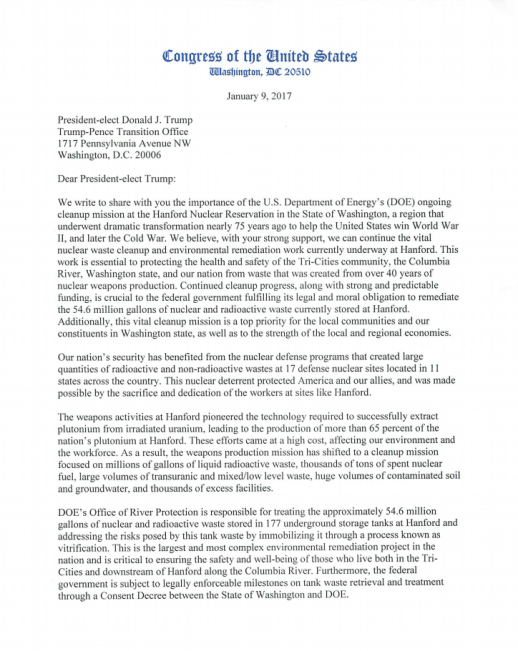





 nuclear-news