The Ministry of Defence has begun spending £1.3 billion as part of plans for 14 major new developments at the Trident nuclear bases on the Clyde in Scotland. Details released under the Freedom of Information act show MoD plans to complete a ‘nuclear infrastructure’ project at Faslane by 2027, and at Coulport by 2030.
The total cost of replacing Trident, estimated to be at least £205 billion including maintenance costs, looks set to rise, while fears are also growing about the safety of Trident.
The body which monitors nuclear safety – the Defence Nuclear Safety Regulator – has recently been censored by the Ministry of Defence. For the past 10 years the regulator has published annual reports exploring issues including staff shortages at nuclear sites and nuclear accidents. However, reports for 2015 and 2016 have been blocked by the MoD.
Retired MoD nuclear expert, Fred Dawson, was quoted in the Sunday Herald saying, “The obvious conclusion to draw is that there is something to hide.”
Kate Hudson, CND General Secretary, said, “As the MoD spends vast amounts on Trident infrastructure, the enormously wasteful expense of Trident is laid bare. Each billion represents schools and hospitals that could have been built but won’t because of the disastrous decision of the government to plough ahead with replacing an out-of-date nuclear weapons system that will not deliver real security.
“Earlier in the year, we learnt that the government covered-up a failed Trident missile test. This crucial information was held back while MPs were deciding on the future of Trident in a Parliamentary vote in 2016.
The latest MoD decision to withhold information about safety, that is likely, on past experience, to include nuclear submarines, military nuclear sites and nuclear warhead convoys, shows that this unhealthy and dangerous culture of secrecy is worsening. How can politicians identify major safety issues if this information is not available and how will the public hold them to account?“The latest MoD decision to withhold information about safety, that is likely, on past experience, to include nuclear submarines, military nuclear sites and nuclear warhead convoys, shows that this unhealthy and dangerous culture of secrecy is worsening. How can politicians identify major safety issues if this information is not available and how will the public hold them to account?“
http://www.pressreleasepoint.com/safety-fears-grow-uks-nuclear-bases-expand
November 16, 2017
Posted by arclight2011part2 |
Uncategorized |
Leave a comment
November 16, 2017 at 07:05 PM
Nine reactors at five nuclear power plants in Japan, including some currently in operation, have used products manufactured by the Kobe Steel Ltd. group which has admitted fabricating product quality data, it has been learned.
According to documents shown at a meeting of the Nuclear Regulation Authority on Wednesday, the active reactors are the No. 3 and No. 4 units at Kansai Electric Power Co.’s Takahama plant in Fukui Prefecture and the Nos. 1 and 2 units at Kyushu Electric Power Co.’s Sendai plant in Kagoshima Prefecture.
The others are the Nos. 3 and 4 units at Kansai Electric’s Oi plant in Fukui, the Nos. 3 and 4 units at Kyushu Electric’s Genkai plant in Saga Prefecture, and the No. 3 unit at Shikoku Electric Power Co.’s Ikata plant in Ehime Prefecture.
Kobe Steel’s welding rods were used during assembly work at all nine reactors, and reinforcing bars and parts in some reactor containment vessels use hexagon bolts manufactured by the company.
The utilities told the NRA that the products are not among those affected by the data fabrication scandal and, thus, pose no safety problems.
The welding rods were also used for water tanks which are used to store contaminated water at Tokyo Electric Power Company Holdings Inc.’s crippled Fukushima No. 1 plant, it was also found.
NRA Chairman Toyoshi Fuketa asked for performance examinations to be conducted on the welding rods.
http://wasabi-now.com/article/87809663a9a8ac3732faef4f496cab03
November 16, 2017
Posted by arclight2011part2 |
Uncategorized |
1 Comment
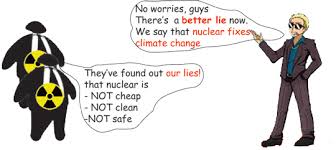
November 16, 2017, by Alex Kirby
Climate change and nuclear threats feed off each other and should be treated in unison, an influential US think-tank says.
LONDON, 16 November, 2017 – Climate change and nuclear threats are closely linked and must be tackled together, US experts say.
The warning comes from a working group chaired by the Center for Climate and Security (CCS), a non-partisan policy institute of security and military experts (many of them high-ranking former members of the armed forces), in a report which offers a framework for understanding and addressing the distinct problems together.
The report is published as this year’s UN climate summit draws to a close in Bonn in the aftermath of President Trump’s tour of Asia, during which nuclear weapons issues featured prominently.
Professor Christine Parthemore, a former adviser to the US defence department, co-chairs the working group. She told the Climate News Network:
“Simultaneous effects of climate change, tough social or economic pressures, and security challenges could increase the risk of conflict among nuclear weapon-possessing states, even if that conflict stems from miscalculation or misperception. India and Pakistan are major concerns.
“They are grappling with water stress, deadly natural disasters, terrorism, and numerous other pressures. At the same time, the types of nuclear weapons they are developing and policies on command of those weapons are raising tensions between them.
“Some countries are more actively flaunting their nuclear threats toward one another. North Korea has been the most active in that regard”
“Our group believed this is a recipe for not only increasing the risk of conflict, but for raising the risk of such a conflict escalating to the nuclear realm.
“Big picture: nuclear nonproliferation regimes and international climate change cooperation help underpin the global order. They are stabilising forces, and if we don’t continue strengthening them, we may see a less predictable global security environment.
“This is especially dangerous in times like these when some countries are more actively flaunting their nuclear threats toward one another. North Korea has been the most active in that regard.”
The authors say countries such as Nigeria, Jordan, Egypt and Saudi Arabia are dealing simultaneously with a range of interdependent internal pressures – including climatic, economic, security, and environmental demands – as they pursue nuclear energy.
Reactor safety
Bangladesh is coping with sea-level rise and changing Himalayan glacial patterns, and with terrorism and overpopulation. The report says these stresses could affect the security and safety of the nuclear reactors being built in the country with Russian help.
It says extreme heat, flooding, sea level rise and natural disasters are already affecting power stations and could knock out nuclear installations in countries already short of electricity and facing social or political pressure. The same dilemmas could face sites handling nuclear weapons.
Concerns about nuclear security and proliferation could help countries to rely instead on fossil fuels and maintain their high dependence on them, “making dangerous, business-as-usual climate change scenarios more likely”. And it says people forced into migration by climate change or other factors can affect security and nuclear stability.
The report says it is important to develop technologies to help countries which seek to introduce nuclear energy, including the safest reactor designs, modern security and monitoring systems and strong climate modelling abilities.
New risks
It says this is especially critical in the potential crisis regions where combining security, climate, and nuclear risks must be addressed urgently: South Asia, the Middle East, the South China Sea and Central and North Africa.
The report also says there is mounting evidence that various security challenges, climatic trends and nuclear issues are combining in new and potentially high-risk ways. Mapping and addressing this complexity is critical for protecting US security interests not only in these crisis regions, but across the Indo-Asia-Pacific and Europe as well.
It urges the US to develop realistic planning, better communication about nuclear and climate risks, and education for policymakers about practical ways they can protect America’s capacities for coping with these challenges.
The report suggests that US leaders should encourage more robust engagement between public and policymakers on risks like nuclear conflict and climate change, and should convey risks in ways that people can relate to, for example emphasising ways to reduce threats to vulnerable infrastructure. – Climate News Network
http://climatenewsnetwork.net/climate-nuclear-threats-twins/
November 16, 2017
Posted by arclight2011part2 |
Uncategorized |
1 Comment
HIROSHIMA/NAGASAKI
The mayors of Nagasaki and Hiroshima have been invited to the ceremony where an international group that has campaigned for a treaty banning nuclear weapons will be awarded the Nobel Peace Prize, the cities said Wednesday.
Hiroshima Mayor Kazumi Matsui is expected to attend the ceremony to be held on Dec 10 in Oslo, while Nagasaki Mayor Tomihisa Taue is considering attending, city officials said. They would be the first Hiroshima and Nagasaki mayors to attend a Nobel Peace Prize ceremony.
The efforts of 2017 Nobel Peace Prize winner, the International Campaign to Abolish Nuclear Weapons, led to the adoption in July of a landmark U.N. treaty outlawing nuclear weapons. ICAN is seeking the attendance of atomic bomb survivors who have thrown their support behind the treaty.
Although the Japanese government has not joined the treaty, likely due to its reliance on the protection of the U.S. nuclear arsenal, the mayors of Hiroshima and Nagasaki have backed efforts for a treaty to prohibit nuclear weapons.
Speaking at a U.N. conference to negotiate a nuclear weapons ban treaty in June New York in June, Matsui said the “earnest wish” of the atomic bomb survivors, known in Japan as hibakusha, is to “witness the prohibition of nuclear weapons in their lifetime.”
Taue, meanwhile, attended the signing ceremony of the new treaty in New York in September.
Japan is the only country to have suffered atomic bomb attacks, with the United States dropping the first on Hiroshima on Aug. 6, 1945, and the second on Nagasaki three days later, during the final stages of World War II.
Around 210,000 people are estimated to have died from the attacks by the end of 1945 and many survivors were left suffering from health problems in the following years.
https://japantoday.com/category/politics/a-bombed-cities’-mayors-invited-to-nobel-peace-prize-ceremony
November 16, 2017
Posted by arclight2011part2 |
Uncategorized |
Leave a comment
North Korea suggested Wednesday it may be open to giving up its nuclear weapons, but only if the U.S. did so first.
Ruling Korean Workers’ Party newspaper Rodong Sinmun published a commentary Wednesday in which the country’s authoritarian leadership challenged President Donald Trump to reverse his support for a bigger, stronger U.S. nuclear weapons arsenal and adopt a non-proliferation policy. North Korea has argued its weapons of mass destruction stockpile was necessary only to prevent the U.S. from overthrowing the government of Kim Jong Un, which the U.S. has threatened to do by force if he did not abandon his nuclear weapons.
“The DPRK’s access to nuclear weapons and intercontinental ballistic rockets is a just choice for self-defense to counter the U.S. nuclear threat. Therefore, no one has right to fault with it,” the newspaper wrote, according to the official Korean Central News Agency, referring to North Korea’s official name: the Democratic People’s Republic of Korea.
“The world’s denuclearization is the aspiration and desire of humankind. If the aspiration and desire come true, U.S. and other countries that have the largest number of nuclear weapons should take the lead in denuclearization,” it added.
North Korean leader Kim Jong Un guides the launch of a Hwasong-12 missile in this undated photo released by North Korea’s Korean Central News Agency (KCNA) on September 16, 2017. North Korea has clung on to its nuclear weapons despite international pressure, but said they were only a self-defense measure in the face of the U.S.’s nuclear threat. KCNA via Reuters
The commentary went on to call it “a foolish daydream for the Trump group to dream of the DPRK’s dismantlement of nukes” and urged the U.S. to instead “recognize, respect and coexist with the DPRK as nuclear weapons state.” Since North Korea’s first nuclear test in 2006, the U.S. has led an international campaign of sanctions to pressure North Korea’s leadership into disarming.
President Donald Trump inherited this tension when he came to office in January and, in April, he hardened his stance by expanding the U.S.’s military presence in the Asia-Pacific, specifically calling on his nuclear rival not to conduct a sixth nuclear weapons test as reports suggested it would. Despite Trump’s pledge not to allow Kim to test an intercontinental ballistic missile (ICBM), North Korea did just that in July amid an unprecedented rate of ballistic missile launches. In September, North Korea conducted a hydrogen bomb test, by far its most powerful test to date.
Trump has matched North Korea’s sweeping military advancements this year by doubling down on joint drills with Pacific allies Japan and South Korea in the tense region. The U.S. leader has also threatened to destroy North Korea, raising concerns among U.S. officials and the international community that either Trump or Kim could start a nuclear conflict.
https://www.yahoo.com/news/north-korea-says-may-nuclear-233310576.html
November 16, 2017
Posted by arclight2011part2 |
Uncategorized |
Leave a comment
Japan Review – 28th Session of Universal Periodic Review
Another year comes around and the world gets to see the improvements in Human Rights legislation and training that is currently being developed in Japan.
Certain issues such as the Comfort Women of Korea and the abolition of the death penalty are being discussed. Other issues such as womens rights, disability rights and children’s rights were discussed. Many forms of discrimination were in the frame except one.
Reports from Japan concerning discrimination of Fukushima nuclear evacuees, Government policies that are trying to force the evacuees back to contaminated areas and little recognition of any costly health effects that are expected to happen over the coming decades and of course, placing even more stresses on evacuees.
So, to the nub of the matter. Out of 108 speakers, only a handful even mentioned the plight of Japans internally displaced nuclear refugees. The countries UN representatives that did speak up were Germany, Mexico, Portugal and Austria with Costa Rica hoping that the Atomic bomb survivors would have their rights to health care continued and Guatamala hoped that Japan would sign up to the Nuclear Proliferation Treaty.
While the statements varied as to the issues with Fukushimas residents the 2 main points are;
That Japan should continue the health checks that the government are currently deciding to stop or shrink (For the Atomic bomb survivors as well).
The evacuees should have the right of choice and be able to be part of the decision making process involving their communities and groups.
Mr Gunnar Schneider (@02.21:19 in the
video) goes much farther and calls for a return to the safety limit of radiation to 1mSv/y which would allow more people living in higher radiation areas the option to move and receive a decent compensation to evacuate the contaminated areas. He stressed that pregnant women and children need to be considered better in radiation related health decisions.
The UN representatives who should compassion to the victims of the Fukushima disaster and Atomic bomb survivors were;
Costa Rica Ms. Diana Alejandra Alfaro
Germany Mr Gunnar Schneider
Austria Mr Micheal Pfeifer
Mexico Mr Diego Ruiz Gayol
Portugal- Ms Sonia Maria Melo Castro
It should be noted that many countries called on Japan to create an independent Human Rights Council (That would also protect Fukushima residents rights as well as other stakeholder groups discussed at the meeting). but so far, No Human Rights Council in Japan.
In response the Japanese mission made thorough replies to the council members questions except for the issue of Fukushima related questions and the suppressive Japanese Secrets Act of 2013. However they did make a reply of sorts;
Residents have yearly tests, mental health programs and education of radiation awareness in schools etc show everything is fine in Fukushima.
And in response to the concerns about the Secrets Act, The mission pointed out that no one has been charged and the Act is not suppressing the media. In the background of this hovers the recent interview with Edward Snowden who talked about
spying in Japan using the Five Eyes surveillance network. So their claims about there being no “chilling effect” on the media and wider society seemed to ring a little hollow as did their response to questions on the Human Rights of the Fukushima and Miyagi residents.
What the Germans know;
Posted by Shaun McGee
Posted to nuclear-news.net
Posted on 16 November 2017
November 16, 2017
Posted by arclight2011part2 |
Uncategorized |
1 Comment
Security concerns raised by Royal Navy whistleblower William McNeilly have been vindicated yet again, this time by a top military official. Defence Police Federation chairman Eamon Keating has told Defence Secretary Gavin Williamson that budget cuts have left military bases open to attack.
In 2015, McNeilly leaked a report to WikiLeaks detailing safety and security failures aboard the UK’s Trident nuclear armed submarines and at their base at Faslane in Scotland. The same concerns were raised on Wednesday in an open letter to Williamson, only this time by the officers in charge of base security.
In his letter, Keating pleaded with the Tory minister to veto further cuts to the defense budget and issued him with stark warning: cuts to the Ministry of Defence (MoD) police force budget will lead to fewer officers on the ground and weakened security at Faslane and other MoD sites.
Read more
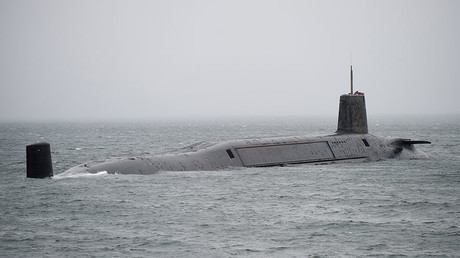
“I must highlight the deeply concerning, and in many cases deplorable decision making that is leaving many of the UK’s critical military assets and sites at unacceptable risk of attack on our own shores,” Keating’s letter reads.
“It is perhaps only a matter of time before an MoD establishment in the UK faces attack, and the reality is that continued and pernicious reductions in the capacity of the MoD Police leave it ill-equipped and understaffed to deal with such a situation.”
Keating’s plea for more finances echo the same concerns raised by McNeilly two years ago. At the time, McNeilly’s claims were dismissed by the military as unsubstantiated folly.
“I accessed the Faslane base for over a year. While I was assigned to the Trident submarines, I accessed them multiple times a day, most days of the week. It is ridiculous for anyone to say that I didn’t know anything about access when I accessed them on numerous occasions,” McNeilly told RT.
“I saw with my own eyes how ridiculous the security at Faslane is.”
McNeilly welcomed the plea from the Defence Police Federation chairman, warning it is “only a matter of time before a Ministry of Defence establishment in the UK faces attack.”
Read more
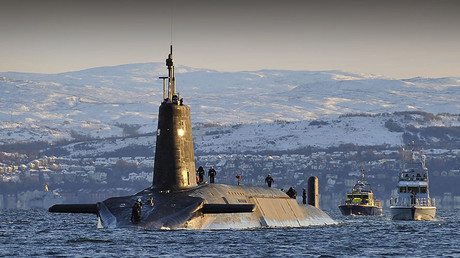
“Now the Defence Police Federation chairman has made a statement that clearly agrees with what I said years prior,” he said.
Recounting his personal experiences from his time at Faslane, McNeilly said his ID would rarely be checked properly and that he would seldom be questioned by security staff at the gate.
“I accessed the Trident submarines without having my ID checked. I just walked straight past [security], down onto the Trident submarine, and left my unchecked bag just feet away from a nuclear missile.
“You don’t need 50 years of experience to see that’s a major security risk.
“Saving time had priority over providing security.”
Keating and McNeilly have now both called for more security to protect UK munitions and bases.
The whistleblower wondered just how long it will take for a terrorist with a fake ID to get through the gates, telling RT the UK’s security weakness could make our own weapons “nothing but a target on our back in this war against terrorism.”
https://www.rt.com/uk/409973-isis-weapon-security-military/
November 16, 2017
Posted by arclight2011part2 |
Uncategorized |
Leave a comment
NATO’s current nuclear strategy is untenable. Crises during the Cold War reveal that nuclear strategies become dangerous exactly in the circumstances they are intended to deter, in political confrontations.
Is the west’s own example more persuasive than admonitions and threats? To me, this is the missing question in the ominous brinkmanship over North Korea’s nuclear arms threats and looming crisis over Iran’s nuclear options, should the nuclear agreement crumble under pressure.
If we think nuclear arms are our ultimate assurance of security, why shouldn’t other countries think the same? A critical look at the role of these doomsday weapons in western defense strategy is now imperative.
This year three events should call our attention to the question: are we more secure with or without nuclear arms?
How my journey into the heart of communism made me a strong believer
Stanislav Petrov’s death this year reminds me of my first real job as a Visiting Lecturer from Norway at the University of Greifswald in the academic year of 1980 – 81, under the just recently signed cultural exchange treaty between our two countries, Norway and East Germany.
My journey into the heart of Communist Germany, not long after Timothy Garton Ash,[1] was considered daring at the time. This was when Reagan became President, Angela Merkel was a budding physicist and dissenter somewhere else in East Germany, and just a few years before Putin had been posted to the Dresden KGB branch office. Stanislav Petrov was an officer in the Soviet Strategic Missile Force where a few years later, he was to save the world from nuclear war by misreading some instructions.
Although not that far away, East Germany in 1980-81 was practically terra incognita. Consequently, I returned home an expert I thought, confident that I had uncovered the truth behind the veil of propaganda and lies. If anyone understood these communist power-mongers, it was I, and I found them dangerous both to our democracy and our freedom. Joining the Norwegian Ministry of Foreign Affairs after my job in East Germany, I became a strong believer in drawing even in nuclear arms in one of my first assignments, which was working on the disarmament process.
How I erred
Then after the end of the Cold War, when the truths came out, I realized I had got it all wrong. One specific memory will suffice. In East Germany, my wife and I soon blended in. So people let their guards down, and I could slip into meetings where people said things not exactly meant for my ears.
One such occasion was a discussion on whether class struggle in Scandinavia would lead to war with the socialist countries. A high-ranking naval officer stated that their observations in the Baltic Sea of the Swedish navy confirmed this. There was no doubt that the Swedes were preparing to attack. Two East German diplomats present then rejected this contention. They did not believe the Swedes were prepared to attack. At the time, I had put the naval officer’s bellicosity down to stupidity and sycophancy, and was reassured by the good sense of the East German diplomats.
Dangerous delusions
Was I wrong! In hindsight, I realized I had witnessed Operation Ryan at work. Unknown to all but a very narrow circle of decision-makers in the west, the ageing and ailing Kremlin leaders under the dying Andropov had come to fear that the western powers were preparing a nuclear first strike under the guise of a military exercise. Their reason was precisely the kind of class struggle analysis with which the East German naval officer had justified his bellicosity. In this ideological view of the world, war between such incompatible “systems” as socialism and capitalism, was inevitable. Maybe the time had come in 1983. Therefore, they ordered spies and their military to look for signs of an impending attack, so that the Kremlin could strike first to prevent the attack or at least cut their losses.
Spies telling the truth not believed
Most disturbing about this was their refusal to believe the presumably good news that their worst fears were unfounded. From the memoirs of the two last East German spy chiefs, Markus Wolf[2] and Werner Grossmann[3], we now know that their KGB superior Krytsjkov, refused to believe their spy in the NATO headquarter, Rainer Rupp, that there were indeed no NATO plans for a first nuclear strike. Even more disturbing is the view of the western agent in the KGB, Mitrokhin,[4] that the sycophancy of the East German spy chiefs prevented them from offering any intelligence that contradicted the prevailing view in the Kremlin.
Fortunately, British and US decision-makers believed their spy, KGB agent Oleg Gordievsky, and took care to scale down military exercises and tone down confrontational rhetoric.[5]
Ban on nuclear arms a threat to western security?
It is in my view disturbing that in the current controversy over nuclear arms there is not more focus on the example of Stanislav Petrov. The context in which he exercised his good judgement, was that of a nuclear strategy still in operation. A preemptive strike becomes a dangerous option when a political crisis feeds delusions about concealed intentions. Hierarchical bureaucratic organizations foster sycophancy by a combination of seduction and intimidation. The kind of person capable of the sound judgement and courage that Petrov demonstrated at that fateful moment, is far too rare and fragile a probability for the survival of humankind to hinge upon it.
Instead of taking the occasion of Petrov’s death to reflect critically on the soundness of current defense strategies, NATO states boycotted the UN vote over the ban on nuclear arms. The Netherlands even voted against the ban. Then, in an apparent rejection of the NATO nuclear strategy, the Norwegian Nobel Committee gave the Nobel Peace Prize to ICAN, the international organization to ban all nuclear arms.
Stanislav Petrov in his house in Frjasino in 2016. Wikicommons/ Queery-54. Some rights reserved.These contradictory views on nuclear arms reflect a serious disagreement. What the disagreement over nuclear arms is all about, Petrov brought into sharp focus in 1983 during his lonely watch in the Soviet command center. He saved the world from total destruction when he prevented the Soviet Union from launching an all-out nuclear attack through a misunderstanding. This narrow escape shows that nuclear arms and concomitant strategies are a grave security risk.
Disagreement is a dilemma
The reasons for the persistence of NATO’s nuclear strategy in spite of the proven risks is that the disagreement over the role of nuclear arms actually reflects a dilemma, not only for NATO but also for Russia and for all other nuclear arms states. The threat of nuclear arms shall make attack impossible. At the same time, the thought of actually using nuclear arms under any circumstances is also impossible. The threat of nuclear arms must in other words be credible to be impossible.
The reason this contradiction turns into a dilemma is that two imperative goals pull in opposite directions. We need to prevent political pressure and block the options for military attack, while at the same time preventing nuclear war. This dilemma turns into a disagreement over the question of which of these goals entails the highest risk of unintended consequences.
Risk of nuclear war versus risk of vulnerability to political pressure
We can seek the answer to this question in evolving nuclear strategy, a strategy not hewn in stone, but changed in response to political crises. Up until the Cuban Missile Crisis in 1962, there was broad agreement that nuclear arms were a panacea for security by blocking both political pressure and war. However, on the brink of a nuclear war both the USA and the Soviet Union realized how dangerous their nuclear strategy became in a political confrontation.
We now know how President Kennedy during the Cuban Missile Crisis gradually realized that the risks of unintended nuclear war outweighed the risks of vulnerability to political pressure. Those who stuck to a tough posture were concerned to avoid the miscalculation that in their interpretation failed to contain the aggressive and expansive dictatorship of Hitler, the prelude to World War II.
Kennedy, however, in the course of the crisis became more concerned with the prelude to World War I. Robert Kennedy, in his book on how the President handled the crisis, says he read one of the bestsellers of that year, Barbara Tuckman’s book Guns of August. Her point was that military strategies inevitably led to war. The parallels to the nuclear strategies became impossible to overlook. After the Cuban Missile Crisis, US Secretary of Defense, Robert MacNamara concluded that the only realistic nuclear strategy was to avoid crises.
How western policy had dangerous unintended consequences
The subsequent period when the superpowers avoided dangerous crises between them ended abruptly with the Soviet invasion in Afghanistan in 1979. The west’s reactions, boycott, military maneuvers and confrontational rhetoric, proved to have dangerous unintended consequences. The ageing, isolated Kremlin leaders began seriously to envisage a western nuclear attack. If so, they needed to strike first to prevent the attack, or at least reduce the damage to the greatest extent possible. Would they have to destroy the feared US missiles before they could be launched? It was in this dangerous situation that Stanislav Petrov kept his cool and prevented an all-out «defensive» Soviet nuclear attack through misunderstanding.
This time, it took longer to adjust policy to the dangerous consequences of nuclear arms in political confrontations. Only with Gorbachev as the new Soviet leader did a radical nuclear disarmament become possible. The so-called intermediate nuclear missiles were removed by an agreement in 1987.
Contradictions in nuclear strategy block nuclear disarmament
However, an agreement to remove the rest of the nuclear missiles was impossible even under favorable political conditions. The contradictions in the nuclear strategies proved insurmountable.
Ever since the new leader of the Soviet Union, Gorbachev, met US president Reagan in Reykjavik in 1986, disagreement over US and NATO plans for missile defense blocked negotiations on effective nuclear disarmament. While the US and NATO contended that a missile defense was able to block off the feared nuclear attack, Russia thought the opposite. In the Russian view, a nuclear attack becomes more feasible if a missile defense can block off the capacity for a retaliatory attack. The problem is that both views are right.
New phase of confrontation may make nuclear strategy dangerous again
We are now entering a new phase of confrontation that begins to resemble the situation following the Soviet invasion of Afghanistan in 1979. Then as now, an absence of dialogue during political crises creates an emotional climate that may feed delusions about concealed intentions. However, at the same time, in political confrontations we face a growing need to resist political pressure and, in a worst-case scenario, block options for attack. Once more, two imperative goals pull in opposite directions. This may become dangerous – again.
NATO’s nuclear strategy untenable
NATOs current nuclear strategy is untenable. Crises during the Cold War reveal that the nuclear strategies become dangerous exactly in the circumstances they are intended to deter, in political confrontations. Then the risk of misunderstandings and miscalculations may reach a dangerous level.
Low political tensions enable nuclear disarmament
By contrast, experience also shows that the lower the political tensions, the easier it is to agree on cutting nuclear arms. By way of example, in the current political climate of confrontation and ensuing high tension, the US – Russian agreement to remove the old Soviet nuclear arms from the new state of the Ukraine would not have been possible. With the end of the Soviet Union, the Ukraine was suddenly a nuclear super power, but agreed to become a non-nuclear state, hardly likely today. How would it have affected our security, were they still armed to the teeth with nuclear weapons?
NATO defense strategy feasible without nuclear arms
Those who do not support a ban on nuclear arms now are of course right that we need an adequate defense to protect us against pressure and block options for an attack, should anyone ever begin to entertain such a deranged idea. The question is if an adequate defense is feasible without the ultimate threat of nuclear arms. A related question is of course how nuclear arms can deter when ultimate recourse to these doomsday weapons is inconceivable.
In the current disagreement over the ban on nuclear arms, nobody seems to recall that only ten years ago a group of elderly statesmen from the US, Russia and Germany called for a universal ban and a defense without nuclear arms. Among them were several with a thorough insight into and personal experience of both nuclear arms and nuclear strategies. The veteran Henry Kissinger in 1973 raised the US nuclear alert to pressure the Soviet Union to cease their support of Egypt during the war with Israel, thus threatening with nuclear arms for political leverage. The Soviet Union’s last leader, Michael Gorbachev, was intimately familiar with the risks inherent in Russian nuclear strategy that Petrov defused. Germany’s previous prime minister Helmut Schmidt initiated the fateful NATO nuclear rearmament that caused the 1983 war scare in the Kremlin. These statesmen had sound reasons for calling for a universal ban and a defense without the ultimate recourse to nuclear arms.
Open debate must consider arguments on their own merits
A realistic analysis of nuclear arms today must ask why these experienced and knowledgeable statesmen held this view. Those who oppose their view must show how they erred.
The answer to these imperative questions can only be found by an open and constructive debate in which arguments are considered on their own merits. Sycophancy, the very nature of hierarchical decision-making and the preeminent cause of bureaucratic dysfunction, is literally a security risk.
Robert Kennedy writes in his book on President Kennedy’s handling of the Cuban Missile Crisis that the President always wanted disagreement among his advisors to ensure the best possible advice.
https://www.opendemocracy.net/torgeir-e-fj-rtoft/western-countries-are-more-secure-without-nuclear-arms
November 16, 2017
Posted by arclight2011part2 |
Uncategorized |
Leave a comment
WASHINGTON/SEOUL, Nov. 16 (Yonhap) — South Korea’s ruling party chief on Wednesday appealed for a peaceful solution to the North Korean nuclear crisis during a forum in Washington.
Choo Mi-ae of the Democratic Party said South Korea and the United States see eye to eye on the need to put more sanctions on Pyongyang but that the increased pressure should be aimed at bringing the North to the dialogue table.
“Our principle for resolving the North Korean nuclear issue must be (to seek) a peaceful solution,” she said during a talk at the U.S.-Korea Institute at Johns Hopkins School of Advanced International Studies.
“A peaceful solution to the North Korean nuclear issue is the only solution agreed on by responsible leaders of the region, including the U.S., China, and which is supported by the international community.”
Tensions caused by the North’s nuclear and missile tests and exchanges of threats and insults with the U.S. have recently shown signs of easing, as Pyongyang has not conducted any provocations for the past two months.
Choo Mi-ae, the leader of the ruling Democratic Party, delivers a speech at the U.S.-Korea Institute at Johns Hopkins School of Advanced International Studies in Washington on Nov. 15, 2017. (Yonhap) Choo Mi-ae, the leader of the ruling Democratic Party, delivers a speech at the U.S.-Korea Institute at Johns Hopkins School of Advanced International Studies in Washington on Nov. 15, 2017. (Yonhap)
Choo said the potential for conflict caused by a miscalculation is large due to a complete breakdown in communication between South and North.
“As tensions rise on the Korean Peninsula, calls for dialogue and peace must also grow louder,” she said, “and (both sides) must refrain from even the slightest word or action that could provoke the other.”
Choo lamented what she cast as the failures of the previous conservative administrations to build on the inter-Korean trust initiated by the liberal governments of Kim Dae-jung and Roh Moo-hyun. The current liberal government of President Moon Jae-in is determined to replant a “seedling in the forest of peace,” she said.
The Moon administration also recognizes the importance of a strong South Korea-U.S. alliance to peace and stability on the Korean Peninsula, according to Choo, and last week’s summit between Moon and U.S. President Donald Trump reaffirmed that there will be no sanctions for the sake of sanctions nor talks for the sake of talks.
“Sanctions are a concerted effort by the international community to make North Korea come to the negotiation table,” she said.
Later in the day, Choo warned that should Washington make demands that were “too unreasonable”, Seoul could not help but consider even scrapping the South Korea-U.S. free trade agreement (FTA).
“I have said here that our domestic political situation wouldn’t be permissive either if the U.S. makes unreasonable claims (regarding the FTA),” Choo told reporters.
Touching on Korea’s car exports, Choo voiced her opposition to a possible U.S. demand that auto parts be procured from within the U.S.
Seoul is taking domestic procedures ahead of formal negotiations to amend the five-year-old trade deal, which U.S. President Donald Trump called “quite unsuccessful and not very good for the U.S.” last week. Washington blames it for America’s growing deficit in goods trade with Korea despite its surplus in the services sector.
http://english.yonhapnews.co.kr/news/2017/11/16/0200000000AEN20171116000251315.html
November 16, 2017
Posted by arclight2011part2 |
Uncategorized |
Leave a comment
16 November 2017 WASHINGTON (Reuters) – President Donald Trump plans to nominate Melissa Burnison, a nuclear energy industry lobbyist, to serve as assistant secretary in charge of congressional and intergovernmental affairs at the U.S. Energy Department, the White House said on Wednesday.
Burnison is currently director of federal programs for the Nuclear Energy Institute, “where she plans, directs and executes legislative strategies for nuclear energy programs and policies on behalf of the nuclear energy industry,” the White House said in a statement.
Previously, she was a senior adviser at the Energy Department and at the U.S. House of Representatives’ Committee on Natural Resources, where she advanced legislation to expand U.S. energy production and jobs, the statement said.
(Reporting by Eric Walsh; Editing by Tom Brown)
http://uk.businessinsider.com/r-trump-to-tap-nuclear-industry-lobbyist-for-us-energy-dept-job-2017-11?r=US&IR=T
November 16, 2017
Posted by arclight2011part2 |
Uncategorized |
Leave a comment
http://www.powermag.com/fercs-chatterjee-has-interim-plan-to-prop-up-coal-nuclear-plants/
Federal Energy Regulatory Commission (FERC) Acting Chairman Neil Chatterjee, who has said he is “sympathetic” to a rule that would help prop up struggling U.S. coal and nuclear power plants, apparently is ready to move forward with an interim plan to keep financially troubled plants operating while his agency continues to consider a market-changing cost proposal from the Department of Energy (DOE).
Utility Dive on November 15 reported that Chatterjee is “considering regulatory action,” saying FERC could issue a “show cause” order directing regional transmission organizations (RTOs) and independent system operators (ISOs) to update market tariffs to keep baseload plants, or those with “necessary resilience attributes,” operating or show why those plants should not continue to remain online. That would provide time for FERC to institute rules regarding electricity grid resilience and market compensation.
Chatterjee, who said he has not detailed his plan with other FERC staff, told Utility Dive his proposal would be “messy” and “uncomfortable.” He said his interim step could dovetail with a broader rule on grid resilience to “accelerate” the process. Chatterjee last week broached the notion of an interim step in comments at the S&P Global Platts Energy Podium event in Washington, D.C., where he said “What I don’t want to have is plants shut down while we’re doing this longer-term analysis, so we need an interim step to keep them afloat.”
Chatterjee also had discussed a short-term solution in a recent interview with Bloomberg, saying
“It’s important to cast that interim lifeline. The worst-case scenario is we do the long-term analysis, we figure out we actually did need these plants, but they’re gone, they’re offline and we can’t get them back.”
DOE officials this week have defended their agency’s notice of proposed rulemaking (NOPR) that would allow power plants to fully recover their costs of power generation, provided they keep a 90-day supply of fuel on hand–a rule designed specifically to aid coal and nuclear plants. The “Grid Resiliency Pricing Rule” was proposed in late September, directing FERC to mandate power market rules to accurately price what it calls “fuel-secure” generation.
Sean Cunningham, who leads the DOE’s Office of Energy Policy and Systems Analysis, in his keynote address this week at the National Association of Regulatory Utility Commissioners meeting in Baltimore said he is confident FERC will “dutifully consider and adopt a rule that will address price formation in the electric markets.”
Other FERC officials have concerns about the DOE proposal. Commissioners Robert Powelson and Cheryl LaFleur each have said the NOPR is not accurate in its characterization of natural gas’ role in grid stability.
Some groups have questioned the DOE’s grid stability study from earlier this year, saying it was too supportive of fossil fuel-generated power at the expense of renewables.
Several groups have been vocal in their opposition to the DOE’s proposed plan, which faces a Dec. 11 deadline. Several states weighed in during the comment period for the NOPR, many urging FERC not to adopt the rule.
—Darrell Proctor is a POWER associate editor 15 November 2017
November 16, 2017
Posted by arclight2011part2 |
Uncategorized |
Leave a comment
BERLIN (Reuters) – Greens want the next coalition government to push for the removal of all nuclear warheads stationed in Germany, a document seen by Reuters showed on Wednesday. The discussion paper on defence and foreign policy did not mention the United States, which is believed to have 20 nuclear warheads at a military base in Buechel in western Germany, according to unofficial estimates.
Chancellor Angela Merkel is trying to secure a fourth term through an unlikely coalition with the ecologist Greens and pro-business Free Democrats (FDP) after her conservative bloc lost support to the far-right in an election in September. NATO member Germany is not a nuclear power and in 2011 a Merkel-led government announced plans to shut all nuclear reactors by 2022 after the Fukushima disaster in Japan.
“Within NATO, we want to ensure that the remaining nuclear weapons in Germany are withdrawn and we want to suspend the modernization programme,” read a section in the document stating the Greens’ position.
Before leaving office former U.S. President Barack Obama announced plans to modernize nuclear bombs, delivery systems and laboratories. His successor, Donald Trump, has said he wants to strengthen and expand his country’s nuclear capability.
The conservatives, Greens and FDP are hoping to end exploratory discussions on Thursday and move on to proper negotiations on forming a government. They remain divided on several key issues, including immigration, reforming the euro zone and climate policy. (This version of the story corrects to show nuclear warheads withdrawal is only Greens demand in 1st, 5th paragraphs)
This story has not been edited by Firstpost staff and is generated by auto-feed.
http://www.firstpost.com/world/corrected-german-greens-want-last-nuclear-weapons-withdrawn-document-reuters-4212185.html
Published Date: Nov 16, 2017 06:15 am | Updated Date: Nov 16, 2017 06:15 am
November 16, 2017
Posted by arclight2011part2 |
Uncategorized |
Leave a comment
14 November 2017
Students have been lured by money and other rewards to attend government events to promote public understanding linked to hosting final disposal sites for high-level radioactive nuclear waste, one of the organizers said Tuesday.
The revelation of a possible attempt to manipulate the participants in the events may serve as a blow to the government’s renewed efforts to select final nuclear waste disposal sites after seeing little progress on the issue over the past 20 years or so.
The Nuclear Waste Management Organization of Japan, which along with the industry ministry has organized the events, admitted that 39 students were offered rewards in exchange for their attendance, but blamed the matter on mismanagement by a Tokyo-based marketing company that has engaged in publicity work.
“We weren’t supposed to solicit participants by paying money, but the idea was not thoroughly shared inside the company,” an official of the organizer known as NUMO said, adding it confirmed that no rewards had actually been handed to the participants.
On Nov. 6, the marketing company in question, Oceanize Inc., promised a dozen students it would pay them 10,000 yen ($88) each in exchange for their participation in an event held in the city of Saitama targeting local residents.
The event capacity was set at 100 people and 86 including the 12 students took part.
In similar events held between October and early November in Tokyo and Aichi, Osaka and Hyogo prefectures, Oceanize mobilized 27 students by promising them printing services and venues for their club activities.
The company also sought to encourage the participation in gatherings in five other prefectures, but no students took part in them, according to NUMO.
Oceanize said it could not comment on the issue because a person in charge was absent.
The series of events started in October after the government unveiled a map in July indicating potential deep-underground disposal sites for high-level radioactive nuclear waste, identifying some 70 percent of the country’s land as suitable.
In the events, officials of the Economy, Trade and Industry Ministry and NUMO explained about the map in the hope to earn public understanding on the issue and move on to the next stage of conducting research for potential candidate sites.
https://english.kyodonews.net/news/2017/11/13afba45a05e-students-offered-reward-for-joining-govt-events-on-nuclear-waste.html
November 15, 2017
Posted by arclight2011part2 |
Uncategorized |
Leave a comment

Posted to nuclear-news.net
posted by Shaun McGee
14 November 2017
During the COP23 meetings I noticed some strong emotive arguments being used against the anti nuclear groups campaigning for renewable energy solutions in Europe. The nuclear lobby strategy is to equate anti nuclear with pro fossil fuel is a regular feature in the argument for nuclear power.
However activists have long since realised there is a swing door policy between the management positions of these energy giants. A good example is TEPCO whose business crashed in 2011, soon after the nuclear disaster in the Fukushima prefecture.
TEPCO and other utilities have holdings in both nuclear AND gas, so no rush for renewables for this state owned monopoly;
…..JERA Co., Inc., together with its subsidiaries, engages in fuel, and power generation and energy infrastructure businesses. Its fuel business includes identifying and investing in upstream fuel projects, as well as fuel procurement, transportation, and trading. ……… The company was founded in 2015 and is based in Tokyo, Japan. JERA Co., Inc. operates as a joint venture between Tokyo Electric Power Company, Incorporated and Chubu Electric Power Company ……. https://www.bloomberg.com/research/stocks/private/snapshot.asp?privcapid=306450378
Meanwhile in an off shore tax dodging account owned by TEPCO we find hardly any information about this except for a brief sentence in the off shore tax dodge report from the paradise papers in recent weeks. Why do I mention this you may ask? Because of the minuscule compensation payouts to the victims of the nuclear disaster, but I digress.
And what little renewable energy is produced in Fukushima will be sold cheap to TEPCO anyway and funded by;
…..All the electricity generated at the plant will be sold to Tokyo Electric Power Company Holdings Inc (TEPCO) at a price of 32 yen/kWh by using the power line of the Fukushima Daini plant for 20 years. The total project cost is about 4.5 billion yen, which is subsidized by the national government and Fukushima Prefecture. Also, a project finance loan was structured by a local bank….. https://japantoday.com/category/tech/solar-plant-begins-operation-in-fukushima
Still no mention of what happened to the off shore millions… billions…. or trillions?
Meanwhile in Australia the Wheatstone Project is digging deep for fossil fuels for Japan;
Australian Wheatstone Project, loaded onto the vessel Asia Venture, has arrived at TEPCO Fuel & Power Futtsu LNG Terminal, in Chiba Prefecture, on 12 November.
The company will be the largest buyer of LNG from the Wheatstone Project, after concluding a long-term sales and purchase agreements for 5.2 MTPA of LNG.
JERA has also contributed to the launch of the Wheatstone Project as a participant in the project through PE Wheatstone Pty. Ltd., an Australian subsidiary of Pan Pacific Energy K.K., which is jointly owned by Mitsubishi Corporation (MC), Nippon Yusen Kabushiki Kaisha (NYK Line) and Japan Oil, Gas and Metals National Corporation (JOGMEC).
The Wheatstone Project is one of Australia’s largest resource developments. The Wheatstone platform is the largest offshore gas-processing platform ever installed in Australia, with a topside weight of about 37,000 metric tons, and the largest float-over installation Chevron has ever delivered globally. https://www.green4sea.com/jera-receives-first-lng-cargo-from-wheatstone-project/
Seems TEPCO preferred the tax payers to pay the victims compensation even though they have other holdings;
…….In fact, an OECD report from 1999 said that conflicts between the private sector (TEPCO and the Oze Forest Management Co. owned by Tepco and runs 5 lodges in Oze, four of which are in the Special Protection Zone against other park organisers’ wishes) and the environment agency and conservation NGOs caused difficulties that would be easier to deal with if the environment agency had overall say in the running of Oze National park…… https://www.opednews.com/articles/Does-Tepco-own-a-radioacti-by-Shaun-McGee-Corporations-Nuclear-Commercial_Fukushima-Meltdown_Nuclear-Arms-Race_Nuclear-Meltdown-140711-884.html
So much for Climate change and environmental concerns. But I wonder about the off shore tax money and the compensation for the victims of the nuclear disaster? Dont you?
“In addition to top-flight international banks such as Barclays, Goldman Sachs and BNP Paribas, other elite Appleby clients have included the founder of one of the Middle East’s largest construction conglomerates, the Saad Group, and the Japanese company operating the crippled nuclear power plant in Fukushima.” http://www.fukuleaks.org/web/?p=16491
More information here; http://press-files.anu.edu.au/downloads/press/n2335/html/ch06.xhtml?referer=2335&page=11
November 14, 2017
Posted by arclight2011part2 |
Uncategorized |
1 Comment
Published on 10 Nov 2017
Increased levels of radioactive Ruthenium were detected in air over central Europe in October 2017. Arctur-AISense team set out to check the radioactive pollution over the Alpine region. Dedicated AISense Gamma IV hot spot locator was mounted beneath an ultralight aircraft to chase possible aerial hot-spots at different atmospheric layers.
https://www.youtube.com/watch?v=nV7uNMQ9AgI&lc=z231ijyzpvuqf5gh104t1aokgpwbbwqm2eqqzs5spcqgbk0h00410.1510654902749498
Check the instrument details here: http://www.arctur.si/aisense/
Explanation of the methodology of this report from Slovenia from the You Tube comments;
November 14, 2017
Posted by arclight2011part2 |
Uncategorized |
Leave a comment


 nuclear-news