Like a modern Henri Becquerel, Washington State University doctoral student Marianne Tarun’s discovery came quite by accident. Her simple lab error has uncovered a new way to boost electrical conductivity of a crystal by 40,000 percent, simply by exposing it to light.
Tarun had accidentally left a sample of strontium titanate out on a counter before testing the crystal’s conductivity and discovering the phenomenon. Her team suspects that photons knock loose electrons which boost the material’s conductivity. Her follow up tests confirmed the effect and found that as little as 10 minutes of light exposure could propagate the effect for days on end.
Known as persistent photoconductivity, it’s nowhere near the level of electrical throughput of what super-conducting materials can achieve. However, it does hold a great deal of practical potential. For one, the effect works at room temperature unlike superconductors which only function at a fraction of a degree from absolute zero.
“The discovery of this effect at room temperature opens up new possibilities for practical devices,” said Matthew McCluskey, co-author of the paper and chair of WSU’s physics department, in a press statement.
“In standard computer memory, information is stored on the surface of a computer chip or hard drive. A device using persistent photoconductivity, however, could store information throughout the entire volume of a crystal.” This could eventually lead to massive increases in data capacity and, hopefully, a Krypton-style storage medium.
The story of a white elephant colloquially known as the Space Shuttle is familiar to most students of the history of technology. The shuttle was originally touted as a cheap way to access space: being mostly reusable, it would have done for space travel the same what DC-3 did for air travel, i.e. open up the space for large-scale exploration and exploitation.
Of course, we all known how that promise fared the test of reality. Instead of envisioned 50 or so annual launches (which may actually have covered the program’s staggering cost), shuttles went up perhaps six times a year. There simply were not enough payloads looking for space access, and refurbishing the shuttle always took longer than early analysis had assumed. However, the shuttle had been sold to the Congress on a launch schedule that even its ardent supporters believed unrealistic. Therefore, the shuttle remained in the agenda for largely political reasons, possibly because of fears that if it was cancelled, there would be nothing else to loft NASA’s astronauts into orbit. In the end, the “cheap” and reusable space access turned out to be (probably) less safe and far more expensive than using expendable, throwaway boosters would have been.
However, the Shuttle provoked interesting reactions back in the day. Since the name of the game on both sides of the Cold War was paranoia about adversary’s intentions, every pronouncement and every program was pored over with a looking glass by unsmiling men in drab offices. When the U.S. announced the Space Shuttle, the Soviet analysts naturally went to work. However, it soon became apparent to them that the launch schedule NASA had advertised – over 50 launches per year – was hopelessly optimistic. The Soviets, being no slouches in the rocketry department, could not fathom why NASA wanted to build a complex, reusable spaceplane instead of simply using more tried and reliable expendable launch vehicles (Garber, 2002:16).
But there seemed to be one customer for the shuttle that would not mind the cost or the complexity.
Eager to sell the shuttle as the only space access the United States would need, NASA had teamed up with the U.S. Air Force. The Air Force was responsible for launching all U.S. defense and intelligence satellites, and if NASA could say to the Congress that Air Force, too, could use the shuttle, then NASA had extra political leverage to extract funds to build one. It was immaterial that the military did not really have a requirement for a shuttle: what was apparently far more important was that NASA could therefore insulate the shuttle from the political charge that it was just a step towards human exploration of Mars, or a permanent space station. Both of these were exactly what some people at NASA wanted it to be, but they also happened to be directions that President Nixon had rejected as too expensive in 1971 (Garber, 2002:9-13).
Therefore, the shuttle design requirements expanded to include political shielding. This took the form of payload bay size (designed to accommodate spy satellites of the time) and, more importantly, “cross-range capability.” The Air Force wanted to have an option of sending the shuttle on an orbit around the Earth’s poles; scientifically, this was a relatively uninteresting orbit, but for reconnaissance satellites that sweep the Earth’s surface, it’s ideal. The military also wanted to have an option of even capturing an enemy satellite and returning after just one orbit, quick enough to escape detection (Garber, 2002:12).
However, this requirement caused a major problem. Because the Earth rotates under the spacecraft, after one orbit the launch site would have moved approximately 1800 kilometers to the East. If the craft is to return to base after one orbit, instead of waiting in orbit until the base again rotates underneath it, it would have to be able to fly this “cross-range” distance “sideways” after re-entering the atmosphere (Garber, 2002:12).
In the end, NASA designed a spacecraft with required cross-range capability. This meant large wings, which added weight and complexity, which in turn decreased the payload, which in turn required more powerful engines, which in turn made everything more complicated… (In all fairness, for various good reasons, NASA might have designed a relatively similar shuttle even without the Air Force requirements. However, it seems that the requirement had at least some effect to the cost and complexity of the shuttle.)
Because all this was public knowledge, the analysts in the Soviet Union rejoiced. A spacecraft that could launch from the Vandenberg Air Force Base,do a single polar orbit, and then return stealthily to its base could be nothing else than a weapon in disguise. It was immaterial that few if any analysts could figure out why such an expensive craft was being built: obviously, the capitalist aggressor must have had discovered something that justified the huge expense. An analysis by Mstislav Keldysh, head of the Soviet National Academy of Sciences, suggested that the Space Shuttle existed in order to lob huge, 25-megaton nuclear bombs from space directly to Moscow and other key centers (Garber, 2002:17). The real danger was that the shuttle could do this by surprise. There would be little to no warning from early warning radars, and no defense…..
The Group of Experts for Nuclear and Radiation Safety of the Baltic Sea Council will meet on November 19th in Vilnius, Lithuania to examine the issues important for the whole Baltic Sea region such as radiation protection and nuclear safety. This meeting is one of the Lithuanian Presidency of the EU Council events.
The delegates will concentrate on joint projects in the field of radiation and nuclear safety, the report on Flagship Project 14.3, aimed to develop scenarios and identify gaps for all main hazards and the potential of such hazards in the Baltic Sea Region. It is planned to discuss the organizational issues of the workshop on the control of the Baltic Sea border regards to illegal nuclear and radioactive material transportation.
The Group of Experts for Nuclear and Radiation Safety of the Baltic Sea Council meetings usually involve 10 experts, delegated by the Baltic Sea States as well as specialists from observing countries, namely Belarus, France, Italy, the Netherlands, Romania, Slovakia, Spain, Ukraine, Great Britain and the U.S. The meetings are aimed to discuss cooperation on ensuring radiation and nuclear safety, joint actions in preparation for nuclear and radiological incidents and responding to them. The delegates will exchange information on ongoing radiological measurements, discuss the cooperation ensuring the control of nuclear and other radioactive materials, the prevention of illegal transportation of such materials.
The participants will visit the Lithuanian Radiation Protection Centre.
18 November 2013 “This mutually agreed strategy is expected to match nuclear technology to national priorities for sustainable development,” Irene Muloni, the minister of energy and mineral development, disclosed.
“The focus of the cooperation will be feasibility studies for nuclear power projects, uranium exploration and evaluation, cancer management, food and agriculture, water resources management and strengthening the national nuclear and radiation safety infrastructure.”
Over the past years population has rapidly increased and so has the demand for food, water, energy and land for agriculture.
To solve such everyday problems, the energy ministry and mineral development intends to peacefully apply nuclear technologies to meet basic needs. Food crops Rapid population growth, together with climate change and resource overuse, threatens future food security.
To alleviate losses in agricultural production and to support low input farming, crop breeding has been developed to improve crop quality and to strengthen the stress resilience of plants, maintaining crop yields without the help of fertilizers.
Scientists are undergoing training to develop new plant varieties in a wide-range of crops to better crop quality and improved stress tolerance.
This advanced breeding is expected to increase farmers’ incomes and agricultural production and to improve food security.
“A pilot testing technological packages will be developed to improve crop productivity and to enhance soil quality and reliance to climate change and variability,” Sarah Nafuna, the head nuclear energy unit of the ministry of energy and mineral development, stated.
“(There has been) development of virus free sweet potatoes and cassava planting materials and the development of a new soya variety with higher nitrogen fixing capacity to increase productivity.” Livestock Livestock farming is an important source of animal based food products and income for famers but facing low productivity and diseases.
However the IAEA has pledged to assist Uganda to optimize livestock productivity through improving animal nutrition, animal reproductive efficiency, and the diagnosis and control of major endemic animal diseases.
…”I want an environment where the foot soldiers can raise issues without fear they’re going to be put in a basement office for 16 months and then laid off,”…
NBCNEWS.COM – The government’s multi-billion-dollar effort to clean up the nation’s largest nuclear dump has become its own dysfunctional mess.
For more than two decades, the government has worked to dispose of 56 million gallons of nuclear and chemical waste in underground, leak-prone tanks at the Hanford nuclear site in Washington State.
But progress has been slow, the project’s budget is rising by billions of dollars, and a long-running technical dispute has sown ill will between the project’s senior engineering staff, the Energy Department, and its lead contractors.
The waste is a legacy of the Cold War, when the site housed nuclear reactors churning out radioactive plutonium for thousands of atomic bombs. To clean up the mess, the Department of Energy (DOE) started building a factory 12 years ago to encase the nuclear leftovers in stable glass for long-term storage.
But today, construction of the factory is only two-thirds complete after billions of dollars in spending, leaving partially constructed buildings and heavy machinery scattered across the 65-acre site, a short distance from the Columbia River.
Technical personnel have expressed concerns about the plant’s ability to operate safely, and say the government and its contractor have tried to discredit them, and in some cases harassed and punished them. Experts also say that some of the tanks have already leaked radioactive waste into the groundwater below, and worry that the contamination is now making its way to the river, a major regional source of drinking water.
Some lawmakers say Hanford has been an early — and so far dismaying— test of whether DOE Secretary Ernest Moniz, previously an MIT physics professor, can turn the problem-plagued department around through improved scientific rigor and better management of its faltering, costly projects. They have accused his aides of standing by while a well-known whistleblower was dismissed last month.
Meanwhile, DOE officials are considering spending an extra $2 billion to $3 billion to help the plant safely process the waste. Doing so could delay the cleanup’s completion for years, the Government Accountability Office estimated in December.
In an Oct. 9 letter, Sen. Edward J. Markey, D-Mass., demanded that Moniz take new steps to ensure that the project’s technical experts are well-treated. Four organizations have reviewed their complaints, he said, and “all have agreed that the project is deeply troubled, and all have affirmed the underlying technical problems.”
On Nov. 14, Sen. Ron Wyden, D-Ore., said at a confirmation hearing for DOE’s general counsel that he worries “the message is out department-wide that when you speak truth to power and come forward and lay out what your concerns are, you face these kinds of (retaliation) problems.” If that’s true, Wyden said, “I think it’s going to be very detrimental to the safety agenda.”
….Last year, a report from the Indian auditor-general found the country’s nuclear safety regulator was weak and unable to properly monitor the industry….
Australia’s agreement to sell uranium to India could include weaker monitoring safeguards than the nuclear deals Australia has with other countries.
A third round of nuclear cooperation agreement talks are due to take place later this month and both governments say they want the deal settled quickly.
In the past, Australia has required countries to that it sells uranium to track the material more closely than is required by the International Atomic Energy Agency (IAEA).
Andrew Davies from the Australian Strategic Policy Institute says the IAEA tracks aggregate quantities of uranium but does not monitor exactly where uranium sent to India from Australia ends up.
“For example, if 100 tonnes goes into a civilian nuclear program and 90 tonnes of product comes out, they don’t know where the missing product was diverted from,” he said.
The ABC understands India says it does not have the capacity to provide additional monitoring beyond what is required by the IAEA.
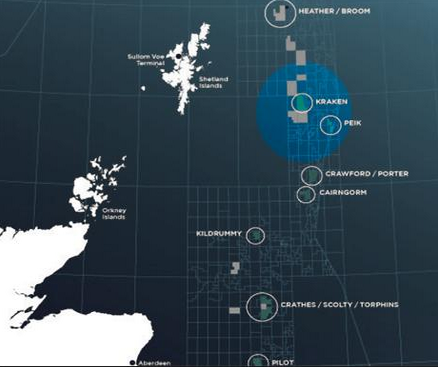
According to EnQuest, the investment is set to generate billions of revenue for taxpayers and to support an estimated 20,000 jobs during the project’s construction period and an average of approximately 1,000 operational jobs a year over the course of its 25 year life.
The development has been approved by the Department of Energy and Climate Change (‘DECC’), this is the largest investment announced in the UK North Sea this year and one of the largest UK industrial investments for 2013.
EnQuest is the operator of Kraken and will develop the project on behalf of itself and its partners. The project will be EnQuest’s sixth production hub in the UK North Sea. The development has two separate heavy oil fields, both of which will benefit from heavy oil allowances, which the Government has provided support for in order to stimulate investm
ent in the UK North Sea.
Chancellor of the Exchequer, George Osborne said: “This is a big investment that will create jobs and boost the British economic plan. It is also evidence that our efforts to create a competitive tax regime that gets the most oil and gas out of the North Sea are working.”
Suppression of Nuclear Protest in Japan – Prof. Masaki Shimoji
He was Jailed for 21 days because he was speaking out against the way the Japanese government is handling the Fukushima Daiichi Nuclear Disaster – burning debris, hiding test results, etc. NOTE: I edited the video to include ONLY ENGLISH but you can watch the full video here: http://youtu.be/YYoUimpDPAk
Published on Nov 17, 2013
An excerpt from A Town Hall Forum
Held at The Unitarian Universalist Church of Berkeley (UUCB) Berkeley, CA Oct. 17, 2013
http://ffan.us/ Fukushima Fallout Awareness Network
“We are alarmed at the lack of testing currently in place to meet the present-and-growing threat of Cesium 134 and 137 contamination in our food supply. The time is past-due for a comprehensive response to radiation present in our food supply from the Fukushima disaster. ” Alexis Lynn Baden-Mayer, Political Director, Organic Consumers Association
Co-Sponsors:
Berkeley Fellowship of Unitarian Univeralists
FukushimaResponse.org
No Nukes Action Committee
Codepink
EON – the Ecological Options Network http://youtu.be/VtHmm17AmWs
The Japanese government’s recent proposal of the “Designated Secrets Bill”, under which journalists could face arrest and prosecution for divulging state secrets, has been cause for much concern among many of my colleagues.
In response to the bill, which is now under consideration by the Japanese Diet, the Foreign Correspondent’s Club of Japan (FCCJ) president Lucy Birmingham wrote a statement of protest:
It is at the very heart of investigative journalism in open societies to uncover secrets and to inform the people about the activities of government. Such journalism is not a crime, but rather a crucial part of the checks and balances that go hand in hand with democracy.
The “Designated Secrets Bill” specifically warns journalists that they must not engage in “inappropriate methods” in conducting investigations of government policy. This appears to be a direct threat aimed at the media profession and is unacceptably open to wide interpretations in individual cases. Such vague language could be, in effect, a license for government officials to prosecute journalists almost as they please.
The full protest statement can be found here: ENGLISH/日本語
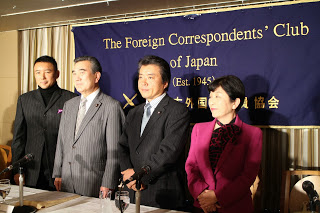
Yesterday, I attended a press conference at the FCCJ during which several prominent politicians voiced their opposition to the proposed “Designated Secrets Bill” (press release HERE).
When Social Democratic Party member Mizuho Fukushima asked lawmakers in the ruling party to explain the definition of “secret”, the reply she received alarmed her. “What is considered secret,” she was told, “is secret”.
“But information,” Fukushima insisted to the crowd of journalists attending the press conference, “is the currency of democracy.”
Mr Sohei Nihi, of the Japanese Communist Party, expressed his concern that people could be arrested and prosecuted for revealing something they did not realize was considered a state secret. He suggested that with such vague wording in the bill regarding what is considered a secret, the government could use it to control information it deemed to be unflattering.
When expressing his concern about the bill, Mr. Ryo Shuhama of the People’s Life Party suggested that if the government yields too much discretionary power then there is the danger that human rights may be violated.
However, it was perhaps the youngest and newest politician in attendance, Independent lawmaker Taro Yamamoto, whose words were most anticipated.
Yamamoto wondered why a bill such as this is even necessary when information that the public has a right to know is already being tightly controlled.As an example, he explained that he recently discovered that equivalent of nearly 2.5 million USD of public money that had been earmarked for reconstruction efforts after the March 11, 2011, disaster was used for “exploratory research” into how to promote the sale of Japan’s nuclear technology to Vietnam.In the public’s interest, Yamamoto requested the relevant papers which he brought to the press conference.The files were redacted to the point that they were nearly entirely black (PHOTO below).
“Why is the government insisting on expanding its power to crack down?” he asked.“On the surface, they are saying this is about national security (relating to tensions in Asia), but in reality this is going to lead to the oppression of rights and the freedom of expression.”
Almost seeming to directly address the camera crews from all the major networks that were filming the press conference, Yamamoto expressed his disbelief at the lack of media coverage the proposed bill has received despite his traveling up and down the country from Hokkaido to Okinawa to speak out against it.“By not providing coverage of this bill,” Yamamoto said, “the media is putting a noose around its own neck.”
“(The passing of this bill) will lead to the ability for the government to crackdown on anything”, Yamamoto predicted.“We are on a path to recreating a fascist state.”
(Translation and posted by Mia on 17/11/13)
Lawmar. Yamamoto managed to get away from being charged a criminal offense after he received so many criticism from other politicians over his handing his letter to the Emperor. He was just talked over to resign his position as a member of Lower House by Mr. Iawaki, a head of 参議院委員会. He showed no sign of resigning… even if he gets continuous harassment by his opponents, pro-nuclear group including being threatened to be killed and sent a knife by post. http://saigaijyouhou.com/blog-entry-1152.html
これ、山本太郎議員がベトナムへの原発輸出に関する資料請求して出て来たもの(笑)初質疑で時間内ギリギリでこれをカメラに目線に曝した太郎さん^ 「何処みても真っ黒けでしょ?もう、特定秘密保護法案が通ってしまったかのよう」と。あっぱれ太郎! pic.twitter.com/6IsXIahjuV Mr. Yamamoto recently acquired some information on the exporting of nuclear business to Vietnam. However, the document is nearly painted all black. He shared the redacted blacked out document with the rest of members of the Parliament. “It is all painted black! Doesn’t this document show we are already affected by new secret law!!” Well done, Taro-san!
An excellent Presentation.
Facing Fukushima Facts – Mary Beth Brangan by eon3
Published on Nov 17, 2013
An excerpt from A Town Hall Forum
Held at The Unitarian Universalist Church of Berkeley (UUCB) Berkeley, CA Oct. 17, 2013
http://ffan.us/ Fukushima Fallout Awareness Network
“We are alarmed at the lack of testing currently in place to meet the present-and-growing threat of Cesium 134 and 137 contamination in our food supply. The time is past-due for a comprehensive response to radiation present in our food supply from the Fukushima disaster. ” Alexis Lynn Baden-Mayer, Political Director, Organic Consumers Association
Co-Sponsors:
Berkeley Fellowship of Unitarian Univeralists
FukushimaResponse.org
No Nukes Action Committee
Codepink
EON – the Ecological Options Network http://youtu.be/VtHmm17AmWs
More cancers in Fukushima children — Mother: We don’t know what’s actually going on, I can’t trust gov’t — TV: Private hospital finds cysts after ‘official’ tests were all clear (VIDEO)
Hermann Scheer tells the truth about the nuclear industry. He says that the nuclear energy lobby comes from the many pro-nuclear institutions that were set up in the 1950s and 1960s and still exist. This helps perpetuate the myth that renewable energy cannot fully replace fossil or atomic energy.
Dr. Hermann Scheer is a member of the German Parliament, President of EUROSOLAR, the European Association for Renewable Energy, and General Chairman of the World Council for Renewable Energy. He will speak at UC Berkeley in 290 HMMB at 11:00 a.m.
Description: “Energy Autonomy: The Economic, Social and Technological Case for Renewable Energy”by Dr. Hermann Scheer, member of the German Parliament
11:00 a.m. in 290 Hearst Memorial Mining Building, UC Berkeley campus. Co-sponsored by the Energy and Resources Group.
Abstract:
For 200 years, industrial civilization has relied on the combustion of abundant and cheap carbon fuels. But continued reliance has had perilous consequences. On the one hand there is the insecurity of relying on the world’s most unstable region ‘ the Middle East ‘ compounded by the imminence of peak oil, growing scarcity and mounting prices. On the other, the potentially cataclysmic consequences of continuing to burn fossil fuels, as the evidence of accelerating climate change shows.
Yet, there is a solution: to make the transition to renewable sources of energy and distributed, decentralized energy generation. It is a model that has been proven, technologically, commercially and politically, as Hermann Scheer comprehensively demonstrates. The alternative of a return to nuclear power ‘ again being widely advocated ‘ he shows to be compromised and illusory.
The advantages of renewable energy are so clear and so overwhelming that resistance to them needs diagnosis ‘ which Scheer also provides, showing why and how entrenched interests oppose the transition and what must be done to overcome these obstacles.
Biography:
Dr. Hermann Scheer is a member of the German Parliament, President of EUROSOLAR, the European Association for Renewable Energy, and General Chairman of the World Council for Renewable Energy. He devoted the greatest part of his political and scientific life to the replacement of nuclear and fossil fuels with environmentally sound energy sources. In the German Parliament, the German Renewable Energy Feed-in-Tariff-Law, the new Federal Building Law (prioritising Renewable Energies) and the Tax-Free-Law for Biofuels are based on his initiatives. These laws became the most successful Renewable Energy industrial promotion and application worldwide.
Dr. Scheer has received numerous awards including the World Wind Energy Award, the World Prize on Bio-Energy and the World Solar Prize as well as the Alternative Nobel Prize. In 2002 Time Magazine recognized him as one of five ‘Heroes for the Green Century’.
His previous books include The Solar Economy (2002) and A Solar Manifesto (1994).
The highly dangerous and unprecedented removal of the highly radioactive nuclear fuel rods in Fukushima Unit 4 will begin on Monday, November 18.
The Unit 4 fuel rod removal is like to trying to pull cigarettes from a crushed pack.The Japanese Nuclear Regulation Authority (NRA) had previously said the process would begin in mid-November but kept the exact date secret ‘for security reasons.’ TEPCO has now confirmed that the operation will begin Monday.
The NRA said that it will provide ‘enhanced oversight’ to TEPCO as the company begins the hugely delicate process of removing 1,331 spent fuel assemblies and 202 unused assemblies. The fuel rods are brittle, potentially damaged, and still located high above the ground in a badly damaged building that has buckled and tilted and could collapse if another quake strikes.
The fuel assemblies are in a 32 x 40 feet concrete pool, the base of which is on the fourth story of the damaged reactor building. The assemblies – which contain plutonium, one of the most toxic substances known – are under 23 feet of water.
If the fuel rods – there are 50-70 in each of the assemblies, which weigh around 661 pounds and are 15 feet long – are exposed to air or if they break, catastrophic amounts of radioactive gases could be released into the atmosphere.
France’s feisty objection to elements of the proposed Iran nuclear agreement may have merit, but Eric Edelman and Ray Takeyh are way off base writing that “France has an honorable history” in shielding the Nuclear Nonproliferation Treaty and underlying norms.
France has had a tradition of helping countries with suspect nuclear ambitions. Before the treaty, Paris provided Israel with the Dimona reactor that it knew would be used for weapons development. After the NPT went into force in 1970, France provided Saddam Hussein’s Iraq with the Osirak reactor. When questions arose, France refused to modify Osirak’s weapons-grade fuel. Paris also provided Iraq with equipment for laboratory work on nuclear enrichment.
In the early 1970s, France provided Pakistan with plutonium extraction technology. Only strong U.S. pressure in 1978 forced Paris to abandon the export of a large reprocessing plant, but this did not stop French companies from supplying other equipment that Islamabad used in the weapons program.
An early partner in India’s “peaceful” nuclear program, France also continued to assist New Delhi after it exploded its first nuclear weapon in 1974.
France has a lot of nonproliferation catching up to do if it is to be taken seriously.
Bennett Ramberg
Los Angeles
The writer served in the State Department‘s Bureau of Politico-Military Affairs in the George H.W. Bush administration.





 “Energy Autonomy: The Economic, Social and Technological Case for Renewable Energy”





