Homer Simpson would be proud: Nuclear regulators crack firewalls to access porn
…Investigators later learned that a co-worker filched that employee’s login credentials to search for porn using terms such as “busty women.”…
Read more: http://www.washingtontimes.com/news/2013/nov/20/nuclear-regulators-bypass-federal-firewalls-find-w/?1#ixzz2lKHtefrE
Follow us: @washtimes on Twitter
Read more: http://www.washingtontimes.com/news/2013/nov/20/nuclear-regulators-bypass-federal-firewalls-find-w/?1#ixzz2lKHe7IVL
It’s become tougher to surf porn on government computers after scandals, but some workers at the Nuclear Regulatory Commission managed to find ways to bypass detection software and firewalls to get the illicit content, records show.
One contract employee watched, in his words, two “porn type” Netflix movies during “downtime” on his 12-hour shift at the commission’s office of information services, according to case records reviewed by The Washington Times.
Another employee repeatedly used the photo-sharing site Flickr to search for pornography while at the office.
And for years, a resident inspector at the agency scoured eBay looking for pornographic images.
The case memos don’t suggest as pervasive of a problem as the porn-surfing scandal that embroiled the Securities and Exchange Commission a few years ago. But the records indicate that the problem hasn’t been eliminated, either.

Joseph McMillian, assistant inspector general for investigations, said agents hadn’t been tipped off to any broader problems when they opened the investigation.
“It wasn’t anything specific; it was just being proactive,” he said.
From May 2011 to September 2012, agents with the inspector general’s cybercrimes unit opened seven cases involving computer misuse, records show. Among the examples cited in a case memo, all involved pornography.
In one investigation, agents approached an employee about 100 explicit images and videos traced to his computer. The employee denied looking at the material, and what might have seemed like an excuse turned out to be true.
CNN Doubles Down on Pro-Nuclear Bias – Answers Petitions, Critics, with More Slanted Commentary
…The film’s other billionaire funder, Microsoft founder Paul Allen, is an investor in “advanced nuclear technologies,” according to the website of his venture capital firm, Vulcan Inc…
Global Research, November 21, 2013
NRDC’s Dale Bryk provides the only voice of skepticism on CNN’s nuclear roundtable following the network’s airing of pro-nuke documentary Pandora’s Promise.
CNN aired the pro-nuclear power filmPandora’s Promise on November 7. The film was little more than propaganda (FAIR Action Alert, 10/25/13), brooking virtually no dissent from the views of the film’s seven principal “stars”–one-time anti-nuclear environmentalists who now say the planet can only be saved from the ravages of fossil fuels by a rapid, large-scale investment in new, supposedly fail-safe “fast reactors.”
In advance of the airing, FAIR and RootsAction presented CNN with a petition signed by over 27,000 activists, demanding the news network present a more balanced discussion of the issue. How did CNN respond? By compounding the bias with a post-show roundtable,Nuclear Power: The Fallout From Fear, that featured a panel just as slanted as its title.
Moderated by CNN‘s Anderson Cooper, the panel was stacked three to one in favor of the film’s premise. Dale Bryk of the Natural Resources Defense Council, the lone anti-nuclear voice, was outnumbered by the film’s director, Robert Stone, climate scientist James Hansen and former nuclear plant operator Michael Friedlander. During the panel, Bryk had her remarks ridiculed as “silly” by Hansen and “delusional” by Stone, with no objection from Cooper, who seemed at times to play the role of a fourth pro-nuclear panelist. At one point he confronted Bryk on the role of renewables by parroting the film’s line that “alternative solutions like solar, wind…will never be a real solution.”
At another point, Cooper asked the filmmaker a leading question that suggested nuclear power has been remarkably safe: “Can you point to how many people have died from–I mean, Three Mile Island, nobody died. Emergency procedures there worked, correct?”
Cooper’s language could have come straight from any number of past corporate media whitewashings of nuclear power dangers. For instance, NBC‘s 1993 broadcast What Happened? (3/16/93) concluded that “the system worked” at Three Mile Island–that aside from some “communications” issues, people near the Pennsylvania plant were happily living their lives years after the 1979 partial meltdown there (Extra!, 7/1/93).
 Three Mile Island had resulted in only a “a minor release” of radiation, agreed Stone, adding that, in the US, “not a single death has occurred from commercial nuclear power in the entire 50-year history.”
Later, Stone said of the Fukushima accident: “Nobody has died, nobody has gotten sick, and according to the best science in the World Health Organization, nobody ever will.” What WHO (2/28/13) actually says is that “the estimated risk for specific cancers in certain subsets of the population in Fukushima Prefecture has increased,” and that one-third of the emergency workers at the plant have an increased cancer risk.
When FAIR asked epidemiologist Steven Wing of the University of North Carolina’s School of Public Health to comment on Stone’s claims, he acknowledged that no deaths had resulted immediately from acute radiation poisoning at Three Mile Island or Fukushima, but that longer-term cancers caused by radiation were a different story:
TV: Mentally disabled are working at Fukushima Daiichi, says journalist — Many men forced to go to plant — Homeless treated like ‘disposable people’ (VIDEO)
Published: November 21st, 2013 at 5:42 pm ET
By ENENews
RT News, Nov. 20, 2013: Homeless men employed cleaning up the stricken Fukushima nuclear plant, including those brought in by Japan’s yakuza gangsters, were not aware of the health risks they were taking and say their bosses treated them like “disposable people.” […] While some workers voluntarily agreed to take jobs on the nuclear clean-up project, many others simply didn’t have a choice […] many of the workers were brought into the nuclear plant by Japan’s organized crime syndicates, the yakuza. […] Although a special task force to keep organized crime out of the nuclear clean-up project has been set up, investigators say they need first-hand reports from those forced to work by the yakuza […]
Anonymous former Fukushima worker: We were given no insurance for health risks, no radiation meters even. We were treated like nothing, like disposable people — promised things, and then kicked us out when we received a large radiation dose.
Tomohiko Suzuki, journalist who worked at Fukushima plant: The government called Tepco to take urgent action, Tepco relayed it to subcontractors — and they, eventually, as they had a shortage of available workers, called the Yakuza for help. […] They were given very general information about radiation and most were not even given radiation meters. They could have exposed themselves to large doses without even knowing it. Even the so-called Fukushima 50 […] at least three of them were enrolled by the yakuza.
Aleksey Yaroshevsky, RT: There are 25% more openings for jobs at Fukushima plant than applicants, according to government data. Gaps filled, says Suzuki, by the homeless, the desperately unemployed and even those with mental disabilities.
10,000 protesters against tough new official secrets law in Japan 秘密保護法案反対集会デモ、1万人集まる

Posted by Mia
No Way Back: The Japanese Government Tells People to Go Home Despite Radiation Alarm 日本政府は放射能の危険さを無視して、避難者を立ち入り禁止にすべき地域に帰還させようとしている。

France does not need Mali’s uranium despite all conspiracy stories to the contrary

…One more variation on the story that is almost not worth mentioning is the idea that France is fighting in Mali to protect its supply lines to Niger, where Areva currently produces about 3,200 tonnes of uranium every year. Since it would be shipped in the form of yellowcake (U3O8) and not uranium, France needs to move about 4,000 tonnes of material from Niger each year….
…Full containers contain about 19 tonnes of U3O8 concentrate. Shipping 4,000 tonnes would thus require about 210 containers each year. That is not much more than one truck every 2 days….
Pro-nuclear advocate with small nuclear plant operating and design experience. Former submarine Engineer Officer. Founder, Adams Atomic Engines, Inc. Host and producer, The Atomic Show Podcast. Resume available here
· January 24, 2013
There is a meme circulating on web claiming that France’s intervention in Mali can be traced to a desire to capture the country’s uranium resources. That idea is complete and utter rubbish that can only be believed by people who have done no math and no research to recognize whether such a theory can be supported by facts and logic.
There is a certain set of facts that would lead gullible people to believe the theory that the conflict in Mali has something to do with uranium. It is true that France obtains roughly 80% of its electricity supply from the output of 59 nuclear reactors. It is also true that reactors operate by fissioning uranium. It is also true that nations, especially former colonial powers like France, have a long history of engaging in war over resources. In fact, the notion that resource conflicts underly many of society’s deadliest conflicts is one of the concepts that motivates me to do what I do every day.
However, a curious person who is willing to do a little research and math needs more information before jumping to conclusions about France’s motivations for intervening in Mali. Here is a set of relevant questions that are not hard to answer; those answers determine if the theory holds any water.
- How much uranium does Mali have?
- How much uranium does France need?
- How much would it cost France to buy the material? (Stated another way, how much is Mali’s uranium worth on the open market?)
- Is there an adequate supply of uranium from other sources?
- How much will intervention cost in the short term?
The World Nuclear Association has two relevant web pages, one titled Supply of Uranium and one titled World Uranium Mining. Mali does not appear on either page, indicating that it has neither world leading uranium resources, nor any substantial uranium production.
Digging a little deeper into the sources claiming that uranium is the key to understanding the motives for the Mali conflict, I found a site published by a firm called Consultancy Africa Intelligence that has a page about Mali’s mining industry and natural resources. Buried in the discussion about gold and diamonds, I found the following statement:
Several companies in Mali are currently carrying out uranium exploration in the Falea and Gao regions, where the uranium potential is estimated to be 5,200 tonnes.
Going back to those pages from the World Nuclear Association, I found that the world’s uranium mining industry produced 54,000 tonnes of uranium in 2011 and that the world’s known recoverable resources were 5.3 million tonnes as of the end of 2011. Next to those numbers, a speculative, “potential” resource of 5,200 tonnes is trivial.
BP’s Trolls Send Death Threats to Online Critics | Interview with Dahr Jamail
Published on 20 Nov 2013
Abby Martin speaks with investigative journalist Dahr Jamail, who has uncovered BP’s online scheme to silence critics of their Gulf of Mexico clean-up, with methods such as bribery and death threats.
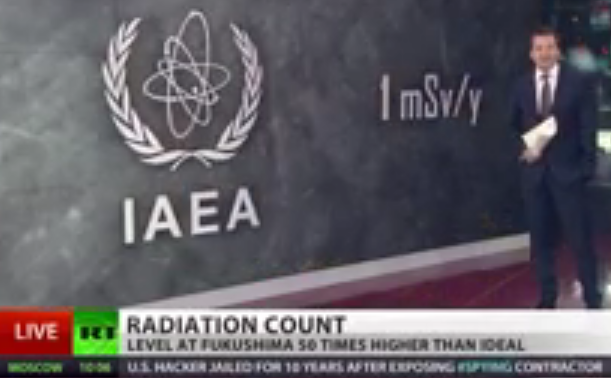
Belarusian President signs off on building Ostrovets nuke plant against public demands that construction get canceled
….via proof that has been obtained that shows the official Environmental Impact Assessment (EIA) for the project of Belarusian NPP has been “conducted improperly, understating data on the possible impact of Ostrovets NPP on public health and the environment in case of a severe accident.”…..
http://www.bellona.org/articles/articles_2013/president_signs_off_on_ostrovets
MINSK—As the Belarusian government made its official announcement of the “start of construction” of Ostrovets Nuclear Power Plant, representatives of the Belarusian public fired back with open addresses demanding that the construction license for the plant’s Unit 1 be revoked and the very decision to build the station voided.
On November 5 – days after Belarusian President Alexander Lukashenko signed his decree “On the Construction of the Belarusian Nuclear Power Plant” – members of the country’s NGOs, initiative groups, and parties sent out open addresses protesting the plant’s construction.
In an address sent to the Department for Nuclear and Radiation Safety (Gosatomnadzor) of the Belarusian Ministry of Emergency Situations, Belarusian NGOs urged the agency to revoke the construction license issued for the reactor of the future plant’s Unit 1 and cancel the decision to build the plant.
The following day, the political council of one of the oldest democratic parties in Belarus, the United Civil Party (UCP), published a statement with a number of demands, including “immediate suspension of construction” of the plant and developing a “state program of nuclear-free development of the country through the use of energy-efficient technologies and renewable energy sources.”
Lukashenko signs Belarusian nuclear plant construction decree
Decree No. 499, “On the Construction of the Belarusian Nuclear Power Plant,” was inked by President Lukashenko on November 2, the Belarusian news agency BELTA reported (in Russian).
This decision, the news report said, was taken in accordance with Article 4 of the law of the Republic of Belarus “On the Use of Atomic Energy” and allows the general contractor on the project to start construction of the plant.
Item 1 of the decree (in Russian) orders to [e]xecute in 2013 to 2020 the construction of the Belarusian Nuclear Power Plant […] on a plot of land in Ostrovets District of Grodno Region […].”
Belarusian (or Ostrovets) Nuclear Power Plant (NPP) is a two-unit station with reactors of the Russian series VVER-1200 and a total capacity of 2.4 gigawatts, being built to a Russian project. The general contractor is Atomstroiexport, the export wing of the Russian State Atomic Energy Corporation Rosatom.
Several days later, BELTA cited (in Russian) Belarusian Deputy Energy Minister Mikhail Mikhadyuk as saying that the signing of Decree No. 499 gives a green light to starting building the main structures of the future plant.
Public spells out factors aggravating Ostrovets plant’s risks
Representatives of the Belarusian public demanded that Gosatomnadzor recall its construction license for the Ostrovets station’s Unit 1 and cancel the decision to build the plant based on factors that “impact the increase of the hazard level of Ostrovets NPP.”
This was stated in the open address (in Russian) sent out on November 5 and signed by the Belarusian Green Party, the ecological non-governmental organization Ecodom, the steering committee of the movement Scientists for a Nuclear-Free Belarus!, the organizing committee for the creation of the Belarusian Christian Party, the Belarusian Social-Democratic Party (Gramada), the public campaign Ostrovets NPP is a Crime!, the Belarusian Autocephalous Orthodox Church, and other organizations.
The request addressed to Gosatomnadzor, the statement says, is based on Article 15 of the Belarusian Law “On the Use of Atomic Energy”, which states, in part: “The decision to build a nuclear installation and (or) storage site must be cancelled, and their construction stopped, in the event that factors are brought to light that entail a decrease in the safety levels of these sites, contamination of the environment, or other adverse circumstances.”
92-year-old journalist motivated to write again by Fukushima crisis 92歳のジャーナリスト福島事故がきっかけで、本の執筆に励む
http://fukushimaappeal.blogspot.co.uk/2013/11/92-year-old-journalist-motivated-to.html
Posted by Mia
19 November 2013
(Source) http://mainichi.jp/english/english/features/news/20131116p2a00m0na006000c.html
In the 160-centimeter-tall, 36-kilogram frame of 92-year-old Kikujiro Fukushima burns a journalistic passion.

Image source ; http://www.japanfocus.org/-yuki-tanaka/3623
I first visited Fukushima at his house in Yanai, Yamaguchi Prefecture, in the summer of 2007. At the time, Prime Minister Shinzo Abe, who was serving his first term, was touting his “beautiful country” slogan. That same summer, the defense minister resigned after implying that the atomic bombing of Japan was inevitable.
I remember Fukushima angrily saying at the time that if those in power imposed their self-righteous values on the people, Japan would return to a path of mistakes.
Since then, every time I have met Fukushima, his words have made me think.
“If you hide in safety in the name of impartiality of the press, you will not learn the truth,” he once said to me. On another occasion he told me, “If you don’t go to the site of an event and face the people involved, you can’t take any pictures, or write an article that will touch people.”
Fukushima previously worked as a photographer, but he traded in his camera for the written word, and went on to release three books on postwar Japan. Eventually he retired from the world of journalism, but that was before the disasters of March 2011 reignited his journalistic desire. Worried that “the mistakes of Hiroshima would be repeated,” he headed to Fukushima Prefecture accompanied by younger photographers.
In the disaster-hit prefecture, the same kinds of tragedies that had plagued the Hiroshima victims he talked to had resurfaced: farmers robbed of the land passed down from their ancestors, people worried about the effects of radiation on their children and grandchildren and the discrimination that could arise.
Now the fall of 2013 has arrived, and a second Abe administration, this time proposing the creation of a “strong country,” has been born. Lies and cover-ups about the Fukushima nuclear disaster have come to light, and a push to restart the country’s idled nuclear reactors continues.
When I visited Fukushima’s home again, I found him sitting at his desk.
“Both this word processor and I are nearing the end of our lives. I always start out with a prayer that it will run properly,” he said.
“What’s most important is to not ignore things that are troublesome or inconvenient, to think for yourself, and to start from where you can,” he told me. He added that he wanted to protest against the pro-nuclear stance.
“I want to live a little longer and write a book linking Fukushima and Hiroshima,” he said. “There are still things I have left to write.” (By Shinya Hagio, City News Department)
Related articles
- Japan mayor offers Fukushima kids home in his town (bigstory.ap.org)
Russian-US Megatons to Megawatts – “Parting is such sweet sorrow”

http://www.bellona.org/articles/articles_2013/megatons_megadone
Russia started last week to draw the curtains on a 20-year-old nuclear non-proliferation program as it began to package its last batch of low-enriched uranium (LEU) to the United States under the long-standing “Megatons to Megawatts” program to convert Soviet-made nuclear weapons into conventional reactor fuel.
An official from Russia state nuclear corporation Rosatom told RIA Novosti that 160 metric tons of low-enriched uranium had been loaded in 10 containers onto a ship that will deliver the cargo to the US port of Baltimore.
The Megatons to Megawatts program was signed in February 1993 and expires this year.
“This ends what has been an extremely important non-proliferation program between the United States and Russia,” said Nils Bøhmer, Bellona’s general director and nuclear physicist. “It has helped prevent the manufacture of countless weapons of mass destruction and left the world a safer place – both Russia and the US are to be congratulated.”
Russia poised for uranium rush in US?
Russia has earned $17 billion in revenue converting 500 metric tons of high-enriched uranium – the equivalent of 20,000 nuclear warheads – from dismantled nuclear weapons into low-enriched uranium to be used for fuel in US commercial reactors.
But it now expects to earn more.
Russia has often complained that it is unfairly making less than market value for the LEU it provided to the US under the nonproliferation program – and took the matter to court in 2008.
That year, a US federal court found in favor of Russia being able to sell uranium to the US outside the parameters of the Megaton’s to Megawatts agreement by striking down high tariffs levied on Russia LEU, and allowed some imports to circumvent the program.
But this year looks set to be a boom year in uranium sales to the US with the Megatons to Megawatts limits officially out of the way, according to industry predictions.
Alex Jones interviews Chris Busby – Fukushima worst case scenario with dose estimates
begins at 2hrs 33 mins approx
18 November 2013
Chris Busby comments to Alex Jones on various forms of contamination from nuclear sources, including a Fukushima worst case scenario (he provides dose estimates), Fallujah, Pacific Tuna, Corruption of the Science community by big money interests and much more in this 40 minute interview . He makes the comment that if you live near a nuclear plant in the USA, that you should “run away”.

Nuclear Hotseat 126: Wasserman, Gundersen on TEPCO, SFP4 & Activism now! -Audio
Nuclear Hotseat Podcast
The Activist Voice of the Anti-Nuclear Movement
Produced and Hosted by Libbe HaLevy

DOWNLOAD HERE:
http://lhalevy.audioacrobat.com/download/d4b1a1ad-1250-ad6c-450b-8d8cba932f6f.mp3
Or listen on link – http://www.nuclearhotseat.com/blog/
THIS WEEK’S NUCLEAR HOTSEAT: www.NuclearHotseat.com/Blog
(CLICK TO ACCESS):
Nuclear Hotseat is the weekly international news magazine keeping you up to date on all things anti-nuclear. Produced and Hosted by Three Mile Island survivor Libbe HaLevy, each podcast contains the week’s international nuclear news, at least one expert interview, ways to protect physical health of yourself and your loved ones from the dangers of radiation exposure, and activist opportunities.
Among the nuclear experts interviewed by Nuclear Hotseat in its first two years:
- Arnie Gundersen, nuclear engineer, head of Fairewinds Energy Education
- Dr. Helen Caldicott, founding President, Physicians for Social Responsibility
- Dr. Janette Sherman and Joseph Mangano, authors of “An Unexpected Mortality Increase in the United States Follows Arrival of the Radioactive Plume from Fukushima: Is There a Correlation?”
- Karl Grossman, Journalist, host of “Enviro Close-Up”
- Daniel Hirsch, Nuclear Policy Lecturer, UC Santa Cruz
- Alice Slater, Nuclear Age Peace Foundation
- Mochizuki Iori, blogger, Fukushima Diary
- Nuclear Whistleblowers
- …and many more.
Harvey Wasserman: Risky Operation at Fukushima Demands World Action
Published on 19 Nov 2013
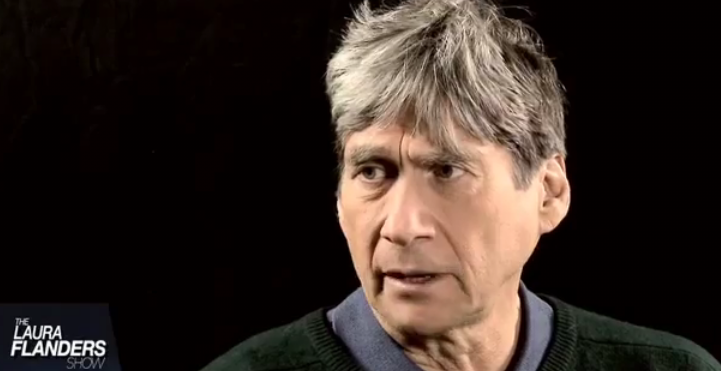
Laura Flanders’ show streams at GRITtv.org This week, the operator of Japan’s crippled Fukushima nuclear plant began the process to remove 400 tons of highly irradiated spent fuel, Nuclear researcher Harvey Wasserman talks about the risks involved and need for world intervention. Distributed by OneLoad.com
A BIT ON THE CYANIDE – Mining in Romania
“A global problem requires a global solution!” We call on all affected communities to unite to protect their rights for a clean and healthy environment. United against irresponsible mining!
http://www.schnews.org.uk/stories/A-BIT-ON-THE-CYANIDE/
Published on 18th November 2013

In the dark caves of Transylvania something creeps but it is not vampires you should be worried about. The real blood sucking threat to Romania is Gabriel Resources, the company behind the Rosia Montana gold mining project. Protesters have been gathering outside Westminster every Sunday since the 1st of September to raise awareness about this ecological catastrophe that is currently unfolding in Romania. They are holding weekly demonstrations. Check facebook event. Schnews took a look at the most recent one:
Around 100 Save Rosia Montana campaigners showed up in cold temperatures to raise concerns over the mining project. There were banners inscribed with “Together We Will Save Rosia Montana”, “Our mountains are not for sale”, “You shall not pass”, and they’d brought a dusky green authentic Romanian banger with the number plates of BRJ 135K to drive the point home. The demonstration this Sunday(11th) was due to start at 2.30pm but protesters were told by the Met to start demonstrating at 3pm instead as there was a clash with Remembrance Day and they were then forced to move down the road so instead of standing by Parliament Square they reassembled by the George V statue. To further complicate matters, their allocated area was host to another demonstrating group, the Egypt anti-coup protesters.

There was uncertainty of how the two would demonstrate together at the same spot without shitting on each other’s parade but in a true revolutionary spirit of solidarity and show of camaraderie each group took the microphone for two minutes and took it in turns to shout, “We do not want cyanide”, “From the river to the sea, Egypt, Egypt will be free”, “Say NO Cyanide”, “BBC don’t you see, SISI killed democracy”, “Romanian Government Shame On You”. This was the way of it for two hours until the final hour commenced and a choir had formed, made up of Romanian and Egyptian protesters shouting each other’s woeful and powerful slogans. One demonstrator took the stand and led their songs of protest as well as the conductor of the London Philharmonic orchestra would have. Cars sporadically beeped in support as they drove by.
Artistic ripples
There is an open piece collective art project, Echo Rosia Montana, being created for the campaign (and against fracking, and for the Global Ecological Revolution) initiated by Artist Emanuela Marcu. People are encouraged to participate, starting with one person drawing a small leaf in the middle of a blank piece of paper or canvas and then writing their name at the bottom of the page then the following person traces a line around the leaf, reflecting the initial image like an echo and signs their name next to the last person’s, linking their names together. At the end this artistic process creates an image that depicts the rippling effect. This is meant to show “in the same way as the protest, from a small gesture of inner resistance, to a movement as vast as a shoreless ocean spreading around you, that you will have moved from stillness to irrepressible, waving life”. New York, Paris, Torino and London are some of the cities that have taken part in creating canvasses for the revolution. It will result in an end piece signed by thousands of people in many cities across the world. Echo for Rosia Montana will be delivered to the hands of UNESCO Paris along with a global plea to add Rosia Montana to the World Heritage List.
The Save Rosia Montana campaign has recently grabbed the attention of some better known players. Last week Kumi Naidoo (Executive Director of Greenpeace International) attended a demonstration and showed his support. Serban Cantacuzino (President of Pro Patrimonio – The National Trust of Romania) and Nicolae Ratiu (Chairman of The Ratiu Foundation) both of the Romanian Cultural Institute have publicly pledged their support.
Fool’s Gold
1 This Month





PLEASE OPPOSE HR 8255 AND S.3639 – bills would accelerate satellite deployment, with no environmental review or safeguards – https://ncstd5li.quorum.us/campaign/169331/
To see nuclear-related stories in greater depth and intensity – go to https://nuclearinformation.wordpress.com
-
Archives
- October 2026 (81)
- September 2026 (339)
- August 2026 (330)
- July 2026 (355)
- June 2026 (287)
- May 2026 (306)
- April 2026 (356)
- March 2026 (251)
- February 2026 (267)
- January 2026 (308)
- December 2025 (358)
- November 2025 (359)
-
Categories
- 1
- 1 NUCLEAR ISSUES
- business and costs
- climate change
- culture and arts
- ENERGY
- environment
- health
- history
- indigenous issues
- Legal
- marketing of nuclear
- media
- opposition to nuclear
- PERSONAL STORIES
- politics
- politics international
- Religion and ethics
- safety
- secrets,lies and civil liberties
- spinbuster
- technology
- Uranium
- wastes
- weapons and war
- Women
- 2 WORLD
- ACTION
- AFRICA
- Atrocities
- AUSTRALIA
- Christina's notes
- Christina's themes
- culture and arts
- Events
- Fuk 2022
- Fuk 2023
- Fukushima 2017
- Fukushima 2018
- fukushima 2019
- Fukushima 2020
- Fukushima 2021
- general
- global warming
- Humour (God we need it)
- Nuclear
- RARE EARTHS
- Reference
- resources – print
- Resources -audiovicual
- Weekly Newsletter
- World
- World Nuclear
- YouTube
-
RSS
Entries RSS
Comments RSS

