-
India is negotiating unit cost of power for two EPR reactors to be built at Jaitapur
-
The work has been halted several times following conformity warnings
Halt Flamanville EPR work, says nuclear watchdog
….An EDF spokesman confirmed that the Agency had pointed to over 15 cases of non-conformity in a machine at the heart of the reactor under construction…..
December 18, 2013
Vaiju Naravane
Environmentalists criticised reactor as being too expensive and an impossible and dangerous dream
The controversial French EPR at the Flamanville plant in France has once again run into trouble, with the French nuclear watchdog the Nuclear Safety Authority (Agence de surete nucleaire) calling for a halt in work, according to reports appearing in the French press.
EDF, the French engineer-operator of the plant, has admitted that it has received a warning from the French Ministry of Labour but rejected reports that said construction had been forcibly halted.
The gigantic reactor capable of producing 1650 megawatts of power has had teething problems ever since work first began almost eight years ago. Initially expected to go on stream in 2012, the reactor is now slated to become operational in 2016 with a corresponding rise in cost – from an initial € 3.3 billion to an estimated € 9 billion. Not a single EPR (European Pressurised Reactor) is currently operating. The plant in Olkiouoto in Finland, delayed by several years has yet to be commissioned and the Finnish operator TVO is locked in a bitter arbitration battle to the tune of € 2.7 billion with French nuclear giant Areva, the designer of the troubled reactor.
Escalating cost
India is currently negotiating the unit cost of power for two EPRs to be built at Jaitapur in Maharashtra. The cost of the reactor has jumped from an estimated € 3.3 billion in 2007 to over € 8 billion now. It is likely to cross € 9 billion next year. Environmentalists have criticised the reactor as being too expensive, too gigantic and an impossible and dangerous dream. But French authorities have pegged ahead with the controversial project, work on which has been halted several times following conformity warnings from the French nuclear watchdog and accidents including on-site deaths.
“There is real danger at the heart of the EPR in Flamanville [northern France] which EDF has chosen to ignore, failing to respond to the many summations issued by the Agency . Finally, on 13 December, the Ministry of Works and Labour officially warned the engineer operator to take all necessary steps to remedy a situation dangerous for worker safety. Which means of course that delays and costs will rise even further for this gigantic project,” the influential French website Mediapart reported.
An EDF spokesman confirmed that the Agency had pointed to over 15 cases of non-conformity in a machine at the heart of the reactor under construction.
“We have issued a provisional report and are going to issue a final report on the remedial action taken,” the spokesman said. Earlier, the ASN had halted work when cracks appeared in the reactor’s central dome because of faulty cladding and cementing.
Environmental specialists have questioned India’s decision to firstly purchase the mega reactors and secondly locate them in Jaitapur, considered to lie in a seismic zone. Areva, the reactor’s designer says the reactor has a double dome that ensures absolute safety.
Japan Passes Energy Sector Reform in Wake of Fukushima
….What is certain is that old monopolies will face challenges from new energy providers and pressure to improve their services and prices. Renewable energy providers will have a bigger stake in Japan’s electricity market. On the other hand, we are not yet sure whether the opposition forces will fight to the death to stall the next steps of the reform or not….
By Global Risk Insights | Mon, 16 December 2013
By Roger Yu Du
The Fukushima nuclear crisis certainly had profound implications for Japan. In November 2013, Japan’s lower house and upper house successively passed legislation to start electricity sector reform in 2015. Nuclear energy, which used to account for 30 percent of Japan’s electric power, was discarded after the earthquake and Fukushima incident, leading to energy price hikes (see graph below). The new bill, designed to break up monopolies, curb electricity prices and facilitate the development of renewable energy through a series of liberal reforms, is the child of the Fukushima nuclear crisis.

The reform plan consists of three stages. The bill in question provides the legal background for the first stage of reform – the creation of a national grid company in 2015. This entity, after merging different regional grids, will be authorized to instruct power companies to supply electricity to each other when needed to overcome supply shortages. This reform emphasizes electricity transfer among regions, making sure that power shortages during the Fukushima incident would not happen again.
Related article: Here’s An Official Vote For Nuclear
The second and third stages of reform seek to liberalize the sale of electricity to households and strip the major power firms of power transmission and distribution functions. The new bill’s supplementary provision included a plan to enact bills in 2014 and 2015 to stipulate these steps of reform.
The logic of the reforms is straightforward. The 10 regional electricity companies have monopolized Japan’s regional electricity markets for over half a century: they have total control of power generation, transmission and retail in their own regions. Users cannot choose their electricity supplier from other regions. Now, 98 percent of Japan’s electricity supply comes from those big corporations. Unfortunately, they all face soaring costs for imported fuel, which lead to electricity prices that are twice as high as those in the U.S. By allowing households to choose electricity providers and ensuring renewable energy’s access to the national grid, Japan’s electricity sector is expected to see higher supply with more competition.
“Consumers will have a wider choice over the purchase of electricity from operators and in terms of fees. It will also lead to a reduction in electricity payments,” said Toshimitsu Motegi, minister of the economy, trade and industry.
In any political scenario, the greater the perceived impact, the fiercer the opposition you will face. Japan’s regional electricity companies and the opposition parties tried hard to kill the legislation. In June 2013, Abe’s cabinet submitted a bill to the Diet, deliberation on which was postponed for an unrelated political reason. Similar stories have unfolded multiple times since 1990s, when Japan’s leaders tried to revamp the electricity sector. Luckily, this time, due to the Fukushima crisis, the power companies lost public support. Therefore, the first stage of reform, a unified national grid that guarantees power supply during emergencies, was passed this time without further delays.
However, whether this series of reforms can achieve lower electricity prices for households and corporations remains to be tested. What is certain is that old monopolies will face challenges from new energy providers and pressure to improve their services and prices. Renewable energy providers will have a bigger stake in Japan’s electricity market. On the other hand, we are not yet sure whether the opposition forces will fight to the death to stall the next steps of the reform or not.
By Roger Yu Du
Leading US nuclear fuel company to file for bankruptcy
…Even with five nuclear reactors under construction in the south east United States, the nuclear industry is expected to lose a large share in the energy sector, especially after Japan’s Fukushima disaster which raised concerns over nuclear safety. The demand for uranium is expected to decline, at least until new regulations limiting carbon emissions are put in place….
http://eguidez.com/world-news/%E2%80%8Bleading-us-nuclear-fuel-company-to-file-for-bankruptcy/
December 17, 2013
According to the plan the company will repay convertible bonds in October 2014 with $530 million raised from new equity and debt. The majority of creditors have approved, says Reuters.
During the restructuring process USEC intends to run business operations and to fulfill all obligations to suppliers, partners, clients and employees.
USEC, which had a market value of about $43 million as of Friday’s close, has total debts of $640.4 million in cash and equivalents of $128.4 million as of September 30, according to Reuters data.
USEC operates the only US uranium enrichment plant in Paducah, Kentucky. The enterprise belongs to the US Ministry of Energy while USEC rents it. However in May, 2013 the company said it was forced to cease uranium enrichment because the Ministry of Energy considered the plant commercially unpromising.
Besides uranium enriching USEC was the contractor involved in the Megatons to Megawatts program for conversion of Russian weapon uranium into nuclear fuel for American power plants. The program began in 1994 and ended in December, 2013. In 2011 USEC and Russia’s “Tekhsnabeksport” signed a long-term contract for delivering uranium enrichment services to US nuclear power plants until 2022. These deliveries have to partially fill in for the Megatons in Megawatts program ending in 2013.
USEC was founded in 1992 to provide enriched uranium for civilian nuclear power. In 1998 the company went public with IPO and listing on the New York Stock Exchange.
Currently the company is involved in the American Centrifuge project for highly efficient uranium enrichment gas centrifuge extraction into nuclear fuel. The company said in November that government funding for the $350 million project in Ohio would end in January.
Even with five nuclear reactors under construction in the south east United States, the nuclear industry is expected to lose a large share in the energy sector, especially after Japan’s Fukushima disaster which raised concerns over nuclear safety. The demand for uranium is expected to decline, at least until new regulations limiting carbon emissions are put in place.
Reactor decision made for Bulgarian nuclear power plant
17/12/2013

Bulgarian Energy Holding (BEH) is to enter exclusive talks with Westinghouse and Toshiba towards the construction of an AP1000 as the seventh unit at the Kozloduy nuclear power plant, 120 miles north of the Bulgarian capital, Sofia.
In 2012, Bulgaria‘s Council of Ministers approved in principle the construction of new capacity at the site, prompting a request for proposals and subsequent feasibility studies of either a VVER or AP1000, and the latter has now been chosen.
The site is already home to two operating Russian-designed VVER-1000 pressurised water reactors, Kozloduy 5 and 6, as well as four shut-down VVER-440s.
Westinghouse and Toshiba will now work “collaboratively and actively” with BEH over the coming months on the details of a potential project. World Nuclear News reports that Westinghouse president and CEO Danny Roderick said that the selection of the AP1000 reactor would give Bulgaria “a maximum degree of certainty with respect to investment, licensing to European and global standards, with accelerated and modern construction.”
Prior to 2002, Bulgaria was a major regional exporter of electricity thanks in large part to the output of the six Kozloduy reactors, but was forced to close units 1-4 as a condition of its accession to the European Union.
Are Jordan’s nuclear ambitions a mirage?
…Domestic critics also question whether there really are large, commercially viable uranium reserves in the kingdom, and whether their country can provide the quality and volume of water needed for mining and cooling reactors….
http://www.thebulletin.org/are-jordans-nuclear-ambitions-mirage
Chen Kane
16 December 2013
In October of this year, Jordan announced it had chosen Russia to build its first two nuclear-power reactors. Historically, Jordan has lacked access to energy resources. It depends on imports for more than 96 percent of power consumption. This means that a whopping 20 to 25 percent of Jordan’s national expenditures go to importing energy. That is a massive outflow of capital for a country of only 6.5 million people. Jordan’s decision to turn to nuclear power, however, doesn’t mean that the kingdom is about to sail smoothly into the club of nations that produce their own nuclear energy. While Jordan is in great need of a less costly and more reliable energy source, it won’t get there unless it can overcome some major challenges.
High demand. Jordan’s pursuit of nuclear energy is motivated by two factors. The first is a desire to expand, secure, and diversify its energy sources. The kingdom estimates that its electricity consumption will more than double by 2030, reaching 6,000 megawatts per year.
Jordanians have long experienced wild energy price fluctuations and repeated blackouts due to sudden shortages. For example, the pipeline that runs from Egypt to Jordan—and supplies Jordan with more than 80 percent of its natural gas—has been bombed more than 15 times since 2011 as a result of the volatile security situation. Since July 2013 the gas supply from Egypt has been completely suspended, costing Jordan’s fragile economy more than $2 billion. For these reasons, the kingdom understandably looks with hope to nuclear energy as a source of electricity for households, water desalination plants, and industry.
Jordan’s second motive for pursuing nuclear power is to reduce the economic toll that imported energy takes. Many in Amman believe that given the country’s vast uranium reserves, once it starts mining, it will be able to export both energy and the raw material, making the program a significant source of new income. Jordan plans to export part of the uranium and use the rest as a strategic stockpile for its own nuclear program. (It should be noted that French nuclear giant Areva and Jordan Phosphate Mines Company have said that the uranium is not commercially viable.) With more than 15 neighboring countries having announced plans to pursue nuclear energy, Jordan sees an opportunity to become a leading uranium provider.
Pressing problems. While Jordan has made impressive progress in pursuing nuclear energy, many urgent challenges still need to be addressed. It possesses none of the required technology, skilled staff, or infrastructure necessary for a nuclear program. The country has no experience in operating nuclear reactors or fuel and waste facilities. And it has chosen a Russian nuclear reactor design—the AES92—that has been built only in India, where it is currently due to start up after being under construction for 10 years, even though it has not been reviewed by an open and experienced regulatory body.
As worrisome as all that may seem, there are other issues that are even more pressing.
Dealing with public opposition. Domestic critics have, not surprisingly, raised safety and environmental concerns since the spectacle of a disastrous accident at Japan’s Fukushima Daiichi Nuclear Power Station in 2011. Meanwhile the Arab Spring stoked public unrest in Jordan and emboldened anti-nuclear demonstrators to take to the streets. Those who oppose the nuclear program question the accuracy of data presented by the government regarding its cost and economic effectiveness. Said Ayoub Abu Dayyeh, the head of the prominent Jordanian nonprofit organization the Society of Energy Saving and Sustainable Environment, summarized the basis for the public’s skepticism: “In Jordan we have witnessed fraudulent elections, a fraudulent Parliament; it is not out of the realm of possibility that at the end of the day we will receive fraudulent studies.” Domestic critics also question whether there really are large, commercially viable uranium reserves in the kingdom, and whether their country can provide the quality and volume of water needed for mining and cooling reactors.
Ace Hoffman – Nuclear waste: Get rid of it! But where? How? When? And who’s gonna pay for it?
….The fuel should be retrievable in case a permanent national repository does become available. Spent fuel should NOT be reprocessed. Reprocessing takes an enormous amount of energy and creates additional radioactive and chemical waste streams (no matter how many nuclear proponents claim otherwise)….
http://acehoffman.blogspot.co.uk/2013/12/nuclear-waste-get-rid-of-it-but-where.html
Tuesday, December 17, 2013
Hearings on the Nuclear Regulatory Commission’s proposed Generic Environment Impact Statement (GEIS) for nuclear waste were held nationally over the past few months and attended by more than 1400 people. The comment period (for written comments) for “NRC NUREG-2157” ends December 20th.
In California, about 150 people attended a hearing in Carlsbad, and over 200 attended the San Luis Obispo meeting.
Tonight in San Clemente, citizens will ask their city council to request an extension of the comment period. Concerned citizens hope to be able to get additional requests from other local communities, to force the federal government to remove nuclear waste from the now-closed San Onofre Nuclear (Waste) Generating Station, or at least, to give us hardened on-site storage, which neither the current dry casks nor the spent fuel pools provide.
“Hardened” might mean underground, behind earthen berms, separated from each other, moved away from rail, ship, aerial and truck bomb access points, fewer assemblies in each cask, etc. etc.. These are standard anti-terrorism procedures which are NOT being done at our ISFSIs (Independent Spent Fuel Storage Installations, the current acronym for “semi-permanent nuclear waste dump and blight on the land.”)
Yesterday Donna Gilmore and I were suddenly interviewed by Fox 5 San Diego about Southern California Edison’s shipment of Unit II’s original reactor pressure vessel head to Clive, Utah. It’s a dome-shaped object approximately 14 feet across. Edison says it weighs 77 tons, and says that standing six feet away from it for an hour will give you about as much radiation as watching television for about a year. Do they mean modern OLED screens or old tube TVs? Do they mean the most modern types of dental x-ray equipment when they say it’s equal to a dental x-ray, or do they mean older machines that give out nearly an order of magnitude more radiation? Or even older ones that were even worse?
Here’s a link to the report based on the on-site interview with Donna Gilmore:
http://fox5sandiego.com/2013/12/16/san-onofre-transports-nuclear-waste-out-of-state/#ixzz2nh3ycGur
This report by 760KFMB gives additional information:
http://www.760kfmb.com/story/24237142/77-ton-nuclear-component-on-the-road-from-san-onofre-to-utah
Here’s a link to my own animation of San Onofre’s reactors, which shows the exact part they are moving (screen two (the two triangles at the top advance the screens)). Notice that the RPVH is a pretty small piece of the entire system:
http://www.acehoffman.blogspot.com/2013/02/new-animation-shows-what-could-happen.html
The RPVH is highly radioactive, although presumably it will be shipped facing down, so that most of the gamma emissions will be shielded by 8 inches of steel (with a lot of holes, which aim straight up, but presumably have been plugged with something). Underneath perhaps they will have a heavy metal plate several inches thick bolted to the bottom, and any gamma emissions that get through it will, presumably, mainly go into the ground beneath the vehicle as it travels down the road. Few will get through the eight inches of steel, few will get through the bottom plate and then bounce off the ground into where other vehicles with people might be, and so it is called “low level waste.” The inner liner of the RPVH is made of the finest stainless steel available — and millions of kid’s braces could have been made with that steel, if it were not irradiated. Some of it might find its way into kid’s braces some day by accident anyway.
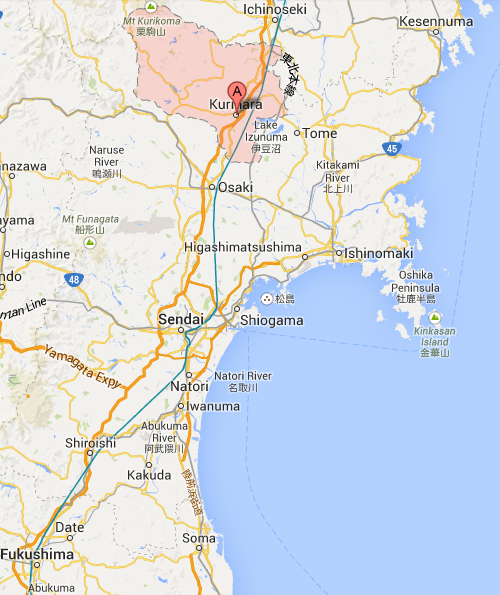
High levels of Radioactive contamination in soil in Miyagi prefecture north of Fukushima
18 December 2013
http://sokuteikak.exblog.jp/21103494/
Radioactive contamination in soil in Izunuma area in Kkurihara-city,
Miyagi prefecture


Cs137:2100 Bq/Kg(検出下限minimum limit of detection 40.7)
Cs134:870 Bq/Kg(検出下限minimum limit of detection 10.4)
Total Cesium - Cs合計:2970 Bq/Kg(検出下限minimum limit of detection  51.1)
測定時間  time length of measurement:3600秒/1時間 3600 seconds/hour  V7容器(85ml)


http://sokuteikak.exblog.jp/21103494/

Story – 2030: Will Europe have the courage to fix its climate & energy tools?
Leading environment journalist Sonja van Renssen gives an insight into the EU’s progress on reducing green house gas emissions in order to tackle climate change and an outlook on the debate on reduction targets for 2030 coming up next year.
According to the European Environment Agency, Europe is doing very well tackling climate change. A closer look on the figures shows that there is still a lot to achieve. While only four out of 28 member states – namely Bulgaria, Denmark, France and Germany – show good progress on reducing emissions, many other states are lagging behind. Belgium, Latvia, Malta, the Netherlands and the United Kingdom for example have problems to meet their renewable targets. Austria, Luxembourg and Spain are the three member states that are struggling most to reduce emissions from transport and households.
Although the economic recession might have facilitated the reduction of industry-related emissions the trend is going in the right direction, argues the European Commission. Also in terms of decoupling economic growth from emission developments progress is visible. “The decoupling trend is the result of policies”, says the institution. The European Climate Foundation (ECF) is less satisfied with the current developments and points out that more has to be done.
Regarding the green house gas emission targets for 2030 the European Commission and the European Climate Foundation are in disagreement. While a reduction of 40% is enough for the Commission, the ECF favours a reduction target of at least 50%. A debate on this target will take place at the European Council in March 2014.
Featuring statements by Hans Bruyninckx, Executive Director at the European Environment Agency, Jos Delbeke, Director-General for Climate Action at the European Commission and Stephen Boucher, Programme Director of the European Climate Foundation
UK Union Says EU Blocking Of Hinkley Point Would Be ‘A Disaster’
…But we see no sign of Osborne securing any guaranteed benefits for UK manufacturing. Meanwhile, the Chinese manufacturing supply chain and nuclear industries will benefit from having a controlling interest in the UK nuclear industry.
Gary Smith
National secretary, GMB commercial services section
Qoute source ; http://www.theguardian.com/business/2013/oct/18/energy-sector-china-syndrome………………………………………………………………………………………………………………………..
…Gary Smith, GMB national secretary for energy, said the EU investigation is a routine and normal process within state aid and competition procedures and that an investigation is under way is “no basis for scaremongering reports”….
17 Dec (NucNet):
|
Source: |
NucNet |
|
Editor: |
David Dalton |
A union that represents more than 600,000 energy and construction workers in the UK has said the unexpected EU blocking of the planned Hinkley Point C nuclear power station because it infringes state-aid rules would be “a disaster” for jobs and for energy supply.
GMB said it had learned that the EU College of Commissioners will be notified tomorrow, Wednesday 18 December, that the competition commissioner has “some doubts” about the Hinkley Point C agreement and is likely to agree to the launch of a formal investigation into the proposals.
This follows the announcement in October 2013 that EDF Group and the UK government had reached in principle an agreement on the key commercial terms for an investment contract for the construction of two EPR units at Hinkley Point C in Somerset.
One of those terms is a “strike price” of 89.50 pounds (about 145 US dollars, 105 euros) per megawatt-hour, which will increase in line with inflation.
The strike price had been the subject of negotiations between EDF and the government that began last year. It is the guaranteed price at which EDF will be able to sell the electricity it generates at Hinkley Point C.
Kathleen Walker Shaw, GMB European officer, said GMB understands that a 90-page internal document will be presented at an EU meeting tomorrow looking at “all the angles of the deal”. She said such forensic preparation of the case in advance, identifying all the issues, and looking at all options is common, as so many disputed competition cases end up in court.
Once the investigation is formally launched, the EU Commission will launch a consultation period of four weeks for interested third parties to put forward their views, GMB said. The date of the formal launch will be published in the Official Journal of the EU – this is likely to be in January 2014.
According to GMB, Joaquin Almunia, the commissioner for competition, has indicated he would wish to see the investigation concluded before the end of the current EU Commission term in October 2014. There is optimism it will be completed by summer 2014.
Gary Smith, GMB national secretary for energy, said the EU investigation is a routine and normal process within state aid and competition procedures and that an investigation is under way is “no basis for scaremongering reports”.
However, he said the UK is already several years behind schedule on new nuclear. He said: “Were the EU to block Hinkley Point C for some unexpected reason this would be a disaster for jobs and the associated UK nuclear industries. It cannot be overstated what a blow this would be to our energy sector and the related jobs.”
© NucNet a.s.b.l Brussels, Belgium
China needs Western help for nuclear export ambitions
…CGN, a southern Chinese utility, this year changed its name from China Guangdong Nuclear to China General Nuclear as part of its push to reach beyond its home region. As an operator of nuclear plants, it has modelled itself on EDF.…
http://main.omanobserver.om/?p=40009
Tuesday 17th, December 2013 / 22:34 Written by
While China has already built reactors for its ally Pakistan, Hinkley Point is its first nuclear project in a developed world, writes David Stanway
CHINA’S investment in Britain’s £16 billion Hinkley Point project is its first foray into Europe’s nuclear power market and a marker of its global ambitions, but its firms will depend on foreign partners if they are to fulfil them.
China General Nuclear Power Group (CGN) and China National Nuclear Corporation (CNNC) plan to take a combined 30-40 per cent stake in a consortium led by French utility EDF to build French-designed EPR reactors in southwest England. China has the world’s largest nuclear building programme at home and hopes to leverage this into a nuclear export industry.

While China has already built reactors for its ally Pakistan, Hinkley Point is its first nuclear project in a developed country, and Beijing hopes the UK credentials will help promote its two nuclear giants on the global stage.
But industry analysts say gaps in the Chinese supply chain, fears of political interference and inexperience in the economics of nuclear power mean the firms will struggle to go it alone.
“The UK probably has the most expensive energy in the world.”
Posted: December 17, 2013
THE planned new nuclear power plant at Hinkley Point looks set for further delay, and has been strongly criticised by an industry heavyweight.
Under rules from Brussels, state governments are not allowed to get involved in the free market in a big way, and the EU is considering whether the 35-year-deal is too long and equal to state backing of a private deal.
A decision about whether an enquiry into the deal by the EU Commission is needed was due to be made yesterday.
And Jim Ratcliffe, boss of Ineos, one of the UK’s biggest energy consumers, warned that electricity produced at the site will be too expensive.
The government agreement gives EDF the security of a fixed price of £92.50 per megawatt for the energy the power station produced.
When speaking with the BBC on Monday, Mr Ratcliffe, said: “Forget it.
“Nobody in manufacturing is going to go near that price.”
In the interview Mr Ratcliffe added: “The UK probably has the most expensive energy in the world.
“It is more expensive than Germany, it is more expensive than France, it is much, much, more expensive than America.
“It is not competitive at all, on the energy front, I am afraid.”
“Even for a massive company like EDF, Hinkley Point is a huge investrment of which makes it inherently risky.”
Hinkley Point C has the potential to create 25,000 jobs in the United Kingdom during its construction.
When operational it will employ 900 workers and will be able to supply up to seven per cent of the UK’s electricity needs, with no carbon emissions.
Japan Ministers discuss high-level nuclear waste dump
NHK — Dec 17
Japan’s cabinet ministers held their first talks on the contentious topic of finding a site for the disposal of high-level nuclear waste.
The industry and science ministers were among the participants at Tuesday’s meeting.
Chief Cabinet Secretary Yoshihide Suga said Prime Minister Shinzo Abe wants the government to take the initiative on the issue.
The government is planning to bury highly radioactive waste from nuclear power plants deep underground. But it has yet to find a municipality that’s willing to host such a repository.
政府は「最終処分関係閣僚会議」の初会合を開き、高レベル放射性廃棄物の最終処分地選定を国が主導する方針を決定した。
Japanese only
Judge stops toxics regulators from approving demolition of former nuclear lab
http://www.scpr.org/news/2013/12/17/41003/judge-stops-toxins-regulators-from-approving-demol/
A superior court judge has temporarily stopped state regulators from approving the demolition and disposal of debris from a former nuclear research lab in Ventura County out of concerns the material is radioactive.
Sacramento County Superior Court Judge Allen Sumner ruled the Department of Toxic Substances Control must undertake an environmental review of plans to tear down the so-called Area Four site in Santa Susana currently owned by Boeing. A half century ago, the facility was home to nuclear research and rocket development and the site of a partial nuclear meltdown.
In August, environmental groups sued to stop Boeing from demolishing the facility and shipping the debris to area landfills. They later filed for a preliminary injunction to stop DTSC from approving the demolitions plans. Judge Sumner agreed to the injunction last week pending a trial on the original lawsuit.
In separate statements, DTSC and Boeing said they are reviewing the order to determine next steps
MarketResearchReports.com: North American Market for Nuclear Plant Life Extension (PLEX) to Reach $21 Billion by 2025
http://www.prweb.com/releases/2013/nuclear-power-report/prweb11429207.htm
Lewes, Delaware (PRWEB) December 17, 2013
With global power demand forecast to rise from more than 19,100 terawatt hours (TWh) in 2012 to over 31,800 TWh by 2025, at a Compound Annual Growth Rate (CAGR) of 4%, nuclear Plant Life Management (PLIM) and Plant Life Extension (PLEX) programs are becoming an increasingly important option for nuclear power plant (NPP) operators, says a new report available at Market Research Reports, Inc.
The latest report states that North America will be the largest market for nuclear Plant Life Extension (PLEX) between 2013 and 2025, valued at almost $21 billion. Meanwhile, the major PLEX markets in Europe between 2013 and 2025 will be France, Ukraine, the UK and Russia, which are expected to achieve revenues of $5.2 billion, $3.4 billion, $2.6 billion and $2 billion, respectively.
Research Report also believes that rising power demand is one of the main factors contributing toward the increasing importance of nuclear PLIM and PLEX programs across the globe. With this ongoing demand, NPP operators are now seeking to extend the life of their plants in order to avoid the costs associated with complete new-builds.
Senior analyst of this report says: “The capital cost of building new plants is significant and involves a discouraging array of risks for investors. In comparison, the capital cost of PLIM for long-term operation is much lower, which is boosting the global trend of plant owners aspiring to increase their NPPs’ operational lives.”
However, a number of challenges will hinder the need for nuclear PLIM and PLEX investment up until 2025, such as negative public opinion and safety concerns surrounding nuclear power.
Analyst continues: “The Fukushima disaster in Japan resulted in some governments reconsidering their nuclear power policies, and this has been supported by radiation fears and anti-nuclear public opinion.
“As a result, there are now uncertain market conditions, which are deeming investment in nuclear projects increasingly risky and therefore impacting on the need for plant operators to consider nuclear PLIM and PLEX programs,” the analyst concludes.
For more information regarding this report please visit: http://www.marketresearchreports.com/globaldata/plant-life-extension-plex-and-plant-life-management-plim-nuclear-reactors-global.
USA – DOE Announces Funding for Small Nuclear Reactors
December 17, 2013
http://wallstcheatsheet.com/stocks/doe-announces-funding-for-small-nuclear-reactors.html/?a=viewall
The U.S. Department of Energy announced that it has selected NuScale Power as its second winner in the agency’s public-private partnership program to support the development of small modular reactors (or, SMR). The award includes a five-year cost-sharing program including up to $226 million in funding — DOE will provide 50 percent of the cost of the project and requires matching funding from the company.
DOE originally announced its decision to partner with the nuclear industry to develop SMRs in March 2012, issuing a Funding Opportunity Announcement (or, FOA) worth up to $452 million. Babcock & Wilcox (NYSE:BWC) received the first award in November 2012 and after negotiations with DOE, the two signed an agreement in April 2013 that provides B&W with $79 million in federal funding.
DOE defines SMRs as nuclear reactors that are 300 megawatts or less, about one-third the size of a conventional large-scale nuclear reactor. B&W’s MPower design will have a capacity of 180 MW, while NuScale’s Power Module will generate a much smaller 45 MW.
The decision to put public money towards developing a certified SMR design was a sign of the Obama administration’s support for nuclear power. It was also significant because the nuclear industry has stalled out. Upfront costs for a new 1,000 megawatt nuclear power plant are extraordinary. With cheap natural gas and increasingly cheap clean energy, nuclear power has become too expensive to build.
SMRs promise several yet unproven benefits over large reactors. Small reactors can be constructed in factories and shipped to site, cutting costs and avoiding construction delays. They can also be built underground, improving safety. Lower upfront costs due to their small size allow for lower financing costs, as well as the flexibility of only adding small increments of power capacity — beneficial when power demand is growing slowly.
1 This Month





PLEASE OPPOSE HR 8255 AND S.3639 – bills would accelerate satellite deployment, with no environmental review or safeguards – https://ncstd5li.quorum.us/campaign/169331/
To see nuclear-related stories in greater depth and intensity – go to https://nuclearinformation.wordpress.com
-
Archives
- October 2026 (74)
- September 2026 (339)
- August 2026 (330)
- July 2026 (355)
- June 2026 (287)
- May 2026 (306)
- April 2026 (356)
- March 2026 (251)
- February 2026 (267)
- January 2026 (308)
- December 2025 (358)
- November 2025 (359)
-
Categories
- 1
- 1 NUCLEAR ISSUES
- business and costs
- climate change
- culture and arts
- ENERGY
- environment
- health
- history
- indigenous issues
- Legal
- marketing of nuclear
- media
- opposition to nuclear
- PERSONAL STORIES
- politics
- politics international
- Religion and ethics
- safety
- secrets,lies and civil liberties
- spinbuster
- technology
- Uranium
- wastes
- weapons and war
- Women
- 2 WORLD
- ACTION
- AFRICA
- Atrocities
- AUSTRALIA
- Christina's notes
- Christina's themes
- culture and arts
- Events
- Fuk 2022
- Fuk 2023
- Fukushima 2017
- Fukushima 2018
- fukushima 2019
- Fukushima 2020
- Fukushima 2021
- general
- global warming
- Humour (God we need it)
- Nuclear
- RARE EARTHS
- Reference
- resources – print
- Resources -audiovicual
- Weekly Newsletter
- World
- World Nuclear
- YouTube
-
RSS
Entries RSS
Comments RSS

