Engineers Warn: Two US Nuclear Plants May Cause New Fukushima
Written by Ajorlo
Saturday, 22 December 2012
Senator Joe Lieberman is the current chairman of the Senate Committee on Homeland Security & Government Affairs, but will retire in 2013. Two nuclear engineers have asked him to spend his last days in Congress investigating the threats posed by two nuclear power facilities.
Paul Blanch, a retired nuclear engineer who used to work at the Indian Point nuclear facility in Buchanan, N.Y., and Lawrence Criscione, a risk engineer at the Nuclear Regulatory Commission (NRC) headquarters, sent a letter to the senator, warning that a Fukushima-like meltdown is in America’s future if no action is taken to improve the facilities at Indian Point and Oconee.
The engineers claim that the gas lines leading to the facilities, as well as nearby dams, are vulnerable to sabotage. Engineering failures or natural phenomena like earthquakes or floods can also cause a meltdown.
CND welcomes report on Trident & Barrow employment

Thursday, 13 December 2012
The Campaign for Nuclear Disarmament today welcomed the findings of a ‘timely and significant’ report into the Trident Alternatives Review and the future of Barrow. (For the full report, see here and for evidence submitted, see here)
The report, produced by the Nuclear Education Trust (NET), makes a clear case for the publication of the Lib Dem-led review into alternatives to “like-for-like” replacement of the Trident nuclear weapons system, which the government has so far refused to commit to.
It also concluded that while Barrow is heavily dependent on BAE Systems as an employer, the economic impact of an option other than like-for-like replacement is not ‘a “binary” choice between 6,000 employed or none’.
Rather, the report recommends that the Government should ‘take a number of steps now to support a fragile economy’. Reducing Barrow’s dependence on BAE Systems (and thus the need for Trident replacement) could be achieved through a range of investment, regeneration and diversification mechanisms, the report argues. This could include investment from the Energy Coast Initiative, creation of an Enterprise Zone for Barrow and transitional funding from European Structural Funds, as well as support towards industrial diversification.
Kate Hudson, General Secretary of CND, said that the report ‘offers a timely and significant intervention in the debate around Trident replacement.’
‘The issue of employment at Barrow is of great importance in these discussions. This is a very skilled workforce which could and should be utilised in industries which have a sustainable future.’
‘The way for the government to pave the way for such diversification is to invest now to give the workers in Barrow a broader opportunity of employment which is not solely reliant on BAE Systems and Ministry of Defence decision-making.’
http://www.cnduk.org/cnd-media/item/1546-cnd-welcomes-report-on-trident-barrow-employment
Ringhals NPP -Seawater leak shuts down Swedish nuclear reactor
“Recent studies found that Swedes have become more negative towards nuclear energy, particularly since the Fukushima Daiichi nuclear disaster in Japan. According to a survey carried out by the SOM Institute at Gothenburg University, 44 percent of Swedes favor phasing out nuclear power, either immediately or at the end of the lifespan of the current plants. Only 35 percent were in favor of expanding the use of nuclear energy.”
Published: 21 December, 2012
RT

Swedish authorities have ordered the shutdown of a reactor at its largest nuclear power plant near Gothenburg following a seawater leak. The leak is the latest in a string of similar incidents that have plagued the Swedish nuclear industry.
“There is no safety problem” at Reactor 4 of the Ringhals plant, nuclear authority inspector Jan Gällsjo told the national TT news agency. However, the presence of saltwater in the pressurized water system is an irregularity that needs to be repaired, Gällsjo added.
The Ringhals power station is located on Sweden’s southwest coast near Gothenburg, the country’s second largest city.
Earlier this month, the Radiation Safety Authority ordered the shutdown of reactor O2 at the Oskarshamn plant due to safety concerns, the Local reported. Several days later, an investigation found cracks in two of the 10 pools in which nuclear waste is stored. Nuclear waste management contractor SKB was ordered to review security and safety requirements before the reactor can be brought back online.
A report published in October by environmental organization Greenpeace heavily criticized safety conditions at Sweden’s nuclear plants.
“We are killing off the myth that Swedish nuclear power is safe. Swedish power plants are old, have great security risks, there is a lack of both personnel and skills and a large number of incidents are occurring,” said Rolf Lindahl, one of the authors of the report.
The plants, which were built in the 1970s and 1980s, are being pushed to create more energy, which is putting a strain on the facilities. Rather than taking steps to guarantee the safety of the aging stations, plant operators seem to be motivated by “financial gains,” Lindahl said.
The Ringhal station had been slammed earlier for not having sufficient protection against earthquakes and floods, according to the report. It now seems that the Forsmark and Oskarshamn plants face the same threats from natural disasters.
19 billion dollars to go to USA nuclear programme, 80 billion dollars to military (Video: R Schoenman)
RT
Fri Dec 21, 2012 3:16PM GMT

In the background of this, the US Senate has voted to violate freedom of speech and ban Iranian media by applyingcommunication sanctions on Iran. The United Nations has joined in the sanction war on Iran by imposing sanctions on Iranian companies that it is claimed smuggled arms to the Syrian government. Ironically there has been no sanctions applied by the UN against Western or Arab countries’ smuggling unlimited weapons to so-called rebels waging massacres in the country. The American military is to begin deployment of Patriot missile batteries with 400 US troops to the Turkish Syrian border to operate these batteries under a false pretext of possible attack on Turkey.
Press TV has interviewed Mr. Ralph Schoenman, author and radio host, Berkeley about this issue. The following is an approximate transcription of the interview.
Press TV: Missiles for Israel; a ban on Iranian media – it goes in stark contradiction to what the US claims it stands for. Tell me what you think about it?
Schoenman: Well, the US doesn’t stand for anything except imperial policy and it doesn’t attempt to disguise that reality.
The sanctions you are describing are really acts of war and of course the expansion of the sanctions to affect media and communication are an expression and attempt by the United States to eliminate the discussion or ingermation that exposes the nature of its aggressive operations.
I would like to point out that these decisions or votes by the Senate are in conjunction with the United Nations Security Council, which has now imposed new sanctions on two Iranian companies and the claim is that Iran has been smuggling arms to Syria.
The irony of course of this is here you have the full scale global war being waged by NATO and the surrogates in the Middle East such as Qatar and Bahrain and Saudi Arabia and Turkey in arming the mercenary operations of the so-called rebels in Syria on an unlimited basis with meetings in Morocco representing nominally 130 countries waging war in Syria and sending openly arms and troops and intelligence operatives to Syria.
But when two Iranian companies send arms to the government of Syria in order to respond to this, that is the subject of sanctions and this services the expansion of sanctions by the Senate. It is war. It is imperial agenda and will be continually expanded because that is the intention of the United States.
Press TV: The White House has already threatened to block this Bill. What do you think is the main motivation behind it?
Norway uses rice from Japan to make Sake!
Watch Video here
http://www.youtube.com/watch?v=p_WgksJFVcw
MissingSky101 News Bulletin
Norway uses rice from Japan to make Sake. @ 13.20 mins
The Brewer began the project 3 years ago but the fukushima happened 1 year and 9 months ago!
No mention of Cesium 137, 134 or Strontium 90 levels in the rice..
Codex Alimentarius levels allowed in Europe (the allowable levels are lower in Japan)
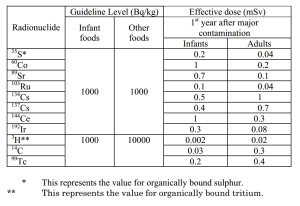
PDF for Diagram here From Page 82
ftp://ftp.fao.org/codex/meetings/CCCF/cccf5/cf05_INF.pdf
Published on Dec 21, 2012
Experts update quake risk projections across Japan
Japanese seismic experts have updated their earthquake risk projections for the country’s major cities over the next 30 years.
Members of the government’s Earthquake Research Committee released the estimates on Friday for the first time in two years.
Reactor screening to begin in July or later
The head of Japan’s nuclear watchdog says it cannot begin safety screening of off-line reactors until new safety standards are set up next July.
All but two of Japan’s reactors are suspended following the Fukushima accident last year.
Team finds faults at nuclear plant possibly active
A panel of nuclear experts has found that 2 faults under a nuclear power plant in northern Japan may be active.
The findings could keep the plant offline for some time.
Floating pier washed ashore in Washington
Authorities in the US state of Washington are considering what to do with a floating pier that has apparently washed ashore from Japan.
A US Coast Guard helicopter spotted the 9-meter-long concrete pier on Tuesday on the shore of the Olympic Peninsula.
15 giant tsunami hit western Japan over 6000 years
A university research team says about 15 massive tsunami have occurred near the Nankai Trough along Japan’s Pacific coast in the last 6,000 years, devastating the country’s western region.
Links to other stories:
A global perspective on American child deaths
Donna Mulhearn
A global perspective on American child deaths
DONNA MULHEARN
DECEMBER 17, 2012
 ‘You come from a culture where it is okay to kill children,’ the Iraqi woman said. We were sheltering against the wall of a building in Fallujah in April 2004 while the city was under attack by US forces.
I began to protest, but she continued, in broken English: ‘Let me say it another way. You come from a culture where your people think it is okay to kill our children.’
What could I say? There were several little bodies at my feet, bloodied remains laid out on the footpath and covered with thin sheets. The children had been shot by US snipers that day, among at least 1000 civilians killed in that ferocious attack.
This Iraqi woman knew there would be no collective outrage at the killing of Fallujah’s children. No front-page headlines. We would not know their names, see their faces or hear their stories. Their killers would not be pursued, labelled ‘mad’ or ‘evil’, or made to face a court. There would be no calls for ‘change.’
Some commentators have compared the response to deaths of the children in the small American community of Newtown with the young victims of US wars. The point is valid. A life is a life, and all life is precious; a fact that has enough weight of its own without the need to draw comparisons.
Yet the dark, shocking words of the Iraqi woman in Fallujah have been haunting me these past days as the grief of the Newtown shootings has overwhelmed us all.
What might be helpful at this time is to build on this grief and passion of the US and international community, and allow it to shape a wider discussion; to trigger a new empathy for grieving parents everywhere, an empathy that crosses borders, and which might result in change for children worldwide who are affected by US policy.
Whenever I’ve been with parents grieving their children lost in the violence of recent wars, the same questions has emerged out of their grief and anger: ‘How would the US President feel if his children were killed in a bombing? How would Americans feel? How would your people feel?’
The question grasps at the hope that if those in the West made the effort to imagine how they might feel to lose a child violently to a drone strike, a missile, or a sniper, the result would be greater empathy and understanding.
The endless, heartbreaking cries at yesterday’s prayer vigil for the Newtown victims provided a glimpse of the horror, the emptiness, the confusion that grieving parents feel. The profound love parents have for children is something all cultures have in common.
Video – Iraq worse than ever! Effects of Depleted Uranium are more widespread than Fallujah
” 600 percent infant mortality rates increase”
“2000 tons of microscopic uranium in Iraq”
“1 in 3 children in Fallujah are born with deformities, unprecedented !”
“half life of uranium is 4 and a half billion years”
” they eat it in the food and water”
“high levels of lead and mercury found”
“effects to last for generations”
“birth defects being found in many major cities that were targeted by USA forces”
Abby Martin
RT – Breaking the Set
On this episode of Breaking the Set, Abby Martin talks to Iraqi-American activist and editor of Liberatethis.com Dahlia Wasfi and director of the Justice for Fallujah Project Ross Caputi about the state of Iraq and the US military’s use of depleted uranium (2 minutes 3 seconds). Abby then talks to Trevor Timm, co-founder and executive director of the Freedom of the Press Foundation, about the importance of his organization and the need to protect net neutrality. BTS wraps up the show by highlighting @dronestream founder Josh Begley for his Twitter account that reports on US drone strikes, and Abby calls out the members of the Westboro Baptist Church for calling for an anti-gay rally at the funeral of the principle of Sandy Hook elementary after the tragic school
Video on this link:
http://rt.com/programs/breaking-set-summary/iraq-church-sandy-hook/
December 31, 2011
Happy New Year to one and all! I had planned on finishing the book by the end of 2011. I had not planned on meeting and marrying my husband this year. I’m still writing. 🙂 Bonfire destruction of the manuscript on hold for now.
Sincerely, Dahlia
“We declare our right on this earth…to be a human being, to be respected as a human being, to be given the rights of a human being in this society, on this earth, in this day, which we intend to bring into existence by any means necessary.”
–El Hajj Malik Al Shabazz (Malcolm X)
A Town of Nuclear Power Plants, Haeundae -South Korea
“Environmental groups in the Ulsan area conducted a simulation, which showed that 400,000 people would die if the wind blew toward Ulsan after an accident at Kori 1. If the numbers for Ulsan is that big, than if the wind blows toward Busan, the number of casualties will easily surpass a million.”
Posted on : 2012-12-18 15:36
Kyunghyang Shinmun.

What kind of a nuclear power plant is Kori? Kori Unit 1 is Korea’s first nuclear power plant. At the time Kori 1 was constructed, we lacked technology, so the reactor was built by welding three pieces together.
Although its 30-year lifetime expired in 2007, the Lee Myung-bak government approved its operation for another 10 years. Thus it is still in operation. So Korea continues to tinker and operate a “junk” reactor, closer to a junk car rather than a used car. Kori 1 is not only the star of the most accidents at nuclear power plants, but is also “the nuclear power plant of horror,” where a complete black out had occurred recently.
Kori Nuclear Power Plant is a town of nuclear power plants. At present, 6 reactors are in operation and 6 more units will be constructed. Twelve nuclear reactors will be huddled together.
To make matters worse, a population of 3.4 million lives within a 30-kilometer radius of Kori. Greenpeace said, “There is no place like this anywhere else in the world,” and warned that an accident at Kori would be a global catastrophe far surpassing the Fukushima accident.
Environmental groups in the Ulsan area conducted a simulation, which showed that 400,000 people would die if the wind blew toward Ulsan after an accident at Kori 1. If the numbers for Ulsan is that big, than if the wind blows toward Busan, the number of casualties will easily surpass a million.
These figures are not an exaggeration. In the past 25 years, 200,000 people have died from the 1986 Chernobyl accident. The Independent (UK) reported that the number of deaths caused by the Fukushima accident will reach 1 million.
The answer is simple. All we need to do is suspend the operation of nuclear power plants that have reached the end of their lifespan. Kori 1 is only responsible for 1% of our nation’s electricity, so there’s no need to argue about power supply.
“Repository” Russia for German Depleted Uranium
Published on 14/12/2012
Translated from German
IPPNW Blog
The Russian environmentalist and nuclear power opponent Olga Podosenowa, spokeswoman for the environmental group “Ecodefense” in the city of Yekaterinburg in the Urals

The Russian environmentalist and nuclear power opponent Olga Podosenowa, spokeswoman for the environmental group “Ecodefense” in the city of Yekaterinburg in the Urals, lives just 60 miles away from the closed Novouralsk. After Novouralsk 1996-2009 depleted nuclear waste from Gronau arrived in NRW. The total Gronau sent during this period was 27,000 tons of nuclear waste to four Russian cities. How much of that came after Novouralsk, however, is a mystery. We can not investigate this question in Novouralsk, this is still a closed city that was not even allowed toe be entered by Russian citizens.In a conversation I had with Ms. Podosenova we discussed the difficult working conditions of Russian environmentalists and explained why Russia’s environmental movement urgently needs the solidarity of its Western partners.
Ms. Podosenova, you live in the immediate vicinity of Novouralsk, one is of four Russian cities, stored in the depleted uranium from Gronau in North Rhine-Westphalia. Since when do you know that is your neighbor city German nuclear waste?
2004 our group “Ecodefense” learn from our European colleagues that, since 1996, shipments of depleted uranium in the “Electrochemical Combine Urals” in my neighborhood of Novouralsk, a closed city ,allegedly goes for further processing, but is actually being stored. And only 10% of the material supplied by Novouralsk was returned to Germany, the rest remains lying on the ground, where it is stored in the open air. No sooner had we learned from these journeys, we went to the public. We organized camps were held in the immediate vicinity of the places that nuclear waste from Germany came: in Angarsk, Tomsk and near Novouralsk. Environmentalists in Germany and Russia turned simultaneously to the competent public prosecutor, we protested in front of the German Embassy and German consulates.
In what condition is this garbage?
Garbage stored in Novouralsk. Novouralsk is a closed city, there was barbed wire around it, also Russian citizens can visit this city only with a special permit. And thus have a special permit neither environmentalists nor we get independent experts. Against this background, we turned to the public prosecutor, urged them to find out how the garbage is stored. And 2006, we received a response from the prosecution, which is not very reassuring. You have, be determined as the prosecution of the Sverdlovsk region, that technical requirements have been breached for storage, and have called on the leaders to address these shortcomings.In the following decades, the management tried to pacify the population. There, the company’s management, no cause for alarm. But we can not verify that, and we dont believe them either. We have assumed that the waste remains in stainless containers stored in the open air.
And who is responsible for the storage of the German uranium hexafluoride in Novouralsk?
U.S. ATTORNEY GENERAL: Don’t impose death sentence on 82-year-old nun and peacemaker
Petition by
Washington, United States

Sixteen years in prison is not enough? Sister Megan Rice and her friends, all peace activists, already face 16 years in prison if convicted for a nonviolent peace action. Sister Megan, Greg Boertje-Obed, and Michael Walli went to Oak Ridge, Tennesse, to say NO to nuclear holocaust. Instead of dropping charges, the US Attorney General and the Department of Justice are considering two additional charges against this 82-year-old nun and two U.S. veterans, both sabotage charges. One carries 20 years and the other 30 years in prison. With the new charges, the defendants would face a maximum of 65 years in prison. This is the equivalent of a death sentence.
Megan, Greg, and Michael called their action “Transform Now Plowshares,” and brought nothing more dangerous than flashlights, binoculars, bolt cutters, bread, flowers, a Bible, and household hammers to Oak Ridge. They hammered on the walls of a storage facility to symbolize the disarming and abolition of nuclear weapons. The real danger to society is not this nun and two veterans, but instead the facility they want to transform. This unconstitutional facility holds enough weapons grade uranium to make more than 10,000 nuclear weapons, far more than what scientists say is needed to destroy life on earth.
Please join in this petition to the Attorney General of the United States asking him to refuse to authorize additional charges: 16 years in prison for revealing the criminality and insecurity of nuclear weapons production smacks of killing the messenger for the failings of the king.
Sign the Petition here
Fukushima -Secure spent nuclear fuel rods in dry passive storage -Petition

The greatest near term threat to humanity is reactor fuel pond No. 4. International aid for the stabilization of the Fukushima-Daichi site is needed, to place all of its spent reactor fuel into dry, hardened storage casks. This will require about 244 additional casks at a cost of about $1 million per cask. To accomplish this goal, an international effort is required – something that Senator Ron Wyden (D-OR) has called for. As we have learned, despite the enormous destruction from the earthquake and tsunami at the Dai-Ichi Site, the nine dry casks and their contents were unscathed. This is an important lesson we should not ignore.
Sign the petition here
Bulgarian President Opposes Recommended Nuclear Energy Policy
“So, an indifferent electorate, a president in opposition, and billions of dollars at stake – place your bets.”
By John Daly | Mon, 17 December 2012
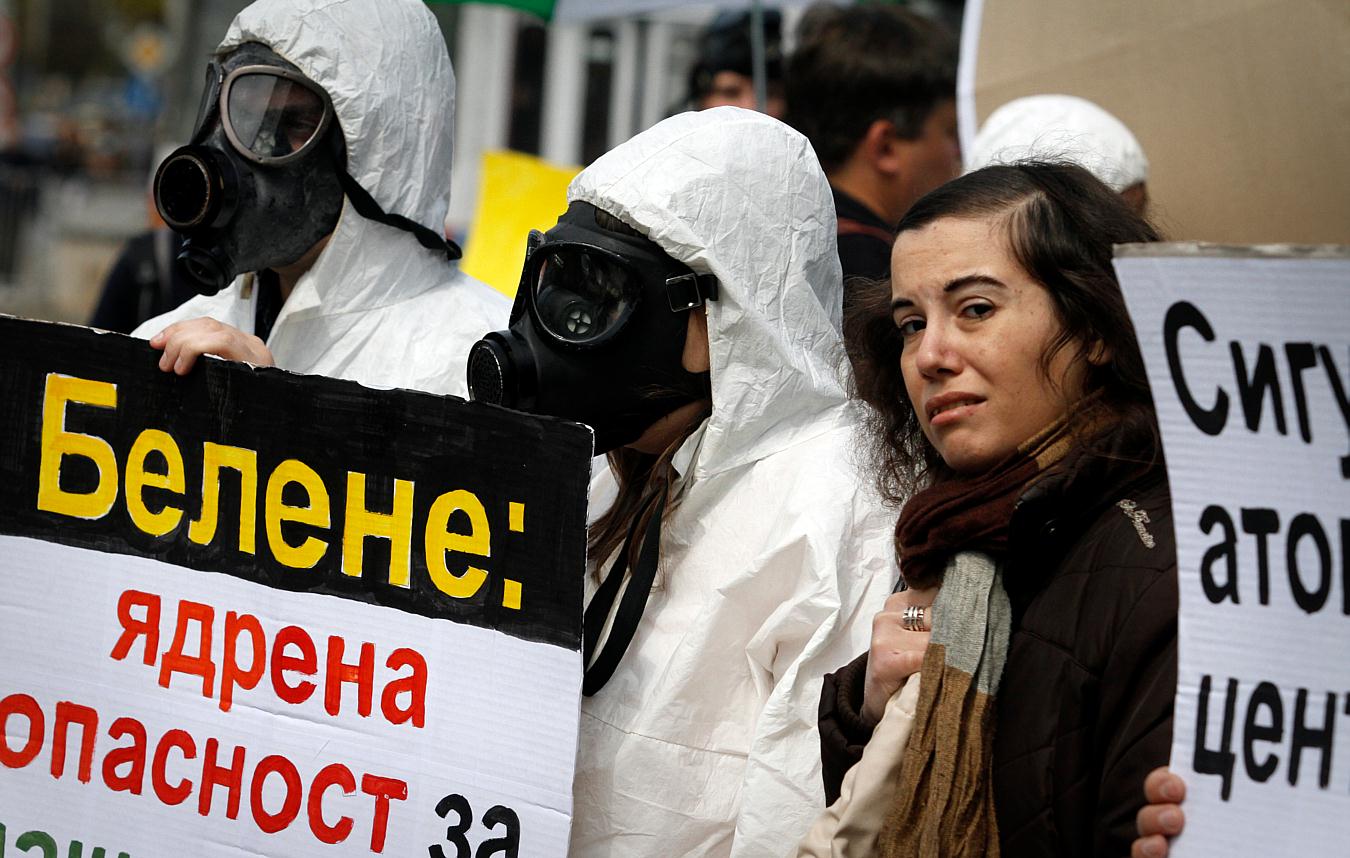
As the global nuclear energy industry at present is recovering from the potential death blows of the 11 March 2011 earthquake and subsequent tsunami that destroyed Japan’s six reactor Fukushima Daiichi nuclear complex, the battleground for nuclear power’s future seems increasingly to be shifting to Central and Eastern Europe. There, a legacy of aging Soviet reactors, allied to EU and NATO membership is heightening tensions between governments increasingly torn between Communist-era policies and a non-nuclear future.
Nowhere are the battle lines more starkly drawn than in Bulgaria, where the International Atomic Energy Agency has recommended several improvements to Bulgaria’s sole remaining nuclear power plant at Kozloduy.
The fly in the ointment?
Bulgaria’s president Rosen Plevneliev, who stated that he will vote against the proposed building of a second Bulgarian NPP at Belene at the upcoming 27 January 2013 referendum.
On 27 January Bulgarians will vote on a referendum asking them to decide, “Should Bulgaria develop nuclear energy through the construction of a new nuclear plant?”
Taiwan -Nuclear energy meeting ends in brawl over attendance
“None of us legislators want to see these incidences of violence in the committee” and “We only want to know who these participants are,” Chen Shu-hui shouted as he was surrounded by several legislators from both parties, adding that the meeting should not be allowed to proceed.
]…[
“Can’t we even listen to the meeting?” Yang asked.
By Lee I-chia / Staff reporter
Tue, Dec 18, 2012
 Chinese Nationalist Party (KMT) Legislator Chen Shu-hui, left, and Democratic Progressive Party Legislator Ho Hsin-chun, right, argue yesterday over the presence of members of the public at a legislative committee meeting.Dec 18, 2012
Photo: Lin Cheng-kung, Taipei Times
A meeting of the legislature’s Education and Culture Committee yesterday to hear a report by the Atomic Energy Council on comprehensive safety checks at the Fourth Nuclear Power Plant in New Taipei City’s (新北市) Gongliao District (貢寮) was postponed after legislators quarreled over whether members of the public should be allowed to attend the meeting.

The committee chair for the session, Democratic Progressive Party (DPP) Legislator Cheng Li-chiun (鄭麗君), had invited Gongliao residents and members of anti-nuclear energy groups to attend the session, but the move drew objections from Chinese Nationalist Party (KMT) legislators Chen Shu-hui (陳淑慧) and Kung Wen-chi (孔文吉).
Fearing a repeat of an incident involving National Tsing Hua University student Chen Wei-ting (陳為廷), a co-convener of the Youth Alliance Against Media Monsters — who attended a committee meeting earlier this month and caused controversy by using strong language while addressing Minister of Education Chiang Wei-ling (蔣偉寧) — Chen Shu-hui stepped up to the inquiry podium at the beginning of the meeting and asked the committee chair to vet the participants before opening the meeting.
Chen Shu-hui’s request prompted DPP legislators to question the constitutionality of identifying the participants and the dispute devolved into a quarrel between KMT and DPP legislators, culminating with Chen Shu-hui and DPP Legislator Ho Hsin-chun (何欣純) shouting loudly at each another and banging on the podium.
Foreign firms largely excluded in Fukushima clean-up
By Mari Saito
NATIONAL DEC. 17, 2012 – 04:00PM JST
Japan Today
TOKYO —
Nearly two years after a massive earthquake and tsunami caused meltdowns at the Fukushima nuclear plant, Japan is failing to keep a pledge to tap global expertise to decommission its crippled reactors, executives at nuclear contractors from the United States and Europe say.

The result, they warn, is that a process expected to take more than 30 years and cost at least $15 billion could take longer and cost more as contracts are channelled through domestic heavyweights such as nuclear reactor makers Toshiba Corp and Hitachi Ltd, andgeneral contractors such as Taisei Corp.
A review of bidding records by Reuters shows companies from outside Japan have failed to win any of the 21 contracts awarded this year to develop technologies crucial for the unprecedented job of scrapping the four damaged reactors at Fukushima.
“There appears to be a desire to treat this as a science project and reinvent the wheel,” Jeffrey Merrifield, senior vice president of U.S. nuclear engineering firm Shaw Group Inc’s power division told Reuters.
Contracts awarded since January represent only the initial work at Fukushima. But a half-dozen executives at companies with nuclear industry experience raised questions about the Japanese government’s and Tokyo Electric Power Co’s oversight of the process.
Some executives worry that being shut out now risks their ability to tap a growth market, since Japan could scrap dozens of reactors over the coming decades. Most asked not be named for fear of jeopardizing their ability to win future work in Japan.
Takuya Hattori, president of the Japan Atomic Industrial Forum, a group representing the nuclear industry in Japan, said the government has not been responsive to complaints about the bidding process. “They are shutting that criticism out incredibly deftly,” said Hattori, a 36-year veteran of TEPCO, the operator of the Fukushima plant.
Skilled Veterans Corps for Fukushima -A message to the world !

Video update on Fukushima Part 1
Published on Dec 7, 2012
Yastel Yamada is a retired technition from the Fukushima Diiatchi Power Plant in Japan that was hit by an earthquake and tsunami 11 March 2011. He established the Skilled Veterans Corps for Fukushima, an organization of 700 retired scientists and engineers who volunteered to do the clean up work and risk illness and death to protect younger people from the exposure.
In this talk Mr. Yamada presents details of the situation at the plant and his overall principles and plans for dealing with the 40 year clean up required.
Video update on Fukushima Part 2
Published on Dec 16, 2012
Yastel Yamada is a retired technition from the Fukushima Diiatchi Power Plant in Japan that was hit by an earthquake and tsunami 11 March 2011. He established the Skilled Veterans Corps for Fukushima, an organization of 700 retired scientists and engineers who volunteered to do the clean up work and risk illness and death to protect younger people from the exposure.
In this talk Mr. Yamada presents details of the situation at the plant and his overall principles and plans for dealing with the 40 year clean up required.
http://www.youtube.com/watch?v=MhmFImLqBV0
SVCF Bulletin No. 29 issued on December 1, 2012
When we started SVCF in the first half of last year, we thought that we would be able to start our work at Fukushima #1 Nuclear Power Plant almost immediately. However, the reality, which we’ve gradually come to understand since last year’s negotiations, is that the multilayered subcontracting system, which is characteristic of the Japanese society, has been a huge barrier for us.
The multilayered subcontracting system has been problematic in the IT industry for the last 10 years, and there doesn’t appear to be an easy solution for this issue. This issue is also something that will need to be resolved as it relates to the Fukushima nuclear power plant. As they prepare to start removing fuel debris from the site, it will become increasingly difficult to work within the current system.
1 This Month





PLEASE OPPOSE HR 8255 AND S.3639 – bills would accelerate satellite deployment, with no environmental review or safeguards – https://ncstd5li.quorum.us/campaign/169331/
To see nuclear-related stories in greater depth and intensity – go to https://nuclearinformation.wordpress.com
-
Archives
- October 2026 (10)
- September 2026 (339)
- August 2026 (330)
- July 2026 (355)
- June 2026 (287)
- May 2026 (306)
- April 2026 (356)
- March 2026 (251)
- February 2026 (267)
- January 2026 (308)
- December 2025 (358)
- November 2025 (359)
-
Categories
- 1
- 1 NUCLEAR ISSUES
- business and costs
- climate change
- culture and arts
- ENERGY
- environment
- health
- history
- indigenous issues
- Legal
- marketing of nuclear
- media
- opposition to nuclear
- PERSONAL STORIES
- politics
- politics international
- Religion and ethics
- safety
- secrets,lies and civil liberties
- spinbuster
- technology
- Uranium
- wastes
- weapons and war
- Women
- 2 WORLD
- ACTION
- AFRICA
- Atrocities
- AUSTRALIA
- Christina's notes
- Christina's themes
- culture and arts
- Events
- Fuk 2022
- Fuk 2023
- Fukushima 2017
- Fukushima 2018
- fukushima 2019
- Fukushima 2020
- Fukushima 2021
- general
- global warming
- Humour (God we need it)
- Nuclear
- RARE EARTHS
- Reference
- resources – print
- Resources -audiovicual
- Weekly Newsletter
- World
- World Nuclear
- YouTube
-
RSS
Entries RSS
Comments RSS

