“Why Don’t You Go to Fukushima I Nuke Plant? Lots of Jobs There…”, Says City Official In Charge of Public Assistance for the Poor in Hokkaido -EXSKF
FRIDAY, JANUARY 4, 2013
EXSKF

According to Hokkaido Shinbun, this is what a city bureaucrat said to a 27-year-old man who went to the counter at the City Hall to ask about public assistance after he lost his job and couldn’t find a job for a year, being late on rent, subsisting on one piece of bread per day.
Public servants whose salary derives from taxpayers’ money and/or money borrowed on the backs of taxpayers (municipal bonds for general expenses) told this young man that the assistance was not meant for people like him, and that he should go to Fukushima I Nuke Plant so that he didn’t need to receive public money.
From Hokkaido Shinbun (1/3/2013; part) as copied by this blog:
あのころ…昨年4月。男性の財布に現金はほとんどなかった。建設会社の期間雇用作業員だったが、2011年春に雇い止めに。地元企業数十社に履歴書を送り、3社の面接は受けたが、採用してもらえなかった。
Back then, in April last year. There was hardly any cash in the man’s wallet. He used to be a seasonal worker at a construction company, but the company didn’t hire him in the spring of 2011. He sent his resumes to dozens of local companies. He landed on three job interviews but he was not hired.
蓄えは底をつき、食事は一日菓子パン一個。一年で10kgやせた。アパートの家賃も払えず、家主は退去を求めてきた。行き倒れも覚悟したある日、気が付くと市役所に向かって歩いていた。最後の助けを求めるために。
His savings were depleted, and his meal consisted of one piece of bread per day. He lost 10 kilograms in one year. He couldn’t pay the rent for his apartment, and the landlord wanted to evict him. He thought he would die on the street. Without realizing it, he was walking toward the City Hall. The last resort.
だが、生活保護の窓口で、見ず知らずの職員に怒鳴られた。
Vt. and NY seek more review of nuke waste storage
Updated 5:25 am, Friday, January 4, 2013
Seattle PI
MONTPELIER, Vt. (AP) — Twenty-four anti-nuclear and environmental groups are joining the states of Vermont and New York in calling on the Nuclear Regulatory Commission to do a more thorough study of the impacts of storing spent nuclear fuel on the grounds of nuclear power plants.
The groups range from the Vermont-based New England Coalition to Washington-based Beyond Nuclear to California’s San Luis Obispo Mothers for Peace.
The groups want a more thorough look at risks of fire and leakage at the expanding dry cask storage sites for highly radioactive nuclear waste at reactors around the country.
They want a moratorium on licensing and relicensing of reactors until the risks are resolved.
Professor: Cesium in wild mushrooms not caused by Fukushima accident
January 06, 2013
By SEIKO SADAKUNI/ Staff Writer

When high levels of radioactive cesium were detected in wild mushrooms in Towada, Aomori Prefecture, a restaurant owner pointed her finger at the Fukushima No. 1 nuclear plant.
The government slapped a ban on shipping wild mushrooms for 10 prefectures, including Aomori, Nagano, Shizuoka and Yamanashi.
The 70-year-old woman was forced to stop using wild mushrooms in the stew and vinegared dishes served at her restaurant in Towada, 350 kilometers from the crippled nuclear plant. She now buys screened mushrooms from a vegetable stand.
She still asks, “How can the mushrooms be contaminated when the city is so far away from the nuclear power plant?”
Gakushuin University professor Yasuyuki Muramatsu, an expert on radioecology, has an answer: The high radioactivity levels in the mushrooms were not caused by the Fukushima disaster, but by events much farther away.
If the Towada “chichitake” mushrooms had been contaminated by the Fukushima accident, then two types of radioactive cesium–cesium-134 and cesium-137–would have been detected in roughly equal amounts, he said.
Cesium-137, which has a half-life of 30 years, was detected at a level of 120 becquerels, exceeding the government-mandated safe level of 100 becquerels per kilogram. But no cesium-134, which has a half-life of two years, was found in the mushrooms.
Similarly, in “sakura shimeji” mushrooms from the city of Aomori, cesium-137 was measured in late October at 107 becquerels, while almost no cesium-134 was found.
“The fact that no cesium-134 has been detected proves that the contamination happened prior to the Fukushima nuclear accident,’’ Muramatsu, 62, said. “It is from nuclear weapons tests conducted by the Soviet Union and China from the late 1940s to the late 1960s, and from the Chernobyl accident in 1986.”
The women of Fukushima with rare footage from inside the exclusion zone and opinions on the nuclear disaster

Six Japanese women offer brutally honest views on the state of the clean-up, the cover-ups and untruths since the nuclear accident in Fukushima, and how it has affected their lives, homes and families.
6人の日本人女性が、福島原発事故以降の汚染除去の現状、隠ぺいと嘘について包み隠さぬ本音を打ち明け、そして事故が彼女たちの人生、故郷、家族にどのような影響を及ぼしたかについて語ります。
Women of Fukushima – Pt 1 of 2
Published on Jan 5, 2013
If you like this film, please DONATE to: http://www.women-of-fukushima.com/ !
Woman of Fukushima – Pt 2 of 2
Published on Jan 5, 2013
Over a year since three reactors went into meltdown at the Fukushima Daiichi Nuclear Power Plant, a broad, disparate anti-nuclear movement is growing in Japan. Nowhere is that more apparent, perhaps, than in Fukushima prefecture, where a group of local women boldly protest the deafening silence of the Japanese government over the worst nuclear accident of this century.
Largely ignored by their own media, these brave women brush aside their cultural shyness and share their brutally honest views on the state of the cleanup, the cover-ups, the untruths and the stagnant political climate in today’s Japan.
Supported with rare footage from inside the exclusion zone, as well as from abandoned neighboring towns, the Women of Fukushima (“Fukushima no Onnatachi”) offers startlingly candid insights, in the women’s own voices, about what has become of their lives, homes, and families in the aftermath of 3/11.
福島第一原子力発電所で3基の原子炉がメルトダウンを起こしてから1年以上。さまざまな人々による大がかりな反原発運動が日本国内で拡大しつつあります。この運動がもっとも顕著なのは、おそらく福島県でしょう。そこでは地元の女性グループが勇敢にも立ち上がり、今世紀最悪の原発事故に対する日本政府の沈黙に抗議しているのです。国内メディアにほとんど無視されてきたこの勇敢な女性たちは、内気な県民性を脇へ押しやり、現在の日本における汚染除去の現状や隠ぺい、嘘、そして停滞した政治情勢について包み隠さぬ率直な意見を公表しています。立ち入り禁止区域内や周辺の荒れ果てた無人の村々の貴重な映像と共に、「福島の女たち」は3・11によって彼女たちの人生、故郷、家族がどのような影響を受けたのかについての驚くほど率直な見解を、彼女たち自身の声で伝えます。
reblogged from
http://www.women-of-fukushima.com/
h/t
Enenews from this article highlighting one comment in the film
Co-Star of Fukushima Film: “I think my phone is bugged, and when I’m out I think someone might be entering my house” (VIDEO)
Published: January 5th, 2013 at 11:17 pm ET
By ENENews
Film: Women of Fukushima
Director: Paul Johannessen
Co-Director: Jeffrey Jousan
Director of Photography: Ivan Kovac
Women of Fukushima on Facebook: http://www.facebook.com/pages/Women-of-Fukushima/421693721210035
At 13:00 in
Setsuko Kuroda:
The Japanese police in this sense are very good.
Everyone could be watched.
I think my phone is bugged.
And when I am out I think someone might be entering my house.
http://enenews.com/star-fukushima-film-phone-bugged-when-im-be-entering-house-video
could be some interesting comments on that link 😉
Part 2 -Information, Misinformation, Disinformation? -Japans radiation monitoring
Posted by azby on December 29, 2012
Safecast
GOVERNMENT MONITORING POSTS
In recent months there has been a fair amount of controversy concerning the accuracy of the radiation monitoring posts the government has installed all over Fukushima prefecture, and in some neighboring prefectures as well. We wrote about it back in July, 2012:
TEPCO cheating on radiation levels by using “improved” monitoring posts

A MEXT radiation monitoring post, aka “droid,” of a common type manufactured by NEC . This one is at the former Akasawa Elementary School in Aizu-Misato.
There are almost 700 of these monitoring posts (675 at latest count), which we refer to as “droids” because of how they look (see photo above). They are all powered by solar panels and use storage batteries.
Through the Ministry of Education, Culture, Sports, Science, and Technology (MEXT), the government spent a lot of money (we haven’t been able to find out precisely how much) to have them installed, and spent more money to have a web site made that displays the readings: MEXT realtime environmental radiation page
From this reasonably attractive-looking page, users are supposed to click on a prefecture, then on a region of the prefecture, and then choose from any one of a dozen or more municipalities. Then a scrolling list appears on the right hand side, and users can select a particular monitoring post to review (In the case of Koriyama City in Fukushima, there are 393 monitoring posts in the list). A zoomable, scrollable Google Fusion map appears, and the individual posts are marked by colored dots. Clicking a dot gives the current reading at that location, updated very 10 minutes it seems, and it is possible to download data for the entire month. So, thank you for doing that much, at least, MEXT.
This system sucks in many ways. While working with it in order to compare the MEXT readings with our own, we’ve found that it’s impossible to get an overview of more than a small part of Fukushima at any one time, that hunting down particular locations is incredibly time consuming and frustrating, that the cumulative time data does not go back far enough, and that the downloadable data comes with many restrictions and is difficult to pull down efficiently. Yes, MEXT made this system ADAP — As Difficult As Possible.

Screen capture from the MEXT online system of the area around Kawauchi Elementary school in Fukushima. The blue dots represent fixed monitoring posts, the blue diamond a reading taken with a handheld unit. One of the dots was selected, and the reading shown as 0.093 uSv/h (microsieverts per hour). The two fixed units at this location are actually much closer together than this map suggests (see photo further below).

The Safecast map of the same area. The most recent bGeigie readings for the road next to the school, from Nov 9, 2012, were in the 0.12 to 0.17μSv/h range. This is fairly consistent with what the droid shows. Readings taken on the same drive on the roads north and south of the school range as high as 0.18 μSv/h. Safecast readings from a year ago, however, are in the 0.14 to 0.25 μSv/h range alongside the school and up to 0.29 μSv/h on the road to the north. On the one hand this shows that the range of variation we often encounter within a short distance can easily be a factor of two, sometimes more. The most recent readings also support the idea that the schoolyard the monitoring posts are located in has been decontaminated since last year, as has the road (A blogger has reported recently that some areas just beyond the schoolyard remain fairly contaminated, however). MEXT has made their data fairly easy to access for people who know exactly what they are looking for and just want a quick look, but it is extremely difficult and time-consuming to make this kind of close comparison with other data sets. And we couldn’t help but notice that we have a lot more data available for this area than the government provides.
Part 1 -Information, Misinformation, Disinformation? -Japans radiation monitoring

Posted by azby on December 29, 2012
Safcast
Whose job is it to make this stuff easy to understand?
“YOU CAN’T ALWAYS FIND WHAT YOU’RE LOOKING FOR…..”
[Skip to Part 2] At Safecast we assumed from the start that our data should be accurate, easy to understand, informative, well-visualized, and easily accessible. In many respects this simply reflects “best practices” in information design, as well as a vision of social responsibility in which openness and transparency are paramount virtues. So when we make decisions about how to present our data, we adhere to principles of intuitiveness, depth, context, and dare we say it, beauty in design. We want to make it as easy as possible (AEAP) for people to find what they’re looking for, and to find out what it means. That’s why we’re continually miffed when official sources of information seem to be operating under an entirely different set of assumptions.
To be honest, the seriousness of government missteps and opacity during the early weeks of the disaster led us to accommodate ourselves to vastly lowered expectations in terms of the quality and accessibility of information we’d probably see from official sources. Even though it’s their job, and they are legally required to provide many kinds of information, many of us prepared ourselves for endless tooth-pulling and fact-checking about radiation information. So first, I’d like to give a sort of brief status update:
1) The government has made a lot of information available, more than we expected (because we expected nothing).
2) It still needs to be scrutinized, fact-checked, and independently confirmed.
3) There are still some areas where a lot of us have been pulling teeth for months and still haven’t been able to get the information we’re looking for.
So let’s just agree to live with #2 and #3 for the moment. It means constant effort on our part, but enough of us are constitutionally well-equipped for this kind of research-based tug-of-war that it’s not really that onerous at this point. We get good at it, we build trust, and people who were once opponents sometimes become allies, because frankly, they need our help.
But #1 is where we find ourselves really scratching our heads. There is all sorts of official information available, and a lot of it is proving reliable, but it’s rarely as easily accessible or informative as it should be. In fact, locating and using the data is usually as difficult as possible (ADAP) considering how easy it is now to find good information and web designers, and how inexpensive it has become. It should be easy to do a good job, if the people in charge really care about doing a good job.
REPORTING THE RESULTS OF WHOLE-BODY TESTS:
One brief example would be how results of internal contamination monitoring done with whole-body counters (WBC) are being reported. These tests are being done in municipalities all over Fukushima prefecture, sometimes under the direction of the prefecture itself, more often by individual hospitals on behalf of their municipalities. Fukushima Prefecture has put up a web page to communicate the results of testing done through Oct. 2012, as well as a more detailed breakdown. They’ve gathered quite a lot of numbers for us:

The WBC report page provided by Fukushima Prefecture summarizes the key data in this table. It shows how something can be entirely accurate and extremely uninformative at the same time.[
Petition: Evacuate Fukushima -Avaaz
Petition: Evacuate Fukushima

This very simple homemade video petitions is dedicated to all victims of 311 and the brave citizens of Tohoku. Already over 10,000 written signatures were collected on the Avaaz petition . Please sign this petition to support the children and become part of the solution.
HINKLEY UPDATE: PROTESTERS FINED IN COURT -SchnewsUK

Published on 29th December 2012 | Part of Issue 834
Four anti-nuclear protesters were fined £100 each and given 12 months conditional discharge on Wednesday (19th) in Taunton magistrates’ court. The four had chained themselves together and blocked the main access outside the Hinkley power plant in November. The blockade stopped entry and exit onto the site for over four hours until a removal team arrived from nearby Bristol. In court the four pleaded guilty to obstructing the highway. The action raised awareness and protested against the plans for reactors at the Hinkley C nuclear power station site in Somerset.
The defendants had no choice but to represent themselves in court as that was a better alternative to a duty solicitor according to one of the defendants SchNEWS spoke to, they went on to say “The outcome in court was expected and even though it could have been worse it is still not a good outcome. The conditional discharge restricts you from being active.”
In a statement taken from a press release on the stop hinkley website speaking after the verdict, tree surgeonZoe Smith from Bristol was in a defiant mood. “This is a national campaign and I expect there will be many more surprises for EDF over the coming months.
Barnaby Hodges, a catering worker from Glastonbury, said outside court: “I have never been arrested for protesting before, but like many people in Glastonbury I am ready to take whatever non-violent action is necessary to prevent the building of a potential Fukushima only 25 miles away. It’s not as if there aren’t any alternatives.”
There might be a small respite for the protesters as recent cutbacks at EDF’s parent company in France could mean long delays for the nuclear building programme. EDF has indicated for over a year now that it plans to spend billions on two reactors at the new plant at Hinkley. Confirmation is expected in March 2013 but with pressure from the French government to cut costs at the parent company the confirmation date might be pushed further away still.
http://www.schnews.org.uk/stories/HINKLEY-UPDATE-PROTESTERS-FINED-IN-COURT/
Stop Hinkley needs more supporters.
“…Stop Hinkley have a long and successful record campaigning against nuclear power at Hinkley Point and Oldbury. We campaigned vigorously on the dangers connected with running Hinkley ‘A’ and as a consequence BNFL reluctantly shut it down permanently in 2000. We have worked with regional BBC and ITV documentaries to highlight the risk from the crumbling old reactor at Oldbury. Now Hinkley Point is the proposed site for the first of a series of new nuclear power stations in the UK….”
Fukushima Dead Zone -RT with Alissa Descotes Toyosaki

January 03, 2013
RT
Abby Martin
On this episode of Breaking the Set, Abby Martin first highlights Senator Ron Wyden as a hero for his steadfast voice of opposition to the recently passed FISA bill. At the same time, she calls out Father Piero Corsi of Italy for saying that women provoke every bad thing coming their way. Abby then speaks to citizen journalist Alissa Descotes Toyosaki about the ongoing crisis in Fukushima and the anti-nuclear movement growing in Japan. BTS wraps up the show with a discussion on Islamophobia machine and how to stop it with Nadhira Al-Khalili, legal counsel for the Council on American Islamic Relations.
http://rt.com/programs/breaking-set-summary/fukushima-misogynist-islamophobia-machine/
A French take on the disaster here with some good news about the independent fukushima hospital set up to combat the bad medical practice of the official fukushima medical hospital that is covering up the details and evidence of contamination health effects…. Please note that CRIIRAD (qouted) support the ICRP dose measurement theory and this theory is more suitable for clinical hospital conditions. It is not effective for those breathing in gases and particles. Also, There is no mention of Plutonium, Strontium 90 etc. However CRIIRAD`s ICRP still advises areas needing evacuation.
http://blogs.rue89.com/fleurs-printemps-nucleaire
“…While officially, the Japanese government had agreed to open its doors to foreign companies that had applied to the decommissioning of the devastation, one wonders about the exclusion of these firms decided by that same government. connection
What are the reasons for this refusal?
Is there some secret to protect?
With CRIIRAD we learned that hundreds of thousands of Japanese still living in heavily contaminated territories were permanently irradiated.
In fact released products in large quantities in a wide radius around the plant, far beyond the evacuation zone are cesium 134 and 137, the latter having a period or half-life of 30 years.
US Atomic Tests in the Marshall Islands: connection to Japan and USA -Videos
For a better quality informative video please see the second video link at he bottom of the page. Holly Barker explains the connection between the Marshall Islands, Japan, USA and the Nuclear club. detailing Human Rights abuses. dated March 2012
US Atomic Tests in the Marshall Islands: UN Geneva

Published on Jan 2, 2013
The US carried out their main Atmospheric Megaton Hydrogen (thermonuclear) Bomb Tests in the Pacific Test grounds centred on the Marshall Islands between 1950 and 1958 after the discovery that their atomic tests in the Nevada desert and in New Mexico were causing fallout contamination as far away as New York.
The Hydrogen Bombs were tested in the Marshall Islands and the largest one, a 15Mt bomb destroyed Bikini atoll. Fallout in the Marshall Islands resulted in serious health effects which were systematically either ignored or covered up.
The question of the magnitude of these effects has come to the UN Human Rights Council in Geneva and a Special Rapporteur was charged with investigating the issue and producing a report for the September meeting of the UNHRC in Geneva.
The US Health Physics Society had previously produced a biased and dishonest report arguing that fallout was too low and doses too low to have caused any effects. This video is of the first half of the UNHRC meeting in Geneva on September 13th 2012 organised by the American Association of Anthropologists.
The meeting Chair is Prof Barbara Rose Johnston and presentations were made by Prof Holly Barker and Prof Chris Busby. Delegates from the Marshall Islands also attended and made contributions. Dr Busby’s presentation is uploaded in a separate video and his report to the UNHRC is at http://www.nuclearjustice.org and his paper on the effects is at http://www.greenaudit.org/?page_id=104
The main recommendations of Dr Busby’s reports were adopted by the UN Special Rapporteur in his report to the General Assembly, most important being that a proper independent (of the US and the Health Physics Society) investigation of the contamination and the ill health are carried out.
https://www.youtube.com/watch?v=FMhI2-dZ3Jo
TalkingStickTV – Holly Barker – U.S. Nuclear Testing on the Marshall Islands
Published on Mar 4, 2012
Talk by Holly Barker co-author of “The Consequential Damages of Nuclear War: The Rongelap Report” on “From Nuclear Weapons to Nuclear Energy: The U.S., The Marshall Islands, and Japan” given February 24, 2012 at University Temple United Methodist Church in Seattle, WA.
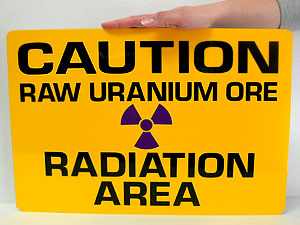
Columbia nuclear fuel worker exposed to uranium
2 Jan 2012
By SAMMY FRETWELL
Emergency medical crews whisked a Columbia nuclear fuel plant employee to the hospital this week after the worker was exposed to a uranium-containing acid, according to the federal Nuclear Regulatory Commission.
The Westinghouse Electric Co. employee, whose name was not available, was treated for pain and released from the hospital. The incident has prompted an investigation by the company.
The exposure is unusual, say company officials and veteran nuclear industry watchers. Anti-nuclear activist Tom Clements said the incident warrants further review by the NRC, the chief oversight agency for the nuclear industry.
“I have not seen an exposure like this and I check these (NRC reports) every day,” he said. “It’s all the more reason to investigate more closely.”
NRC spokesman Roger Hannah said his agency would await the results of the Westinghouse investigation before deciding if further action is necessary. Company officials said they already have taken steps to avoid similar incidents even as their in-house investigation continues. The employee is fine and returned to work soon after Monday night’s incident, plant manager Dave Precht said.
“The trip to the hospital was precautionary,” Precht said Wednesday. “Instead of taking any risk, we just took him to make sure.”
Westinghouse, a division of Japan’s Norio Sasaki, uses uranium to make fuel for nuclear plants across the country at its facility in lower Richland County. The Bluff Road plant is a 550,000-square-foot facility built in 1969. The company is one of the Columbia area’s largest employers with about 1,200 workers.
Uranium is a naturally occurring radioactive material that is mined and processed for use in the nuclear power industry.
Fukushima: NHK Documentary; Downwind From Disaster
http://www.youtube.com/watch?v=NJlmkM-ebXM
Published on Jan 1, 2013
Duration -42 mins

Minamisoma,
Fukushima Prefecture
This is a record of people in that one town caught up in the triple disaster.
Threatened by the unseen forces of radiation, what did the residents do? What was their state of mind?
“Why should we evacuate, why do we have to flee?”
New -Chris Busby at the UN: Marshall Islands US Atomic Tests -October 2012
“The Royal Society in London was brought into cover up the effects in Iraq”
Edited and updated video link with re-edited video 3 Jan 2012
Published on Jan 1, 2013
Dueation – 27 mins

This is Dr Busby’s contribution to a meeting organised by the American Association of Anthropologists at the United Nations Human Rights Council in Geneva on 12th September 2012. The Chair was Prof Barbara Rose Johnston. The earlier part of the meeting will also be uploaded to youtube. The US nuclear tests created enormous contamination and serious health problems in the Marshall Islands but these have been systematically covered up.
Most recently the US Health Physics Society published a dishonest series of reports maintaining that there were no serious health effects due to the radioactive fallout. Dr Busby’s paper on the issue “The health effects of exposures to radioactivity from the us pacific nuclear tests in the Marshall is. Criticisms of the analysis of Simon et al 2010: Radiation doses and cancer risks in the Marshall islands associated with exposure to radioactive fallout from Bikini and Enewetak nuclear weapons tests and supporting documentation. Occasional paper 2012/6″ is at the Green Audit website:
http://www.greenaudit.org/?page_id=104
and at:
http://www.scribd.com/doc/111935078/22
His representation to the UNHCR on behalf of the AAA is at:
http://nuclearjustice.org/wp-content/uploads/2012/09/UAJWritten-statements-Bu…
Dr Busby’s main recommendations were adopted by the Special Rapporteur to the UNHCR in his report to the General Assembly. These were that there should be a fully independent study both of the remaining fallout in the Marshall Islands and also an independent Epidemiological study of the health of the inhabitants.
North Korea EMP attack could destroy U.S. – Concern over nuclear Spent Fuel Pools
“..North Korea’s last round of tests, conducted in May 2009, appear to have included a “super-EMP” weapon, capable of emitting enough gamma rays to disable the electric power grid across most of the lower 48 states, says Dr. Peter Vincent Pry, a former CIA nuclear weapons analyst and president of EMPact America, a citizens lobbying group.
North Korea’s nuclear tests have been dismissed as failures by some analysts because of their low explosive yield. But Dr. Pry believes they bore the “signature” of the Russian-designed “super-EMP” weapon, capable of emitting more gamma radiation than a 25-megaton nuclear weapon…” Source: Newsmax
Earlier this year a citizen petitioned the NRC to revisit the issue of grid disruption, this time focusing on the spent fuel pools at U.S. nuclear power plants. The petition calls for a new rule that would require nuclear power plant spent fuel pools to have emergency systems capable of functioning for two years in the absence of an operating electric grid. The NRC is currently analyzing dozens of public comments on the petition, and the agency expects to issue a decision on the petition in the middle of next year.
http://public-blog.nrc-gateway.gov/2011/10/31/keeping-u-s-reactors-safe-from-power-pulses/
North Korea EMP attack could destroy U.S.

1 January 2013
North Korea now has an intercontinental ballistic missile (ICBM) capable of delivering a nuclear weapon to the United States, as demonstrated by their successful launch and orbiting of a satellite on Dec. 12, the Washington Times reports.
In fact, the Times report says, “North Korea is a mortal nuclear threat to the United States – right now.”
It’s not just the threat of conventional nuclear attack that has experts worried. Nor is the North Korea invasion scenario in the new remake of “Red Dawn” a realistic risk.
The real concern is that North Korea now has miniaturized nuclear weapons for ballistic missile delivery and armed missiles with nuclear warheads that could destroy the U.S. in a single blow with an EMP attack that would send the U.S. back to 19th century technology a la the NBC TV show “Revolution.”
South Carolina nuclear-waste cleanup plant delayed, overbudget with video
The most dangerous waste sits in 47 aging tanks that are prone to leaks. SRS slowly is cleaning out and neutralizing the material in the tanks to reduce its environmental and health threat. The work, however, can’t be finished until the salt-waste processing plant is operating.
SRS managers say the salt-waste plant likely won’t open until at least 2018 — nine years after its initial target date for completion — although that date is tentative and could be pushed back. The completion date depends on more money from the U.S. Department of Energy.
“We now have to address the cost increase, as well as the schedule delays, and get a viable baseline together for what it is going to take to complete this facility,” said Zack Smith, the Energy Department’s deputy manager at the Savannah River Site.
Video link Courtesy of redbuttonstudio
Published on Jan 1, 2013
Originally published on Dec 31, 2012
South Carolina nuclear-waste cleanup plant delayed, overbudget
By SAMMY FRETWELL
The (Columbia) State
The Savannah River Site’s salt-waste processing plant originally was scheduled for completion in 2009, but problems with its design and the types of materials needed in the facility have delayed work and sent costs skyrocketing.
Early U.S. Department of Energy estimates placed the project’s cost at $440 million. The cost later was revised to $900 million, agency records show. Today, it has risen to $1.3 billion, according to a November status report by the Energy Department.
That’s an important pocketbook issue for taxpayers.
But delays in the project also are a concern to the public for environmental and safety reasons. Without the salt-waste processing facility, efforts to clean up some of the word’s most dangerous atomic waste could be delayed.
1 This Month





PLEASE OPPOSE HR 8255 AND S.3639 – bills would accelerate satellite deployment, with no environmental review or safeguards – https://ncstd5li.quorum.us/campaign/169331/
To see nuclear-related stories in greater depth and intensity – go to https://nuclearinformation.wordpress.com
-
Archives
- October 2026 (10)
- September 2026 (339)
- August 2026 (330)
- July 2026 (355)
- June 2026 (287)
- May 2026 (306)
- April 2026 (356)
- March 2026 (251)
- February 2026 (267)
- January 2026 (308)
- December 2025 (358)
- November 2025 (359)
-
Categories
- 1
- 1 NUCLEAR ISSUES
- business and costs
- climate change
- culture and arts
- ENERGY
- environment
- health
- history
- indigenous issues
- Legal
- marketing of nuclear
- media
- opposition to nuclear
- PERSONAL STORIES
- politics
- politics international
- Religion and ethics
- safety
- secrets,lies and civil liberties
- spinbuster
- technology
- Uranium
- wastes
- weapons and war
- Women
- 2 WORLD
- ACTION
- AFRICA
- Atrocities
- AUSTRALIA
- Christina's notes
- Christina's themes
- culture and arts
- Events
- Fuk 2022
- Fuk 2023
- Fukushima 2017
- Fukushima 2018
- fukushima 2019
- Fukushima 2020
- Fukushima 2021
- general
- global warming
- Humour (God we need it)
- Nuclear
- RARE EARTHS
- Reference
- resources – print
- Resources -audiovicual
- Weekly Newsletter
- World
- World Nuclear
- YouTube
-
RSS
Entries RSS
Comments RSS

