Russia to double nuclear missile tests for 2013 -What caused that then?
The strategic missile forces plans for 11 launches of intercontinental ballistic missiles in 2013, up from five last year.

Some of the missile-types deployed in Russia are getting older, and the main aim of the tests to blast off this year has the objectives of lifetime extension. By testing the missiles, their reliability can be proven.
Military Press reports that five launches of intercontinental ballistic missiles were conducted in 2012. Three of which were held by a pilot training program to develop the defense systems and improvement of combat equipment to secure the strategic missiles to overcome anti-missile defense systems.
Russia has repeatedly protested USA’s development of an anti-missile defense system.
The Vigil for December 2012 – Geneva and Paris IndependentWHO
2 – JANUARY – 2013
Since April 26, 2007, the Hippocratic Vigil has been held outside the WHO headquarters in Geneva, which now makes a total of 295 weeks without interruption. The vigil consists of a silent presence that aims to remind the World Health Organization of its obligations as set out in its constitution. We have added the name of Hippocrates to our description because of the ethical rules he instituted for health practitioners. As far as the protection of the health of people affected by the consequences of the nuclear industry is concerned, the World Health Organization ignores these rules.
The Vigil takes place outside the WHO headquarters in Geneva every working day from 8:00 am to 6:00 pm
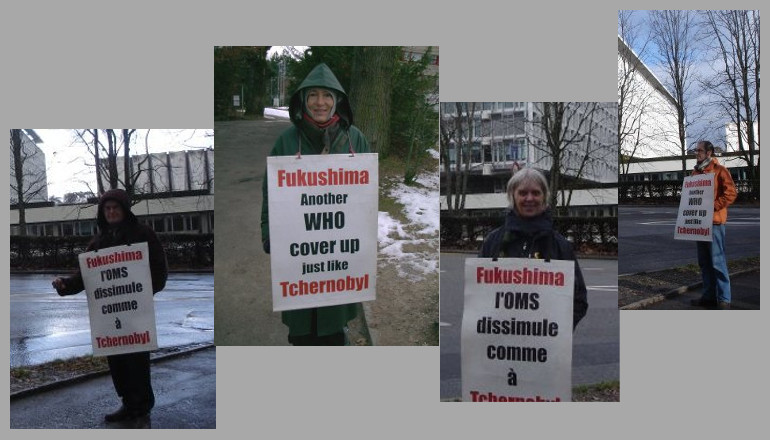
Week 293 – Geneva – 03 to 07 December 2012
Michel Monod (Geneva – Switzerland) – Sylvie Baldens (Gentioux – 23 – France)
Carole Bouvier (Cologny – Switzerland)
Philippe de Rougemont (Geneva – Switzerland)
(not photographed)
Françoise Bloch (Geneva – Switzerland)
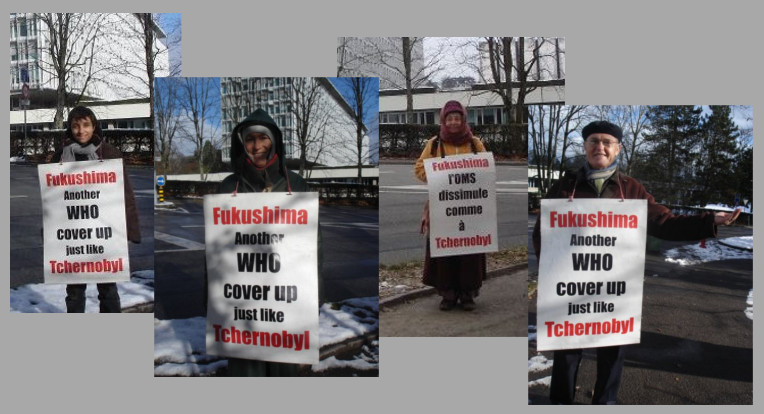
Week 294 – Geneva – 10 to 14 December 2012
Annick Steiner (Geneva – Switzerland)- Sylvie Baldens (Gentioux – 23 – France)
Lamamo (Aix les Bains – 73 – France) – Michel Monod (Geneva – Switzerland)
(not photographed)
Jean Yves Peillard (Clarafond – 74 – France)
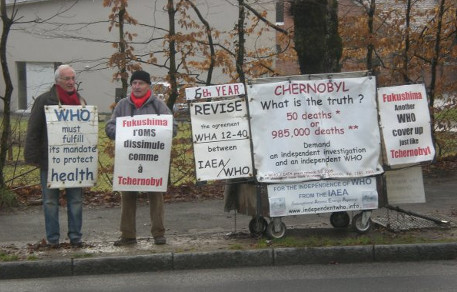
Week 295 – Geneva – 17 to 21 December 2012
David Shipley (Geneva – Switzerland) – Philippe Reculard (Auxerre – 89 – France)
(not photographed)
Isabelle Perrey (Aix les Bains – 73 – France) – Michel Monod (Geneva – Switzerland)
Alison Katz (Geneva – Switzerland))
We now believe it is important to address ourselves to those who are partly responsible for deciding WHO policy. It is for this reason that, on 9th November 2012, we began a Vigil outside the Ministry of Health in Paris. The Ministers of Health are the representatives of the member countries of WHO, and they are involved in deciding the policies and actions that this institution pursues in the area of radioprotection.
We will maintain this silent and peaceful vigil every Friday from 9am to 5pm outside the Ministry of Health in Paris, until France takes the necessary steps to ensure that WHO fulfils its mission to protect the population from radioactive pollution, and that a programme of independent research is put in place on a national and / or European level, on the theme of “Health and nuclear power”.
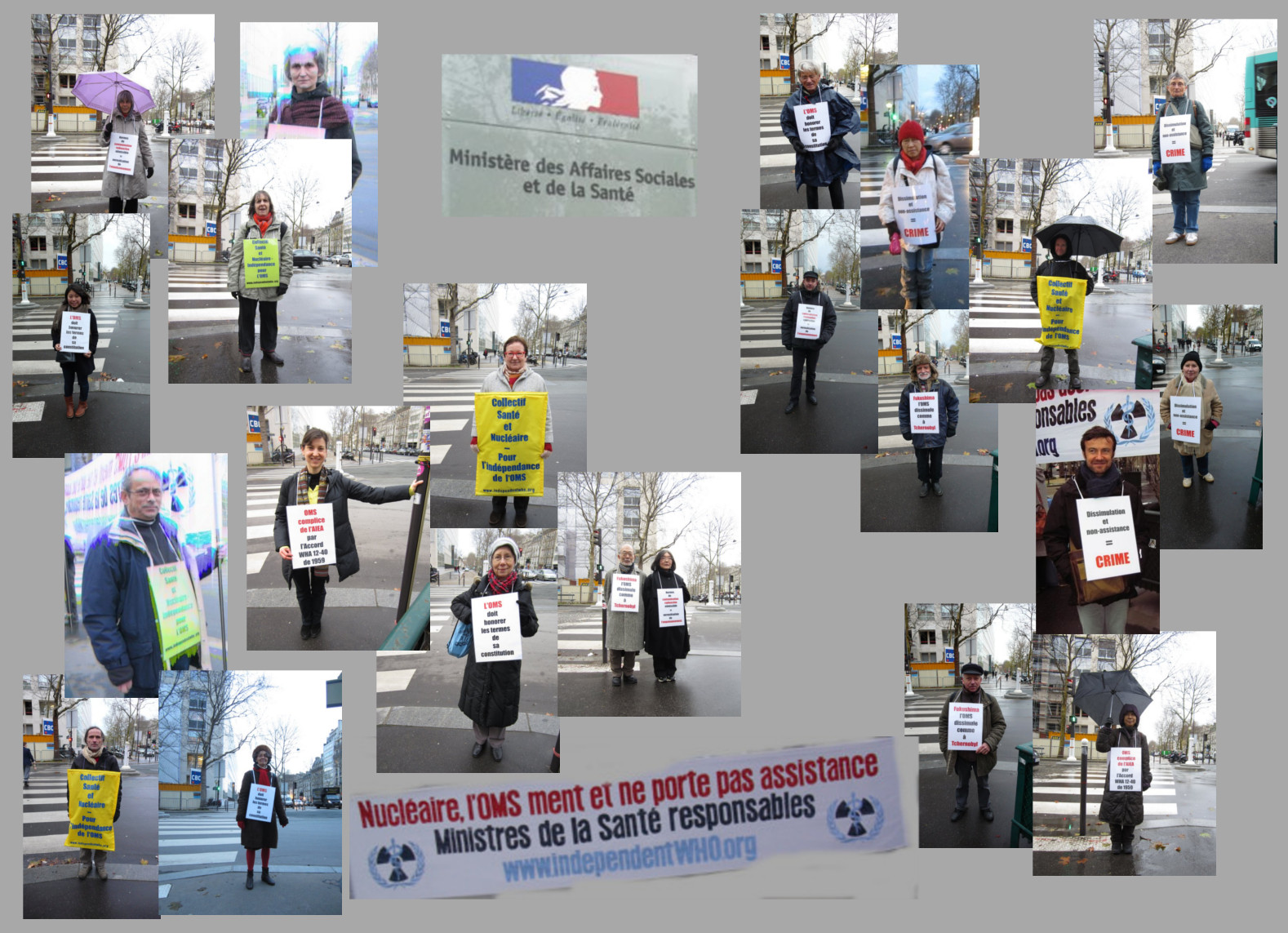
Vigil outside the Ministry of Health in Paris – December 2012
Taking part in the Vigil outside the Ministry of Health during December 2012 :
Midori Amo – Pauline Cabirol – Xavier Ciret – Philippe Clavière – Christophe Elain – Lionel Faure – Marie Magdeleine Fratoni – Etsuko Furukata – Chiaki Iwasaki – Dominique Lalanne – Martine Laroche – Serge Levillayer – Monique Levy – Dominique Maddaléna – Janick Magne – Anne Marie Minella – Jeannine Naudinet – Jean Pierre Pasquet – Monique Vilain – Mr et Mme Yamamoto
http://independentwho.org/en/2013/01/02/the-vigil-for-december-2012/
Corruption At “Decontaminating” Radioactive Towns In Japan

On Friday, Katsutaka Idogawa, mayor of Futaba, a ghost town of once upon a time 7,000 people near Fukushima No. 1, told his staff that evacuees might not be able to return for 30 years. Or never, given the age of many of them. He spoke in Kazo, Saitama Prefecture, where the town’s government has settled. It was the first estimate of a timeframe. But it all depends on successful decontamination efforts. And they’ve turned into a corruption scandal.
I’ve written about top-level corruption in the Japanese nuclear industry before [check out A Revolt, the Quiet Japanese Way or Whitewash versus Reality: “Disaster Made in Japan”], but this time, it hit the companies doing the decontamination work and the Environment Ministry.
The Ministry lined up 11 municipalities in Fukushima Prefecture for decontamination work: removing radioactive materials from the outside of buildings and from areas within 20 meters of buildings, roads, and farmland. It would be the initial process of the long-term goal to reduce airborne radiation level to under 0.23 microsievert per hour. Work has begun at four municipalities, for which ¥650 billion ($7.5 billion) has been earmarked. Big bucks, and it’s just the beginning.
The Ministry hired major construction companies, which in turn hired subcontractors, which then often hired sub-subcontractors to do the actual work, a murky process in Japan. The Ministry’s contracts stipulated how the decontamination had to be done and how radioactive waste had to be disposed of. Roofs, walls, and other surfaces would have to be washed by hand or with brushes. Power washers would not be allowed, except to clean gutters. Contaminated runoff would have to be collected and disposed of according to the rules. Contaminated leaves and soil would have to be placed in bags to prevent radiation from spreading. And dumping of radioactive materials is illegal. Violators would be fined or get thrown in the hoosegow for up to a year.
Alas, reporters of the Asahi Shimbun discretely watched and photographed, then interviewed decontamination workers at different sites. It was chilling. For example, leaves and soil contaminated by radioactive fallout weren’t put in bags and taken to collection sites for proper disposal but were dumped into rivers, at the bottom of slopes, or in other areas. Forbidden power washers were used to decontaminate houses, parking lots, and other areas; contaminated water splashed on neighboring structures, or was allowed to seep into the soil or reach the drainage system and eventually the river.
As a consequence, radiation levels after decontamination were in some cases significantly higher than they’d been before, as contaminated materials had become airborne, reaching in one case 2.9 microsieverts—near the catastrophic level at which the evacuation of residents would be required.
A Frenchmans experience in Japan since the nuclear disaster at Daichi
KNA Blog (French)
31 December 2012
Two French people in Japan
 |
| (13’37 “, Fr) |
Alexis Borreca , “Alex Japan”, gave cooking classes in Tokyo, where he lived with his wife and daughter Japanese. He built guitars too. Sickened and disgusted by the behavior of the media and government, he began posting videos daily from March 14, 2011, creating a big enough buzz on the Internet. Three months later, all his videos on Fukushima will be deleted without notice or explanation by YouTube.buzz on the Internet. Three months later, all his videos on Fukushima will be deleted without notice or explanation by YouTube.
 |
| (7’25 “, Fr) |
Mabesoone Lawrence , professor of comparative literature, still lives in Japan with his wife and daughter. He is also a member of the Watchers Fukushima and creator of the anti-nuclear movement of the ” Yellow Ribbon “. He did not hesitate to mobilize all his savings, ie 8,000 euros to buy a machine to measure the contamination of food. Since April 2012, he organized with the support of the Municipality of Nagano citizens measurement sessions foods, free and open to all.The original of this video dated June 27, 2011, that I offer a version that is I increased the volume a bit and fixed a problem with sync sound due to a defect in the video from 3’17 “. You will find here an interview with Lawrence about 30 minutes, dated February 2012.buy a machine to measure the contamination of food. Since April 2012, he organized with the support of the Municipality of Nagano citizens measurement sessions foods, free and open to all.
54% of cities hosting nuclear plants OK restart: sort of?

From the comments
zichiJAN. 07, 2013 – 10:22AM JST
@Heda_Madness
if as you say, the voters massively support nuclear energy, equally they also massively support a host of other ideas like changing Article 9, spending more on defense, spending ¥200 trillion on public works, maybe making atomic weapons, and so on…
……………………………………………………………………………………………………………………..

PenfoldJAN. 07, 2013 – 08:04AM JST
It’s only the mayors who agree, not the people..
………………………………………………………………………………………………………………………..

Of course the mayors or governors are the ones asked here. Who else could:
28% refrained from clarifying their position, the Yomiuri said, while two did not give valid answers.
……………………………………………………………………………………………………………………..
OK, now you can read the article.. 🙂 and check the comments..
54% of cities hosting nuclear plants OK restart: survey
JAN. 07, 2013 – 07:00AM JST
TOKYO — Japan Today
The majority of Japanese towns and cities hosting nuclear plants said they would agree to the reactors being restarted if the government guaranteed the safety of the facilities, a survey said Sunday.
All but two of Japan’s 50 reactors remain closed for safety checks following the Fukushima nuclear disaster triggered by the March 2011 quake-tsunami and must get the blessing of a new regulator before being restarted.
Despite the Fukushima crisis, 54% of the 135 mayors of communities located near nuclear plants said they would accept the restart of the reactors, according to the survey by the Yomiuri Shimbun newspaper.
Only 18% said they would not support reactor restarts, while 28% refrained from clarifying their position, the Yomiuri said, while two did not give valid answers.
The results run contrary to public opposition to reactor restarts, as the Fukushima nuclear meltdown has fuelled fear of nuclear power in Japan.
The survey outcome, however, reflects the harsh economic reality in the rural communities hosting nuclear facilities, which are usually major employers in the areas that often have no other industries, the Yomiuri said.
Fukushima’s crippled reactors went through meltdowns and explosions that sent radioactive materials in the surrounding areas, which is likely to be unfit for human activities for decades.
Fukushima – IndependentWHO the cons-forum “Nuclear Free Now» December 2012
“….Demonstration outside the conference venue IAEA in Koriyama
Denial is strong among the local population, the desire to forget the anxiety dominates but the consequences and the possibility that the disaster is even worse, it seems, is present in all minds. Highlight of this event: the spokesman of the IAEA came listen to speeches by representatives of different associations of victims. She was visibly moved to all the suffering but that said, she still has not crossed the barrier that separates us from it to associate with victims. In another ten disasters maybe …..”
22 – DECEMBER – 2012
Translated from French – Google
connected viseo with introduction in english
https://www.youtube.com/watch?v=hM-1bDfVfxo
In Japan, a cons-forum was organized by the group “Nuclear Free Now”, in Koriyama, a city 55 km from Fukushima, from 12 to 17 December 2012, in response to the ministerial meeting on nuclear safety organized on the same dates in this city by the Japanese government and the IAEA.
Against the organizers of the forum, a member wishing to make a presentation IndependentWHO the agreement WHO / IAEA activities of the group, so I participated in various events organized by “Nuclear Free Now. ”
~

In Tokyo, a first meeting was held on December 12 by “Friends of the earth Japan” (Friends of the Earth), with interventions of two Japanese associations on the situation in Fukushima, with a presentation of the IAEA by Reinhard Uhrig of the Austrian “Global 2000” and also with my intervention.
~
Thursday, December 13, the same presentations were made, this time in Fukushima, with a high point when the video I presented the watch to the Ministry of Health in Paris, the people of Fukushima have recognized one of them, now a refugee in France.

Presentation at Fukushima December 13, 2012
~
Friday, December 14, with the group of Europeans came to this forum-cons, we went for the day in the area particularly susceptible to contamination. Along the way, we saw workers decontaminating karcher roof houses and in various places, land or fields where topsoil has been removed. Contaminated, it is stored in big bags.

Contaminated soil is stored in bags
We start by visiting Iitate, a village evacuated in which, apart from workers engaged in decontamination, there is not a soul. Nothing special in this town, nothing to see, nothing to feel , only the beep / beep is heard geiger counter. Amazing thing that radioactivity distributed unevenly in leopard spots, but you can not see and can easely who wants to forget, before its consequences on health remind us of his presence. A Iitate, are stacked sandbags waiting for a destination that nobody seems to he the slightest idea. The issue of storing “waste” is already a very serious problem and volumes that will stop growing as decontamination to be performed is important. And for the moment, the candidates receiving the waste are reported to say …. they do not especially want. So, in some fields, we chose the dilution on the spot, the earth has been disturbed and mixed with the underlying layer, making every culture now impossible.
It is then that we realize Minamisouma. Near the east coast and the damage caused by the tsunami are still visible. It feels a little better power has been absolutely amazing and have this cataclysm ….human arrogance to think their nuclear power plants able to resist.
Brain-injured man still in jail after making threat to blow up Waterford 3
5 Jan 2012
A man who is being held at the Nelson Coleman Correctional Center for threatening to blow up the Waterford 3 nuclear plant is awaiting a sanity evaluation.
St. Tammany Parish resident William Dugas is being held for a felony charge of “threatening communications” after F.B.I. investigators claim that he made threats to blow up the nuclear facility in Taft and murder Entergy employees.
Dugas, 51, has been incarcerated at the Nelson Coleman Correctional Center since late October for the incident.
Criminal charges filed with the U.S. States Eastern District Federal Court reveal that Dugas made the threats concerning the St. Charles Parish nuclear facility during a dispute over his electric bill.
According to F.B.I. investigators, Dugas’ complaints were related to hurricane surcharges for Hurricane Katrina in 2005 and Hurricane Gustav in 2008 that he felt he should not have to pay since he only recently opened an account with the company.
“I will go and blow up that nuclear plant and I know you really don’t want me to do that because it will blow up this whole United States and I don’t care. I’ve already died twice and it doesn’t mean anything to me,” read an F.B.I. transcript of Dugas’ phone call dated Oct. 10.
In a message left the next day, Dugas said, “I’m telling you, I will start killing these people and walk away scot free. You better get in touch with me.”
According to the charges, Dugas also threatened to “smash the CEO of Entergy’s head off his desk until he was dead.”
After being taken into custody on Oct. 12, F.B.I. investigators said Dugas admitted to making the statements, but said he was only trying to get someone’s attention. Although he said he did not have any intention of blowing up the plant, he claimed he knew how to do so. However, when pressed by F.B.I. agents he would not reveal how the plant could be blown up.
No explosives or weapons were found in a search of Dugas’ home.
Japan – Nuclear decontamination worker says illicit dumping is daily occurrence
January 05, 2013(Mainichi Japan)
Decontamination worker says illicit dumping is daily occurrence

Illicit dumping of radiation-tainted soil, plants and water resulting from decontamination work in areas affected by the Fukushima No. 1 Nuclear Power Plant disaster is “common practice,” a worker has told the Mainichi Shimbun.
The Environment Ministry launched an investigation after allegations of illicit dumping by contractors charged by the government to conduct decontamination efforts emerged on Jan. 4.
According to the worker, who has been monitoring radiation levels as part of decontamination efforts in the Fukushima Prefecture village of Kawauchi and elsewhere since last fall, general contractors are awarded primary contracts, and subcontractors take charge of each decontamination zone. These zones are then divided up among unions of sub-subcontractors comprising small to mid-size companies and local operators.
The worker said that branches and leaves collected during decontamination work are supposed to be stored temporarilyin special bags, but such rules are commonly disregarded.
“There’s no temporary storage space anymore, so branches and leaves are often just left there,” he said. “It’s common practice. In other words, we arrive at the conclusion that since there’s no space to put it, there’s nothing else we can do.”
Water that has been used to decontaminate surfaces must also be collected by placing plastic sheets under structures during cleaning. The tainted water is then pumped into a tank and processed with a purification system. However, failure to take such measures is common, the worker said.
Fukushima News 1/5/13: 209,695 Bq/Kg of cesium in Tochigi dust;New Fault In Kanto Region Seabed
Published on Jan 5, 2013
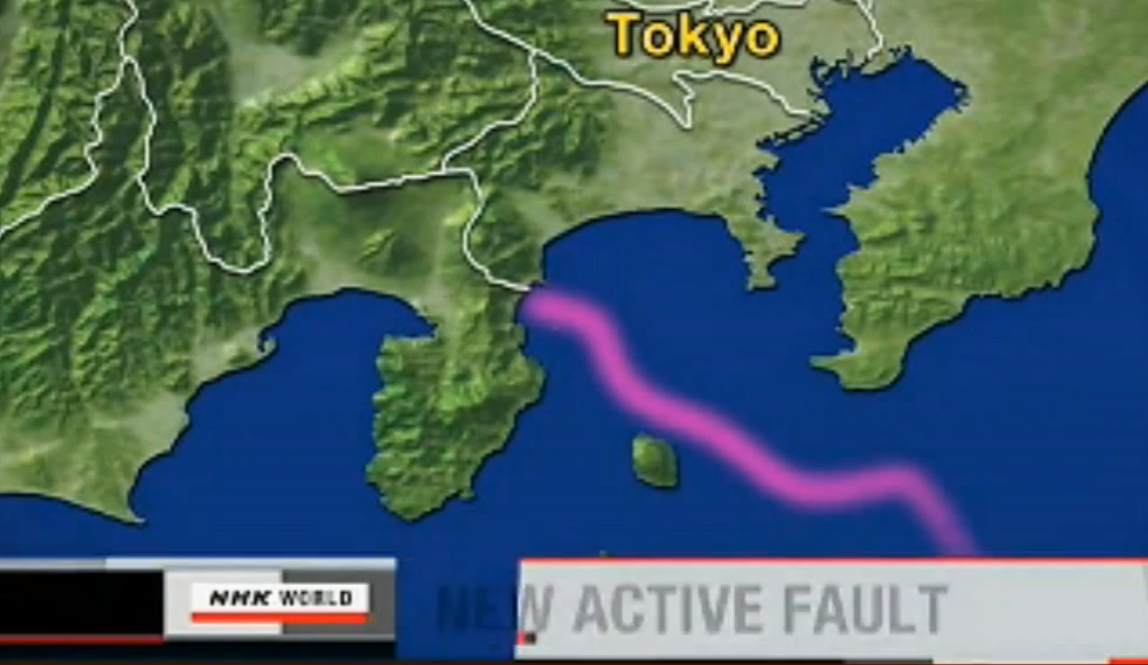
New fault found on seabed near Kanto region
Japanese researchers have discovered a new fault on the seabed off Japan’s east coast. They say the fault may have formed fairly recently during an earthquake that hit the Kanto region that includes Tokyo.
Bluefin tuna sold for record $1.8 mil. in Tokyo
A 222-kilogram bluefin tuna has fetched an all-time high of 155.4 million yen, or 1.8 million dollars, at the year’s first auction at Tokyo’s Tsukiji market.
Magnitude 7.5 quake hits Alaska
A powerful earthquake has hit off the southeastern coast of the US state of Alaska.
The US Geological Survey says the magnitude 7.5 earthquake struck at 8:58 UTC on Saturday.
The focus was about 100 kilometers west of the town of Craig, at a depth of about 10 kilometers.
http://www.youtube.com/watch?v=_ovQzuQLAi8
Japanese NPO: “We need to start a rotating evacuation for children as soon as possible” — “Radiation just continues to accumulate” (VIDEO)
Fukushima Now: in the Aftermath of Nuclear Disaster
A 30 minute documentary commissioned by CWS-Asia/Pacific on the aftermath of the March 11, 2011, nuclear disaster in Fukushima, Japan, highlighting some of the efforts made by local people and organizations to combat the problems of radiation exposure, and some of the remaining dangers of radiation. We hope that this video will raise awareness of the ongoing needs of the people in Fukushima and further donations to our extended appeal for the Japan disaster. For further information, please visit our website, http://www.cwsasiapacific.org.
http://www.youtube.com/watch?feature=player_detailpage&v=6hxTzH6f2fA#t=947s
For an indepth look into Fukushima i recommend this web site [Arclight]
http://fukushimaontheglobe.com/whats-fukushima#sthash.y7YIXrxf.dpbs
A Nun’s Warning: “I just came back from Japan and Fukushima and I hear already many children start getting sick” (VIDEO)
Published: January 5th, 2013 at 10:56 am ET
By ENENews
http://enenews.com/nuns-warning-came-japan-fukushima-hear-already-many-children-getting-sick-video
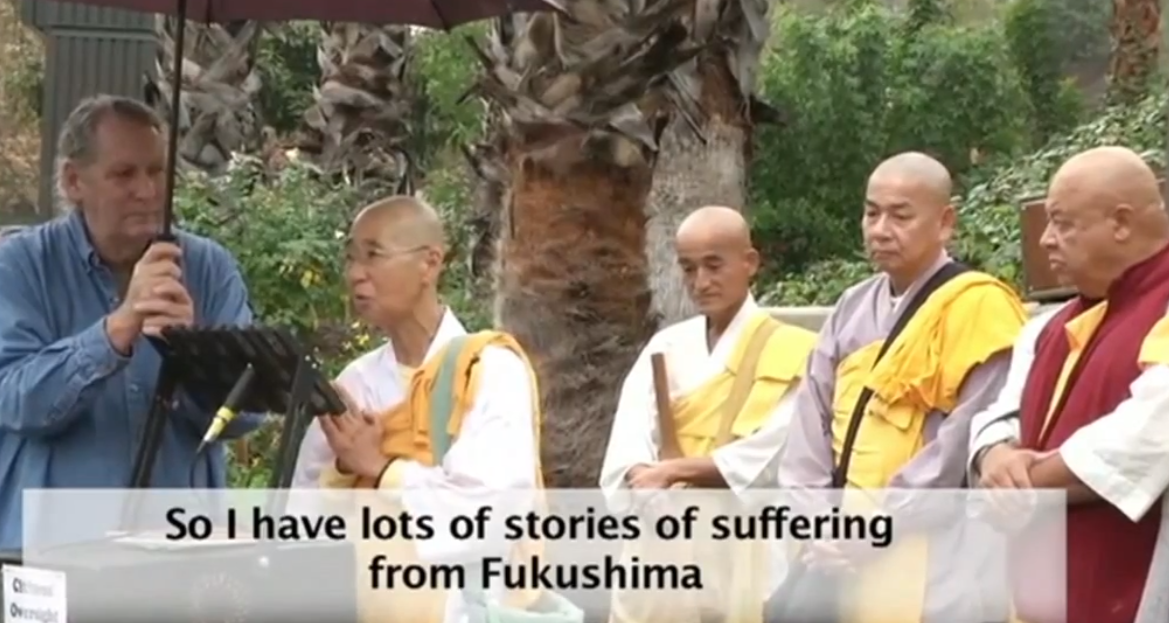
Title: A Nun’s Warning: Radiation Hurts Children Most
Source: eon3
Date: Jan 4, 2013
A Nun’s Warning: Radiation Hurts Children Most
June, Buddhist Nun: I just came back from Japan last month so I have lots of stories of suffering from Fukushima […]
I come from Japan. I just came back from Japan and Fukushima and I hear already many children start getting sick. Some thyroid problems. And so we have been studying what’s happened in Chernobyl, nuclear testing sites […]
Europe nuke club pitches for associate member status to India
Move will open many doors for Indian scientists, says Rolf-Dieter Heur

The Director-General of CERN (European Organisation for Nuclear Research), Rolf-Dieter Heur on Saturday pitched for India becoming an associate member of the organisation.
CERN was instrumental in the discovery of the so-called ‘God particle’ – an elementary particle believed to exist in physics — in July last year.
RIGHT TIME
“This is the right time for India to be an associate member of CERN,” Heur said here on the sidelines of a session organised by the Indian Science Congress, adding that the matter has also been taken up with Union Minister for Science and Technology S. Jaipal Reddy.
The associate membership of CERN will not only open the doors of mega science experiments for Indian scientists but also help them participate in training and education programmes held at the laboratory, he said.
India, currently, enjoys an observer status and needs to make a payment of nearly 10 million Swiss Francs to CERN for associate membership.
Cold Fusion/Hot fusion ? ….but still hot under the collar!
If you want to study journalism, don’t go to New York University where you might get Professor Charles Seife.

NYU Journalism professor Charles Seife fails on fact-checking.
His last book Sun in a Bottle: the Strange History of Fusion and the Science of Wishful Thinking published in October 2008 appears to be the fodder for his recently published article Fusion Energy’s Dreamers, Hucksters, and Loons posted on Slate.com, and he hasn’t researched the field since.
Primarily about the inability of plasma scientists to generate commercial power from hot fusion, the recent piece of typing contains gross inaccuracies about cold fusion stemming from the same falsities that pushed it out of the mainstream science community two decades ago.
For over half-a-century, hot fusion labs have received about a hundred billion dollars research funding under the auspice of producing clean abundant energy “in the future”. The joke is that the future always seems to be ‘thirty years away’. To date, hot fusion projects have not generated any useful energy.
However in the article, the author repeats the same myths about cold fusion that have long ago been dispatched by condensed matter nuclear scientists around the world. Scientists working out of U.S. Navylabs, national labs, nuclear agencies, and universities have confirmed the very reproducible reaction’s effects of excess heat and transmutations repeatedly.
Unfortunately, the Professor gets a D for not taking the time to review the facts, confusing the enormous energy gains in cold fusion with the lack of hot fusion success. He fails further by insulting two of the discoverers of cold fusion Martin Fleischmann and Stanley Pons, implying a criminal intent by equating them with the actions of Richard Richter.
Seife writes in his article:
“For one thing, the history of fusion energy is filled with crazies, hucksters, and starry-eyed naifs chasingafter dreams of solving the world’s energy problems. One of the most famous of all, Martin Fleischmann, died earlier this year. Along with a colleague, Stanley Pons, Fleischmann thought that he had converted hydrogen into helium in a beaker in his laboratory, never mind that if he had been correct he would have released so much energy that he and his labmates would have been fricasseed by the radiation coming out of the device. Fleischmann wasn’t the first—Ronald Richter, a German expat who managed to entangle himself in the palace intrigues of Juan Peron, beat Fleischmann by nearly four decades—and the latest schemer, Andrea Rossi, won’t be the last.“
Seife is confusing the 100-year-old conventional theory of nuclear reactions with today’s low-energy nuclear reaction (LENR), lattice-assisted nuclear reaction (LANR), and quantum fusion, names used to describe the variants of cold fusion research taking place today.
Merkel confirms Germany won’t export nuclear waste
Deutsche Welle
- Date 05.01.2013
The German chancellor has said the country is to dispose of its nuclear waste within its own borders. The announcement came after her environment minister denied a report that the government planned to export it.
Chancellor Angela Merkel delivered her message on her government’s nuclear waste disposal policy on Saturday at her Christian Democrat Party’s (CDU) convention in the north western state of Lower Saxony.
It’s clear “that we’ll dispose our own [radioactive] waste here,” she said, adding that this position had been “well-established.”
Merkel’s confirmation of her party’s position served to back her environment minister, Peter Altmaier, who had spoken out on the issue on Friday.
Altmaier had publicly called a report “nonsense” that had been published by the daily Süddeutsche Zeitung. The article had suggested that the government was considering sending radioactive waste abroad for disposal.
A new EU guideline, to be implemented this year, would allow member nations lacking sufficient domestic storage options to ship their depleted uranium abroad. The German parliament is due to debate and ratify the bloc-wide changes.
Permanent site still sought
Cumbria Wildlife Trust dodges the issue of Nuclear Developments

Those with an interest in wildlife will be aware that the nuclear industry from Kirksanton to Kakadu is no lover of the natural world. There are wildlife officers on the Sellafield site but they are there to make sure the wildlife is culled (the freezers on site hold many species of Cumbrian birds – waiting to be dumped as nuclear waste). Cumbria Wildlife Trust continues to receive money courtesy of the nuclear industry, Studsvik the radioactive scrap metal dealer at Lillyhall is a silver member. Meanwhile Cumbria Wildlife Trust continues to dodge the biggest issue facing Cumbria’s wildlife – that of the proposed new nuclear build at Sellafield: ‘Moorcide,’ and the proposed nuclear dump, deeper than scafell is high, under a huge swathe of Lakeland.
The following are an exchange of letters in the local press….
I am a long time member and support much of the excellent work the Trust has done. A flagship campaign into 2013 is the push for recognised Marine Conservation Zones. This is a really important campaign but I cannot support MCZs which allow for nuclear developments.
In Cumbria this is especially important with the prospect of government plans for both new nuclear build and the national geological nuclear dump.
Has CWT opposed the plan for new build at Sellafield? A new nuclear plant would require huge amounts of water (both sea and fresh) and would dangerously raise the temperature of the Irish Sea around Sellafield. The proposed new nuclear plant would burn the fuel for longer producing hotter wastes and according to the Environment Agency would require a desalination plant to provide unlimited fresh water. A desalination plant (salt water intake) would disturb substantial radioactive silts on the Irish Sea bed and the intake pipes for huge amounts of sea water per second would damage significant fish stocks.
Has CWT opposed the plan for a geological dump? The government plan is for the radioactivity to percolate out sooner or later to the Irish Sea.
As a wildlife enthusiast I cannot support Marine Conservation Zones which would allow for these nuclear developments. CWT opposed the plan for new build at Kirksanton, the same objections re water use, sea temperature rise and damage to sea life, apply at Sellafield. Will Cumbria Wildlife Trust ensure that Cumbria is safe for the next 50 years and oppose nuclear developments?
Marianne BIRKBY
Wildlife artist and founder of Radiation Free Lakeland
Reply from Cumbria Wildlife Trust
Experts okay restart of worrisome Belgian nuclear plants
by Staff Writers
Brussels (AFP) Jan 05, 2013

Scientific experts have greenlighted the restart of two Belgian nuclear power plants despite signs of micro-cracks in reactor vessels, the daily Le Soir said Saturday.
No independent confirmation was immediately available from Belgium’s nuclear safety authority, AFCN.
Le Soir, which did not identify its sources, said “experts on material resistance who were asked for their opinion on the fate of the Tihange 2 and Doel 3 vessels have handed in a positive report.”
AFCN had said it would hand the government a report on whether to restart the reactors in mid-January. It has already received a positive report from the country’s Electrabel power utility.
Le Soir said the experts had however asked for “more intensive” checks.
Many “potential cracks” were found during inspections early last year at the base of the reactor vessel at Doel 3, near the northern city of Antwerp, which was closed in June, as well as at Tihange 2, near the southern city of Liege.
It was halted in August for investigation after the problems at Doel came to light.
The reactor vessels, housing the nuclear core, were built in the 1970s by the Dutch firm Rotterdamsche Droogdok Maatschappij (RDM), which has since ceased business.
RDM equipped some 20 nuclear plants, half of them in Europe.
Earlier this year, the Belgian nuclear regulator said the problems in the Doel 3 reactor likely dated back to its construction and while there was little risk for the present, there was “a malaise given the large number” of defects.
The 2011 Fukushima nuclear disaster in Japan has increased sensitivity over the safety of nuclear energy, with Germany deciding to phase out its plants.
The EU counts 147 reactors in 14 countries, with more than a third of the total in France which depends almost entirely on nuclear generators for electricity.
1 This Month





PLEASE OPPOSE HR 8255 AND S.3639 – bills would accelerate satellite deployment, with no environmental review or safeguards – https://ncstd5li.quorum.us/campaign/169331/
To see nuclear-related stories in greater depth and intensity – go to https://nuclearinformation.wordpress.com
-
Archives
- October 2026 (10)
- September 2026 (339)
- August 2026 (330)
- July 2026 (355)
- June 2026 (287)
- May 2026 (306)
- April 2026 (356)
- March 2026 (251)
- February 2026 (267)
- January 2026 (308)
- December 2025 (358)
- November 2025 (359)
-
Categories
- 1
- 1 NUCLEAR ISSUES
- business and costs
- climate change
- culture and arts
- ENERGY
- environment
- health
- history
- indigenous issues
- Legal
- marketing of nuclear
- media
- opposition to nuclear
- PERSONAL STORIES
- politics
- politics international
- Religion and ethics
- safety
- secrets,lies and civil liberties
- spinbuster
- technology
- Uranium
- wastes
- weapons and war
- Women
- 2 WORLD
- ACTION
- AFRICA
- Atrocities
- AUSTRALIA
- Christina's notes
- Christina's themes
- culture and arts
- Events
- Fuk 2022
- Fuk 2023
- Fukushima 2017
- Fukushima 2018
- fukushima 2019
- Fukushima 2020
- Fukushima 2021
- general
- global warming
- Humour (God we need it)
- Nuclear
- RARE EARTHS
- Reference
- resources – print
- Resources -audiovicual
- Weekly Newsletter
- World
- World Nuclear
- YouTube
-
RSS
Entries RSS
Comments RSS

