Houthi attacks add to worries over Trump Saudi nuclear power pact
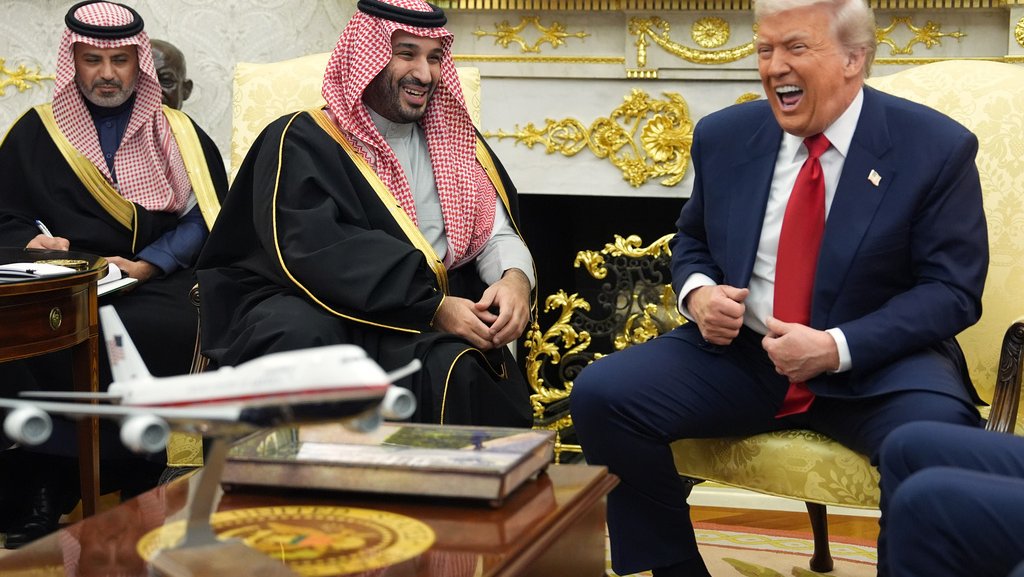
“The last thing Washington should do is to build a bomb starter kit in Saudi Arabia, only for the Yemenis—or some other hostile group—to take it over,”
Under the agreement, Saudi Arabia would be able to enrich uranium and build nuclear reactors using US technology. It does not include the so-called Additional Protocol, which grants the UN’s International Atomic Energy Agency intrusive powers such as snap inspections that Washington had previously demanded from Iran.
The New Arab Staff & Agencies, 20 November, 2026, https://www.newarab.com/news/houthi-attacks-adds-concerns-over-trump-saudi-nuclear-power-pact
Houthi attacks on Saudi infrastructure raise fresh security concerns over Trump’s proposed nuclear deal with Riyadh ahead of a US Senate vote.
Houthi attacks on Saudi infrastructure are adding to concerns about US President Donald Trump‘s proposed nuclear power pact with the kingdom, weeks before US senators are due to vote on whether to block the agreement.
Yemen’s Iran-aligned Houthis have intensified drone and missile strikes on Saudi airports, oil facilities and office buildings, raising questions about Riyadh’s ability to secure nuclear plants that would be built under the pact.
The US Senate will vote as soon as the week of November 30 on a resolution of disapproval of the proposal, known as a 123 Agreement, Republican and Democratic Senate aides familiar with the timing said.
Trump, who surprised members of Congress in July by announcing the deal, submitted it to Congress in August.
Concerns rose because the agreement did not address whether Saudi Arabia would join the “Abraham Accords” to normalize ties with Israel and did not require tough measures like snap inspections of the proposed nuclear plants.
Worries about the deal have focused mainly on the possibility that Saudi Arabia one day could build a nuclear weapon, but the Houthi campaign has fueled worries that militants could strike or seize nuclear facilities.
The Houthis escalated their threats on Friday, saying they would attack Saudi Arabia’s Red Sea ports and warning everyone nearby to stay away.
Henry Sokolski, executive director of the Nonproliferation Policy Education Center, and Sharon Squassoni, a research professor at George Washington University, wrote in the National Interest that the US should demand safety plans.
“The last thing Washington should do is to build a bomb starter kit in Saudi Arabia, only for the Yemenis—or some other hostile group—to take it over,” they wrote.
The Senate aides said they did not know whether the resolution to block the pact would garner the simple majority needed to pass the Senate, where Trump’s Republicans still have a 53-47 seat majority.
However, some Republicans have joined Democrats in requesting more information on the nuclear proposal.
THE RIGHT TO ENRICH URANIUM
Under the agreement, Saudi Arabia would be able to enrich uranium and build nuclear reactors using US technology. It does not include the so-called Additional Protocol, which grants the UN’s International Atomic Energy Agency intrusive powers such as snap inspections that Washington had previously demanded from Iran.
Some Democratic lawmakers and nonproliferation advocates have criticized the pact for not barring Saudi Arabia from enriching uranium or reprocessing nuclear waste, two potential pathways for making a nuclear weapon. The United Arab Emirates agreed to such measures, known as the gold standard, in its 2009 deal with Washington.
US Representative Brad Sherman, a California Democrat and senior member of the House of Representatives Foreign Affairs Committee, said the “first step” toward a nuclear weapon is to begin a civil nuclear program without committing to robust safeguards.
“This is exactly what the Trump administration is allowing MBS (Saudi Arabia’s Crown Prince Mohammed bin Salman) to do,” Sherman wrote in the Washington Post.
No comments yet.
1 This Month
Tell Congress: Prevent Nuclear Catastrophe in Iran

Tell Congress: Prevent Nuclear Catastrophe in Iran

Read the Public Inquiry Report, the Commissioners’ report, Surrendering Australia: The AUKUS Deception is available to download for free at aukuspublicinquiry.com. Or just watch the replay of the National Press Club Luncheon.


Shut down the radiation-damaged Heysham nuclear reactors now
To see nuclear-related stories in greater depth and intensity – go to https://nuclearinformation.wordpress.com

Say No to NASA’s Reckless Nuclear Reactor on the Moon
Say No to NASA’s Reckless Nuclear Reactor on the Moon
-
Archives
- November 2026 (238)
- October 2026 (302)
- September 2026 (339)
- August 2026 (330)
- July 2026 (355)
- June 2026 (287)
- May 2026 (306)
- April 2026 (356)
- March 2026 (251)
- February 2026 (267)
- January 2026 (308)
- December 2025 (358)
-
Categories
- 1
- 1 NUCLEAR ISSUES
- business and costs
- climate change
- culture and arts
- ENERGY
- environment
- health
- history
- indigenous issues
- Legal
- marketing of nuclear
- media
- opposition to nuclear
- PERSONAL STORIES
- politics
- politics international
- Religion and ethics
- safety
- secrets,lies and civil liberties
- spinbuster
- technology
- Uranium
- wastes
- weapons and war
- Women
- 2 WORLD
- ACTION
- AFRICA
- Atrocities
- AUSTRALIA
- Christina's notes
- Christina's themes
- culture and arts
- Events
- Fuk 2022
- Fuk 2023
- Fukushima 2017
- Fukushima 2018
- fukushima 2019
- Fukushima 2020
- Fukushima 2021
- general
- global warming
- Humour (God we need it)
- Nuclear
- RARE EARTHS
- Reference
- resources – print
- Resources -audiovicual
- Weekly Newsletter
- World
- World Nuclear
- YouTube
-
RSS
Entries RSS
Comments RSS


Leave a Reply