The M.O.D.and URENCO Plan for the Village of Capenhurst in Cheshire: Host for “Receipt and Storage” of 27 Nuclear Submarines (and the rest).
Radiation Free Lakeland, By mariannewildart on November 18, 2026
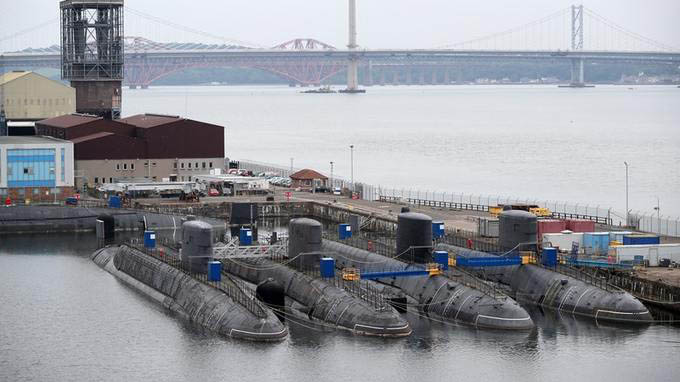
| URENCO the UKs uranium enrichment facility at Capenhurst in Cheshire has been selected to “receive and store” 27 defunct nuclear submarines. URENCO has applied to the Environment Agency to change their radioactive substances permit to allow this to happen. The impact would be intolerable and cumulative to existing radioactive blight at the Capenhurst URENCO site. |
| Comments by Radiation Free Lakeland to Urenco Nuclear Stewardship Limited (UNS) application to the Environment Agency to change (vary) their radioactive substances permit EPR/DB3735DH. |
| Village of Capenhurst, Host to Receive and Store 27 Nuclear Submarines? |
The leafy village of Capenhurst in Cheshire has been chosen from five shortlisted sites, Aldermaston,Burghfield, Chapelcross and Sellafield to receive and store 27 submarine’s Reactor Pressure Vessel (RPV) at the Urenco nuclear fuel enrichment site. The 27 submarine reactor pressure vessels each contain heat generating Intermediate Level radioactive Waste (ILW) and must be stored for an interim period before sending them all to one (or more) proposed Geological Disposal Facility (GDF).
The additional radioactive burden from the 27 submarine reactor pressure vessels at Capenhurst would be 36Tbq largely, according to the application, Cobalt 60. This is cumulative to the existing and increasing radioactive burden at the Capenhurst site with plans for HALEU fuel for new reactors.
A planned commercial HALEU enrichment plant at Urenco’s Capenhurst site, co-funded by the UK government under its GBP £300m HALEU programme and targeted for operation by 2031. Urenco now cites output of up to 27 tonnes of HALEU a year, up from the 10 tonnes a year in the 2024 funding announcement; front-end engineering is under way. “HALEU is uranium enriched above 5% and below 20% U-235 — the fuel for advanced reactors with U.S. supply still at demonstration scale”. By NNN Newsroom 27 August 2026.
Cumbria is the only area in the UK shortlisted for a GDF and the opposition to a GDF which would also include 140 tonnes of plutonium much of it from foreign nuclear reactors is growing.
National Audit Office Concern at Nuclear Submarine ‘Value for Money.’
In 2019 the National Audit Office noted that :The Ministry of Defence has committed to act responsibly and dispose of its nuclear submarines “as soon as reasonably practicable”. To date, it has not disposed of any of the 20 submarines retired from service since 1980 (now 27).
“The National Audit Office noted in 2019 that there were “20 out-of-service submarines stored by the Ministry of Defence (the Department). 19 (now 27) average number of years submarines out-of-service, against 26 years in-service, £0.5bn estimated total cost to the Department of maintaining retired submarines.”
NAO go on to say that:
£96 million estimated cost to the Department of fully disposing of a submarine (1)
£7.5 billion Department’s future liability for maintaining and disposing of its 20 stored and 10 in-service submarines, as at March 2018
Defueling submarines
11 – number of years’ delay in re-establishing an ability to defuel submarines, moving from 2012 to a current planning estimate of 2022 (2)
57% (£100 million) budget increase for re-establishing a defueling capability from £175 million (2007) to £275 million (2018)
9- average number of years fuelled submarines have been stored
Dismantling submarines (removing radioactive parts)
15 – number of years delay rolling out a tested submarine dismantling approach, moving from 2011 to a current planning estimate of 2026
50% (£0.8 billion) increase in the cost of the project from £1.6 billion (2002) to £2.4 billion (2016)
£0.9 billion estimated increase in the Department’s longer-term financial liabilities related to submarine dismantling should it take:
• six months longer to remove intermediate-level waste from boats dismantled in two stages than the expected 18 months; and
• a similar delay dismantling the remaining submarines
Notes
1 Figures estimated based on the average annual cost over the last four years at 2017-18 prices.
2 ‘Current planning estimate’ reflects the Department’s current working level assumption, which has not yet been approved by the Departmental Investment Board as it is subject to ongoing scrutiny.”
How Many More Nuclear Submarines to Be Dismantled and at What Cost?
Despite the eye-watering costs to the tax payer and the dangerous proposal to use the village of Capenhurst as host to a nuclear submarine“dismantling” site there is a push for the building of ever more nuclear submarines with nowhere to go and no way of “disposal.” (see AUKUS below).
The Ministry of Defence had told the National Audit Committee in 2019 that: “although it had deferred dismantling submarines on affordability grounds in the past, this was no longer acceptable on safety and reputational grounds.” In other words the Ministry of Defence has said it cannot afford to fund the dismantling of nuclear submarines which begs the question why more are being built and planned ( National Audit Office Investigation into submarine defueling and dismantling 2019).
Transport
The Ministry of Defence’s own factsheet states that:
“that the route for construction traffic will be via the A41 and Capenhurst Lane avoiding Dunkirk Lane and Capenhurst Village. Capenhurst Nuclear Sevices notes that the preferred route for the transportation of the Reactor Pressure Vessels is via the A51 and through the village thereby avoiding the Capenhurst bridge”. These are small country roads already entirely unsuitable for the existing lorries carrying Uranium Hex and other nuclear materials to URENCO. The MOD factsheet goes on to say that : “There may be up to 3 RPV transports in the first year. Based on initial dismantling of the submarines at Rosyth and then those at Devonport, the long- term rate is expected to be around 1 a year thereafter. If there were some parallel work at Devonport and Rosyth, it could be around 2 a year for a few years.”
This understates the case given the amount of submarine reactor vessels is 27 – a few years equates to 13 to 27 years of radioactive nuclear submarine reactors trundling through Capenhurst and the surrounding villages.
Then of course the plan is to trundle them to Cumbria to be dumped in a deep geological disposal facility 1000 metres under the sea off the Lake District coast. With ever more nuclear submarine reactors and civil nuclear reactors being built the nuclear industry in the UK is clearly out of control.
The UK is becoming a literal nuclear waste dustbin with all the blight, health impacts and environmental damage that brings. The Environment Agency rather than warning UK Government about the continued manufacture of the most dangerous nuclear wastes including nuclear submarines, is acting as a facilitator for the nuclear industry.
It is clear from the tone of the application that URENCO fully expects the Environment Agency to rubber stamp the plan.
Radiological Protection – or Lack Of It.
Radiation Free Lakeland fully endorses the comments by Professor Chris Busby of Green Audit which we reproduce below. The cumulative toxic burden to the public is intolerable…………………………………………………………………………………………………………………………………………………………………………………………………………………………………….. https://mariannewildart.wordpress.com/2026/11/18/the-mod-and-urenco-plan-for-the-village-of-capenhurst-in-cheshire-host-for-receipt-and-storage-of-27-nuclear-submarines-and-the-rest/
No comments yet.
1 This Month
Tell Congress: Prevent Nuclear Catastrophe in Iran

Tell Congress: Prevent Nuclear Catastrophe in Iran

Read the Public Inquiry Report, the Commissioners’ report, Surrendering Australia: The AUKUS Deception is available to download for free at aukuspublicinquiry.com. Or just watch the replay of the National Press Club Luncheon.


Shut down the radiation-damaged Heysham nuclear reactors now
To see nuclear-related stories in greater depth and intensity – go to https://nuclearinformation.wordpress.com

Say No to NASA’s Reckless Nuclear Reactor on the Moon
Say No to NASA’s Reckless Nuclear Reactor on the Moon
-
Archives
- November 2026 (232)
- October 2026 (302)
- September 2026 (339)
- August 2026 (330)
- July 2026 (355)
- June 2026 (287)
- May 2026 (306)
- April 2026 (356)
- March 2026 (251)
- February 2026 (267)
- January 2026 (308)
- December 2025 (358)
-
Categories
- 1
- 1 NUCLEAR ISSUES
- business and costs
- climate change
- culture and arts
- ENERGY
- environment
- health
- history
- indigenous issues
- Legal
- marketing of nuclear
- media
- opposition to nuclear
- PERSONAL STORIES
- politics
- politics international
- Religion and ethics
- safety
- secrets,lies and civil liberties
- spinbuster
- technology
- Uranium
- wastes
- weapons and war
- Women
- 2 WORLD
- ACTION
- AFRICA
- Atrocities
- AUSTRALIA
- Christina's notes
- Christina's themes
- culture and arts
- Events
- Fuk 2022
- Fuk 2023
- Fukushima 2017
- Fukushima 2018
- fukushima 2019
- Fukushima 2020
- Fukushima 2021
- general
- global warming
- Humour (God we need it)
- Nuclear
- RARE EARTHS
- Reference
- resources – print
- Resources -audiovicual
- Weekly Newsletter
- World
- World Nuclear
- YouTube
-
RSS
Entries RSS
Comments RSS


Leave a Reply