America Leans on Fusion Breakthroughs to Turbocharge Its Nuclear Weapon Arsenal
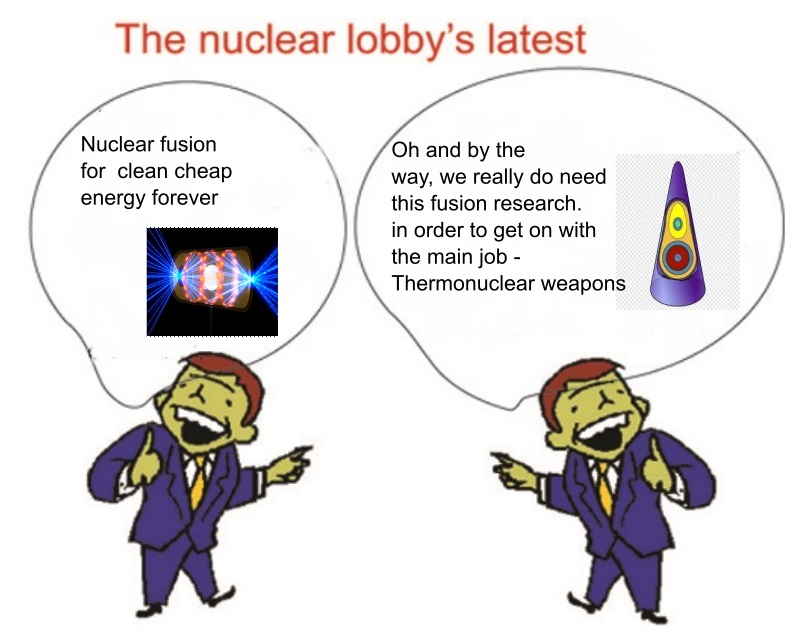
The Trump administration has reversed Obama-era prohibitions on pursuing new nuclear warheads or capabilities. The New START Treaty, which had put constraints on Russian and U.S. nuclear weapons development, expired in February without a replacement. No arms-control agreement exists with China.
Facing a three-way arms race with Russia and China, the U.S. is turning to an energy startup
By Heather Somerville, WSJ, Sept. 9, 2026
ALBUQUERQUE, N.M.—On an expanse of desert here between a Netflix studio and self-storage facility, construction is under way on a fusion plant meant to help America win an escalating nuclear-arms race.
By the decade’s end, its developers say, the site will be home to a nuclear-fusion facility designed to subject weapons parts to the sorts of stresses they would experience in an all-out nuclear blast.
Testing with fusion reactors helps ensure America’s nuclear weapons still work after decades in storage, components are reliable and that new designs will have the desired effect, without resuming the explosive nuclear tests of decades prior.
At the Albuquerque groundbreaking ceremony, the site was mostly dirt, punctuated by a pair of Deere excavators holding up an American flag. Keith LeChien, chief technology officer of three-year-old startup Pacific Fusion, said it wouldn’t be barren for long.
“We’re watching what China’s doing and how fast they’re going in fusion,” he said. “We’re staying ahead of that.”
The project marks a new era in America’s nuclear posture. Once completed, Pacific Fusion’s facility will produce more than 1,000 times more fusion power than the government-operated machine that was put into service for weapons experiments after the U.S. stopped underground blasts in 1992.
The startup’s design creates all that energy by linking together 156 modules, or movable shipping container-sized machines, that each emit pulses of energy. It is building them at its San Leandro, Calif., factory.
The reactor will help serve the Trump administration’s goal of maintaining and modernizing nuclear weapons that have been in storage for decades, as well as designing and producing new ones, something that was anathema to prior administrations. Motivating this are Russia’s nuclear threats to the West and China’s fast-track to nuclear parity.
“We are entering now a very complex time where we have to be postured to deter two near-peer adversaries,” said Paul Dean, vice president of the nuclear policy program at Nuclear Threat Initiative, a Washington nonprofit that works on reducing nuclear threats.
The Trump administration has reversed Obama-era prohibitions on pursuing new nuclear warheads or capabilities. The New START Treaty, which had put constraints on Russian and U.S. nuclear weapons development, expired in February without a replacement. No arms-control agreement exists with China.
“Without some guardrails around those relationships, we have the potential to have an unregulated arms race,” Dean said. “It’s starting to become a pretty dangerous era.”…………………………………………………………………………………………………………………………………………………………………………………………………………………………………………………….
“There is no limitation on what you can do now,” said Hans Kristensen, director of the nuclear information project at the Federation of American Scientists, a scientific nonprofit that works to reduce threats of global catastrophe, including nuclear war. The U.S. has “swung back to what is fundamentally a revitalized nuclear-weapons production enterprise.” https://www.wsj.com/politics/national-security/nuclear-fusion-weapons-testing-china-russia-0b5fcfa9?mod=business_lead_story
No comments yet.
1 This Month

Tell Congress: Prevent Nuclear Catastrophe in Iran

Tell Congress: Prevent Nuclear Catastrophe in Iran

Read the Public Inquiry Report, the Commissioners’ report, Surrendering Australia: The AUKUS Deception is available to download for free at aukuspublicinquiry.com. Or just watch the replay of the National Press Club Luncheon.

19 November – Webinar – The Reality of Reprocessing
Time: 11:00 AM Pacific Time (US & Canada) / 2:00 PM Eastern / 7:00 PM UK / 8:00 PM CET
Register for the Zoom Event Here


Shut down the radiation-damaged Heysham nuclear reactors now
To see nuclear-related stories in greater depth and intensity – go to https://nuclearinformation.wordpress.com

Say No to NASA’s Reckless Nuclear Reactor on the Moon
Say No to NASA’s Reckless Nuclear Reactor on the Moon
-
Archives
- November 2026 (138)
- October 2026 (302)
- September 2026 (339)
- August 2026 (330)
- July 2026 (355)
- June 2026 (287)
- May 2026 (306)
- April 2026 (356)
- March 2026 (251)
- February 2026 (267)
- January 2026 (308)
- December 2025 (358)
-
Categories
- 1
- 1 NUCLEAR ISSUES
- business and costs
- climate change
- culture and arts
- ENERGY
- environment
- health
- history
- indigenous issues
- Legal
- marketing of nuclear
- media
- opposition to nuclear
- PERSONAL STORIES
- politics
- politics international
- Religion and ethics
- safety
- secrets,lies and civil liberties
- spinbuster
- technology
- Uranium
- wastes
- weapons and war
- Women
- 2 WORLD
- ACTION
- AFRICA
- Atrocities
- AUSTRALIA
- Christina's notes
- Christina's themes
- culture and arts
- Events
- Fuk 2022
- Fuk 2023
- Fukushima 2017
- Fukushima 2018
- fukushima 2019
- Fukushima 2020
- Fukushima 2021
- general
- global warming
- Humour (God we need it)
- Nuclear
- RARE EARTHS
- Reference
- resources – print
- Resources -audiovicual
- Weekly Newsletter
- World
- World Nuclear
- YouTube
-
RSS
Entries RSS
Comments RSS


Leave a Reply