Romania Shuts Down Cernavoda Nuclear Reactor Days After Restart Amid Danube Drought
The operator of Romania’s sole nuclear power plant has dismisse0d its technical director after Reactor 1 was forced offline again, highlighting the growing problemof severe, climate-induced water shortages
Streamline Newsroom, Nov 10, 2026, Chief editor: Ken Kariuki, https://streamlinefeed.co.ke/news/romania-shuts-down-cernavoda-nuclear-reactor-days-after-restart-amid-danube-drought
Romania’s sole nuclear power plant has been forced to shut down its first reactor just days after reconnecting it to the national grid, underscoring the acute vulnerability of critical energy infrastructure to severe, climate-induced water shortages.
The Cernavoda Nuclear Power Plant, operated by the state-owned enterprise Nuclearelectrica, halted operations at Reactor 1 following a brief restart sequence in early November. The facility’s management subsequently announced the dismissal of the plant’s technical director pending an internal investigation into the operational failures that necessitated the abrupt shutdown.
While the immediate technical cause of the latest trip has not been fully detailed, the underlying constraint remains the critically low water levels of the Danube River, which the plant relies upon entirely for its essential cooling systems.
The Vulnerability Of Thermal Generation
Nuclear reactors require vast quantities of water to condense steam and maintain safe operating temperatures within the primary and secondary cooling loops.
When river flows drop below minimum thresholds, or when water temperatures rise too high to effectively absorb waste heat, regulators mandate that plants reduce output or shut down completely to prevent ecological damage to the waterway and ensure mechanical safety.
The Danube, Europe’s second-longest river, has suffered from a prolonged and severe drought this year, drastically reducing its discharge rates and threatening the operational viability of multiple energy facilities across the Balkans.
Reactor 1, a 700-megawatt CANDU-style pressurized heavy water reactor, had been offline since August due to these exact environmental constraints. Its restart was initially heralded as a crucial step toward stabilizing Romania’s domestic energy supply ahead of the winter heating season.
The sudden reversal not only disrupts national grid planning but also exposes the systemic risks inherent in siting massive thermal and nuclear generation assets along waterways increasingly stressed by shifting climate patterns.
- Cooling Requirement: Massive continuous water flow for steam condensation.
- Environmental Limit: Discharge water temperature must not exceed ecological thresholds.
- Baseload Role: Provides approximately 20 percent of Romania’s total electricity demand.
Ecological Toll On The Danube Basin
Ecological Toll On The Danube Basin
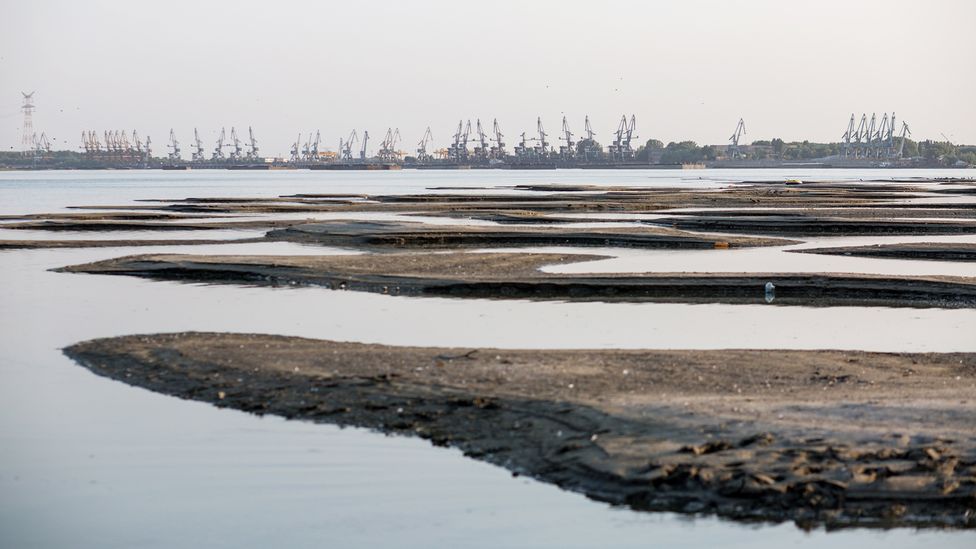
The ecological and logistical toll on the Danube has been severe. Record-low flows have exposed vast stretches of riverbed, crippling commercial navigation and stranding barges carrying vital agricultural and industrial exports.
Environmental agencies have also documented significant stress on aquatic ecosystems, as diminished water volume concentrates pollutants and reduces oxygen levels, compounding the thermal stress caused by industrial cooling discharges. The military was even deployed in certain sectors to detonate submerged sediment banks in a desperate attempt to redirect scarce water flow toward critical intake channels.
The incident at Cernavoda mirrors a broader trend of climate-related energy disruptions across Europe. In recent summers, utilities in France and Germany have been forced to curtail output at both nuclear and coal-fired power plants because the rivers they draw from became too warm or too shallow to provide adequate cooling or transport fuel.
These environmental bottlenecks have complicated the continent’s energy transition, forcing grid operators to rely more heavily on fossil fuel reserves or imported electricity during periods when renewable generation is also constrained by weather patterns.
Future Strategies And SMR Deployment
Looking beyond the immediate crisis, Romania is aggressively pursuing the deployment of Small Modular Reactors (SMRs) in partnership with US-based NuScale Power, aiming to diversify its nuclear footprint and enhance energy independence.
Proponents of SMR technology argue that smaller, more flexible reactor designs could be sited in locations with different cooling requirements or integrated with advanced dry-cooling systems.
However, the Cernavoda shutdown demonstrates that until the fundamental constraints of thermodynamics and hydrology are resolved through massive infrastructure adaptation, all thermal generation remains hostage to the availability of water.
Following the announcement of the shutdown and the management reshuffle, shares in Nuclearelectrica, which are traded on the Bucharest Stock Exchange, experienced notable volatility. Investors remain highly sensitive to operational interruptions at the state-controlled utility, given its outsized role in national energy economics and its ongoing capital-intensive refurbishment programs.
The recurring nature of these climate-induced outages raises fundamental questions about the long-term asset valuation of legacy nuclear infrastructure in a warming world.
As extreme weather events become more frequent, the Cernavoda incident serves as a stark case study for energy planners globally.
The transition to low-carbon energy systems must account not only for the reduction of greenhouse gas emissions but also for the physical resilience of the generation assets themselves against the very climate impacts they seek to mitigate. Without significant adaptation, baseline power reliability will remain perpetually at the mercy of the weather.
No comments yet.
1 This Month


Read the Public Inquiry Report, the Commissioners’ report, Surrendering Australia: The AUKUS Deception is available to download for free at aukuspublicinquiry.com. Or just watch the replay of the National Press Club Luncheon.



19 November – Webinar – The Reality of Reprocessing
Time: 11:00 AM Pacific Time (US & Canada) / 2:00 PM Eastern / 7:00 PM UK / 8:00 PM CET
Register for the Zoom Event Here



Shut down the radiation-damaged Heysham nuclear reactors now
To see nuclear-related stories in greater depth and intensity – go to https://nuclearinformation.wordpress.com

Say No to NASA’s Reckless Nuclear Reactor on the Moon
Say No to NASA’s Reckless Nuclear Reactor on the Moon
-
Archives
- November 2026 (119)
- October 2026 (302)
- September 2026 (339)
- August 2026 (330)
- July 2026 (355)
- June 2026 (287)
- May 2026 (306)
- April 2026 (356)
- March 2026 (251)
- February 2026 (267)
- January 2026 (308)
- December 2025 (358)
-
Categories
- 1
- 1 NUCLEAR ISSUES
- business and costs
- climate change
- culture and arts
- ENERGY
- environment
- health
- history
- indigenous issues
- Legal
- marketing of nuclear
- media
- opposition to nuclear
- PERSONAL STORIES
- politics
- politics international
- Religion and ethics
- safety
- secrets,lies and civil liberties
- spinbuster
- technology
- Uranium
- wastes
- weapons and war
- Women
- 2 WORLD
- ACTION
- AFRICA
- Atrocities
- AUSTRALIA
- Christina's notes
- Christina's themes
- culture and arts
- Events
- Fuk 2022
- Fuk 2023
- Fukushima 2017
- Fukushima 2018
- fukushima 2019
- Fukushima 2020
- Fukushima 2021
- general
- global warming
- Humour (God we need it)
- Nuclear
- RARE EARTHS
- Reference
- resources – print
- Resources -audiovicual
- Weekly Newsletter
- World
- World Nuclear
- YouTube
-
RSS
Entries RSS
Comments RSS


Leave a Reply