US/UK collaborate for nuclear “race to the bottom”?
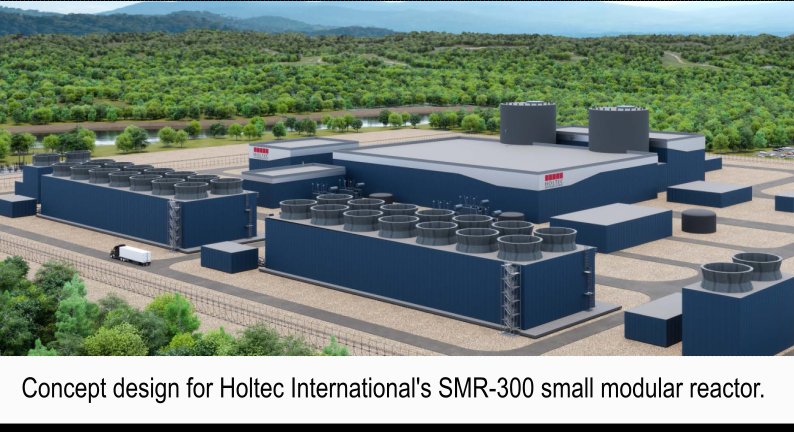
[Photo credit: Holtec International’s SMR LLC Pioneer SMR-300, US Department Of Energy]
accelerated export of novel and still questionable nuclear technologies to the UK as well as the precedent to export to other countries……………………….. marketing tactic unreasonably subordinates and deprioritizes safety critical review times just to facilitate the accelerated US export of novel reactor designs to Great Britain and the precedent for elsewhere.
the technological guinea pig for cutting corners
October 29, 2026, https://beyondnuclear.org/us-uk-in-harmony-for-nuclear-race-to-the-bottom/
Holtec SMR LLC’s Pioneer reactor chosen to pilot US and UK collaboration to fast track export regulation of novel reactor licensing
In a partnership between the US Nuclear Regulatory Commission (NRC) and the UK Office of Nuclear Regulation (ONR), the UK Environment Agency and Natural Resources Wales are collaborating on aligning commercial reactor regulations to fast-track the export(opens in new tab) of several American developers’ of “First Of A Kind” (FOAK) small modular nuclear reactors for licensing and construction in Great Britain. The present American SMR leaders are Holtec International, TerraPower and X-Energy. The partnership was constructed as part of the 2025 “UK-U.S. Atlantic Partnership for Advanced Nuclear Energy(opens in new tab).”
Reuters reports that “UK authorities have identified Holtec’s two-unit SMR-300 project at Palisades, Michigan, as the input reference design for the company’s Generic Design Assessment (GDA) – a regulatory review of a nuclear reactor design’s safety, security and environmental acceptability, independent of a specific site.”
Beyond Nuclear’s overall concern focuses on the primary goal and intent initiated by the Trump Administration’s White House Executive Orders to arbitrarily truncate the nuclear regulatory staff’s review time on the projected time and cost to speed up new reactor design approvals for domestic development and foreign export. The plan cuts safety-related technical review times from three and four years to two years. This now translates into the US accelerated export of novel and still questionable nuclear technologies to the UK as well as the precedent to export to other countries.
It is of concern that under a promotionally guise of “avoiding duplication of work” that disregards particularly stubborn technical and still open safety-related issues. That marketing tactic unreasonably subordinates and deprioritizes safety critical review times just to facilitate the accelerated US export of novel reactor designs to Great Britain and the precedent for elsewhere.
The US and UK regulators are risking a lot on their joint pilot project by fast-tracking Holtec International’s SMR-300. Holtec’s SMR venture is explicitly a FOAK reactor. This is Holtec International’s first effort at designing, licensing, building and operating a light water with the associated risks. Holtec International, as any FOAK venture, will be the corporate and industrial guinea pig for the proposed “unleashing” of this SMR technology.
As the technological guinea pig for cutting corners to accelerate export licensing, FOAK reactors are already notorious and unpredictable for uncontrolled cost compared to subsequent builds or “Next Of A Kind” (NOAK). In a fiercely competitive domestic and international market, the developer is responsible for adequately funding and overseeing its quality control and quality assurance of the initial tooling, engineering, and workforce training. FOAK nuclear ventures in general face strong financial headwinds as is already in evidence(opens in new tab) with Holtec International’s abrupt cancellation of its $900 million initial public offering (IPO) on the NASDAQ market just three days ahead of scheduled launch on Wall Street.
The push for Holtec International to be the US – UK joint pilot project choice raises particularly challenging and significant concerns for the introduction of what’s euphemistically identified as “dual track complexity.”
Holtec International’s latest wholly owned subsidiary SMR LLC which is the parent company’s firewall to the Palisades Energy Center in Covert, Michigan. The Center initially includes the two Pioneer SMR reactors (SMR-300) which are projected to be sited and operated adjacent to Holtec International’s other subsidiary, Holtec Palisades’ acquisition of the 50-year-old operationally aged and deteriorated Palisades pressurized water reactor. Holtec Palisades is now not only operationally aged and deteriorated but the reactor’s safety-related systems, structures and components have also been neglected by lack of maintenance, repair and replacement since Entergy’s intention to permanently close and decommission the plant. Initially, the previous owner/operator, Entergy Nuclear, neglected the single unit’s operational safety and operability mandate by systematically cancelling maintenance, repairs and replacements of safety-related systems, structures and components in lieu of the plant’s announced closure and decommissioning on December 6, 2016. As a result of the encroaching permanent shutdown, corrosion was allowed to set in by abandoning the unit to a prolonged period of wet storage. Entergy essentially neglected Palisades’ safety-related systems, structures and components as radioactive junk until was “permanently” shutdown on May 20, 2022.
When Holtec International’s subsidiary, Holtec Decommissioning International, took over possession under the suspiciously false pretense of decommissioning, it was then Holtec Decommissioning International that further delayed draining and chemically treating the wet systems. The delay further rendered damage consequences when Holtec International reverse course with creation of its subsidiary Holtec Palisades and switch to the restart the reactor and followed by an extreme license renewal plan projecting reactor operations out to March 24, 2051. Whether or not Holtec intended to actually dismantle, decontaminate and decommission the nuclear power station, they neglected to properly implement the reactor’s safety-related layup primarily for the critical reactor pressure boundary system’s steam generators until May 2024—roughly two years after the initial “permanent” shutdown for decommissioning as certified to the NRC by Entergy, Holtec Palisades (owner) and Holtec Decommissioning International (operator).
According to NRC inspections in late 2024, accelerated stress corrosion cracking (SCC) reveal the exacerbated delay caused extensive, unexpected corrosion on the outside diameter of the steam generator tubes. Regulators found indicators of stress corrosion cracking in 1,163 tubes across both steam generators, vastly exceeding previous operational history.
In Beyond Nuclear’s view, this all adds up to an extremely risky and irresponsible venture.
No comments yet.
1 This Month



19 November – Webinar – The Reality of Reprocessing
Time: 11:00 AM Pacific Time (US & Canada) / 2:00 PM Eastern / 7:00 PM UK / 8:00 PM CET
Register for the Zoom Event Here



Shut down the radiation-damaged Heysham nuclear reactors now
To see nuclear-related stories in greater depth and intensity – go to https://nuclearinformation.wordpress.com

Say No to NASA’s Reckless Nuclear Reactor on the Moon
Say No to NASA’s Reckless Nuclear Reactor on the Moon
-
Archives
- November 2026 (43)
- October 2026 (302)
- September 2026 (339)
- August 2026 (330)
- July 2026 (355)
- June 2026 (287)
- May 2026 (306)
- April 2026 (356)
- March 2026 (251)
- February 2026 (267)
- January 2026 (308)
- December 2025 (358)
-
Categories
- 1
- 1 NUCLEAR ISSUES
- business and costs
- climate change
- culture and arts
- ENERGY
- environment
- health
- history
- indigenous issues
- Legal
- marketing of nuclear
- media
- opposition to nuclear
- PERSONAL STORIES
- politics
- politics international
- Religion and ethics
- safety
- secrets,lies and civil liberties
- spinbuster
- technology
- Uranium
- wastes
- weapons and war
- Women
- 2 WORLD
- ACTION
- AFRICA
- Atrocities
- AUSTRALIA
- Christina's notes
- Christina's themes
- culture and arts
- Events
- Fuk 2022
- Fuk 2023
- Fukushima 2017
- Fukushima 2018
- fukushima 2019
- Fukushima 2020
- Fukushima 2021
- general
- global warming
- Humour (God we need it)
- Nuclear
- RARE EARTHS
- Reference
- resources – print
- Resources -audiovicual
- Weekly Newsletter
- World
- World Nuclear
- YouTube
-
RSS
Entries RSS
Comments RSS


Leave a Reply