Sizewell C stitch-up is looking increasingly radioactive
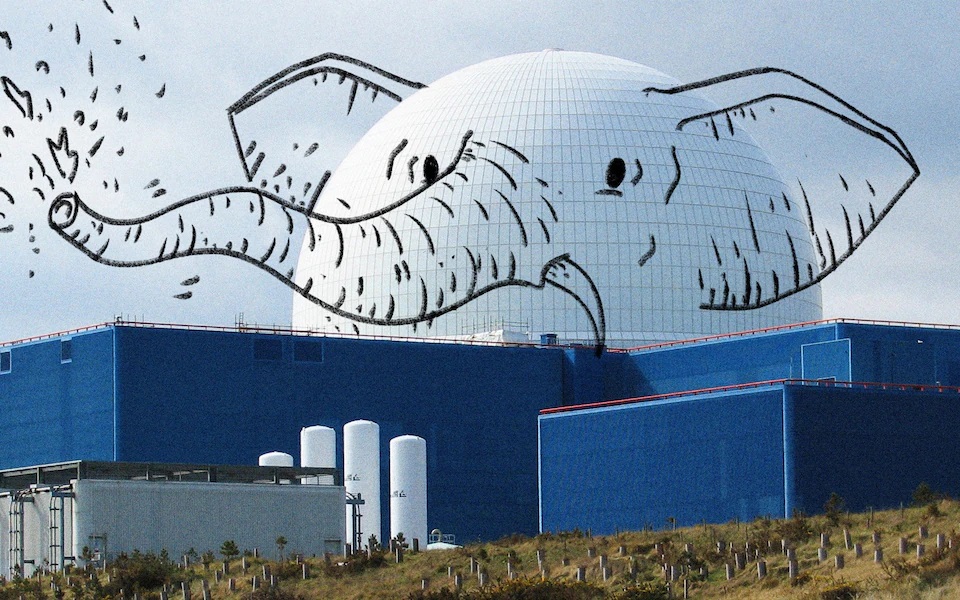
MPs’ report on the £40bn nuclear power plant points out obvious flaws that leave
taxpayers on the hook and give investors a golden rod.
Some nuclear reactions can be hard to predict. Not those involving Ed Miliband and
Rachel Reeves. Put them in charge of the financing for a new plant on the
Suffolk coast and you hardly need MPs on the public accounts committee to
tell you the outcome: “Sizewell C represents a terrible deal for the UK
taxpayer.”
Private companies were hardly queuing up to invest in Sizewell
C. As the PAC points out, no nuke “anywhere in the world” with the
similar “European pressurised reactor” design “has come out on
budget”. France’s Flamanville 3 and Finland’s Olkiluoto 3? Fourteen
years late and costing at least “300 per cent” more than forecast.
And, of course, our own Hinkley Point C: “Five to seven years delayed and
around 100 per cent over budget.”
Still, no one forced the government to
box itself into the same financially ruinous design. Or to adopt the
“regulated asset base” financing model championed by Kwasi Kwarteng —
the former Tory chancellor of mini-budget, “moron premium” fame —
that front-loads construction cost overruns on to consumers. Or, having
opted for both, strike such a lopsided deal. As the PAC puts it:
“Consumers and taxpayers shoulder significant financial risks, while
private investors enjoy protected profits.”
Times 28th Oct 2026,
https://www.thetimes.com/business/companies-markets/article/sizewell-c-nuclear-power-plant-anthropic-octopus-wbncx0ljh
Armed police train for an attack on nuclear shipment from Dounreay
29 Oct 26, https://www.bbc.co.uk/news/articles/c317kvk1v2n8o
Armed police have for the first time tested a scenario where an attempt is made to attack and steal a shipment of radioactive material being transported from the Dounreay nuclear power plant.
The Civil Nuclear Constabulary exercise involved armed attackers deliberately crashing a car to stop a lorry reaching Georgemas Junction, a railway station about six miles from the plant on the north Caithness coast.
In real-life situations, the station has been used for transporting radioactive material from Dounreay to Sellafield in Cumbria for reprocessing or storage.
The training exercise included an employee at Dounreay, near Thurso, being “arrested” in connection with the attack.
The Civil Nuclear Constabulary (CNC) worked with Police Scotland and other emergency services during the exercise held late last month.
A workshop was also held involving police, Highland Council, Dounreay and the Vulcan Naval Reactor Test Establishment.
Vulcan, which sits next to Doureay, is a military facility used for testing prototype nuclear reactors for submarines.
CNC said months of planning went into preparing the exercise.
Exercise and resilience manager Steve Warren said: “This was a scenario that had not been exercised or tested before, meaning we were asking a lot of everyone involved.”
Ch Insp Dave McIntosh, of Dounreay’s operational policing unit, said the training had placed personnel in “really challenging circumstances”.
He added: “I’m very proud of them, they did a really, really good job.”
Dounreay was built as an experimental nuclear reactor site in the 1950s and is now in a years-long process of being decommissioned.
Nuclear emergency warning after radioactive material released in fire at nuke site
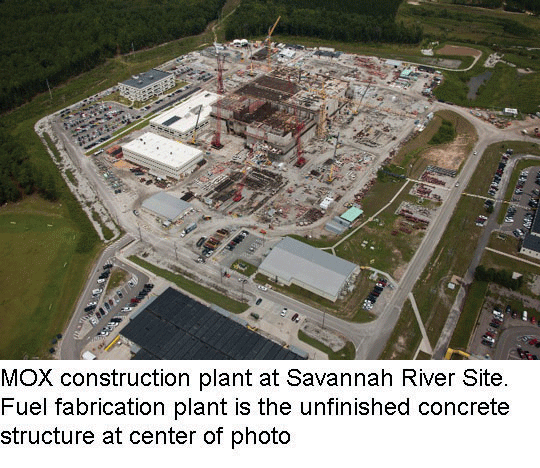
Radioactive material was released after a fire broke out at the Savannah River Site, prompting a second-highest level emergency declaration at the nuclear facility
Jeremiah Hassel Senior U.S. News Reporter and Olivia Beeson UK & World News Reporter, 29 Oct 2026,
https://www.dailystar.co.uk/news/world-news/emergency-sparked-after-radioactive-material-37821162
Radioactive material was released following a blaze at a nuclear facility in South Carolina. A site area emergency was declared at the federal nuclear complex in the Palmetto State.
The fire has now been extinguished. Authorities announced the emergency at 5:39pm on Wednesday after flames erupted in a single room at the Savannah River National Laboratory near Aiken, with the site posting an update on its official X page.
Officials told local broadcaster WRDW that there was “an unfiltered, ground-level radiological release”. They stressed that no contamination was detected outside the affected facility, and there has been no indication of consequences beyond the site’s boundaries.
Nevertheless, the Federal Aviation Administration imposed a flight restriction, citing a US government “nuclear incident” at the location. “A fire was reported at the Savannah River National Laboratory but has since been extinguished. No contamination has been reported outside the affected facility,” the SRS posted on X.
“As a precaution, barricades at site entrances have been closed to incoming traffic. Rail, river, and air traffic in the vicinity of SRS is also being restricted. SRS officials are directing response efforts and have notified the appropriate state and local government agencies,” the statement added.
“Local residents should tune in to local radio and TV stations where state officials will announce any actions citizens may need to take. Residents should stay tuned to these stations for updated instructions.”
Staff caught up in the incident were believed to have sheltered in place throughout the ordeal as a precautionary measure. Workers were located in Area A, the laboratory section, taking refuge behind barricades, the statement confirmed.
They were later allowed to leave, though nobody was permitted entry, WRDW reported, partly citing the statement. The cause of the fire, along with the type and volume of material released and whether anyone sustained injuries, all remain undisclosed.
Wednesday’s emergency declaration represents the second-highest of three emergency categories at the facility, signalling that “something more serious has occurred,” according to the site’s community preparedness guidance. The emergency declaration was lifted Wednesday night once the blaze had been extinguished.
The SRS spans roughly 310 square miles of land straddling the South Carolina-Georgia border. Established in the 1950s, it produced plutonium and tritium for nuclear weapons throughout the Cold War, though its focus has since shifted to nuclear materials management, environmental clean-up and research.
Financing structure for Sizewell C a ‘terrible deal’ – Public Accounts Committee
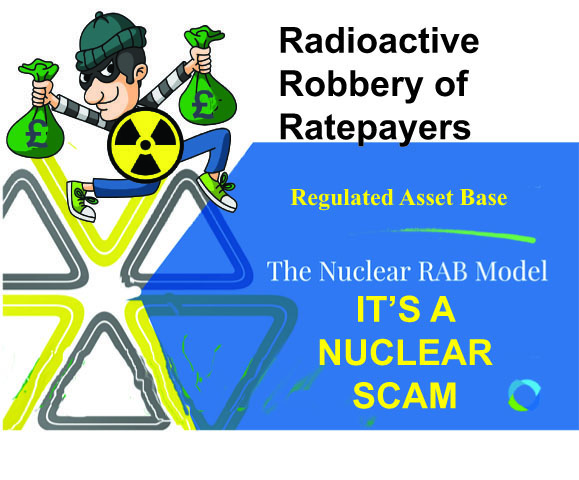
The MPs also took aim at the corporate and financing structure the government had selected for Sizewell C, called the Regulated Asset Base (RAB).
28 Oct, 2026, By Tom Pashby,
https://www.newcivilengineer.com/latest/financing-structure-for-sizewell-c-a-terrible-deal-public-accounts-committee-28-10-2026/
Sizewell C, the 3.2GW nuclear power plant under construction on the Suffolk coast, represents “a terrible deal for the UK taxpayer”, Members of Parliament (MPs) on the Public Accounts Committee (PAC) have said.
In its report, Sizewell C, published today, 28 October, the financing of the £38bn project, which exposes the public to up to £54bn in costs, was heavily criticised.
The first line of the report said: “Sizewell C represents a terrible deal for the UK taxpayer.”
It went on: “Successive governments’ failure to deliver new nuclear has left the UK in a position where the best terms it could secure to deliver Sizewell C mean that consumers and taxpayers shoulder significant financial risks, while private investors enjoy protected profits.
“The UK must never be put in this position again.”
Sizewell C, minority owner EDF, the Department for Energy Security and Net Zero (Desnz) and other proponents of the project have regularly argued that Sizewell C should be delivered more easily because it is copying so much of the design work from its ‘sister project’ Hinkley Point C in Somerset.
The PAC report said: “Desnz argues that applying lessons learned from the UK’s other current major nuclear project, Hinkley Point C, and replicating the design of its pressurised water reactors, will reduce risks at Sizewell C.
“However, no comparable nuclear power station anywhere in the world has been delivered on time and on budget. Projects using the same reactor design have experienced delays of up to 14 years and substantial cost overruns.”
The MPs also took aim at the corporate and financing structure the government had selected for Sizewell C, called the Regulated Asset Base (RAB).
“The Department has chosen a novel delivery model for Sizewell C in which it relinquishes majority control, despite the public providing most of the financing and bearing most of the risk,” the report said
Iran hasn’t tried to repair nuclear facilities damaged in US strikes, UN nuclear chief says
Daily Mail, By ASSOCIATED PRESS, 28 October 2026
UNITED NATIONS (AP) – The head of the U.N. nuclear agency said Tuesday there has been no indication Iran has tried to repair or reconstruct its nuclear facilities damaged in U.S. and Israeli military strikes this year or last year.
President Donald Trump has said one of the major reasons the U.S. went to war with Iran on Feb. 28 was to deny Tehran the ability to develop nuclear weapons, even as he has insisted that strikes the U.S. carried out on Iranian nuclear sites in June 2025 “obliterated” the country´s atomic program.
During a U.N. Security Council meeting, International Atomic Energy Agency chief Rafael Grossi urged Iran to give inspectors access to all nuclear sites, including those damaged in the military attacks. The IAEA has not been able to verify the status of Iran´s stockpile of near weapons-grade uranium since the U.S. bombed its sites last year.
However, Grossi said that “since June 2025, we have not identified any activity to repair or reconstruct any of the facilities damaged in the military attacks of 2025 and 2026.”
Trump has consistently downplayed the economic impact of the Iran war, which has emerged as a liability for Republicans heading into next week´s midterm elections, and has argued that higher fuel prices are worth paying to prevent a nuclear-armed Iran. The White House didn´t immediately respond Tuesday evening to a request for comment on Grossi’s remarks.
Iran maintains that its nuclear program is peaceful. However, the IAEA says the country has a stockpile of 440.9 kilograms (972 pounds) of uranium enriched up to 60% purity – a short, technical step away from weapons-grade levels of 90%.
The U.N. meeting on Tuesday was called by Bahrain, Denmark, Latvia, France, the United Kingdom and United States after the IAEA referred Iran to the Security Council for failing to comply with its nuclear nonproliferation obligations. Russia and China, allies of Iran, tried unsuccessfully to prevent the meeting.
Under those obligations, which are part of the Nuclear Non-Proliferation Treaty, Iran is legally bound to declare all nuclear material and activities and allow IAEA inspectors to verify that none of it is being diverted from peaceful uses.
Iran´s U.N. deputy ambassador Gholamhossein Darzi attacked the council for its silence after the U.S.-Israeli attacks, denouncing their “wars of aggression against Iran” and accusing the U.S. of committing war crimes against the Iranian people.
He never mentioned the IAEA´s unanswered questions or the demand to return its inspectors. Instead, he asserted that “Israel possesses nuclear weapons, yet your concern is the absence of inspectors in Iran.” Israel has never confirmed that it possesses nuclear weapons…………….
https://www.dailymail.com/wires/ap/article-16244573/Iran-tried-repair-nuclear-facilities-damaged-US-strikes-UN-nuclear-chief-says.html
The secret purpose of Sizewell C

“There are very powerful vested interests behind nuclear,” he said. “One of the things that one has read is that part of the push for nuclear is because of the deterrence programme. You need to have a nuclear power programme to get nuclear-trained engineers for your nuclear submarines.”
A new nuclear power station is rising on the Suffolk coast • Its links to Trident run deep • What are we really paying for?
Reuben J. Brown, Dispatch, Oct 20, 2026, https://dispatch-media.com/the-secret-purpose-of-sizewell-c/
A few dozen metres from the soft, shifting Suffolk coastline, a troop of ground engineers and construction workers is digging a very deep trench.
Along its mile-long loop, they will dig 50 metres down until they hit clay, then inject the trench with stabilising slurry, fill it with steel cages and pump it with concrete. Once complete, this buried wall will seal off a chunk of former marshland from its water table in a kind of civil-engineering Tupperware box. Sometime around 2029, the engineers will pump the box dry and cap it with more concrete. From there, building Sizewell C should be straightforward: we’ll have done it all before.
This is the theory behind Britain’s next nuclear power station: that, though its predecessor at Hinkley Point ran years over schedule and doubled its budget, these were inevitable teething problems in a country that hasn’t finished a nuclear power project since the 1990s. The idea is to learn Hinkley Point’s lessons and build faster and cheaper; and build we must, because new nuclear power is the only way to affordably decarbonise British energy.
Over the past two months, I have interviewed people working across energy systems, nuclear construction, public finance, coastal management and government policy; reviewed hundreds of pages of official documents; and spent time in Suffolk with the people building Sizewell C and those who will live beside it. What I found raises serious questions about this theory and what truly underpins it.
Towards the end of one phone call, Scotland’s former chief statistician Jim Cuthbert exhaled: “This thing, to my mind, just reeks somewhat.”
We’d been talking for close to an hour about the risks in Sizewell C’s public–private funding model, adapted from Thatcher-era schemes used by privatised water companies. He told me he had one more thing to “just mention”.
“There are very powerful vested interests behind nuclear,” he said. “One of the things that one has read is that part of the push for nuclear is because of the deterrence programme. You need to have a nuclear power programme to get nuclear-trained engineers for your nuclear submarines.”
***
A few days earlier, I had met Andy Stirling, the researcher who first surfaced this argument with colleagues at the University of Sussex’s Science Policy Research Unit. When I arrived at his house in Lewes, his front door was swung open to the afternoon sun.
Stirling has been excavating the relationship between the civilian and military wings of Britain’s nuclear industry for over a decade now, to relatively little public attention. He greeted me in khaki shorts and we set off up a steep lane towards the yellowed summer grassland of the South Downs. Raising his voice against the wind, he began to tell me about one of the stranger reversals in recent British Energy Policy…………… (Subscribers only)………………..https://dispatch-media.com/the-secret-purpose-of-sizewell-c/
US touting small nuclear reactors for use in Caucasus and Central Asia

Armenian Prime Minister Nikol Pashinyan recently indicated that small reactors may not fit Armenia’s needs,
Armenian and Kazakh officials remain open to idea.
Oct 28, 2026, https://eurasianet.org/us-touting-small-nuclear-reactors-for-use-in-caucasus-and-central-asia
The United States is making a fresh push to promote the use American nuclear energy technology in Central Asia and the Caucasus.
Shawna J. Wilson, Deputy Assistant Secretary of State for Security Programs, traveled to both regions recently for meetings with Armenian and Kazakh officials that explored ways to advance US nuclear cooperation with both countries.
The United States and Armenia finalized a nuclear cooperation deal in February during a visit to Yerevan by Vice President JD Vance. Kazakhstan, meanwhile, signed an agreement in late 2025 covering US training assistance for Kazakh technicians in the nuclear sector.
US cooperation has focused on the construction and safe operation of small modular nuclear reactors (SMRs). Wilson’s discussions in Kazakhstan paid “particular attention” to Kazakh participation in the US-led FIRST program, which, according to the State Department, “provides capacity-building support to partner countries as they develop their nuclear energy programs to support clean energy goals.”
According to an account published by the Kazakh state news agency Kazinform, both sides during the October 27 talks “confirmed their mutual interest in further developing Kazakh-American cooperation in the peaceful use of nuclear energy.” Kazakhstan presently has plans to build three large-scale nuclear facilities, to be built by Russian and Chinese firms.
In Armenia, Wilson met with Narek Apitonyan, the Ministry of Territorial Administration and Infrastructure official leading the country’s efforts to develop its nuclear capacity. Armenia is currently considering options to replace its antiquated Metsamor nuclear plant, an issue that has stoked competition between Russia and the United States to secure the contract.
After expressing initial enthusiasm for SMRs, Armenian Prime Minister Nikol Pashinyan recently indicated that small reactors may not fit Armenia’s needs, an announcement that seemingly put Russia back in the lead in the race to build a new nuclear facility.
But Apitonyan, in comments posted on the ministry’s Facebook account, suggested that the United States will have a role in Armenia’s nuclear future.
Korea Hydro & Nuclear Power (KHNP)ends Daewoo-Doosan talks on $18.7 billion Czech nuclear plant
Korea’s state-run nuclear power operator ended talks with the Daewoo-Doosan consortium over key terms and plans to select a new contractor for the $18.7 billion Dukovany project.
October 29, 2026, https://www.koreajoongangdaily.com/business/khnp-ends-daewoodoosan-talks-on-187-billion-czech-nuclear-plant/12946437
Korea Hydro & Nuclear Power (KHNP), Korea’s state-run nuclear power operator, said Thursday it has ended negotiations with a local consortium on a construction contract for a nuclear power plant project in the Czech Republic after the two sides failed to agree on key terms.
“The company has decided to terminate negotiations with a consortium comprising Daewoo Engineering & Construction and Doosan Enerbility for the Dukovany nuclear power plant project. The breakdown is due to differences over key contract terms,” KHNP said in a press release.
KHNP said it will formally conclude the negotiations and begin preparations for a tender to select a new contractor.
“We aim to sign a contract with a new consortium for the Czech project during July of 2027,” Choi Il-kyung, executive vice president of KHNP’s overseas business division, said.
The Dukovany project, valued at about 25 trillion won ($18.7 billion), involves the construction of two 1,000-megawatt APR1000 reactors, a Korean-designed model, in the Czech Republic.
A Korean consortium led by KHNP won the project last year. KHNP subsequently negotiated a construction contract with the Daewoo-Doosan consortium, which had been designated as the construction contractor.
“The end of the negotiations does not mean the overall nuclear power plant project has been canceled as KHNP is preparing follow-up measures,” the company said.
The consortium expressed regret over KHNP’s decision, saying the nuclear operator had introduced revised contract terms in early October and rejected its request to extend the Thursday deadline before unilaterally ending negotiations.
It argued that the revised terms would unfairly burden construction contractors with additional costs arising from design changes, despite their lack of involvement in the reactor’s design.
It also accused KHNP of violating the principle of good faith by refusing further talks unless the consortium accepted the revised terms, urging the nuclear operator to resume negotiations in the broader national interest.
In a Facebook post, Industry Minister Kim Jung-kwan said he respects KHNP’s decision and pledged government support for the successful construction of the nuclear power plant in the Czech Republic.
Dismantle, weaponize, or rebuild: Why the Iran nuclear threat isn’t going away
Bulletin By Sina Azodi | Analysis | October 29, 2026
Iran now faces one of the most consequential nuclear decisions. In less than a year, the United States twice used military force to destroy key infrastructure and prevent Tehran from acquiring a nuclear weapon. These strikes have set Iran’s nuclear program back by severely degrading its nuclear enrichment capacity. But they have not eliminated the scientific expertise, industrial capacity, and political motivations that sustained the program for decades. Still, the attacks exposed the weakness of Iran’s previous strategy, which thought that by advancing its program but remaining below the nuclear threshold, Tehran was effectively deterring attacks from its adversaries. It failed.
Tehran now must choose between three main broad options: Dismantle its nuclear program, weaponize it, or rebuild its latent nuclear capacity while still being under the nuclear threshold. Despite its evident failure to deter foreign adversaries, the third path remains the most plausible. Dismantlement would require Iran to abandon three decades of technological investment in exchange for uncertain external guarantees of nuclear fuel delivery. Weaponization, meanwhile, would invite further military strikes and trigger a nuclear arms race in the Middle East. In contrast, rebuilding a latent capacity is already a tested strategy for Iran, allowing it to preserve its technological autonomy and leverage while avoiding immediate costs of acquiring a nuclear arsenal.
Dismantling. The first—and least likely—option resembles the so-called Libya model. Under that arrangement, Libya agreed to dismantle key elements of its nuclear infrastructure and transfer sensitive enrichment equipment abroad in return for sanctions relief and improved relations with the West. Applied to Iran, such a scenario would require Tehran to dismantle its enrichment facilities and renounce domestic uranium enrichment in exchange for sweeping sanctions relief, trade, access to civilian nuclear reactors, and guaranteed supplies of nuclear fuel from abroad………………………………………………………………………………………………………………………………………………………………………………………………………………………..
Weaponizing. In a second and less likely scenario, Iranian leaders may conclude that the country has already absorbed the costs associated with approaching the nuclear threshold—sanctions, sabotage, diplomatic isolation, and two wars—without obtaining the deterrent protection of possessing an actual nuclear weapon. From this perspective, continuing to remain just short of the bomb could appear unsustainable and weaponization the only option to restore deterrence. While Tehran might attempt to rapidly produce a nuclear weapon using its remaining nuclear materials, acquiring a single device would not necessarily translate into a credible nuclear deterrent. Therefore, while the weaponization and rebuilding options are not mutually exclusive, their distinction lies in Tehran’s main objective………………………………………………………………………………………………………………………………………………………………………………………………………… the weaponization scenario would also risk triggering a nuclear arms race in the Middle East. Saudi officials have repeatedly threatened to acquire their own nuclear weapons if Iran develops a bomb. This would put Iran into a nuclear arms race with Saudi Arabia and Israel, both of which have superior conventional firepower, better financial resources, and stronger military alliances…………………………………………………………………………………………………………………………………….
Rebuilding. The third, and most likely, scenario is a return to pre-June 2025 threshold status, in which Iran reconstructs its nuclear capacity but refrains from crossing the finish line. Publicly available information indicates that Iran is rapidly rebuilding its pre-war nuclear infrastructure and working to finish a more fortified enrichment facility at Pickaxe Mountain. Rather than abandoning enrichment or rushing toward the bomb, Tehran could seek to restore a latent nuclear capability while making the program more resilient to future attack. Rebuilding the program may not represent a credible means of restoring deterrence, but an effort to preserve Iran’s nuclear options while avoiding the other alternatives…………………………………………………………………………………………………………………………….
By remaining within the Nuclear Non-Proliferation Treaty (NPT) and accepting robust international inspections, Tehran could negotiate limits to its nuclear program, stockpile, and inspections in return for verifiable sanctions relief, trade, and foreign investment. That flexibility could prove especially valuable after the enormous damage that the sanctions and the two recent wars have done to the Iranian economy………………………………………………………………………………………………………………………….
The destruction of Iran’s nuclear facilities may have bought time for Washington, but military force alone cannot resolve the Iranian nuclear challenge. If the United States is to prevent an Iranian nuclear arsenal, the central policy challenge is therefore to alter the incentives surrounding that choice. Any durable agreement would need to combine verifiable limits on enrichment and uranium stockpiles with robust inspections and tangible economic benefits for permanent restraint, while preserving substantial costs for a move toward weaponization. Without such an arrangement, repeated military strikes may delay Iran’s program without resolving the calculation that sustains it and could ultimately strengthen the argument inside Iran’s political system that only nuclear weapons can provide lasting security. https://thebulletin.org/2026/10/dismantle-weaponize-or-rebuild-why-the-iran-nuclear-threat-isnt-going-away/
COP 31: Resisting Erdoğan’s Authoritarian Greenwashing

As Turkey prepares to host the world’s largest climate summit in
Antalya, its official rhetoric masks a long-running policy of expanding
fossil fuel exploration and accelerating nuclear projects under foreign
dependency. In this context, COP31 is bound to become yet another
greenwashing spectacle. Still, Turkey’s grassroots movement continue to
resist the government’s authoritarian push for more extraction, fighting
instead for energy democracy and ecological justice. The 31st United
Nations Climate Change Conference (COP31) will be held from 9 to 20
November in the Turkish city of Antalya. Touted as the “implementation
COP”, the hope is that it will provide a platform for forging global
consensus on realistic emission cuts and fossil fuel phaseout.
Green European Journal 28th Oct 2026, https://www.greeneuropeanjournal.eu/cop-31-resisting-erdogans-authoritarian-greenwashing/
World’s First Permanent Nuclear Waste Site Wins License in Finland
Oil Price, By Haley Zaremba – Oct 29, 2026
Finland’s government has licensed Onkalo, the first permanent repository for spent nuclear fuel anywhere, 22 years after construction began.
Posiva still has to finish commissioning tests and get inspection approval from STUK, and it has not given a date for the first disposal.
The site is built for up to 6,500 tonnes of spent fuel, 400 meters down, while the U.S. remains stuck on a permanent plan…………………………………………………………………………………………………………………………………………………
https://oilprice.com/Energy/Energy-General/Worlds-First-Permanent-Nuclear-Waste-Site-Wins-License-in-Finland.html
Russia’s Rosatom says it is in advanced talks to supply floating nuclear power plants to African countries
At present, only one floating nuclear power plant is in operation globally
By Reuters, October 29, 2026
MOSCOW, Oct 28 (Reuters) – Russia’s state nuclear corporation Rosatom could supply floating nuclear power plants to coastal African countries and is in advanced discussions with at least four nations, senior company executives said on Wednesday at a Russia-Africa Summit.
Vladimir Aptekarev, deputy head of Rosatom’s machine-building division, said that 38 of Africa’s more than 50 countries have sufficient coastline to host a Russian-made floating power unit.
At present, only one floating nuclear power plant is in operation globally, in Russia’s remote Chukotka region, dating from 2020. Floating plants use smaller reactors, are contained within a vessel which can be towed to a destination and require less infrastructure on land. They also make it possible to secure a new source of energy quickly and at a lower cost.
“As a first step, a floating nuclear power unit can serve as a good entry point, enabling a country both to address its energy needs and to join the nuclear club,” said Aptekarev.
Rosatom is proposing implementing such projects under a power purchase agreement (PPA) model, with servicing and refuelling cycles carried out in Russia, allowing the unit to operate for up to 60 years.
…………………………………..Rosatom Chief Executive Alexei Likhachev told reporters the company is in advanced discussions on potential floating nuclear power plant projects with Egypt, Togo, Namibia and Tanzania.
For international markets, Rosatom is offering floating power units with a capacity of 100 megawatts with RITM-200M reactors adapted for warm climates.
Rosatom has already reached an agreement with Indonesia on what it describes as the world’s first export supplies of electricity generated by two floating nuclear power units with a combined capacity of 200 megawatts.
1 This Month




Shut down the radiation-damaged Heysham nuclear reactors now
To see nuclear-related stories in greater depth and intensity – go to https://nuclearinformation.wordpress.com

Say No to NASA’s Reckless Nuclear Reactor on the Moon
Say No to NASA’s Reckless Nuclear Reactor on the Moon
-
Archives
- November 2026 (12)
- October 2026 (302)
- September 2026 (339)
- August 2026 (330)
- July 2026 (355)
- June 2026 (287)
- May 2026 (306)
- April 2026 (356)
- March 2026 (251)
- February 2026 (267)
- January 2026 (308)
- December 2025 (358)
-
Categories
- 1
- 1 NUCLEAR ISSUES
- business and costs
- climate change
- culture and arts
- ENERGY
- environment
- health
- history
- indigenous issues
- Legal
- marketing of nuclear
- media
- opposition to nuclear
- PERSONAL STORIES
- politics
- politics international
- Religion and ethics
- safety
- secrets,lies and civil liberties
- spinbuster
- technology
- Uranium
- wastes
- weapons and war
- Women
- 2 WORLD
- ACTION
- AFRICA
- Atrocities
- AUSTRALIA
- Christina's notes
- Christina's themes
- culture and arts
- Events
- Fuk 2022
- Fuk 2023
- Fukushima 2017
- Fukushima 2018
- fukushima 2019
- Fukushima 2020
- Fukushima 2021
- general
- global warming
- Humour (God we need it)
- Nuclear
- RARE EARTHS
- Reference
- resources – print
- Resources -audiovicual
- Weekly Newsletter
- World
- World Nuclear
- YouTube
-
RSS
Entries RSS
Comments RSS

