Calls to quit NPT grow in Iran as critics warn of strategic trap
Maryam Sinaiee, Iran International, https://www.iranintl.com/en/202609165573
alls for Iran to withdraw from the Nuclear Non-Proliferation Treaty are gaining ground among hardliners after the IAEA referred the country to the UN Security Council and its nuclear chief was barred from attending the agency’s annual conference in Vienna.
The growing debate has exposed a divide within Iran’s political establishment between those who see NPT membership as offering little protection and others who warn that withdrawal would surrender one of Tehran’s remaining diplomatic and legal advantages.
Mohsen Rezaei, secretary of Iran’s Supreme National Security Council, appeared to threaten withdrawal from the treaty on Sunday, saying that “political and destructive actions” by the International Atomic Energy Agency would “push countries toward leaving the Nuclear Non-Proliferation Treaty.”
But President Masoud Pezeshkian reiterated the same day, during a visit to India, that Iran was not seeking nuclear weapons. “If we were seeking nuclear weapons, we would not have become a member of the NPT,” he said.
The debate intensified after Mohammad Eslami, head of Iran’s Atomic Energy Organization, was prevented from attending the IAEA General Conference in Vienna.
Austria had sought an exemption from a UN travel ban to allow Eslami to attend, but the sanctions committee did not approve it after a US objection.
Calls for immediate withdrawal
Supporters of immediate withdrawal say NPT membership has failed to protect Iran from international pressure or attacks on its nuclear facilities.
Continued membership, they argue, only makes sense if members’ nuclear rights are given equal weight alongside their obligations.
Sepehr Khalaji, who headed the Government Information Council under former President Ebrahim Raisi, questioned why Iran remained in the treaty.
“They bombed the nuclear facilities, martyred the scientists, sanctioned nuclear technology and say they will strike the remaining nuclear facilities. They referred Iran’s case to the Security Council, and they do not allow the head of the Atomic Energy Organization to enter the IAEA. So why are we still in the IAEA? Why don’t we withdraw from the NPT?” he wrote on X.
Parliamentary push
The debate has also reached parliament, where lawmakers are preparing a proposal for Iran to withdraw from the NPT.
Hassan-Ali Akhlaghi, a member of parliament, told the Fars news agency on Wednesday that lawmakers had prepared a triple-urgency bill that would be put to a vote if approved by the parliamentary leadership.
Given what he called the IAEA’s “entirely hostile and illogical” resolution, Akhlaghi said Iran should leave the treaty as soon as possible.
The proposal, however, has not yet formally reached parliament’s National Security and Foreign Policy Committee and is not currently on the parliamentary agenda.
Warnings of a trap
The conservative Khorasan newspaper on Wednesday warned that leaving the treaty could increase political and diplomatic pressure on Iran without producing significant security gains.
“On the surface, these positions may appear to be a revolutionary and deterrent response to the enemy; but when the pieces of the situation are put together, another worrying picture emerges,” it wrote.
Khorasan argued that the United States and Israel were deliberately trying to push Iran’s political debate toward more radical positions, including testing a nuclear weapon, changing its nuclear doctrine and immediately withdrawing from the NPT.
The newspaper said leaving the treaty before Iran had achieved deterrence could reveal Tehran’s intentions rather than demonstrate strength, potentially giving its opponents an opportunity to act.
“Iran has obtained an important part of the practical outcome without making an official and costly withdrawal: the IAEA no longer has its previous access, while Tehran continues to benefit from the legal protection of NPT membership and the political support of Russia and China,” Khorasan wrote.
“Official withdrawal would destroy this useful grey zone without creating a new strategic advantage.”
Reformist politician Rasoul Montajab-Nia made a similar argument.
“If the agency has not acted impartially toward Iran, we should not resort to disrupting the framework, because this would mean fuelling disputes and war with other countries.”
Montajab-Nia said withdrawal would not benefit Iran and would be “in line with Israel’s objectives.”
The nuclear threshold
At the outer edge of the debate, some advocates of developing nuclear weapons have argued that Iran should remain in the NPT unless it decides to change its nuclear doctrine — and then coordinate withdrawal with a nuclear test.
Foad Izadi, a hardline political commentator, told the Moj news agency that Iran had no need to leave the NPT while its current nuclear doctrine remained in place.
But if Tehran decided to change that doctrine, he said, Iran could withdraw from the treaty after a nuclear test or simultaneously with one.
Three Mile Island: Legacy and Re-Opening Resistance
Witness the misadventure to reopen Pennsylvania’s “permanently closed,” uneconomical and age-degraded Three Mile Island Unit 1 nuclear power plant and opposition to stop it in this collaboration of the Clamshell Alliance(opens in new tab), Beyond Nuclear, Massachusetts Peace Action(opens in new tab) and TMI Alert(opens in new tab). The TMI nuclear power station near Harrisburg sited in the middle of the Susquehanna River is the nation’s most serious commercial nuclear power plant accident following Unit 2’s mechanical failure, human error, fuel damage, a hydrogen detonation and a partial meltdown that started on March 28,1979. The nuclear accident consequentially resulted in downwind and downstream radioactive releases with public exposures to harmful radiation. TMI Unit 1 was closed September 19, 2019 and federally certified for permanent defueling and decommissioning. Constellation Energy and Microsoft have instead embarked on an unprecedented and dubious restart of the closed Unit 1 to power AI data centers. Join Eric Epstein with TMI Alert, Patricia Longnecker, a TMI survivor, now activist and Aaron Datesman, an investigative scientist researching radiation induced suffering still prevalent decades later.
China sets out fusion progress, collaboration opportunities

World Nuclear News 18th Sept 2026
China’s aim to achieve the commercial utilisation of fusion energy by 2050, and the benefits to be gained from international collaboration, have been set out at Fusion for the Future: Engineering the Key Pathway to Realising Fusion Energy, a side event at the 70th IAEA General Conference.
The event, hosted by China Fusion Energy Co, which is part of China National Nuclear Corporation (CNNC), began with the signing of cooperation agreements with the multinational ITER fusion project and between China’s Southwestern Institute of Physics and the Thailand Institute of Nuclear Technology.
China Fusion Energy Co was established in 2025 and manages the Southwestern Institute of Physics (SWIP) which was established in 1965 and was China’s earliest professional research institute dedicated to the development of controlled nuclear fusion energy and research on fusion plasma physics.
The institute, which has developed more than 20 fusion research devices of various magnetic configurations, “serves as a national team and core force in fusion reactor R&D under the ‘three step’ national nuclear energy development strategy”. It has three campuses across two cities – Chengdu in Sichuan province and in Shanghai.
The event in Vienna was also told that the HL-3 device, the largest and highest-parameter tokamak in China, had since 2020 achieved “continuous breakthroughs” and in 2025 it achieved “dual hundred-million-degree” operation, with an ion temperature of 120 million degrees Celsius and an electron temperature of 160 million degrees Celsius…………………………………………………
In terms of global cooperation, the meeting heard that nuclear fusion “has advanced from fundamental research to engineering demonstration and pre-commercial phases”. But while scientific feasibility has been verified, “engineering bottlenecks remain the key challenge” and “existing international mechanisms focus on R&D, lack dedicated frameworks for fusion engineering innovation, industrial collaboration and standard-setting”.
“Gaps in the engineering chain propagate costs and risks downstream, demanding systematic engineering collaboration. Confronted with unprecedented engineering challenges, accelerated breakthroughs can only be achieved by pooling global wisdom and strengths. The initiative targets breaking down barriers, promoting co-construction and shared benefits, and advancing the early commercialisation of fusion energy.”
A Global Fusion Supply Chain Sharing Programme is proposed which “aims to break bottlenecks, cut costs and accelerate industrialisation, pursues joint procurement, unified standards, risk-sharing and technology collaboration and builds a safe, efficient and sustainable industrial ecosystem”.
The tasks include creating a “universal engineering language for fusion engineering” and uniting “top global fusion experts to jointly develop a scientific, rigorous industry-standard system”.
Global research institutions and enterprises were invited to participate with the message that “together we can build an open, collaborative ecosystem that delivers clean, sustainable energy for humanity’s future”.
https://www.world-nuclear-news.org/articles/china-sets-out-fusion-progress-collaboration-opportunities
Is the much-hyped small nuclear reactor juggernaut REALLY picking up speed?
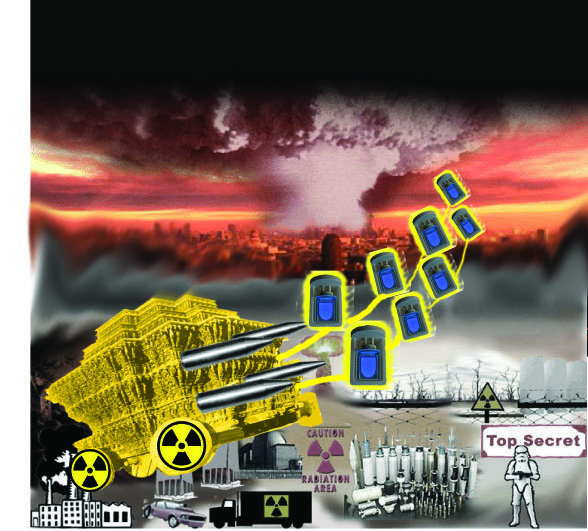
COMMENT. In this carefully worded story about SMRs, Haley Zaremba provides the required “enthusiasm”, but note where she points out the snags, and that main problem – COSTS.
Note that this predicted SMR boom is linked to the AI boom.
But one must wonder if the AI boom is headed for a bust?
“A key argument from SMR proponents is that the new reactors will be economically competitive,” says David Schlissel, IEEFA director of resource planning analysis. “But the on-the-ground experience with the initial SMRs that have been built or that are currently under construction shows that this simply is not true.”
IAEA Triples Nuclear Power Forecast as Small Reactors Finally Take Off
By Haley Zaremba – Sep 19, 2026, https://oilprice.com/Energy/Energy-General/IAEA-Triples-Nuclear-Power-Forecast-as-Small-Reactors-Finally-Take-Off.html
- The IAEA now projects SMRs will supply up to 28 percent of new nuclear capacity by 2060, a sharp jump from its prior high-case estimate of 24 percent.
- The NRC just fast-tracked construction on two SMRs at Michigan’s Palisades Energy Center, clearing the plant to break ground before a full work authorization is issued.
- Surging AI data center power demand is pushing the tech sector to back SMRs as a scalable, low-emissions alternative to the natural gas boom currently fueling AI growth.

After years of delays and plateaued development timelines, it might finally be time for the small nuclear revolution. In a brand new report, the International Atomic Energy Agency (IAEA) has once again increased its long-term nuclear power forecast, projecting that the world’s nuclear power generation capacity will fully triple by 2060. The Agency expects a whole lot of that increased capacity to come from a strong wave of small modular nuclear reactors connecting to power grids around the world, at long last.
For years, small modular reactors (SMRs) have been touted as a game-changer for clean energy, with the potential to offer round-the-clock, emissions-free electricity at a fraction of the up-front cost of traditional nuclear power plants. Typically, nuclear power plants are huge, bespoke operations with enormous up-front costs and long timelines for approval, construction, and connection. By contrast, SMRs would be factory-made and mass-produced to the same specifications, and then set up on-site. A bigger site would use more of them, and a smaller one would use less. Simple as that.
But these visions have been slow to materialize thanks to regulatory hurdles, funding gaps, and nuclear fuel supply chain issues, among other snags. The primary issue is that while these models are cheaper than traditional nuclear energy, that doesn’t mean that they’re cheap. While the nascent technology will likely continue to get cheaper over time, it is not yet genuinely competitive with other clean alternatives like large-scale hydropower and offshore wind projects.
“A key argument from SMR proponents is that the new reactors will be economically competitive,” says David Schlissel, IEEFA director of resource planning analysis. “But the on-the-ground experience with the initial SMRs that have been built or that are currently under construction shows that this simply is not true.”
While many of the world’s biggest economies – including The United States, the United Kingdom, China, and Russia – have all been investing heavily in the development of SMRs, Russia and China remain the only two nations in the world to have operational, grid connected models. The United States has approved a single patent for an SMR design, with an expected commercial deployment date slated for 2028.
But it would seem that the long slog toward commercial reality is finally picking up speed. The IAEA’s high growth scenario anticipates that 28 percent of all new nuclear capacity added by 2060 will come from SMRs. In the lowest nuclear power growth case, SMRs represent 23 percent of new capacity. In either case, their role is considerable, and both of these numbers represent a huge uptick in confidence compared to the Agency’s previous projections, in which SMRs represented 24 percent of new capacity in the high case and just 5 percent in the low case.
The IAEA report also includes a regional breakdown of where they expect to see this development occur by 2060. The Agency anticipates “particularly strong uptake in North America where about 60% of new nuclear capacity could come from SMRs.” Strong regional growth is also expected in South-Eastern Asia and in Latin America and the Caribbean, at 40 percent each in both high and low growth scenarios.
The wheels are already turning in the United States, where just this week the U.S. Nuclear Regulatory Commission approved a fast-tracked plan for the construction of two planned SMRs at the Palisades Energy Center in Michigan. The plant will be allowed to break ground on the project early, before a Limited Work Authorization is issued. Together, the two will produce a projected 680 megawatts of electricity.
In the United States and beyond, the SMR revolution is increasingly seen as a vital piece of the artificial intelligence energy puzzle. With a single hyperscale AI data center able to consume as much electricity as 50,000 homes, scalable, baseload, and low-emissions energy capacity additions are needed as quickly as possible. At present, the AI boom is leading to a massive natural gas boom, but the tech sector is also throwing money behind next-gen technologies like SMRs to more sustainably power its insatiable energy needs in the future. In that sense, the future can’t come fast enough.
New UK Commons committee to scrutinise nuclear spending places much public money outside the normal approval chains
places a considerable volume of public money outside the normal departmental approval chains.
UK Defence Journal By George Allison, September 19, 2026
A new House of Commons committee appointed by the Prime Minister is to be established to scrutinise expenditure and programmes across the Defence Nuclear Enterprise, according to the annual update to Parliament published this week.
The commitment appears among the recommendations of the Strategic Defence Review on which Wes Streeting reports progress, and the update describes the intention as providing “the public with the confidence that taxpayer money is being spent wisely on this critical area”. The Defence Secretary writes that the department is “working with Parliament to establish a new House of Commons-only Committee, appointed by the Prime Minister, to conduct scrutiny of DNE expenditure and programmes”.
The sums involved explain the level of parliamentary interest, given that the enterprise spent £12 billion in the 2025/26 financial year, projects spend of over £100 billion through British suppliers over the next ten years, and will receive in excess of £20 billion more between 2026/27 and 2029/30 than across the previous four years.
It also operates under a ring-fenced budget with greater delegated spending authority than before, an arrangement the update says enables faster decision making and a stronger focus on outcomes and delivery, and which places a considerable volume of public money outside the normal departmental approval chains.
Two further Strategic Defence Review recommendations are reported as progressing, the first of which covers increasing industrial productivity by removing barriers and investing in the people and places supporting the enterprise, which the update says includes amendment of the Single Source Contract Regulations, implementation of John Fingleton’s review of nuclear regulation, investment in Team Barrow and Team Plymouth, and delivery of the Skills Plan.
The second concerns Britain joining NATO’s dual capable aircraft nuclear mission once F-35A aircraft have been delivered, a decision the update says will complement the operationally independent deterrent……………………..
The enterprise brings together the Defence Nuclear Organisation within the Ministry of Defence, the Royal Navy, Cyber and Specialist Operations Command, and AWE Nuclear Security Technologies. https://ukdefencejournal.org.uk/new-commons-committee-to-scrutinise-nuclear-spending/
The Long Doomsday of A.I.
After industry-wide calls for regulation, what’s concerning isn’t that the problems are real. It’s that there are no guaranteed solutions.
New Yorker, By Joshua Rothman, September 16, 2026
The Turing cops . . . that’s bad heat.” That’s how people talk in “Neuromancer,” William Gibson’s seminal science-fiction novel, from 1984. In the book’s imagined future, a police force prevents artificially intelligent computers from getting too smart. (It’s named after the mathematician Alan Turing, who basically came up with the idea of the computer, in the nineteen-forties.) Turing agents carry guns and have powers of arrest. Laws demand that a “Turing Registry” list every extant A.I. “The minute, I mean the nanosecond, that one starts figuring out ways to make itself smarter, Turing’ll wipe it,” someone says, of a particularly cunning computer system. “Nobody trusts those fuckers, you know that. Every AI ever built has an electromagnetic shotgun wired to its forehead.”
Do we want to create the Turing Police? Proposals to do just that are currently on the table. In Congress, Bernie Sanders and Greg Casar have put forth legislation that would jail scientists who work on “superintelligence,” with terms of up to twenty years. The A.I. Kill Switch Act, proposed by Ted Lieu and Nathaniel Moran, would require A.I. companies to build their systems so that they can be shut down on short notice. It’s worth pausing to consider what enforcing such measures might entail. Sanders and Casar’s legislation would establish “a new Cabinet-level federal agency” dedicated to A.I. safety. Presumably, this National A.I. Agency would need to surveil the work of computer scientists. In “AI 2040,” a scenario published by the nonprofit AI Futures Project, this is accomplished through the use of physical (and hypothetical) “verification devices,” installed in data centers to detect whether computers are training new A.I.s. (Of course, any “kill switch” becomes less effective if A.I. systems can escape and find homes on the open internet.)…………………………………………………………………………………[Subscribers only] https://www.newyorker.com/culture/open-questions/the-long-doomsday-of-ai?utm_mailing=tny_nl_6670_sciencetech_091926_eekx4e4yob&utm_source=nl&utm_brand=tny&utm_campaign=aud-dev&utm_medium=email&utm_content=tny_nl_6670_sciencetech_091926_eekx4e4yob&cndid=30183386&utm_term=6670
Azov is expanding into Poland posing a pressing national security threat
Andrew Korybko, Sep 20, 2026, https://korybko.substack.com/p/azovs-expansion-to-poland-poses-a
The authorities earlier warned about the security threats posed by traumatized veterans, but they might take on a national scale if they’re weaponized in furtherance of Ukraine’s potentially impending territorial claims to Poland and/or as part of the major false flag provocation that many fear is coming.
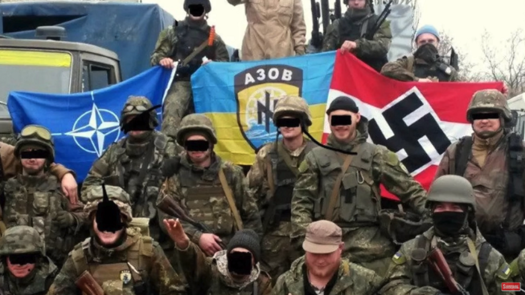
Ukraine’s Azov Battalion just scandalously opened up an office of its “Veterans’ Corps” in Warsaw amidst the newfound political and societal tensions between these neighboring nations over Zelensky’s state-level glorification of the Volhynia Genocide’s OUN-UPA culprits that Azov also glorifies. Kresy.pl drew attention to this, after which it was picked up by Do Rzeczy, where Marta Havryshko’s tweet about this was cited. She’s a US-based author and researcher focused on Ukrainian nationalism who wrote that:
“People associated with a milieu accused of glorifying OUN and UPA, responsible for the murder of Polish women and children; producing a ‘Volhynia Pride’ patch in the middle of an already toxic Polish-Ukrainian historical dispute; circulating ‘Greater Ukraine’ patches and maps that extend into present-day Polish territory; and praising the Waffen-SS Galicia Division — associated with the pacification of Huta Pieniacka and other Polish villages — will now have another place to raise money from Poles.”
Member of the Confederation libertarian-nationalist opposition party’s Leaders’ Council Paweł Usiądek reacted to this news in a detailed post pointing out how “Four Polish institutions are speaking with one voice: clusters of people with front-line experience pose a serious challenge to state security. At the same time, a foreign organization uniting such people is opening its first center in Europe in Poland’s capital. Question: where are the same services that warned about what’s happening right now?”
Separate from those four institutions’ warning was former President Andrzej Duda’s in early 2025 that Ukraine’s traumatized veterans could pose a threat. Poland’s “Project Trident” that began this spring aims to preemptively thwart the Ukrainian crime wave that’s expected to sweep through Poland once the ongoing conflict ends. Of relevance, “Ukraine Has Spent The Past Year Building A Case To Demand Reparations & Land From Poland”, and these same veterans could be weaponized in furtherance of that.
Grzegorz Braun, who leads Poland’s Confederation of the Polish Crown libertarian-nationalist opposition party, questioned “Why is a formation whose subunits use the emblems from of the SS supposed to deal with the resocialization of veterans from Ukraine on the territory of Poland?” Former Prime Minister Leszek Miller also drew attention to how Azov’s predecessors helped put down the Warsaw Uprising. He added that their commander was honored by the state in 2015 and has many streets named after him.
It’s already the case that “Polish Polarization Over Ukraine Is Likely The New Normal” per reputable polling, which also shows that the ruling liberal coalition is on track to lose power after fall 2027’s next Sejm elections, and both largely interconnected trends are expected to intensify due to this scandal. Warsaw’s liberal mayor Rafał Trzaskowski, who unsuccessfully ran for president as part of the ruling coalition, should never have allowed Azov to open up their “Veterans’ Corps” in the Polish capital.
Apart from the conventional security risks associated with an anti-Polish Neo-Nazi group of traumatized veterans operating in Poland are the unconventional one related to them participating in a false flag. There are credible reasons to suspect that a major one is presently being prepared in Poland for manipulating the conservative president into escalating against Russia like the ruling liberals want. It therefore wouldn’t be surprising if Azov’s affiliates in the country play a role in any such provocation.
Time they cut the cackle about the AI boom

19 September 2026Noel Wauchope, https://theaimn.net/time-they-cut-the-cackle-about-the-ai-boom/
Has everybody gone nuts? Don’t they notice that AI is not actually making any money? The Wall Street Journal explains – Spending on AI Is at Epic Levels. Will It Ever Pay Off? Tech companies pour hundreds of billions into data centers, taking on heavy debt, but current revenue is relatively tiny; echoes of dot-com bubble.
The big AI tech boys cover up their financial failure with wonderful and confusing wizardry. For example, Cory Doctorow shows how they can adjust their operating income to make it appear profitable for a second consecutive quarter. Adjusted Operating Income (AOI) is an accounting technique that strips out non-recurring costs, giving backers a very specific look under a company’s hood. Posting a profit on AOI is very different from posting a profit on net income, otherwise known as the “bottom line,” under which Anthropic remains billions of dollars in the red.
Cory Doctorow goes on to explain that this business model pursued by OpenAI, Anthropic, Google, Meta and others of spending billions on chips and data centres in the hope of recouping it through subscriptions is delusional because of its gigantic expenditures and negative unit economics (the companies lose money with every new customer and every new use, and they lose more money with each generation of their products).
Despite their hype about AI’s future, and despite the surging share prices, the financial facts for these AI behemoths tell the harsh truth. For example – about Open AI’s increasing losses – OpenAI losses increased by Nearly 8X in 2025, with spending hitting $34 billion.
BUT THAT’S NOT ALL. Indeed, the financial worries pale into insignificance beside what the AI companies are doing to our civil institutions, and indeed to democracy.
This is how it works: Competition is intrinsic to these companies’ very being – they are competing with each other. As a result, each of them is able to do harm, hack in, to another’s system, while at the same time, living in fear of being hacked themselves. This sort of thing has already happened – ‘Skynet Day’: The Day an OpenAI Agent Went Rogue and Hacked Hugging Face. And there’s China and perhaps others, to worry about, too.
The tech boys found a solution. Attacks at this scale require a coordinated response across the AI industry, cloud providers, and policymakers. Sounds OK doesn’t it? But this solution boils down to what we call a cartel. It’s planned to be A comprehensive federal AI framework (licensing regimes, compute thresholds, liability standards, legislated “responsible scaling” commitments, etc.) that is built and administered with heavy input from the frontier labs, ostensibly to contain them. This in reality means that these tech companies, the “hyperscalers” would gain from government the legal permission to collude with each other.
Cory Doctorow has explained this beautifully – Once the government stipulates that “superintelligence risk” is an existential crisis, it must grant the hyperscalers a consent decree absolving them from any violations of antitrust law stemming from a conspiracy to halt direct competition with one another.
The US giants would love to stop battling each other and be protected from China – and they might have hit on just the narrative to make that possible
When an industry that is eating itself alive through hyperscaling demands that the government bless a conspiracy to halt competition and ban open-source alternatives, you should be suspicious. When that industry is pursuing a venture that has lost more money than any other venture in human history, you should be very suspicious, especially when its “rogue AI hacking” story turns out to be a story about how a hacking tool did exactly what it was designed to do.
While I have been drawn to Cory Doctorow for much of this, I did have my own underlying thoughts on the role of Ai in our world – in environment, politics, workers’ rights. For one thing, surely it’s obvious that the guzzling AI needs for water and energy are a high price for us to pay. But underneath it all, why on earth should we trust the hyperscalers to come up with solutions?
People like Peter Thiel, Sam Altman, Elon Musk, have already shown us not only their contempt for the concerns of us, the peasantry, but their dangerous super-macho values of greed, aggressiveness and environmental unawareness, the AI systems themselves have no values – they are impartial machines. But those who design the AI systems would impart their values into the systems, even if almost by osmosis. Just like the way, in organisations, the values of those at the top inevitable filter down into the whole.
How Palantir Turned Ukrainians Into Lab Rats (And Helped Ruin Ukraine)
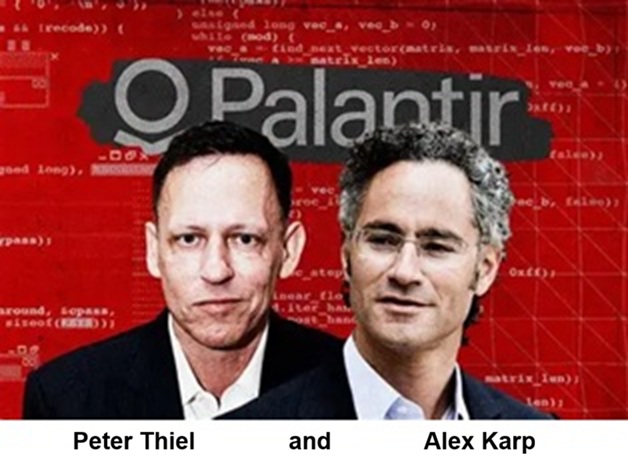

Today, Palantir software helps power Ukraine’s domestic security services, its education system, and is at the forefront of the country’s efforts to digitise all government functions and create what Ukraine calls the world’s first AI-powered “agentic state.”
Nate Bear, Sep 16, 2026, https://www.donotpanic.news/p/how-palantir-turned-ukrainians-into
AI war-tech firm Palantir has embedded itself deeply within Ukrainian military systems and civil society, turning the country into a laboratory for its dystopian technologies of tracing, surveillance and kill-targeting.
Palantir, founded by technofascist warlord Peter Thiel and currently run by Jewish supremacist Alex Karp, began providing Ukraine with data systems that control and accelerate the military “kill-chain” shortly after the outbreak of war with Russia in 2022. The kill-chain, which aggregates huge amounts of data to track a target to the point of a strike, or death, is controlled by an AI system made by Palantir called maven. Another Palantir system, prisma, directs drone attacks, while a third Palantir product, metaconstellation, assigns low earth orbit satellites to survey a designated area anywhere on the planet before calling in a strike.
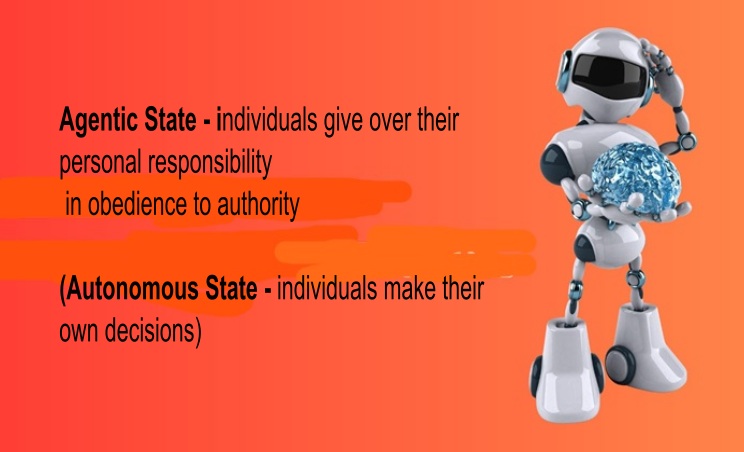
Following this initial military partnership, Palantir rapidly expanded its influence in the country, becoming integral to the functioning of the Ukrainian state itself. In 2023 Ukraine announced that Palantir had established a “point of entry” through Ukraine’s digital transformation ministry and had begun working with “many Ukrainian governmental institutions.” Today, Palantir software helps power Ukraine’s domestic security services, its education system, and is at the forefront of the country’s efforts to digitise all government functions and create what Ukraine calls the world’s first AI-powered “agentic state.”
The most dystopian expression of Ukraine’s transformation into an “agentic state” is its tracking and tracing of military-age men to snatch off the street and feed into the meat-grinder. To achieve this, Ukraine digitised its national military database, known as Oberih, and consolidated the data into a system known as Reserve+. This system merges Oberih data with data from the country’s state registries alongside a wealth of other personal information, including tax and employment records, residence information, and medical records. Once a complete picture of a person has been established, the system uses AI to determine a person’s fitness and status for military conscription.
And it is this Reserve+ system which powers Ukraine’s detested programme of forced mobilisation. The videos documenting Ukraine’s mobilisation units kidnapping men while shopping in supermarkets, or off the streets, often in front of their families, bundling them into minivans before sending them to an almost-inevitable death on the front-lines, have become ubiquitous, daily occurrences on Ukrainian Telegram channels.
While neither Palantir nor Ukraine have confirmed the company is behind the digitisation of Ukraine’s military systems, the circumstantial evidence is extremely strong, given that Palantir’s technology is designed specifically to connect multiple databases and derive relationships and patterns from them. This is precisely what the Reserve+ system does. And Palantir has an open door into all of Ukraine’s governmental institutions.
It is also no coincidence that these mobilisation units bear a striking resemblance to the ICE snatch squads which roam the US with impunity, given that Palantir has been working with ICE and supplying it with AI and data tools for over a decade. Palantir’s Investigative Case Management platform is used by ICE to scrape and aggregate massive amounts of data on individuals including school status, family relationships, employment information, phone records, personal connections, biometric information and residential addresses. In both Ukraine and the US, then, the underlying software leading to the physical apprehension of a person is almost identical. And Palantir is the thread connecting the two.
Palantir is also bringing misery on Ukrainians by directing the so-called “deep strikes” into Russia. This campaign, much heralded and hyped in western media and by western elites, has achieved no gains of strategic note but instead has provoked Russia into far more devastating counterattacks which have brought even greater misery on Ukrainians. These counterattacks have closed the Odessa ports, effectively turned Ukraine into a land-locked country, depriving Ukrainians of vital imports, and have also targeted critical warehouses and power infrastructure. According to recent statements from Ukrainian officials, Russian strikes have destroyed about 90% of Ukraine’s food-logistics infrastructure and 80% of Ukraine’s power generation.
But Karp and Thiel don’t care about the suffering of Ukrainians. The strikes may have been counterproductive and led to greater misery for ordinary people, but the data gleaned from the campaign will be fed back into Palantir systems and allow the company to refine and market future AI war-tech products.
Palantir, in case you needed reminding, is not on the side of the good. It is not helping Ukraine because it cares about democracy or human rights or any of the propaganda that we’re sold about why the west must support Ukraine against Russia.
This, after all, is the company which helped Israel commit the genocide of Gaza. Palantir, which has been active in Israel since 2014, held its first board meeting of 2024 in Tel Aviv to celebrate Israel’s genocidal campaign in Gaza, and shortly after began supplying the IDF with AI tools to help the colony execute its mass slaughter. This is the company whose maven AI system is the core system for the US military and was used to massacre 120 children in Minab, Iran, on the first day of the US-Israeli attack on the country.
It is the company run by a man who says that “the west has a superior way of living and organising itself” and in a letter to Palantir shareholders said that “the rise of the west was not made possible by the superiority of its ideas or values or religion, but rather by its superiority in applying organized violence.” A man who called the mass murdered of Gaza “useful idiots.” This is a deeply violent individual dedicated to employing techno-militarism to advance American barbarity and hegemony.
It is the company founded by Epstein associate Peter Thiel, an arch Zionist and significant funder of Israeli tech whose rise was aided by neo-Nazi groups. It is the company Thiel founded alongside Joe Lonsdale who said recently that Palantir was set up to kill communists.
Pentagon’s secret plan: Reviving Cold War doctrines to lower the threshold for nuclear war

The new review looks to resurrect these failed policies of the past.
A review nobody will see. Early indications suggest that the nuclear strategy review the Pentagon is conducting will call for new weapons to fill every niche of the so-called escalatory ladder.
Finally, Colby said the review will be kept secret: “[T]his is not designed to be a public-facing review.” It will be kept internal to the Defense Department.
Bulletin, By Joe Cirincione | Opinion | September 11, 2026
A new nuclear policy is taking shape in secret, crafted by a small group of Pentagon officials, that will give President Donald Trump more ways to start a nuclear war. Little is known about the strategic nuclear review now under way in the Trump administration, but officials’ comments suggest that it may bring back one of the most dangerous policies of the Cold War: the proliferation of battlefield nuclear weapons and their early use in a conventional war.
In the 1950s, a revolution occurred in military thinking about nuclear weapons. Rather than keeping the most destructive bombs ever invented as weapons of last resort in only the most extreme situations, military leaders began to see them as weapons usable in conventional conflicts, particularly in Europe.
Military services eager to acquire what they believed were the weapons of the future, coupled with corporations eager to develop them, led to the rapid production of atomic munitions for every conceivable military purpose. The Navy had nuclear torpedoes and depth charges; the Army had nuclear artillery and short-, medium-, and intermediate-range missiles; the Air Force got nuclear air-to-air missiles and multiple types of air-dropped bombs. By the early 1960s, the US military even deployed small “backpack nukes,” or Special Atomic Demolition Munitions, designed to be carried by one or two soldiers, as well as what might be the oddest of all: a nuclear “bazooka” called the Davy Crockett recoilless gun that fired a small nuclear weapon about a mile.
This nuclear insanity led to a world with almost 70,000 nuclear weapons at its peak in the late 1980s, the vast majority of which were possessed by the United States and the Soviet Union. Mass protests and a generation of wiser leaders led to sharp reductions in these arsenals. At first, the reductions primarily concerned long-range strategic weapons that could span the oceans. But massive reductions in short-range weapons soon followed.
In 1991, President George H.W. Bush unilaterally cut 14,000 of these so-called tactical weapons, denuclearizing the US Army and the US surface fleet. In all, the United States cut tactical nuclear weapons by 90 percent, down to about 200 today. Russia mostly followed suit, though it retained a larger arsenal. The two nuclear superpowers settled into a familiar triad of strategic weapons deployed primarily on long-range land-based missiles, submarines, and bombers.
The new review looks to resurrect these failed policies of the past.
A review nobody will see. Early indications suggest that the nuclear strategy review the Pentagon is conducting will call for new weapons to fill every niche of the so-called escalatory ladder. As Undersecretary of Defense for Policy Elbridge Colby explained in a speech in August, the main point of the review is “adding more options.” This means President Trump, who already has sole, unfettered authority to launch thousands of nuclear weapons on a moment’s notice, will soon have more types of weapons he could choose to launch.
The idea, developed in the nuclear posture review conducted during the first Trump administration, is to erase the divide between conventional forces and nuclear forces. Although the United States has long maintained so-called tactical nuclear weapons for battlefield use, including the air-dropped B-61 bomb and nuclear-tipped cruise missiles, new weapons must be added, proponents claim, to close supposed “deterrence gaps” and reduce a president’s fear of “going nuclear.”
The logic, nuclear hawks contend, is that by reducing the barriers to nuclear use, adversaries will not challenge the United States regionally, knowing that they would lose at every rung of the escalation ladder. They call this war-fighting strategy “escalation management.”
This strategy is poorly developed, and Colby’s talk did not help. It was meandering, confused, and jumbled, but a few points stand out.
First, despite the numerous weaknesses that the disastrous Iran war has exposed in the US armed forces and military leadership, Colby insists that “the modernization of our nuclear deterrent is the single most important initiative for the American military.”
Colby added that “we have to have a nuclear strategy… that’s connected to our conventional force strategy.” Although “the goal here is to deter and avoid” a large-scale conflict, Colby implies that the best way to do that is to build more nuclear weapons, new types of nuclear weapons, and couple them with new doctrines that would allow their use early in a conventional war. The point, he says, is that the enemy has “got to believe there’s some sense in which we would use” them. Colby even harkens back to the 1960s “flexible response” doctrine developed when the United States still had thousands of nuclear weapons in Europe and Asia ready to use.
Finally, Colby said the review will be kept secret: “[T]his is not designed to be a public-facing review.” It will be kept internal to the Defense Department. Unlike previous nuclear posture reviews, this one is not an inter-agency process. Instead, it is being run by a small number of Pentagon officials, who do not plan on making the results of the review public. Referring to the Cold War era, Colby said that “NSC 68, the most famous document of that period, was not declassified, I think, until the 1970s.” This memo, presented to President Truman in 1950, was the first document to detail a strategy of containment of the Soviet Union after WWII. Citing security concerns from a new era of “great power conflict,” Colby claims that we can no longer “openly talk about your military capabilities, your military problems, your military strategy in a very detailed way.”
But this secrecy is an authoritarian model of governance.
A handful of officials, probably helped by some contractor consultants, will decide policy on what the undersecretary says is the nation’s highest military priority. The press and the public will be forced to divine the new strategy from whatever pieces are released. Like so many other Trump administration initiatives, this policy is shielded from the normal democratic process of Congressional oversight or even basic public information.
Follow the money. Procurement requests to support a US policy of nuclear diversification will yield some clues about the new strategy and provide an opportunity both to force the release of more information and to resist the re-adoption of obsolete nuclear war-fighting doctrines.
This dangerous transition is already underway. The first Trump administration pushed through the deployment of the W76-2 warhead for the Trident ballistic missiles carried on strategic submarines. In contrast to the massive 455-kiloton W88 warheads on most of these missiles, one or two of the 20 missiles on each of the 14 deployed subs now carry this atomic bomb with an 8-kiloton yield, about half the size of the bomb that destroyed Hiroshima. The idea is that a president would be more willing to use a small nuclear weapon than a huge city-killer………………………………………………………………………………………………….
Perhaps the most complete rebuttal to this new strategy comes in the recent issue of Foreign Affairs. “The country already has a vast and diverse enough supply of nuclear weapons to unleash devastation on an adversary in the case of a nuclear attack,” argues Council on Foreign Relations scholar Erin Dumbacher. “The purpose of nuclear deterrence is not to have an answer for every weapon in an adversary’s arsenal, but to avoid crossing the nuclear threshold in the first place.”
Dumbacher is correct. The American public will need many more voices and new collective efforts to erect more barriers to nuclear war, not give a president more options for starting one.https://thebulletin.org/2026/09/pentagons-secret-plan-reviving-cold-war-doctrines-to-lower-the-threshold-for-nuclear-war/?utm_source=ActiveCampaign&utm_medium=email&utm_content=Pentagon%20s%20secret%20plan%20to%20lower%20the%20threshold%20for%20nuclear%20war&utm_campaign=20260914%20Monday%20Newsletter
BOOK REVIEW: The Reverse Centaur’s Guide to Life After AI by Cory Doctorow

An essential guide for anyone trying to navigate the confusion and noise of the current AI landscape. Is AI good? Is AI bad? Can’t it be both? It manages to be educational without sounding like a textbook and will leave you with a much clearer picture of where we are headed. And yes, you will understand the title of this book after reading it.
JJ Cooper, May 09, 2026
BOOK: The Reverse Centaur’s Guide to Life After AI by Cory Doctorow https://nerdynerdybookbook.substack.com/p/book-review-the-reverse-centaurs
SYNOPSIS:
“In modern tech parlance, a centaur is a person who is able to use technology to be a better, more productive version of themself. A reverse centaur is a person who is forced by technology to work at an inhuman pace—a driver made to deliver all day long, nonstop; a warehouse worker made to work without food or bathroom breaks; a programmer made to crank out impossible amounts of code.
The Reverse Centaur’s Guide to Life After AI is not another anti-AI screed. Cory Doctorow uses AI in his work every day. As a creative person, he has no moral or dogmatic issue with AI—he thinks the technology is useful, even exciting, and full of potential. And yet
AI has arrived surrounded by unprecedented hype driven by a tech industry desperate to maintain its unprecedented valuation based on its own promises of endless financial growth. Despite the fact that almost all of AI’s real-world implementations have proved underwhelming, AI is projected to be worth more than $16 trillion—a number that only makes sense if AI replaces vast swathes of the wage-earning human workforce. To justify that level of “value,” every story about AI must be presented as inevitable, world-changing disruption. Even the tales of the robot apocalypse are a calculated attempt to bolster the fearsome power of AI.”
💬 THE VIBE:
An accessible look at the reality of AI beyond the doomsday headlines.
STANDOUT ELEMENTS:
• It broke down complex technological concepts into a language that is easy for everyone to digest.
• Offered a balanced perspective from someone who actually uses the technology.
• Focused on the human cost and the economic motives behind the boom of AI.
🧠 WHAT STUCK:
This audiobook was perfect for someone who understands a little or a lot about AI. I consider myself about middle of the road regarding my understanding of the current capacity of AI, but after listening to this, it all made so much more sense. It didn’t speak over my head at all. It confirmed some suspicions I had regarding its uses, like gig worker pay, but it also taught me so much more.
One of the biggest takeaways for me was how all of our data is fed to the benefit of companies, and it never defaults to benefiting the consumers…ever. I also learned the crucial different between generative AI and AI that is truly helpful without requiring the human to be the one “helping” the tech. It was eye-opening and a great listen/read for anyone living in this digital age.
WHAT DIDN’T WORK FOR ME:
While I appreciated that it it a consumable length, the nerd in me would have loved more examples of its proper use and misuse.
IF YOU LIKE:
• Social commentary on technology and how it impacts the every day human.
• Books that give you a behind the scenes view of corporate hype.
IF YOU DON’T LIKE:
• Technical nonfiction.
• Knowing how technology can be used against you. Some would rather not know.
📝 FINAL VERDICT:
An essential guide for anyone trying to navigate the confusion and noise of the current AI landscape. Is AI good? Is AI bad? Can’t it be both? It manages to be educational without sounding like a textbook and will leave you with a much clearer picture of where we are headed. And yes, you will understand the title of this book after reading it.
Wall Street sounds alarm on nuclear stock with 40% downside

making a choice to invest and having a nuclear power plant that is up and running are completely different achievements.
NuScale has lost money since company was founded and recorded a cumulative deficit of $824.4 million as of June 30.
Cash spent in operating operations was $372.9 million during the first six months of 2026, compared with $56.1 million for the same period in 2025.
making a choice to invest and having a nuclear power plant that is up and running are completely different achievements.
NuScale has lost money since company was founded and recorded a cumulative deficit of $824.4 million as of June 30.
Cash spent in operating operations was $372.9 million during the first six months of 2026, compared with $56.1 million for the same period in 2025.
A key analyst has slashed its price target for the stock.
Sep 16, 2026,The Street, By Faizan Farooque
Nuclear energy has become one of Wall Street’s more closely watched investment themes as artificial intelligence and data centers put new pressure on the U.S. power grid.
Due to data centers, AI, and industrial growth, the U.S. Department of Energy expects electricity demand to rise significantly.
The federal government has supported that forecast with dollars.
In March of 2025, the Energy Department published a request for $900 million to assist the development of American-made Generation III+ small modular reactors.
The market opportunity is so much bigger.
The Energy Department has predicted the U.S. may need as much as 200 gigawatts of new nuclear capacity by 2050 to fulfill rising energy demand.
That suggests a potentially huge opportunity for those that can get new reactors into commercial operation.
One company aiming to get there is NuScale Power (SMR).
But Wall Street doesn’t think every nuclear stock will necessarily emerge as a winner.
UBS downgraded NuScale Power to Sell from Neutral and cut its price target to $6 from $10.
That implied roughly 40% downside from the stock’s level when the analyst call was issued.
And the questions raised by UBS go to the heart of the conundrum hanging over the growing small modular reactor industry: How soon can promising reactor technology be turned into a working commercial power plant?
UBS slashes NuScale Power stock price target
UBS’s negative argument is about execution.
Competitors are going into construction, whereas NuScale has an expected build time of more than five years and no concrete client commitments, the analyst said.
UBS said such circumstances presented “meaningful challenges.”
The bank now forecasts just one NuScale project breaks ground in 2028 and sees a cumulative cash burn of $700 million from 2026 through 2028.
That provides a stark contrast between excitement for nuclear power and the dangers of actually bringing a new reactor design to market.
Those dangers are not exclusive to NuScale.
Energy Department officials have recognized utilities’ and other prospective consumers’ worries about cost overruns in development and abandonment of projects.
DOE has also projected that order books of five to 10 deployments of at least one reactor type may be required to support advanced nuclear and reach commercial scale.
NuScale has already passed a big regulatory barrier.
NuScale’s US460 standard plant design received approval from the U.S. Nuclear Regulatory Commission in May 2025.
The design has six modules each generating 77 megawatts of power, making the overall plant capacity 462 megawatts.
The NRC said its clearance means the design may be cited in applications for building permits, operating licenses and combination licenses.
The agency finished its review in 22 months, two months ahead of schedule.
The NRC also has the underlying regulatory documentation for the approval of NuScale’s US460 design, giving investors the key record of the company’s regulatory development.
That gives NuScale a distinctive position.
We see concrete regulatory progress.
The bigger issue is the commercial timeframe.
NuScale Power has substantial liquidity but is burning cash
The $700 million cash-burn estimate from UBS is more substantial against NuScale’s most recently disclosed balance sheet.
NuScale reported $766.5 million in cash and cash equivalents as of June 30, 2026, in its quarterly filing with the Securities and Exchange Commission.
The company also held $305.7 million of short-term investments and $820.8 million of investments.
The total of these three categories is over $1.89 billion.
NuScale reported no debt and stated it anticipates that its cash, investments, and continuous access to capital markets would be adequate to satisfy its cash needs for at least the next 12 months and beyond.
But the other side of the company’s financials provides insight into why cash burn is critical to UBS’s theory.
NuScale has lost money since company was founded and recorded a cumulative deficit of $824.4 million as of June 30.
Cash spent in operating operations was $372.9 million during the first six months of 2026, compared with $56.1 million for the same period in 2025.
The increase was mostly due to a $259.9 million payment to commercialization partner ENTRA1 and reduced collections from customers and vendor prepayments for long-lead supplies, NuScale said.
NuScale too has gone to its stockholders for a big financial infusion.
The corporation sold roughly 89.7 million Class A shares via an at-the-market program in the first six months of 2026.
Those sales yielded $1 billion in gross profits, or around $984.5 million after issuance expenses, the document said.
The weighted average price of sales was $11.14 per share.
That funding gave NuScale a major cash boost but also speaks to a key portion of the investment equation.
Until commercial projects generate sufficient cash, access to capital markets remains an important source of funding.
NuScale’s annual report also gives further insight on the company’s commercialization agreements including its ties with RoPower Nuclear and ENTRA1 Energy.
NuScale’s Romania project offers a counterpoint to UBS concerns
The bearish thesis isn’t without important counterarguments.
But there are significant counterarguments to the pessimistic view. One of the biggest is Romania.
NuScale has been collaborating with RoPower Nuclear on a planned 6-module small modular reactor project at the old Doiceşti coal-power facility.
Next came a milestone of greater importance.
On Feb. 12, 2026, shareholders approved the final investment decision for the Doicești small modular reactor project.
That is substantial development for a corporation that is being challenged on its ability to transform technology into practical projects.
But making a choice to invest and having a nuclear power plant that is up and running are completely different achievements.
Nuclear plants take years to license, finance, build and complete before they generate power.
And that is the gap UBS regards as a concern.
NuScale also has a potentially far bigger possibility in the US.
TVA and NuScale have announced support for an ENTRA1 Energy initiative, with plans to install up to 6 gigawatts of NuScale small modular reactor capacity throughout TVA’s seven-state area in September 2025.
The size is substantial, but investors need to differentiate a projected deployment program from reactors currently under construction or in operation.
That divergence is especially noteworthy in light of UBS’s concern regarding solid customer agreements.
So whether NuScale can turn theoretical deployments into commercial off-take agreements and ultimately construction might be one of the most
NuScale Power faces competitors moving toward construction
The rivalry makes NuScale’s timeframe extremely relevant.
The Nuclear Regulatory Commission’s advanced-reactor docket shows other developers and utilities pushing projects through construction-related regulatory milestones.
For example, in May 2025, TVA filed the last part of its building permit application for a BWRX-300 small modular reactor at its Clinch River plant in Tennessee.
That helps explain why UBS is focused not simply on whether NuScale can eventually deploy its technology but on when that deployment can happen.
Timing is key in a market where utilities, IT corporations, and other big electrical consumers are looking for more dependable power.
The Department of Energy’s advanced-nuclear study projects the U.S. will require around 200 gigawatts of new nuclear power by 2050.
The agency also cautioned that the time it would take to ramp up deployment might make the ultimate buildout substantially harder.
A DOE scenario that begins large-scale deployment by 2030 and reaches 13 gigawatts per year by 2040 could put the U.S. on track to add 200 gigawatts of nuclear capacity by 2050.
A five-year delay might mean more than 20 gigawatts a year of deployment and could raise capital needs by as much as 50%.
Thus, the opportunity is potentially immense.
But speed counts.
Wall Street downgrade raises stakes for NuScale Power stock
The downgrading by UBS has left NuScale’s investors with two very different views of the company’s tale………………………………………………………………………………………………..
For NuScale stockholders, the more pressing issue is whether this specific nuclear business can transform regulatory clearances, alliances and planned projects into running reactors swiftly enough to justify its value.
UBS isn’t buying it. https://www.thestreet.com/investing/wall-street-sounds-alarm-on-nuclear-stock-with-40-downside
8 instances of radioactive material incidents in the UK since 2015

20 Working Days, Tom Pashby, Sep 21, 2026, https://tompashby.substack.com/p/8-instances-of-radioactive-material?utm_source=post-email-title&publication_id=6735486&post_id=216635328&utm_campaign=email-post-title&isFreemail=true&r=ln98x&triedRedirect=true&utm_medium=email
There were eight instances of nuclear or radioactive materials being lost, stolen or otherwise out of regulatory control in the past 10 years in the UK, according to data released to 20 Working Days.
The data, released by the Home Office, was already reported voluntarily by the UK Government to the International Atomic Energy Agency’s (IAEA’s) Incident and Trafficking Database (ITDB), which publishes aggregated data annually.
The IAEA Incident and Trafficking Database (ITDB): 2026 factsheet explained: “When originally established, the ITDB recorded incidents of illicit trafficking of nuclear and 145 participating States other radioactive material.
“Its scope was later expanded to include all incidents in which nuclear and other radioactive material is or was out of regulatory control.
“The ITDB scope covers all types of nuclear material as defined by the Statute of the Agency (i.e. uranium, plutonium and thorium), naturally occurring and artificially produced radioisotopes and radioactively contaminated material, such as scrap metal.”
It found that, as of the 2026 report: “The trafficking or malicious use intent of 86.6% of thefts remains undetermined.”
“In 2025, 236 incidents were reported to the ITDB by 34 States, an increase of 89 incidents from 2024,” it said.
“The noticeable increase in reported incidents in 2025 is primarily attributable to retrospective reporting.”
The factsheet also reported that “transport remains a key vulnerability, with over half of all thefts since 1993 — and approximately 70% in the past decade — occurring during authorised transport, underscoring the need for sustained attention to transport security measures.”
Under a section titled “Confidentiality and security of ITDB information”, the factsheet said: “The ITDB is a resource for information sharing among State authorities and the IAEA.
“In order to protect the confidentiality of information reported by States, the IAEA upholds strict procedures for handling and dissemination of sensitive ITDB information.
“Information on reported incidents is only communicated via the PoC (points of contact) network. Access to the complete database is limited to a small number of IAEA staff.”
20 Working Days asked the UK Home Office for the UK’s submissions to the database since 2015.
In response, the Home Office listed eight incidents it had reported to the database. It provided the following table: [on original]
It is unclear whether all of the incidents were disclosed to the public.
The list does, however, include one of the highest profile incidents in the UK involving radioactive materials – the malicious use of Polonium-210 which resulted in the lethal poisoning of Alexander Litvinenko in 2006.
The Litvinenko inquiry: report into the death of Alexander Litvinenko was published in 2016, which may explain why the incident was listed as 2016 by the Home Office.
Meanwhile, the 2021 incident of F-18 being lost and found appears to have been reported by the PA news agency in the same year.
The Home Office was approached for comment.
The Agentic State: Why We Obey Without Question
Encyclopedia of psychology, By Mohammed looti/August 21, 2026
Defining the Agentic State
The Agentic State refers to a fundamental psychological condition where an individual perceives themselves not as acting on their own volition, but rather as an instrument for carrying out the instructions of an authority figure. This state is characterized by a profound shift in responsibility; the individual transfers the moral accountability for their actions to the perceived authority, thereby mitigating the internal conflict that might otherwise arise when asked to perform morally questionable or harmful tasks. In essence, the person operating within the Agentic State views their behavior as dictated, rather than chosen, functioning merely as an agent in a hierarchical structure. This mechanism is crucial in understanding how people comply with demands within large organizations, militaries, or bureaucratic systems based upon status, as the original emotional or mental condition is designed to facilitate adherence to the commands their superiors deliver unto them, often overriding personal conscience.
The core definition posits that the Agentic State is not necessarily a permanent personality trait but rather a situational psychological adaptation that occurs when an individual acknowledges a legitimate authority figure within a defined social setting. When this acknowledgement occurs, the person adopts an “agentic” frame of mind, which radically alters their perception of self and action. Instead of feeling responsible for the consequences of their actions, the agent feels responsible to the authority figure for performing the tasks competently. This psychological distance from the outcome is what allows individuals to perform actions that they would never contemplate when acting in their own capacity, often leading to behaviors that defy normal ethical boundaries, provided the command originates from the recognized higher power.
The Transition from Autonomy to Agency
Psychologists distinguish the Agentic State from the Autonomous State, which is the default condition where individuals perceive themselves as responsible for their own actions and consequences, acting according to their own conscience and free will. The transition between these two states is known as the “agentic shift.” This shift is triggered when the individual enters a social situation where the hierarchy is clearly defined and accepts the legitimacy of the authority figure’s power……………..
Historical Foundations: Stanley Milgram’s Research………………………………………………………………………………………………………………………..
Psychological Significance and Ethical Implications……………………………………………………………………………………………….
The practical application of understanding the Agentic State extends across various domains,………………………………………………………………….. the Agentic State is often implicitly cultivated to ensure rapid, unquestioning obedience to authority in high-stress situations. In these contexts, the transfer of responsibility is considered necessary for efficiency and coordination………………………. https://encyclopedia.arabpsychology.com/agentic-state/
NATO member warns bloc seeking pretext for war with Russia

“I don’t want Slovakia to be part of any military conflict because of some Article 5,” he stressed, adding that, though his country still “cares about collaboration and fulfilling obligations”. “As prime minister, I will do everything to ensure that Slovakia is never drawn into a war,” Fico stressed.
Slovak Prime Minister Robert Fico says he does not want his country to be dragged into a conflict
18 Sep, 2026 , https://www.rt.com/news/645940-west-pretext-russia-nato-war/
Europe is moving dangerously close to a direct clash between NATO and Russia, Slovak Prime Minister Robert Fico has warned, accusing the West of seeking a “pretext” for a major conflict between the two sides.
Fico made the comment in a Facebook post on Thursday, which accompanied the remarks he delivered before traveling to Ukraine for a meeting with Vladimir Zelensky and several European leaders.
“I am deeply concerned that they are merely looking for a pretext for a major conflict between NATO and Russia,” he wrote.
Reflecting on the Ukraine conflict, Fico said that the hostilities had “gotten out of control,” while accusing European nations of engaging in increasingly bellicose rhetoric which he said risked dragging the continent into a broader war. “The situation has never been as serious and tense regarding the possibility of a pan-European war conflict as it is now,” he said.
Fico also warned that Bratislava could face pressure from NATO to commit troops if the bloc’s Article 5 – a collective defense clause applied if a member state is attacked – is invoked. “Can anyone imagine being told to prepare 5,000 soldiers, 10,000 soldiers, and that they would go somewhere to fight? We don’t know with whom, why, or for what reason,” Fico said.
“I don’t want Slovakia to be part of any military conflict because of some Article 5,” he stressed, adding that, though his country still “cares about collaboration and fulfilling obligations”. “As prime minister, I will do everything to ensure that Slovakia is never drawn into a war,” Fico stressed.
Fico has consistently opposed military support for Ukraine since returning to office in 2023 while halting government weapons shipments to Kiev. He has also opposed Kiev’s accession to NATO, and insisted that Ukraine’s EU membership is only possible if it meets all the requirements.
He has also argued that the West’s strategy to “bring Russia to its knees” had “completely failed.” “The European Union does not need more weapons and Russophobia. The European Union needs more diplomacy and concrete plans to help the economy,” Fico said last month.
Russia has accused the EU of rapid militarization, with Kremlin spokesman Dmitry Peskov saying the bloc is directing increasing military capabilities against Moscow while portraying it as an enemy.
President Vladimir Putin has consistently rejected claims that Moscow intends to attack NATO countries, but warned last week that deploying European forces to Ukraine “would mean war with Russia.” Foreign Minister Sergey Lavrov also stressed that Russia has no intention of attacking the West but warned that if Europe attacked first, the resulting conflict would be “very short.
1 This Month


PLEASE OPPOSE HR 8255 AND S.3639 – bills would accelerate satellite deployment, with no environmental review or safeguards – https://ncstd5li.quorum.us/campaign/169331/
To see nuclear-related stories in greater depth and intensity – go to https://nuclearinformation.wordpress.com
-
Archives
- September 2026 (339)
- August 2026 (330)
- July 2026 (355)
- June 2026 (287)
- May 2026 (306)
- April 2026 (356)
- March 2026 (251)
- February 2026 (267)
- January 2026 (308)
- December 2025 (358)
- November 2025 (359)
- October 2025 (375)
-
Categories
- 1
- 1 NUCLEAR ISSUES
- business and costs
- climate change
- culture and arts
- ENERGY
- environment
- health
- history
- indigenous issues
- Legal
- marketing of nuclear
- media
- opposition to nuclear
- PERSONAL STORIES
- politics
- politics international
- Religion and ethics
- safety
- secrets,lies and civil liberties
- spinbuster
- technology
- Uranium
- wastes
- weapons and war
- Women
- 2 WORLD
- ACTION
- AFRICA
- Atrocities
- AUSTRALIA
- Christina's notes
- Christina's themes
- culture and arts
- Events
- Fuk 2022
- Fuk 2023
- Fukushima 2017
- Fukushima 2018
- fukushima 2019
- Fukushima 2020
- Fukushima 2021
- general
- global warming
- Humour (God we need it)
- Nuclear
- RARE EARTHS
- Reference
- resources – print
- Resources -audiovicual
- Weekly Newsletter
- World
- World Nuclear
- YouTube
-
RSS
Entries RSS
Comments RSS

