Climate change is exposing nuclear power’s reliability problem
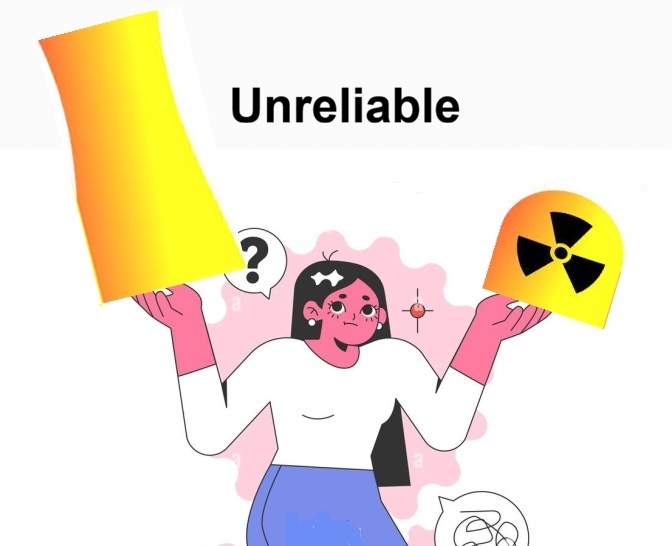
For nuclear power plants to be reliable, they need operating conditions to be stable. With climate change intensifying by the year, one cannot expect predictability, control, and stability.
By Valerie Arnhold, M.V. Ramana | Opinion | September 6, 2026, https://thebulletin.org/2026/09/climate-change-is-exposing-nuclear-powers-reliability-problem/
One of nuclear energy’s biggest selling points is its claims of reliability. “Nuclear energy is the only large-scale power source that can be tapped in even the most extreme weather conditions, 24 hours a day, 7 days a week,” boasts the American energy company Constellation. “Nuclear power plants are very reliable, and can run for many months without interruption, providing large amounts of clean electricity, regardless of the time of day, the weather, or the season,” says the World Nuclear Association. At a public meeting in June, Keith Ammon, a pro-nuclear Republican member of the New Hampshire House of Representatives, echoed these claims: “Nuclear doesn’t care about the weather,” he said. “It just runs.”
Over the next few months, several countries in Europe had to shut down nuclear plants because of hot weather and drought—proving that nuclear power does, indeed, care about the weather. Coming at a time when demand for electricity was high, these countries were faced with an imminent failure of the electricity grid. Citizens and businesses in Hungary and Romania had to reduce their consumption. Ironically, it was solar power—often critiqued by nuclear boosters as unreliable—that provided additional electricity and staved off shortages in some countries. A further irony is that these heat waves are more likely and more severe because of climate change, which is often advanced as the reason to expand nuclear power in the first place.
European countries heavily dependent on nuclear energy were particularly affected. The near-complete shutdown of Hungary’s Paks at the beginning of August, when output was reduced from around 1960 megawatts to around 225, and complete shutdown of Romania’s Cernavoda power plant on August 13, led to a loss of 40 percent and 20 percent of the respective countries’ electricity generation capacity. Both countries declared a state of energy emergency and asked companies and citizens to reduce energy consumption for 30 days. In France, the electricity regulator RTE recorded on August 12 that more than a third of its nuclear generation capacity was down, as eight reactors were completely shut down, with five operating at reduced levels.

Some have made the case that the amount of time when nuclear reactors are not generating power is quite small and their integrated output over the whole year is not significantly impacted. But this is of little comfort to countries like France or Hungary when they end up losing a large fraction of their electricity generation all at once, especially during a heat wave when the need for electricity is high, and their population’s access to electricity is in peril.
Underlying most of these shutdowns is water, or lack thereof. Nuclear reactors need even more water than other thermal power plants for regular operations and to ensure vital safety functions. As the Nuclear Energy Agency explained, nuclear “power plants have in general greater cooling needs than other thermoelectric generating technologies. This results from the lower efficiency of the power conversion cycle, as well as from the latent safety function cooling water plays, for instance to evacuate residual heat during planned or unplanned shutdowns.”
In reactors, roughly a third of the heat produced by the nuclear fission reactions is converted into electricity. The remaining heat must be expelled into the environment; if not, the hot fuel rods will melt down. The severe accident at the Fukushima Daiichi nuclear reactors in Japan after an earthquake and tsunami knocked out nearly all of the plant’s backup energy sources shows the safety consequences of completely losing the ability to remove heat.
The most efficient way to remove the extra heat is to continuously pump water from some large outside source like a river or a lake. After passing through the reactor, the water is released back into the same source, but at a higher temperature.
The conditions of the water used for cooling could affect nuclear power plants in two ways. Most of the time, the primary concern is that the hot water being discharged from nuclear power plants could harm flora and fauna. Regulatory agencies, therefore, set rules about the temperature of the water on the basis of potential harm to aquatic ecosystems. The Swiss Federal Office of Energy, for example, required the Beznau nuclear plant to be shut down in late June after water temperatures in the Aare river reached 25 degrees Celsius (77 degrees Fahrenheit), in order to ensure the safety of fish populations. In some cases, regulators have modified the rules temporarily to allow reactors to continue operating, as they did in France this July.
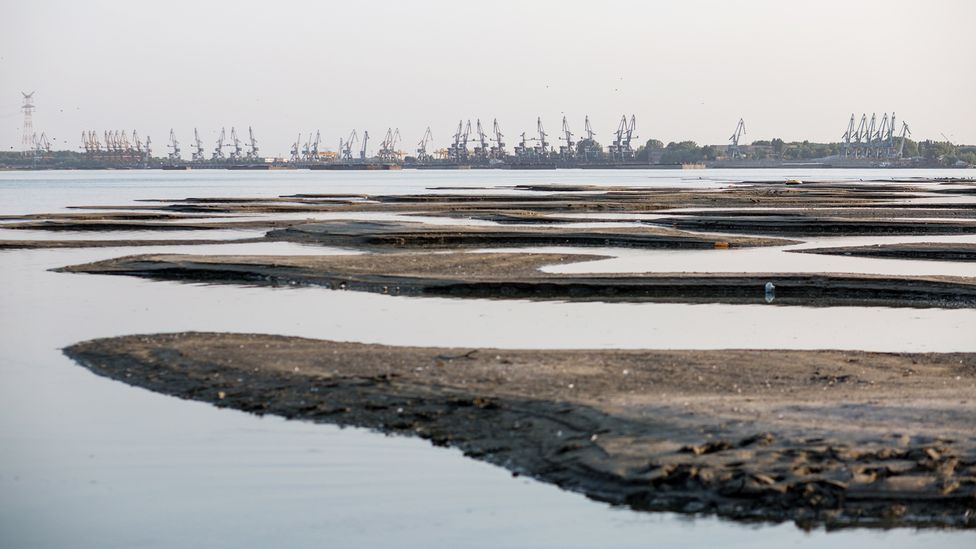
Drought is an even bigger problem. If water levels in rivers drop too low, it becomes challenging or impossible to draw in water for cooling. This is what happened in Hungary and Romania after the river Danube fell to historically low levels this summer—just 4 inches, well below the previous all-time low of 13 inches in 2018. In what can only be described as pure desperation, Hungary sank two barges and thousands of tons of rock and concrete blocks into the river to raise the level of water by mere centimeters.
There have been many such shutdowns in recent decades, going back to at least 2003. The heat wave that year led to multiple reactors being shut down in France, and the Cernavoda nuclear plant in Romania. Since then, heatwaves have forced temporary shutdowns of reactors or reductions in their power output across Europe in nine of the past 20 years. A 2021 study found climate-related outages at nuclear power plants increased dramatically between the 1990s and 2010s. Far from remaining exceptional phenomena, interruptions to plant availability and losses of production have become a constant.
Heat and drought aren’t the only challenges to securing enough water for cooling. The long list of nuclear facilities that have been forced to shut down after jellyfish clogged water intake pipes includes Scotland’s Torness nuclear plant in 2011 and 2021; South Korea’s Hanul nuclear plant in 2021; St. Lucie nuclear plant in Florida in 2011; Diablo Canyon nuclear plant in California in 2008, and many more. Following the shutdown of the Gravelines nuclear plant in France last year, operator EDF invested more than 1.5 million euros to surveil jellyfish populations in the North Sea. Despite continuous monitoring, the arrival of thousands of jellyfish led to the shutdown of three reactors at the Gravelines nuclear plant yet again this summer. Jellyfish swarms are expected to become more frequent as climate change intensifies, for multiple reasons.
If too little water is a problem for nuclear reactors, too much water—hurricanes and floods, for instance—is also a problem. When Hurricane Sandy hit the East Coast of the United States in 2012, the Salem-1 reactor in New Jersey had to be shut down “after debris blocked its cooling water intakes and caused four of its six circulating water pumps to stop working.” In 2009, heavy rainfall led to severe flooding in Rhône Valley resulting in the emergency shutdown of the Cruas nuclear plant in France as the cooling water intake of the plant was clogged by debris.
Severe weather events, including floods, winds, and wildfires, are a hazard to the safe operation of nuclear plants because such events can disable safety systems. In August 2020, a derecho in Iowa caused extensive damage to the Duane Arnold nuclear plant’s cooling towers, forcing its permanent shutdown ahead of its scheduled decommissioning. Natural disasters and extreme weather can also complicate the response to any accident or near-accident.
Climate change is already causing “more frequent and intense extreme events.” Unanticipated shutdowns will increase in frequency as extreme weather events driven by climate change become more common. One study found that “the average frequency of climate-induced disruptions” grew from “0.2 outage per reactor-year in the 1990s to 1.5 in the past decade” (i.e., 2010s). Going by the record so far, this decade will likely record a higher number of outages.
Can this trend be arrested by technology? Nuclear plants could, in principle, adopt other ways of removing the heat. For example, they could build cooling towers with recirculating water or use large electric fans to circulate air and carry away the heat. But these methods would lower the plant’s efficiency, and decrease the power output of reactors. And they would make nuclear power—already among the most expensive sources of electricity—more costly.
For nuclear power plants to be reliable, they need operating conditions to be stable. With climate change intensifying by the year, one cannot expect predictability, control, and stability.
Maintaining the promise of reliability in this changing environment is not only becoming increasingly difficult, but when operators and regulators attempt to keep this promise, it increases the risk of accidents due to more hazardous operating conditions and exacerbates the environmental footprint of nuclear reactors.
No comments yet.
1 This Month





PLEASE OPPOSE HR 8255 AND S.3639 – bills would accelerate satellite deployment, with no environmental review or safeguards – https://ncstd5li.quorum.us/campaign/169331/
To see nuclear-related stories in greater depth and intensity – go to https://nuclearinformation.wordpress.com
-
Archives
- October 2026 (58)
- September 2026 (339)
- August 2026 (330)
- July 2026 (355)
- June 2026 (287)
- May 2026 (306)
- April 2026 (356)
- March 2026 (251)
- February 2026 (267)
- January 2026 (308)
- December 2025 (358)
- November 2025 (359)
-
Categories
- 1
- 1 NUCLEAR ISSUES
- business and costs
- climate change
- culture and arts
- ENERGY
- environment
- health
- history
- indigenous issues
- Legal
- marketing of nuclear
- media
- opposition to nuclear
- PERSONAL STORIES
- politics
- politics international
- Religion and ethics
- safety
- secrets,lies and civil liberties
- spinbuster
- technology
- Uranium
- wastes
- weapons and war
- Women
- 2 WORLD
- ACTION
- AFRICA
- Atrocities
- AUSTRALIA
- Christina's notes
- Christina's themes
- culture and arts
- Events
- Fuk 2022
- Fuk 2023
- Fukushima 2017
- Fukushima 2018
- fukushima 2019
- Fukushima 2020
- Fukushima 2021
- general
- global warming
- Humour (God we need it)
- Nuclear
- RARE EARTHS
- Reference
- resources – print
- Resources -audiovicual
- Weekly Newsletter
- World
- World Nuclear
- YouTube
-
RSS
Entries RSS
Comments RSS


Leave a comment