Part II — No Blank Check for the War Machine
The Pentagon’s missile shortage will not be solved tomorrow. But its long-term answer is already being built beside our communities. Project Ranger approved without us—but the Pentagon, Castelion and New Mexico officials still must answer to the people.
Elaine Cimino, Aug 29, 2026
The Pentagon’s missile shortage will not be solved tomorrow. But its long-term answer is already being built beside our communities.
Part I asked what government kept from the public while it assembled the deal. Part II asks what the emerging federal weapons record now tells us about the scale and purpose of what was approved without us.
A national weapons emergency is being converted into a private investment opportunity—and New Mexico has been selected as one of the places where the consequences will be imposed.
The August 21 Defense One investigation, “There’s No Shortcut to Replenish U.S. Munitions Stockpiles,” describes a Pentagon racing to replace missiles being consumed in the Iran war while defense companies pitch a new generation of cheaper weapons. Buried inside that national story is a name New Mexico residents must recognize: Castelion.[1]
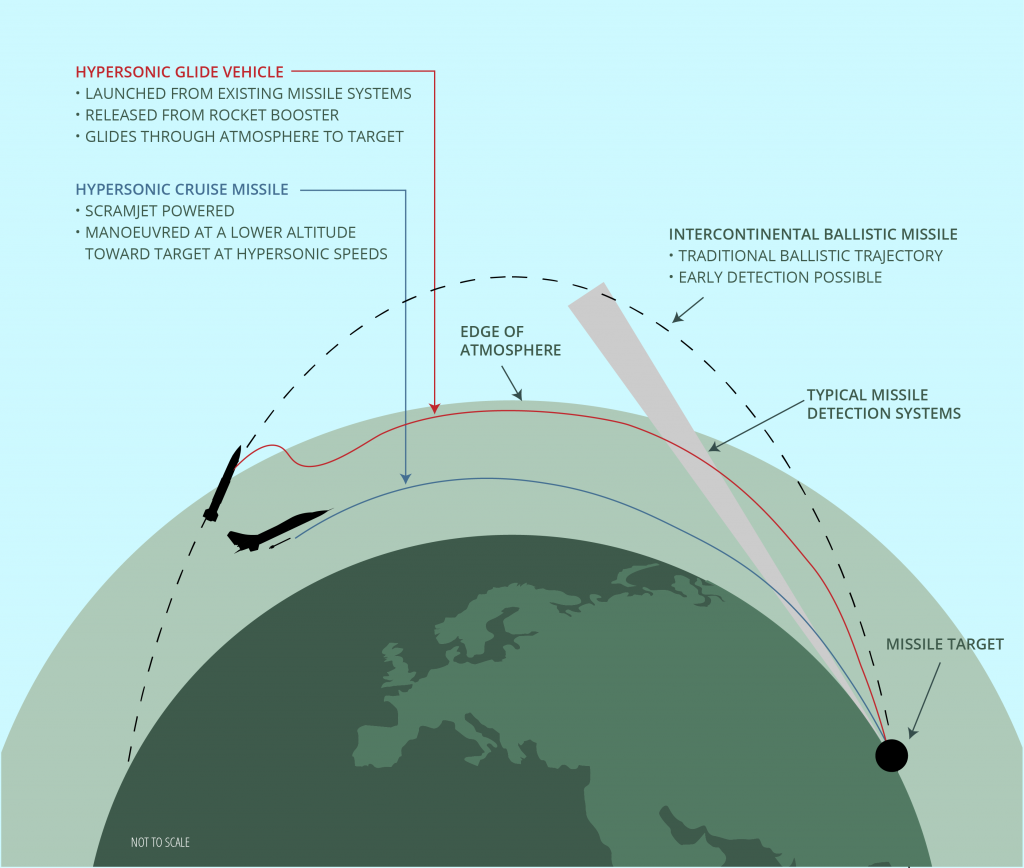
Castelion is constructing Project Ranger, the massive solid-rocket-motor and hypersonic-weapons manufacturing complex west of Rio Rancho in Sandoval County. Its Blackbeard missile is being offered as something the Pentagon has long wanted but struggled to obtain: a hypersonic strike weapon inexpensive enough to manufacture not by the dozen, but by the hundreds and eventually the thousands.
That mention changes the frame around Project Ranger. This is not simply another economic-development project, an isolated factory or a collection of buildings on remote State Trust Land. It is being positioned inside a long-term restructuring of the American war industry.
The federal government wants cheaper missiles, more suppliers, faster testing and industrial-scale production. Castelion wants to become one of the companies that supplies them. Project Ranger is where much of that ambition is supposed to become physical reality.
And while the Pentagon, investors and public officials discuss speed, scale and deterrence, the people living beside the factory are still waiting for something far more basic: full disclosure of what will be manufactured, burned, tested, stored, transported and released near their homes and water.
Blackbeard will not solve the immediate Iran stockpile crisis
The first fact must be stated precisely. Blackbeard is not a replacement for the Patriot and Terminal High Altitude Area Defense interceptors being depleted in the Iran war.
Patriot and THAAD missiles are defensive weapons intended to destroy incoming missiles or aircraft. Blackbeard is an offensive, long-range hypersonic strike weapon intended to hit targets on land or at sea. Producing one does not replenish the other.
That is why the Defense One article warns that the Pentagon’s low-cost weapons campaign will not quickly repair the immediate stockpile crisis. New missiles must still be developed, tested, evaluated, certified, placed under contract and manufactured. That takes years, not weeks. Experts quoted in the article describe a continuing window of vulnerability while the military attempts to rebuild inventories depleted not only by Iran, but by years of global commitments.[1]
Blackbeard is therefore not the emergency cure being delivered to today’s battlefield. It is part of the arsenal the Pentagon wants for the wars it is preparing to fight in 2027, 2028, 2029 and beyond—particularly a possible conflict with China.
That distinction does not make Project Ranger less consequential. It makes it more so. A temporary emergency might end. A permanent industrial strategy can expand for decades.
The Pentagon is building a high-low arsenal
The larger strategy is a “high-low mix”: retain a smaller inventory of extraordinarily expensive weapons while acquiring far greater numbers of cheaper missiles for missions that do not require the most sophisticated system available.
Castelion is marketing Blackbeard as the hypersonic expression of that strategy. It is advertised as a weapon capable of exceeding Mach 5 but designed from the beginning for lower-cost, industrial-rate production.
Reuters reported in April that Navy planning documents contemplated the purchase of 4,500 air-launched hypersonic missiles for F/A-18 aircraft over five years, at an average projected price of about $384,000 each. The same report explained that a $105 million Navy award would fund Blackbeard’s integration onto the F/A-18, including flight tests, safety work and airworthiness certification.[2]
That is not the same as a funded order for 4,500 Blackbeards. But it shows what the Pentagon is testing: whether a weapon once treated as an exotic, multimillion-dollar rarity can become a routinely deployed instrument of war.
If that experiment succeeds, Project Ranger will not be a boutique research site. It will be an arsenal factory………………………………………………………………………………………………………………………………………………………………………………………… https://elainecimino652909.substack.com/p/part-ii-no-blank-check-for-the-war?utm_source=post-email-title&publication_id=3194544&post_id=213199756&utm_campaign=email-post-title&isFreemail=false&r=281p2&triedRedirect=true&utm_medium=email
No comments yet.
1 This Month
26 September – International Day for the Total Elimination of Nuclear Weapons





PLEASE OPPOSE HR 8255 AND S.3639 – bills would accelerate satellite deployment, with no environmental review or safeguards – https://ncstd5li.quorum.us/campaign/169331/
To see nuclear-related stories in greater depth and intensity – go to https://nuclearinformation.wordpress.com
-
Archives
- September 2026 (291)
- August 2026 (330)
- July 2026 (355)
- June 2026 (287)
- May 2026 (306)
- April 2026 (356)
- March 2026 (251)
- February 2026 (267)
- January 2026 (308)
- December 2025 (358)
- November 2025 (359)
- October 2025 (375)
-
Categories
- 1
- 1 NUCLEAR ISSUES
- business and costs
- climate change
- culture and arts
- ENERGY
- environment
- health
- history
- indigenous issues
- Legal
- marketing of nuclear
- media
- opposition to nuclear
- PERSONAL STORIES
- politics
- politics international
- Religion and ethics
- safety
- secrets,lies and civil liberties
- spinbuster
- technology
- Uranium
- wastes
- weapons and war
- Women
- 2 WORLD
- ACTION
- AFRICA
- Atrocities
- AUSTRALIA
- Christina's notes
- Christina's themes
- culture and arts
- Events
- Fuk 2022
- Fuk 2023
- Fukushima 2017
- Fukushima 2018
- fukushima 2019
- Fukushima 2020
- Fukushima 2021
- general
- global warming
- Humour (God we need it)
- Nuclear
- RARE EARTHS
- Reference
- resources – print
- Resources -audiovicual
- Weekly Newsletter
- World
- World Nuclear
- YouTube
-
RSS
Entries RSS
Comments RSS


Leave a comment