200-MWe marine microreactors could power ports, desalination and electro-fuel plants.
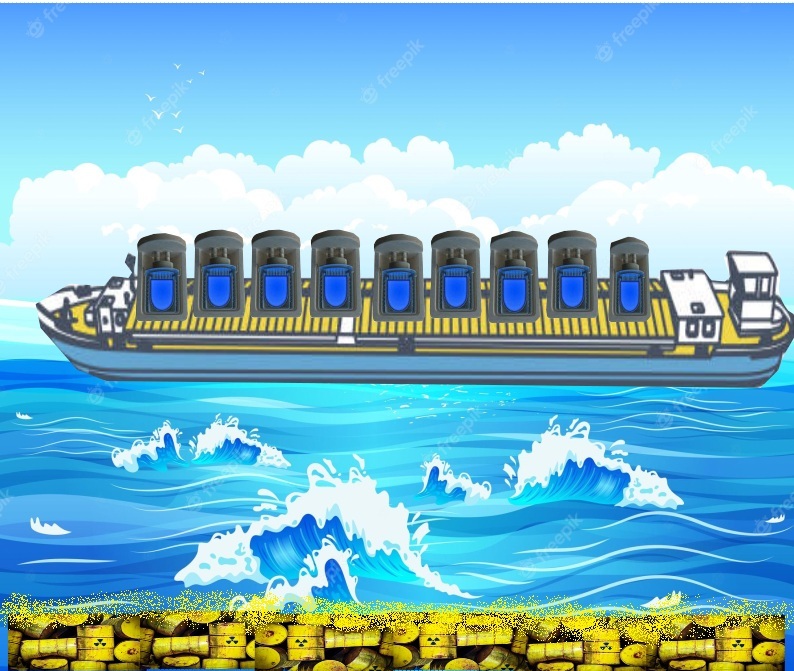
The nuclear barge could supply power to ports, isolated regions and coastal industries. (Ed – they don’t mention the wastes)
By Atharva Gosavi, Aug 29, 2026, https://interestingengineering.com/energy/200-mwe-marine-reactors-could-power-ports-desalination-and-electro-fuel-plants
A consortium led by advanced reactor developer newcleo has begun studying a floating nuclear power plant designed to supply low-carbon electricity to ports, coastal industrial hubs and isolated regions.
Named n-Floating, the project will examine a non-self-propelled barge housing multiple lead-cooled LFR-AS-200 reactors, each capable of producing 200 MWe.
The initiative has received nearly €1 million through a Bpifrance-managed program supporting the decarbonization of the maritime sector.
Work is underway and will continue for approximately 18 months, with potential industrial deployment targeted by 2036.
Multiple reactors aboard one floating unit
newcleo is working with classification society Bureau Veritas Marine & Offshore and French engineering company ABMI Groupe.
Together, the three companies will assess whether advanced nuclear reactors can be safely and competitively integrated into floating infrastructure.
The initial phase will focus on conceptual studies for the nuclear barge. Researchers will evaluate possible applications, including electricity supply for ports, associated industrial facilities, coastal areas and regions that may face land, grid or infrastructure constraints.
The barge could also support energy-intensive processes such as desalination and the production of low-carbon fuels.
However, the project remains at the study stage, and its technical feasibility, regulatory requirements and commercial prospects still need to be evaluated.
“Maritime deployment of advanced reactors opens a broader and still largely unexplored market for nuclear energy,” said Stefano Buono, CEO of newcleo.
“Floating nuclear offers an opportunity to bring reliable, low-carbon power to applications at sea and in coastal locations,” he added.
Borrowing experience from offshore energy
The concept will draw on established methods used by the maritime, oil and gas industries to design, construct and operate floating facilities for energy production, storage, liquefaction and regasification.
Building and integrating major plant systems inside a controlled shipyard environment could support greater standardization and repeatable construction.
Once completed, the unit could then be transported to its intended operating location rather than being built entirely at the deployment site. Bureau Veritas will contribute expertise in classification, certification and risk assessment.
Its work will help the consortium examine the safety, regulatory and technical questions created by combining a nuclear installation with a floating maritime platform.
ABMI Groupe will contribute engineering and project-delivery experience from complex maritime and nuclear programs.
The consortium will also establish a development roadmap covering the steps required to move from the present conceptual phase toward possible construction and deployment.
Safety and licensing remain central
Floating reactors would need to comply with both nuclear and maritime safety requirements. Licensing, physical security, operations and regulatory oversight will therefore form important parts of any future development program.
The study begins as international discussions around maritime nuclear technology gather pace.
The International Atomic Energy Agency launched its ATLAS initiative on August 26 to encourage dialogue and improve technical understanding of innovative nuclear applications and their safety and regulatory implications.
The consortium ultimately aims to create a standardized floating energy system that can be deployed at scale. Under its current roadmap, the nuclear barge could progress toward industrial deployment by 2036.
No comments yet.
1 This Month
15 October. Joint Appeal for Nuclear Abolition Day -presentation to the UN on October 15 will be live on UNWebTV
Endorse the Nuclear Abolition Day Appeal
23-25 October – on Zoom – World BEYOND War’s annual global conference

To see nuclear-related stories in greater depth and intensity – go to https://nuclearinformation.wordpress.com
-
Archives
- October 2026 (139)
- September 2026 (339)
- August 2026 (330)
- July 2026 (355)
- June 2026 (287)
- May 2026 (306)
- April 2026 (356)
- March 2026 (251)
- February 2026 (267)
- January 2026 (308)
- December 2025 (358)
- November 2025 (359)
-
Categories
- 1
- 1 NUCLEAR ISSUES
- business and costs
- climate change
- culture and arts
- ENERGY
- environment
- health
- history
- indigenous issues
- Legal
- marketing of nuclear
- media
- opposition to nuclear
- PERSONAL STORIES
- politics
- politics international
- Religion and ethics
- safety
- secrets,lies and civil liberties
- spinbuster
- technology
- Uranium
- wastes
- weapons and war
- Women
- 2 WORLD
- ACTION
- AFRICA
- Atrocities
- AUSTRALIA
- Christina's notes
- Christina's themes
- culture and arts
- Events
- Fuk 2022
- Fuk 2023
- Fukushima 2017
- Fukushima 2018
- fukushima 2019
- Fukushima 2020
- Fukushima 2021
- general
- global warming
- Humour (God we need it)
- Nuclear
- RARE EARTHS
- Reference
- resources – print
- Resources -audiovicual
- Weekly Newsletter
- World
- World Nuclear
- YouTube
-
RSS
Entries RSS
Comments RSS


Leave a Reply