Why Britain and Europe MUST talk to Russia, and why no one wants to make the first move
In conversation with Mark Galeotti
Ian Proud, Aug 21, 2026. https://thepeacemonger.substack.com/p/why-britain-and-europe-must-talk?utm_source=post-email-title&publication_id=3221990&post_id=212103666&utm_campaign=email-post-title&isFreemail=true&r=1ise1&triedRedirect=true&utm_medium=email
After four and a half years of war in Ukraine, European leaders are still largely stuck repeating the same empty mantras: “as long as it takes,” “no talks until Russia withdraws,” “dialogue is a reward for good behaviour.”
In my latest conversation on The Peacemonger channel, leading Russia expert Mark Galeotti explains why this approach has become deeply self-harming — and why someone, somewhere, is going to have to break the logjam.
Galeotti, honorary professor at UCL, director of Mayak Intelligence and host of the widely followed podcast In Moscow’s Shadows, is characteristically clear-eyed.
The war is no longer delivering strategic benefits for Europe (I’d argue that it has been a disaster from the start).
Russia is slowly advancing in the Donbas.
Ukraine is paying a catastrophic human and economic price.
Europe is bankrolling the conflict while outsourcing its diplomacy to Washington and preparing to phase out the last of its Russian gas imports — a move with predictably severe economic consequences.
Yet no one wants to be the first to say out loud what many now admit privately: that a negotiated end is necessary, and that talking to Russia is not a concession but a necessity.
Galeotti is particularly interesting on Britain’s potential role.
Outside the European Union and still regarded by Moscow as both a serious antagonist and a serious player, the UK has a rare opportunity to act as a pragmatic interlocutor.
The “only Nixon could go to China” logic applies.
Under a possible Burnham government more focused on domestic priorities, that opportunity may be greater than under previous administrations — but it will still require political courage.
The conversation ranges widely beyond the battlefield.
We discuss the urgent need to restore military-to-military contacts, law-enforcement cooperation and academic exchanges — the practical, professional channels that have been allowed to atrophy.
Galeotti is scathing about the hollowing-out of British diplomatic and academic expertise on Russia, and the long-term cost of cutting off the next generation of specialists from time on the ground.
He is equally clear-eyed about the Russia–China relationship: transactional, competitive and far more fragile than the “friendship without limits” rhetoric suggests.
Western policymakers who talk of a seamless “Dragon Bear” alliance are, in his view, peddling dangerous nonsense.
When the war eventually ends — and Galeotti, like me, does not expect it this year — European politicians will face the awkward task of polishing a strategic failure as success, as I have long said.
The longer the fighting continues, the more expensive and politically toxic the post-war period will become.
This is a sober, realistic conversation free of both Russophobia and wishful thinking.
If you want to understand why Europe is stuck, and what it would actually take to start moving toward a settlement, I strongly recommend watching the full discussion which you can find here.
Bulgaria’s Kozloduy nuclear plant cuts output because of Danube drought
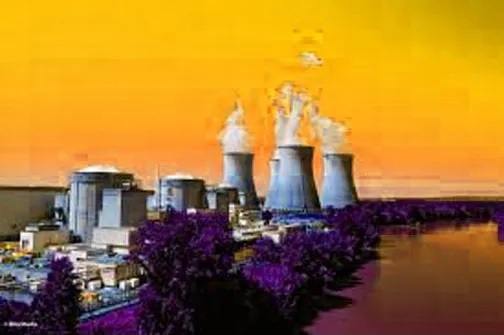
First time in plant’s 52-year history that extreme weather conditions forced reduce output
Aysu Biçer, 20 August 2026,
https://www.aa.com.tr/en/europe/bulgarias-kozloduy-nuclear-plant-cuts-output-because-of-danube-drought/4033319
Bulgaria’s Kozloduy nuclear power plant will reduce output from one of its reactors as the Danube River level continues to fall amid an unprecedented drought, Bulgarian News Agency BTA reported Thursday.
The energy ministry said it would “preventively lower the output of Kozloduy’s Unit 5 by some 120 MW on August 21” to ensure the plant’s safe operation.
Unit 5 has a generating capacity of just over 1,000 MW.
It is the first time in the plant’s 52-year history that extreme weather conditions have forced it to reduce output, the report underlined.
The ministry said the Danube was forecast to continue receding in the Bulgarian section of the river.
Kozloduy uses Danube water to cool steam in condensers in the non-nuclear part of the plant. The river is not used to cool nuclear reactors.
Water is supplied through the plant’s shore-based pumping station, which was designed to maintain the necessary supply even when river levels are low.
A crisis management working group was established at Kozloduy in early June as water levels began to fall and forecasts indicated prolonged drought across western and central Europe.
The plant has continued operating normally and supporting the national and regional energy system, said the ministry, while several nuclear plants along the Danube have reduced output or shut down.
Hungary’s Paks nuclear plant reduced production to critically low levels earlier this month as the Danube reached record lows.
In Romania, Unit 1 of the Cernavoda nuclear plant was shut down at the end of July, while a nationwide state of heightened alert was declared in the energy sector for August.
South Korea helps Egypt expand Russian-built nuclear plant
South Korea’s growing role in Egypt’s Russian-built El Dabaa nuclear plant has helped shield the project from sanctions and enabled expansion
The New Arab Staff, 22 August, 2026
South Korea’s growing role in Egypt’s Russian-built El Dabaa nuclear power plant has helped Cairo shield the project from Western sanctions and paved the way for a major expansion of the site, according to senior Egyptian energy officials.
Electricity and Renewable Energy Minister Mahmoud Esmat said in televised remarks that Egypt was studying the addition of at least two more nuclear units at El Dabaa, with the possibility of eventually expanding the complex from four reactors to six or even eight.
Senior sources at Egypt’s Ministry of Electricity and Energy told The New Arab that the proposed expansion reflected “a state of confidence” surrounding the project following South Korea’s entry as a partner alongside Russia’s Rosatom.
They said South Korean involvement had enabled Egypt to gain access to Western-linked technology while limiting the exposure of companies working on El Dabaa to US and European sanctions imposed on Russian firms following Moscow’s invasion of Ukraine in 2022.
According to the sources, the South Korean government is expected to provide financial and technical support for future expansions of El Dabaa, alongside its existing role in completing control systems and turbine-related work.
The arrangement has allowed Russia to retain control of the project’s nuclear core while South Korean companies handle major elements of its conventional power-generation infrastructure.
The sources said South Korea had taken on work that US company General Electric did not proceed with following the outbreak of the Ukraine war.
Egypt currently plans four Russian-designed VVER-1200 reactors at El Dabaa, with a total capacity of 4.8 gigawatts.
The proposed expansion could eventually increase capacity to 9.6 gigawatts by 2040, according to the sources.
Nuclear energy experts said Esmat’s remarks “open the door to transforming El Dabaa from a four-unit plant into a larger nuclear complex”.
No cost estimate, reactor models or timetable have yet been announced for the additional units.
However, the experts said Cairo increasingly views El Dabaa as “the nucleus of a long-term nuclear programme, rather than a standalone project that ends with the operation of four reactors”.
South Korea’s involvement in the project expanded rapidly after Russia’s invasion of Ukraine complicated Western-linked supply chains.
Experts at Egypt’s Nuclear Energy Authority told The New Arab that Russian nuclear energy company Rosatom accelerated moves to bring Korea Hydro & Nuclear Power into El Dabaa as the key supplier for the turbine island and associated control systems for the four Russian units.
Korea Hydro & Nuclear Power signed a $2.25 billion contract with Russia’s Atomstroyexport in Cairo on 25 August 2022, months after the outbreak of the war and the introduction of Western sanctions…………………………………………………
https://www.newarab.com/news/south-korea-helps-egypt-expand-russian-built-nuclear-plant
Floating 10 MW nuclear reactor proposed for California.

By Efosa Udinmwen, 22 Aug 26, https://www.techradar.com/pro/floating-10-mw-nuclear-reactor-proposed-for-california-barge-mounted-smr-aims-to-power-15-000-homes
The Port of Long Beach is exploring small modular reactors that could eventually supply electricity for port operations and ships.
Bluecore Energy, a startup building compact nuclear reactors meant to operate from floating barges, is leading the proposal.
This marks a potential return of nuclear power development in California after nearly five decades under state restrictions.
A startup’s barge-based reactor plan
Bluecore has leased space at Berth 48 within the Port of Long Beach, where it intends to develop and test its floating reactor system.
The company’s initial system is rated at 10 MWe, a capacity the startup says can scale through pairing multiple units together, an approach which suits continuous port operations partly because individual reactors are designed to run for years on a single fueling cycle.
Iranian hackers shut down UK power plant
Telegraph 22nd Aug 2026
Unprecedented cyber attack believed to be most successful of its kind
Iran shut down a British power plant for four days in an unprecedented cyber attack, The Telegraph can disclose.
It is thought to be the first time that hackers affiliated to the Iranian regime have succeeded in closing down such a facility in the UK, and is believed to be the most successful cyber attack of its kind.
The Telegraph understands that the incident took place at the same time as a series of attacks on US water infrastructure last month, which affected 12 states and caused concern in the White House.
Iran shut down a British power plant for four days in an unprecedented cyber attack, The Telegraph can disclose.
It is thought to be the first time that hackers affiliated to the Iranian regime have succeeded in closing down such a facility in the UK, and is believed to be the most successful cyber attack of its kind.
The Telegraph understands that the incident took place at the same time as a series of attacks on US water infrastructure last month, which affected 12 states and caused concern in the White House.
Advertisement
British officials refused to be drawn on which power plant had been affected, citing security concerns, but it is understood that the facility was disabled for four days while staff fought to bring it back online.
It is understood that the plant affected was relatively small and that the outage had no impact on the UK’s wider power supply or energy generation.
In response, the Government briefed the chief executives of power companies and wrote to businesses with advice, direction and next steps……………………………………………………………………………………………………………… https://www.telegraph.co.uk/news/2026/08/22/iranian-hackers-shut-down-uk-power-plant/
‘Can we justify £15bn on nuclear weapons?’

By Andrea Dow, Rothesay1, 20 Aug 2026,
https://argyllbute24.co.uk/can-we-justify-15bn-on-nuclear-weapons/
EVEN if you believe in the logic of Mutually Assured Destruction (MAD). Even if you think a nuclear base on the Clyde is a deterrent rather than a likely potential target.
Even if the phrase “increased readiness, availability and lethality” gives you a warm fuzzy glow rather than prostrating you with terror – does £15 billion not seem a lot to spend on something supposedly designed to never be used?
Aside from the repeated leaks of tritium and the inevitable cover-ups by both the MOD and Scottish Environmental Protection Agency (military bases are exempt from civilian pollution controls), the watchdog organisation, the Infrastructure and Projects Authority, published a damning report stating the project is in doubt, with major risks or issues apparent in a number of key areas, having “major issues with project definition, schedule, budget, quality and/or benefits delivery which at this stage do not appear to be manageable or resolvable”.
Faslane is the home of the nation’s nuclear deterrent and the new generation of hunter-killer submarines. Each submarine carries up to 16 missiles. Each missile carries up to eight warheads. Each warhead has a yield of 100 kilotons of TNT, six times greater than the bomb that destroyed Hiroshima – is it just me, or does this make the case for increased lethality seem a little shaky?
To quote the independent organisation Scientists for Global Responsibility, “Nuclear weapons are the epitome of an unsustainable security strategy and create enormous risks for humanity and the global environment.” The case for abandoning this grandiose project and committing the UK to a future without weapons of mass destruction is becoming stronger by the day.
Maybe I’m just a pessimist, but as a child the regular sight of nuclear subs patrolling the Clyde during the Cold War did not make me feel safe.
They were the stuff of nightmares – nightmares I’d hoped we were beginning to collectively waken from. Apparently not so. And despite the clear and obvious risks to all, some few will continue to benefit richly from this folly (just as they will from the proposed data centre at Ardyne). Just another example of what author Kapka Kasabova calls the “genocidal, ecocidal greed” of the global industrial-military complex whose appetites are incompatible with the survival of a human Earth.
Frightened anyone? Or is it just me?
Drought, heat – and jellyfish: Climate change is causing problems for the French nuclear power plant fleet
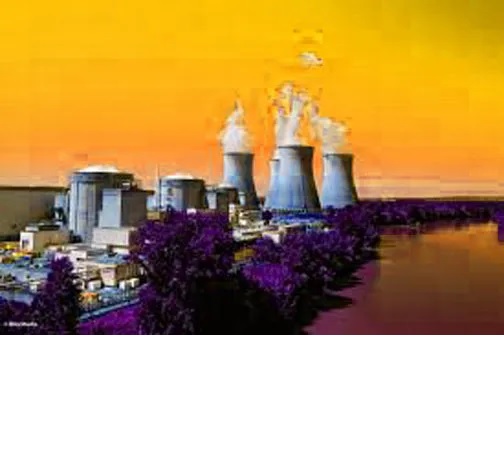
13 nuclear reactors have had to shut down. Solar energy has so far compensated for the loss – at least during the day.
Heat waves and drought have led to the shutdown of several French
nuclear reactors, while strong solar power generation has helped stabilize
the grid. As photovoltaic capacity declines after sunset, battery storage
could help meet the high evening demand and reduce dependence on
electricity generation from gas-fired power plants.
The combined effects of
heat wave and drought have led to the shutdown of 13 French nuclear
reactors by mid-August; this corresponds to 20.4 percent of the country’s
total nuclear power capacity. This is the highest level since 2015, reports
the French news agency AFP. The state-owned energy supplier EDF justifies
the shutdowns with “environmental restrictions” and “external environmental
factors”.
Focus Online 19th Aug 2026, https://www.focus.de/earth/energie/minus-20-prozent-frankreich-akws-fallen-reihenweise-aus-solar-springt-ein_f45e9bcc-c370-4ea0-8759-c097efb4bcb2.html
Golden Dome Secrecy Poses Challenge for Estimating Costs.

The Pentagon has said it expects the program to cost $185 billion to build over the next 10 years, but think tank experts and government analysis have argued the bill for what Trump’s executive order articulated will likely be much higher. One of the first outside estimates, released last year by the American Enterprise Institute, projected costs ranging anywhere from $250 billion to $2.4 trillion. In May, the Congressional Budget Office pegged the program’s cost at $1.2 trillion.
COMMENT, by Alice Slater. Don’t forget that Russia and China have been urging us for years to negotiate a treaty to prohibit weapons and war in space which the US and our Peace Movement generally ignores! Most recently, they issued a Joint Proposal on the 80th Anniversary of WWII last summer for more global cooperation., criticizing the Golden Dome and urging that we negotiate their draft treaty to ban weapons and war in space, pledging never to be the first to put weapons or war in space!!! Why aren’t we all urging the US government and its allies in crime to take up this proposal and save one and a half trillion dollars on the Golden Dumb!! See Russian and Chinese proposal here: http://en.kremlin.ru/supplement/6310
Aug. 19, 2026 | By Courtney Albon, https://www.airandspaceforces.com/golden-dome-secrecy-challenge-cost-estimates/
While Pentagon officials have revealed some details about the architecture behind the Golden Dome missile defense project, crafting an independent cost estimate for a largely classified program remains a challenge, experts said Aug. 19.
President Donald Trump issued an executive order in January 2025 directing the Pentagon to build a multilayered missile defense shield to protect the U.S. from traditional and advanced missile threats, to include hypersonic weapons. Defense Department officials have said the system will consist of command-and-control nodes, satellite sensors, and ground-and- space-based interceptors, but the finer details of that architecture—including numbers of satellites and interceptors—remain shrouded in secrecy.
The Pentagon has said it expects the program to cost $185 billion to build over the next 10 years, but think tank experts and government analysis have argued the bill for what Trump’s executive order articulated will likely be much higher. One of the first outside estimates, released last year by the American Enterprise Institute, projected costs ranging anywhere from $250 billion to $2.4 trillion. In May, the Congressional Budget Office pegged the program’s cost at $1.2 trillion.
These wide-ranging projections point to the lack of a common, unclassified understanding of what systems and technology will underpin the program, which experts said is the fundamental challenge of estimating Golden Dome’s cost.
Speaking at a Brookings Institute event, CBO’s Director of National Security Analysis David Mosher said the organization was tasked by lawmakers to put a price tag on the scope laid out in Trump’s initial executive order rather than try to estimate what the Golden Dome program office is actually building—an important distinction.
“The Golden Dome they’re building is perhaps different than the Golden Dome in the executive order,” Mosher said. “We couldn’t have costed what they’re building because nobody knows what they’re building yet.”
With the executive order as the baseline, the report constructed an architecture with the elements included in Trump’s directive and then sized it “to protect what we thought was a sort of plausible, relatively large attack from North Korea, or a modest attack from Russia or China,” Mosher said. The resulting notional architecture features four interceptor layers designed to target multiple missile types and to operate either independently or in concert with an associated command-and-control network:
- A space-based constellation of 7,800 satellites designed to take out up to 10 intercontinental ballistic missiles launched near simultaneously as well as hypersonic glide vehicle threats
- An upper wide-area surface layer comprised of three Ground-Based Midcourse Defense sites, each with 60 Next-Generation Interceptors or Ground-Based Interceptors focused on engaging ICBM threats
- A lower wide-area surface layer with four U.S.-based sites, each equipped with 48 SM-3 Block IIA interceptors to defeat ICBMs or hypersonic glide vehicles
- A “regional sector” layer with 35 interceptor and radar sites loaded with THAAD, SM-6 Block IB, and Patriot interceptors that can target ICBMs, glide vehicles, and cruise missiles
The space-based interceptor constellation would be the most expensive element of this architecture by far, costing $743 billion over 20 years, or 60 percent of the total cost. The report, which calls its architecture a “middle ground” between more limited and high-end alternatives, estimates each SBI-equipped satellite would cost $22 million and have a five-year service life.
CBO’s report also includes the cost of a satellite sensing layer—which it projects would require about $90 billion to develop, field, and maintain—as well as the battle management and communication systems needed to coordinate the broader architecture. The sensing layer would include satellites such as the Hypersonic and Ballistic Tracking Space Sensor, which the Space Development Agency is fielding as part of its low-Earth orbit missile-tracking constellation, and space-based air moving target indication satellites, which the Space Force is currently developing.
Golden Dome Director Gen. Michael Guetlein has pushed back on CBO’s estimates, saying they’re built on inaccurate assumptions about what his team is actually building. According to Guetlein, the report’s assumptions are based on technology envisioned in the early 2000s “for a different fight”—one focused on point defense, or defense of a limited area, rather than the regional, homeland defense mission that underpins Golden Dome.
“That is not what we need for the homeland,” he said in May. “In a regional defense, there’s a different architecture. And you can’t just take what we’ve done in the past and multiply it forward or you’re going to get large numbers like CBO got.”
Mosher acknowledged the report is detached from the program office’s architecture, pointing out multiple times that CBO and the general public do not have access to those details. He said CBO has asked for briefings but hasn’t been able to meet with program officials.
“I know nothing about what they’re actually building except what I read in publications,” Mosher said.
According to Guetlein, a key difference between the architecture envisioned in the CBO report and what the Pentagon is pursuing through Golden Dome is the use of “next-generation” technology like AI, advanced computing, and directed energy.
Mosher said that for the most part, the report used existing systems as a baseline because they’re a known quantity. He said it’s true that harnessing advanced technology could lower costs over time, especially for some space-based elements of the architecture. However, other technologies like high-energy lasers in space aren’t yet ready for prime time, which means it’s likely not a near-term differentiator.
“We tend to estimate what we see,” he said. “New technologies might provide the opportunity for that, I think we mentioned that as a possibility, but it’s not what you would have in the near term, which is what they’re trying to do.”
Ukrainian activist found guilty of high treason in political “show trial”
By William Briggs | 22 August 2026, https://independentaustralia.net/life/life-display/ukrainian-activist-found-guilty-of-high-treason-in-political-show-trial,21460
The fact that the Western world fawns on Zelensky and describes him as a champion of democracy and freedom must be challenged, writes Dr William Briggs.
ON THE 10TH AUGUST, a Ukrainian court sentenced a young socialist to 15 years for ‘high treason.’
He has already been held for two years. His legal team are appealing the sentence and is seeking support from around the world to both protest the sentence and to raise the issues of what was a “show trial.”
Bogdan Syrotiuk was found guilty of treason and yet the evidence presented in this “trial” was clearly political in nature and in violation of the European Convention on Human Rights.
His “crime” is that he resolutely stands against the war. The Ukrainian prosecutors manipulated this to mean that he was supporting the Russian invasion of Ukraine. This was shown to be a false accusation.
His was not a call for this or that country to prevail, but for a unity of the working people across national boundaries. His position was a principled Marxist position, and for that he is to be locked away for 15 years.
The case against him could not show any act of treason, espionage, sabotage or collaboration with any military force. The Ukrainian state’s case was based on what he had read and what he had written. In the end, the case was built around six articles published on the World Socialist Website.
The “subversive” nature of these six articles included what was described as a ‘non-recognition’ of the legitimately elected government. The prosecution also deemed that he had ‘compared’ the present regime with Nazis and fascists. He was also being charged with presenting ‘negative’ assessments of the armed forces and that he had been putting forward a ‘reinterpretation’ of national heroes and historical figures.
His defence argued that in reality there is no “legitimately elected” leadership. Ukrainian President Volodymyr Zelensky’s term in office ended in May 2024. Elections have been indefinitely suspended and all left-wing parties and remotely progressive organisations have been effectively banned. Martial Law exists and every 90 days this Martial Law period is further extended.
How you can be accused of failing to recognise ‘democratic processes’ when they have been shut down is difficult to ascertain, but the sleight of hand in the Ukrainian justice system managed to do just that.
The issue of comparing the regime with Nazism and fascism was intrinsically linked with the charge of ‘reinterpreting’ the roles of national heroes. This is where the whole trial and the falsification of history that the regime has been engaging in assume a dangerous character and call into question the apparently blind support being given to Zelensky and his government from so many quarters across the world.
The national heroes that Bogdan Syrotiuk has ‘reinterpreted’ specifically relate to the leaders of the Organisation of Ukrainian Nationalists and the Waffen-SS Galicia Division. These were Nazi collaborators and war criminals. Among the very worst of these criminals was Stepan Bandera. The Ukrainian state officially observes the birthday of Stepan Bandera on January 1 as an annual day of recognition and commemoration.
None of that is in any way a secret affair. On the contrary, the Ukrainian government seems happy with such a past. What it is less happy about is a socialist anti-war activist reminding the world of that dark past and equally dark present.
It was only a few months ago that the Polish President Karol Nawrocki revoked Zelensky’s Order of the White Eagle. This is the highest award that Poland can bestow. Zelensky had given a serving Ukrainian army unit an honorary title that incorporated the name of the WWII fascist group, the Ukrainian Insurgent Army (UPA). The UPA was responsible for the massacres of 100,000 ethnic Poles.
Then, of course, there is the infamous Azov Brigade. It was, before the war, a neo-Nazi group and was taken into the Ukrainian army. The existence of the fascist Azov Brigade, which has received such “honour” in Ukraine simply attests to the truth that the young Marxist spoke.
At the time of his arrest, in 2024, it was claimed that he was acting as an agent of the Russian government. The absurdity of that claim was there for all to see. The articles he wrote and which formed the basis of the treason case repeatedly denounced the Russian invasion.
He clearly stated his opposition to the Putin regime. What he was saying and this needs to be remembered, was that he was seeking a cross-border opposition to both regimes and against the war, as it is the working people of both countries who suffer the most.
The Ukrainian court, referred to ‘socially dangerous consequences’ of the positions that the defendant held. From the perspective of the Ukrainian state this might make sense, but to call for an end to a war that was and is clearly not serving the interests of the people of either country is hardly a ‘dangerous’ concept.
Yuri Irkhin, a leading Ukrainian criminologist, in a report, found:
‘No statements, phrases, sentences, or word combinations that have signs of propaganda aimed at supporting the armed aggression of the Russian Federation.’
In response, the court ordered a new examination of the ‘evidence’ but still found no calls for the overthrow of the state, the seizure of power, subversive acts or the alteration of Ukraine’s borders.
The trial and actions of the Ukrainian state led to an immediate banning of the WSWS website in Ukraine. Syrotiuk’s political documents and materials were destroyed. To add further insult to the process and to show how venal that process has become, he was ordered to pay more than 178,000 hryvnia or $5,600 to cover the cost of the forensic ‘examinations’ used to convict him.
His is not the only case before the courts. Thousands of “criminal” cases have been opened under ‘treason and collaboration statutes.’
The UN Human Rights Office has reported that it ‘continues to document cases of torture and ill-treatment’ of detainees held by the Ukrainian state. While this has been documented, little coverage is given in our media and virtually none in Syrotiuk’s case.
But then, there is a war in progress and sides have been taken. What passes for media coverage is painted, more and more with the brush of propaganda.
The tens of thousands of deserters who now face gaol sentences for opposing the war receive scant attention.
A 2025 Gallup Poll showed that 69 per cent of Ukrainians support a negotiated end to the war. In 2022, the numbers wanting to fight until victory were in the high sixty per cent range. Truth, however, is the first casualty of war.
The fact that the Western world fawns on Zelensky and describes him as a champion of democracy and freedom must be challenged. The sentence of Bogdan Syrotiuk is a gross injustice.
Supporters of Syrotiuk are still campaigning and an appeal is underway.
The vast impacts of a dry Danube
By Victoria Heath, Geographical 20th Aug 2026
Emergency engineering works are underway in the Danube in Hungary to prevent critically low river levels from shutting down the nation’s key nuclear power plant, which provides Hungary with more than one-third of its electricity.
Due to extreme heat, the Danube has reached a record low this month – falling within 8 centimetres of its previous record low – impacting power production at the Paks nuclear plant. Typically, nuclear power plants are built near rivers and coastlines to use water to cool the reactors.
Two 80-metre (260-foot) barges in the river will be sunk by Hungarian authorities to raise water levels so that Paks can continue its normal operations. Currently, it is operating at just 25 per cent of its capacity.
The water is so low in the Danube that around twenty German World War II shipwrecks still containing live ordnance – sunk around eighty years ago – have surfaced on the riverbed.
‘European rivers are already sick,’ said conservationist at Riverwatch Ulrich Eichelmann. ‘This heat wave makes the damage more visible.’
According to the Hungarian government, plans to restore the water level of the Danube – Europe’s second-longest river – include building a submerged, dam-like structure in the riverbed known as a riverbed sill – a process that will take weeks.
Last week, neighbouring Romania shut down its last operating nuclear reactor due to low water levels in the Danube…………………………………………………….. https://geographical.co.uk/news/the-vast-impacts-of-a-dry-danube
Building on shaky foundations – Whistleblower highlights serious safety and staffing concerns after Dounreay reorganisation
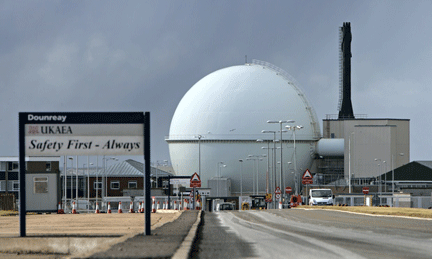
John O’Groat Journal, By David G Scott – david.scott@hnmedia.co.uk, 19 August 2026
Serious concerns have been raised regarding safety governance, staffing levels, and workplace culture at the Dounreay nuclear decommissioning site following a major organisational overhaul.
A former employee at the site warned that recent reorganisations have eroded independent oversight, drained vital institutional knowledge, and created what they describe as “a perfect storm for a disaster.”
At the heart of the concerns is a major site reorganisation known internally as Fit For the Future (FFF). According to the insider, the restructure resulted in the abolition of the dedicated Health and Safety Assurance Department. Historically, this department provided independent checks on project governance, ensured compliance with safety procedures, and tracked lessons learned from previous site incidents.
“The assurance department’s role is to check that people are following procedure, learning from incidents, and maintaining governance,” the source stated. “These were independent people overseeing projects to ensure nobody was cutting corners. Removing that independent oversight leaves the site dangerously exposed.”
Critics within the workforce have alleged that the costly restructuring failed to deliver improvements, claiming that leadership roles were increasingly filled by managers lacking hands-on nuclear safety expertise.
“Egos are driving the leadership team,” the whistleblower claimed. “They have been promoted into positions not because they were competent, but because they were confident. They have people running projects who aren’t experts in the field and won’t listen to the people who are.”
The site has also seen a significant drain of experienced staff through voluntary redundancy schemes including the so-called mutually agreed voluntary exit (MAVE). Decades of operational knowledge built up by long-serving local workers have been lost, leaving remaining teams stretched and reliant on less experienced personnel.
‘I would be perfectly justified in sending you to prison’: Community service for man who ran amok with fire extinguisher at Wick hospital‘I would be perfectly justified in sending you to prison’: Community service for man who ran amok with fire extinguisher at Wick hospital
“I truly believe that a good lot of the people who left under MAVE were people who spoke up about concerns,” said the former employee. “They want people in positions who will just say ‘yes sir, no sir’ – they don’t want to know something is wrong, they want you to cover it up.”
This turnover has driven a decline in the proportion of Suitably Qualified and Experienced Persons (SQEP) holding technical management and safety leadership positions across the site, they suggested. “For positions where years ago you had to have specific degrees and years of hands-on experience, they have watered those standards down across the board,” added the source.
At the same time, accusations have emerged that experienced personnel who voiced concerns about safety protocols or restructuring plans were sidelined or encouraged to leave.
Reports also highlight ongoing workplace bullying alongside a management culture that prioritises public image over addressing root-cause operational issues.
“The bullying that goes on is swept under the carpet. HR know about it, but what they do is move the victim to another area and allow the bully to continue.”
Furthermore, critics argue the scheme represents a false economy, as replacing experienced staff with newer personnel fails to yield genuine savings once additional workforce numbers and extensive training are factored in to fill the capability gap.
Highlighting the practical impact of weakened governance, the source pointed to a recent incident in the site’s laboratories which resulted in staff being exposed to a chemical leak………………………………………….
https://www.johnogroat-journal.co.uk/news/building-on-shaky-foundations-whistleblower-highlights-ser-442770/
DOE Again Denies Access to Defense Nuclear Facilities Safety Board (DNFSB) at Nuclear Weapons Facilities; Contact Your Elected Officials

Once again, the Department of Energy and its semi-autonomous National Nuclear Security Administration has denied the Defense Nuclear Facilities Safety Board access to nuclear weapons facilities, including at Los Alamos National Laboratory (LANL). At a time when LANL is ramping up production of plutonium pits, the triggers for nuclear weapons, the DOE is restricting access to the Board and its resident inspectors preventing them from fulfilling critical oversight and public reporting responsibilities. As a result, the public is no longer informed about potential issues of adequate protection at defense nuclear facilities.
The Board provides oversight of DOE and is independent in the execution of its mission. It is part of the Executive Branch of government.
Further, the five-member Board has been eviserated because neither the recent Democratic nor Republican administrations have filled positions on the Board. Currently there is one Board member, which means the Board cannot issue formal recommendations without a quorum – all to the detriment of the public.
The Board is governed by the Atomic Energy Act which requires that the Energy Secretary “shall fully cooperate with the Board and provide prompt and unfettered access to such facilities, personnel, and information as the Board considers necessary to carry out its responsibilities.”
Based upon a lack of jurisdiction argument, DOE falsely claims that it has the authority to deny the Board access to facilities, personnel and information among other improper denials – again, all to the detriment of the public.
The defense revolving-door, Silicon Valley edition
he Trump administration has installed a revolving door between defense-tech companies and the Pentagon.
An eye-opening glimpse at the links between two congressional committees and more than 100 defense contractors, consultants, and lobbyists.
By John Mecklin, August 17, 2026, https://thebulletin.org/2026/08/the-defense-revolving-door-silicon-valley-edition/?utm_source=ActiveCampaign&utm_medium=email&utm_content=The%20defense%20revolving-door%2C%20Silicon%20Valley%20edition&utm_campaign=20260817%20Monday%20Newsletter%20%28Copy%29
ince President Eisenhower more-or-less invented the term military-industrial complex, US defense spending has grown, dramatically in some eras, leveling off a bit in others, but overall heading ever-upward. Annual US defense expenditures now approach $1 trillion—and, if the Trump administration gets its way, will head toward $1.5 trillion in the coming fiscal year. A variety of factors has driven this rise in defense outlays, but one has become persistent: the revolving door that some national service officials walk through to take well-compensated positions at private-sector military contractors and the firms that lobby the government on their behalf.
The phenomenon and its corruptive possibilities have been much-studied and widely criticized. US Sen. Elizabeth Warren, the noted progressive, commissioned a report on the issue in 2023 with the withering title “Pentagon Alchemy: How Defense Officials Pass rough the Revolving Door and Peddle Brass for Gold.” The libertarian-to-conservative Cato Institute writes less compelling headlines (“Dealing with the Defense Industry’s Revolving Door in the 2027 NDAA”) but doesn’t like the revolving door, either. And in its 2023 report, “March of the Four–Stars: The Role of Retired Generals and Admirals in the Arms Industry,” the heterodox Quincy Institute basically supports Warren’s attempt to at least slow the revolving door via the “Department of Defense Ethics and Anti-Corruption Act.” Warren initially introduced the bill in 2019 and reintroduced it in 2021 and 2023, to no avail.
The interactive display below [on original] illustrates one piece of the defense revolving door as it has evolved over the last decade. During that time, former congressional officials have strolled through the door and wound up working not just at the largest defense contractors (often called “primes”) but also for a new class of high-technology firms—often involved in artificial intelligence and headquartered in Silicon Valley—that has aggressively expanded its Pentagon contracting efforts. And to be clear, the door leads in both directions; private sector bigwigs sometimes move into influential government positions that could affect the fortunes of their companies.
As UC Berkeley investigative reporter Bernice Yeung recently wrote for the Bulletin:
[T]he Trump administration has installed a revolving door between defense-tech companies and the Pentagon. The deputy secretary of defense, Steve Feinberg, is the cofounder and former CEO of a private equity firm that invests heavily in companies with Pentagon contracts. The President’s Council of Advisors on Science and Technology co-chair David Sacks is a venture capitalist who invests in defense tech. The country’s science and technology advisor, Michael Kratsios, was previously an executive at top AI defense firm, Scale AI. The armed services are also stacked with senior leaders with ties to the tech industry, such as Under Secretary of the Army Michael Obadal, an Anduril alum.
The interactive is anything but comprehensive. It looks only at members of Congress who served and top staffers who worked on the House and Senate armed services committees during the 2015-2025 decade. The graphic does not deal with defense-related political contributions, or with the many employees of the Pentagon, military services, State Department, and Energy Department who also rode the revolving door connecting government service to high-paying positions with defense contractors and the K Street firms that lobby for them. The interactive simply shows some of the ways in which the two congressional committees that deal with the country’s armed services are connected with private-sector defense contractors, consultants, and lobbyists. Even within this limited scope, the connections are eye-opening.
Nuclear material found in Syria will remain in the country, minister says
By Reuters, August 19, 2026
Nuclear material found at an undisclosed site in Syria was not dangerous and would remain in Syrian custody, subject to the International Atomic Energy Agency’s guarantees, Syria’s foreign minister said on Tuesday.
Asaad al-Shibani added in a joint press conference with IAEA chief Rafael Grossi in Damascus that Syria had the right to use the material for civil and peaceful purposes.
Since the ouster of President Bashar al-Assad in late 2024, Syria’s new authorities have committed to working with the United Nations’ nuclear watchdog to address the legacy of nuclear activities during decades of Assad family rule.
Grossi said the agency was able to access the site after the Syrian government notified it.
Syria is not known to hold operational stockpiles of nuclear material for a weapons programme, but Israel bombed a suspected Syrian nuclear reactor in 2007 in the country’s eastern province of Deir al-Zor.
Reporting by Nayera Abdallah; Editing by Alex Richardson
Private investors are not rushing into nuclear. The Netherlands has chosen another path

The Dutch government has therefore opted for a wholly state-owned company.
the Dutch government is also responding to recommendations from the International Atomic Energy Agency
Martin Voříšek, 19 August 2026, https://oenergetice.cz/en/nuclear-power/private-investors-are-not-rushing-into-nuclear-the-netherlands-has-chosen-another-path
The Dutch government is gradually preparing a financing model for two new nuclear power plants in the country. After assessing investor interest, it concluded that private investors are unwilling to bear a substantial share of the construction risks. The state has therefore taken the leading role through the wholly state-owned company NEO NL. The state will also bear the costs of at least the initial phase of construction of the new units, in order to accelerate their delivery as much as possible.
The Netherlands is one of the less visible European countries pursuing the construction of new nuclear units. This is only because its preparations are still at an early stage. Its preparations follow a broader European trend in which new large-scale nuclear projects increasingly resemble anything but ordinary private investments. The state therefore acts in the project not only as regulator and provider of support, but directly as investor, lender and future owner of the project.
The Netherlands’ current advantage is that its project is only at the beginning of preparations. It can therefore still be adapted relatively painlessly to the current realities of the European market in order to ensure the earliest and least costly possible completion.
Private investors are not “rushing” to build
One of the key questions in the preparations was whether the project could be developed and delivered by private investors. However, as government documents show, private companies are prepared to participate only if the state assumes virtually all risks associated with preparing and building the power plants.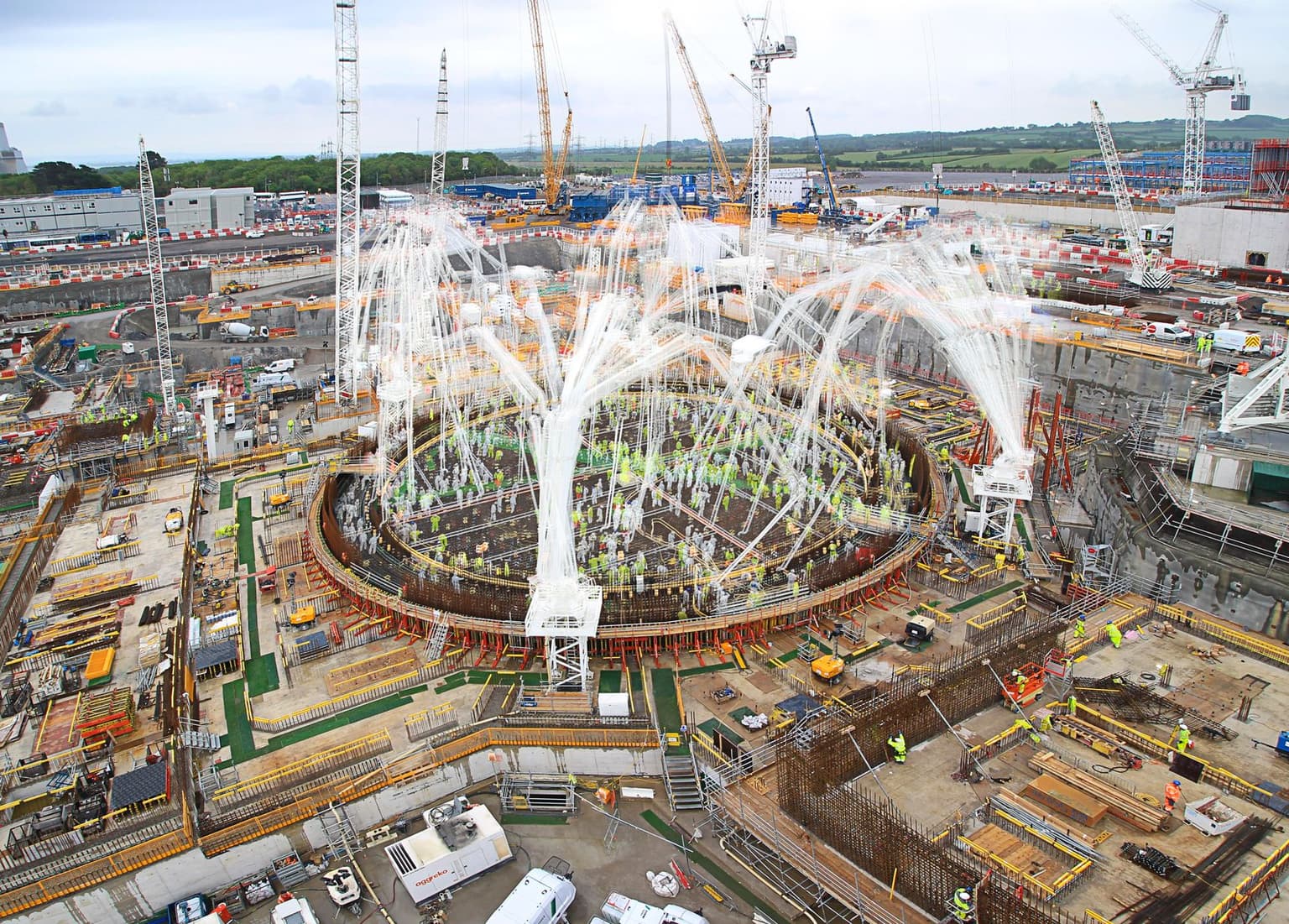 Construction of Hinkley Point C. Source: EDF
The current risks associated with building nuclear power plants are well known: in particular, long construction periods, uncertainty over costs, the duration of permitting processes, interest rate developments and future revenues in the electricity market. The combination of these factors has long constrained the ability of major nuclear projects to secure commercial financing without extensive public support.
A promising investment can thus very easily become an investor’s nightmare, entirely beyond the investor’s control.
NEO NL: State company responsible for building new units
The Dutch government has therefore opted for a wholly state-owned company, Nucleaire Energie Organisatie Nederland, abbreviated as NEO NL. Its task will be to prepare, build and operate the new nuclear power plants, with the state as its sole shareholder.
NEO NL was established on 16 February 2026 and is set to assume the role of future owner and operator of the units. In doing so, the Dutch government is also responding to recommendations from the International Atomic Energy Agency, according to which the future operator should become involved in project preparations as early as the design and construction phase.
The state expects this arrangement to provide greater control over the project, particularly over the choice of technology, risk allocation and the long-term operation of the plants.
State control over technology selection was, after all, also one of the priorities of the Czech government. It first excluded suppliers from China and Russia from the tender to supply units at Dukovany, while the final choice was also the result of agreement between ČEZ and the state.
The state will take over project financing, at least during the first construction phase
As early as October 2025, the Dutch government stated that, according to its analysis, fully state-backed financing was the least costly option in terms of the project’s total costs. The state can generally obtain funding on better terms than a private company. While a higher share of private financing could reduce the impact on the budget, it would make the entire project more expensive.
Once the power plants are completed, the interest rate is to be set at the yield on Dutch government bonds plus one percentage point. In its documents, the Dutch government specifically refers to the Dukovany project, whose public-support model for one unit inspired it.
In June this year, the cabinet confirmed that the state would bear all financing costs for the two new large power plants, at least during the first phase of their construction. Private financing remains theoretically open for later refinancing or a potential equity contribution by the supplier, but not as the main source of funding in the early phase of the project.
Two locations under consideration, two main suppliers
Alongside the financing model, the question of the unit supplier is also gradually becoming clearer. The Netherlands initially assessed options from France’s EDF, US-based Westinghouse and South Korea’s KHNP. However, KHNP withdrew from the technology selection process in March 2025. Two Western technologies therefore remain in contention.
The project currently covers two large units, but the government is considering including an option for two additional reactors in the contract. Here, too, the Czech approach is an evident inspiration: the current contract with KHNP represents an order for two reactors at the Dukovany site and an option for two further reactors at Temelín. Such an approach could shorten preparations for the third and fourth units while improving the negotiating position in agreeing the price and delivery terms.
The site selection has not yet been fully finalised. Although the government excluded several initially considered options in June this year, it is still deciding between Eemshaven in the province of Groningen and a site near Terneuzen in Zeeland.
From the perspective of the transmission system, Eemshaven is the most favourable option. TenneT states that 3.2 GW of new capacity can be connected there without additional investment beyond the network expansion already planned. Terneuzen, by contrast, requires significant measures. According to TenneT, connecting 3.2 GW of new nuclear capacity would require further extensive grid upgrades, or potentially redispatching at costs of up to hundreds of millions of euros annually.
The cabinet wants to decide on its preferred site by the end of 2026. A proposal for a formal siting decision is to follow in the first half of 2027.
The Netherlands follows the Czech construction model
For Czechia, the Dutch development is important above all as further confirmation that the private financing model for large nuclear units in Europe is receding into the background. In both countries, the state is taking on the role of principal investor and establishing a structure intended to reduce financing costs while enabling long-term management of the project.
The Netherlands is directly drawing inspiration from the Czech approach to an interest-free loan during construction. However, the Czech model for Dukovany is more developed and entails a broader transfer of construction and financial risks to the public sector.
The difference lies primarily in the institutional arrangement. The Netherlands is creating a separate company, NEO NL, which is to prepare, own and operate the project, whereas the Czech project is being implemented through EDU II, with the state still holding a dominant stake and with a possible increase in the state’s share to as much as 100% through the nationalisation of parent company ČEZ.
1 This Month
23-25 October – on Zoom – World BEYOND War’s annual global conferenc


Shut down the radiation-damaged Heysham nuclear reactors now
To see nuclear-related stories in greater depth and intensity – go to https://nuclearinformation.wordpress.com

Say No to NASA’s Reckless Nuclear Reactor on the Moon
Say No to NASA’s Reckless Nuclear Reactor on the Moon

-
Archives
- October 2026 (247)
- September 2026 (339)
- August 2026 (330)
- July 2026 (355)
- June 2026 (287)
- May 2026 (306)
- April 2026 (356)
- March 2026 (251)
- February 2026 (267)
- January 2026 (308)
- December 2025 (358)
- November 2025 (359)
-
Categories
- 1
- 1 NUCLEAR ISSUES
- business and costs
- climate change
- culture and arts
- ENERGY
- environment
- health
- history
- indigenous issues
- Legal
- marketing of nuclear
- media
- opposition to nuclear
- PERSONAL STORIES
- politics
- politics international
- Religion and ethics
- safety
- secrets,lies and civil liberties
- spinbuster
- technology
- Uranium
- wastes
- weapons and war
- Women
- 2 WORLD
- ACTION
- AFRICA
- Atrocities
- AUSTRALIA
- Christina's notes
- Christina's themes
- culture and arts
- Events
- Fuk 2022
- Fuk 2023
- Fukushima 2017
- Fukushima 2018
- fukushima 2019
- Fukushima 2020
- Fukushima 2021
- general
- global warming
- Humour (God we need it)
- Nuclear
- RARE EARTHS
- Reference
- resources – print
- Resources -audiovicual
- Weekly Newsletter
- World
- World Nuclear
- YouTube
-
RSS
Entries RSS
Comments RSS

