What Is the Next Weapon? The Rise of the Adaptive Military Ecosystem
Phil Butler, August 10, 2026, https://journal-neo.su/2026/08/10/what-is-the-next-weapon-the-rise-of-the-adaptive-military-ecosystem/
Every generation of warfare produces a defining weapon, but history shows that weapons themselves rarely determine victory. The decisive advantage belongs to the societies capable of creating the organizations, industries, and human expertise necessary to transform new technologies into sustained military power.
The New Battlefield
The longbow reshaped medieval warfare, the musket transformed infantry combat, the tank revolutionized maneuver, and nuclear weapons altered the strategic balance of the world. Today, many believe the next decisive weapon will be the autonomous drone, artificial intelligence, or some future robotic system. The deeper transformation, however, may be something more fundamental: the ability of nations to build adaptive military ecosystems capable of continuously creating, deploying, and improving those technologies. (see CSIS report)
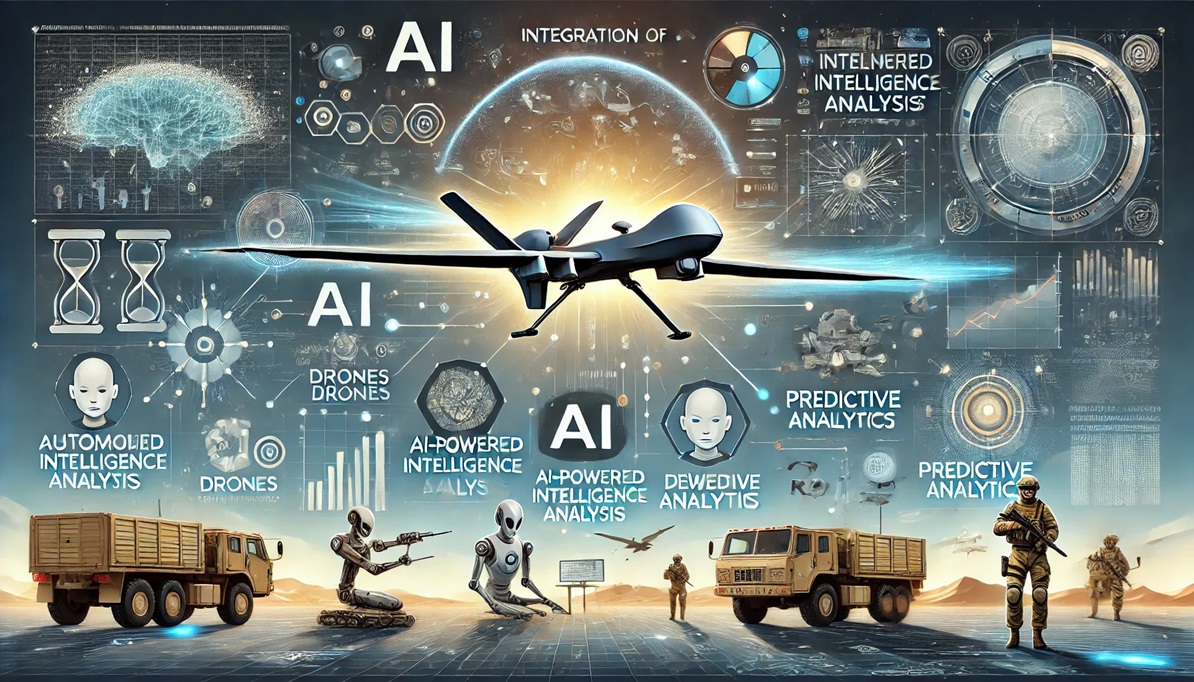
The war in Ukraine has become the most significant military laboratory of the modern era. It is a conflict where the weapons of the twentieth century remain fully present: artillery, armor, missiles, aircraft, and infantry formations. However, these elements are effective only if they can operate inside a battlefield environment transformed by drones, electronic warfare, satellite communications, and rapid technological adaptation. The most visible symbol of this transformation has been the drone. Small unmanned systems have changed reconnaissance, targeting, logistics, and tactical operations. They have made portions of the battlefield more transparent and forced commanders to reconsider how forces maneuver, conceal themselves, and survive. Yet focusing only on drones risks misunderstanding the deeper revolution. The drone is not the weapon; the system surrounding the drone is the weapon.
A modern unmanned platform depends upon communications networks, intelligence gathering, software, electronic warfare protection, manufacturing capacity, trained operators, maintenance systems, and the ability to rapidly modify designs based on battlefield experience. The true capability is not the aircraft itself but the entire cycle that allows a military organization to observe, adapt, produce, and improve. This distinction matters because every major military transformation in history has been driven not simply by invention, but by integration. The tank did not revolutionize warfare merely because armored vehicles existed. It changed warfare when armies developed doctrine, communications, logistics, and command structures capable of exploiting armored mobility.
The same principle now applies to autonomous systems and artificial intelligence. Recent Russian military discussions reflect this same search for integration, with proposals emphasizing the deployment of unmanned systems alongside traditional combat platforms, including concepts involving drone capabilities integrated with armored formations. According to Dmitry Kuzyakin points out the need for close contact, remote drone systems for the moment the line of contact collapses, when traditional drones cease to be the ultimate weapon. However, while such approaches represent only one component of a much larger transformation, they illustrate the growing recognition that future warfare will depend on combining legacy systems with autonomous capabilities rather than replacing one with the other. And as we now observe, recent military discussions have increasingly focused on this challenge. A Russian military perspective examining emerging systems emphasized that technological change requires corresponding changes in organization, training, and operational employment. The significance of this argument extends beyond any single country because it recognizes a fundamental truth: possessing advanced technology is not the same as possessing the ability to use it effectively.
This conclusion is increasingly reflected across defense analysis communities. The RAND Corporation has examined artificial intelligence and autonomy as potentially disruptive military technologies because their importance extends beyond individual weapons systems. AI changes the military decision cycle itself by transforming how information is collected, analyzed, and acted upon. Similarly, research from the Royal United Services Institute examining lessons from Ukraine has emphasized the growing importance of electronic warfare, communications resilience, intelligence networks, and the integration of traditional military capabilities with emerging technologies. Together, these perspectives point toward the same conclusion: future warfare will not be defined by a single revolutionary weapon. It will be defined by the ability to connect many capabilities into a coherent and adaptive system.
The New Arsenal
The industrial foundations of warfare are also undergoing a transformation. During the great conflicts of the twentieth century, military power was measured through factories, shipyards, steel production, fuel supplies, and the ability to manufacture enormous quantities of conventional weapons. Those capabilities remain essential, but the modern defense industry increasingly extends into areas once considered separate from military power. Semiconductor production, software engineering, artificial intelligence research, robotics, advanced manufacturing, and communications infrastructure are becoming central components of national defense capability. The modern battlefield is increasingly connected to research laboratories, technology companies, and industrial networks. This does not mean traditional weapons have become irrelevant. Artillery, aircraft, armored vehicles, and naval systems remain critical. But the pace of technological change means that military advantage will increasingly depend upon how quickly those systems can evolve after they enter service.
The twentieth-century model of procurement often operated on timelines measured in decades. The emerging model increasingly operates on timelines measured in months or even weeks. A battlefield lesson can become a software improvement. A tactical vulnerability can produce a new countermeasure. A design limitation can lead to a revised production method. The strategic competition therefore shifts from simply producing weapons to producing adaptation. This requires a new understanding of military personnel. Future forces will still require soldiers, commanders, and traditional combat specialists, but they will increasingly operate alongside engineers, software developers, robotics technicians, intelligence analysts, electronic warfare specialists, and manufacturing experts. The emergence of this new military workforce is already producing new models of service that blur the traditional boundary between civilian expertise and defense capability. Programs such as the U.S. Army’s Executive Innovation Corps and the Navy’s innovation reserve initiatives seek to bring highly skilled technology professionals from the private sector into military service while allowing them to maintain their civilian careers, creating a flexible pool of expertise in fields such as artificial intelligence, robotics, autonomous systems, and advanced software development. The military professional of the future will need more than proficiency with a particular platform. Increasingly, effectiveness will depend upon the ability to operate within a network of humans and machines that constantly changes.
The concept of military power is expanding. The battlefield is no longer only where soldiers fight. It also exists in laboratories, factories, data centers, communications networks, and training environments where future capabilities are developed. The strongest defense industries will therefore not simply manufacture weapons. They will create learning systems. They will be organizations capable of taking information from the battlefield, converting that information into knowledge, and turning that knowledge into improved capability faster than an opponent can respond. And for Russia, the idea of creating a technical force incentivized for voluntary service should be put into place. By this, I envision highly skilled persons being trained in facets of modernized warfare being part of a military/private initiative that provides for the most skilled operators serving in the various fields to operate or develop these new synergies, who then become part of a wider complex that will constantly evolve and universally incentivize service.
The New Advantage
Read more: What Is the Next Weapon? The Rise of the Adaptive Military EcosystemThe history of warfare is a history of adaptation. The greatest military transformations occurred when societies reorganized themselves around new realities. Naval power changed when nations built industrial fleets and global logistics networks. Air power changed when states developed aviation industries, pilot training systems, and integrated command structures. Nuclear strategy changed when nations built entirely new scientific and industrial institutions.
The emerging era follows the same pattern. The future advantage will not belong simply to those who possess the most advanced weapon. It will belong to those who can create the strongest adaptive ecosystem around that weapon. This has implications for every major defense power. Whether considering Russia, the United States, China, NATO members, or other nations seeking modern military capability, the central challenge is the same: creating institutions capable of continuous learning and technological evolution.
Future defense partnerships may increasingly resemble technological networks. Different nations may contribute different strengths, manufacturing capacity, scientific research, software development, industrial resources, logistics, or specialized expertise. The effectiveness of the collective system may become more important than the capability of any single participant. The question “What is the next weapon?” therefore has an unexpected answer. It may not be a drone, a robot, or an artificial intelligence system. It may be the ability of a society to repeatedly create the next weapon after the current one becomes obsolete.
The defining competition of the twenty-first century will not simply be between armies. It will be between systems of innovation, adaptation, and resilience. Victory has always belonged to those who can change the nature of the battlefield faster than their opponents can adjust. In the next era of warfare, adaptation itself may become the ultimate strategic weapon.
No comments yet.
1 This Month
15 October. Joint Appeal for Nuclear Abolition Day -presentation to the UN on October 15 will be live on UNWebTV
Endorse the Nuclear Abolition Day Appeal
23-25 October – on Zoom – World BEYOND War’s annual global conference

To see nuclear-related stories in greater depth and intensity – go to https://nuclearinformation.wordpress.com
-
Archives
- October 2026 (149)
- September 2026 (339)
- August 2026 (330)
- July 2026 (355)
- June 2026 (287)
- May 2026 (306)
- April 2026 (356)
- March 2026 (251)
- February 2026 (267)
- January 2026 (308)
- December 2025 (358)
- November 2025 (359)
-
Categories
- 1
- 1 NUCLEAR ISSUES
- business and costs
- climate change
- culture and arts
- ENERGY
- environment
- health
- history
- indigenous issues
- Legal
- marketing of nuclear
- media
- opposition to nuclear
- PERSONAL STORIES
- politics
- politics international
- Religion and ethics
- safety
- secrets,lies and civil liberties
- spinbuster
- technology
- Uranium
- wastes
- weapons and war
- Women
- 2 WORLD
- ACTION
- AFRICA
- Atrocities
- AUSTRALIA
- Christina's notes
- Christina's themes
- culture and arts
- Events
- Fuk 2022
- Fuk 2023
- Fukushima 2017
- Fukushima 2018
- fukushima 2019
- Fukushima 2020
- Fukushima 2021
- general
- global warming
- Humour (God we need it)
- Nuclear
- RARE EARTHS
- Reference
- resources – print
- Resources -audiovicual
- Weekly Newsletter
- World
- World Nuclear
- YouTube
-
RSS
Entries RSS
Comments RSS


Leave a Reply