Hinkley Nuclear plant could be delayed again by demands to protect fish
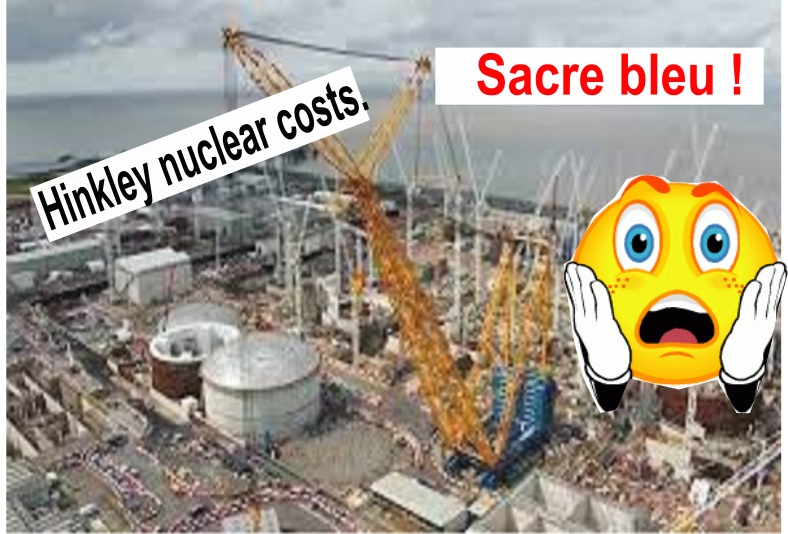
Britain’s first new nuclear power station in more than three decades is
facing years of further delays after an environmental quango said it still
posed a danger to fish.
Hinkley Point C has already spent more than £700
million to offset concerns about its impact on wildlife, including paying
for acoustic deterrents to stop fish from the Severn Estuary being sucked
into the plant’s cooling pipes. But now Natural England has told the
company behind the project that its plans are not good enough and it will
have to pay to create salt marshes in the estuary to boost the fish
population before it can begin generating power.
The demand has led to
warnings that Hinkley’s already delayed 2030 opening date will have to be
put back still further, alongside millions of pounds in additional costs,
which will ultimately be paid for through energy bills.
Any delay would
also in effect kill off Ed Miliband’s signature pledge to decarbonise
electricity supplies by 2030 because it is due to supply between 7 and 10
per cent of the UK’s total power needs. In a letter to local residents
EDF said Natural England had told the company it would not be allowed to
start energy generation unless it did more to protect fish.
The pro-growth
campaign Britain Remade said the case highlighted a system where regulators
and arms-length bodies could demand “endless bespoke surveys, mitigations
and design changes, with little regard for the national interest, energy
security or the cost to billpayers”. “Britain desperately needs more
clean, reliable power, but the system we have built is making it harder and
more expensive to get it,” said Sam Richards, the group’s chief
executive.
Natural England said that under its original development consent
EDF was required to show that its impact on protected species was “fully
mitigated” and said it was applying “the same legal tests that apply to
every major infrastructure project in the UK.“Our advice is grounded in
statutory duties under the habitats regulations, the best available
scientific evidence and the government’s established policy framework,”
it said.
Dave Slater, regional director for Natural England added:
“Development and nature are not competing interests. Building the UK’s
largest nuclear power station is a major undertaking which brings
significant environmental challenges and we are playing our part in finding
solutions to enable this vital infrastructure development to go ahead while
improving environmental outcomes.”
Times 10th June 2026,
https://www.thetimes.com/uk/politics/article/hinkley-point-c-nuclear-delays-environmental-demands-l33cp90n2
No comments yet.
1 This Month
23-25 October – on Zoom – World BEYOND War’s annual global conferenc

To see nuclear-related stories in greater depth and intensity – go to https://nuclearinformation.wordpress.com

Say No to NASA’s Reckless Nuclear Reactor on the Moon
Say No to NASA’s Reckless Nuclear Reactor on the Moon
-
Archives
- October 2026 (149)
- September 2026 (339)
- August 2026 (330)
- July 2026 (355)
- June 2026 (287)
- May 2026 (306)
- April 2026 (356)
- March 2026 (251)
- February 2026 (267)
- January 2026 (308)
- December 2025 (358)
- November 2025 (359)
-
Categories
- 1
- 1 NUCLEAR ISSUES
- business and costs
- climate change
- culture and arts
- ENERGY
- environment
- health
- history
- indigenous issues
- Legal
- marketing of nuclear
- media
- opposition to nuclear
- PERSONAL STORIES
- politics
- politics international
- Religion and ethics
- safety
- secrets,lies and civil liberties
- spinbuster
- technology
- Uranium
- wastes
- weapons and war
- Women
- 2 WORLD
- ACTION
- AFRICA
- Atrocities
- AUSTRALIA
- Christina's notes
- Christina's themes
- culture and arts
- Events
- Fuk 2022
- Fuk 2023
- Fukushima 2017
- Fukushima 2018
- fukushima 2019
- Fukushima 2020
- Fukushima 2021
- general
- global warming
- Humour (God we need it)
- Nuclear
- RARE EARTHS
- Reference
- resources – print
- Resources -audiovicual
- Weekly Newsletter
- World
- World Nuclear
- YouTube
-
RSS
Entries RSS
Comments RSS


Leave a Reply