Rolls-Royce is turning a quiet Welsh site into a nuclear bet, and the strange part is how many homes three small reactors could power
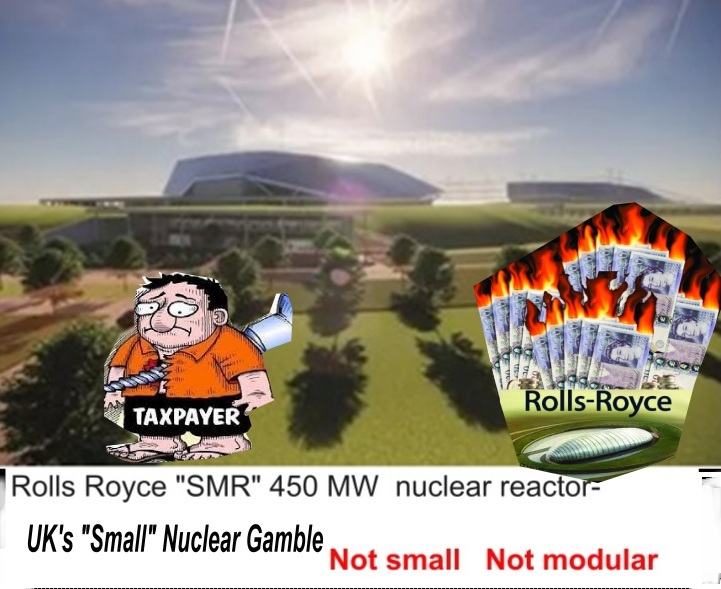
Public money is carrying the risk
SMRs are often promoted as cheaper and faster than conventional nuclear plants, but the first projects still need heavy financing, regulatory work, supply-chain confidence, and buyers willing to believe the model can scale.
By Indux, June 3, 2026, https://www.vozpopuli.com/indux/en/rolls-royce-is-turning-a-quiet-welsh-site-into-a-nuclear-bet-and-the-strange-part-is-how-many-homes-three-small-reactors-could-power/5488/
Rolls-Royce SMR and Great British Energy – Nuclear (GBE-N) have moved the United Kingdom’s first small modular reactor (SMR) project into a new phase, signing a contract that starts technology design work for three units planned at Wylfa in North Wales.
The project is expected to deliver at least 1.4 gigawatts of electric output, enough to power the equivalent of around 3 million homes for more than 60 years.
This is not a finished power plant, and it is not yet the final investment decision, but it is a big marker for a country trying to cut its exposure to volatile fossil fuel markets, rebuild industrial capacity, and keep the lights on without making the electric bill feel like a monthly shock. The material provided for this story described Wylfa as the centerpiece of a new British nuclear push.
Wylfa gets its second act
Wylfa is not new to nuclear power. The site on Anglesey once hosted a nuclear station that helped feed the British grid for decades before its last reactor shut down in 2015, leaving the area with the familiar question that follows many old industrial sites. What comes next?
The answer, at least for now, is a factory-built nuclear project led by Rolls-Royce SMR. The British government confirmed Wylfa in November 2025 as the home of the first small modular reactor plant in the program, with an initial three units and possible room for up to eight in the future.
That matters because Wylfa has had false starts before. Earlier replacement plans collapsed, and the local community was left waiting for a project big enough to bring jobs, training, and long-term investment back to the coast.
The Rolls-Royce design is called small, but the numbers are not tiny. Each unit is a 470 MWe pressurized water reactor, which means the first three units would add up to roughly 1.4 gigawatts of electric capacity.
The pitch is simple. Build much of the plant in factory conditions, move the pre-tested pieces to the site, and reduce the risk that has made traditional nuclear megaprojects expensive and slow.
World Nuclear News reported that about 90% of the SMR would be built away from the site, with the reactor unit measuring about 52 feet by 13 feet. That modular approach is supposed to make schedules more predictable and limit disruption around Wylfa, although nuclear projects rarely become easy just because the parts are smaller.
Jobs are part of the sell
The government says the first SMR project could support around 3,000 jobs at peak construction, along with thousands more across the national supply chain. Rolls-Royce SMR has put the wider employment impact even higher, saying its Wylfa program will support an average of almost 8,000 skilled jobs across the United Kingdom during the build program.
That difference matters. One figure is centered on peak construction at the project, while the other looks more broadly across the build program and the wider supply chain.
For Anglesey, the local promise is easy to understand. Big energy projects do not just bring engineers in hard hats. They bring apprenticeships, local contracts, traffic on access roads, new pressure on housing, and, ideally, years of steady work rather than a short construction rush.
Public money is carrying the risk
The program is also a test of how much public backing is needed to get new nuclear technology moving. The 2025 Spending Review allocated about $3.5 billion to enable the contract and wider SMR program, while the National Wealth Fund is committing up to about $805 million to support Rolls-Royce SMR’s reactor development.
That public support is not just a footnote. SMRs are often promoted as cheaper and faster than conventional nuclear plants, but the first projects still need heavy financing, regulatory work, supply-chain confidence, and buyers willing to believe the model can scale.
At the end of the day, the government is trying to turn Wylfa into more than one power station. It wants a repeatable British nuclear product that can be built at home and exported abroad.
At the end of the day, the government is trying to turn Wylfa into more than one power station. It wants a repeatable British nuclear product that can be built at home and exported abroad.
The timeline is still long
The contract allows Rolls-Royce SMR to begin site-specific design, regulatory engagement, and planning work ahead of a future final investment decision. That last phrase is important. It means the project has momentum, but it still has key approvals and financial steps ahead.
GBE-N has said work is set to start at the site in 2026, while the government has pointed to the mid-2030s for grid connection. So this is not a quick fix for today’s energy bills.
Still, nuclear power is being pitched as the steady partner for wind and solar. When the wind drops or demand spikes during a cold evening, the grid still needs reliable generation that can run day and night.
Why Rolls-Royce wants this win
For Rolls-Royce, Wylfa is more than a domestic contract. Chris Cholerton, chief executive of Rolls-Royce SMR, said the deal “unlocks the delivery” of the first three units and gives the U.K. program certainty, while also pointing to plans for up to six units in Czechia.
That is the bigger business angle. If Rolls-Royce can prove the model at Wylfa, it could strengthen its case in a global market where governments are looking for cleaner baseload power, industrial heat, and energy security.
Proof, however, is the key word. The SMR promise has been talked about for years. Wylfa is where Britain is trying to show whether the factory-built nuclear idea can move from slide decks into steel, concrete, regulation, and power lines.
Wylfa is now the test case
The United Kingdom is betting that small modular reactors can help solve several problems at once. Cleaner electricity, more energy independence, skilled jobs, and a stronger industrial base are all part of the same package.
That is a lot to ask from one coastal site. BHowever, Wylfa has become the place where those promises will start being measured against deadlines, budgets, and public confidence.
The official statement was published on GOV.UK.
No comments yet.
-
Archives
- October 2026 (120)
- September 2026 (339)
- August 2026 (330)
- July 2026 (355)
- June 2026 (287)
- May 2026 (306)
- April 2026 (356)
- March 2026 (251)
- February 2026 (267)
- January 2026 (308)
- December 2025 (358)
- November 2025 (359)
-
Categories
- 1
- 1 NUCLEAR ISSUES
- business and costs
- climate change
- culture and arts
- ENERGY
- environment
- health
- history
- indigenous issues
- Legal
- marketing of nuclear
- media
- opposition to nuclear
- PERSONAL STORIES
- politics
- politics international
- Religion and ethics
- safety
- secrets,lies and civil liberties
- spinbuster
- technology
- Uranium
- wastes
- weapons and war
- Women
- 2 WORLD
- ACTION
- AFRICA
- Atrocities
- AUSTRALIA
- Christina's notes
- Christina's themes
- culture and arts
- Events
- Fuk 2022
- Fuk 2023
- Fukushima 2017
- Fukushima 2018
- fukushima 2019
- Fukushima 2020
- Fukushima 2021
- general
- global warming
- Humour (God we need it)
- Nuclear
- RARE EARTHS
- Reference
- resources – print
- Resources -audiovicual
- Weekly Newsletter
- World
- World Nuclear
- YouTube
-
RSS
Entries RSS
Comments RSS


Leave a Reply