The Disappearing Aid Check: The Future of US–Israel Defense Support
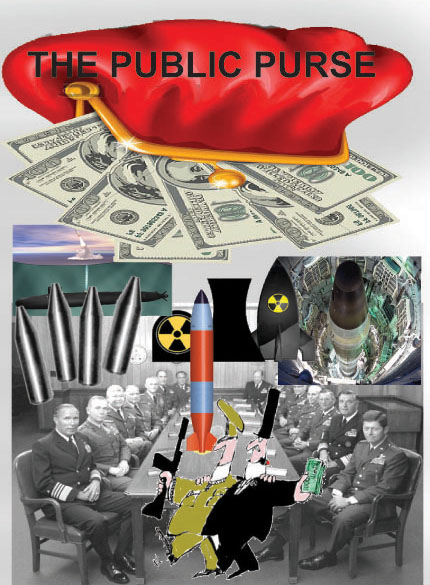
What top Israeli officials — including Prime Minister Benjamin Netanyahu — are quietly backing is not a reduction in American support, but a reorganization of it: shifting billions in resources from State Department–administered foreign aid grants into general Pentagon procurement accounts, industrial partnerships, and sustainment pipelines. The shift will strip away the political and diplomatic oversight mechanisms that make the relationship publicly accountable, moving it from a visible annual aid vote into the opaque machinery of defense acquisition, where oversight is limited and political accountability is minimal. The result would be a defense relationship that is simultaneously deeper and less transparent.
Quincy Institute for Responsible Statecraft, Steven Simon, May 26, 2026
Executive Summary
The United States and Israel are now approaching the renegotiation of their 10-year defense Memorandum of Understanding, or MOU. Israeli officials have said they want to phase out US military grant aid — a position that sounds like a step toward ending US military assistance to Israel. It is not.
What top Israeli officials — including Prime Minister Benjamin Netanyahu — are quietly backing is not a reduction in American support, but a reorganization of it: shifting billions in resources from State Department–administered foreign aid grants into general Pentagon procurement accounts, industrial partnerships, and sustainment pipelines. The shift will strip away the political and diplomatic oversight mechanisms that make the relationship publicly accountable, moving it from a visible annual aid vote into the opaque machinery of defense acquisition, where oversight is limited and political accountability is minimal. The result would be a defense relationship that is simultaneously deeper and less transparent.
Since fiscal year 2019, the United States has provided $3.3 billion per year in Foreign Military Financing, or FMF, grants to Israel, plus an additional $500 million per year for missile defense cooperation. About 25 percent of this FMF grant money has gone toward offshore procurement, or OSP, funds allocated to Israel to spend domestically on its own defense industry and military equipment. Effectively, it is a US subsidy for Israel’s military industrial complex.
This OSP precedent is slated to end with the expiration of the current MOU. This has fueled Israeli proposals to phase out FMF grants altogether, replacing them with a relationship centered on US–Israeli defense integration. This would embed Israeli firms and Israeli–origin intellectual property inside larger Pentagon programs and production. Unlike the foreign assistance process, the military procurement framework would not be subject to the political scrutiny of Congress and the State Department, but would be evaluated on bureaucratic criteria such as cost, readiness, and capability. This shift would likely be justified by reframing US support not as a handout to Israel, but as an investment in American military readiness, industrial capacity, and jobs.
At a time when the US–Israel relationship should be scrutinized in light of Israeli actions that run counter to US interests, such a structural shift would be counterproductive. To avoid this outcome, any procurement-centered relationship should meet these three basic requirements:
- Clear metrics to assess whether Israeli participation in Pentagon programs serves US defense requirements.
- Program-level transparency regarding the existence, scale, cost, and rationale of each procurement program.
- Cross-committee coordination in Congress to ensure visibility and accountability to non-military congressional oversight committees.
The current deal — and why it is running out of road
This brief explains what the shift in US aid for Israel means: where the money actually goes, who controls it, who benefits, and why the standard debate about ending aid misses the consequential change.1……………………………………………………………………………………………………………………………………………………………………
What “ending aid” actually means
…………………………………. ending aid in this context does not mean ending US financial support for Israel’s military and defense sector. It means changing the institutional form through which that support is delivered. The concept, in effect, is not to reduce support for Israel’s military; it is to shift it from the foreign-operations budget and the State Department’s oversight to the Pentagon’s procurement, research and development, industrial base, and sustainment machinery…………………………………………………………………………………………………………………
The new architecture — how money moves in a defense-industrial model
To understand what replaces the grant, it helps to understand how the Pentagon actually spends money on defense cooperation, and why that process looks so different from foreign aid…………………………………………………………………………………………………………………………………………………………………………………………………………………………………………………………………………….
Conclusion — quieter does not mean smaller
The post-2028 US–Israel defense relationship will likely be recast to reduce its political profile. The annual aid vote, one of the most predictably contentious moments in future US foreign-policy debates, may fade away, replaced by procurement decisions that attract little public attention and even less organized opposition. Israeli officials will be able to claim, accurately in formal terms, that Israel no longer receives American aid. American officials will be able to defend the spending as investment in US readiness rather than largesse to a foreign partner…………………………………………………….
For observers trying to understand US–Israel relations, the practical implication is methodological. The aid vote is no longer the right place to look. Instead, the key data will be located in the procurement budget, industrial-base investments, sustainment pipeline, IP licensing arrangements, and workshare provisions. The consequential decisions will be made in those domains.
Annex: Key terms and reference figures………………………………https://quincyinst.org/research/the-disappearing-aid-check-the-future-of-us-israel-defense-support/?ct=t(EMAIL_CAMPAIGN_1_21_2025_13_26_COPY_01)&mc_cid=3131e3a216#h-annex-key-terms-and-reference-figures
No comments yet.
1 This Month





PLEASE OPPOSE HR 8255 AND S.3639 – bills would accelerate satellite deployment, with no environmental review or safeguards – https://ncstd5li.quorum.us/campaign/169331/
To see nuclear-related stories in greater depth and intensity – go to https://nuclearinformation.wordpress.com
-
Archives
- October 2026 (67)
- September 2026 (339)
- August 2026 (330)
- July 2026 (355)
- June 2026 (287)
- May 2026 (306)
- April 2026 (356)
- March 2026 (251)
- February 2026 (267)
- January 2026 (308)
- December 2025 (358)
- November 2025 (359)
-
Categories
- 1
- 1 NUCLEAR ISSUES
- business and costs
- climate change
- culture and arts
- ENERGY
- environment
- health
- history
- indigenous issues
- Legal
- marketing of nuclear
- media
- opposition to nuclear
- PERSONAL STORIES
- politics
- politics international
- Religion and ethics
- safety
- secrets,lies and civil liberties
- spinbuster
- technology
- Uranium
- wastes
- weapons and war
- Women
- 2 WORLD
- ACTION
- AFRICA
- Atrocities
- AUSTRALIA
- Christina's notes
- Christina's themes
- culture and arts
- Events
- Fuk 2022
- Fuk 2023
- Fukushima 2017
- Fukushima 2018
- fukushima 2019
- Fukushima 2020
- Fukushima 2021
- general
- global warming
- Humour (God we need it)
- Nuclear
- RARE EARTHS
- Reference
- resources – print
- Resources -audiovicual
- Weekly Newsletter
- World
- World Nuclear
- YouTube
-
RSS
Entries RSS
Comments RSS


Leave a comment