CHANGES TO RADIATION PROTECTION STANDARDS – FOR WORSE OR FOR BETTER?
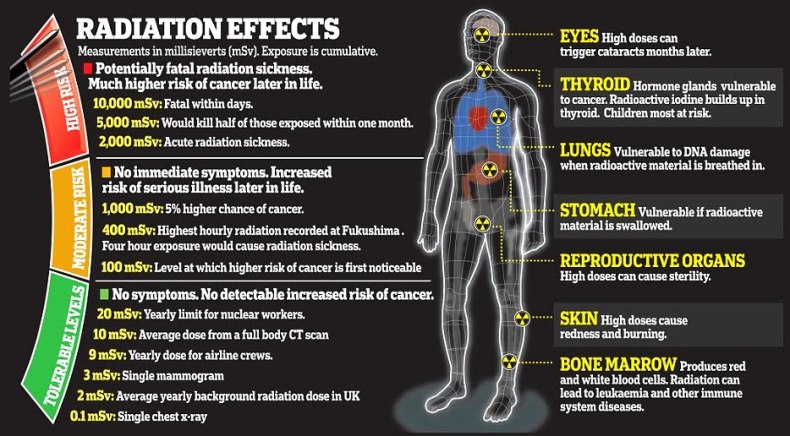
Tony Webb, May 17, 2026, https://mail.google.com/mail/u/0/?tab=rm&ogbl#inbox/WhctKLcDwkXLRPthNZwfjCSsBVWXNmPvNPFqnmqNVGDcPLVtBDMvdgXHsDPZrKHkgNfHZjG?projector=1&messagePartId=0.1.1
Changes for worse or better protection for workers and the public is on the international
and national political agenda in a number of countries. Trade Union, environment and
public health groups around the world are concerned that the USA is considering proposals
that would weaken radiation protection standards at a time when the scientific evidence
suggests these need to be significantly tightened.
Our concern arises as a result of a Directive (EO 14300) 1 issued in May 2025 by US President
Donald Trump requiring the US Nuclear Regulatory Commission (NRC) to review nuclear
safety regulations with particular reference to radiation protection of workers and the
public. The Directive instructs the NRC to abandon fundamental principles that have
formed the basis for radiation protection for much of the past century. These include: the
internationally accepted position that there is no threshold or safe level of exposure; that,
as a consequence, all exposures should be kept as low as reasonably achievable (ALARA) ;
and all exposures to workers and the public be kept below strict annual limits in line with
the best evidence of radiation-induced health risks.
The evidence used to set current standards was drawn mainly from the studies of cancer
rates among the Japanese A-bomb survivors who were exposed to relatively high doses over
short time periods. Since then studies of workers in nuclear power facilities exposed to
lower doses over long time periods show higher rates of cancer than predicted by the
Japanese studies. Rather than indicating any threshold these studies suggest that at low
doses the cancer rates are proportionately higher than expected from the Linear No-
Threshold model used to set current standards. 2 Worker studies also show elevated rates of
cardio-vascular diseases 3 , and increased rates of dementia 4 . In addition, studies on
populations around nuclear power plants are now showing higher cancer rates affecting
particularly children 5 and the elderly 6 – correlated to how close they lived to these facilities.
Despite this mounting evidence that exposure limits should be lowered the likely result of
changes in line with the Presidential directive would be to increase the permissible exposure
limit for workers and the public to five times the current internationally recommended
level.
The US NRC is clearly faced with a dilemma. To adopt the changes demanded by the
President would require reversing its 2021 decision that specifically rejected these same
proposals 7 . The initial date for publication of the NRC’s draft response for public
consultation was 23 February 2026. This was deferred to 30 April and again at short notice
to 24 June. One might speculate that despite large scale resignations and lay-offs among
NRC staff there remain some with scientific integrity opposing the changes. However the
final revision of standards is required by end of November 2026. Given the President’s
record for seeking retribution on government representatives or officials who oppose his
plans it is hard to see any outcome from the NRC other than a change to weaken the US
standards.
There will also likely be pressure on international and national standards agencies to align
with changes in the USA. Some push-back can be expected. Already the heads of European
standards agencies have issued a statement supporting the LNT and ALARA principles and insisted that exposure standards be set on the basis of the scientific evidence without
undue influence. 8 However NRC changes in line with the Trump Presidential Directive will
embolden the nuclear power lobby and create pressure for change where there are joint
ventures involving US military or industrial interests. These changes are also likely to
impede public pressure for review and improvement of current standards.
In Australia, for example, there are a number of joint ventures in uranium and radioactive
rare earths and mineral sands mining and the government has already established a
separate Naval Nuclear Power Safety Regulator (ANNPSR)to oversee all aspects of
construction, operation, maintenance, decommissioning and nuclear waste management
under the Australia-UK-US (AUKUS) nuclear submarine program. While these standards are
expected to be consistent with those of the current Australian Radiation and Nuclear Safety
Agency (ARPANSA) the pressure for change can come from either agency. Hopefully it will
be politically independent science-based pressure to not merely oppose the direction
prompted by the US President’s directive but for better standards to protect health of
workers and the public where they are routinely exposed to ionising radiation.
References and Further Reading……………………………………
No comments yet.
-
Archives
- October 2026 (119)
- September 2026 (339)
- August 2026 (330)
- July 2026 (355)
- June 2026 (287)
- May 2026 (306)
- April 2026 (356)
- March 2026 (251)
- February 2026 (267)
- January 2026 (308)
- December 2025 (358)
- November 2025 (359)
-
Categories
- 1
- 1 NUCLEAR ISSUES
- business and costs
- climate change
- culture and arts
- ENERGY
- environment
- health
- history
- indigenous issues
- Legal
- marketing of nuclear
- media
- opposition to nuclear
- PERSONAL STORIES
- politics
- politics international
- Religion and ethics
- safety
- secrets,lies and civil liberties
- spinbuster
- technology
- Uranium
- wastes
- weapons and war
- Women
- 2 WORLD
- ACTION
- AFRICA
- Atrocities
- AUSTRALIA
- Christina's notes
- Christina's themes
- culture and arts
- Events
- Fuk 2022
- Fuk 2023
- Fukushima 2017
- Fukushima 2018
- fukushima 2019
- Fukushima 2020
- Fukushima 2021
- general
- global warming
- Humour (God we need it)
- Nuclear
- RARE EARTHS
- Reference
- resources – print
- Resources -audiovicual
- Weekly Newsletter
- World
- World Nuclear
- YouTube
-
RSS
Entries RSS
Comments RSS


Leave a Reply