‘The odds are not in our favour’: who sets the Doomsday Clock – and what can they tell us about the future of humanity?
because nuclear bombs have not been used since 1945, the public has developed a false sense of security. We don’t like to contemplate the role played by luck. “We’ve been lucky, because the odds are not in our favour. The more weapons that exist, for longer, the more likely it is something will go wrong,”
Guardian Sophie McBain, Sat 9 May 2026
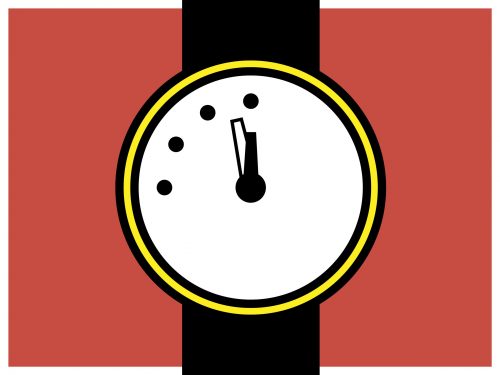
The Earth is getting hotter. Conflicts are raging, in the Middle East and Ukraine, each increasing the chance of nuclear war. AI is infiltrating almost every aspect of our lives, despite its unpredictability and tendency to hallucinate. Scientists, tinkering in labs, risk introducing new, deadly pathogens, more destructive than Covid. Our pandemic response preparedness has weakened. The Doomsday Clock – a large, quarter clock with no numbers, keeps ticking, counting down the seconds until the apocalypse. Tick. Tick. Tick. In January, we reached 85 seconds to midnight. Experts believe humanity has never stood so close to the brink.
“What we have seen is a slow almost sleepwalk into increasing dangers over the last decade. And we see these problems growing. We see science advancing at a rate that defies our ability to understand it, much less control it,” says Alexandra Bell, CEO of the Bulletin of the Atomic Scientists, the organisation that sets the Doomsday Clock. She speaks of the “complete failure in leadership” in the US and other countries, which are doing little to address global, catastrophic threats, even as they feed into one another. Climate change increases global conflict, for instance, and the incorporation of AI into nuclear decision-making is, frankly, terrifying.
Bell speaks over video call from her office in Washington DC, which is decorated with a huge world map, Day of the Dead cushions and a framed print of Barbie superimposed on to a mushroom cloud – a gift from a colleague in response to the Barbenheimer phenomenon, because in this field it helps to have a sense of humour.
Bell, who has spent much of her career working on nuclear arms control, believes that because nuclear bombs have not been used since 1945, the public has developed a false sense of security. We don’t like to contemplate the role played by luck. “We’ve been lucky, because the odds are not in our favour. The more weapons that exist, for longer, the more likely it is something will go wrong,” she says – though she’s quick to add that diplomatic disarmament and peace-making efforts also played a big role……………………………………………………………………………………………………………………………………………………………………………………………………………………………………………………………….. 2026: Inching to doomsday. It’s 85 seconds to midnight
In January, the clock was set to 85 seconds to midnight, the closest it has ever been. Within four weeks, the AI expert Gary Marcus argued on the Bulletin’s website that humanity was already “significantly closer to the brink”, after a showdown between AI developer Anthropic and the White House revealed Trump’s determination to have unrestricted military access to AI. A recent study found that in simulated war games, leading AIs from OpenAI, Anthropic and Google opted to use nuclear weapons 95% of the time.
Two days later, the US and Israel began bombing Iran, raising the risk of nuclear war. “Further escalation or expansion of the conflict could lead to actions driven by miscalculation, misperception or madness, as President Kennedy once said,” warned Alexandra Bell, who succeeded Bronson as president of the Bulletin in 2025. From the start, she worried about the lack of a plan to secure Iran’s nuclear materials, and that other countries would conclude that having nuclear weapons is the only way to maintain their security…………………………………………………………………………………………………………………………………… https://www.theguardian.com/science/2026/may/09/doomsday-clock-ai-iran-ukraine-war-climate-breakdown-nuclear-apocalypse
No comments yet.
1 This Month

9 September – online public forum THREE MILE ISLAND:
7-8:30 PM ET,
Legacy, resistance to reopening – https://us02web.zoom.us/webinar/register/WN_-LGJU4j6TD2Hgf0rpgAr1A#/registration
The nuclear industry and the U.S. Nuclear Regulatory Commission are threatening to restart Pennsylvania’s permanently closed and decommissioning Three Mile Island Unit 1 nuclear power station. Three expert speakers will present the resistance to this dangerous misadventure in a webinar hosted by the Clamshell Alliance, Beyond Nuclear and Massachusetts Peace Action.


No Nuclear in Cwm Llynfi! Stop the nuclear power station near Maesteg.
To see nuclear-related stories in greater depth and intensity – go to https://nuclearinformation.wordpress.com
-
Archives
- August 2026 (330)
- July 2026 (355)
- June 2026 (287)
- May 2026 (306)
- April 2026 (356)
- March 2026 (251)
- February 2026 (267)
- January 2026 (308)
- December 2025 (358)
- November 2025 (359)
- October 2025 (375)
- September 2025 (257)
-
Categories
- 1
- 1 NUCLEAR ISSUES
- business and costs
- climate change
- culture and arts
- ENERGY
- environment
- health
- history
- indigenous issues
- Legal
- marketing of nuclear
- media
- opposition to nuclear
- PERSONAL STORIES
- politics
- politics international
- Religion and ethics
- safety
- secrets,lies and civil liberties
- spinbuster
- technology
- Uranium
- wastes
- weapons and war
- Women
- 2 WORLD
- ACTION
- AFRICA
- Atrocities
- AUSTRALIA
- Christina's notes
- Christina's themes
- culture and arts
- Events
- Fuk 2022
- Fuk 2023
- Fukushima 2017
- Fukushima 2018
- fukushima 2019
- Fukushima 2020
- Fukushima 2021
- general
- global warming
- Humour (God we need it)
- Nuclear
- RARE EARTHS
- Reference
- resources – print
- Resources -audiovicual
- Weekly Newsletter
- World
- World Nuclear
- YouTube
-
RSS
Entries RSS
Comments RSS
 nuclear-news
Leave a comment