US’s Erosion of the Right to Cartoon Is No Laughing Matter
Hank Kennedy, April 9, 2026 https://fair.org/home/uss-erosion-of-the-right-to-cartoon-is-no-laughing-matter/
During World War II, cartoonist Bill Mauldin was summoned to a meeting with Gen. George S. Patton. Mauldin’s Stars and Stripes cartoons drew Patton’s ire over his matter-of-fact depictions of war and American GIs.
To Mauldin, war was no fun adventure. In Up Front, his Willie and Joe were war-weary and disheveled soldiers, not heroes ready for movie stardom. They expressed a darkly comic view of the life of an infantryman. In an exemplary cartoon, one of the duo says to a medic attempting to hand out a medal: “Just gimme th’ aspirin, I already got a Purple Heart.”
Mauldin avoided punishment when Gen. Dwight Eisenhower circulated a letter instructing all officers “not to interfere” with “such things as Mauldin’s cartoons” (Oklahoman, 4/16/82). Mauldin won the Pulitzer twice for his editorial cartooning, once during the war and once afterwards.
Perhaps Donald Trump’s Pentagon saw itself as acting in the Patton tradition when it eliminated comics from Stars and Stripes. As FAIR (3/20/26) previously documented, Pete Hegseth has taken steps to crack down on the independence of the Pentagon’s own newspaper. Among the new guidelines to promote “good order and discipline” is a ban on syndicated material, including comics (Stars and Stripes, 3/13/26). US servicemembers have now been saved from the woke, subversive influences of Doonesbury, Pearls Before Swine and, perhaps worst of all, Beetle Bailey.
A global trend
Hegseth’s anti-comics viewpoint is part of a global trend. Cartooning for Peace, Cartoonists Rights, Reporters Without Borders and several others have teamed up to produce Under Pressure; the March 2 report surveys the status of caricaturists around the world.
Under Pressure collects the stories of some of the most grave casualties in the global war on satire. Egyptian Ashraf Omar has been imprisoned for over a year, awaiting trial under specious charges of terrorism (Committee to Protect Journalists, 3/2/26). Saudi Cartoonist Mohammed Al Ghamdi (pen name Al Hazza) faces a 23-year sentence for “sympathizing with Qatar” (Reporters Without Borders, 7/23/25)—reflecting a since-resolved quarrel between the two governments—and because he allegedly “insulted the kingdom of Saudi Arabia” . In 2024, Palestinian cartoonist Mahasen al-Khateeb was killed in Gaza by Israeli bombardment (Middle East Eye, 10/20/24).
When the survey turns to the United States, things remain ominous. Kak, the president of Cartoonists for Peace whose work appears in L’Opinion, found the “same tactics” that appear in authoritarian regimes, or those headed in a dictatorial direction, “are being used” in the US. He continued that “the ‘Land of the Free’ is now flashing bright red on our threat map,” putting the US in the same crowd as Iran, India, Turkey and Russia.
It’s quite a shift from the 2023 report Cartoonists on the Line, which had no section dedicated to the United States. Much has changed for the worse in three years.
Trump has long mused about using official pressure to suppress satirical responses to his government. In 2018, he threatened to sue Saturday Night Live over their mockery of his administration (Mother Jones, 12/16/18). His FCC chair, Brendan Carr, argued that it was in the “public interest” to threaten Jimmy Kimmel’s late-night ABC show over the host’s comedy (Variety, 12/17/25). These words and deeds have created a climate of fear in the United States, one that political cartoonists are feeling.
‘Long overdue for a housecleaning’
The report cites a few US examples that paint a dark portrait of freedom of expression under the second Trump administration. Some of them have previously been covered by FAIR, including the resignation of Ann Telnaes from the Washington Post (FAIR.org, 1/7/25), the firing of Palm Beach Post editorial page editor Tony Doris (FAIR.org, 3/27/25) and Bob Whitmore’s firing and belated reinstatement to Creative Loafing (FAIR.org, 9/30/25).
There are other examples, however, that deserve more examination.
In 1999, Felipe Galindo (Pen name Feggo) drew “4th of July From the South Border,” an endlessly reproduced and reprinted piece criticizing the militarization of the border with Mexico. Starting in 2022, Feggo’s work hung in the Smithsonian’s National Museum of American History as part of the ¡Presente! A Latino History of the United States exhibit. Feggo’s illustration was taken down after the Trump White House (8/21/25) attacked it as part of an “anti-American exhibition” that showed the US’s legacy of “colonization” and the history of Latino “victimhood and exploitation.” A crowing editorial in the Washington Examiner (8/24/25) asserted “the Smithsonian is long overdue for a housecleaning” over its “fashionable, culturally Marxist ideas.” The New York Times (3/28/25) described Trump’s interference with the Smithsonian as seeking “a more positive view of American history.” More positive for whom, is a question left unasked. Artist Rigoberto Gonzalez, whose “Refugees Crossing the Border Wall Into South Texas” was likewise removed, compared the administration’s censorship to the Nazi campaign against “degenerate art” (NPR, 8/24/25).
Julie Trébault of Artists at Risk Connection, who wrote Under Pressure‘s section on the United States, said it was a “rare and significant move” for the executive branch to single out “a specific work for removal from a federal museum.”
‘Direct threats’
The report cited another Pulitzer winner, Adam Zyglis, in its section on the United States. His July cartoon for the Buffalo News (7/7/25) on flooding in Texas showed a MAGA hat-sporting Texan being swept away while proclaiming, “Gov’t is the problem not the solution!”
The New York Post (7/10/25) reran a Fox News piece (7/9/25) that slammed the cartoon as “vile.” The Post’s conscience is an interesting development, considering that the paper ran a cartoon in 2009 comparing President Obama to a chimpanzee (Guardian, 2/18/09), echoing a well-known racist trope.
The slings and arrows of press criticism were nothing compared to what was to come. In response to this cartoon, Zyglis was subject to numerous death threats. An appearance at Buffalo Museum was canceled over public safety concerns (Politico, 7/11/25). The Association of American Editorial Cartoonists, the Society of Professional Journalists and the Committee to Protect Journalists all released statements condemning the threats and supporting Zyglis (Daily Cartoonist, 7/17/25).
Trébault notes this as a sinister development. To criticize “the government’s actions or positions,” she wrote, “now exposes artists to direct threats.”
Heads in the sand
Unfortunately, Under Pressure has received little coverage in the United States, excepting the Daily Cartoonist (3/4/26). This contrasts with the coverage in New African Magazine (3/2/26), which gave the incidents the report highlights on that continent wider publicity.
The lack of attention media outlets gave to Under Pressure comes at a dangerous time for press freedom. The Inter American Press Association, a hemispheric media watchdog, recently classified the United States as a nation with “‘restrictions’ on freedom of speech” and of the press (AP, 3/10/26). By not giving reports like Under Pressure attention, media outlets are placing their heads in the sand.
Beyond open political censorship, there are also economic pressures on political cartoonists. Many newspapers do not employ their own cartoonists. Instead they choose material from syndicates, which reduces the amount of total cartoonists employed. It’s simple math. Why hire a dedicated cartoonist when syndicated material can be purchased for a fraction of the price?
The venues for cartoonists are also shrinking and sometimes disappearing. Since 2005, around 3,500 newspapers have shut down (Poynter, 10/20/25). Publications like the Atlantic Journal-Constitution, the Newark Star-Ledger and the Pittsburgh Post-Gazette are either ending their print editions or shutting down entirely. Cartoonist Walt Handelman (Editor & Publisher, 2/18/26), recently retired from the New Orleans Times-Picayune and the Advocate, said he was “optimistic about satire…. The real question is, how do you make a professional living doing it.”
Are there still political cartoonists out there worth looking for? Of course. In These Times has a vibrant comics section with witty and insightful commentary from the likes of Mattie Lubchansky, Jen Sorenson, Tom Tomorrow and others. The annual collection World War 3 Illustrated provides a perspective not likely to be found in other outlets, as exemplified by last year’s issue dedicated to Palestinian cartoonists. In between winning awards for Insectopolis, his comic study of creepy crawlies, Peter Kuper’s work enlivens The Nation. Cartoonists may be “under pressure,” but the best of them are capable of rising to the challenge.
Chernobyl’s 40-year legacy: haunting photographs from the radiation zone
The Chernobyl disaster of April 1986 was the beginning of the end of
the Soviet Union. The photographer Gerd Ludwig, who has visited the site 12
times, explores its legacy with Mark Galeotti.
As the German-American
photographer Gerd Ludwig’s extraordinary photographs on these pages show,
however, Chernobyl is neither gone nor forgotten. Ludwig first visited the
site in 1993 and returned 11 times over the decades, most recently last
month. The disaster remained a baneful presence through so many
developments: the failure of Mikhail Gorbachev’s efforts to reform the
USSR, the initially cordial but ultimately bad-tempered divorce of Russia
and Ukraine, and even the conduct of today’s war.
Chernobyl will remain
with us for a long time, not least because there are some distinct
parallels to the present day.
Times 11th April 2026, https://www.thetimes.com/world/europe/article/chernobyls-40-year-legacy-haunting-photographs-from-the-radiation-zone-k8bkhh79x
Finland Is About to Open the World’s First Permanent Nuclear Waste Site
By Haley Zaremba, Oil Price, – Apr 13, 2026
- Finland’s Posiva is on the verge of receiving an operating license for the world’s first permanent nuclear waste disposal facility, built 400 meters underground in 1.9-billion-year-old bedrock at a cost of 1 billion euros.
- Global spent nuclear fuel stocks are set to surge alongside the nuclear energy renaissance, but as of 2024, the U.S. alone faces a $44.5 billion liability with no permanent storage solution in place.
- The U.S. is inching forward: ARPA-E’s SCALEUP Ready program has directed $40 million to two deep borehole disposal projects, including one from Deep Isolation, which calls it the biggest milestone in the company’s history.
Nuclear energy is experiencing a resurgence in popularity on a global scale, thanks to a resurgence in energy security anxieties worldwide. The AI boom has majorly ramped up energy demand projections around the world at the same time that climate pledges are inching dangerously close with perilously little progress to show. Add to this a near-endless cycle of energy crisis and geopolitical conflict, and you’re presented with a majorly heightened energy trilemma: how to source energy that is sufficient, affordable, and sustainable. To solve this puzzle, nuclear energy — a reliable round-the-clock source of carbon-free energy production — can no longer be ignored.
But a nuclear renaissance, while a no-brainer for energy security and climate goals, will also come with a major uptick in nuclear waste, posing a big problem for public health and safety, as well as for the taxpayers that fund its maintenance. Between the 1950s and 2022, it is estimated that nearly 400,000 tons of spent nuclear fuel were generated on a global scale. Of those 400,000 tons, one-third has been ‘recycled’ in a complex and costly process, and two-thirds remain in temporary storage, either in nuclear fuel pools on-site at individual nuclear energy plants or in dry cask storage sites.
However, neither of these storage options are considered to be permanent solutions, and the global quantity of radioactive nuclear waste is about to explode. In fact, the policy and science behind the storage and disposal of spent nuclear fuel remains a critical liability at a global scale, and especially in the United States. As of 2024, it was estimated that the United States’ spent fuel liability clocked in at a jaw-dropping $44.5 billion.
A report from the National Center for Energy Analytics published earlier this month blasts the United States, the world’s biggest nuclear energy producer, for its kick-the-can-down-the-road approach to this critical issue, decrying that “Federal [nuclear waste] management has been a major black eye and policy failing for nuclear energy generation and technology.”
However, the world is, at long last, currently making great progress toward establishing the world’s first-ever permanent nuclear waste disposal site. In fact, a site on the West Coast of Finland is expecting to receive its license to begin operations in just a few months, an incredibly short stretch of time compared to the more-than two decades that the facility has been under construction. The facility will house canisters of spent fuel 400 meters underground in a remote region, housed in earthquake-resistant 1.9 billion-year-old bedrock……………………………………………………………………………………………………………………………. https://oilprice.com/Alternative-Energy/Nuclear-Power/Finland-Is-About-to-Open-the-Worlds-First-Permanent-Nuclear-Waste-Site.html
America Is Losing the World—and It Doesn’t Know How to Stop
April 10, 2026, Joshua Scheer
The so-called ceasefire is already cracking—and anyone paying attention knows why.
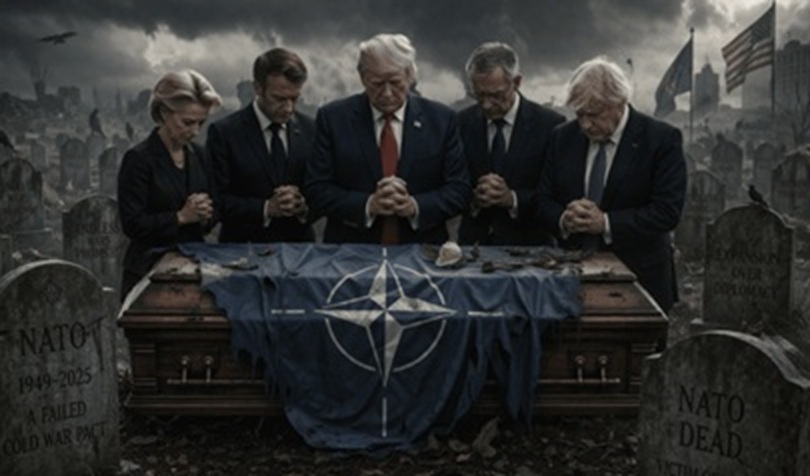
In this wide-ranging and unsettling conversation, retired U.S. Colonel Lawrence Wilkerson pulls back the curtain on a geopolitical order that is not stabilizing, but unraveling. The war with Iran isn’t ending—it’s mutating. NATO isn’t adapting—it’s collapsing. And the United States, rather than recalibrating to a changing world, is doubling down on the very policies accelerating its decline. With Wilkerson saying of NATO: “I think NATO’s dead. I’ve said that before, I’ll say it again. It may take a few months, even a couple of years, for everyone to finally pronounce it dead and say a prayer over its grave—but it’s dead.
Trump may never formally declare the United States is leaving NATO. He’s not that kind of leader—he’s mercurial, inconsistent. You’re not going to get a clear, cogent statement out of him. But it’ll happen all the same.
This is already a fatal situation. Ukraine put the dagger in NATO’s heart—but the wound was there long before that. It began when we broke our promises to Russia after George H.W. Bush, when we failed to integrate them into Europe.
Every president since—starting with Clinton—drove that knife in deeper.”
Wilkerson, a former insider at the highest levels of American power, doesn’t speak in euphemisms. He describes a system running on inertia, denial, and violence—where ceasefires serve as cover, diplomacy is treated as theater, and entire regions are sacrificed to maintain a crumbling illusion of control. The result is not just endless war abroad, but growing instability at home, with the specter of internal fracture no longer unthinkable but increasingly probable.
This is not analysis meant to reassure. It is a warning—from someone who has seen how these decisions are made, and where they lead.
The ceasefire is a lie—and the system selling it knows it.
In this blistering conversation, retired U.S. Colonel Lawrence Wilkerson doesn’t hedge, sanitize, or play along. He calls it what it is: a collapsing global order held together by deception, violence, and delusion. The so-called ceasefire with Iran, he warns, may be nothing more than a tactical pause—a familiar pattern where diplomacy becomes cover for the next round of escalation.
And the implications go far beyond one war.
Wilkerson flatly declares that NATO is “dead”—not weakened, not strained, but functionally finished, a relic already gutted by decades of broken promises and strategic arrogance. He points to a United States that has “created an enemy out of the whole planet,” pursuing confrontation over adaptation as global power shifts away from Western dominance.
Meanwhile, on the ground, the brutality continues. Civilians are being killed at scale, entire cities reduced to rubble, while political leaders posture and stall. There is, in Wilkerson’s assessment, “no inclination whatsoever” from Israeli leadership to stop the slaughter in Lebanon—making any broader ceasefire structurally impossible from the start.
But perhaps most alarming is what comes next.
Wilkerson warns that the United States is not just losing its grip abroad—it is fracturing internally. He describes a political system corrupted across branches, a military being reshaped along ideological lines, and a society saturated with weapons and polarization. The result? A credible path—not hypothetical, but emerging—toward internal conflict.
An empire in denial. A war without an endpoint. And a leadership class, in Wilkerson’s words, willing to “bomb the hell out of everything” rather than confront reality.
But the deeper story isn’t just about Iran or Israel. It’s about a global system breaking apart in real time—and leaders who would rather burn it down than adapt. Wilkerson describes a United States clinging to dominance it no longer has, fighting the rise of a multipolar world with sanctions, bombs, and denial. The result, he warns, is not stability—but escalation on multiple fronts at once.
He points to something even more destabilizing: a fundamental transformation in how power operates. Warfare is changing. Economics are shifting from sea to land. Alliances are dissolving. And yet Washington continues to act as if nothing has changed—doubling down on outdated strategies while the rest of the world moves on without it.
Some of the most important things for all Americans to understand—especially those who may not already—are truths like this from Wilkerson about the United States’ global position: “We’ve created an enemy out of the whole planet—and now we’re shocked the world is pushing back.”
The United States is confronting a reality it refuses to face: the world is changing, and where that change is acknowledged, it is met not with adaptation but with resistance—fought “tooth and nail.” At home, the decay is just as severe. The country, as Wilkerson puts it, has been “damned for a generation,” with dysfunction now entrenched across its core institutions—from Congress to the Supreme Court. That internal fracture is no longer abstract; it carries the real potential for conflict, with multiple factions poised in a nation that has “more guns than people.” And all of this is unfolding at the worst possible moment—during a period of imperial decline—where, in his blunt assessment, this is precisely when you do not want incompetent leadership steering a nation losing ground to rising powers.
As Wilkerson mentioned, there is is the distinct possibility of a civil war, with Wilkerson saying, “You have the potential for a lot of different people out there on the streets—and we have more guns than people.”
I would add this: when some states seem determined to drag us back into the dark ages—stripping away rights, narrowing the horizon of what it means to be free—and when our national leadership speaks of little beyond funding the machinery of war, it forces a reckoning. It makes one confront the unthinkable as something increasingly possible.
A nation cannot endure when its parts move in opposite directions—when some push toward repression while others struggle toward dignity and survival. At a certain point, unity becomes a fiction we tell ourselves to avoid the harder truth: that what we call a country may already be fractured beyond repair.
And if that is the case, then the question is no longer whether we hold together, but whether breaking apart might be the only way to prevent something far worse from tearing us apart first.
On that not at home, the consequences are just as severe. Wilkerson outlines a country hollowed out by corruption, gripped by polarization, and increasingly incapable of governing itself. Institutions are eroding. Trust is collapsing. And in that vacuum, more extreme forces are organizing, arming, and preparing for confrontation.
This is not just a warning about war abroad.
It’s a warning about what happens when a declining power refuses to recognize its own decline—and drags the world down with it.
U.S. Media finally acknowledging Israel’s central role in Trump’s criminal war on Iran
11 April 2026 AIMN Editorial, By Walt Zlotow , https://theaimn.net/u-s-media-finally-acknowledging-israels-central-role-in-trumps-criminal-war-on-iran/
For the first 5 weeks of President Trump’s criminal war on Iran, mainstream media pretended this was totally a US war to defend the Homeland by destroying Iran’s nuclear bomb capability and neutering its missile arsenal. Israel was barely mentioned tho they started the war by assassinating Iranian leader Ali Khamenei. Israel’s relentless bombing of Iran was largely ignored to focus on the devastating US bombing. Also ignored was Iran’s robust retaliation causing the greatest damage to Israel in its 78 year history.
The reality is that on February 28th Israel realized its three decade dream of getting a US President to serve as their proxy to destroy Iran as Israel’s last hegemonic rival in the Middle East. Israel Prime Minister Benjamin Netanyahu has spent the entire 21st century lobbying George W. Bush, Barack Obama, Donald Trump in term one and Joe Biden to take out Iran. Netanyahu finally hit pay dirt with Donald Trump in term two. On February 11 Netanyahu met with Trump, assuring him that once Israel assassinated Iranian leader Ali Khamenei, the regime would collapse within a few days with Iran’s populous rallying around their US liberators.
Gigantic mistake. The Iranian populous coalesced around the regime which retaliated with devastating effectiveness, not only inflicting massive damage on US, Israeli resources but shutting down the Strait of Hormuz, inflicting worldwide economic decline.
Knowing he’s lost, Trump is seeking an off ramp to save his presidency. Netanyahu, the lead actor in this lost war, will have none of it. He’s sabotaging the ceasefire Trump agreed to which would have allowed Iran to survive, retain control of the Strait and keep its nuclear enrichment and its defensive missile arsenal. Netanyahu’s massive bombing of Lebanon, forbidden by Iran’s 10 Point peace plan, puts the ceasefire hanging by a thread.
Mainstream media has taken note, beginning to allow analysts to publicly state this was largely Netanyahu’s war, not Trump’s. MS NOW’s Jen Psaki gave former Secretary of State John Kerry, who negotiated the 2015 Iran nuclear agreement, extensive time to review Netanyahu’s endless demands that US presidents destroy Iran on their behalf. Kerry noted how Netanyahu hyped the imminent Iranian nuclear threat to each president which was swallowed whole only by President Trump. A nuclear agreement meant nothing to Netanyahu. Regime change in a failed state Iran was the sole goal.
The more mainstream media tells the truth about Israel’s central role in Trump’s lost war upending the world economy, the more Trump will be pressured to break with Israel. Whatever Netanyahu has on Trump, whether the hundreds of millions in campaign cash or scandalous Epstein secrets, must be disregarded if Trump has any chance of salvaging his presidency, and more importantly, the world economy.
Keep it up, mainstream news. Expose the dirty secret of Trump’s dirty war launched on orders of Benjamin Netanyahu. If Trump does cut off the weapons train, Israel’s rampage against Iran, Syria, Lebanon, Gaza and Yemen may be over. Time to force Israel to make peace with their neighbours, not endless war.
Mainstream news can assist that noble goal.
War has given Iran new leverage for nuclear programme, say US former envoys

Negotiators of 2015 deal say Tehran has seen how cutting off Hormuz strait can help it counter asymmetry of power
Andrew Roth in Washington. 10 Apr 26, https://www.theguardian.com/world/2026/apr/10/middle-east-crisis-has-given-iran-new-way-to-resist-nuclear-limits-say-former-us-iran-envoys
Former US envoys who dealt with Iran have said that the US-Israeli attack on Iran and Tehran’s subsequent closure of the strait of Hormuz have given Iran new tools and resolve to resist pressure to shutter its nuclear programme.
Two senior negotiators for the Joint Comprehensive Plan of Action (JCPOA), the Obama-era agreement to limit Iran’s nuclear uranium enrichment in exchange for sanctions relief, said the Trump administration’s war had handed Iran a coveted weapon by demonstrating its ability to cut off the strait of Hormuz, an economic chokehold that one negotiator said would help Iran “balance the asymmetry of power” with the US.
“This administration, to say it more politely, cannot unsoil the bed,” said Alan Eyre, a former diplomat who helped negotiate the JCPOA. “There’s no way to get back to the status quo ante before this war started.”
In 2018, Donald Trump withdrew the US from the JCPOA, which barred Tehran from enriching its uranium to weapons-grade. Trump called the deal, which lifted some sanctions on Iran, “one of the worst and most one-sided transactions” the US had ever entered into.
But after a strategy of high pressure – first through returning sanctions and then, after Trump’s return to power in 2025, a war that was meant to destroy Iran’s nuclear and ballistic missile capabilities – the current US administration has found itself in more complex negotiations than before its campaign of economic and military strikes.
“The strait of Hormuz is such a good strategic deterrent [and] to an extent it makes the nuclear programme less crucial,” said Eyre. “It would have taken a lot of time and a lot of risk for them to weaponise [nuclear arms] … But they’ve got a really cool threat now, which is incredibly easy to turn on and off.”
Diplomatic sources have indicated that the Iranian delegation believes this is an unprecedented set of circumstances to negotiate on favourable terms, as the Trump administration appears keen to exit the conflict quickly.
A US delegation led by JD Vance will meet Iranian negotiators in Islamabad, Pakistan this weekend. The vice-president has been a less vocal booster of the war than other members of the administration such as the secretary of defence, Pete Hegseth, and the secretary of state, Marco Rubio.
But while the US could withdraw its air power from the conflict, it has not presented a clear plan for reopening the strait of Hormuz – either through force or a negotiated settlement.
Robert Malley, a Yale lecturer who was former special envoy to Iran under Joe Biden and a lead negotiator on the JCPOA, said: “The strait of Hormuz wasn’t an issue before the US decided to strike. You have all the issues inherited from the past, but you just added a few, because the US has handed Iran a tool that it always had, but it never thought of using, or never felt it could.”
The chances for a comprehensive agreement addressing all of the US and Iran’s grievances appear slim. While the Obama administration sought to negotiate exclusively on Iran’s nuclear programme in the lead-up to the 2015 agreement, the Trump administration has sought a broader deal limiting Iran’s ballistic missiles programme and its support for regional proxies, such as Hezbollah in Lebanon and the Houthis in Yemen.
But a catch-all deal appears to be fraying at the edges. Israel’s continued strikes on Lebanon, a country which Iran believed was part of the deal but the US has said was not, have already threatened its full collapse, with Iran’s Islamic Revolutionary Guard Corps maintaining its blockade on shipping and top officials publicly questioning the ceasefire.
As Malley noted, the Obama administration had chosen to seek a more limited deal with Iran because “for every element that the US and others will put on the table, Iran will put a reciprocal element on the table. This is not a one-way street.”
“I think Trump has been driven by two objectives that were in clear tension,” said Malley. “One was he wanted to be able to declare outright victory, and the other one is he wanted a quick exit.”
“Even though he may claim victory … It’s being contradicted every hour by what’s happening on the ground.”
John Gibbons: I’ve changed my mind on nuclear power — we don’t need it any more

Becoming energy independent is simpler than it’s ever been — wind and solar have the potential to free us from endless energy shocks
Sat, 11 Apr, 2026 , John Gibbons, https://www.irishexaminer.com/opinion/commentanalysis/arid-41825069.html
Nuclear power would, in the future, be “too cheap to meter”. This bold prediction was made by the chair of the US Atomic Energy Commission, Lewis Strauss, in September 1954. This was at the very dawn of the age of nuclear energy and it reflected the Utopian mood of the post-war era.
Fast forward to 2026, and while nuclear is no energy silver bullet, nor has it been an abject failure. Today, just under one tenth of total world electricity production is from nuclear reactors, which have the key environmental advantage of being virtually zero carbon.
Responding to the oil shocks of the early 1970s, France invested heavily in nuclear energy. Its 56 reactors account for about two thirds of total national electrical production, and it regularly exports surplus clean electricity to its European neighbours.
None of these plants are household names, for the good reason that France has managed its fleet of nuclear reactors well and avoided any major incidents over the last half century.
Ireland also looked seriously at the nuclear option, with proposals as far back as 1968 to build four nuclear power stations. These were revived some years later following the oil shocks and in late November 1973, the Irish government approved in principle the construction of a nuclear power station, with an initial budget of £100m. Carnsore Point in Co Wexford was selected as its location.
Growing public opposition to the Carnsore project, including two well-attended protest concerts at the site in 1978 and 1979, saw the government tiptoe away from plans to build a nuclear plant, and the idea was quietly shelved.
The disastrous nuclear accident at the Chernobyl power plant in April 1986 hardened public and political opinion decisively against nuclear energy.
In Ireland, this took the form of the Electricity Regulation Act, 1999, which set out in law a national prohibition on “the use of nuclear fission for the generation of electricity”. That, it seemed, was that.
Opposition to nuclear energy has long been an article of faith among environmentalists. The anti-war movement and the green movement largely coalesced around the idea that nuclear power was both intrinsically dangerous and associated with the proliferation of nuclear weapons. These fears are not totally unfounded. Many countries have indeed developed their civilian and military nuclear programmes in tandem.
In an ideal world, we would have neither nuclear power plants nor nuclear weapons, but that’s not the world we live in. As an environmental commentator, I took the view two decades ago that the unfolding climate emergency was by far the greatest threat we collectively face, and anything that could help in the fight to decarbonise the global economy had to be taken seriously. And yes, that absolutely included nuclear energy.
This was, to put it mildly, not a popular position to adopt. Many people who strongly support climate action are also fervently anti-nuclear. In late 2012, I took part in a green event at Carnsore Point and found myself the odd man out, facing a sceptical audience and an openly hostile fellow panellist, German Green MEP Rebecca Harms.
In 2006, German chancellor Angela Merkel stated: “I will always consider it absurd to shut down technologically safe nuclear power plants that don’t emit CO2.”
Five years later, under pressure from the German Greens in the aftermath of the 2011 nuclear accident at Fukushima, Japan, the government decided to shut down its 17 nuclear power plants, and the absurd became real, as lignite, an ultra-dirty fuel, largely replaced zero carbon nuclear.
Now, the wheel has turned again. In response to the disastrous Iran war, Ireland is now looking to rethink its position on nuclear, with Taoiseach Micheál Martin expressing an open mind on nuclear energy, while noting costs and timescales make it very much a long term option — and this assumes the Irish public would ever tolerate the construction of a nuclear power plant.
Having long supported nuclear power when it was widely opposed in Ireland, I now find myself in the opposite camp. I no longer believe nuclear power can or will play any part in Ireland’s energy future, and here’s why.
First, the cost. In late 2022, Finland’s Olkiluoto 3 nuclear reactor went online, 12 years behind schedule and three times over budget. The final cost exceeded €11bn. This was the first new nuclear power plant built in Europe in over 15 years. At full production, the Olkiluoto plant will supply around 1.6GW of power.
Last year, more than 10 times that amount of wind power was installed across Europe, while 65GW of new solar was deployed in Europe in 2025. In total, some 80GW of new clean renewable energy was added to the European grid last year — the peak equivalent of 50 Olkiluoto nuclear plants.
What changed my mind is that the facts have changed, and changed decisively, over the last decade and more as renewable energy technologies have rapidly matured.
Wind and solar, supported by battery arrays and e-fuels, are now the cheapest, cleanest sources of energy in history. Last year, Ireland alone added 1GW of new solar capacity, meaning we now have at peak a total of 8GW of green electricity, or the equivalent of five Olkiluoto plants.
To grasp the exponential nature of renewable energy roll-out, consider that in 2004, a total of 1GW of solar was deployed globally. Last year, the same amount was added every 12 hours.
Battery storage costs have fallen by an astonishing 90% over the last decade, with no sign as yet of this downward cost curve flattening out. According to the International Energy Agency, renewable power capacity is projected to increase by 4,600GW between 2025-2030.
You would need to build literally thousands of nuclear power plants to keep pace with renewable energy, yet barely 100 have even been commissioned worldwide in the last quarter century, while others, such as in Germany, and Japan, have been shut down.
Ireland has made huge strides in renewable electricity over the last decade in particular, and we need to double down on offshore wind and solar farms to power the electrification of our entire economy and society in the turbulent years ahead. Our continued reliance on fossil fuel imports places us at the mercy of an increasingly volatile global energy marketplace.
While the world’s existing nuclear plants should be maintained, I believe new nuclear power plants have no useful role in decarbonising and achieving energy independence quickly and at scale.
Worse, Irish politicians now dallying with nuclear may only serve to undermine our critical imperative to press ahead with the rapid roll-out of renewable energy.
John Gibbons is an environmental journalist and author of The Lie of the Land: A Game Plan for Ireland in the Climate Crisis
Ceasefire with Iran: Don’t hold your breath – Israel and US lie all the time
Donald Trump deceived millions of American voters with false promises of ending the wars, stopping globalization and industrial revival, and now he has proven himself to be one of the biggest puppets of Israel.
Trump: The United States will work closely with Iran, which we have determined has undergone what will be a very productive regime change! There will be no uranium enrichment, and the United States, in cooperation with Iran, will extract and remove all the deeply buried nuclear “dust”. (It is more than obvious that this ‘ceasefire’ is just a public relations gimmick and a plan to reset US and Israeli offensive operations.)
Bruce K. Gagnon , 9 Apr 2026, https://space4peace.blogspot.com/2026/04/ceasefire-with-iran-dont-hold-your.html
- Iran says the United States has agreed to the following:
1. A non-aggression commitment
2. Continued Iranian control over the Strait of Hormuz
3. Acceptance of uranium enrichment
4. Lifting of all primary sanctions
5. Lifting of all secondary sanctions
6. Termination of all UN Security Council resolutions
7. Termination of all Board of Governors resolutions
8. Payment of reparations to Iran
9. Withdrawal of US combat forces from the region
10. Cessation of hostilities on all fronts, including against Hezbollah in Lebanon
- Axios, citing a White House official: The ceasefire will take effect as soon as Iran opens the Strait of Hormuz.
- Iran’s National Security Council: The agreement stipulates the lifting of all sanctions and the release of frozen Iranian assets abroad. It is emphasized that this does not mean the end of the war, and Iran will only accept the end of the war when, considering the acceptance of Iran’s principles in the 10-article plan, its details are also finalized in negotiations.
- These negotiations will begin with complete distrust on Friday, April 10, in Islamabad, and Iran will allocate two weeks for these negotiations.
- Greater Iran and the Origin of Civilizations: We did not abandon our allies in Yemen, Lebanon, and Iraq; this was a condition for a ceasefire in all these countries.
- Kan Hebrew Channel: If the agreement includes Hezbollah, we must burn the [Israeli] state down.
- During this two-week period, Israel will bolster its defenses, the United States will reinforce its forces, and the global economy will be revitalized. However, the negotiations could very well be a charade, as has happened before, with America launching a new offensive accompanied by assassinations.
- There’s a saying in Farsi which says: “My eyes aren’t watering.” من چشمم آب نمیخوره Which means: “I don’t think anything will come out of this.” But….if this truly does get implemented, this might be the biggest victory (for Iran) of all modern time.
- Donald Trump deceived millions of American voters with false promises of ending the wars, stopping globalization and industrial revival, and now he has proven himself to be one of the biggest puppets of Israel, the World Economic Forum and the Bilderberg Group.
- Over 55 US lawmakers called for invoking the 25th Amendment after Trump threatened to destroy Iranian civilization. Former Trump ally Marjorie Taylor Greene called it “evil and madness.” Tucker Carlson urged military personnel to refuse orders; the Pope and UN Human Rights chief condemned threats against civilians as violations of international law.
- Moscow and Beijing blocked a Bahrain-drafted Security Council resolution on Hormuz, with Russia’s envoy calling it a “greenlit aggression” that ignored the conflict’s root causes. The two powers submitted an alternative text calling for negotiated settlement. China’s representative said the vetoed draft would have “added fuel to the fire.”
- Around 10 AM today, Iran’s Lavan oil refinery facilities on Lavan Island were attack by the enemies. In response, Iran struck targets inside UAE & Kuwait.
- Iran’s UN representative: Israel must adhere to the ceasefire in Lebanon; continued attacks will further complicate the situation and have dire consequences.
- Lebanese Health Minister: Hospitals are overflowing with the injured and victims, and we have hundreds of martyrs and wounded throughout Lebanon as a result of the Israeli strikes. The raid that targeted Shamshtar occurred during a funeral procession, when the enemy bombed the place, resulting in the martyrdom of all those present. “Eternal Darkness” is the name given by Israel to the new aggression against Lebanon.
- Lebanese hospitals are appealing for blood donations due to the large number of injuries and deaths in the major zionist offensive.
- US Chairman of the Joint Chiefs of Staff: Let’s be clear, a ceasefire is a temporary pause. The US Secretary of Defense told US forces involved in the war against Iran: Stay prepared.
- Iran’s IRGC Navy warned ships near the Strait of Hormuz that they must obtain permission from the IRGC naval forces to pass, stating over radio that any vessel attempting to transit without authorization “will be destroyed,” according to a recording shared with The Wall Street Journal.
- Trump: The United States will work closely with Iran, which we have determined has undergone what will be a very productive regime change! There will be no uranium enrichment, and the United States, in cooperation with Iran, will extract and remove all the deeply buried nuclear “dust”. (It is more than obvious that this ‘ceasefire’ is just a public relations gimmick and a plan to reset US and Israeli offensive operations.)
- Iranian media, quoting a high-ranking Iranian military source: We have begun a wave of attacks on US-allied countries in the region as a warning message to implement a ceasefire throughout the region, including Lebanon.
- Spain has called Israel’s continued attacks in Lebanon “unacceptable,” despite the recent U.S.–Iran two-week ceasefire. Foreign Minister José Manuel Albares said all fronts, including Lebanon, must stop.
- Israeli main opposition leader Yair Lapid: There has never been such a political disaster in all of our history. Israel wasn’t even at the table when decisions were made about the core of our national security. Netanyahu failed politically, failed strategically, and did not meet a single goal he set himself. It will take years to repair the political and strategic damage caused by arrogance, negligence, and a lack of planning. Israeli Channel 12 reports from a source: Washington will ask Tehran to cancel the ballistic missile program.
- U.S. Vice President JD Vance: Trump “lacks patience” to make progress on everything related to Iran. If the Iranians do not act in good faith, they will discover that President Trump is not to be trifled with.
- (Update): Iran has halted the passage of vessels through the Strait of Hormuz after Israel’s ceasefire violations against Lebanon — Fars.
As Rocket Launches Increase, They May Be Polluting the Skies
“We’re actually slowing down the repairing of ozone hole with the space industry. Which is quite something.”
Undark, By Ramin Skibba, 04.06.2026
Research suggests that rocket exhaust and debris could be threatening the ozone layer, though uncertainties persist.
Rocket launches used to be a rare occurrence. But with access to space proliferating, partly thanks to an abundance of commercial space companies, global launches have risen exponentially: In the last five years, they’ve nearly tripled. According to an analysis by SpaceNews, in 2025 alone, humans shot about 320 rockets into space.
All those rockets produce a fair amount pollution, from the sooty plumes that catapult them into orbit and beyond to derelict satellites that burn up upon reentry. Regulators have been monitoring and restricting other air pollutants especially since the 1970s, including the exhaust from cars and jet engines. Many researchers believe such regulations are overdue for rocket engines — especially because nobody really knows exactly how much damage those pollutants cause. “It might be another 10 years until we found how large the influences on the atmosphere actually are,” said Leonard Schulz, a geophysicist at the University of Braunschweig – Institute of Technology in Northern Germany. By that time, he added, the pollution could accumulate to the point that, you cannot easily reverse it.
Though space pollution is still small compared to the aviation industry, rocket exhaust may be gradually depleting Earth’s protective ozone layer, which is still recovering from the impacts of pollution from a class of chemicals called chlorofluorocarbons. (CFCs, as they are known, were once commonly used as coolant in refrigerators and air conditioners, among other uses, and were regulated in the late 1980s.) But with limited data and industry transparency, many unknowns and uncertainties persist, including the impacts of next-generation rocket fuels.
Compared to other sources of pollution, the effects of sending rockets into space and from space debris that comes back down from orbit “has been negligible,” said Christopher Maloney, an atmospheric scientist at the University of Colorado who works out of the Chemical Sciences Laboratory at the National Oceanic and Atmospheric Administration, or NOAA, with recent research on emissions from rockets and reentries. “But if you follow these trends, what is it going to look like?”
The boost in rocket launches is largely driven by the private sector, and in particular SpaceX’s Falcon 9 rockets, which are used in part to loft Starlink satellites into orbit. There are now about 10,000 such satellites, which provide internet services to remote regions. Starlink is just one example of a large network of satellites, known as megaconstellations, the deployment of which accounted for some 40 percent of rocket pollution as of 2022. “The proportion of those emissions coming from megaconstellations is growing every year,” said Connor Barker, a research fellow at the University College London who focuses on atmospheric chemical modeling. In January, SpaceX filed an application at the Federal Communications Commission for a megaconstellation of 1 million satellites, which are reportedly intended for orbiting data centers.
Additional launches have come from Chinese rocket companies that deploy satellites and provide spaceflights to the Tiangong space station and other missions; companies like the United Launch Alliance, Blue Origin, and Rocket Lab; and various European countries and Russia.
To account for pollution from both launches and reentries, Barker developed an online emissions tracker, which has shown a rapid increase in the pollution since 2020 — in particular, for the pollutants black carbon, also known as soot, as well as carbon dioxide and carbon monoxide. Barker expects the pollutants to continue rising for years. “We’re actually slowing down the repairing of ozone hole with the space industry,” he said. “Which is quite something.”……………………………………………………………………………………………………………………………………………………………………………………………………………………………..
Spacecraft pollute not just on their way up, but also when they’re on their way down. All those satellites, rocket bodies, and random chunks of debris floating in orbit are mostly made of metals, and they have to go somewhere. “The biggest issue is, nobody has looked at this for quite a long time,” said Schulz, the German geophysicist, who recently published a paper about such “space waste.”
…………………………………………………………………………………………………………………….Ultimately, researchers say, launch operators need to think about not only their rocket fuel, but the materials used to make their spacecraft. Because humanity depends on the ozone layer, if some of it were to disappear, the implications are clear — and different than those of climate change. “The environmental impact is an attack on the thing that makes life on Earth possible, the ozone layer,” Bannister said. “It’s very immediate.”…………………………………………………………………………………………………………………………………….. https://undark.org/2026/04/06/as-rocket-launches-increase-they-may-be-polluting-the-skies/?utm_source=Undark%3A+News+%26+Updates&utm_campaign=90003236de-RSS_EMAIL_CAMPAIGN&utm_medium=email&utm_term=0_5cee408d66-185e4e09de-176033209
All Wars Are Bankers’ Wars: Iran and the Bankers’ Endgame
As for Iran, it is not only the largest and strongest of the Islamic countries but operates the world’s only fully interest-free (riba-free) banking regime. This stands in direct contrast to the conventional Western model, which relies on interest as its primary revenue mechanism. “Money making money out of itself” underpins the global derivatives complex, which is built on rehypothecated, collateralized debt-at-interest.
April 10, 2026 Ellen Brown ScheerPost
“The powers of financial capitalism had another far reaching aim, nothing less than to create a world system of financial control in private hands able to dominate the political system of each country and the economy of the world as a whole.” —Prof. Caroll Quigley, Georgetown University, Tragedy and Hope (1966)
In February 2026, the United States and Israel launched surprise airstrikes on Iran. The officially proffered reasons — preventing Iran’s acquisition of a nuclear weapon and forestalling its aggression — have not held up under scrutiny. As James Corbett documented in recent Corbett Report episodes, the nuclear pretext appears to be recycled propaganda, and the scale and timing of the strikes raise deeper questions about motive.
The thesis that “All Wars Are Bankers’ Wars” was popularized by Michael Rivero in a 2013 documentary by that name. His accompanying article begins with a quote from Aristotle (384-322 BCE):
The most hated sort [of moneymaking], and with the greatest reason, is usury, which makes a gain out of money itself, and not from the natural use of it. For money was intended to be used in exchange, but not to increase at interest.
Rivero then traces how private banking interests have financed and profited from conflicts on both sides for centuries — from the founding of the Bank of England in 1694 to fund William III’s wars to modern regime-change wars.
Full-Spectrum Financial Dominance
Other commentators point to the report of the Project for the New American Century (PNAC) titled “Rebuilding America’s Defenses” (September 2000), which called for “full-spectrum” U.S. military forces to achieve global preeminence. It postulated the need for a “catastrophic and catalyzing event — like a new Pearl Harbor” to accelerate the military transformation the authors envisioned.
This was followed by a 2007 Democracy Now interview in which Gen. Wesley Clark revealed that weeks after 9/11, he had been shown a classified Pentagon memo outlining plans to “take out seven countries in five years”: Iraq, Syria, Lebanon, Libya, Somalia, Sudan, and finishing off with Iran. The first six have since been destabilized or regime-changed. Iran, considered the ultimate prize for Middle East dominance and oil control, remains the last one standing.
Why those seven, and why was Iran the ultimate prize? Greg Palast’s 2013 article titled “Larry Summers and the Secret ‘End-Game’ Memo” supplied the missing financial logic. In 1999, the world was opened to unregulated derivatives trading, so that sovereign bonds, oil flows, shipping routes, and war-risk policies could all be collateralized, rehypothecated (pledged multiple times over), and gambled upon. The lynchpin was the 1997 WTO Financial Services Agreement (the Fifth Protocol to GATS), which became operational in 1999.
None of the seven targeted countries joined the WTO, and they were also not members of the Bank for International Settlements (BIS). That left them outside the long regulatory arm of the central bankers’ central bank in Switzerland. Other countries that were later identified as “rogue states” were also not members of the BIS, including North Korea, Cuba, and Afghanistan.
As for Iran, it is not only the largest and strongest of the Islamic countries but operates the world’s only fully interest-free (riba-free) banking regime. This stands in direct contrast to the conventional Western model, which relies on interest as its primary revenue mechanism. “Money making money out of itself” underpins the global derivatives complex, which is built on rehypothecated, collateralized debt-at-interest.
The last piece in the financial control grid was detailed in David Rogers Webb’s 2024 book The Great Taking. The Everything Bubble, including what some commentators estimate to be more than a quadrillion dollars in derivative bets, is just waiting for a pin. When it bursts, it will trigger large institutional bankruptcies; and under the legal machinery Webb documents, the derivative players will take all.
The 2026 Hormuz insurance crisis triggered by Lloyd’s of London could be that pin. More on all that below.
The City of London and Lloyd’s Weaponize Chaos
For more than three centuries, the City of London – the “Square Mile” that is London’s financial center — has financed both sides of wars and sold insurance against the destruction that would follow. Lloyd’s of London is the insurance pillar of the City’s financial control grid. It is not actually an insurance company but is a corporate body that “operates as a partially-mutualized marketplace within which multiple financial backers, grouped in syndicates, come together to pool and spread risk.” …………………………………………………………………………………………………………………………………………………………………………………………………………………………………………………………………….
Iran’s system was designed to eliminate usury and align finance with real economic activity and risk-sharing rather than speculative debt. It has long been viewed as structurally incompatible with the interest-based, collateral-heavy architecture of City of London and Wall Street finance — an architecture that requires perpetual debt servicing and easily rehypothecated assets to feed the derivatives machine.
By rejecting interest at the national level, Iran has thus insulated itself and its financial partners from the control grid that has made the global “Great Taking” possible……………………………………………………………………………………………………………….
But the immediate need in the current context is to settle the conflict with Iran, and settle it fast, before another black-swan shock ignites the derivatives daisy chain and activates the final Great Taking on a global scale. https://scheerpost.com/2026/04/10/all-wars-are-bankers-wars-iran-and-the-bankers-endgame/
Ellen Brown is an American author, attorney, and activist known for her work on financial reform and public banking. She is the founder of the Public Banking Institute and the author of books like Web of Debt and The Public Bank Solution, advocating for publicly owned banking systems.
International law or foreign military bases: a choice must be made
This is the great discovery of this war:international law provides that attacked states can take action against their aggressor not only on their own territory, but also against military bases that participate in the aggression from abroad, and finally against third-party states that host these bases [ 6 ] . Never before, since the creation of the United Nations, had an attacked state attacked its aggressor(s) on the territory of a third-party state. The whole world had forgotten this response, particularly effective in the era of economic globalization [ 7 ] .
Thierry Meyssan, Voltairenet.org, Tue, 07 Apr 2026, https://www.sott.net/article/505638-International-law-or-foreign-military-bases-a-choice-must-be-made
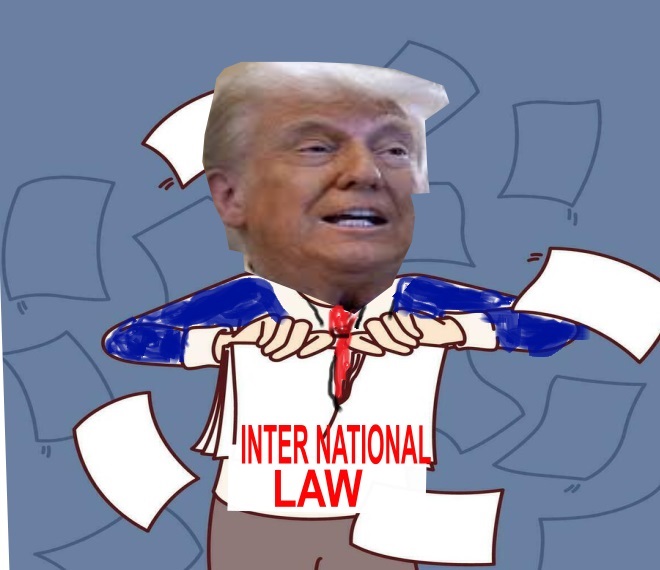
The war waged by Israel, the United States, and the United Kingdom against Iran has called into question international law. Even the Security Council had forgotten its own definition of aggression. It ruled against itself. There has never been a precedent for this situation. All UN member states must now choose between international law and the alliance system devised by the United States.
The Israeli-American-British war [ 1 ] against Iran profoundly impacted the United Nations and revolutionized the way international law was approached. Until then, everyone believed that this law was based solely on respect for one’s signature and the right of peoples to self-determination. However, over time, everyone had also become accustomed to the idea that Israel and the United States would never be considered outside the law.
Although he invoked “collective self-defense” by Israel, this point was swept aside by the astonishing candor of US President Donald Trump, who stated that Iran did not threaten his country [ 2 ] . Until now, Washington had lied shamelessly to maintain the illusion that it respected international law. We remember the lies of George W. Bush and Barack Obama regarding the 9/11 attacks, Iraqi weapons of mass destruction, the Libyan and Syrian massacres, and the wars that followed.
Benjamin Netanyahu simply resorted to his thirty-year-old rhetoric about “the head of the octopus” — that is, Iran — to explain his influence. He could think of nothing better than to refer to Iranian slogans: “Death to the Zionist entity!” and “Death to the United States!” implying that Iran wanted to kill all Israelis and all Americans. However, chanting “Death to the Zionist entity!” has never meant hoping for the death of the State of Israel and its people, but simply challenging the self-proclamation of this state, without the approval of the United Nations, and contrary to the initial plan for a binational state. As for the cry of “Death to the United States!”, it signifies that Iran is challenging the legitimacy of a state founded on the massacre of millions of indigenous people and the enslavement of millions of Black Africans.
One might have expected every UN member to declare this war illegal, an “aggression” as defined by the Charter. Not so! No one said it — except North Korea — though they all thought it. While this attitude is understandable, given the military might of the United States — each member preferring to avoid acknowledging this truth — it is clear that this collective cowardice will have consequences.
The most important point lies elsewhere: not only does this war constitute, in itself, an “aggression” and call into question the signatures of Tel Aviv and Washington, but it is being waged in a “barbaric” manner, in the sense defined by the Hague Conference (1899).Benjamin Netanyahu has openly admitted to assassinating, one by one, all the religious, military, and political leaders of the man he considers his enemy. These are crimes that Donald Trump has also repeated and endorsed.
Until now, Westerners considered assassinating leaders immoral and counterproductive. Israel and the United States are perfectly aware that it is counterproductive, but don’t care whether it’s moral or not [ 3 ] . For seventy-eight years, Israel has assassinated Palestinian leaders. It has orphaned this people and has no choice but to attack them if it no longer has anyone to negotiate with.
In the process, Israel razed the home of the Supreme Leader of the Revolution, Ayatollah Ali Khamenei, and assassinated him. This is exactly as if it had bombed the Vatican and assassinated Pope Leo XIV because he — and all his predecessors — opposed the creation of a Jewish Empire, to use the expression of Vladimir Ze’ev Jabotinsky (1880-1940), even if he accepted that Israel and Palestine should be a refuge for Jews from all over the world, to use the expression of Theodor Herzl (1860-1904).
It should therefore come as no surprise that terrorist movements are forming today, such as Harakat Ashab al-Yamin al-Islamia (HAYI) (Islamic Movement of the Right-Hand People), which are planting bombs in Belgium, the Netherlands, the United Kingdom, and perhaps France. Those Shiites who have accepted the Velayat-e faqih (Islamic jurist doctrine) feel compelled to avenge their spiritual master.
As if that weren’t enough, Benjamin Netanyahu and Donald Trump are now targeting Iranian civilians [ 4 ] whom they were calling on yesterday to “overthrow their regime” (sic). Alas! The Iranians, who were not convinced by Western propaganda that the Revolutionary Guards had massacred 40,000 of their compatriots, joined the Revolutionary Guards en masse to keep the aggressors at bay.
These cruel operations began with the bombing of Tehran’s hydrocarbon stocks, which released “sulfur and nitrogen oxides”, causing acid rain [ 5 ] .
Everyone, having clearly understood that Benjamin Netanyahu and Donald Trump are carrying out an illegal “aggression” against Iran and behaving like barbarians, assassinating leaders and deliberately targeting civilians, could realize that Iran was fully responding to the treatment it was receiving.
This is the great discovery of this war:international law provides that attacked states can take action against their aggressor not only on their own territory, but also against military bases that participate in the aggression from abroad, and finally against third-party states that host these bases [ 6 ] . Never before, since the creation of the United Nations, had an attacked state attacked its aggressor(s) on the territory of a third-party state. The whole world had forgotten this response, particularly effective in the era of economic globalization [ 7 ] .
The members of the Security Council themselves had forgotten the “definition of aggression,” adopted unanimously without a vote on December 14, 1974. So much so that, on March 11, 2026, they adopted Resolution 2817, which “condemns in the strongest terms the unacceptable attacks perpetrated by the Islamic Republic of Iran” against the six Gulf States and Jordan. Without immediately realizing it, they voted on a text contrary to all their signatures and therefore to international law.
Saudi Arabia, Bahrain, the United Arab Emirates, Jordan, Kuwait, Oman, and Qatar were thrust into this war against their will. These seven states — like the Security Council — initially reacted without understanding. They filed a complaint with the Security Council. Then, through a series of letters, they were forced to admit that Iran was within its rights and that the Council had overlooked this. They all signed United Nations General Assembly Resolution 3314(XXIX) (December 14, 1974). Their protests became less vehement, more vague. All had agreed to host US military bases to ensure their security, and all found themselves trapped by the presence of these bases.
There are several ways to react to this contradiction, either by declaring international law inappropriate, but who will protect them in the future? Or by declaring that the United States is doing whatever it wants and putting them in danger, but how can they free themselves from their precious patron?
At the time of writing, more than 80 letters have been exchanged at the Security Council, but none of these seven states has resolved this dilemma: international law or foreign military bases. A choice must be made.
No more able than the others to reconcile the irreconcilable, the Sultanate of Oman, for its part, “invites the Security Council to exercise its responsibilities by carrying out a comprehensive and impartial assessment of the root causes of this crisis so that these can be addressed at the root and not just on the surface.” [ 8 ] .
References:………………………………………………………………………………………………………………
The World Can Have Peace Or Israel, But Not Both
And Other Notes
Caitlin Johnstone, Apr 09, 2026, https://www.caitlinjohnst.one/p/the-world-can-have-peace-or-israel?utm_source=post-email-title&publication_id=82124&post_id=193682839&utm_campaign=email-post-title&isFreemail=true&r=1ise1&triedRedirect=true&utm_medium=email
Israel is already aggressively sabotaging the Trump administration’s two-week ceasefire with Iran by slaughtering huge numbers of civilians in Lebanon, a nation which is explicitly off-limits for any attack under the ceasefire conditions agreed to by Tehran.
The US and Israel are trying to claim that Lebanon is not part of the ceasefire agreement, but Pakistan, whom the US appointed to mediate the agreement, says this is false. The New York Times reports that the White House took part in Pakistan’s public messaging which explicitly included Lebanon in the ceasefire conditions, before changing its tune after Israel attacked.
Iran has reportedly responded to these violations by again halting traffic through the Strait of Hormuz.
This serves as yet another reminder that the world can have peace or it can have Israel — but it cannot have both. Israel is a genocidal apartheid state whose entire existence is premised upon a strategy of unceasing violence and abuse in the middle east. As long as that state continues to exist in its present iteration, peace will never be attainable.
❖
If your job hired a guy who kept getting into fights with your coworkers and saying it’s because they are racist against him, for a week you might believe him.
After a month, you’d have doubts.
After two months, you’d realize he’s probably just an asshole.
Israel has been doing this for eighty years.
Democrats in the House and Senate are finally moving on a War Powers Act to stop the US president from going to war with Iran, and I’d say better late than never but at this point that would barely even be true.
Democrats like Chuck Schumer and Chris Murphy are currently slamming the president not for his horrifying mass atrocities in Iran but for losing the Strait of Hormuz and failing to achieve objectives like completely disarming their conventional missile program.
As I have said here previously, it’s clear that the reason the Democratic Party failed to oppose Trump’s warmongering with Iran was because they supported it too.
The actual, official 2024 Democratic Party platform accused Trump of “fecklessness and weakness” for failing to go to war with Iran during his first term. Kamala Harris labeled Iran the #1 enemy of the United States. In their 2024 debate, Harris repeatedly slammed Trump for being too soft on America’s enemies and announced that she “will always give Israel the ability to defend itself, in particular as it relates to Iran and any threat that Iran and its proxies pose to Israel.”
I’ve seen a lot of people trying to argue that Trump’s depravity in Iran proves everyone should support Democrats, but it’s clear the Democratic Party is just the more polite-looking face on the same evil power structure.
The Grayzone’s Wyatt Reed has an article out about a freakish BBC article which cited an anonymous Iranian who allegedly told them he supports the US and Israel “hitting energy infrastructure, using an atomic bomb, or leveling Iran.” Following public outcry, the quote was removed and replaced with completely different words — initially without any editor’s note of any kind.
Reed documents how the BBC reporter behind the story, Ghoncheh Habibiazad, is a London-based Iranian monarchist with an extensive history of agitating for regime change war against her home country, including with the US government propaganda operation Radio Free Europe/Radio Liberty.
Last month The Times ran an article titled “Some Iranians say one thing’s worse than bombs: no bombs”. Western powers are always aggressively pushing this self-evidently false claim that people in empire-targeted countries want bombs dropped on them, in much the same way slavery proponents argued that Africans were happiest as slaves because God made it their nature to serve.
I’ve said it before and I’ll say it again: it’s impossible to have enough disdain for the western press.
‘Non-survivable’: heatwaves are already breaching human limits, with worse to come, study finds

Analysis of six extreme heatwaves found when
temperature and humidity were accounted for, all were potentially deadly
for older people.
Extreme heat is already creating “non-survivable”
conditions for humans in heatwaves that have killed thousands and likely
many more, according to new research that warns people are more susceptible
to rising temperatures than first thought.
Scientists re-examined six
extreme heatwaves between 2003 and 2024 and found that when temperature,
humidity and the body’s ability to stay cool were accounted for, all were
potentially deadly for older people.
Guardian 8th April 2026, https://www.theguardian.com/environment/2026/apr/08/extreme-weather-heatwaves-breaching-human-survival-limits-study-finds
Israel Carpet Bombs Lebanon After Announcement of Iran Ceasefire
Israeli forces announced on Wednesday that it struck 100 sites in Lebanon over 10 minutes.
By Sharon Zhang , Truthout, April 8, 2026
Israeli forces launched some of the most intense bombardments of Lebanon in recent years on Wednesday, striking Beirut and towns and cities across the country just hours after a ceasefire deal that reportedly includes Lebanon was announced.
The Israeli military announced on Wednesday that it targeted over 100 sites with strikes over just the course of 10 minutes in Lebanon. The UN also reported that it has recorded over 60 locations struck. The intensity of the strikes was unprecedented in recent times, one Al Jazeera reporter said, reminiscent of the scale of Israel’s invasion of Beirut in 1982 or Israel’s beeper attack in 2024.
Video of the strikes circulated online. One showed a massive fire in the wreckage of destroyed buildings in Beirut, sending plumes of dark smoke into the air. Another video purportedly taken in Beirut showed the top floors of a building completely destroyed and smoking, while the streets below were covered in flaming debris…………………………………………………………………………………………………………………………………………………………………………………………………………………………………………………..
Since the latest escalation in Lebanon on March 2, Israeli strikes have killed over 1,450 people, including 126 children, Lebanese officials have said. Israel’s bombardments and expanded ground invasion have displaced 1.2 million people, or over a fifth of the population, in just weeks. https://truthout.org/articles/israel-carpet-bombs-lebanon-after-announcement-of-iran-ceasefire/
1 This Month


Shut down the radiation-damaged Heysham nuclear reactors now
To see nuclear-related stories in greater depth and intensity – go to https://nuclearinformation.wordpress.com

Say No to NASA’s Reckless Nuclear Reactor on the Moon
Say No to NASA’s Reckless Nuclear Reactor on the Moon
-
Archives
- October 2026 (247)
- September 2026 (339)
- August 2026 (330)
- July 2026 (355)
- June 2026 (287)
- May 2026 (306)
- April 2026 (356)
- March 2026 (251)
- February 2026 (267)
- January 2026 (308)
- December 2025 (358)
- November 2025 (359)
-
Categories
- 1
- 1 NUCLEAR ISSUES
- business and costs
- climate change
- culture and arts
- ENERGY
- environment
- health
- history
- indigenous issues
- Legal
- marketing of nuclear
- media
- opposition to nuclear
- PERSONAL STORIES
- politics
- politics international
- Religion and ethics
- safety
- secrets,lies and civil liberties
- spinbuster
- technology
- Uranium
- wastes
- weapons and war
- Women
- 2 WORLD
- ACTION
- AFRICA
- Atrocities
- AUSTRALIA
- Christina's notes
- Christina's themes
- culture and arts
- Events
- Fuk 2022
- Fuk 2023
- Fukushima 2017
- Fukushima 2018
- fukushima 2019
- Fukushima 2020
- Fukushima 2021
- general
- global warming
- Humour (God we need it)
- Nuclear
- RARE EARTHS
- Reference
- resources – print
- Resources -audiovicual
- Weekly Newsletter
- World
- World Nuclear
- YouTube
-
RSS
Entries RSS
Comments RSS

