When “exterminate the world” isn’t a headline
15 April 2026 Michael Taylor, https://theaimn.net/when-exterminate-the-world-isnt-a-headline/
A sitting president speaks of world extermination – and the world barely looks up.
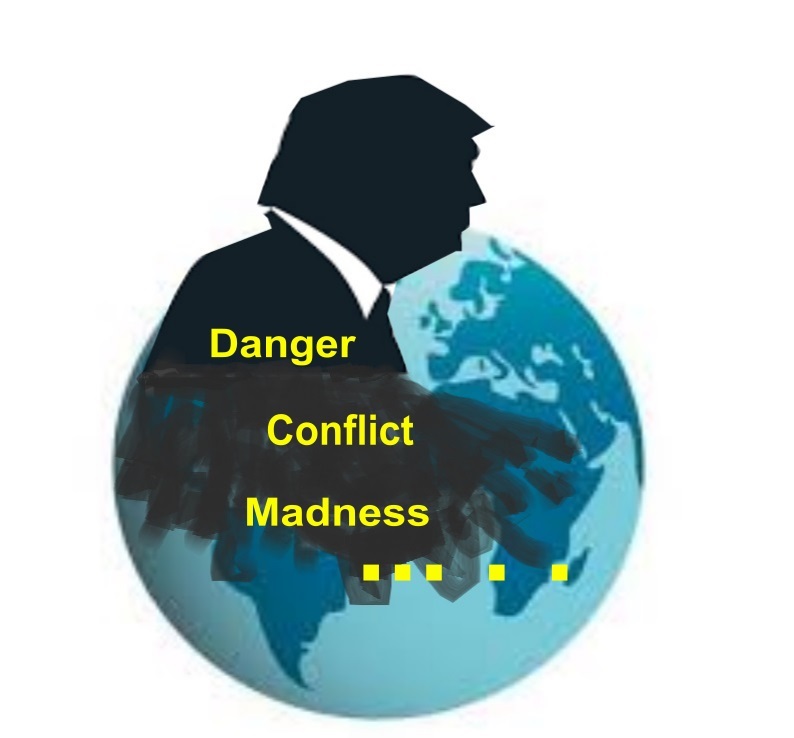
There was a time – not so long ago – when a statement from a sitting president that another nation wants to “exterminate the world” would have detonated across the political landscape. It would have triggered emergency debates, wall-to-wall coverage, and grave discussions about judgment, stability, and the terrifying weight of nuclear rhetoric.
Now, it barely lingers for a news cycle.
When Donald Trump warns of apocalyptic destruction in the context of Iran, the words land with a dull thud rather than a sharp crack. Not because they are any less dangerous – but because the world has been conditioned to expect them. Shock, it turns out, has a shelf life. And we have exceeded it.
This is how democratic norms erode – not always through dramatic rupture, but through repetition. The outrageous becomes familiar. The familiar becomes background noise. And eventually, the unthinkable becomes just another line in a transcript.
There is, of course, always an explanation ready at hand. Analysts speak of strategy, of calculated unpredictability, of the so-called “madman theory” dressed up as geopolitical chess. Perhaps. But even if one accepts that premise, it raises a more unsettling question: what happens when the performance of madness is indistinguishable from the real thing?
The danger is no longer just in the words themselves, but in our diminished reaction to them. A public that no longer flinches at the language of annihilation is a public that has, in some quiet and reluctant way, adapted to it. And a media environment that treats such rhetoric as routine risks becoming an accomplice to that adaptation – not through malice, but through fatigue.
This is the deeper story. Not what was said, but what wasn’t felt in response.
Because when the most extreme language available to a leader of a nuclear-armed state fails to shock, it is not the words that have changed.
It is us.
No comments yet.
1 This Month
15 October. Joint Appeal for Nuclear Abolition Day -presentation to the UN on October 15 will be live on UNWebTV
Endorse the Nuclear Abolition Day Appeal
23-25 October – on Zoom – World BEYOND War’s annual global conference

To see nuclear-related stories in greater depth and intensity – go to https://nuclearinformation.wordpress.com
-
Archives
- October 2026 (139)
- September 2026 (339)
- August 2026 (330)
- July 2026 (355)
- June 2026 (287)
- May 2026 (306)
- April 2026 (356)
- March 2026 (251)
- February 2026 (267)
- January 2026 (308)
- December 2025 (358)
- November 2025 (359)
-
Categories
- 1
- 1 NUCLEAR ISSUES
- business and costs
- climate change
- culture and arts
- ENERGY
- environment
- health
- history
- indigenous issues
- Legal
- marketing of nuclear
- media
- opposition to nuclear
- PERSONAL STORIES
- politics
- politics international
- Religion and ethics
- safety
- secrets,lies and civil liberties
- spinbuster
- technology
- Uranium
- wastes
- weapons and war
- Women
- 2 WORLD
- ACTION
- AFRICA
- Atrocities
- AUSTRALIA
- Christina's notes
- Christina's themes
- culture and arts
- Events
- Fuk 2022
- Fuk 2023
- Fukushima 2017
- Fukushima 2018
- fukushima 2019
- Fukushima 2020
- Fukushima 2021
- general
- global warming
- Humour (God we need it)
- Nuclear
- RARE EARTHS
- Reference
- resources – print
- Resources -audiovicual
- Weekly Newsletter
- World
- World Nuclear
- YouTube
-
RSS
Entries RSS
Comments RSS


Leave a Reply