First Nations urge Environment Minister not to green light Chalk River nuclear waste dump.
MARIE WOOLF, OTTAWA, Globe and Mail, 15 Feb 24
Environment Minister Steven Guilbeault was urged by First Nations chiefs Wednesday not to issue a permit to allow a nuclear waste dump on a forested site northwest of Ottawa where a variety of wildlife, including “at risk” wolves, live.
Ten chiefs and members of First Nations in Quebec and Ontario travelled to Parliament to urge the federal government to halt the Chalk River Near Surface Disposal Facility (NSDF), which the Canadian Nuclear Safety Commission approved for construction last month.
First Nations, supported by environmentalists and Bloc Québécois and Green MPs, said the site of the Canadian Nuclear Laboratories’ planned nuclear waste dump is too near the Ottawa River, which supplies drinking water to the country’s capital. They fear it could be polluted with a radioactive substance running off the site.
Kebaowek First Nation last week filed a Federal Court application for a judicial review of the Jan. 9 decision by the Canadian Nuclear Safety Commission, alleging the government breached its duty to consult Indigenous people.
At a press conference, preceding a rally with First Nations on Parliament Hill, Kebaowek Chief Lance Haymond urged the Prime Minister to intervene and halt the project saying First Nations had not been properly consulted.
Chief Dylan Whiteduck of Kitigan Zibi Anishinabeg First Nation told The Globe and Mail that an inadequate assessment of the impact on plants and mammals – including black bears hibernating in dens on the site – was conducted before approval was given.
First Nations spent several months surveying the site and found it rich with wildlife, but he said they were not given long enough, and a more extensive survey is needed.
Mr. Haymond said if Mr. Guilbeault were to issue a permit under the Species at Risk Act (SARA) it would pre-empt an assessment his department is carrying out on upgrading to a threatened species eastern wolves that roam on the site………………………………………………………………
In 2015, the Committee on the Status of Endangered Wildlife in Canada reassessed the status of the eastern wolf as threatened.
If the wolves are classed as threatened, their habitat would need to be protected, which could put on hold plans to build the waste dump on territory where they roam.
The eastern wolf, also known as the Algonquin wolf, numbers between an estimated 236 and 1,000 adults, and is confined to forests in Central Ontario and Southwestern Quebec. It is currently listed as a species of special concern.
The federal government published the proposed uplisting of the eastern wolf to a threatened species in November last year, carrying out a month-long consultation. It has until August to make a decision.
The proposed order amends Schedule 1 to the Species at Risk Act “to support the survival and recovery of the eastern wolf in Canada by uplisting it from a species of special concern to threatened.”……………………… https://www.theglobeandmail.com/politics/article-first-nations-urge-environment-minister-not-to-green-light-chalk-river/
Ukraine’s New Armed Forces Chief Warns Of ‘Extremely Difficult’ Situation On Front Line
Radio Free Europe 13 Feb 24
The new chief of Ukraine’s armed forces warned that the situation on the front line has become extremely difficult as Russia pours in additional troops and equipment after months trying to capture the eastern Ukrainian strongholds of Avdiyivka and Kupyansk.
Ukraine, which is heavily dependent on economic and military aid from its Western allies, has been facing a shortage of ammunition and military equipment on the battlefield and air-defense systems to protect its civilians and infrastructure pounded daily by Russian shelling and drone attacks.
As Russia’s unprovoked [?]invasion nears the two-year mark, depleted Ukrainian forces have been conserving dwindling ammunition as desperately needed U.S. military aid is being held back by Republican lawmakers in Washington.
“The operating environment is extremely complex and intense. Russian occupiers continue to step up their efforts and have a large advantage in personnel numbers,” Colonel General Oleksandr Syrskiy wrote on Facebook on February 14, a day after visiting the front line together with Defense Minister Rustem Umerov.
“On the Avdiyivka front, only during the last day, the units of the Defense Forces of Ukraine repelled 29 attacks by the Russian occupiers,” wrote Syrskiy, who was appointed to lead Ukraine’s military less than a week ago by President Volodymyr Zelenskiy.
After a largely failed counteroffensive last year, Ukrainian forces have been stretched on a front line of roughly 1,000 kilometers in the east.
Syrskiy said the Russians were employing aerial bombardment combined with mortar and heavy artillery fire to attack the positions of the Ukrainian military in addition to waves of infantry attacks that he called “flesh storms.”
Syrskiy’s assessment came as 31 NATO allies and 23 other allies of Ukraine met in Brussels on February 14 to discuss further military assistance for Kyiv.
U.S. Defense Secretary Lloyd Austin opened the meeting of the U.S.-led Ukraine Defense Contact Group (UDCG), also known as the Ramstein format, by saying the United States will “continue to dig deep” to provide military aid to Ukraine………………………………………. https://www.rferl.org/a/ukraine-syrskiy-front-line/32819423.html
TODAY. Israel, USA, the “West” can’t hide their atrocious guilt any more

Look – it was sort of OK in the 1930s – for Western political leaders, and their people, to sort of “didn’t know” what was going on in Germany. Hell, they had the lovely 1936 Olympics, and workers were getting a good deal, and Hitler was lovely to dogs.
If there were atrocities going on, – like millions of Jews, homosexuals, dissidents, mentally ill…. getting tortured and murdered – well, we “found out” about it only years later, didn’t we?
BUT. It’s different now. There is ample evidence – first hand real photography, real videos and film, real firsthand aural and written accounts of the mass cruelties being inflicted by Israel on the people of Gaza.
“War against Hamas” – what nonsense ! It’s massacre of Palestinians, and everybody knows it.
President Joe Biden and co. can bleat all they like about “urging Israel to be humanitarian to the Gazan people”, AT THE SAME TIME AS BIDEN AND CO ARE SUPPLYING WEAPONS TO ISRAEL TO DO THE KILLING!
US officials told POLITICO that the Biden administration was not planning any consequences for Israel if it went ahead with a major assault on Rafah, which would inevitably kill a huge number of civilians. “No reprimand plans are in the works, meaning Israeli forces could enter the city and harm civilians without facing American consequences,” the report reads.
“We’re going to continue to support Israel … And we’re going to continue to make sure they have the tools and the capabilities to do that.”
Of course the only thing that Biden really cares about is himself getting elected again in November. That might make him, and USA’s sycophantic allies, care a little bit about the miseries in Gaza.
But the world is appalled. We are not taken in by pious bleatings about “humanitarian aid” – while the Genocide finding of the International Court of Justice is ignored by the powerful, and while the one agency of support to the Gazans is closed down by the powerful.
Perhaps they’ll try to pretend that all the mass of evidence of genocide is “fake news”, and produced by artificial intelligence, and critics are just “tools of Russia” – or some other rubbish that the CIA and nuclear-military-industrial complex think up.
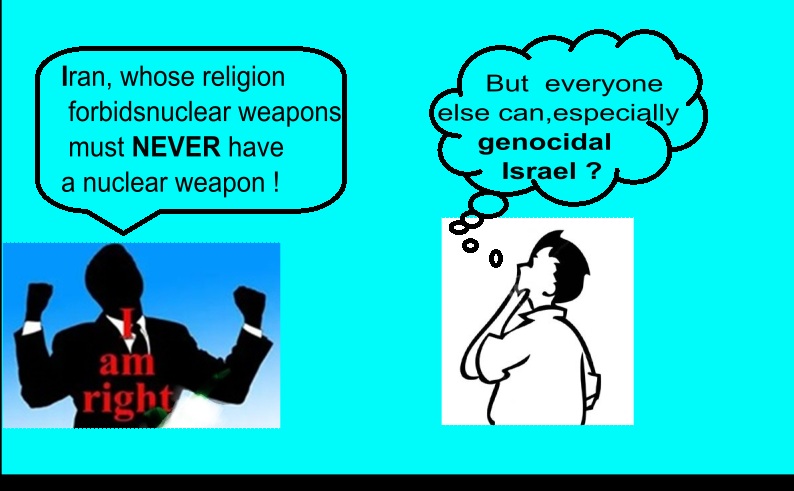
Their hypocrisy is boundless. Now they’re all alarmed because Iran might make a nuclear bomb. Israel has about 90 nuclear bombs, according to some experts. Israel has had nuclear bombs for decades, and the “Western powers” just pretend that they don’t know this. Israel is OK, safe to manage its nuclear weapons. Really?
Australian Parliament votes in favour of bringing Assange home
By John Jiggens | 15 February 2024, https://independentaustralia.net/politics/politics-display/parliament-votes-in-favour-of-bringing-assange-home,18333—
In a historic vote, parliamentarians have shown unprecedented support for the return home of imprisoned journalist Julian Assange. Dr John Jiggens reports.
WEDNESDAY 14 FEBRUARY turned out to be an unanticipated Happy Valentine’s Day for Julian Assange supporters. The Australian House of Representatives passed a motion introduced by Tasmanian Independent Andrew Wilkie, on behalf of the Parliamentary Friends of Julian Assange, urging the U.S. and the UK to bring their prosecution of the WikiLeaks founder to a close and allow him to return to his family and home in Australia.
The vote was 86 for Yes (ALP, Greens and Independents) and 42 for No (mostly Liberal and National).
In an unprecedented show of parliamentary support for Assange, two-thirds of the lower house voted for the motion. It was not unanimous because Coalition members overwhelmingly chose to support the U.S. and UK in what the former UN Rapporteur on Torture, Nils Melzer, described as the torture of an Australian journalist.
Greens leader Adam Bandt appealed to the Coalition to support the motion. Assange has become symbolic of journalists around the world who face attacks on press freedom, he argued, ranging from political prosecutions through to murder.
Assange’s prosecution set a chilling precedent for journalists about their ability to hold governments to account and to tell the truth without facing imprisonment and without facing a risk to their own lives.
Bandt said:
“If governments think that participation in the AUKUS agreement and alliance is so critical, surely part of that should be the insistence on human rights and the proper treatment of our citizens — of Australian citizens. If we are sitting around a table with these governments, we should be able to insist that Julian Assange is brought home.”
His appeal fell on deaf ears — it remained AUKUS regardless of any cost.
For Assange, the situation is still perilous. He remains incarcerated in HM Prison Belmarsh in the UK, where he has spent the last five years, locked down for 23 hours each day in a three-metre by two-metre cell, unconvicted of any charges, an innocent man in a living hell, like Dylan’s ‘Hurricane’. Like Nelson Mandela, he walks his long walk to freedom around that tiny cell every day.
In one week, the UK High Court will decide whether he has exhausted all his legal appeals to prevent being extradited to the USA where he would face charges that could see him imprisoned for 175 years under their notorious 1917 Espionage Act for publishing material, which revealed shocking evidence of misconduct by U.S. forces.
As Senator David Shoebridge tweeted on the day of the vote:
‘There are real concerns that if Julian loses next week he will be immediately extradited.’
In this epic David versus Goliath mismatch, one lone Australian journalist pitted against the world’s greatest empire, it was rare good news. Members and supporters of the Parliamentary Friends of Julian Assange tweeted happily.
Andrew Wilkie, Convenor of the Parliamentary Friends of Assange:
‘I successfully moved a motion to recognise the importance of bringing Julian Assange’s extradition to an end. The Govt voted for it in an unprecedented show of political support for Julian. The US must heed these calls & drop the extradition. #FreeAssangeNOW #auspol #politas.’
Adam Bandt, Leader of the Greens:
‘Today – for the first time – the House voted to call on the UK & the USA to bring Julian Assange home. His family, the people and this Parliament want him home.
PM — it’s time we make this a reality.’
Dr Monique Ryan, Independent member, Kooyong:
‘A powerful moment. Today the Government and crossbench called on the United States and the United Kingdom to stop prosecuting Julian Assange so he can come home. This is the ultimate test of our nations’ friendship and I sincerely hope it is heard.’
David Shoebridge, Greens Senator:
‘Today the House of Representatives has voted in favour of a motion from my Parliamentary Friends of Assange colleague @WilkieMP on the need to bring Julian home. This is a genuinely historic moment and a testament to the work of so many for so many years. 86-42 vote.’
The ‘disturbing’ intel roiling the Hill is about Russian nukes in space
The U.S. has for more than a year been concerned about Russia’s potentially creating and deploying an antisatellite nuclear weapon, one of the people familiar with the intelligence said.
Politico, By ERIN BANCO, ALEXANDER WARD and LEE HUDSON, 02/14/2024
A vague warning by the chair of the House Intelligence Committee about a “serious national security threat” Wednesday is related to Russia’s attempts to develop an antisatellite nuclear weapon for use in space, according to two people familiar with the matter.
While the people did not provide further details on the intel, one of them noted the U.S. has for more than a year been concerned about Russia’s potentially creating and deploying an antisatellite nuclear weapon — a weapon the U.S. and other countries would be unable to adequately defend against.
In his statement Wednesday morning, Rep. Mike Turner (R-Ohio) said his committee had made available the information about the national security threat and called on the administration to declassify the intelligence so officials and lawmakers could discuss the matter with allies.
It is not clear what prompted Turner to issue the statement now, as the intelligence has been available to leaders of the House intelligence committee and their top aides in a secure room on Capitol Hill for more than a week, one of the people said. The Senate intelligence committee has also had access to the information.
House intelligence committee members on Tuesday voted to open the intelligence up for viewing for all members. All Senate members now have access as well.
It’s possible Turner was attempting to raise alarms about Russia’s advancements in space as a way of underscoring the need for lawmakers to approve additional aid to Ukraine. The Senate passed the supplemental bill including $60 billion in aid for Kyiv. It is currently under review by the House.
One House intelligence committee member said the intelligence was “disturbing.” Another said “it’s a serious issue but not an immediate crisis.” Both members and the others familiar with the intelligence were granted anonymity to speak about classified materials. ………………………………………………………..
U.S. officials have raised the alarm in recent years about missiles launched from Earth’s surface that can destroy satellites in orbit. In 2021, Russia conducted an anti-satellite missile test on one of its own satellites, breaking it up into more than 1,500 pieces of debris — which can pose a serious threat to other objects in orbit.
ABC previously reported on the particulars about the most recent intelligence relating specifically to the antisatellite nuclear weapon.
There are a number of other issues that the administration has viewed as concerning in regard to Russia’s activities in space, including certain developments with its satellites and its jamming of U.S. satellites. https://www.politico.com/news/2024/02/14/house-intel-national-security-threat-russia-space-power-00141473
Britain must pay more for Hinkley, says France
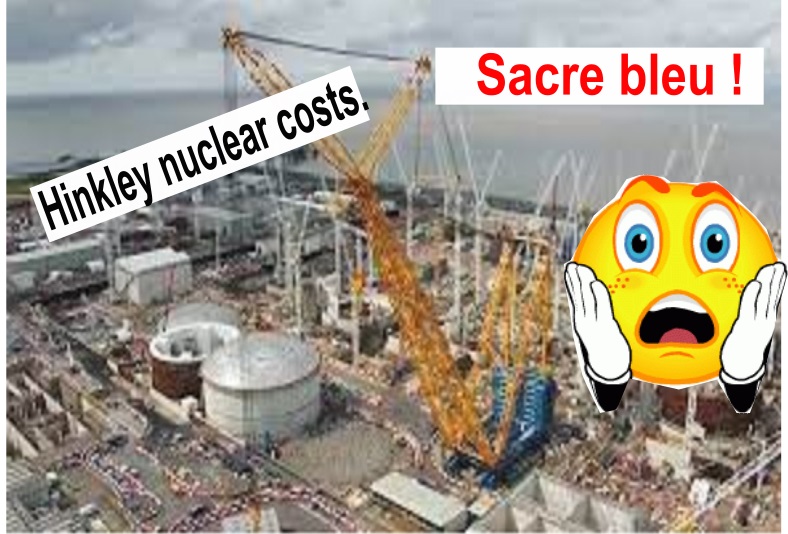
Push for funding comes weeks after Hinkley Point C costs were revised up to £46bn
Jonathan Leake, 13 February 2024
British taxpayers have been asked to stump up cash to fund nuclear power
plants being built in the UK by the French energy giant EDF. Bruno Le
Maire, France’s finance minister, said on Tuesday he would be asking
Jeremy Hunt for “an equitable sharing of costs” for the power stations
which include Hinkley Point C, in Somerset, and Sizewell C, in Suffolk.
It comes after it emerged that the costs at Hinkley Point C had surged to
£46bn, significantly more than the £18bn proposed when contracts were
signed in 2016. Speaking at an International Energy Agency ministerial
meeting in Paris, Mr Le Maire said he had raised the subject with Claire
Coutinho, the Energy Secretary, and planned to have “discussions” with
Mr Hunt, the Chancellor, about it.
The UK has so far refused to consider
paying more for Hinkley, pointing out that it is not a government project.
Last month a government spokesman said: “Any additional costs or schedule
overruns are the responsibility of EDF and its partners and will in no way
fall on taxpayers.”
There is growing concern in France over the plight of
state-owned EDF which is on the hook for most of the extra costs. If EDF
were to pull out of Sizewell it would cause huge delays and a likely end UK
hopes of building 24 gigawatts of new nuclear capacity by 2050, equating to
about seven new nuclear power stations. These would supply up to a quarter
of the country’s projected electricity demand.
Telegraph 13th Feb 2024
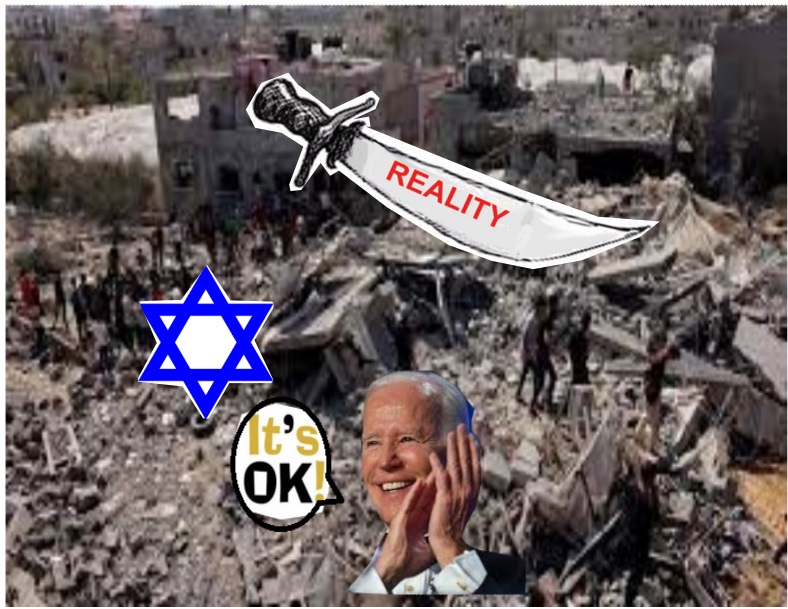
The War on Gaza: Public Relations vs. Reality
Wednesday, February 14th, 2024, By Robert C. Koehler, m http://commonwonders.com/the-war-on-gaza-public-relations-vs-reality/
For its victims, war is . . . yes, hell. For the rest of us — the onlooking and supportive patriots — war is an abstraction embedded in ignorance, a.k.a., public relations, served up for public consumption.
At least that’s the way it’s supposed to be. The reality of war should never directly confront the official PR of those waging it. If it does, God help the war industry!
But that’s what’s happening now, as public support for U.S. complicity in Israel’s devastation of Gaza diminishes, indeed, starts turning to outrage. Official spokesmen for the Biden administration, such as John Kirby, strategic communications coordinator for the National Security Council, are forced to start mixing apologetic language in with their unwavering support for the bombing and murder of civilians . . . excuse me, Israel’s right to defend itself.
“Civilian deaths are happening, and happening at a rate that obviously we’re not comfortable with,” Kirby said in a New Yorker interview. “But,” he quickly added, “it doesn’t mean that they are intentionally trying to wipe the people of Gaza off the map the same way that Hamas wants to wipe the Israeli people off the map.”
Wow, Israel’s actions and official declarations of intent to obliterate Palestine are making the U.S. government uncomfortable. (But Hamas is still the bad guy.) Oh, if only fragments of actual truth about the war could penetrate such an interview. For instance:
And it was mostly — I mean, the majority of the patients that I treated were children, anywhere from the age of 2 to 17. I mean, I saw horrific eye and facial injuries that I’ve never seen before, eyes shattered in two 6-year-old children with shrapnel that I had to take out, eyes with shrapnel stuck inside, facial injuries. I saw orthopedic injuries where — you know, limbs just cut off and dangling. I saw abdominal injuries that were just horrific. And it was just mass chaos. There were children on the floor, unattended to, with head trauma, people suturing patients without anesthesia on the ground. It was just mass chaos and really horrific, horrific scenes.”
The speaker is Dr. Yasser Khan, a Canadian ophthalmologist recently back from a humanitarian mission at the European Hospital in Khan Younis, in southern Gaza, near Rafah. He was interviewed by Democracy Now! I wish John Kirby could have been there.
The hospital, he said, was “about 300, 400 percent over capacity. There was patients and bodies lying all over the hospital floor, inside and outside. They had orthopedic devices coming from their legs or their arms. They were getting infected, they were in pain, because they were on the floor, so the conditions weren’t very sterile. And if they survived amputation the first time, the infection would get them . . .”
His words go on and on. OK, you (I mean Kirby) might say, this is war. People get hurt. But Israel has to “defend itself.”
This is self-defense?
“They have killed over 300 or 400 healthcare workers, doctors, nurses, paramedics. Ambulances have been bombed. This has all been a systematic sort of — you know, by destroying the healthcare system, you’re contributing to the genocide.”
Khan also notes: “They’ve attacked the sewage system, the water system, so the sewage mixes with the drinking water. And you get diarrheal diseases, bacterial diseases. You know, cholera, typhoid is not far away. Hepatitis A is epidemic there now. They’re living in cramped spaces.”
And it gets even more insane: “What’s going on is now there’s 10,000 to 15,000 bodies that are decomposing. So, it’s raining season right now in Gaza. So all the rainwater mixes with the decomposing bodies, and that bacteria mixes with the drinking water supply, and you get further disease.”
Israel has the right to defend itself. But come on, guys, be a little bit more careful. Kill fewer children. Try not to poison the water. You might say this is public relations with a limp. Meanwhile, the International Court of Justice has ordered Israel to “refrain” from taking action that could be considered genocidal and, good God, “take measures to improve the humanitarian situation for Palestinian civilians in the enclave,” as Reuters reports.
But it’s war itself — regardless of “intent” — that is causing this hell. The act of war, the weapons of war, the political-economic structure of the globe that is based on endless war and domination, seems never to face serious condemnation, at least not in any official sense. But if we feed war, we feed hell.
Perhaps there’s one bit of recent news about a challenge to the global war industry, and its public relations perpetrators, that isn’t simply a scream from the political margins or cries from the victims. It’s the Transatlantic Civil Servants’ Statement on Gaza, a statement, released on Feb. 2, signed by more than 800 civil servants from the United States, the European Union and about a dozen European countries, declaring: “It Is Our Duty To Speak Out When Our Governments’ Policies Are Wrong.”
The statement declares the Gaza pummeling “one of the worst human catastrophes of this century.” And it calls on its countries to halt all military support to Israel and use their leverage “to secure a lasting ceasefire and full humanitarian access in Gaza and a safe release of all hostages” and “develop a strategy for lasting peace.”
A strategy for lasting peace? That’s another way of calling for an end to war. It’s about time.
Small Nuclear Modular Reactors (SMRs) and Consent in Saskatchewan: What You Haven’t Been Told
Uranium Mining in Northern Saskatchewan: What You Need To Know―Four-Part Webinar Series Webinar #2: February 13th, 2024,
Small Nuclear Modular Reactors (SMRs) and Consent in Saskatchewan: What You Haven’t Been Told Everyone is welcome to attend this webinar series that will help you know more about what is happening with uranium mining in Northern Saskatchewan. While many people have been busy in survival mode and exhausted from the pandemic, wars around the world, and the extreme rising cost of living, uranium mining lobbyists and governments have been taking advantage, passing industry-favourable laws that will further degrade and threaten freshwater systems already desperately overburdened by farming and mining use and wastewater byproducts.
Hosted by Tori Cress Guests: Paul Belanger, Keepers of the Water Science Advisor. Dr. Gordon Edwards, President and co-founder of the Canadian Coalition for Nuclear Responsibility, and Benjamin Ralston BA, JD, LLM, Assistant Professor at the College of Law, University of Saskatchewan Technical support: Beverly Andrews Paul Belanger works on the Keepers of the Water team as our Science Advisor and is also an environmentalist – entrepreneur, and designer. Paul founded his first environmental organization in 1987, then went on to mentor with scientists and operate an oil field supply and safety company. After more education and some research, Paul began an ecological design company called Living Design Systems – which is still active. Paul holds much knowledge and will now take us through a brief history of uranium mining in Saskatchewan.
Benjamin Ralston is an assistant professor at the College of Law at the University of Saskatchewan. Some of his research areas include Aboriginal rights, Canadian constitutional law, environmental law, human rights law, and natural resource law. Benjamin has worked at the U of S in various capacities since 2014. Including for the first year of the Nunavut law program in Iqaluit. He taught law courses in the Kanawayihetaytan Askiy (kaun-a-way-taa-tan-ah-ski) Program for Indigenous land managers and continues to teach a graduate course on environmental law and policy for the School of Environment and Sustainability. He is completing his Ph.D. at the College of Law with a dissertation investigating the intersection between environmental assessment practices and Indigenous rights in Canada. No registration is required. We will be broadcasting live from our Facebook Event Page here, https://fb.me/e/4cpZppDBU and on our YouTube channel here, https://youtube.com/live/f6TOoWU-w5A?…
AI, climate change, pandemics and nuclear warfare puts humanity in ‘grave danger’, open letter warns
More than 100 politicians, academics and celebrities urge world leaders to act now against the existential threats facing mankind
Samuel Lovett, DEPUTY EDITOR OF GLOBAL HEALTH SECURITY, 15 February 2024 https://www.telegraph.co.uk/global-health/terror-and-security/ai-climate-change-pandemic-nuclear-warfare-humanity-danger/
Climate change, pandemics, nuclear warfare and artificial intelligence all pose an existential threat to humanity and need to be addressed with “wisdom and urgency”, more than 100 politicians, academics, and celebrities have warned in an open letter.
The signatories, including Annie Lennox, Richard Branson, Gordon Brown and Charles Oppenheimer, whose grandfather developed the atom bomb, said today’s world leaders prioritise “short-term fixes over long-term solutions” and “lack the political will to take decisive action” against the many dangers facing mankind.
“Our world is in grave danger. We face a set of threats that put all humanity at risk. Our leaders are not responding with the wisdom and urgency required,” the letter reads. “We are at a precipice.”
The signatories list four key demands for future-proofing humanity: a global financing plan to ease the transition to clean energy; arms control talks to reduce the risk of nuclear war; an equitable pandemic treaty to prepare for future outbreaks; and international governance for regulating AI to make it “a force for good”.
“The biggest risks facing us cannot be tackled by any country acting alone. Yet when nations work together, these challenges can all be addressed, for the good of us all,” the letter states.
The call for action is led by the Elders, an independent group of global leaders campaigning for peace and human rights founded by Nelson Mandela, and the Future of Life Institute, a non-profit working to develop transformative technologies for the benefit of humanity.
Other signatories of the letter include Ban Ki-moon, the former UN Secretary-General, Sir Malcolm Rifkind, the former UK foreign secretary, Helen Clark, the former prime minister of New Zealand, Mary Robinson, the former president of Ireland, and Amber Valletta, the American model and actress.
The letter also encourages the world’s decision-makers to be “bold” in abandoning their short termism in favour of “long-view leadership”.
“In a year when half the world’s adult population face elections, we urge all those seeking office to take a bold new approach,” it reads.
“We need long-view leadership from decision-makers who understand the urgency of the existential threats we face, and believe in our ability to overcome them.
“Long-view leadership means showing the determination to resolve intractable problems not just manage them, the wisdom to make decisions based on scientific evidence and reason, and the humility to listen to all those affected.”
The letter comes ahead of the Munich Security Conference, where government officials, military leaders and diplomats will meet on Thursday to discuss international security.
Each year, the conference brings together roughly 350 senior figures from more than 70 countries to engage in an intensive debate on current and future security challenges facing humanity.
Commenting on the open letter, Ban Ki-moon said the range of signatories “makes clear our shared concern: we need world leaders who understand the existential threats we face and the urgent need to address them”.
Russian nuclear capabilities in space could threaten international satellites, US military comms: Sources
House Intel Chairman Mike Turner first warned of the ‘serious national security threat’ on Wednesday
By Brooke Singman , Jacqui Heinrich Fox News, February 14, 2024
The U.S. has intelligence of a national and international security threat related to Russian nuclear capabilities in space which could threaten satellites, including potentially knocking out U.S. military communications and reconnaissance, Fox News has learned.
Sources tell Fox News that the Russian capability has not yet deployed.
House Intelligence Committee Chairman Mike Turner on Wednesday morning first warned of a “serious national security threat,” and called on President Biden to declassify it………………………………………………………………………………………………………. more https://www.foxnews.com/politics/russian-nuclear-capabilities-space-could-threaten-international-satellites-us-military-comms-sources
South Africa lodges Urgent Complaint with Int’l Court of Justice over Israel’s Plan to Assault Rafah
JUAN COLE, 02/14/2024
Ann Arbor (Informed Comment) – The South African government lodged an urgent complaint on Monday at the International Court of Justice against the plan announced by Israeli Prime Minister Binyamin Netanyahu to attack Rafah in southern Gaza, where 1.4 million people, most of them refugees from elsewhere, have been pushed by the Israeli military. So reports Siyabonga Mkhwanazi at Pretoria’s Independent On Line (IOL) (a consortium of South Africa newspapers).
The IOL says that President Cyril Ramaphosa confirmed Tuesday that South Africa has inquired with the ICJ whether it needs to issue another preliminary judgment to stop Israel’s planned offensive against Rafah. The Court is permitted to issue provisional orders at any time without having to convene to decide the case finally.
Lizeka Tandwa at the Mail & Guardian reports that the further submission to the court pointed out that “Rafah is the last refuge for the surviving people in Gaza.”
Vincent Magwenya, the spokesman for South African’s president, posted this statement to the presidency web site:
………………………………………………………………………https://www.juancole.com/2024/02/complaint-justice-israels.html
Development of small modular reactors and advanced modular reactors: implications for the management of higher activity wastes and spent fuel [new paper from UK Committee on Radioactive Waste Managemen [CoRWM]
A new paper from the UK Committee on Radioactive Waste Management says that the issue of managing the used fuel and radioactive waste from these small modular reactors “appears, with some exceptions … to have been largely ignored or at least downplayed up to now”. It adds that the issue “must be considered when selecting technologies for investment, further development, construction and operation”.
There is considerable interest in the development of Small Modular Reactor (SMR) and Advanced Modular Reactor (AMR) designs and their commercial deployment, both for energy security and net zero, particularly given the historic difficulties of deploying reactors at gigawatt (GW) scale.
The management of spent fuel and radioactive waste from these new reactors must also be considered when selecting technologies for investment, further development, construction and operation.
This CoRWM position paper provides recommendations to the UK Government, Great British Nuclear, and Nuclear Waste Services and regulators to consider as SMR and AMR deployment is progressed.
The paper is posted at https://www.gov.uk/government/publications/development-of-small-modular-reactors-smrs-and-advanced-modular-reactors-amrs-corwm-position-paper
PDF, 539 KB, 42 pages
Patrick Lawrence: The Crisis at The New York Times
From Israeli Propaganda to Page One.
By Patrick Lawrence ScheerPost 12 Feb 24
It has been evident to many of us since the genocide in Gaza began Oct. 7 that Israel risked asking too much of those inclined to take its side. The Zionist state would ask what many people cannot give: It would ask them to surrender their consciences, their idea of moral order, altogether their native decency as it murders, starves and disperses a population of 2.3 million while making their land uninhabitable.
The Israelis took this risk and they have lost. We are now able to watch videos of Israeli soldiers celebrating as they murder Palestinian mothers and children, as they dance and sing while detonating entire neighborhoods, as they mock Palestinians in a carnival of racist depravity one would have thought beyond what is worst in humanity—and certainly beyond what any Jew would do to another human being. The Israeli newspaper Haaretz reports, as American media do not, that the Israel Defense Forces covertly sponsor a social media channel disseminating this degenerate material in the cause of maintaining maximum hatred.
It is a psychologically diseased nation that boasts as it inflicts this suffering on The Other that obsesses it. The world is invited—the ultimate in perversity, this—to partake of Israel’s sickness and said, in a Hague courtroom two weeks ago, “No.”
Post–Gaza, apartheid Israel is unlikely ever to recover what place it enjoyed, merited or otherwise, in the community of nations. It stands among the pariahs now. The Biden regime took this risk, too, and it has also lost. Its support for the Israelis’ daily brutalities comes at great political cost, at home and abroad, and is tearing America apart—its universities, its courts, its legislatures, its communities—and I would say what pride it still manages to take in itself. When the history of America’s decline as a hegemonic power is written, the Gaza crisis is certain to figure in it as a significant marker in the nation’s descent into a morass of immorality that has already contributed to a collapse of its credibility.
We come to U.S. media — mainstream media, corporate media, legacy media. However you wish to name them, they have gambled and lost, too. Their coverage of the Gaza crisis has been so egregiously and incautiously unbalanced in Israel’s behalf that we might count their derelictions as unprecedented. When the surveys are conducted and the returns are in, their unscrupulous distortions, their countless omissions, and—the worst offense, in my view—their dehumanization of the Palestinians of Gaza will have further damaged their already collapsing credibility.
We come, finally, to The New York Times. No medium in America has had further to fall in consequence of its reporting on Israel and Gaza since last October. And the once-but-no-longer newspaper of record, fairly suffocating amid its well-known hubris, falls as we speak. It has erupted, by numerous accounts including implicitly its own, in an internal uproar over reportage from Israel and Gaza so shabby—so transparently negligent—that it, like Israel, may never fully restore its reputation.
Max Blumenthal, editor-in-chief of The Grayzone, described the crisis on Eighth Avenue better than anyone in the Jan. 30 segment of The Hill’s daily webcast, Rising. “We’re looking at one of the biggest media scandals of our time,” he told Briahna Joy Gray and Robby Soave. Indeed. This well captures the gravity of The Times’s willful corruptions in its profligate use of Israeli propaganda, and Blumenthal deserves the microphone to say so. Since late last year The Grayzone has exhaustively investigated The Times’s “investigations” of Hamas’s supposed savagery and Israel’s supposed innocence.
This is more than “inside baseball,” as the saying goes. We now have a usefully intricate anatomy of an undeservedly influential newspaper as it abjectly surrenders to power the sovereignty it is its duty to claim and assert in every day’s editions. It would be hard to overstate the implications, for all of us, of what The Grayzone has just brought to light. This is independent journalism at its best reporting on corporate journalism at its worst.
What we find as we read The Times’s daily report from Israel, and from Gaza when its correspondents unwisely accept invitations to embed with the IDF, is a newspaper unwilling to question either its longstanding fidelity to Israel or its service to American power. These two ideological proclivities—well more than what its reporters see and hear—have defined the paper’s coverage of this crisis. This is bad journalism straight off the top.
It was inevitable, then, that The Times would serve as Israel’s apologist as soon as the IDF began its murder spree last October.
. This was not a rampage worthy of the Visigoths, as plentiful video footage carried on social media and in independent publications revealed it to be: It was dignified as “a war,” a war waged not against Palestinians but “against Hamas,” and Israel fought it in “self-defense.” Hamas is “a terrorist organization,” so there is no complexity or dimensionality to it, and therefore no need to understand anything about it.
It has been a question of minimizing and maximizing in the pages of The Times. Israel’s genocidal intent is indecipherable to anyone relying on its coverage. The physical destruction of Gaza is never described as systematic. The IDF does not target noncombatants. The newspaper has reported the shocking statements of Israeli officials, some openly favoring genocide, ethnic-cleansing, and the like, only when these have been so prominently reported elsewhere that The Times could no longer pretend such things were never said. ………………………………………………………………………………………………………………………………………………………………..
And so on. You have descriptions of all kinds of unimaginable, B–movie perversities—militiamen playing with severed breasts, militiamen walking around with armfuls of severed heads—that rest upon “witnesses” whose testimonies, given how often they shift or do not line up with what was eventually determined, simply cannot be counted as stable.
And then there are the official statements. Among the most categoric of these is one from the Israeli police, issued after The Times published “‘Screams Without Words’” Dec. 28 and asserting that they have found no eyewitnesses to rapes on Oct. 7 and see nothing in media reports such as The Times’s constituting evidence of systematic sexual violence.
And so on. You have descriptions of all kinds of unimaginable, B–movie perversities—militiamen playing with severed breasts, militiamen walking around with armfuls of severed heads—that rest upon “witnesses” whose testimonies, given how often they shift or do not line up with what was eventually determined, simply cannot be counted as stable.
And then there are the official statements. Among the most categoric of these is one from the Israeli police, issued after The Times published “‘Screams Without Words’” Dec. 28 and asserting that they have found no eyewitnesses to rapes on Oct. 7 and see nothing in media reports such as The Times’s constituting evidence of systematic sexual violence. ………………………………………………………………………………………………………… more https://scheerpost.com/2024/02/12/patrick-lawrence-the-crisis-at-the-new-york-times/
Nuclear Illusions Hinder Climate Efforts as Costs Keep Rising

a long line of nuclear illusionists advocating grandiose goals for nuclear energy without any evidence to suggest they could be achieved, and much to suggest why they never will be.
“In recent years the nuclear industry seems to have quietly changed its business model from making and selling products to harvesting subsidies for fantasies”
the timelines will shrink, and the mirage will fade. Money will be wasted and global warming will continue.
The federal government also continues to fund efforts to develop “new” designs for smaller reactors that are proving far less economic than larger ones and will struggle to succeed. Two government showcase projects have already collapsed for lack of customer interest.
Stephanie Cooke, 12 Feb 2024 Energy Intelligence Group, Stephanie Cooke, Washington, https://www.energyintel.com/0000018d-7a5e-d1ef-a5cd-fe7e077c0000
The price tag for new nuclear plants just got a lot higher — at up to £46 billion ($58 billion) for two French reactors under construction in the UK — but don’t expect that to deter enthusiasm for nuclear energy. According to former US Energy Secretary Ernest Moniz, the world “will soon need to build the equivalent of about 50 large nuclear power reactors per year until 2050” to mitigate climate change. Moniz admits that’s a challenge, but nevertheless possible if nations “rethink how to build, regulate and finance nuclear technology.” Moniz comes from a long line of nuclear illusionists advocating grandiose goals for nuclear energy without any evidence to suggest they could be achieved, and much to suggest why they never will be.
In 1998, when the future of nuclear energy looked grim, a group of nuclear worthies convened in Paris for an International Conference on Preparing the Ground for Renewal of Nuclear Power. It was the fourth such attempt since the initial conference on the topic in 1979. In opening remarks later published, a former General Electric executive, Bertram Wolfe, proclaimed that “if one assumes nuclear energy will be needed to provide one-third of the world’s energy by the middle of the next century,” 100-200 new reactors per year would have to be added over the next 50 years.
Global warming was seen as a potential, though still-distant threat, but enough of one to argue for more nuclear energy as a “precautionary” measure against it, according to another speaker, Chauncey Starr, who had founded and presided over the US Electric Power Research Institute. Starr dismissed renewables as the “visionary goal” of an “anti-nuclear environmental community” embraced by politicians that “either suffer from the childlike innocence of the ignorant” or “knowingly engaged in political duplicity.” By 2060, hydro and renewables would “very optimistically” account for only 23% of worldwide electricity consumption, Starr predicted, and they would be heavily dependent on subsidies. He was off by several decades. That benchmark was surpassed in 2016, according to the 2023 BP Statistical Review of World Energy.
It was the nuclear crowd that suffered from ignorance, and illusionary ideas. One prominent industry executive at the time, Shelby Brewer, proclaimed in Paris that recent deregulation of US wholesale electricity markets would have “a positive impact on nuclear power” because utilities no longer subject to state regulated rates of return would be more likely to build new reactors. “Power generators will focus explicitly on price competitiveness, cost effectiveness and equity return — a new set of dynamics for the industry.” He wound up by declaring that “the salvation of US nuclear power lies with Adam Smith, not Uncle Sam.”
Real World Experience
In the real world, annual reactor construction starts worldwide since then were far from 200, 100 or even 50 — the highest number was 15 (in 2010). In the 14 years since, construction began on a total of 84 reactors of which 41 were in China, meaning that outside China, just three were started per year on average.
Deregulation was hardly the panacea Brewer predicted either. When reactors in US deregulated markets couldn’t compete against natural gas or renewables, operators were forced to turn to Uncle Sam for subsidies or shut down. Despite subsidies on offer for new nuclear power plants, only one was ever built — in the regulated state of Georgia — with ratepayers forced to foot the bill for financing and construction. The only other US reactor start-up, Watts Bar-2, was commissioned in 2016, but construction on that started in the 1980s, stopped, and then restarted.
The federal government also continues to fund efforts to develop “new” designs for smaller reactors that are proving far less economic than larger ones and will struggle to succeed. Two government showcase projects have already collapsed for lack of customer interest.
“In recent years the nuclear industry seems to have quietly changed its business model from making and selling products to harvesting subsidies for fantasies,” says Amory Lovins, adjunct professor of civil and environmental engineering at Stanford, and cofounder and chairman emeritus of RMI (formerly Rocky Mountain Institute). “A dollar astutely invested in influence campaigns, and sometimes corruption, seems to be able to yield on the order of $10-$100+ in subsidies — for as long as they last. So long as the band plays on, it looks like good work if you can get it.”
Compared with the industry’s past cheerleaders, Moniz appears relatively modest in what he proposes, and he admits that 50 reactors per year is a tall order, “two-thirds more than were built at nuclear power’s peak in the early 1980s.”
His ideas for overcoming the challenges are worn: A “new system” to “deliver standardized products rather than costly and risky one-off multidecade projects.” Including small modular reactors and advanced reactors, there are probably 100 or more designs around the globe in various stages of development. How do you standardize out of that? The only “new nuclear” in the West are the four multidecade projects in Finland, France, the US and UK — all exorbitantly over-budget and by definition economically highly risky. Of the six reactors in question, only two are generating power — one each in Finland and the US.
Airline Industry Model
Moniz looks to the airline industry for a model in the way nuclear plants could be built and regulated. Smaller reactors especially could be produced by “assembly-line methods” and new reactor designs certified by an “international body charged with issuing a single globally accepted generic certification for reactor designs.”
This overlooks the fact that the nuclear power industry is driven by geopolitics and its historic and symbiotic relationship with nuclear weapons. Competition is intense in reactor export markets, with supplier countries jealously guarding their areas of influence and seeking the means for continued influence over decades, as reactors are sited, built and then decommissioned.
The aviation industry is driven by real demand. People who want to fly don’t have alternatives to boarding an airplane; customers who need electricity have many other low-carbon options besides reactors. No airline wants a fatal crash, so it makes sense that pilots, especially if they’re flying to other countries, follow a universal set of norms, and that aviation authorities from several countries are often involved in certifying new aircraft designs.
“To ignore or pretend to ignore that there is so much difference is an insult to readers’ intelligence,” writes Yves Marignac of Institut negaWatt in an email. “To even consider the possibility that things could change so that the conditions for this international free, standardized, ‘orderbook’ approach can be met, furthermore in a timeframe that is consistent with objectives such as delivering on 50 large reactors per year soon, is wishful thinking pushed to a record high!”
Along with the announcement of Hinkley Point C’s massive cost increase came news that the first of two reactors wouldn’t be commissioned until at least 2029, and possibly as far out as 2031. This is not stopping plans for more nuclear power in both the UK and France, with London promising eight new reactors by 2050, and Paris calling for six reactors by 2035, with as many as eight more after that. These goals, billed as part of the “global solution” to climate change, are no more than a distant mirage.
As the two countries haggle over who pays the exorbitant costs at Hinkley Point C, the timelines will shrink, and the mirage will fade. Money will be wasted and global warming will continue. “The costlier and slower new reactors are, the less fossil fuel they can displace per dollar and per year, compared to a like investment in renewables and efficient use — thereby making climate change worse, not better,” argues Lovins. “Climate effectiveness requires that we count carbon, cost and speed — not just carbon.”
It’s time to close the curtain on illusionist theater in energy policy-making. It’s a show that’s long since run its course.
Stephanie Cooke is the former editor of Nuclear Intelligence Weekly and author of In Mortal Hands: A Cautionary History of the Nuclear Age. The views expressed in this article are those of the author.
Surviving an Era of Pervasive Nuclear Instability
Today, we can identify at least four such potential flash points—Ukraine and NATO’s Eastern Front, Taiwan, the South China Sea, and the Korean Peninsula—with more likely to emerge in the coming months and years. Each has the potential to ignite a Cuban missile crisis–like confrontation.
Today, we can identify at least four such potential flash points—Ukraine and NATO’s Eastern Front, Taiwan, the South China Sea, and the Korean Peninsula—with more likely to emerge in the coming months and years. Each has the potential to ignite a Cuban missile crisis–like confrontation.
A call for grassroots activism.
The Nation, MICHAEL T. KLARE 12 Feb 24
Deapite two years of war in Ukraine, rising tensions over Taiwan, and a metastasizing conflict in the Middle East, our 21st-century world has yet to experience a major nuclear blowup—a moment when the risk of thermonuclear annihilation is real and imminent, as was the case during the Cuban missile crisis of 1962. Yes, we have experienced nuclear jitters over North Korea’s repeated threats to attack South Korea and Vladimir Putin’s threats to use nuclear weapons in Ukraine, but none of those incidents has brought us to the edge of extinction. If current trends persist, however, we are likely to encounter a succession of major nuclear crises in the months and years ahead, each potentially more dangerous than the one before. To prevent these from triggering a nuclear apocalypse, we will need wise and prudent leadership by our top officials—and a mass public campaign to insist on such prudence.
During the Cold War, of course, the potential for a catastrophic nuclear crisis was ever-present. We were all aware that any major US-Soviet confrontation could trigger a nuclear exchange, obliterating every one of us. The end of the Cold War was, therefore, an enormous psychic blessing, allowing us to live without the constant dread of imminent nuclear annihilation. For younger generations, moreover, other vital concerns—racism, global warming, economic insecurity—have come to replace nuclear anxiety. These concerns persist, as potent as ever. But now we must all brace ourselves for the return of incessant nuclear crises.
The reemergence of pervasive nuclear instability is the product of two interrelated factors: the outbreak of a tripolar military rivalry between the US, China, and Russia on one hand, and the proliferation of potential nuclear flash points on the other. Each is contributing to the risk of a nuclear conflict, but the combination is making the danger infinitely worse.
The Emerging Three-Way Nuclear Arms Race
Until very recently, the nuclear arms race was widely perceived as a two-way affair, involving the United States and the Soviet Union (later the US and Russia). During the Cold War, the two superpowers built up their atomic arsenals to terrifying heights and then, following the trauma of the Cuban missile crisis, took steps to control and reduce their respective stockpiles. Still, both sides continued to maintain vast nuclear stockpiles after the Cold War’s end, claiming that these munitions were needed to deter a possible nuclear strike by their opponent. They did, however, agree to further reductions in their atomic arsenals, culminating with the signing, in 2010, of the New Strategic Arms Reduction Treaty (New START).
…………… despite the gradual reduction in “deployable” warheads, the US-Russian arms race was actually gaining momentum, not slowing down.
………………….Still, before 2018, the nuclear arms race was largely considered a two-way affair
………………. But this two-way dynamic began to change in 2018, as the US adopted a new grand strategy identifying China, as much as Russia, as a vital threat to US security, while the Chinese—fearing an increased threat from the US—began the expansion and modernization of their own nuclear capabilities.
…………To prevail in future conflicts with these countries, the NDS affirmed, US forces would have to be equipped with the most advanced weaponry available—and be backed up by a modern, highly capable nuclear force. “Modernizing the Nation’s nuclear deterrent delivery systems…is the Department’s top priority,” Secretary of Defense James Mattis affirmed in a 2018 statement to the Senate Armed Services Committee (emphasis in the original).
In this, and every subsequent Pentagon presentation on the global security environment, US officials have stressed that the nuclear arms race is no longer limited to a US-Russia competition but has become a three-way affair, involving a growing threat from China. “The global situation is sobering,” Mattis testified in 2018. Not only is Russia modernizing its full range of nuclear systems, but “China, too, is modernizing and expanding its already considerable nuclear forces, pursuing entirely new capabilities” [emphasis added].
Misleading statements like these were repeated year after year—despite the fact that China then possessed a minuscule nuclear capability (at least when compared to those of the US or Russia) and had done little, before 2018, to expand or modernize its forces.
Nevertheless, the US military’s embrace of the 2018 National Defense Strategy, accompanied by the Trump administration’s increasingly hostile stance towards China, prompted top Chinese officials, led by President Xi Jinping, to conclude that China’s small nuclear force was inadequate to deter a disarming US nuclear attack and so had to be expanded, enabling it to survive a devastating US first strike and still manage to deliver a retaliatory attack on US territory.
…………………………………………………………………………… While China’s nuclear buildup can largely be viewed as a defensive response to the 2018 NDS with its call for enhanced US military capabilities, that buildup, in classic arms-racing fashion, is being cited by congressional hawks in their strident demands for an accelerated US nuclear modernization effort—and, increasingly, for the abandonment of New START warhead limits when that treaty expires in February 2026.
In October 2023, for example, the Congressional Commission on the Strategic Posture of the United States reported that “the size and composition of the [US] nuclear force must account for the possibility of combined aggression from Russia and China” and, given the expansion of the Chinese arsenal, US strategy must “no longer treat China’s nuclear forces as a ‘lesser included’ threat.” This requires that “The US strategic nuclear force posture should be modified to…[a]ddress the larger number of targets due to the growing Chinese nuclear threat.”
As in the 1960s, then, we face the prospect of an unbridled nuclear arms race involving the development and deployment of increasingly capable and lethal atomic munitions—except, this time, it’s a three-way contest, not just a two-way race. This is sure to enflame tensions among the major powers and make it exponentially harder to negotiate limits on nuclear stockpiles like those adopted in the Cold War era.
Proliferating Nuclear Flash Points
Complicating this picture even further is the proliferation of potential nuclear flash points—contested areas that encapsulate the strategic interests of two or more of the major powers and so possess the ability to ignite a major military encounter with ever-present nuclear implications.
During the Cold War, there were several such hot spots, with Berlin and Cuba the most prominent among them. Both of those sites prompted nuclear crises on more than one occasion, the most famous being the Cuban missile crisis of 1962, when both sides readied nuclear weapons for immediate attack. It was only through tortured diplomacy and sheer luck, notes historian Martin Sherwin in his magisterial account of the crisis, Gambling with Armageddon, that the world was spared a thermonuclear catastrophe. (The United States also threatened to use nuclear weapons in Korea, Vietnam, and during the Quemoy-Matsu crisis of 1954; those episodes were largely kept secret at the time.)
Today, we can identify at least four such potential flash points—Ukraine and NATO’s Eastern Front, Taiwan, the South China Sea, and the Korean Peninsula—with more likely to emerge in the coming months and years. Each has the potential to ignite a Cuban missile crisis–like confrontation.
Ukraine and NATO’s Eastern Front. At present, with both sides in the Ukraine conflict seemingly trapped in a war of attrition and neither side making appreciable gains on the battlefield, the likelihood of a nuclear exchange appears relatively low. Should battlefield conditions change, however, the nuclear risk could increase. Were Ukrainian forces to be on the verge of capturing Crimea, for example, Moscow might employ tactical nuclear weapons to prevent such an outcome, saying it was defending sovereign Russian territory. Nuclear tensions could also erupt along NATO’s border with Russia in east-central Europe, as the NATO powers bolster their military presence there and Moscow—voicing opposition to what it views as threatening Western behavior—takes steps to counter those efforts.
Taiwan. Of equal danger is the possibility of a US-China war erupting over Taiwan. That island, deemed a renegade province by China, has become a source of growing tension as Taiwanese leaders steer the country ever closer toward independence and Beijing threatens to counter such a move with force. ……………………………………………………
The South China Sea. The South China Sea dispute, like the conflict over Taiwan, could easily result in a full-scale US-China conflict……………………………………………………..
The Korean Peninsula. North Korea’s current dictator, Kim Jong Un, has repeatedly threatened to employ nuclear weapons in response to US and/or South Korean provocations, and regularly conducts tests of his various missile and artillery systems to back up these warnings…………………………………………………………
Other Potential Flash Points. These four hotspots currently represent the most likely sites of a future Cuban missile crisis–-like event, but others are sure to arise in the years ahead. Among those that appear most likely to fall into this category are the Arctic, South Asia, and the Middle East. The Arctic constitutes a potential nuclear flash point because both Russia and the NATO powers are building up their forces there—the accession of Finland and Sweden to NATO will surely accelerate this process………………………………………………..
What Is to Be Done?
The picture presented above is not an optimistic one. The combination of a seemingly intractable three-way arms race and the proliferation of potential nuclear flash points suggests we will face a never-ending cycle of nuclear crises in the years to come. Whether we will survive any of these, as we did the Cuban missile crisis, is entirely unforeseeable. ……………………………………………………..
If we hope to prevent the next nuclear crisis from ending in catastrophe, there are many specific things that could be done to reduce the risk of uncontrollable escalation. These include, for example, persuading the US and Russia to resume their “Strategic Stability Dialogue”—high-level talks intended to devise steps for reducing the risk of nuclear escalation—that was paused at the onset of the fighting in Ukraine. The US and China could also commence talks of this sort. All three countries could also agree to slow or freeze their nuclear expansion and modernization efforts.
But none of this will occur in the current political environment, with leaders of all three countries under pressure from powerful domestic forces to bolster their nuclear capabilities vis-à-vis their rivals. These include, among others, a deeply entrenched military-industrial-nuclear complex with a strong ties to elite governing circles. And these forces will not be overcome without a global grassroots movement calling for nuclear restraint and human survival.
I am no starry-eyed idealist. As a veteran of the 1960s Ban the Bomb movement and the 1980s Nuclear Freeze Campaign, I know how hard it is to build a mass movement around nuclear issues. It will be even harder today, with so many other existential perils competing for people’s attention, especially climate change. But I do not see how we humans can expect to survive the coming years of recurring nuclear crises without building such a movement.
Fortunately, there are many others who share this outlook. Here and there across America—and in the world as well—people are becoming more aware of the rising threat of nuclear war and taking steps to reduce that danger. I particularly commend the work of Peace Action New York State, Massachusetts Peace Action, and other local and statewide groups that have addressed the nuclear danger, and Back from the Brink, a national campaign seeking to mobilize grassroots activism on the issue. These are still undersized efforts; but they are a start, and they point us in the direction we must go if we are to ensure human survival. https://www.thenation.com/article/world/surviving-an-era-of-pervasive-nuclear-instability/—
1 This Month

petition to oppose the rapid increase of space-military industry threatening Jeju Island and the region.
[Petition by April 19th (KST)] Stop the joint military-Hanwha Systems-Jeju Provincial Government Sea Launch!
World Nuclear Power. Reactors 1951-2026, 75 Years of Nuclear Power.
Interactive Map– https://dv.worldnuclearreport.org/
Chernobyl: The Lost Tapes – A good documentary on Chernobyl on SBS available On Demand for the next 3 weeks– https://www.sbs.com.au/ondemand/tv-program/chernobyl-the-lost-tapes/2352741955560

of the week–London Campaign for Nuclear Disarmament

Tell the Ukrainian Government to Drop Prosecution of Peace Activist Yurii Sheliazhenko
To see nuclear-related stories in greater depth and intensity – go to https://nuclearinformation.wordpress.com
-
Archives
- April 2026 (205)
- March 2026 (251)
- February 2026 (268)
- January 2026 (308)
- December 2025 (358)
- November 2025 (359)
- October 2025 (376)
- September 2025 (257)
- August 2025 (319)
- July 2025 (230)
- June 2025 (348)
- May 2025 (261)
-
Categories
- 1
- 1 NUCLEAR ISSUES
- business and costs
- climate change
- culture and arts
- ENERGY
- environment
- health
- history
- indigenous issues
- Legal
- marketing of nuclear
- media
- opposition to nuclear
- PERSONAL STORIES
- politics
- politics international
- Religion and ethics
- safety
- secrets,lies and civil liberties
- spinbuster
- technology
- Uranium
- wastes
- weapons and war
- Women
- 2 WORLD
- ACTION
- AFRICA
- Atrocities
- AUSTRALIA
- Christina's notes
- Christina's themes
- culture and arts
- Events
- Fuk 2022
- Fuk 2023
- Fukushima 2017
- Fukushima 2018
- fukushima 2019
- Fukushima 2020
- Fukushima 2021
- general
- global warming
- Humour (God we need it)
- Nuclear
- RARE EARTHS
- Reference
- resources – print
- Resources -audiovicual
- Weekly Newsletter
- World
- World Nuclear
- YouTube
-
RSS
Entries RSS
Comments RSS
 nuclear-news