EU’s top diplomat slams US for sending arms to Israel as Gaza deaths mount

Politico, FEBRUARY 12, 2024 ,BY PAULA ANDRÉS
Western leaders have decried Israel’s planned Rafah invasion plan, but PM Netanyahu “doesn’t listen to anyone,” Josep Borrell says.
EU foreign affairs chief Josep Borrell on Monday called on the international community, and particularly the U.S., to stop providing arms to Israel in light of the growing number of civilians being killed in Gaza.
“Everybody goes to Tel Aviv begging please protect civilians, don’t kill so many. How many is too many?” Borrell said during a meeting of EU ministers.
If the international community is worried about the death toll, “maybe they have to think about the provision of arms,” he said. Borrell, the EU’s top diplomat, also cited a Monday Dutch court ruling ordering the Netherlands government to halt shipments of components to Israel for F-35 fighter jets……………….
Borrell noted the U.S. had taken a similar decision on arms supplies to Israel in its 2006 conflict with Lebanon “because Israel didn’t want to stop the war; exactly the same thing that happens today.”……………………..
Western leaders have decried Israel’s invasion plan, but Israeli Prime Minister Benjamin Netanyahu “doesn’t listen to anyone,” Borrell said. “Where are they going to evacuate [Palestinians]?” he asked. “To the moon?”
UN agency
The EU ministers voiced support for the United Nations agency for Palestinian refugees (UNRWA), which has recently taken fire amid Israeli allegations that members of its staff abetted the October 7 Hamas attacks.
“Many member states stated there is no alternative for Gaza and that we must prevent funding gaps,” said Belgium’s Minister of Development Cooperation Caroline Gennez.
Gennez said there was an “agreement amongst the member states that full transparency is needed from all sides,” adding that details of the Israeli reports haven’t been shared with donor countries or the UNRWA itself.
“It’s not a secret that the Israeli government wants to get rid of UNRWA,” Borrell said,
but “there’s only one way in which the agency can be dissolved […] through the creation of two states.”
Several EU countries and international donors have suspended funding to UNRWA since Israel’s allegations, cutting the agency’s budget by more than half.
For UNRWA chief Philippe Lazzarini, the agency’s collapse would be “short-sighted” and would not contribute to the recent ruling from the International Court of Justice to ensure humanitarian aid in Gaza. “The coming days will tell us if we will be able to continue to operate in an extraordinarily challenging environment,” he said.
Lazzarini added that Sunday was “the first time the U.N. could not operate with a minimum of protection,” and deplored the looting of trucks filled with aid for Palestinians at the border.
The European Commission has yet to decide whether it will provide an €82 million payment to the U.N. agency by the end of the month, as two investigations are underway. https://www.politico.eu/article/top-eu-diplomat-josep-borrell-united-states-sending-arms-to-israel/
Small nuclear reactors (SMRs) still have plenty to prove.

Britain’s MPs are not paid to be polite. So it must have been with some restraint that the members of the environmental audit committee described the government’s nuclear strategy this week as “lacking clarity”, not least over small modular reactors.
Lacking clarity? You can think of better ways to describe the financially
radioactive shambles, complete with Rishi Sunak’s fantasy “road map”.
He’s glibly promising 24 gigawatts of capacity by 2050 — either another
seven Hinkley Point Cs or a mix of them and SMRs.
Surely he’s spotted what’s going on with that Somerset nuke? Costs up from £18 billion to as
much £35 billion in 2015 prices, or £46 billion in today’s money, with
its start-up likely to be delayed six years to 2031.
Maybe he hasn’t, because he’s planning a lookalike for Sizewell C in Suffolk, built by the
same French-backed EDF. Only this time it won’t be EDF but consumers and
the taxpayer on the hook for the construction cost overruns. As the
committee chairman Philip Dunne noted: “The UK has the opportunity to be
a genuine world leader in the manufacture of SMR nuclear capability with
great export potential.” But despite the taxpayer lobbing in £215
million to support their development, MPs are right to see a deficit on the
“clarity” front.
As Professor Steve Thomas from the University of
Greenwich says: “SMRs are up to a decade behind large reactors in terms
of their commercial development and their economics are speculative and
untested.” Rolls’s are 470 megawatts, one seventh of the 3.2GW Hinkley.
But who knows if it really can build them for £2.5 billion a pop? Or
whether it’ll prove feasible to cram several on a single site. In
November Utah Associated Municipal Power Systems canned a project to build
six 77MW NuScale SMRs at a site in Idaho. And even if they’d be far
smaller than Hinkley, they’d still need to be just as safe. Will safety
issues drive up costs? Also, who’s paying for them? Consumers, the
taxpayer, the private sector? And what’s the cost versus alternative
energy technologies?
Times 15th Feb 2024
https://www.thetimes.co.uk/article/shameful-shambles-over-mega-nukes-d6wzvp33v
Devonport Dockyard nuclear sub dismantling will be hit by delays, new report predicts
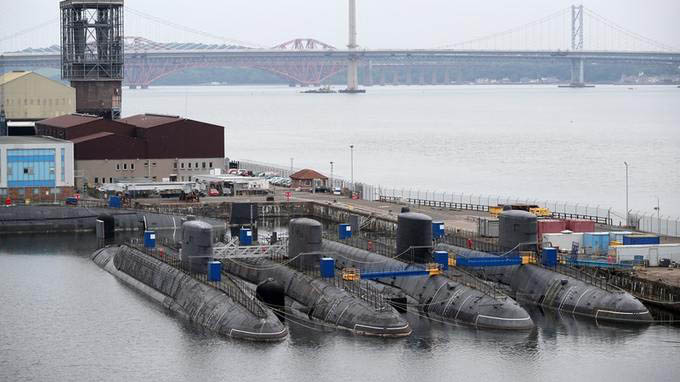
Nuclear Information Service expects no quick fix for removal of 15 decommissioned submarines laid up at Devonport
William Telford, Business Editor, 15 Feb 24 Plymouth Live
The dismantling of 15 decommissioned nuclear subs at Devonport Royal Dockyard is likely to hit delays, according to a new report. The briefing document published by the independent Nuclear Information Service says a history of infrastructure work at the Plymouth facility means “delays are more likely to materialise than not”.
The report said upgrades to 14 and 15 Docks and the Submarine Refit Complex at Devonport are overdue and progress on submarine dismantling is “on hold” while the Government focuses on its £298m “demonstrator” project to fully dismantle HMS Swiftsure at Rosyth, forecast to be complete at the end of 2026.
The Ministry of Defence told Plymouth Live it aims to dismantle the nuclear submarines at Devonport “as soon as practicably possible”. It said the Swiftsure project will “inform and refine” the dismantling process for subsequent submarines and provide more certainty on the dismantling schedule for future submarines and remains on schedule for completion by the original target date of 2026.
The Nuclear Information Service’s briefing report on Devonport Royal Dockyard gives an overview of the facility and its role in servicing the UK’s submarine fleet, including its nuclear-armed submarines. The report said: “The 15 out-of-service nuclear submarines stored at Devonport, and a further seven that are at Rosyth, together comprise every nuclear submarine the Navy has ever fielded.
“Aside from the long-overdue upgrades to 14 and 15 Docks, and the Submarine Refit Complex, progress on submarine dismantling is on hold while the Government focuses on its ‘demonstrator’ project to fully dismantle HMS Swiftsure. This work is being undertaken at Rosyth and is currently forecast to be complete at the end of 2026 at a cost of £298m.
“Three more submarines at Rosyth have had low-level waste removed from them, but it is not clear if work to defuel the nine submarines at Devonport that are still carrying nuclear fuel will begin before completion of the demonstrator project.
In 2016 the MoD estimated that fully dismantling 27 submarines would cost £2.4bn. Although the risk to in-service submarine availability from delays to submarine dismantling and defuelling is lower than from delays to the maintenance schedule, the history of problems with the project and with infrastructure work at Devonport suggests that delays are more likely to materialise than not.”…………………………..more https://www.plymouthherald.co.uk/news/plymouth-news/devonport-dockyard-nuclear-sub-dismantling-9098888—
AGAIN – THE POWER OF THE ZIONIST LOBBY
I was banned from Mastodon because I posted a link to an article supporting humanitarian aid to Gaza.Now I have been banned from one part of Reddit ( r/worldnews) for posting this link https://www.unz.com/…/over-a-million-palestinians-are…/
I can still post to other parts of Reddit.

Palestine and the Power of Language

TIME, BY ELENA DUDUM, FEBRUARY 16, 2024 Dudum is a Palestinian-Syrian-American writer currently working on a memoir about living in the diaspora as a Palestinian in America. She is a graduate of Columbia University
In today’s near-constant news cycle on Gaza, Palestinians seem to die at the hands of an invisible executioner. Palestinians are shot dead. Palestinians starve. Palestinian children are found dead. But where is there accountability? Palestinians die, they aren’t killed, as if their death is a fault of their own.
The obfuscation of responsibility is facilitated by a structure often overlooked since grade school: grammar. At this moment, grammar has the indelible power to become a tool of the oppressor, with the passive voice the most relied-upon weapon of all.
When I was young, teachers scolded me for using the passive voice—they wanted my writing to be precise and direct. Instead, my sentences always seemed to protect those who performed the actions. Back then, the fact that my sentence structure obscured accountability didn’t bother me. But I know better now. As a Palestinian American, with refugee grandparents who survived the Nakba, I’m confronting the occupation back home from the safety of my apartment in America. Over the years, I’ve combed through headlines searching for the active voice in a sea of passivity. I need those who commit actions, those who hold agency, to be named. I need Israel and its occupational forces to be named.
The passive voice often focused on the recipient of the event, not the doer. In the news today, I see only the passive voice: “A group of Palestinian men waving a white flag are shot at,” and I can’t help but hear the voices of my past English teachers ask, “But who ‘shot’ these men?” Accountability is not just vague; it’s altogether missing……………………………………………………………………………………………………………………………………….
“This is how Britain ruled the world,” Khalidi went on to explain. “It was an empire of violence. And that strategy of overwhelming violence, when challenged, has been Israel’s strategy ever since.” This history of violence can easily be traced back to the foundation of the Zionist movement. The first Israeli prime minister, David Ben-Gurion, wrote to his son in 1937: “The Arabs will have to go, but one needs an opportune moment for making it happen, such as a war.”
I saw intent in these words, but others in my class did not. So I kept searching, looking through the archive to help me piece together what parts of history I was missing. I found Joseph Weitz, director of the Jewish National Fund’s Lands Department, who wrote that there was no solution other than to transfer all Arabs from Palestine—who were the overwhelming majority in the region—into neighboring countries so that no Palestinian villages would remain. But when I shared these findings in class, they were brushed aside. “This isn’t intent,” a student said. “You can’t prove intent with a few peoples’ letters and actions.”………………………………………………………………………………………………………………
While writing tedious essays in high school, I didn’t care that I used the passive voice. I didn’t care because our writing assignments were often divorced from broader socio-political contexts. The violence of protecting those accountable versus those left bearing the burden of the violence didn’t yet touch me or my body. A privilege, I know. The calculated use of language against Palestinians didn’t yet anger me, either, even though blatant anti-Arab racism happened in front of me with growing frequency after 9/11. It felt as though this version of racism was acceptable, even expected……………………………………………………………………………………………..
The word “complicated” is often used to describe the occupation in Palestine, a word that insists that occupation is untouchable—Palestine’s history is too complex, there are too many moving parts, it’s a puzzle that can never be solved. But this word is condescending—a distraction. It wants us to feel small, worthless, and petty in our investigation. It demands power structures remain in place, allowing some to speak while requiring others to stay quiet. But what’s happening today in Palestine against the Palestinian people is not complicated. It’s a revolting violation of human rights. It is active and precise. Palestinians are killed or, if they’re lucky, violently evicted from their homes. The question—by whom?—is often never raised. Palestinian schools, hospitals, community centers, historic holy spaces, safe zones are bombed; their resources depleted; people are starving—as if all of this happened devoid of context or responsibility for those who hold power.
So let me amend the above statements, as my former English teachers would have requested, and put them into the active voice: Israel bombs Palestinian schools that house sacred archives. Israel bombs hospitals with necessary aid. Israel bombs community centers and historic holy spaces that have stood for centuries. Israel depletes Palestinian resources. Israel bombs Rafah, housing over 1 million displaced Palestinians, after claiming it a safe zone. Israel is starving Gaza. https://time.com/6695499/palestine-power-of-language-essay/—
What are Russia’s Top 5 Anti-Satellite Systems?
Sputnik, 15 Feb 24
Russia has effective means to thwart adversary satellites, including arms based on new physical principles. What are they?
Moscow trashed the groundless rumors of its alleged efforts to deploy a nuclear anti-satellite system in space on February 15.
A day earlier, mainstream US media claimed that Washington had informed Congress and its European allies about Russia’s work on a new, space-based nuclear weapon designed to undermine the US satellite network.
A new bugaboo about Russia’s supposed plans to destroy American satellites with nuclear arms is aimed at ramming a $60 billion funding package for Ukraine through US Congress, military analyst and editor-in-chief of the National Defense magazine Igor Korotchenko told Sputnik on Thursday. Even though the package in question was earlier passed in the US Senate as part of a $95 billion bill, the chances of the House approving the legislation is considered slim.
According to Korotchenko, Russia has cheaper and more effective means of anti-satellite warfare than those that Washington accuses it of developing.
This is a question of approaches. The fact is that the deployment of nuclear weapons in space is ineffective in terms of its use, especially given that Russia has much simpler and cheaper means to disable, in the event of hostilities, a significant part of the US satellite constellation,” the expert underscored.
Sputnik has taken a look at the systems that could do the job.
The Nudol System
On November 15, 2021, Moscow conducted a direct-ascent hit-to-kill anti-satellite (ASAT) test using the A-235 Nudol anti-satellite system. The test shot down an old Soviet reconnaissance satellite launched back in 1982.
The A-235 Nudol is an improved modification of the A-135 Amur strategic missile defense system. The missile can hit a target at a distance of up to 1,500 kilometers (versus 850 kilometers for the A-135), while its interception speed is increased to Mach 10 (versus Mach 3.5 for the A-135).
In contrast to its predecessor, the A-235 may use kinetic force, not nuclear or high-explosive fragmentation, to destroy the target.
The development of the A-235 Nudol started in 1985-1986 and was carried out in compliance with international ballistic missile agreements existing at the time. The weapon was designed to become the first Soviet mobile missile defense system capable of intercepting intercontinental-range missiles, spacecraft and satellites operating at high orbits.
Immediately after the Cold War, the development of the A-235 was suspended and restarted in 2011 by Almaz-Antey, nine years after the Bush administration unilaterally terminated the Antiballistic Missile Treaty (ABM) in 2002.
The system has been tested several times since 2014; however, in November 2021 the missile was fired at a specific moving space target and eventually destroyed it, causing a fuss in the Pentagon.
Nanosatellites: Nivelir, Burevestnik and Numismat
The development of Russia’s secretive project Nivelir (“Leveler”) has reportedly been carried out by the Central Scientific Research Institute of Chemistry and Mechanics Named after D.I. Mendeleyev since 2011.
The endeavor supposedly envisaged building small satellites designed to inspect other satellites in space. The first three satellite-inspectors were reportedly attached to three communications satellites launched between 2013 and 2015.
According to other sources, Russia has been experimenting with satellite inspectors since 2017. The satellites maneuvered in orbit, moving away from each other and then getting closer. In 2019, the Cosmos-2535 and Cosmos-2536 devices were launched. Their goal was to study the impact of “artificial and natural factors of outer space” on Russia’s space devices and to develop “technology for their protection.”…………………………………..
The Kontakt System
The USSR started to develop the 30P6 Kontakt (“Contact”) system in 1983. The 79М6 munition – a three-stage rocket – was supposed to be mounted on the MiG-31D fighter-interceptor.
Launched from an airplane at an altitude of 15 kilometers the munition was designed to fire a fragmentation warhead into space. It was assumed that the Kontakt system would be a stealth and inexpensive means of destroying enemy satellites……………………………………………………….
The Tirada Electronic Warfare System
According to the Russian Ministry of Defense, the Tirada-2S radio-electronic communication suppression system is capable of electronically jamming satellite communications with complete disabling. In this case, satellites can be deactivated directly from the Earth’s surface.
There is little information about the system’s specifications in the public domain. …………………………………………………………………………………..
The Peresvet Laser System
On March 1, 2018, Russian President Vladimir Putin first mentioned Russia’s laser weapon for air defense and anti-satellite warfare, the Peresvet, during his address to the Federal Assembly………………………………………….
The aforementioned systems are just a few of those potentially developed by the Russian military-industrial complex, indicating that Russia is capable of using its decades-long scientific and technological potential to ensure the nation’s security in the event of a large-scale conflict. https://sputnikglobe.com/20240215/what-are-russias-top-5-anti-satellite-systems-1116802215.html
SpaceX deorbiting 100 older Starlink satellites to ‘keep space safe and sustainable’

By Brett Tingley, Space,com , 14 Feb 24
There are still well over 5,000 operational Starlink satellites in low Earth orbit.
SpaceX will deorbit some of its older Starlink internet satellites in order to reduce the number of potentially dangerous spacecraft in low Earth orbit.
The company just announced that 100 Version 1 Starlink satellites will be deorbited over the next weeks and months in the name of space sustainability. SpaceX posted a statement to X (formerly Twitter) on Monday (Feb. 12) announcing the plan, noting that the move is “the right thing to do to keep space safe and sustainable.”
The statement, titled “Commitment to Space Sustainability,” points out that SpaceX‘s Starlink team found a “common issue in this small population of satellites that could increase the probability of failure in the future,” potentially rendering them unable to be maneuvered out of the way of other spacecraft. The deorbiting operation should take around six months…………………………………………………………..
All Starlink satellites are designed to fall into Earth’s atmosphere on their own in under five years from the time they are deployed due to the effects of atmospheric drag. They are also engineered to be “fully demisable by design,” SpaceX’s statement adds, meaning they burn up entirely as they deorbit, rendering the risk of debris falling to Earth to “effectively zero.”
While 100 satellites sounds like a significant amount, SpaceX currently has 5,438 Starlink craft in orbit, according to astrophysicist and satellite tracker Jonathan McDowell. The company already has regulatory approval to launch 12,000 Starlink satellites, and wants to eventually expand its fleet to 40,000 or so.
And more are going up every month; SpaceX plans to launch 144 missions this year, most of them likely devoted to placing Starlink satellites in orbit. (About 60% of the company’s launches in 2023 were dedicated Starlink missions.) The satellites offer high-speed broadband connectivity to users worldwide, including in war-torn or disaster-stricken areas. https://www.space.com/spacex-starlink-satellites-deorbit-space-sustainability
Energy company Centrica boss says it could fund Suffolk nuclear plant Sizewell C
Energy company Centrica is considering pumping cash into the construction
of the Sizewell C nuclear power plant on the Suffolk coast, its chief
executive has revealed. Chris O’Shea said the Suffolk site was a
“possible future investment” as the government tries to secure funding
for the project. Ministers are bidding to raise hundreds of millions of
pounds from private companies to help build the plant, near Leiston.
East Anglia Daily Times 15th Feb 2024
https://www.eadt.co.uk/news/24122986.centrica-boss-says-fund-suffolk-plant-sizewell-c
Mirror 15th Feb 2024
https://www.mirror.co.uk/money/british-gas-owner-centrica-considers-32134974
Evening Standard 15th Feb 2024
Proactive Investor 15th Feb 2024
Bloomberg 15th Feb 2024
US Gives Israel the Green Light to Kill Civilians in Rafah

US officials told POLITICO that there would be no consequences for Israel if it invades Rafah, by Dave DeCamp February 13, 2024, https://news.antiwar.com/2024/02/13/us-gives-israel-the-green-light-to-kill-civilians-in-rafah/
The US has given Israel the green light to kill civilians in Rafah despite public comments from US officials calling for Israel to come up with a plan to protect civilians in the city, which is packed with an estimated 1.5 million Palestinians.
US officials told POLITICO that the Biden administration was not planning any consequences for Israel if it went ahead with a major assault on Rafah, which would inevitably kill a huge number of civilians. “No reprimand plans are in the works, meaning Israeli forces could enter the city and harm civilians without facing American consequences,” the report reads.
White House National Security Council spokesman John Kirby made clear at a press conference on Monday that the US wasn’t thinking about cutting off Israel from military aid if it went ahead with the assault. When asked if the US has threatened to withhold aid, Kirby said, “We’re going to continue to support Israel … And we’re going to continue to make sure they have the tools and the capabilities to do that.”
President Biden is also not reconsidering his full-throated support for the Israeli slaughter in Gaza despite reports of him disparaging Israeli Prime Minister Benjamin Netanyahu in private conversations.
Congress is also on board with continuing to support the mass killing of Palestinians as the Senate voted to pass a $95 billion foreign military aid bill that includes $14 billion for Israel. Only 20 Republicans voted for the bill, but the opposition is due to the lack of a border deal, as virtually all Republicans are in favor of unconditional support for Israel, even more so than Democrats in Congress.
Rafah’s pre-war population was 275,000, meaning Palestinians displaced from other areas of the Strip increased the population fivefold. The majority of the Palestinians in the city are sheltering in tents in the streets, leaving them especially vulnerable to an Israeli attack. Israeli airstrikes on Rafah on Sunday night into Monday morning killed 27 children and 22 women.
Breakthrough research unveils effects of ionizing radiation on cellular DNA

Feb 14 2024The Korea Advanced Institute of Science and Technology (KAIST)
Recent release of the waste water from Japan’s Fukushima nuclear disaster stirred apprehension regarding the health implications of radiation exposure. Classified as a Group 1 carcinogen, ionizing radiation has long been associated with various cancers and genetic disorders, as evidenced by survivors and descendants of atomic bombings and the Chernobyl disaster. Despite much smaller amount, we remain consistently exposed to low levels of radiation in everyday life and medical procedures.
Radiation, whether in the form of high-energy particles or electromagnetic waves, is conventionally known to break our cellular DNA, leading to cancer and genetic disorders. Yet, our understanding of the quantitative and qualitative mutational impacts of ionizing radiation has been incomplete.
On the 14th, Professor Young Seok Ju and his research team from KAIST, in collaboration with Dr. Tae Gen Son from the Dongnam Institute of Radiological and Medical Science, and Professors Kyung Su Kim and Ji Hyun Chang from Seoul National University, unveiled a breakthrough. Their study, led by joint first authors Drs. Jeonghwan Youk, Hyun Woo Kwon, Eunji Kim and Tae-Woo Kim, titled “Quantitative and qualitative mutational impact of ionizing radiation on normal cells,” was published in Cell Genomics.
Employing meticulous techniques, the research team comprehensively analyzed the whole-genome sequences of cells pre- and post-radiation exposure, pinpointing radiation-induced DNA mutations. Experiments involving cells from different organs of humans and mice exposed to varying radiation doses revealed mutation patterns correlating with exposure levels.
Notably, exposure to 1 Gray (Gy) of radiation resulted in on average 14 mutations in every post-exposure cell. Unlike other carcinogens, radiation-induced mutations primarily comprised short base deletions and a set of structural variations including inversions, translocations, and various complex genomic rearrangements. (Figure 3) Interestingly, experiments subjecting cells to low radiation dose rate over 100 days demonstrated that mutation quantities, under equivalent total radiation doses, mirrored those of high-dose exposure. ……………………………………….. more https://www.news-medical.net/news/20240214/Breakthrough-research-unveils-effects-of-ionizing-radiation-on-cellular-DNA.aspx
The Complexity of Nuclear Submarine Safeguards Impacts the Current Landscape

By Leonam dos Santos Guimarâes*
RIO DE JANEIRO | 14 February 2024 (IDN) — The topic of applying safeguards to nuclear submarine fuel, with a focus on ensuring security and proliferation resistance, involves a complex interplay of international regulations, agreements, and technical considerations.
A pivotal aspect of this discussion centers on the application of International Atomic Energy Agency (IAEA) safeguards, particularly in the context of military-to-military transfer of nuclear material for submarine programs. It has been argued that there should be no automatic exclusion from safeguards for nuclear material simply because it is used in military activities.
The emphasis is on ensuring that the non-application of safeguards is as limited as possible, encompassing all processes outside the actual use of relevant nuclear material in the submarine, such as enrichment, fuel fabrication, storage, transportation, reprocessing, and disposal.
AUKUS
The application of safeguards to the AUKUS (Australia, United Kingdom, and United States) Nuclear Submarine program is a complex and highly technical subject, requiring a nuanced understanding of international nuclear non-proliferation norms, the specific details of the AUKUS agreement, and the technical aspects of nuclear submarine technology. The AUKUS pact, a security agreement between Australia, the United Kingdom, and the United States, announced in September 2021, involves the provision of nuclear-powered submarines to Australia. This arrangement has significant implications for nuclear non-proliferation and safeguards. The following points are pertinent AUKUS agreement:
Nature of Nuclear Technology in Submarines: The nuclear reactors used in submarines are designed for propulsion and not for the production of nuclear weapons. However, they do use weapon degree HEU, which can be weaponized. This necessitates strict safeguards to ensure that the HEU is not diverted for non-peaceful purposes.
Australia’s Nuclear Non-Proliferation Commitments: Australia is a non-nuclear weapon state (NNWS) party to the Treaty on the Non-Proliferation of Nuclear Weapons (NPT). As such, Australia is obliged to maintain a civilian nuclear program exclusively for peaceful purposes and under international safeguards. The acquisition of nuclear-powered submarines places Australia in a unique position, as it will have to demonstrate that its new capabilities are not being used for prohibited military purposes, like nuclear weapons development.
International Safeguards and Oversight: The IAEA plays a crucial role in the implementation of safeguards. Australia, along with the UK and the US, must work closely with the IAEA to develop a framework that ensures the submarine program adheres to Australia’s non-proliferation commitments. This could involve regular inspections, monitoring, and verification mechanisms.
Regional and Global Implications: The deployment of nuclear-powered submarines by Australia could have significant implications for regional security dynamics, particularly in the Indo-Pacific region. There is a need for transparency and dialogue to address any concerns raised by neighboring countries and to prevent any escalation of regional arms races.
Technological and Operational Safeguards: Apart from international oversight, there are also technical and operational safeguards that are integral to the program. These include secure handling and accounting of nuclear materials, physical protection measures, and safety protocols to prevent accidents or unauthorized use.
Legal and Policy Frameworks: The AUKUS partners will need to develop robust legal and policy frameworks that align with international norms and bilateral agreements. This includes legislative and regulatory measures that govern the use, transfer, and disposal of nuclear materials and technology.
The application of safeguards
The application of safeguards to the AUKUS Nuclear Submarine program is a critical aspect of its implementation. It requires a balanced approach that addresses the non-proliferation concerns while allowing Australia to enhance its defense capabilities. Ensuring the program’s compliance with international nuclear non-proliferation norms and maintaining transparency will be essential in mitigating any regional tensions and in bolstering global nuclear security………………………………………………………………………………………………………….. more https://indepthnews.net/the-complexity-of-nuclear-submarine-safeguards-impacts-the-current-landscape/
“Threat to US national security” relates to Russia’s possible launch of nuclear weapons into space
EUROPEAN PRAVDA, UKRAINSKA PRAVDA — WEDNESDAY, 14 FEBRUARY 2024, https://www.pravda.com.ua/eng/news/2024/02/14/7441914/—
Two sources of the US television channel ABC News have claimed that a “serious national security threat to the US” which was discussed on 14 February relates to Russia’s alleged intention to launch nuclear weapons into space.
Source: European Pravda, ABC News
Details: The chairman of the US House Intelligence Committee, Mike Turner, had requested that intelligence be declassified that “has to do with Russia wanting to put a nuclear weapon into space”.
ABC News has clarified that this is not about Russia dropping nuclear weapons on Earth, but rather that these weapons could be used against satellites.
“It is very concerning and very sensitive,” one source told ABC News, calling it a “big deal”.
Details of the “serious national security threat to the US” were not disclosed, but many members of the US Congress, while describing the issue as serious, assured the public that it was no cause for alarm.
National Security Advisor Jake Sullivan said that he had personally contacted leading lawmakers from the national security committees before Turner publicly warned of the “serious threat to national security”.
Background: A survey conducted ahead of the Munich Security Conference revealed a lower perception of Russia’s war against Ukraine as a major threat to the world compared to the end of 2022.
EU nuclear weapons ‘unrealistic,’ says German defense committee chair
Some German politicians have suggested the EU needs its own nukes rather than relying on the U.S., France and the U.K.
Politico, FEBRUARY 14, 2024 , BY SEJLA AHMATOVIC
The EU should prioritize other areas over developing an independent nuclear deterrent, which is an unrealistic proposal, a top German defense policymaker said Wednesday.
A debate on the potential need for EU nuclear weapons has opened up in Germany following U.S. presidential candidate Donald Trump’s recent remarks on NATO members that don’t meet the target of spending 2 percent of their GDP on defense…………………………………………………….
The debate about nuclear weapons has triggered various responses. Former Foreign Minister Sigmar Gabriel, for instance, called for the expansion of nuclear deterrence on Wednesday.
All EU members are signatories to the Treaty on the Non-Proliferation of Nuclear Weapons (NPT), which is supposed to prevent the spread of nuclear weapons and facilitate cooperation between nuclear and non-nuclear countries.
Some 191 states have signed the agreement. India, Israel, Pakistan and South Sudan have never signed the treaty, while North Korea announced its retreat in 2003. According to its official website, the EU is “firmly committed to uphold and to strengthen the integrity” of the Treaty………………………………………………………..
While France is the only EU country with its own nuclear weapons, several host U.S. nuclear weapons, including Germany. https://www.politico.eu/article/germany-defense-committee-marie-agnes-strack-zimmermann-european-nuclear-weapons/
Safety panel urges Fukushima nuclear plant operator to better communicate with public
Feb. 14, 202, By MARI YAMAGUCHI, TOKYO, https://japantoday.com/category/national/safety-panel-urges-fukushima-nuclear-plant-operator-to-better-communicate-with-the-public-after-leak
A panel of safety experts has urged the operator of the tsunami-wrecked Fukushima Daiichi nuclear power plant in Japan to communicate more quickly with the public over incidents such as last week’s leak of contaminated water.
Thirteen years after the Fukushima disaster in which the plant suffered triple meltdowns following the 2011 earthquake, safety culture at the Tokyo Electric Power Company Holdings company has improved but there is still work to do, said Dale Klein, a former U.S. Nuclear Regulatory Commission chairperson who now serves as an advisor to TEPCO’s reform committee.
The panel’s news briefing Tuesday on its periodic assessment came a week after highly radioactive water leaked from a treatment machine during maintenance work at the Fukushima Daiichi plant. TEPCO said no one was injured, and radiation monitoring shows no leakage escaped the compound.
But the leak triggered criticism in and outside Japan. Any leak of radioactive water is a sensitive topic.
In another accidental leak in October, four workers were sprayed with radioactive liquid waste while cleaning a treatment facility. Two were briefly hospitalized for skin contamination, though none showed symptoms of poisoning.
Klein said both incidents could have been prevented, and TEPCO needs to quickly analyze what happened in such mishaps and “very quickly communicate to the public what happened and why.”
For risk control, many companies, including TEPCO, often try to know everything before they say anything publicly, Klein said. But in the age of social media, speculation spreads quickly, he said.
The filtering machine involved in last week’s incident is part of TEPCO’s controversial wastewater discharge project, which began in August.
The discharges, expected to continue for decades, have been strongly opposed by fishing groups and neighboring countries including China, which banned imports of all Japanese seafood. The Japanese government hopes the International Atomic Energy Agency’s assistance and reviews affirming the discharges have met international safety standards would further help address concerns in and outside the country.
The TEPCO safety experts acknowledged improved safety culture at TEPCO. It noted the Nuclear Regulation Authority’s lifting of a suspension on the utility to resume preparations to restart another nuclear power plant, Kashiwazaki-Kariwa, after addressing lax safeguarding measures.
The next big hurdle is consent from the local community.
“TEPCO must build trust every day, all the time,” Klein said. “(Trust) is hard to gain but easy to lose.”
PM Trudeau dismisses Algonquin concerns over Chalk River nuclear waste dump

COMMENT. This is a sad day when we witness so clearly who Trudeau sides with in regard to nuclear waste, as well as the betrayal to Indigenous peoples about authentic reconciliation as per the violations related to UNDRIP.
Thank heavens that various news media, including CBC, are beginning to pay increasing attention to the folly of nuclear waste disposal and how the CNSC absolutely fails to protect human health and the natural environment.
Attention also must be solicited among the news media about the proposed NWMO DGR, because if it is not stopped at this autumn’s site selection stage, I have no faith or trust in what would follow, namely, a federal environmental assessment (EA), because the EA would be controlled by the CNSC.
Trudeau touts nuclear safety commission’s expertise as Bloc leader allies with First Nations
Brett Forester · CBC News · Feb 14, 2024
Algonquin leaders are finding the Canadian government largely unmoved, but they continue to fight construction of a radioactive waste dump on unceded territory near Deep River, Ont., roughly one kilometre from the Ottawa River.
First Nations chiefs have allied with Bloc Québécois and federal Green Party leaders, joined forces with concerned civil society groups, and launched a legal fight against the project. On Wednesday they all rallied on Parliament Hill to voice their united opposition.
“The time to act is now, for the sake of our environment, our communities and the principles enshrined in the United Nations Declaration on the Rights of Indigenous Peoples,” said Lance Haymond, chief of Kebaowek First Nation, at a news conference outside the House of Commons.
While legally non-binding, the UN declaration, or UNDRIP, outlines minimum human rights standards, including against storing hazardous materials in Indigenous territories without their consent.
Last month, the Canadian Nuclear Safety Commission (CNSC) authorized construction of a “near surface disposal facility” at the government-owned, Second World War-era Chalk River nuclear laboratory, about 190 kilometres northwest of Ottawa.
Kebaowek applied for judicial review of that decision earlier this month, relying largely on UNDRIP. Three citizens’ groups applied for judicial review the same day.
Later on Wednesday in question period, Prime Minister Justin Trudeau dismissed the concerns, swatting away questions from Bloc leader Yves-François Blanchet, who picked up the cause.
“This is not a political decision. On this side of the House, we trust our experts,” said Trudeau in French.
Trudeau touted the commission as an independent, science-driven, quasi-judicial expert panel that consults with First Nations. But Haymond suggested Trudeau, always keen to recognize how Parliament Hill sits on unceded Algonquin land, is failing to live up to his promises.
“Actions speak louder than words. Reconciliation is a series of actions, and not words,” Haymond told reporters.
“So if this government is serious about reconciliation with the Anishinaabe people, we’ve given him and his government a golden opportunity.”
Run by private sector
Regulatory filings describe the disposal facility as similar to a municipal landfill, with added features for hazardous material, such as a base liner, cover, leak-detection system and wastewater treatment plant.
Canadian Nuclear Laboratories (CNL), a private-sector consortium contracted to manage federal nuclear sites, intends to bury a million cubic metres of low-level radioactive waste in the giant hillside mound.
The commission concluded the project is not likely to cause significant adverse effects on the environment or Indigenous peoples, provided CNL implements mitigation and monitoring measures.
Ten out of 11 federally recognized Algonquin First Nations oppose the project, while the Algonquins of Pikwàkanagàn, roughly 150 kilometres northwest of Ottawa, is the lone community to consent.
Before hosting a rally outside, Haymond and other Algonquin leaders joined Green Party leader Elizabeth May, Bloc MP Sébastien Lemire, and Ole Hendrickson, spokesperson for the citizens’ groups that launched a court challenge.
May accused the government of ignoring UNDRIP in the interests of industry. She singled out AtkinsRéalis, a member of the CNL consortium better known by its former name SNC Lavalin, the engineering giant that pleaded guilty to fraud in a 2019 corruption scandal.
“They are the powerful corporate lobbying interest behind ignoring UNDRIP, ” May told reporters………………………
Tritium in Perch Lake
Hendrickson warned the mound “would release pollutants into the Ottawa River during and after operation, according to the proponent’s own study. This makes it an issue for millions of people.”…………………………………https://www.cbc.ca/news/indigenous/prime-minister-chalk-river-nuclear-waste-1.7115467
1 This Month

petition to oppose the rapid increase of space-military industry threatening Jeju Island and the region.
[Petition by April 19th (KST)] Stop the joint military-Hanwha Systems-Jeju Provincial Government Sea Launch!
World Nuclear Power. Reactors 1951-2026, 75 Years of Nuclear Power.
Interactive Map– https://dv.worldnuclearreport.org/

Chernobyl: The Lost Tapes – A good documentary on Chernobyl on SBS available On Demand for the next 3 weeks– https://www.sbs.com.au/ondemand/tv-program/chernobyl-the-lost-tapes/2352741955560

of the week–London Campaign for Nuclear Disarmament


Tell the Ukrainian Government to Drop Prosecution of Peace Activist Yurii Sheliazhenko
To see nuclear-related stories in greater depth and intensity – go to https://nuclearinformation.wordpress.com
-
Archives
- April 2026 (194)
- March 2026 (251)
- February 2026 (268)
- January 2026 (308)
- December 2025 (358)
- November 2025 (359)
- October 2025 (376)
- September 2025 (257)
- August 2025 (319)
- July 2025 (230)
- June 2025 (348)
- May 2025 (261)
-
Categories
- 1
- 1 NUCLEAR ISSUES
- business and costs
- climate change
- culture and arts
- ENERGY
- environment
- health
- history
- indigenous issues
- Legal
- marketing of nuclear
- media
- opposition to nuclear
- PERSONAL STORIES
- politics
- politics international
- Religion and ethics
- safety
- secrets,lies and civil liberties
- spinbuster
- technology
- Uranium
- wastes
- weapons and war
- Women
- 2 WORLD
- ACTION
- AFRICA
- Atrocities
- AUSTRALIA
- Christina's notes
- Christina's themes
- culture and arts
- Events
- Fuk 2022
- Fuk 2023
- Fukushima 2017
- Fukushima 2018
- fukushima 2019
- Fukushima 2020
- Fukushima 2021
- general
- global warming
- Humour (God we need it)
- Nuclear
- RARE EARTHS
- Reference
- resources – print
- Resources -audiovicual
- Weekly Newsletter
- World
- World Nuclear
- YouTube
-
RSS
Entries RSS
Comments RSS
 nuclear-news