European nuclear Power Purchase Agreements (PPAs) may be unworkable – analysts
CAROLINE PAILLIEZ, Paris, France, SOPHIE TETREL, Paris, 18 Dec 2023
(Montel) Plans by France’s EDF to sell rights to its nuclear capacity to industrials across Europe via long-term power purchase agreements (PPA) while attractive may be unworkable, French analysts warned.
“If nuclear power is offered tomorrow in France at EUR 70/MWh, the whole of Europe will be interested,” said Peter Claes, head of Belgium’s Febeliec industry lobby, in light of a year of record high energy prices.
Yet the analysts, and even EDF itself, have warned that, in practice, the contracts were complex and potentially costly.
The PPAs were open to any big European power consumers wanting to…………………………..(Subscribers only) more https://www.montelnews.com/news/1533543/european-nuclear-ppas-may-be-unworkable–analysts
Documents Reveal Hidden Problems at Russia’s Nuclear Powerhouse
- Flagship reactor had unusual safety event in February 2022
- Rosatom said its reactors all meet highest safety standards
By Alberto Nardelli and Jonathan Tirone, December 18, 2023
As Russian troops poured into Ukraine at the start of Vladimir Putin’s invasion in February last year, alarm was rising at a flagship Kremlin nuclear project in neighboring Belarus, just a short distance from the European Union’s border.
Engineers at Rosatom Corp. preparing a new 1,200-megawatt reactor, which was not yet connected to the power grid, to generate electricity at the Astravets Nuclear Power Plant detected a mysterious and exceedingly rare problem. Resin was seeping into the primary circuit, threatening to seize up critical components, according to internal documents of the Russian state nuclear……………………….(Subscribers only) more https://www.bloomberg.com/news/articles/2023-12-18/documents-reveal-hidden-problems-at-russia-s-nuclear-powerhouse
Nuclear push- will it unravel?

, https://renewextraweekly.blogspot.com/2023/12/nuclear-push-will-it-unravel.html—
There has of late been something of a global nuclear PR push, but it’s perhaps been oddly timed in that not everything has been going its own way. The USA’s flagship NuScale Small Modular Reactor (SMR) has taken a dive. It was seen as the pioneer for cheap fast-build mini-reactors, a scaled down but otherwise conventional pressurised water reactor. But, despite some speculative funding, it was looking increasingly dodgy financially, with lawyers circling like vultures.

And then the big Idaho Falls NuScale project was cancelled. WIRED said this had been on the cards since ‘the utilities backing the plant were spooked by a 50% increase in the projected costs’. That was not seen as good news for other SMRs further back in development. Some see it all as a bit of a dangerous gamble.
Maybe not the right time then for the UK to launch what amounted to a promotional report ‘Made in Britain: The Pathway to a Nuclear Renaissance’. Produced by the All-Party Parliamentary Group (APPG) it says that the UK government decision to invest in Sizewell C was a turning point. Well yes- it recognises that few others are likely to! Unlike with Hinkley Point C, with China playing a financial support role- although it recently halted that. To that extent, unless the UAE can be enticed to step in, if Sizewell C goes ahead, it will be ‘made in Britain’, though, as with Hinkley, most of the technology will be imported.

However, progress on funding and project contacts is all going rather slowly. Sir John Armitt, chair of the National Infrastructure Commission, said that ‘at the moment, we’re not making any progress really on Sizewell C, there is no deal being done with EDF… so we don’t see nuclear as really having a significant part to play in any new stations other than Hinkley before 2035.’ And, making it even harder for any potential investors, the government wants new tighter Regulated Asset Base funding rules– perhaps they are getting nervous about likely costs to consumers?

Nevertheless, the APPG seem confident that all can be made well soon- with the newly established Great British Nuclear (GBN) organisation seen as playing key role. APPG calls on the government to ‘commit the funding to GBN necessary to build its developer capabilities and to invest directly in at least the first two SMR projects & next large-scale project,’ on the way to 24GW by 2050. It welcomed the £20bn SMR contract value figure that the government mentioned last year, but that’s not been confirmed. And would the big Rolls Royce SMR be chosen to make it all UK? Rolls certainly thinks it will be the winner...
Globally, while there are some new nuclear projects underway or planned, for example in China, it all still mostly looks a bit uncertain. It is true that, ever optimistic, the nuclear lobby keeps talking its future up. Over 20 nations, led by the United States, including the UAE, South Korea, Japan, France, the Netherlands, Poland, Sweden and the UK, issued a call at COP28 climate summit in the UAE to triple global nuclear power capacity by 2050.
However, despite that being twenty years after the 2030 target date for renewables to be tripled, as pushed by Bloomberg NEF and also backed at COP28 (see later), several commentators said that, even by then, the triple nuclear target was unlikely to be reached – it would need unprecedented expansion. And the annual World Nuclear Industry Status Report (WNISR), which emerged at more or less the same time as the COP nuclear statement, certainly made clear that nuclear was already being far outstripped by renewables globally.

A significant reversal of its prospects does not seem unlikely. Indeed, as an earlier article in the FT had noted, even the International Atomic Energy Agency has forecasts that, given expected growth energy demand, over the next 20 years, the nuclear industry share in the global energy mix, roughly10% of the world’s electricity generation today, will remain flat, if not decrease slightly, unless there are very ambitious construction plans.
So maybe that’s why are we seeing such optimistic projections- otherwise nuclear will be sidelined. We have been here before with ambitious nuclear projections and plans- which failed to materialise. A recent study has looked back at why earlier scenario model-based predictions had not come true, and it may be that we may be about to see a repeat exercise.
Of late, there have certainly been some scenarios with major expansion of nuclear, for example, in the IPCC Sixth Assessment Report, with nuclear capacity doubling by 2050. However, it also said renewables were much more efficient at reducing carbon and there are many scenarios with renewables accelerating very rapidly. That’s not surprising given the recent fall in their cost. Though, sadly, aided by inflation pressures due to the rise in the costs of fossil fuels, it seems to be taking a while for new funding patterns to be adopted, and for linked energy demand stabilisation programmes to be introduced. That being so, a recent study has suggested that ‘there is the risk that considerable public and private funds will be invested in developing technologies for the commercial use of nuclear energy despite the fact that other technologies are expected to offer a significantly better cost-performance ratio with fewer economic, technical, and military risks’.
Of course it can be argued that we will need to expand both nuclear and renewables and certainly there are strong lobby pressures to do that- or else, it is claimed, we will face ever expanding fossil fuel use and carbon emissions. But are nuclear and renewables equally valuable and capable of rapid expansion? To many, renewable expansion does look more credible- at COP28 118 countries renewed their pledge to triple renewable power by 2030, a target backed by the EU and shared by IRENA. That, along with investment in energy saving and demand management, should arguably help us to cut global use of fossil fuel, and the consequent carbon emissions, faster than investment in nuclear and at less cost.
However, it won’t be easy, and that’s just for power. And although there are scenarios suggesting that, given careful energy management, 100% of all energy globally could come from renewables by 2050, there’s a long way to go to get to that. Some may be tempted to look to carbon capture to help on the way for a while, although it’s hard to see that being cheap or easy. Like nuclear, with CCS projects failing or stalled, it looks more like another costly dead-end diversion. What’s wrong with accelerating the full range of green energy systems– renewables, energy storage and smart demand management, which of course includes energy efficiency?

Chris Hedges: The Death of Israel

Settler colonial states have a terminal shelf life. Israel is no exception. https://scheerpost.com/2023/12/17/chris-hedges-the-death-of-israel/
Israel will appear triumphant after it finishes its genocidal campaign in Gaza and the West Bank. Backed by the United States, it will achieve its demented goal. Its murderous rampages and genocidal violence will exterminate or ethnically cleanse Palestinians. Its dream of a state exclusively for Jews, with any Palestinians who remain stripped of basic rights, will be realized. It will revel in its blood-soaked victory. It will celebrate its war criminals. Its genocide will be erased from public consciousness and tossed into Israel’s huge black hole of historical amnesia. Those with a conscience in Israel will be silenced and persecuted.
But by the time Israel achieves its decimation of Gaza — Israel is talking about months of warfare — it will have signed its own death sentence. Its facade of civility, its supposed vaunted respect for the rule of law and democracy, its mythical story of the courageous Israeli military and miraculous birth of the Jewish nation, will lie in ash heaps. Israel’s social capital will be spent. It will be revealed as an ugly, repressive, hate-filled apartheid regime, alienating younger generations of American Jews. Its patron, the United States, as new generations come into power, will distance itself from Israel the way it is distancing itself from Ukraine. Its popular support, already eroded in the U.S., will come from America’s Christianized fascists who see Israel’s domination of ancient Biblical land as a harbinger of the Second Coming and in its subjugation of Arabs a kindred racism and white supremacy.
Palestinian blood and suffering — 10 times the number of children have been killed in Gaza as in two years of war in Ukraine — will pave the road to Israel’s oblivion. The tens, perhaps hundreds, of thousands of ghosts will have their revenge. Israel will become synonymous with its victims the way Turks are synonymous with the Armenians, Germans are with the Namibians and later the Jews, and Serbs are with the Bosniaks. Israel’s cultural, artistic, journalistic and intellectual life will be exterminated. Israel will be a stagnant nation where the religious fanatics, bigots and Jewish extremists who have seized power will dominate public discourse. It will find its allies among other despotic regimes. Israel’s repugnant racial and religious supremacy will be its defining attribute, which is why the most retrograde white supremists in the U.S. and Europe, including philo-semites such as John Hagee, Paul Gosar and Marjorie Taylor Greene, fervently back Israel. The vaunted fight against anti-Semitism is a thinly disguised celebration of White Power.
Despotisms can exist long after their past due date. But they are terminal. You don’t have to be a Biblical scholar to see that Israel’s lust for rivers of blood is antithetical to the core values of Judaism. The cynical weaponization of the Holocaust, including branding Palestinians as Nazis, has little efficacy when you carry out a live streamed genocide against 2.3 million people trapped in a concentration camp.
Nations need more than force to survive. They need a mystique. This mystique provides purpose, civility and even nobility to inspire citizens to sacrifice for the nation. The mystique offers hope for the future. It provides meaning. It provides national identity.
When mystiques implode, when they are exposed as lies, a central foundation of state power collapses. I reported on the death of the communist mystiques in 1989 during the revolutions in East Germany, Czechoslovakia and Romania. The police and the military decided there was nothing left to defend. Israel’s decay will engender the same lassitude and apathy. It will not be able to recruit indigenous collaborators, such as Mahmoud Abbas and the Palestinian Authority — reviled by most Palestinians — to do the bidding of the colonizers. The historian Ronald Robinson cites the inability to recruit indigenous allies by the British Empire as the point at which collaboration inverted into noncooperation, a defining moment for the start of decolonization. Once noncooperation by native elites morphs into active opposition, Robinson explains, the Empire’s “rapid retreat” is assured.
All Israel has left is escalating violence, including torture, which accelerates the decline. This wholesale violence works in the short term, as it did in the war waged by the French in Algeria, the Dirty War waged by Argentina’s military dictatorship and during Britain’s conflict in Northern Ireland. But in the long term it is suicidal.
“You might say that the battle of Algiers was won through the use of torture,” the British historian Alistair Horne observed, “but that the war, the Algerian war, was lost.”
The genocide in Gaza has turned Hamas fighters into heroes in the Muslim world and the Global South. Israel may wipe out the Hamas leadership. But the past — and current — assassinations of scores of Palestinian leaders has done little to blunt resistance. The siege and genocide in Gaza has produced a new generation of deeply traumatized and enraged young men and women whose families have been killed and whose communities have been obliterated. They are prepared to take the place of martyred leaders. Israel has sent the stock of its adversary into the stratosphere.
Israel was at war with itself before Oct. 7. Israelis were protesting to prevent Prime Minister Benjamin Netanyahu’s abolition of judicial independence. Its religious bigots and fanatics, currently in power, had mounted a determined attack on Israeli secularism. Israel’s unity since the attacks is precarious. It is a negative unity. It is held together by hatred. And even this hatred is not enough to keep protestors from decrying the government’s abandonment of Israeli hostages in Gaza.
Hatred is a dangerous political commodity. Once finished with one enemy, those who stoke hatred go in search of another. The Palestinian “human animals,” when eradicated or subdued, will be replaced by Jewish apostates and traitors. The demonized group can never be redeemed or cured. A politics of hatred creates a permanent instability that is exploited by those seeking the destruction of civil society.
Israel was far down this road on Oct. 7 when it promulgated a series of discriminatory laws against non-Jews that resemble the racist Nuremberg Laws that disenfranchised Jews in Nazi Germany. The Communities Acceptance Law permits exclusively Jewish settlements to bar applicants for residency on the basis of “suitability to the community’s fundamental outlook.”
Many of Israel’s best educated and young have left the country to places like Canada, Australia and the U.K., with as many as one million moving to the United States. Even Germany has seen an influx of around 20,000 Israelis in the first two decades of this century. Around 470,000 Israelis have left the country since Oct. 7. Within Israel, human rights campaigners, intellectuals and journalists — Israeli and Palestinian — are attacked as traitors in government-sponsored smear campaigns, placed under state surveillance and subjected to arbitrary arrests. The Israeli educational system is an indoctrination machine for the military.
The Israeli scholar Yeshayahu Leibowitz warned that if Israel did not separate church and state and end its occupation of the Palestinians, it would give rise to a corrupt Rabbinate that would warp Judaism into a fascistic cult. “Israel,” he said, “would not deserve to exist, and it will not be worthwhile to preserve it.”
The global mystique of the U.S., after two decades of disastrous wars in the Middle East and the assault on the Capitol on Jan. 6, is as contaminated as its Israeli ally. The Biden administration, in its fervor to unconditionally support Israel and appease the powerful Israel lobby, has bypassed the congressional review process with the Department of State to approve the transfer of 14,000 rounds of tank ammunition to Israel. Secretary of State Antony Blinken argued that “an emergency exists that requires the immediate sale.” At the same time he has cynically called on Israel to minimize civilian casualties.
Israel has no intention of minimizing civilian casualties. It has already killed 18,800 Palestinians, 0.82 percent of the Gazan population — the equivalent of around 2.7 million Americans. Another 51,000 have been wounded. Half of Gaza’s population is starving, according to the U.N. All Palestinian institutions and services that sustain life — hospitals (only 11 out of 36 hospitals in Gaza are still “partially functioning”), water treatment plants, power grids, sewer systems, housing, schools, government buildings, cultural centers, telecommunications systems, mosques, churches, U.N. food distribution points — have been destroyed. Israel has assassinated at least 80 Palestinian journalists alongside dozens of their family members and over 130 U.N. aid workers along with members of their families. Civilian casualties are the point. This is not a war against Hamas. It is a war against the Palestinians. The objective is to kill or remove 2.3 million Palestinians from Gaza.
The shooting dead of three Israeli hostages who apparently escaped their captors and approached Israeli forces with their shirts off, waving a white flag and calling out for help in Hebrew is not only tragic, but a glimpse of Israel’s rules of engagement in Gaza. These rules are — kill anything that moves.
As the retired Israeli Major General Giora Eiland, who formerly headed the Israeli National Security Council, wrote in Yedioth Ahronoth, “[T]he State of Israel has no choice but to turn Gaza into a place that is temporarily or permanently impossible to live in…Creating a severe humanitarian crisis in Gaza is a necessary means to achieve the goal.” “Gaza will become a place where no human being can exist,” he wrote. Major General Ghassan Alian declared that in Gaza, “there will be no electricity and no water, there will only be destruction. You wanted hell; you will get hell.”
Settler colonial states that endure, including the United States, exterminate through diseases and violence nearly the entirety of their indigenous populations. Old World plagues brought by the colonizers to the Americas, such as smallpox, killed an estimated 56 million indigenous people over about 100 years in South, Central and North America. By 1600 less than a tenth of the original population remained. Israel cannot kill on this scale, with nearly 5.5 million Palestinians living under occupation and another 9 million in the diaspora.
The Biden presidency, which ironically may have signed its own political death certificate, is tethered to Israel’s genocide. It will try to distance itself rhetorically, but at the same time it will funnel the billions of dollars of weapons demanded by Israel — including $14.3 billion in supplemental military aid to augment the $3.8 billion in annual aid — to “finish the job.” It is a full partner in Israel’s genocide project.
Inside the Youth-Led Fight for a Demilitarized Future

Over the past two months, Raytheon/RTX — which develops and sells weapons systems used by the Israeli Defense Forces — has seen stock prices skyrocket and company executives discuss the rise in violence as a financial opportunity.
According to UMass Dissenters organizers, the company is deeply entrenched at the college through recruitment practices and the Isenberg School of Management, which has a close educational and financial partnership with the weapons manufacturer.
A UMass Dissenters organizer discusses the growing youth-led antiwar movement and how they are organizing against weapons manufacturers and the war in Gaza.
SCHEERPOST, By Alessandra Bergamin / Waging Nonviolence, 17 Dec 23
In January 2020, Dissenters — a grassroots, youth-led antiwar movement — began with the mission to connect violence against Black and brown communities in the U.S. to the systems of oppression that fund, arm and enable global militarism. While born from the legacy of the U.S. antiwar movement, Dissenters takes an intersectional approach that connects global wars with corporate elites, local police, border walls, surveillance and prisons. Operating across the country through campus chapters, training fellowships and a strong social media presence, Dissenters has been organizing for college divestment from weapons manufacturers, ending campus recruitment from military-affiliated companies and disbanding campus police departments.
Since Oct. 7, in the aftermath of the Hamas attack and the subsequent siege of Gaza, Dissenters chapters have doubled down on antiwar organizing, holding local and national rallies, sit-ins, student walkouts and training events both on and offline. One campus chapter — at the University of Massachusetts, Amherst — has organized protests, disruptions to sports games, and a sit-in at the chancellor’s office to pressure its university to cut ties with the weapons manufacturer Raytheon, now known as RTX.
Over the past two months, Raytheon/RTX — which develops and sells weapons systems used by the Israeli Defense Forces — has seen stock prices skyrocket and company executives discuss the rise in violence as a financial opportunity. According to UMass Dissenters organizers, the company is deeply entrenched at the college through recruitment practices and the Isenberg School of Management, which has a close educational and financial partnership with the weapons manufacturer.
I spoke with Bre Joseph, a UMass Amherst senior and organizer with the campus chapter of Dissenters. We discussed organizing college students against weapons manufacturers, the radicalizing impact of activist arrests, and the lessons learned from successes and setbacks.
In relation to the siege on Gaza, what are the main goals or demands of the UMass Dissenters chapter?
Number one is that the school must divest and cut ties with weapons manufacturers like Raytheon, but also Boeing, Lockheed Martin, General Dynamics, Northrop Grumman and so on. Our second demand is that the administration must call for an immediate end to Israel’s siege on Gaza and end U.S. funding. A third demand is that the administration must replace weapons manufacturers with jobs working toward a demilitarized future.
I think that third one acknowledges that — while moving away from Raytheon as a campus partner would technically decrease opportunities afforded to UMass students — the onus is on the campus to replace jobs that increase death and violence with jobs that are sustainable and help the earth. We’ve heard students express this on an app called Yik Yak where you can post anonymously. It’s usually unserious, but every now and then I’ll open it and see people say, “I’m an engineering major, and I’m tired of having Raytheon pushed down my throat as an employment option. I don’t want to build bombs. I don’t want to make money for this company that’s killing people. I want better options.” That’s really been our goal from the beginning — get those jobs out and center a demilitarized future instead of militarizing it further.
How does intersectionality both inform and impact Dissenters’ organizing? ………………………………………………………………..
How has UMass Dissenters organized to inform and mobilize students on the connections between the campus and weapons manufacturers?
In terms of education, we have a document that we’ve made public via our Instagram and emails we’ve sent out to interested students really detailing UMass’s connection to Raytheon — and detailing Raytheon’s connection to the IDF and the war on Palestinians. At our weekly meetings, we’ve also had things like teach-ins for interested students. We’ve also crashed Raytheon information sessions to do this thing we call “being the common sense,” where we ask recruiters: “What exactly would students be building? What exactly is making the company money?” We ask the questions they don’t really want to answer but that they need to to be held accountable…………………………………………………………………………………………………………………………………………………………………………………………………….. more https://scheerpost.com/2023/12/17/inside-the-youth-led-fight-for-a-demilitarized-future/
Biden has the power to rein in the nuclear presidency. He should use it.
By Jon Wolfsthal, December 18, 2023, https://www.washingtonpost.com/opinions/2023/12/18/trump-nuclear-weapons-control-president-biden/
Jon Wolfsthal is director of global risk at the Federation of American Scientists as well as a former National Security Council senior director under President Barack Obama.
In less than a year, America will elect a president. Whoever is sworn in on Jan. 20, 2025, will immediately be vested with the sole legal authority to order the use of the United States’ nuclear weapons. If a sitting president decides to exercise that authority — for almost any reason — no one can legally stop them. That must change.
This is not a new problem. Two of the 14 presidents in the nuclear age have behaved dangerously enough that their own officials have tried, in legally questionable ways, to insert themselves into the nuclear chain of command.
In President Richard M. Nixon’s final days, then-Defense Secretary James Schlesinger declared that any nuclear order had to be checked with him first. The fact that Donald Trump remains the front-runner for the 2024 Republican nomination injects additional concern given his behavior as president. In the last few days of Trump’s term, then-Chairman of the Joint Chiefs of Staff Gen. Mark A. Milley tried to mitigate these risks by telling officers at the National Military Command Center (NMCC) that if they received a nuclear launch order from Trump, they must loop him in. “I’m part of the procedure,” Milley reportedly told subordinates.
We might want to thank both Milley and Schlesinger for did what they did, but they might have broken the law in doing so. Though the chairman of the Joint Chiefs is the country’s senior military officer, he is not part of the nuclear-launch process. Nor is the defense secretary, secretary of state or even the commander of U.S. Strategic Command.
To initiate a nuclear strike, the president can issue an order bypassing senior military leaders and advisers. Every president carries with him a sealed card known as the “biscuit.” The president can call the NMCC at any time and use the code from the biscuit to verify his identity — and the weapons get launched. As commander in chief, a president can even order the watch officer not to tell superiors that an order has been given. So even if a concerned chairman of the Joint Chiefs instructs his soldiers to inform him of any such command, the president can simply override that “safeguard” at his discretion.
The chain of command, however, is different for almost every other decision to use military force. For non-nuclear decisions — including conventional military strikes or sending soldiers into combat — the president must give an order to the defense secretary, who then issues written instructions to the relevant combatant commander. It’s a transparent system that encourages accountability.
Why are nuclear weapons procedures different from conventional ones? Because, during the Cold War, speed was seen as essential for deterrence. If a Soviet nuclear bolt from the blue could kill a sitting president before he had time to order a counterattack, adversaries were thought to have an incentive to initiate a first strike. By being able to respond quickly, without having to work through layers of officials, deterrence was thought to be more robust.
But there is no reason today to rely on speedy decision-making during situations in which the United States might launch first. Even as relations with Moscow are at historic lows, we are worlds removed from the Cold War’s dominant knife’s-edge logic. This means checks and balances on a president’s decision to start a nuclear war can be adopted without sacrificing America’s security or the protection of our allies. It’s time our institutions caught up with this strategic reality.
Numerous ideas have been put forward to close this dangerous loophole. None is perfect. The idea of requiring another elected or Senate-confirmed officer such as a vice president, secretary of state or defense secretary to agree to a nuclear launch order has been considered impractical. For one, if senior officials are killed, or are appointed without Senate approval, the United States could be rendered unable to retaliate against a nuclear attack. At the very least, any such change would require a legal remedy and congressional approval by both houses of Congress — something unlikely even in ideal circumstances.
What is left is not a permanent solution but an improvement over the current process nonetheless: President Biden has the authority as commander in chief to change the military chain of command. He can make launching nuclear weapons absent a confirmed nuclear attack on the United States conform to the same procedures required for the use of conventional forces. Adopting such a process would not impact the country’s security, or that of its allies. But it would ensure that no president can act without other senior officials being directly involved in a decision to use America’s most powerful weapons.
Could a future president try to reverse these safeguards? Yes, but doing so would take time and require the work of other senior officials. The formal chain of command is established by law but can be changed through executive order. Requiring White House lawyers to develop a new directive to revert to the older, less-constrained systems would be a time-consuming process. And putting even surmountable speed bumps in place is worth the effort.
There is no perfect system for preventing nuclear use as long as nuclear weapons exist. Yet nuclear procedures have been adjusted many times over the decades, and it is time for yet another change. The Biden administration should be praised for spending a lot of time crafting norms for responsible nuclear behavior — from repeatedly declaring that a nuclear war cannot be won and thus must never be fought, to ensuring that unsupervised artificial intelligence is kept far from decision on the use of nuclear weapons. It should continue this admirable track record by insulating the United States’ nuclear weapons from an unstable future president by adding senior officials into the process.
The danger of rising tides to the Dungeness nuclear site, and to planned small nuclear reactors for Sussex
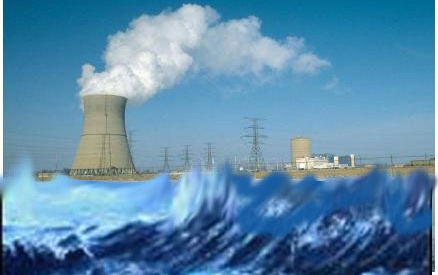
suggestions that Dungeness might become the site of a new nuclear power station featuring Small Modular Reactors (SMRs). The UK’s energy infrastructure, as noted by Peter Frankopan, is highly exposed to danger by even modest rises in sea levels, with all 19 of the country’s nuclear reactors located in coastal regions
As climate change increases the frequency and severity of storms, the inhabitants of low-lying Sussex coastal towns face potential danger
Rising Tides and Nuclear Solutions: the urgent call for coastal protection, byChris Wilmott, 16-12-2023
Born in the coastal town of Hastings, I was lucky to grow up in Sussex by the Sea. I recognise that being able to enjoy the proximity of the sound of the waves, with the many wild and warm variations of weather, was a fantastic benefit during my childhood. However, in recent years, my gaze has shifted somewhat towards a looming threat – the peril that coastal towns now face from climate change and the relentless rise of the tides and adverse weather.
I’ve been doing some research on this and according to NASA there is the potential for lunar cycles to start creating higher tides as soon as 2030, leaving low-lying areas vulnerable to the unforgiving turmoil and rage of the sea. This makes me very concerned for Dungeness, just across from Hastings in Kent, an iconic region situated in a famously low-lying area. In a recent article published by Sussex Bylines, Susan Kerrison posed the question The rising costs of sea defences – how prepared are we? In my opinion, we’re not prepared at all.
…………………………………………….Dungeness B is a nuclear power plant that even as far back as 2014 caused serious concerns over its safety and is now closed and in the process of de-fuelling. EDF privately acknowledged to the Office of Nuclear Regulation (ONR) that the shingle bank protecting the reactors from the sea was “not as robust as previously thought.” This revelation sparked worries among environmentalists, with Greenpeace’s Doug Parr highlighting the lack of transparency about serious safety concerns over flooding.
My interest in this site is heightened by suggestions that Dungeness might become the site of a new nuclear power station featuring Small Modular Reactors (SMRs). The UK’s energy infrastructure, as noted by Peter Frankopan, is highly exposed to danger by even modest rises in sea levels, with all 19 of the country’s nuclear reactors located in coastal regions – the UK Office for Science has acknowledged this threat.
Apart from the potential fall out of power stations failing, one must consider the localised impact of families having to relocate and businesses losing their premises, potentially at short notice. Hastings has suffered two floods so far this year, with sandbags a common sight and businesses forced to close.
Onwards and Upwards for the sea
Ocean scientist Eelco Rohling warns that the combination of global sea-level rise and increased storm intensities could spell doom for exposed coastal regions. The threat of flooding extremes looms large, even with a sea-level rise of 20 centimetres. Twenty centimetres may seem like a modest rise, the corresponding storm surge of two metres would cause considerable damage. Picture then a sea-level rise of say, 80 centimetres, and one can only imagine the destruction that would be caused by a corresponding storm surge of eight metres. ……………………………………………more https://sussexbylines.co.uk/news/environment/rising-tides-and-nuclear-solutions/—
Fukushima: Japan’s Triple Threat in Spades
BY JOHN LAFORGE, CounterPunch ,15 Dec 23
“………………………… Dumping prompts major seafood import bans
Japan intends to disperse over 1.34 million tons of the contaminated wastewater to the Pacific. The government and international regulators have declared that the pollution will have a “negligible” impact on sea life and human health. Skeptical governments in 15 countries maintain import restrictions on Japanese fish and other seafood. China fully banning imports of fishery products from Japan from Aug. 24 when the wastewater discharge started. According to Food Navigator online, five states with the strictest bans are geographically close to Japan and fiercely oppose the radioactive waste dumping. They are South Korea, Taiwan, China, Hong Kong, and Macau. Ten others — Indonesia, French Polynesia, the U.S., the European Union (27 states), Iceland, Switzerland, Norway, Liechtenstein, Russia, and Singapore — require certification, inspections, etc. before allowing imports.
China’s ban has had a serious impact on Japan’s fishery. According to the BBC, China imported over 100,000 tons of scallops from Japan last year. The South China Morning Post reports that China had been the world’s biggest buyer of Japanese seafood, but now “says its ban is due to food safety fears.”
Another micro dosing of mushrooms
Mushrooms grown in Yamahashi prefecture, 172 miles southwest of Fukushima, were found with high levels of radioactive cesium, Japan’s Ministry of Health reported. The edible mushrooms had 150 becquerel of cesium-per-kilo, but the state allows 100 “Bq/kg”. The United States is more at ease with people eating cesium, and allows 1,200 Bq/kg. The U.S. doesn’t even make an exception for baby food.
Fisheries minister apologizes for stating fact
Information control and media manipulation by Japan’s government was on display in August, after Minister of Fisheries Tetsuro Nomura said publicly that Tepco was dumping “contaminated water” into the Pacific. Nomura was immediately attacked by editors, industry, and politicians for his “error” in not speaking of “treated water” — the state’s official term of art. In fact, the wastewater is poisoned with radioactive tritium, carbon-14, and (before “treatment”) some 62 radioactive elements picked up through contact with mounds of melted uranium and plutonium reactor fuel. The minister publicly apologized for his “gaffe” after being scolded by the Prime Minister himself, Fumio Kishida.
Third round of wastewater dumping protested
In November, Tepco began its third major discharge. The group Korean Peoples’ Action Against Japan’s Ocean Dumping of Radioactive Wastewater said problems with the process include clogged wastewater filters, and an increase in the concentration of radioactive material in the third discharge compared to the second. Likewise, the Pacific Collective on Nuclear Issues, composed of civil society groups, NGOs, and others in the Pacific region, said in a statement, “If the Japanese government and Tepco believe the radioactive wastewater is safe, they should be prepared to safely dispose of it within terrestrial Japan.”
The Collective also reminded the 52nd meeting of Pacific Island Forum states in Cook Island that the panel of scientific experts commissioned by the Forum found that “data provided so far, to support Japan’s claim that the treated wastewater is safe, is inconsistent, unsound, and therefore far from reliable.” Additionally, the Polynesian bloc attending the Forum (including Niue, Cook Islands, Samoa, American Samoa, French Polynesia, Wallis and Futuna, Tuvalu and Tonga) demanded a pause in Japan’s dumping.
Wastewater accident contaminates five workers
Tepco has reported that five workers accidentally came in contact with radioactive “fluid” while cleaning ocean dumping discharge pipelines. Two of them were contaminated enough to be kept under medical observation, China Daily reported November 6. According to Tepco, a doctor said there was a possibility the two men sustained burns due to radiation exposure. The Daily, which has been highly critical of Japan’s wastewater discharging, demanded to know: “[S]ince four of the five workers ‘were wearing protective gear and full-face masks, which prevented ingestion of the fluid,’ how could the ‘fluid’ splash and burn the ‘lower body and both arms’ of one of them, and why the other worker, whose ‘entire body was found to be exposed,’ was allowed to do the dangerous work without wearing any protective gear?” The Daily’s editors declared that the “Accident proved Japan’s toxic water plan dubious.”
Editors plaster “safe” over risky discharge
“IAEA confirms safe tritium levels in latest ALPS treated water release at Fukushima,” was the November 7 headline Nuclear Engineering International magazine used in its report on Tepco’s wastewater dumping. However, the article itself had no such confirmation. IAEA experts monitoring the discharge only said that the concentration of radioactive tritium in the waste was “far below Japan’s operational limit.” The word “safe” did not appear in the article or the IAEA report. The article’s text was factually accurate since there is no safe level of radioactive contamination. Like hundreds of others in the sane position, the magazine’s editors put the word “safe” into the IAEA’s mouth and turned the reporter’s story into a lullaby.
Area forests are a re-contamination source
Editors plaster “safe” over risky discharge
“IAEA confirms safe tritium levels in latest ALPS treated water release at Fukushima,” was the November 7 headline Nuclear Engineering International magazine used in its report on Tepco’s wastewater dumping. However, the article itself had no such confirmation. IAEA experts monitoring the discharge only said that the concentration of radioactive tritium in the waste was “far below Japan’s operational limit.” The word “safe” did not appear in the article or the IAEA report. The article’s text was factually accurate since there is no safe level of radioactive contamination. Like hundreds of others in the sane position, the magazine’s editors put the word “safe” into the IAEA’s mouth and turned the reporter’s story into a lullaby.
Area forests are a re-contamination source
Jim Smith, a Professor of Environmental Science at the University of Portsmouth, wrote in The Conversation October 23, that “Radiocaesium [cesium-137], which is the most important long-lived radioactive element emitted by the accident in terms of radiation dose, adheres to soil particles very strongly. Consequently, the decontamination of agricultural land primarily involved removing the top 5cm [about 2 inches] of topsoil. In urban areas, decontamination efforts entailed the removal of soil from sports fields”, school yards and other public areas.
However, as much as 71% of Fukushima Prefecture is covered by forest, and most of it remains contaminated. “Restrictions on the consumption of forest products have lasted for decades following the 1986 Chernobyl incident. And they are expected to persist in many forested areas of Fukushima too,” Prof. Smith wrote. Rainwater runoff from these forests creates routine downstream re-contamination of previously decontaminated areas. Additionally, forest fires can redistribute radioactivity still on trees and the forest floor creating inhalation risks — the same way fire regularly plagues the radioactive exclusion zone around the Chernobyl wreckage in Ukraine. https://www.counterpunch.org/2023/12/15/fukushima-japans-triple-threat-in-spades/
Nuclear news for week ending 18 December

A bit of good news. Staying in Gaza as an act of love: Stories from the Catholics who risk their lives to serve. Blossom Dearie Christmas wish https://www.youtube.com/watch?v=LTub-8WIXfg
TOP STORIES.
Nuclear push- will it unravel? Wins, losses and participation trophies for US nuclear power in 2023.
Sad Clown with the Circus Closed Down*: Zelenskiy’s Demise.
Israel Is Wiping Out Gaza’s Journalists: A Tribute.
COP28 — The End Of The 1.5°C Fantasy. Failure of Cop28 on fossil fuel phase-out is ‘devastating’, say scientists.
Australia’s Defence Minister Marles is wrong – Australia IS taking US and UK nuclear waste! Nuclear energy is not viable for Australia, for a number of reasons.
From the archives. As the world starts to panic over climate change, nuclear evangelists offer spurious solutions.
************************
Climate. COP28 fossil fuel pledges will not limit global warming to 1.5C, says IEA. COP 28 ‘s fundamentally weak agreement to “call on parties to contribute” to action on climate change. At COP 28, fossil fuels targeted for the first time, but with a weak pledge. Cop28 president says his firm will keep investing in oil.
Nuclear. I’m trying hard to keep the Israel and Ukraine news out of this newsletter. That is hard, because the trajectory of each is bringing us closer to the nuclear brink. It’s like pre World War 1.
Christina notes. The demise of Vladimir Zelensky – when will the USA throw him under a bus? Netanyahu’s Israel breathes new life into the modern Nazi movement. What I want for Christmas – for people, especially the media, to tell the truth a bit more often.
**********************************
CLIMATE. Does nuclear power generate GHG CO2 emissions? COP 28 and the nuclear energy numbers racket. Nuclear power – a ‘dangerous distraction’ from real climate action. The danger of rising tides to the Dungeness nuclear site, and to planned small nuclear reactors for Sussex.
ECONOMICS. EDF told not to expect UK to step in to fund Hinkley Point C flagship nuclear project. China’s CGN Halts Funding for UK’s Hinkley Nuclear Plant. The Uncertain Costs of New Nuclear Reactors: What Study Estimates Reveal about the Potential for Nuclear in a Decarbonizing World. Grand plan to triple nuclear energy with small nuclear reactors, but where’s the funding? France scores diplomatic wins on banks and nuclear in new EU rules.
EDUCATION. Subsidy for nuclear energy, but what about nuclear waste? Inside the Youth-Led Fight for a Demilitarized Future.
ENERGY. German nuclear plant to be replaced by Europe’s biggest battery.
ENVIRONMENT. Fukushima: Japan’s Triple Threat in Spades.
HEALTH. Fukushima nuclear plant worker exposed to radiation.
INDIGENOUS ISSUES. Bribery to indigenous people – by Canada’s nuclear lobby.
MEDIA. Criticize Israel? You’re fired. Causing Gaza Blackouts, Israel Benefits from Media Double Standards. Sellafield nuclear site exposés are long overdue. Matthew Modine on His Role in ‘Oppenheimer’ and Producing Nuclear Testing Doc ‘Downwind’: ‘This Insanity Hasn’t Stopped’. Kristen Stewart Warns the World Is “Dangerously Close” to Nuclear Catastrophe.
POLITICS.
- U.S. Congress passes bill barring imports of Russian uranium for nuclear power, (but this ban can be waived as needed.)
- Nebraska team launches study of Congress and nuclear weapons policy.
- Chris Hedges: The Death of Israel. Bernie Sanders Votes No on Giving Israel Aid to Continue ‘Inhumane War’ on Gaza INTERNS ACCUSE CONGRESS OF SUPPRESSING CALLS FOR CEASE-FIRE.
- Member for Dublin urges swift action on Sellafield nuclear threat.
- Australia: Labor’s new AUKUS bill declares Osborne in SA, Stirling in WA as nuclear zones.
POLITICS INTERNATIONAL and DIPLOMACY.
- UN Members Support Gaza Cease-Fire in Overwhelming 153-10 Vote. Biden Intends To Keep Participating In The Incineration Of Gaza. Is Biden taking the Iran nuclear deal off life support?
- Iran Dismisses Fears Over Its Nuclear Program.
- China drops out of British nuclear power program.
- The UN Nuclear Ban Treaty is Leading Resistance to Nuclear Autocracy. As nuclear powers restart the arms race, unarmed nations call for reason.
- Dreams of a nuclear revival overtaken by reality.
SAFETY. Sellafield staff ‘used home computers to beat security failings’. Nuclear plants and the war in Ukraine.
SPINBUSTER. HOW BIDEN’S STATE DEPARTMENT CONCEALS ITS “HUMAN RIGHTS BLACK HOLE” IN THE MIDDLE EAST.
WASTES. Cumbrian councils urged to poll public over controversial nuclear dump plan. Theddlethorpe nuclear waste site: Informed decision needed, says council..
WAR and CONFLICT. UN General Assembly votes to demand immediate ceasefire in Gaza. Ukraine’s 200 Fighter Jet Demand Could Lead To Nuclear Catastrophe.
WEAPONS and WEAPONS SALES. The Chris Hedges Report: The Weapons Israel Tests on Palestinians Will Be Used Against All of Us. https://www.youtube.com/watch?v=9PEWDLunejA Nearly Half of All Israeli Munitions Dropped on Gaza are Imprecise ‘Dumb’ Bombs.
Ukraine asking US for military aid that doesn’t exist – New York Times. Ukraine was never going to win – US senator. Why Zelensky’s ‘Fantasy’ of Building Military-Industrial Hub in Ukraine is Doomed.
Why the Pentagon is a multitrillion-dollar fraud. French nuclear submarine visits Scotland. South Korea military says North fires ballistic missile.
What I want for Christmas – for people, especially the media, to tell the truth a bit more often.

I was 7 when I discovered that Father Christmas was not real. Yes, a bit slow indeed. I felt so betrayed that my parents had lied to me. At least it solved the mystery of why I (badly behaved) got beaut presents, and my best friend (well behaved) got little ones. Twas all about the money available in each household, not about being naughty or nice.
The world, especially my world – the “Western world” continues to perpetrate comfortable weasel words and downright lies. And it all goes a bit crazy at this time of year - the addiction to rampant consumerism taking precedence over spending lovely times with family and friends.
Some of my favourite current lies. Top lie is ‘THE CLOUD’, and “CLOUD COMPUTING”. The only genuine cloud here is the veil of lies that covers the truth about the digital system – uncontrolled spread of steel and concrete datafarm monstrosities, guzzling water and electricity.
Then there are all the military lies and euphemisms “collateral damage” “special military operation” . In the case of the Israeli obliteration of Palestinians – there are the “targeting Hamas, not Palestinions” , “right to self-defence” , ”saving civilian lives” ”lowering the intensity” – when what is really meant is genocide.
Climate change action – is full of dubiously worded stuff, vaguely worded COP 28 statements with no effective target or date to “transition away from fossil fuels”- and “transitional fuels can play a role”
Then there are the obfuscations, weasel words, and downright lies of the nuclear lobby – “clean” “green” “sustainable” “low carbon” “low cost” ………….
So, for Christmas and the New Year, it would be nice to read and hear some straight words that actually match the facts.
COP28 — The End Of The 1.5°C Fantasy

what the world got from COP28 was more like an endorsement of the status quo that reflects the ongoing state of play rather than accelerating it.
We must not allow broiling temperatures, more powerful storms, more frequent wildfires, and the disappearance of rain forests to become the new normal.
https://cleantechnica.com/2023/12/16/cop-28-the-end-of-the-1-5-degree-c-fantasy/
In Paris at the end of 2015, the world rejoiced when the national representatives from around the planet agreed to try really, really hard to keep average global temperatures from increasing more than 1.5°C above pre-industrial levels. Of course, in the 1800s when the Industrial Revolution began, the amount of carbon dioxide in the atmosphere was around 300 parts per million. In 2015, carbon dioxide levels were on the verge of breaking the 400 ppm barrier. Today, with COP28 now in the rear view mirror, the world is experiencing carbon dioxide levels of 420 ppm.
In order for all the happy talk in 2015 to mean anything, CO2 levels should have been declining since then. The fact that they have risen instead means the promise of the Paris climate accords was a mirage. Pessimists at the time suggested the good news was an illusion and history, unfortunately, has proven those “the glass is half empty” types correct.
There was much celebrating in Dubai when the final communique from COP28 contained an historic phrase that proclaimed for the first time ever that the nations of the world should focus on “transitioning away from fossil fuels in energy systems, in a just, orderly and equitable manner.” That is the first time in 28 tries that the words “fossil fuels” have been included in such a statement, which is pretty astonishing when you realize these annual events are about global warming. It has taken 28 years and millions of written and spoken words to acknowledge that fossil fuels are the problem. A young activist from India may have helped as well.
Sultan Al Jaber is being celebrated for getting those words into the final document after they were omitted from a prior draft and for standing up to his oil-soaked colleagues who felt betrayed by that language. But David Wallace-Wells, a science and climate writer for the New York Times, is not one of those who is cheering. In fact, he says what the world got from COP28 was more like an endorsement of the status quo that reflects the ongoing state of play rather than accelerating it.
Global sales of internal combustion engine vehicles peaked in 2017, he writes, and investment in renewable energy has exceeded investment in fossil fuel infrastructure for several years running. In 2022, 83 percent of new global energy capacity was green.
“The question isn’t about whether there will be a transition, but how fast, global and thorough it will be. The answer is: not fast or global or thorough enough yet, at least on the current trajectories, which COP28 effectively affirmed. To limit warming to 1.5 degrees Celsius now requires entirely eliminating emissions not long after 2040, according to the Global Carbon Project, whose ‘carbon budget’ for 1.5 degrees Celsius will be exhausted in about five years of current levels of emissions. For 1.7 degrees Celsius, it’s just after 2050, and for 2 degrees Celsius, 2080. And despite Al Jaber’s claim that COP28 has kept the 1.5 degree goal alive, hardly anyone believes it’s still plausible.”
In fact, Wallace-Wells writes, most analysts predict a global peak in fossil fuel emissions at some point over the next decade, followed not by a decline but a long plateau — meaning that in every year for the foreseeable future, we would be doing roughly as much damage to the future of the planet’s climate as was done in recent years. The expected result will be that by the end of this century, average global temperatures will have risen by 2 to 3 degrees Celsius above pre-industrial levels.
“Not so long ago, this was a future that terrified us, but now we are not just coming to accept that future and, in some corners, applauding it as progress. Over the last several years, as decarbonization has made worst case scenarios seem much less likely, a wave of climate alarmism has given way somewhat to a new mix of accommodation and optimism.”
Imagining 3°C At COP28
At COP28, Bill Gates described anything below 3 degrees as a “fortunate” outcome. A few months earlier, former President Barack Obama struck a similar note in describing how he’d tried to talk his daughter Malia off the edge of climate despair by emphasizing what could still be saved rather than what had been lost already through global inaction. “We may not be able to cap temperature rise to 2 degrees Celsius, but here’s the thing, if we work really hard, we may be able to cap it at two and a half.” Scottish data scientist Hannah Ritchie gives a shot of optimism to those caught in a panic about warming and environmental degradation in a new book called “Not the End of the World.”
Wallace-Wells tries to remain guardedly optimistic but believes COP28 will be remembered as the moment the world finally gave up on the goal of limiting warming to degrees and encourages his readers to think what passing that threshold will mean.
“Global warming doesn’t proceed in large jumps, for the most part, and surpassing 1.5 degrees does not bring us immediately or inevitably to 2 degrees. But we know quite a lot about the difference between those two worlds — the one we had once hoped to achieve and the one that now looks much more likely. Indeed, in the recent past, a clear understanding of those differences was responsible for a period of intense and global climate alarm.”
The Intergovernmental Panel on Climate Change “Special Report on Global Warming of 1.5 Degrees Celsius,” published in 2018, collated all the scientific literature about the two warming levels. Between 1.5 and 2 degrees C, it estimated more than 150 million people will die prematurely from the air pollution produced by the burning of fossil fuels. Flooding events that used to arrive once a century will become annual events.
Most scientists believe that amount of warming would be a death sentence for the world’s coral reefs. And many believe that, in that range, the planet will lock in the permanent loss of many of its ice sheets, which could bring, over centuries, enough sea level rise to redraw the world’s coastlines.
If warming grows beyond those levels, so will its impacts. At 3 degrees, for instance, New York City could be hit by three 100 year flooding events each year and more than 50 times as many people in African cities would experience conditions of dangerous heat. Wildfires would burn twice as much land globally and the Amazon would cease to be a rain forest but become a grassland. Potentially lethal heat stress, almost unheard of at 1.5 degrees, would become routine for billions at 2 degrees, according to one recent study, and above 3 degrees would impact places like the American Midwest.
“In some ways, these projections may sound like old news, but as we find ourselves now adjusting to the possibility of a future shaped by temperature rise of that kind, it may be clarifying to recall that, almost certainly, when you first heard those projections, you were horrified. The era of climate reckoning has also been, to some degree, a period of normalization, and while there are surely reasons to move past apocalyptic politics toward something more pragmatic, one cost is a loss of perspective at negotiated, technocratic events like [COP28]”
Was 1.5°C Just An Attractive Fantasy?
Perhaps it was always somewhat fanciful to believe that it was possible to limit warming to 1.5 degrees Celsius. Wallace-Wells suggests. As Bill McKibben said recently, simply stating the goal did a lot to shape action in the years that followed the Paris climate accords by demanding we all look squarely at what the science told us about what it would mean to fail.
The Dubai consensus that renewable energy should triple by 2030 is one sign that, in some areas, impressive change is possible. “But for all of our temperature goals, the timelines are growing shorter and shorter, bringing the world closer and closer to futures that looked so fearsome to so many not very long ago,” Wallace -Wells cautions.
The Takeaway
We must not allow broiling temperatures, more powerful storms, more frequent wildfires, and the disappearance of rain forests to become the new normal. We need to keep the vision that emerged in Paris in 2015 alive and intact, even if it was largely a fantasy. We need to keep the pressure on governments and fossil fuel companies to sharply reduce their carbon emissions by honoring the spirit as well as the letter of closing statement from COP28.
The struggle is far from over. Every tenth of a degree of increase in average global temperatures prevented will avoid untold suffering for millions of humans.
There is another consideration here. Much of the turn toward extreme right wing governments around the world from the United States to the Netherlands, Italy, New Zealand, and the UK is directly connected to a desire to keep black and brown people from becoming unwelcome immigrants. It is in the selfish best interest of wealthy nations to control climate related migration by controlling global temperature increases. If we think climate migration is rampant now, we ain’t seen nothing yet.
Nuclear power – a ‘dangerous distraction’ from real climate action

A ‘dangerous distraction’ COP plot to triple nuclear power by 2050 decried
https://beyondnuclearinternational.org/2023/12/17/a-dangerous-distraction/–By Jon Queally, Common Dreams
Climate campaigners scoffed Saturday at a 22-nation pledge to triple nuclear power capacity by mid-century as a way to ward off the increasing damage of warming temperatures, with opponents calling it a costly and “dangerous” distraction from the urgent need for a fossil fuel phaseout alongside a rapid increase in more affordable and scaleable renewable sources such as wind and solar.
The Declaration to Triple Nuclear Energy—backed by the United States, Canada, France, the Czech Republic, and others—was announced as part of the Climate Action Summit taking place in Dubai as a part of the two-week U.N. climate talks known as COP28.
While the document claims a “key role” for nuclear energy to keep “a 1.5°C limit on temperature rise within reach” by 2050 and to help attain the so-called “net-zero emissions” goal that governments and the fossil fuel industry deploy to justify the continued burning of coal, oil, and gas, critics say the false solution of atomic power actually harms the effort to reduce emissions by wasting precious time and money that could be spent better and faster elsewhere.
“There is no space for dangerous nuclear power to accelerate the decarbonization needed to achieve the Paris climate goal,” said Masayoshi Iyoda, a 350.org campaigner in Japan who cited the 2011 Fukushima disaster as evidence of the inherent dangers of nuclear power.
Nuclear energy, said Iyoda, “is nothing more than a dangerous distraction. The attempt of a ‘nuclear renaissance’ led by nuclear industries’ lobbyists since the 2000s has never been successful—it is simply too costly, too risky, too undemocratic, and too time-consuming. We already have cheaper, safer, democratic, and faster solutions to the climate crisis, and they are renewable energy and energy efficiency.”
When word of the multi-nation pledge emerged last month, Mark Jacobson, professor of civil and environmental engineering at Stanford University and co-founder of The Solutions Project which offers a roadmap for 100% renewable energy that excludes nuclear energy, called the proposal the “stupidest policy proposal I’ve ever seen.”
Jacobson said the plan to boost nuclear capacity in a manner to avert the worst impacts of the climate crisis “will never happen no matter how many goals are set” and added that President Joe Biden was getting “bad advice in the White House” for supporting it.
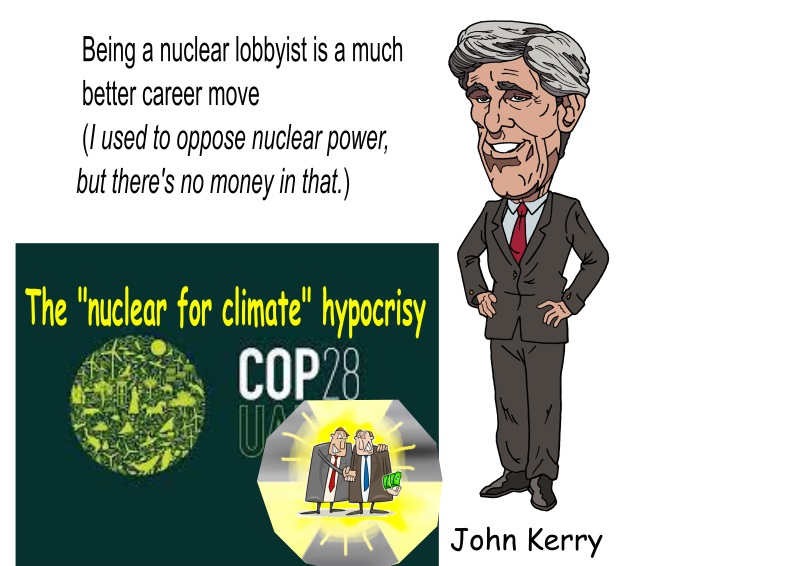
In comments from Dubai, U.S. climate envoy John Kerry said that while nuclear is not “going to be the sweeping alternative to every other energy source,” he claimed that “science and the reality of facts” shows the world “you can’t get to net-zero 2050 without some nuclear.”
Numerous studies and blueprints towards a renewable energy future, however, have shown this is not established fact, but rather the position taken by both the nuclear power industry itself and those who would otherwise like to slow the transition to a truly renewable energy system.
Pauline Boyer, energy transition campaign manager with Greenpeace France, said the scientific evidence is clear and it is not in favor of a surge in nuclear power.
“If we wish to maintain a chance of a trajectory of 1.5°C, we must massively reduce greenhouse gas emissions over the coming years, but nuclear power is too slow to deploy in the face of the climate emergency,” she said.
“The announcement of a tripling of capacities is disconnected from reality,” Boyer continued. Citing delays and soaring costs, she said the nuclear industry “is losing ground in the global energy mix every day” in favor of renewable energy options that are cheaper, quicker to deploy, and more accessible to developing countries.
In 2016, researchers at the University of Sussex and the Vienna School of International Studies showed that “entrenched commitments to nuclear power” were likely “counterproductive” towards achieving renewable energy targets, especially as “better ways to meet climate goals”—namely solar, wind, geothermal, and hydropower–were suppressed.
In response to Saturday’s announcement, Soraya Fettih, a 350.org campaigner from France, which relies heavily on nuclear power, said it’s simply a move in the wrong direction. “Investing now in nuclear energy is an inefficient route to take to reduce emissions at the scale and pace needed to tackle climate change,” said Fettih. “Nuclear energy takes much longer than renewable energy to be operational.”
Writing on the subject in 2019, Harvard University professor Naomi Oreskes and renowned author and psychohistorian Robert Jay Lifton observed how advocates of nuclear power declare the technology “clean, efficient, economical, and safe” while in reality “it is none of these. It is expensive and poses grave dangers to our physical and psychological well-being.”
“There are now more than 450 nuclear reactors throughout the world,” they wrote at the time. “If nuclear power is embraced as a rescue technology, there would be many times that number, creating a worldwide chain of nuclear danger zones—a planetary system of potential self-annihilation.”
John Mearsheimer: Israel is Choosing ‘Apartheid’ or ‘Ethnic Cleansing’
https://scheerpost.com/2023/12/17/john-mearsheimer-israel-is-choosing-apartheid-or-ethnic-cleansing/
Israel has gone far beyond “going after Hamas” in the first 10 weeks of its war on Gaza, according to one of the United States’ leading political scientists, John Mearsheimer.
He tells host Steve Clemons that murdering hundreds of civilians daily and starving the rest is a “punishment campaign” and “should be unacceptable to decent people all over the world.”
In this episode, Mearsheimer, who teaches international relations at the University of Chicago, looks into Israel’s long-term strategies and explains why the elites in the US, Europe and the Arab world are not taking concrete steps to stop Israel’s bombing campaign.
Biden staffers give the boss a lesson in humanity
Walt Zlotow, West Suburban Peace Coalition, Glen Ellyn IL
Wednesday night, dozens of President Biden’s employees held a vigil outside the White House. They called for a lasting cease-fire in Gaza to protest their Chief’s near total support, in weapons and words, of Israel’s genocidal ethnic cleansing of Palestinians in Gaza.
Protesters wore sunglasses and masks to hide their identities in fear of losing their administration jobs; indeed destroying their government careers.
Their protest was the most visible pushback from government workers to Biden’s grotesque involvement enabling the destruction of Gaza and its 2.3 million beleaguered Palestinians.
In November, over 700 political appointees sent Biden a letter demanding he support an immediate, permanent cease-fire to stop the killing, and resume humanitarian aid. Earlier this month over 40 White House interns sent Biden a letter condemning Israel’s genocidal response to the October 7 attack and imploring Biden to support a permanent cease-fire.
Did you read those letters from political appointees and lowly interns, Mr. President? Did you peer thru the White House windows to view people, with more courage and decency than you could imagine, beseeching you to end the madness of your war policies?
Along with those hundreds of courageous government workers, the whole world, save for the leaders of America and Israel, are pondering when President Biden will reclaim his humanity.
French nuclear submarine visits Scotland
French nuclear submarine Suffren visited Faslane naval base near Glasgow in
Scotland this week. The visit isn’t the first time a French nuclear
submarine has visited Scotland, not by a long shot, as the increasing
number of visits by the French and U.S. Navy in recent years reflects the
enhanced security posture in the North Atlantic.
UK Defence Journal 16th Dec 2023
https://ukdefencejournal.org.uk/french-nuclear-submarine-arrives-in-scotland-2/
1 This Month

petition to oppose the rapid increase of space-military industry threatening Jeju Island and the region.
[Petition by April 19th (KST)] Stop the joint military-Hanwha Systems-Jeju Provincial Government Sea Launch!
World Nuclear Power. Reactors 1951-2026, 75 Years of Nuclear Power.
Interactive Map– https://dv.worldnuclearreport.org/
Chernobyl: The Lost Tapes – A good documentary on Chernobyl on SBS available On Demand for the next 3 weeks– https://www.sbs.com.au/ondemand/tv-program/chernobyl-the-lost-tapes/2352741955560

of the week–London Campaign for Nuclear Disarmament


Tell the Ukrainian Government to Drop Prosecution of Peace Activist Yurii Sheliazhenko
To see nuclear-related stories in greater depth and intensity – go to https://nuclearinformation.wordpress.com
-
Archives
- April 2026 (211)
- March 2026 (251)
- February 2026 (268)
- January 2026 (308)
- December 2025 (358)
- November 2025 (359)
- October 2025 (376)
- September 2025 (257)
- August 2025 (319)
- July 2025 (230)
- June 2025 (348)
- May 2025 (261)
-
Categories
- 1
- 1 NUCLEAR ISSUES
- business and costs
- climate change
- culture and arts
- ENERGY
- environment
- health
- history
- indigenous issues
- Legal
- marketing of nuclear
- media
- opposition to nuclear
- PERSONAL STORIES
- politics
- politics international
- Religion and ethics
- safety
- secrets,lies and civil liberties
- spinbuster
- technology
- Uranium
- wastes
- weapons and war
- Women
- 2 WORLD
- ACTION
- AFRICA
- Atrocities
- AUSTRALIA
- Christina's notes
- Christina's themes
- culture and arts
- Events
- Fuk 2022
- Fuk 2023
- Fukushima 2017
- Fukushima 2018
- fukushima 2019
- Fukushima 2020
- Fukushima 2021
- general
- global warming
- Humour (God we need it)
- Nuclear
- RARE EARTHS
- Reference
- resources – print
- Resources -audiovicual
- Weekly Newsletter
- World
- World Nuclear
- YouTube
-
RSS
Entries RSS
Comments RSS
 nuclear-news