How US and Ukraine’s far-right made pro-peace Zelensky a ‘no peace’ president

the exalted version of Zelensky promoted to NATO state audiences today is a sharp contrast to the pro-peace candidate that Ukrainians overwhelmingly elected four years ago.
it is no wonder that the same US political establishment that sabotaged Zelensky’s peace mandate now holds him up as a hero.
In October 2019, as he took steps to implement Minsk in the face of far-right protests and US hostility, Zelensky assured Ukrainians that he was “the president of peace,” and that “ending this war is of utmost importance to me.” He added: “I, the president, am not ready to sacrifice our people. And that is why I choose diplomacy.”
Elected in 2019 to bring peace to Ukraine, a Zelensky aide now declares that “there is no peace with Russia, and Ukraine must arm itself to the teeth.”
Aaron Maté https://mate.substack.com/p/how-us-and-ukraines-far-right-made?utm_source=post-email-title&publication_id=100118&post_id=105251040&isFreemail=false&utm_medium=email 26 Feb 23,
Volodymyr Zelensky marked the one-year anniversary of Russia’s invasion of Ukraine by rejecting any negotiations with the Kremlin.
“There is nothing to talk about and nobody to talk about over there,” Zelensky declared.
The Ukrainian President delivered the message just two weeks after his French and German counterparts urged him, at a meeting in Paris, “to start considering peace talks with Moscow,” the Wall Street Journal reports.
But as an adviser explained to the New York Times, Zelensky is now “more at peace with himself,” and therefore has no need to entertain the possibility of peace with his neighbor.
He has a clear understanding what Ukraine should do,” the adviser said. “There is no ambiguity: There is no peace with Russia, and Ukraine must arm itself to the teeth.”
Zelensky’s “clear understanding” of the need to reject peace with Russia and turn his country into a NATO arms depot is a resounding victory for the Ukrainian far-right and its US government allies. As I wrote here last year, these two powerful forces, aligned by their converging interests in prolonging the post-2014 war in Ukraine’s Donbas region, sabotaged the peace platform that Zelensky was elected on in April 2019. As Adam Schiff put it, the US has used Ukraine’s civil war “so that we can fight Russia over there, and we don’t have to fight Russia here.”
The commemoration of the first anniversary of Russia’s cross-border invasion to end Schiff’s bipartisan “fight” has yielded more insight into how the US, in concert with its ideological allies in Ukraine’s powerful far-right, helped convert Zelensky from pro-peace candidate to “no peace” president.
In a fawning profile, the Washington Post approvingly recounts how Zelensky shifted from naively “thinking peace with Putin was possible” to now believing that “victory is the only answer.” Although the Post attempts to cast Zelensky’s “transformation” as the result of “Russian President Vladimir Putin’s threat,” the details tell a different story.
The Post describes a summer 2019 exchange between the then-rookie president and the top US diplomat in Ukraine, William Taylor. At the time, Zelensky was “expressing curiosity” about the Steinmeier Formula, a German-led effort to revive the stalled Minsk Accords. Minsk, reached in 2015, called for granting limited autonomy to the rebellious Donbas regions in eastern Ukraine in exchange for their demilitarization. Ukraine’s far-right, the driving force behind the 2014 Maidan coup that triggered the ensuing Donbas war, had opposed Minsk’s implementation at every turn.
Zelensky, Taylor recalls, “hoped” that the Steinmeier initiative “might lead to a deal with the Kremlin.” The Ukrainian president “pointed to a document explaining the formulation, thinking that somewhere in the details of the legalese a workable compromise with Moscow might be found.”
But Washington knew better: no compromise with Moscow could be allowed. “No one knows what it is,” Taylor told Zelensky of the German plan. “Steinmeier doesn’t know what it is… It’s a terrible idea.”
The Steinmeier plan was in fact a simple idea, and a welcome one to anyone interested in bringing peace to Ukraine. For his part, Taylor was never shy about advocating war. In a December 2014 letter to The Washington Post, Taylor denounced an opinion article that had opposed sending US arms to Ukraine and advocated an agreement between NATO and Russia to resolve the Ukrainian crisis. Backers of such steps, Taylor wrote, are “advocating that the West appease Russia.… Now is not the time for appeasement.”
This explains why Taylor was similarly hostile to the “terrible” plan named after former German foreign minister Frank-Walter Steinmeier. The Steinmeier Formula called for holding local elections in the rebel-held Donbas areas under Ukrainian law and international supervision. If OSCE monitors certified the results, then Ukraine would regain control of its eastern border and enact a special status law granting the rebellious Donbas regions limited autonomy.
But this road map, along with a similar initiative from French diplomat Pierre Morel, “got nowhere because of opposition in Ukraine,” former UK diplomat Duncan Allan observed for the UK government-funded think tank Chatham House. When Zelensky tried to revive it in late 2019, Allan added, “[a]nother sharp reaction in Ukraine forced him to back down.” As the New York Times now notes in passing, “a backlash at home — with street protesters in Kyiv accusing him of treason for surrendering land — steered the Ukrainian president to a political formula in which he rejected concessions” with Russia.
Specifically, that “backlash” in Ukraine included not only violent protests but outright threats to Zelensky’s life.
“Zelenskyy said he was ready to lose his ratings, popularity, position,” Right Sector co-founder Dmytro Yarosh, commander of the Ukrainian Volunteer Army and former senior Ukrainian military advisor, said shortly after Zelensky’s May 2019 inauguration. “No he would lose his life. He will hang on some tree on Khreshchatyk – if he betrays Ukraine and those people who died in the [Maidan] Revolution and the [Donbas] War.” (Two years after threatening to hang the president from a tree, Yarosh was given a repeat appointment as an advisor to the Commander-in-Chief of the Ukrainian military. The Ukrainian military subsequently claimed that the appointment was withdrawn).
Despite the internal and external opposition, Zelensky departed a meeting with Putin in December 2019 feeling “hopeful”, the Post reports. “Within weeks, Russia agreed to a broader prisoner exchange and offered Ukraine a $3 billion gas arbitration settlement as well as a new gas transit deal.”
But on top of the far-right backlash at home, Zelensky’s peace initiative faced direct hostility from Ukraine’s patron in Washington. After warning Zelensky against pursuing a “terrible” European-brokered peace plan, William Taylor soon became a hero of Trump’s first impeachment over Ukraine. At the impeachment proceedings, which kicked off in October 2019 just as Zelensky was trying to follow through on his peace mandate, Taylor was summoned to assure Congress and a Russiagate-crazed media class that Trump’s pause on weapons subsidies for the Ukrainian fight against the Russia-backed Donbas rebels endangered “our national security.” (For his services, the New York Times lauded Taylor as “a septuagenarian Vietnam veteran with a chiseled face and reassuring gray hair,” while the Washington Post declared him to be a “meticulous note taker.”)
The prevailing imperative to use Ukraine “to fight Russia over there” (Schiff) meant that Zelensky had no chance to pursue the “terrible” Minsk agreement that Taylor and other influential proxy warriors opposed.
“The reality is that Ukraine depends on political, diplomatic, economic and military support from the West, and particularly from the United States,” Samuel Charap of the Pentagon-tied RAND Corporation wrote in November 2021. Up to that point, “Ukraine has shown little desire” to “[implement] its obligations under the Minsk II agreement,” and the US had “not yet used its influence to push for progress on the Donbas conflict.” If the Ukrainian government could be pushed “toward complying”, Charap noted, that “might actually invite de-escalation from Russia” while saving Ukraine “from calamity.”
But by then, Zelensky had decided to side with the forces that had sabotaged him. According to the Post’s account, citing David Arakhamia, the leader of Zelensky’s faction in parliament: “By early 2021, Zelensky believed that negotiations wouldn’t work and that Ukraine would need to retake the Donetsk and Luhansk regions ‘either through a political or military path.’” As a result, “[t]he Kremlin disengaged.”
Zelensky’s early 2021 decision that “negotiations wouldn’t work” explains why, in early 2022, he shunned all opportunities to prevent Russia’s looming invasion. At the final talks on implement Minsk, a “key obstacle,” the Washington Post reported, “was Kyiv’s opposition to negotiating with the pro-Russian separatists.” When Germany proposed a last-minute deal in which Ukraine would “renounce its NATO aspirations and declare neutrality as part of a wider European security deal,” Zelensky turned it down, according to the Wall Street Journal. After rejecting diplomacy, Zelensky’s government then significantly increased its shelling of the Donbas, a potential step toward trying to “retake the Donetsk and Luhansk regions” via the “military path” that the Washington Post has newly confirmed.
And as the recent disclosures of former Israeli Prime Minister Naftali Bennet underscore, the US went from sabotaging Zelensky’s peace mandate before the Russian invasion to blocking diplomatic efforts in the period since.
As a result, the exalted version of Zelensky promoted to NATO state audiences today is a sharp contrast to the pro-peace candidate that Ukrainians overwhelmingly elected four years ago.
In October 2019, as he took steps to implement Minsk in the face of far-right protests and US hostility, Zelensky assured Ukrainians that he was “the president of peace,” and that “ending this war is of utmost importance to me.” He added: “I, the president, am not ready to sacrifice our people. And that is why I choose diplomacy.”
By now choosing to reject diplomacy, President Zelensky has shown that he is more than willing to sacrifice his people for the sake of his NATO state patrons’ desired proxy war against Russia. Accordingly, one year into the catastrophic Russian invasion that it helped provoke, it is no wonder that the same US political establishment that sabotaged Zelensky’s peace mandate now holds him up as a hero.
Should Algorithms Control Nuclear Launch Codes?

A new State Department proposal asks other nations to agree to limits on the power of military AI.
LAST THURSDAY, THE US State Department outlined a new vision for developing, testing, and verifying military systems—including weapons—that make use of AI.
The Political Declaration on Responsible Military Use of Artificial Intelligence and Autonomy represents an attempt by the US to guide the development of military AI at a crucial time for the technology. The document does not legally bind the US military, but the hope is that allied nations will agree to its principles, creating a kind of global standard for building AI systems responsibly.
Among other things, the declaration states that military AI needs to be developed according to international laws, that nations should be transparent about the principles underlying their technology, and that high standards are implemented for verifying the performance of AI systems. It also says that humans alone should make decisions around the use of nuclear weapons.
When it comes to autonomous weapons systems, US military leaders have often reassured that a human will remain “in the loop” for decisions about use of deadly force. But the official policy, first issued by the DOD in 2012 and updated this year, does not require this to be the case.
Attempts to forge an international ban on autonomous weapons have so far come to naught. The International Red Cross and campaign groups like Stop Killer Robots have pushed for an agreement at the United Nations, but some major powers—the US, Russia, Israel, South Korea, and Australia—have proven unwilling to commit.
One reason is that many within the Pentagon see increased use of AI across the military, including outside of non-weapons systems, as vital—and inevitable. They argue that a ban would slow US progress and handicap its technology relative to adversaries such as China and Russia. The war in Ukraine has shown how rapidly autonomy in the form of cheap, disposable drones, which are becoming more capable thanks to machine learning algorithms that help them perceive and act, can help provide an edge in a conflict.
Earlier this month, I wrote about onetime Google CEO Eric Schmidt’s personal mission to amp up Pentagon AI to ensure the US does not fall behind China. It was just one story to emerge from months spent reporting on efforts to adopt AI in critical military systems, and how that is becoming central to US military strategy—even if many of the technologies involved remain nascent and untested in any crisis.
Lauren Kahn, a research fellow at the Council on Foreign Relations, welcomed the new US declaration as a potential building block for more responsible use of military AI around the world.
A few nations already have weapons that operate without direct human control in limited circumstances, such as missile defenses that need to respond at superhuman speed to be effective. Greater use of AI might mean more scenarios where systems act autonomously, for example when drones are operating out of communications range or in swarms too complex for any human to manage.
Some proclamations around the need for AI in weapons, especially from companies developing the technology, still seem a little farfetched. There have been reports of fully autonomous weapons being used in recent conflicts and of AI assisting in targeted military strikes, but these have not been verified, and in truth many soldiers may be wary of systems that rely on algorithms that are far from infallible.
And yet if autonomous weapons cannot be banned, then their development will continue. That will make it vital to ensure that the AI involved behave as expected—even if the engineering required to fully enact intentions like those in the new US declaration is yet to be perfected.
There has never in history been a greater need for a large Anti-War Movement

Caitlin Johnstone 27 Feb 23 Caitlin’s Newsletter,
Things are escalating more and more rapidly between the US-centralized power structure and the few remaining nations with the will and the means to stand against its demands for total obedience, namely China, Russia, and Iran. The world is becoming increasingly split between two groups of governments who are becoming increasingly hostile toward each other, and you don’t have to be a historian to know it’s probably a bad sign when that happens. Especially in the age of nuclear weapons.
The US State Department’s Victoria Nuland is now saying that the US is supporting Ukrainian strikes on Crimea, drawing sharp rebukes from Moscow with a stern reminder that the peninsula is a “red line” for the Kremlin which will result in escalations in the conflict if crossed. On Friday, Ukraine’s President Zelensky told the press that Kyiv is preparing a large offensive for the “de-occupation” of Crimea, which Moscow has considered a part of the Russian Federation since its annexation in 2014.
As Anatol Lieven explained for Jacobin earlier this month, this exact scenario is currently the one most likely to lead to a sequence of escalations ending in nuclear war. In light of the aforementioned recent revelations, the opening paragraph of Lieven’s article is even more chilling to read now than it was when it came out a couple of weeks ago:
The greatest threat of nuclear catastrophe that humanity has ever faced is now centered on the Crimean peninsula. In recent months, the Ukrainian government and army have repeatedly vowed to reconquer this territory, which Russia seized and annexed in 2014. The Russian establishment, and most ordinary Russians, for their part believe that holding Crimea is vital to Russian identity and Russia’s position as a great power. As a Russian liberal acquaintance (and no admirer of Putin) told me, “In the last resort, America would use nuclear weapons to save Hawaii and Pearl Harbor, and if we have to, we should use them to save Crimea.”
| And that’s just Russia. The war in Ukraine is being used to escalate against all powers not aligned with the US-centralized alliance, with recent developments including drone attacks on an Iranian weapons factory which reportedly arms Russian soldiers in Ukraine, and Chinese companies being sanctioned for “backfill activities in support of Russia’s defence sector” following US accusations that the Chinese government is preparing to arm Russia in the war. Israel’s Prime Minister Benjamin Netanyahu has reportedly been holding multiple meetings with top military officials regarding potential future attacks on Iran to neutralize the alleged threat of Iran developing a nuclear arsenal, a “threat” that Netanyahu has personally been lying about for years. If you’ve been reading Antiwar.com (and if you care about this stuff you probably should be), you’ve been seeing new articles about the latest imperial escalations against China on a near-daily basis now. Sometimes they come out multiple times per day; this past Thursday Dave DeCamp put out two completely separate news stories titled “US Plans to Expand Military Presence in Taiwan, a Move That Risks Provoking China” and “Philippines in Talks With US, Australia on Joint South China Sea Patrols“. Taiwan and the South China Sea are two powderkeg flashpoints where war could quickly erupt at any time in a number of different ways. If you know where to look for good updates on the behavior of the US-centralized empire and you follow them from day to day, it’s clear that things are accelerating toward a global conflict of unimaginable horror. As bad as things look right now, the future our current trajectory has us pointed toward is much, much, much worse. Empire apologists will frame this trajectory toward global disaster as an entirely one-sided affair, with bloody-fanged tyrants trying to take over the world because they are evil and hate freedom, and the US-centralized alliance either cast in the role of poor widdle victim or heroic defender of the weak and helpless depending on which generates more sympathy on that day. These people are lying. Any intellectually honest research into the west’s aggressions and provocations against both Russia and China will show you that Russia and China are reacting defensively to the empire’s campaign to secure US unipolar planetary hegemony; you might not agree with those reactions, but you cannot deny that they are reactions to a clear and deliberate aggressor. This is important to understand, because whenever you say that something must be done to try and avert an Atomic Age world war, you’ll get empire apologists saying “Well go protest in Moscow and Beijing then,” as though the US power alliance is some kind of passive witness to all this. Which is of course complete bullshit; if World War III does indeed befall us, it will be because of choices that were made by the drivers of the western empire while ignoring off-ramp after off-ramp. This tendency to flip reality and frame the western imperial power structure as the reactive force for peace against malevolent warmongers serves to help quash the emergence of a robust anti-war movement in the west, because if your own government is virtuous and innocent in a conflict then there’s no good reason to go protesting it. But that’s exactly what urgently needs to happen, because these people are driving us to our doom. In fact, it is fair to say that there has never in history been a time when the need to forcefully oppose the warmongering of our own western governments was more urgent. The attacks on Vietnam and Iraq were horrific atrocities which unleashed unfathomable suffering upon our world, but they did not pose any major existential threat to the world as a whole. The wars in Vietnam and Iraq killed millions; we’re talking about a conflict that can kill billions. Each of the World Wars was in turn the worst single thing that happened to our species as a whole up until that point in history. World War I was the worst thing that ever happened until World War II happened, and if World War III happens it will almost certainly make World War II look like a schoolyard tussle. This is because all of the major players in that conflict would be armed with nuclear weapons, and at some point some of them are going to be faced with strong incentives to use them. Once that happens, Mutually Assured Destruction ceases to protect us from armageddon, and the “Mutual” and “Destruction” components come in to play. None of this needs to happen. There is nothing written in adamantine which says the US must rule the world with an iron fist no matter the cost and no matter the risk. There is nothing inscribed upon the fabric of reality which says nations can’t simply coexist peacefully and collaborate toward the common good of all beings, can’t turn away from our primitive impulses of domination and control, can’t do anything but drift passively toward nuclear annihilation all because a few imperialists in Washington convinced everyone to buy into the doctrine of unipolarism. But we’re not going to turn away from this trajectory unless the masses start using the power of our numbers to force a change from warmongering, militarism and continual escalation toward diplomacy, de-escalation and detente. We need to start organizing against those who would steer our species into extinction, and working to pry their hands away from the steering wheel if they refuse to turn away. We need to resist all efforts to cast inertia on this most sacred of all priorities, and we need to start moving now. We’re all on a southbound bus to oblivion, and it’s showing no signs of stopping. Read Caitlin’s Newsletter in the app Listen to posts, join subscriber chats, and never miss an update from Caitlin Johnstone. © 2023 Caitlin Johnstone 548 Market Street PMB 72296, San Francisco, CA 94104 Unsubscribe |
Nuclear weapons consortium enthusiastically revving up their business.

Nuclear weapons consortium faces new global threats, JIM CARRIER S The Gazette, Feb 26, 2023
WASHINGTON • Thirty years after the Cold War, the United States is again running in a nuclear arms race.
Officially, no one calls it a race. It is contest between four or five adversaries who could destroy the world, or much of it. But it is shaping up to be a costly, unpredictable, generational competition that will shadow international nuclear geopolitics for decades.
Team USA, which is leading the pack at the moment, gathered in a hotel ballroom in Alexandria, Va., Feb. 14 to hear how it can win. The forum was the 15th Nuclear Deterrence Summit, a gathering of people employed by the “nuclear security enterprise,” the complex of laboratories, factories, corporations and federal branches that make and use nuclear weapons.
The atmosphere was by turns alarming and auspicious as contractors, who operate most of the nuclear enterprise and employ 95% of its 70,000 employees, heard of the growing threats to U.S. security, while contemplating lucrative federal contracts to counter those threats.
“Delivery of mission is becoming paramount while the fiscal environment is evolving from being cost-constrained to being cost-conscious,” reported a new study of the enterprise.
The result of that shift is clear: The first millions of trillions of dollars are flowing toward labs and factories that are designing, and starting to build, new thermonuclear bombs and new fleets of missiles, airplanes and submarines to deliver them.
For the 531 people in attendance the summit at times resembled a pep rally.
In a keynote address, Jill Hruby, administrator of the National Nuclear Security Administration (NNSA), described the U.S. buildup as a “renaissance.”
Nuclear weapons remain the “cornerstone of national defense,” she said. The current stockpile of 3,750 aging warheads — down from more than 31,000 at the height of the Cold War in the mid-1960s — is being “modernized.” They include five existing warheads for gravity bombs, Minuteman and cruise missiles, and the Trident missile for new Columbia-class submarines, now being built. One warhead, the W93, is a new design for the Sentinel, a new intercontinental ballistic missile that will replace the Minuteman III missiles in silos in Colorado, Wyoming, Montana and North Dakota.
To make that warhead, the U.S. will again make plutonium “pits,” the core of hydrogen thermonuclear bombs, at a remodeled plant in Los Alamos, N.M., and a new $10 billion plant in Savannah River, Ga.
The pit factories, which replace the infamous and now cleared from the landscape Rocky Flats factory outside Denver, are still being designed, and are the subject of lawsuits by activist groups who say the government sidestepped required full environmental impact statements. If they become operational, Los Alamos will make 30 pits a year starting in 2026 and Savannah River 50 pits a year — a number that is likely to grow, Hruby said.
In the next five years NNSA, a semi-autonomous agency within the U.S. Department of Energy responsible for applying nuclear science to military weapons, plans to complete five warhead modernizations, build at least six major construction projects and rebuild numerous facilities and capabilities that have “atrophied or disappeared” since the Cold War, she said. Many of the plants and labs are still cleaning up deadly contamination left from the Cold War.
“The American people are hearing more about nuclear issues than at any time since the Cuban Missile Crisis, or the collapse of the Soviet Union,” Hruby said.
At the conclusion of her talk, which began at 8:30 a.m. on Valentine’s Day, moderator DJ Johnson, vice president of Honeywell’s Federal Solutions Business Enterprise, prompted the audience like a cheerleader………………
The audience applauded, a bit halting at first, perhaps because of two sobering messages that accompanied NNSA’s accomplishments. The first involved new international threats that in the last year shattered the foundations of nonproliferation treaties and the delicate balance of power and peace that had prevailed since the 1960s:………………………………………………………………………….
The second sobering message involved the enterprise’s brain deficit. Last year, the complex hired 11,000 people, but lost 7,000……………
Attrition at some plants is as high as 10% a year, nearly a third of the federal overseers are nearing retirement and 40% of the workforce has less than five years’ experience……………….
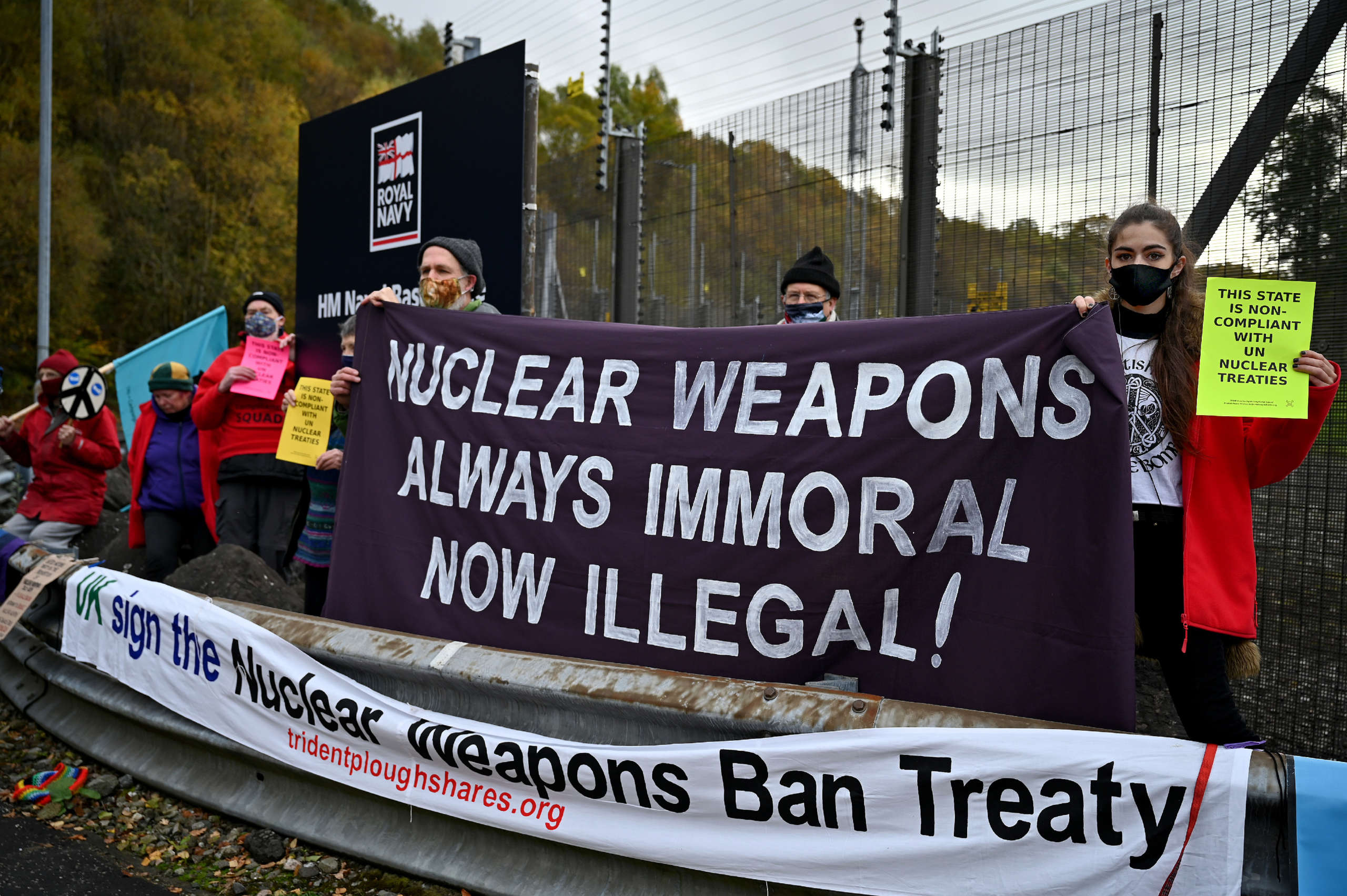
As the 500 enterprise employee met and contemplated a future full of nuclear weapons, two men stood across the street from the hotel, holding hand-painted signs. “Nuclear Weapons are illegal,” said one. “The World Wants Nuclear Disarmament,” said the other.
Japan postponing its controversial plan for trials to reuse radioactively contaminated soil
Japan’s government is postponing trials in the Tokyo area to reuse soil
that was decontaminated following the 2011 nuclear accident due to
complaints from residents. They would have been the first of their kind
outside Fukushima Prefecture.
The trials were set to start by the end of
March in Tokyo’s Shinjuku Ward and Tokorozawa City in neighbouring Saitama
Prefecture. But Environment Ministry officials say residents complained and
raised concerns at briefing sessions in December. They say some people
questioned why their neighbourhood was chosen, and that others complained
about a lack of information. The mayor of Tokorozawa has also been
hesitant, as the majority of a local community group opposes the plan.
NHK 24th Feb 2023
Seoul aims to use strengthened US ties to expand nuclear plant exports
The Yoon Suk Yeol administration has scrapped the former Moon Jae-in administration’s nuclear phase-out policy based on the view that nuclear power is essential for the long-term sustainability of South Korea’s economy and its nuclear power industry
Settlement between Westinghouse and KEPCO is necessary for Washington-Seoul to expand alliance into nuclear energy
Korea Times, By Kim Yoo-chul 26 Feb 23,
Unlike the previous Moon Jae-in administration, President Yoon Suk Yeol and his foreign affairs team are clearly aiming to grow South Korea into a pivotal state given Seoul’s competitive standing to increase interoperability among a range of partners, specifically in the Indo-Pacific region.
This policy drive is backed by his administration’s concerted backing of Washington’s various protectionist industrial policies and regional security agenda items.
South Korea’s support of the Inflation Reduction Act (IRA), CHIPS and Science Act, the country’s participation in a U.S.-initiated Indo-Pacific Economic Framework (IPEF) and Chip 4 alliance are the examples signifying Seoul’s shift toward U.S. policies………………………….
Seoul’s backing of [U.S. President Joe] Biden’s signature industrial and regional security policies illustrates the fact that the country is prepared to withstand any economic and political costs by raising its profile as an advocate of major policy initiatives outlined and being managed by the U.S.’ partners and its like-minded allies,” a senior government official said in a telephone interview, adding that the majority of his comments do not necessarily reflect the official policy or position of South Korea.
Despite Seoul maintaining strategic cooperation with Beijing given its heavy reliance on the Chinese market _ China is the largest trading partner of South Korea _ and China’s huge political influence on North Korea, the Yoon administration’s apparent shift in position favoring the Biden administration’s moves to revive U.S. manufacturing, has so far been successful……………………………………..
Now, as the Biden administration has set its sights on boosting U.S. energy independence, the Yoon administration is hoping to expand its alliance with Washington into nuclear energy, in addition to batteries and chips, security analysts and company officials said.
SMRs emerge as option, legal troubles
The prime goal of the Inflation Reduction Act (IRA) is aimed at addressing rising inflation. However, the IRA also includes several tax incentives for clean energy technologies including advanced small modular reactors (SMRs). This means the IRA will possibly become a game changer for Washington’s participation in the new energy economy……………………
the IRA will have profound effects on South Korean nuclear energy and reactor companies, because they are in a better position to become one of the top beneficiaries of the act,” a trade ministry official said by telephone.
The Yoon Suk Yeol administration has scrapped the former Moon Jae-in administration’s nuclear phase-out policy based on the view that nuclear power is essential for the long-term sustainability of South Korea’s economy and its nuclear power industry. There are hopes that Yoon might reach a consensus with his U.S. counterpart on the sidelines of the Korean leader’s scheduled state-visit to the White House in late April to expand the Washington-Seoul alliance in the area of SMRs, industry sources told The Korea Times………….
U.S.-based Westinghouse and KEPCO, alongside KEPCO’s subsidiary Korea Hydro & Nuclear Power (KHNP), are involved in negotiations over their legal dispute after the U.S. company filed a lawsuit against KHNP in a U.S. federal court to block it from selling reactors to Poland. KEPCO and its subsidiary, KHNP, have been accused of infringing on Westinghouse’s intellectual property rights and Washington’s nuclear export controls.
“Reaching a settlement is highly likely before Yoon’s visit to the U.S. Westinghouse and KEPCO, along with KHNP, have until March 17 this year to address their legal issues. As nuclear technologies have also become a security issue, all parties involved in the legal dispute will have to find a compromise under the principle of reciprocity that won’t hurt national interests,” said Seok Kwang-hoon, a senior analyst at Energy Transition Korea. Westinghouse officials were not immediately available for comment.
“Westinghouse itself has no question about the significance of its commercial partnership with South Korea given the country’s supply chains for future AP1000 nuclear reactors. That means if the ongoing settlement negotiations fail, then this will impact Seoul’s efforts to win reactor deals from Poland and the Czech Republic, the countries categorized as South Korea’s target markets. It’s a plausible idea for South Korean companies to acquire Westinghouse’s property rights,” said Kim Sang-tae, a professor of nuclear engineering at Hanyang University in Seoul. https://www.koreatimes.co.kr/www/tech/2023/02/419_346075.html
Thousands rally in Berlin, Paris to call for peace in Ukraine
People in Berlin take part in a protest against the delivery of weapons to Ukraine.
Protesters in Paris and Berlin capitals have rallied to demand peace in Ukraine, a day after the anniversary of Russia’s invasion.
Thousands of people protested in the Germany capital on Saturday to condemn the government’s supply of arms to Ukraine and call for peace talks to end the war.
The organisers were criticised before the protest for downplaying Ukraine’s right to defend its territory from Russian aggression and failing to distance themselves from the far right and far left, where pro-Russia views are common.
One of the organisers, opposition lawmaker Sahra Wagenknecht of the ex-communist Left party, said that there was no place for neo-Nazis at the rally, but that anyone who wanted peace “with an honest heart” was welcome.
While most placards at the protest reflected traditional left-wing positions, some participants bore banners with the slogan “Americans go home” and the logo of a far-right magazine. Some waved Russian flags.
Wagenknecht accused the German government of seeking to “ruin Russia,” and said that Moscow should be made an “offer” in order to resume peace talks.
Another of the organisers, prominent feminist author Alice Schwarzer, said it was time to look beyond left and right.
The two women have also launched a petition which claims to have gathered more than 645,000 signatures.
Protesters jeered whenever she and Wagenknecht mentioned the name of German foreign minister Annalena Baerbock, who has strongly backed the delivery of arms to Ukraine.
Police said that about 13,000 people took part in the rally at Berlin’s iconic Brandenburg Gate, while organisers claimed that 50,000 people participated.
One attendee was Konstantin Schneider, an academic from Berlin, who said he understood that countries in Eastern Europe were afraid of Russia.
“Of course [Russian President Vladimir] Putin is an idiot to attack Ukraine,” he said. “But we still need to find new solutions [to the war] instead of sweepingly saying there’s nothing to negotiate.”
There were several small counter-demonstrations. On Friday, thousands of protesters across Europe marched against Moscow’s invasion of Ukraine…………………………………….
UK: big talk about small nuclear reactors, but not much is happening, really.

Over 3000GW of renewables are already in place globally, compared to only 394 GW of nuclear, with wind and solar now romping further ahead around the world. By 2050, the BNEF says the global power system will be dominated by wind and solar (75% of production), with nuclear at just 9%, down from 10% now. If it makes it to 24% nuclear by then, the UK will be a bit of an outlier.
“……………………………….Graham Stuart, now a Minister of State at the new Department for Energy Security and Net Zero…..- ‘what I can say is that we are absolutely committed to nuclear as a significant share of our electricity because we need that baseload and are committed to driving it forward.’
So that’s a positive ‘go’ signal, although funding is still a major problem, and, despite much talk, progress on the proposed ‘24 GW of nuclear by 2050’ programme seems to have slipped behind.
As NuClear News 141 reported, at the end of November last year, the Government was said to be about to announce proposals to set up a new body called Great British Nuclear (GBN), which would develop a network of small modular reactors (SMRs), as well as promote new large reactors. Grant Shapps, the Business Secretary, was due to make the announcement on 29th November. But it was delayed because of a row with the Treasury over funding.
And by January, The Times was reporting that a deal on SMR funding was unlikely to materialise for at least another 12 months. A senior government source said the Treasury would not sign off on any orders or significant funding for SMR work until the technology had approval from the Nuclear Regulators Generic Design Assessment, which was not expected, until 2024.
In addition to the proposed Rolls Royce SMRs, four of which are planned initially, several other SMRs are also now in the race for UK deployment, some from overseas. They include GE Hitachi’s 300MW boiling water reactor, and Holtec’s 160MWe pressurised water reactor, developed in collaboration with Mitsubishi and Hyundai. The USA’s NuScale, the most advanced project so far, has also expressed interest in UK sites for its mini PWR.
Potential UK sites for new SMRs include Trawsfynydd in Wales and Heysham and Oldbury in England, but, given the funding issues, it will evidently be a while before anything happens on SMRs, or indeed, in terms of new larger projects, after Sizewell C. Though some help with funding may yet be on hand. According to the Telegraph, nuclear projects may soon to be classed as ‘green’ or ’sustainable’ investments, clearing a way for more institutional investors and environment-focused funds to back them. The Telegraph says there are also hopes that use can be made of the Government’s green gilts green savings bonds.
Is nuclear really green? Not many greens think so, and given the risks, costs and delays associated with it, nuclear is often not popular with investors. There have been some delays with the only currently live new projects in the UK, the Hinkley Point C EPR being built by EdF, although nothing so far on the decade-long delays with the ongoing EPR projects in France and Finland. EDF now say the Hinkley EPR should start up in 2027. However, to be on the safe side, the deadline for starting up its major CfD payment (after which, under the contract rules, it would not be eligible for CfD payments) has been extended to 2036 from 2033.
…………………….. EDF has recently admitted that Hinkley Point C final cost is likely to be £31-32bn, up from the £18 bn estimated initially. Sizewell ought to benefit from construction lessons learned from Hinkley, but, although RAB pushes the financial risks onto consumers, there are still many investment uncertainties about the project.
Finance may be a key issue for EDF in the UK, but it is if anything even more of an issue for it in France, where it is facing major problems, with a huge repair bill and loss of income as plants are shut for safety checks and power has to be imported. As a result, with energy security being a key issue these days, nuclear no longer looks reliable. ………………………
With a handful of other nuclear projects being considered around the world, including some SMRs, and Russia and China also pressing ahead with larger plants, the UK isn’t the only country with ambitions for nuclear expansion. However, globally, the likely scale of nuclear expansion is relatively small in total, compared with the vast scale and rapid pace of renewables expansion.
Over 3000GW of renewables are already in place globally, compared to only 394 GW of nuclear, with wind and solar now romping further ahead around the world. By 2050, the BNEF says the global power system will be dominated by wind and solar (75% of production), with nuclear at just 9%, down from 10% now. If it makes it to 24% nuclear by then, the UK will be a bit of an outlier. https://renewextraweekly.blogspot.com/2023/02/uk-nuclear-news.html
Vladimir Putin says the US-led military alliance in Ukraine seeks defeat and liquidation of Russia
ABC News 27 Feb 23
President Vladimir Putin has cast the confrontation with the West over the Ukraine war as an existential battle for the survival of Russia and the Russian people — and said he was forced to take into account NATO’s nuclear capabilities.
Key points:
- February 24 marked the first anniversary of the Russian invasion of Ukraine
- Mr Putin says he believes the future of Russia is in peril
- The interview was aired on Sunday on Russian state television
A year since ordering the invasion of Ukraine, Mr Putin is increasingly presenting the war as a make-or-break moment in Russian history — and saying that he believes the very future of Russia and its people is in peril…………………………………………
Mr Putin said the tens of billions of dollars’ worth of US and European military assistance to Ukraine showed that Russia was now facing off NATO itself — the Cold War nightmare of both Soviet and Western leaders.
Ukraine says it will not rest until every last Russian soldier is ejected from Ukraine, including from Crimea which Russia annexed in 2014………………….
Russia’s official nuclear doctrine allows for the use of nuclear weapons if they — or other types of weapons of mass destruction — are used against it, or if conventional weapons are used, which endanger “the very existence of the state”………………………………..
Group calls for the stoppage of works at Sizewell C nuclear site, as Sizewell project is not yet authorised, and works are damaging the environment
EDF continues its programme of eco-vandalism. TASC calls on SoS for Defra
to intervene. Despite an EDF statement on 18th January, claiming that,
“[Its] Advance [preparatory] works [for Sizewell C] are reversible in the
unlikely event Sizewell C will not proceed to a Final Investment Decision
and full construction”, TASC is shocked and disgusted to discover that
EDF will renege on that promise when, on 1st March, EDF begins to destroy
wet woodland, a legally protected priority ‘Biodiversity Action Plan’
habitat, located in Sizewell Marshes Site of Special Scientific Interest.
Despite EDF knowing full well that we are now entering the bird, bat and
reptile breeding season, it has already begun felling woodland in Goose
Hill, as part of its plan to clear over 40 hectares – including the
felling of some ancient trees – to make way for Sizewell C’s car park.
TASC’s Chair, Jenny Kirtley said “These actions create permanent and
irreversible environmental loss to East Suffolk’s Heritage Coastal
biodiversity and is in direct contradiction of the government’s ‘green
agenda’. Despite EDF’s claim, it is not possible to reverse such losses
and represents further eco-vandalism which goes hand-in-glove with the
construction of a redundant and unnecessary nuclear plant which may never
commence construction.
Sizewell C has yet to make a Final Investment
Decision, does not have a site licence from the Office for Nuclear
Regulation, nor three outstanding environmental permits needed from the
Environment Agency. Furthermore, the project’s DCO approval is subject to
TASC’s judicial review proceedings scheduled to take place in the High
Court on 22nd and 23rd March.
We have asked the Secretary of State for
Defra and the MP for Suffolk Coastal to intervene and to stop the work at
least until these uncertainties around Sizewell C’s various
authorisations have been granted.’.
TASC 24th Feb 2023
Russia Sends Ship To Space Station To Rescue “Stranded Crew”
BY TYLER DURDEN, SATURDAY, FEB 25, 2023 https://www.zerohedge.com/technology/russia-sends-ship-space-station-rescue-stranded-crew
Russia launched an uncrewed Soyuz spacecraft on Friday for a NASA astronaut and two cosmonauts after their original ride back to Earth was damaged by a micrometeoroid impact while parked at the International Space Station in December.
The rescue plan was announced last month. The empty rescue capsule, Soyuz MS-23, blasted off from Baikonur Cosmodrome in Kazakhstan early Friday morning and is set to dock at the orbiting lab on Sunday.
WATCH: NASA launched a Roscomos Soyuz spacecraft from the Baikonur Cosmodrome in Kazakhstan to the International Space Station to bring back a stranded crew to Earth https://t.co/aUNd9r46fs pic.twitter.com/6brPI1vVzm— Reuters Asia (@ReutersAsia) February 24, 2023
The damaged Soyuz will return to Earth for further inspection at the end of March. There will be no crew on board.
The three men arrived at the ISS in September on what was expected to be a six-month mission, but that will be extended for another six months.
NASA is sending another crew of four to the ISS Monday via a SpaceX rocket from Florida’s Kennedy Space Center.
The Empire Gives People The Illusion Of Fighting The Power Without Ever Endangering Real Power
| CAITLIN JOHNSTONE, FEB 26 |
The one-year anniversary of Russia’s invasion of Ukraine has seen countless emotional news segments and heartstring-plucking articles, wall-to-wall social media posts, and public demonstrations decrying the evils of Vladimir Putin throughout the western world.
For what’s probably the first “anti-war” protest of most of their lives, American liberals gathered at the Lincoln Memorial in Washington DC over the weekend to bravely condemn the leader of a foreign government thousands of miles away. There they were joined by empire managers like the virulent warmonger Samantha Power, who spoke at the rally opposing Russian warmongering at the capital of the most warlike nation on the planet.
For the last year, mainstream westerners have been using this war to act out their fantasies of being courageous up-punching anti-imperialists, fighting powerful bloodthirsty tyrants in defense of the needful, all while living directly under the thumb of the most tyrannical regime in the world.
They mindlessly regurgitate the propaganda of the most powerful empire that has ever existed, parrot the same lines that are already being said all day long by all the most powerful institutions in the western world, all in service of the hegemonic agendas of the largest and most murderous power structure on earth, while pretending to be standing in opposition to the powerful.
The way the war in Ukraine allows mainstream liberals to play-act as rebellious anti-imperialists is a good illustration of how the empire gives people the illusion of fighting the power without their ever opposing the empire……………………..
In exactly the same way, Trump’s presidency allowed right wingers to pretend they were part of a movement against the establishment, despite Trump never actually challenging the establishment in any meaningful way. They believed he was fighting the Deep State even after he imprisoned Assange. They believed he was “ending the wars” even as he ramped up aggressions against Russia which helped bring us to where we are today, ……………………………………..
Imperial narrative managers actively foster these delusions of revolution and up-punching among the mainstream herd because it’s a great way to kill the possibility of any real revolutionary zeitgeist. If you can give people the illusion that they are fighting the power without their ever actually fighting the power, then you can always remain in power……………………….
Here’s hoping enough of us learn to see through the illusion one day https://caitlinjohnstone.substack.com/p/the-empire-gives-people-the-illusion?utm_source=post-email-title&publication_id=82124&post_id=105198072&isFreemail=true&utm_medium=email
India, China may have averted nuclear war in Ukraine by influencing Russia: US
Live Mint, 26 Feb 2023, Edited By Anwesha Mitra
As the Ukraine-Russia war continues, US Secretary of State Anthony Blinken said recently that India and China may have helped persuade Moscow to avoid using nuclear weapons. The remarks came as the war marked its first anniversary and concerns grow about a Russian spring offensive.
“…other countries that might have a little bit more influence with Russia these days, like China, but also other countries, like India, to engage him directly about their absolute opposition to any use of nuclear weapons. And we know that they conveyed those messages. And I think that had some effect,” Blinken told The Atlantic during an interview published on Friday. ……………………………………………………………….. more https://www.livemint.com/news/world/india-china-may-have-influenced-russia-prevented-nuclear-war-in-ukraine-us-11677322391450.html
February 26 Energy News — geoharvey

Opinion: ¶ “Dear Maryland: It’s Time To Drive Clean Trucks And Buses” • Every soul walking this earth deserves to breathe clean air. But there are counties across Maryland have air that hasn’t met the EPA’s standards for decades, causing public health problems ranging from asthma to premature death. Much of that pollution comes from […]
February 26 Energy News — geoharvey
World Insights: Science should guide Fukushima wastewater release plan, Pacific leaders say
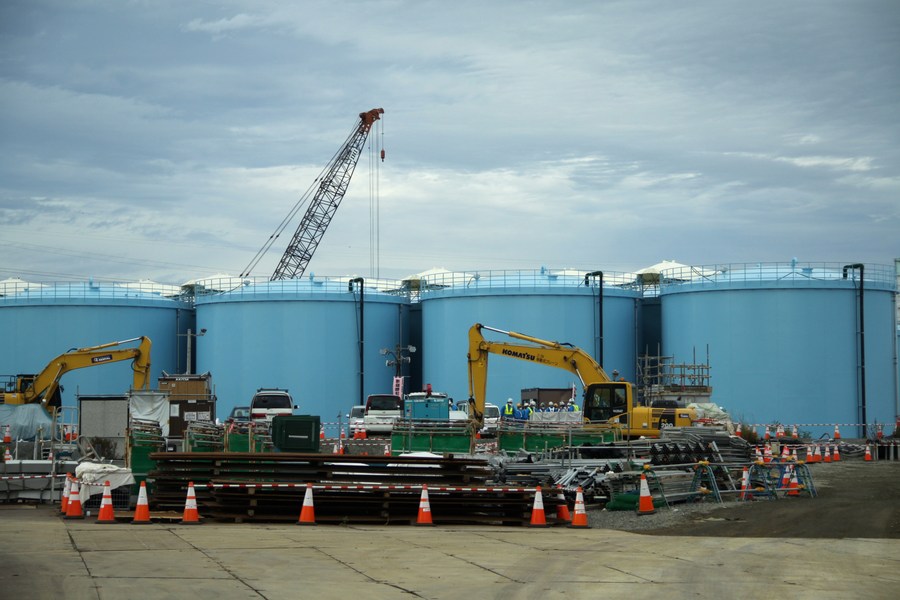
File photo taken on Oct. 12, 2017 shows huge tanks that store contaminated radioactive wastewater in Fukushima Daiichi nuclear plant, in Fukushima Prefecture, Japan
– Civil society groups in Japan and many international organizations have voiced objections to the Fukushima wastewater release plan, citing a lack of a practical demonstration and its potential threat to society and marine ecology.
– Analysts believe that Japan should not ignore the concerns and livelihoods of Pacific islanders.
SUVA, Feb. 26 (Xinhua) — Pacific leaders on Friday wrapped up the two-day Pacific Islands Forum (PIF) Special Leaders’ Retreat in Fiji, where Japan’s Fukushima wastewater release plan was in the limelight.
The PIF rotating chair underlined in a statement that science and data should guide political decisions on Japan’s proposed discharge of treated radioactive wastewater from the wrecked Fukushima nuclear plant into the sea.
The outgoing chair and Fiji’s Prime Minister Sitiveni Rabuka, together with other PIF leaders, believes the decision is not as simple as a domestic issue of Japan, but concerns the South Pacific island countries and beyond.
Given that related data and evidence provided by Japan are far from independent or verifiable, the PIF has called on the country repeatedly to delay the discharge plan.

People rally to protest against the Japanese government’s decision to discharge contaminated radioactive wastewater in Fukushima Prefecture into the sea, in Tokyo, capital of Japan, April 13, 2021.
CRITICISM FROM INT’L COMMUNITY
Civil society groups in Japan and many international organizations have also voiced objections to the plan, citing a lack of a practical demonstration and its potential threat to society and marine ecology.
Over the past years, fishermen in neighboring countries have staged several rallies, calling for immediate stop to the “grave criminal act” of releasing radioactive water into the sea. Within Japan, local civic groups have organized protests outside the government house of Fukushima Prefecture.
Japan’s unilateral push to discharge radioactive wastewater from its crippled Fukushima Daiichi nuclear power plant into the Pacific Ocean is irresponsible and harmful, South Korean green activists have said.
“The Pacific Ocean is not the sea of Japan, but the sea of everybody … Pollutants will flow to neighboring countries in a situation that a lot of radioactive materials have already been released and contaminated (the marine ecosystem),” Ahn Jae-hun, energy and climate change director at the Korea Federation for Environment Movement, told Xinhua.
The Japanese government’s decision to discharge the contaminated water into the sea when there are alternatives such as long-term storage violates the precautionary principle recognized by the international community, Greenpeace Seoul Office has said. Greenpeace is an independent global campaigning network for environment protection.
“We must prevent action that will lead or mislead us toward another major nuclear contamination disaster at the hands of others,” said PIF Secretary General Henry Puna.
Take a look at how Japan proceeded with that.
The Japanese government decided in April 2021 to release more than one million tons of treated wastewater into the Pacific Ocean this spring.
Three months later, Japan greenlit the discharge plan while the International Atomic Energy Agency (IAEA)’s task force was still conducting the review mission.
Earlier this year, Japan unilaterally announced that it would start discharging the radioactive water in spring or summer, just before the agency’s task force arrives in Japan for review.

A poster to boycott Japanese products is seen in a supermarket to protest against Japan’s decision to dump radioactive wastewater from the crippled Fukushima Daiichi nuclear power plant into the Pacific Ocean, in Seoul, South Korea, April 14, 2021.
PACIFIC OPPOSITION
Pacific island countries unanimously oppose Japan’s release plan for multiple reasons, citing ecological fragility, economic dependence on the fisheries industry, and the devastating effects of radioactive pollution caused by Western nuclear testing.
First, Pacific island countries are concerned that the released radioactive substances will spread with ocean currents and tides, risking contaminating fish. As more than half of the world’s tuna comes from the Pacific Ocean, a potentially contaminated environment could hurt the fisheries that those countries rely on.
Second, the Pacific Ocean’s delicate ecology may come under threat. If the wastewater release leads to an ecological disaster, the vulnerable island residents will leave their homes, causing an ecological and survival crisis that will deal a heavy blow to the entire Pacific region.
Last, Western countries have conducted a dazzling array of nuclear tests in the Pacific since the mid-20th century, resulting in shocking radioactive pollution and ecological disasters. These have left painful memories for islanders, who have been sensitive to the wastewater issue.
Analysts believe that Japan should not ignore the concerns and livelihoods of Pacific islanders. Neither should it dump the wastewater into the sea until disputes are settled over the legitimacy of the discharge plan, the reliability of radioactivity data, the effectiveness of purification equipment and the uncertainty of environmental impact, they added.
https://english.news.cn/20230225/1aa34ef7e18444c99e8a1e84a8b691b7/c.html
-
Archives
- February 2026 (220)
- January 2026 (308)
- December 2025 (358)
- November 2025 (359)
- October 2025 (376)
- September 2025 (258)
- August 2025 (319)
- July 2025 (230)
- June 2025 (348)
- May 2025 (261)
- April 2025 (305)
- March 2025 (319)
-
Categories
- 1
- 1 NUCLEAR ISSUES
- business and costs
- climate change
- culture and arts
- ENERGY
- environment
- health
- history
- indigenous issues
- Legal
- marketing of nuclear
- media
- opposition to nuclear
- PERSONAL STORIES
- politics
- politics international
- Religion and ethics
- safety
- secrets,lies and civil liberties
- spinbuster
- technology
- Uranium
- wastes
- weapons and war
- Women
- 2 WORLD
- ACTION
- AFRICA
- Atrocities
- AUSTRALIA
- Christina's notes
- Christina's themes
- culture and arts
- Events
- Fuk 2022
- Fuk 2023
- Fukushima 2017
- Fukushima 2018
- fukushima 2019
- Fukushima 2020
- Fukushima 2021
- general
- global warming
- Humour (God we need it)
- Nuclear
- RARE EARTHS
- Reference
- resources – print
- Resources -audiovicual
- Weekly Newsletter
- World
- World Nuclear
- YouTube
-
RSS
Entries RSS
Comments RSS
 nuclear-news