Rolls Royce’s “small” nuclear reactor will occupy 5.3 acres.
The UK/Ireland Nuclear Free Local Authorities have today received a reply
from Rolls-Royce as to just how big their proposed ‘Small’ Modular
Reactor will be.
During last year’s World Cup, the NFLA’s then Chair,
Councillor David Blackburn, wrote to Tom Samson, Chief Executive Officer at
Rolls-Royce, to point out the general state of confusion amongst nuclear
activists, pro- and anti-, alike, with media reports claiming that an SMR
would occupy a surface area amounting to between ‘one and a half and ten
football pitches’ and asking for clarification.
Now Dan Gould, Head of Communications at Rolls-Royce SMR, has provided a final score – 5.3 acres –
an area ‘incorporating the entirety of the SMR unit’.
NFLA 16th Feb 2023
We’ve Forgotton The Potential Horrors of What a Nuclear Winter Would Be Like

The results revealed 3.2 percent of UK respondents and 7.5 percent of US respondents had heard about the consequences of a nuclear war from contemporary media or culture.
In the event of a nuclear attack on Ukraine from Russia, nearly one in five people involved in the study supported retaliation with nuclear weapons. For those who had seen the infographics ahead of time, that figure dropped by 13 percent in the UK and 16 percent in the US – showing how education makes a difference in public opinion.
15 February 2023, By DAVID NIELD https://www.sciencealert.com/weve-forgotton-the-potential-horrors-of-what-a-nuclear-winter-would-be-like—
Under the shadow of the Cold War, many in the world feared the impending prospect of a nuclear winter. According to a new report, our focus has since drifted from its horrors, leaving us with a general lack of awareness that could be dangerous for the future of humankind.
It goes without saying that the threat of a nuclear blast is no trivial event. Decades of pop culture have left society with a relatively strong association between global calamity and atomic weapons.
But the exact details on exactly what we might expect from such an escalating conflict have become hazy in the past few decades.
The facts themselves are fairly clear. Besides the many millions who would be killed directly from the blasts, climate models predict the debris resulting from nuclear war would block out much of our sunlight for up to a decade. The consequences for survivors would be devastating: a decline in global temperature, followed by widespread crop failure, and then mass starvation.
In spite of this dark threat, just a small percentage of today’s population claim to be well informed about the precise consequences of a nuclear war – and many of those people are relying on outdated information spread amid the political tensions between superpowers in the 1980s.
“In 2023 we find ourselves facing a risk of nuclear conflict greater than we’ve seen since the early eighties,” says Paul Ingram, a global risk researcher and diplomacy expert at the Centre for the Study of Existential Risk (CSER) run by the University of Cambridge in the UK. Ingram is the sole author of the report, which has not been peer reviewed.
“Yet there is little in the way of public knowledge or debate of the unimaginably dire long-term consequences of nuclear war for the planet and global populations.”
An online poll of 1,500 people in the UK and 1,500 people in the US was used to prepare the new report. The participants were quizzed on how much they know about a potential nuclear winter, and where they had got their information from. The survey allowed multiple sources to be picked, so they’re not mutually exclusive.
The results revealed 3.2 percent of UK respondents and 7.5 percent of US respondents had heard about the consequences of a nuclear war from contemporary media or culture. A greater fraction of people said their recollection of information spread in the 1980s, during a period of increasing hostility in the US-Soviet Union Cold War, informed their views of the risk of a nuclear winter. Unsurprisingly, few people relied on recent academic papers.
Using hypothetical news reports as a prompt, Ingram also looked at how people would want their governments to respond in the event of a nuclear strike. Half of those surveyed were shown infographics on the effects of nuclear winter before they answered, while the other half were not.
In the event of a nuclear attack on Ukraine from Russia, nearly one in five people involved in the study supported retaliation with nuclear weapons. For those who had seen the infographics ahead of time, that figure dropped by 13 percent in the UK and 16 percent in the US – showing how education makes a difference in public opinion.
“There is an urgent need for public education within all nuclear-armed states that is informed by the latest research,” says Ingram. “We need to collectively reduce the temptation that leaders of nuclear-armed states might have to threaten or even use such weapons in support of military operations.”
The nuclear winter infographics used by the researchers were published in a 2022 peer-reviewed study. The smallest nuclear war theorized involved 100 nukes of 15 kilotons each (about the same size used on Hiroshima), which represents just 0.1 percent of the total combined nuclear arsenal of Russia and the US.
That ‘small’ war would lead to 27 million direct fatalities and 225 million additional deaths from starvation, scientists calculate. At the top end of the scale, all-out nuclear war, we’re looking at 400 million direct deaths and more than 5 billion people dying of starvation because of the consequences of nuclear war.
With so many factors to consider, estimates differ when it comes to the impact of a nuclear war – but even the best case scenarios will clearly be unimaginably terrible. What this report shows is that a big part of avoiding the self-destruction of our species is in raising awareness of what we might be about to do to ourselves.
“Ideas of nuclear winter are predominantly a lingering cultural memory, as if it is the stuff of history, rather than a horribly contemporary risk,” says Ingram.
The report is available to read in full online at the Centre for the Study of Existential Risk.
Australia’s dangerous and ill-judged obsession with the American “Alliance”
After that Australian forces, or rather their equipment, was aligned to a newer kind of threat from irregular or insurgent forces in Western Asia, conflicts in which Australia had little or no direct interest but was engaged there to keep the US on-side

The proposed long term acquisition of nuclear submarines has completely upended our diplomatic and strategic positioning, as revealed (perhaps unintentionally) by Defence Minister Richard Marles when he told a gathering in London this month that the AUKUS goal is to create “a more seamless defence industrial space” between the three countries, affirming that Australia is more tied at the hip to the US than previously admitted – because we would not have national control over the submarines in relation to their location and deployment, thereby severely compromising our national sovereignty.
The submarines would have little purpose for independent defence if ranged against China
Pearls and Irritations. By Andrew Farran, Feb 16, 2023
How might the renown mid-20th century linguist Ludwig Wittgenstein have addressed the current defence strategic review?
As the perceptive mid-20th century Cambridge based English/Austrian linguist Ludwig Wittgenstein explained, the answer you get to a question depends on how the question is formed. The same wisdom could have been conveyed to military planners in the past when they set out to plan force structures for twenty or more years ahead. Wrong question. Wrong answers.
Looking back, think of all the military expenditure over the past twenty years and more that has been wasted as being unusable or irrelevant to purpose. Think of the lost opportunities for sound force development and the money saved that might have been available for under-resourced schools, hospitals and welfare assistance falling short of need.
After World War Two planning remained where it had left off, with established formations around divisions, battalions and platoons, essentially ground forces and an expensive aircraft carrier unsuitable for serious combat. After much debate a viable carrier fleet was seen as unattainable and unaffordable with the loss of the existing fleet air arm. Upgrades on traditional lines were undertaken following the Korean War but thereafter with Vietnam becoming the main preoccupation (misconceived), and keeping faith with the US on military commitments, the conventional wisdom in military circles was that future conflict would involve containing insurgents in Asian jungles and the protection of naval approaches around continental Australia and its resources of a conventional nature.
Nonetheless a parallel objective was the search for a silver bullet that would provide cover for all contingencies whether existing or not. Hence the embrace by government of the F111 fighter/bomber not withstanding the tribulations of its procurement and eventual deployment (the latter being relatively little as it happened). After that Australian forces, or rather their equipment, was aligned to a newer kind of threat from irregular or insurgent forces in Western Asia, conflicts in which Australia had little or no direct interest but was engaged there to keep the US on-side – being our insurance in case of larger dangers closer to home.
…………………………. The real threat to America today is largely internal given rising levels of rioting and disaffection (racial and otherwise). But concern over America’s decline vis a vis China, whether real or not, is now front and centre on force structure issues.
…………….. As before we have looked for a magic pudding that would enhance our profile and please our once great and powerful friends. Hence as was the case with the F111s, and more recently the F-35s we have become fixated with nuclear powered submarines, having decided they are needed for long range deployment.
There is much that is unreal about this move. Firstly long range deployment implies that China is the potential or envisaged enemy requiring Australian engagement at that level. While China might be seen as flexing its muscles lately it has done nothing in this regard that is different from the United States. Both seek to protect and advance their relative status. But for neither side would this be advanced by military conflict.
……………..
wider world has a vested interest in the avoidance of counter-productive warfare and a deep felt need for viable multilateralism.
(See Jeffrey Sachs, “The new geopolitics”.)
………………………… The proposed long term acquisition of nuclear submarines has completely upended our diplomatic and strategic positioning, as revealed (perhaps unintentionally) by Defence Minister Richard Marles when he told a gathering in London this month that the AUKUS goal is to create “a more seamless defence industrial space” between the three countries, affirming that Australia is more tied at the hip to the US than previously admitted. – because we would not have national control over the submarines in relation to their location and deployment, thereby severely compromising our national sovereignty.
That would be a high price to pay even if we were engaged in a major war as was the case in 1942; but it is not and should not be the price we pay on speculation over assumed threats that are anything but imminent. The submarines would have little purpose for independent defence if ranged against China which can deploy a growing number of nuclear powered and armed submarines together with some 50 conventional powered ones (bearing in mind too that North Korea could deploy just as many given that the Korean War remains unresolved).
The Strategic Review currently underway will certainly strengthen our capacity to protect our immediate off-shore regions and coastline with new technologies including drones for enhanced surveillance, medium range missiles and sea mines, and survivable platforms to support them – while appreciating at the same time that in a high conflict situation the Chinese or any other militarily powerful nation could lob missiles on our vulnerable locations with disconcerting accuracy (including cities, Pine Gap and North West Cape). That point could well be the end of us sooner than we would like to think
So why buy into this unless doing so would make a difference when we know it would not. There is a lot more to this issue for the government to consider than when Prime Minister Menzies and his Cabinet decided on Australian forces being deployed in Vietnam or when Prime Minister Howard and his kitchen cabinet decided similarly in the case of Iraq – both gigantic mistakes. https://johnmenadue.com/the-defence-strategic-review-and-australias-alliance-obsession/
Media Ignores Evidence That West Opposed Ukraine Peace Deal

So we now have a NATO Foreign Minister, a journalist with sources “close to Zelensky” and a former Israeli PM all saying that Western leaders opposed a peace deal because they wanted to “weaken”, “press” or “smash” Putin.
there’s credible evidence that Western leaders stymied negotiations which might have led to a peace deal because they wanted to weaken Russia
BY NOAH CARL, 14 FEBRUARY 2023 https://dailysceptic.org/2023/02/14/media-ignores-evidence-that-west-opposed-ukraine-peace-deal/
As I noted in a previous article, the former Israeli Prime Minister Naftali Bennett revealed in a recent interview that in March of last year Western leaders blocked a draft peace deal between Russia and Ukraine.
There seems to be some disagreement over exactly what he said, as the interview was in Hebrew. Based on the English subtitles on YouTube, I quoted him as saying, “They blocked it.” But others insist he said, “They broke off negotiations.” Either way, he clearly implied that the West stymied negotiations that might have led to a peace deal.
What’s more telling is the reason he gave as to why the West did so, namely “to keep smashing Putin”. This tallies closely with Roman Romanyuk’s account of why Western leaders opposed negotiations in April:
Behind this visit and Johnson’s words lies much more than a simple reluctance to engage in agreements with Russia. The collective West, which back in February suggested that Zelenskyi surrender and run away, now felt that Putin is actually not as all-powerful as they imagined him to be. Moreover, right now there was a chance to “press him”. And the West wants to use it.
As Caitlin Johnstone points out, it also lines up with what the Turkish Foreign Minister Mevlut Cavusoglu said on April 20th last year:
Following the NATO foreign ministers’ meeting, it was the impression that … there are those within the NATO member states that want the war to continue, let the war continue and Russia gets weaker. They don’t care much about the situation in Ukraine.
So we now have a NATO Foreign Minister, a journalist with sources “close to Zelensky” and a former Israeli PM all saying that Western leaders opposed a peace deal because they wanted to “weaken”, “press” or “smash” Putin.
These seem like newsworthy revelations, don’t they? Not according to the mainstream media.
I checked whether the revelations have been mentioned by any of the following outlets: the BBC, CNN, the Times, the Guardian, the Telegraph, the New York Times, the Washington Post, or the Wall Street Journal. With the exception of one op-ed in the New York Times which quoted Cavusoglu’s statement, they’ve been completely ignored.
The point here isn’t that there definitely would have been a peace deal if not for the actions of Western leaders. We can’t know that. The point is: there’s credible evidence that Western leaders stymied negotiations which might have led to a peace deal because they wanted to weaken Russia.
With the exception of Tucker Carlson and a few lesser-known outlets, why hasn’t the media covered this? One of the current headlines on the BBC News homepage is ‘Rihanna reveals pregnancy at Super Bowl show’. Which is more newsworthy: Rihanna’s personal life, or the revelation that Western leaders may have sabotaged peace? I’m reminded of this meme: [on original]
A few days ago, in fact, a BBC Ukraine journalist got up and hugged Zelensky at a press conference. However much you support a particular cause, as a journalist you’re supposed to show a modicum of impartiality. Based on this incident, I wouldn’t expect any dramatic shifts in coverage.
Japan to extend life of nuclear power stations, and also remove rules specifying the operational periods of reactors.
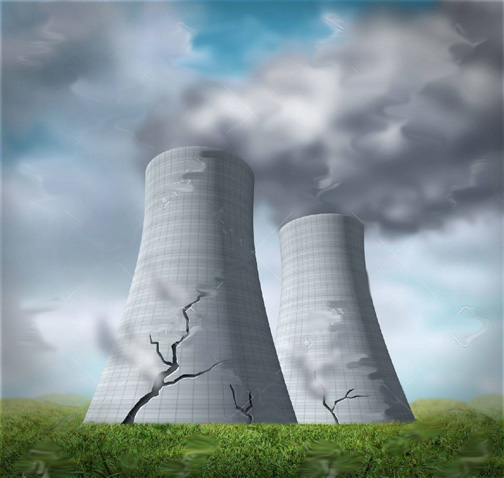
Japan’s Nuclear Regulation Authority (NRA) has approved draft legislation
to extend the operating life of the country’s nuclear power reactors beyond
60 years. It also approved an amendment to the Nuclear Reactor Regulation
Law to remove the rule specifying the operational periods of reactors.
World Nuclear News 14th Feb 2023
https://www.world-nuclear-news.org/Articles/NRA-approves-use-of-Japanese-reactors-beyond-60-ye
With weasel words, Australia’s top military brass, and sycophant Richard Marles, justify allowing U.S. nuclear weapons in Australia

US nuclear-armed bomber visits allowed under Australian treaty obligations The Age, Matthew Knott, February 15, 2023
American B-52 bombers armed with nuclear warheads could rotate through Australia without breaching treaty obligations, the nation’s most senior defence public servant has indicated.
The Australian public would never be informed whether such aircraft are carrying nuclear weapons under the so-called US policy of “warhead ambiguity” in which it neither confirms nor denies if particular forms of military equipment are nuclear-armed.
While adamantly refusing to address hypothetical scenarios, Foreign Minister Penny Wong said: “The responsible way of handling this is to recognise that the US has a ‘neither confirm nor deny position’ which we understand and respect.”
It was revealed last year that the United States is preparing to build dedicated facilities for up to six B-52 bombers at Tindal air base, south of Darwin, for use in the Northern Territory dry season.
Nuclear weapons opponents and the Chinese government blasted the plan on the basis it could escalate tensions in the Asia-Pacific and accelerate an arms race in the region………………….
Australia is prohibited from permanently housing nuclear weapons in the country under its treaty obligations. But Moriarty, speaking in general terms, suggested US nuclear-armed bombers could temporarily pass through Australia without breaching international law.
“The stationing of nuclear weapons in Australia is prohibited by the South Pacific Nuclear-free Zone Treaty to which Australia is fully committed,” Moriarty said.
“There is no impediment under this treaty or the Nuclear Non-proliferation Treaty to the visit of foreign aircraft to Australian airfields or transit of Australia’s airspace, including in the context of our training and exercise programs and Australia’s force posture co-operation program with the United States.”
The B-52 is a long-range, heavy bomber that can carry out ocean surveillance and anti-ship operations and “can carry nuclear or precision guided conventional ordnance”, according to the US government……………
Greens defence spokesman David Shoebridge said: “It is highly alarming that Australian military facilities are being made available for the US to launch its nuclear-capable bombers.
“This decision not only makes us a nuclear target – it further erodes our sovereignty.
“The US has made it clear it won’t tell anyone when their B-52’s are nuclear armed or not. This leaves Australia in the dark about our role in the USA’s global nuclear strategy.”
Defence Minister Richard Marles said that while Australia had agreed to an increased tempo of American rotations in northern Australia, there had been no change in policy regarding the presence of nuclear-armed weapons.
“America maintains a policy of ambiguity in terms of the nature of assets that are on their platforms and they do that so as to amplify their extended nuclear deterrence,” he told the ABC.
Asked whether US nuclear-armed bombers should be allowed in Australia, opposition defence spokesman Andrew Hastie said: “Of course, we want to see a greater presence of the American military in the Indo-Pacific.”……………………………………………
When the ABC’s Four Corners revealed the plan to build dedicated facilities for the B-52s in October, Chinese Foreign Ministry spokesman Zhao Lijian said: “Such a move by the US and Australia escalates regional tensions, gravely undermines regional peace and stability, and may trigger an arms race in the region.”
Greens foreign affairs spokesman Jordan Steele-John said: “Nuclear-capable B-52 bombers have no place on Australian bases, on Australian shores or in Australian airspace. They are an offensive weapon that will destabilise our region.” https://www.theage.com.au/politics/federal/us-nuclear-armed-bomber-visits-allowed-under-australian-treaty-obligations-20230215-p5ckrs.html—
Russia’s Grip on Nuclear-Power Trade Is Only Getting Stronger.
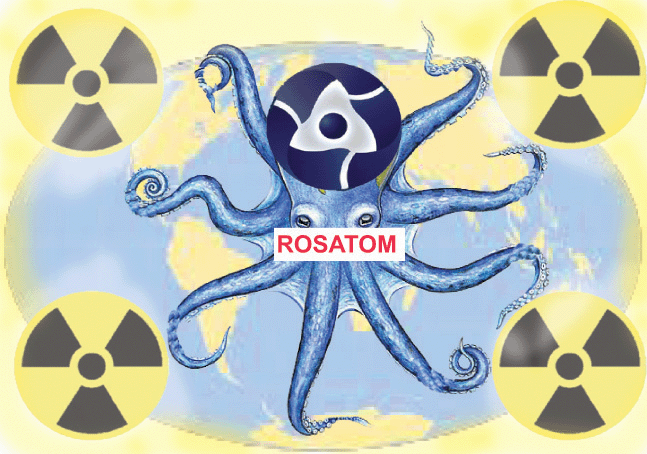
New data shows exports in the strategic industry jumped more than 20% last year, as
long-term projects boost Russian influence. Russia’s nuclear exports have
surged since the invasion of Ukraine, boosting the Kremlin’s revenue and
cementing its influence over a new generation of global buyers, as the US
and its allies shy away from sanctioning the industry. Exclusive trade data
compiled by the UK’s Royal United Services Institute show that Russian
nuclear fuel and technology sales abroad rose more than 20% in 2022.
Bloomberg 14th Feb 2023
Rising seas threaten ‘mass exodus on a biblical scale’, UN chief warns

An increase in the pace at which sea levels are rising threatens “a mass
exodus of entire populations on a biblical scale”, the UN secretary
general has warned. The climate crisis is causing sea levels to rise faster
than for 3,000 years, bringing a “torrent of trouble” to almost a
billion people, from London to Los Angeles and Bangkok to Buenos Aires,
António Guterres said on Tuesday.
Some nations could cease to exist,
drowned under the waves, he said. Significant sea level rise is already
inevitable with current levels of global heating, but the consequences of
failing to tackle the problem are “unthinkable”. Guterres said:
“Low-lying communities and entire countries could disappear for ever. We
would witness a mass exodus of entire populations on a biblical scale. And
we would see ever fiercer competition for fresh water, land and other
resources.
Guardian 14th Feb 2023
Global leaders are dropping the ball on climate change
Global leaders are dropping the ball on climate change
Greta Thunberg
We cannot just buy, invest or build our way out of the climate and environmental crisis. Nevertheless, money is still very much at the heart of the problem.
The ‘Icefin’ bore deep into an Antarctic glacier. What it found were temperatures warmer than melting point
Antarctica’s Thwaites glacier holds enough water to raise global sea levels by 65 centimetres. New research shows steep terraces and fissures in the glacier shelf are speeding up its melting.
TODAY Bewdy! It’s gonna happen sooner than we thought. Just like Ukraine does against Russia, Australia will fight America’s war against China.
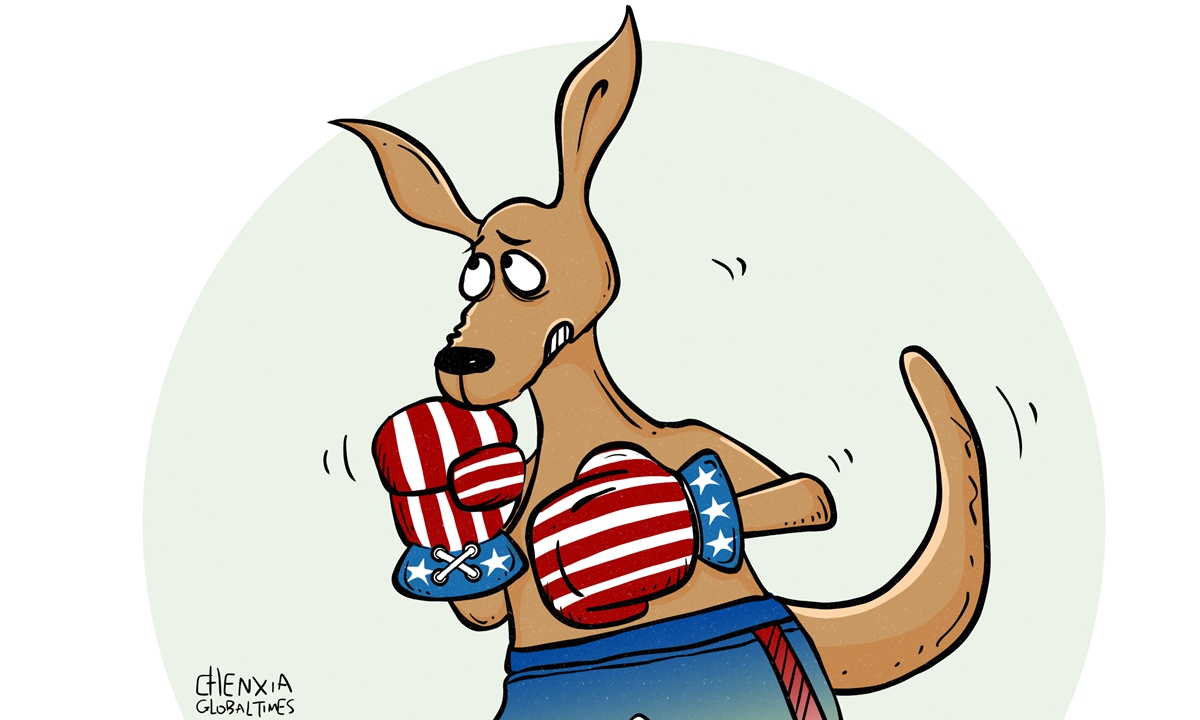
Isn’t it exciting?
We thought that it would take a while, for little ole Australia (population under 26 million), to become important on the world stage. I mean, most Americans are amazed that we speak English: that’s because they’ve heard of Austria, but not of Australia. Until now.
I mean, Ukraine (pop.44 million) was pretty much ignored, but now it’s big-time. They are “weakening” Russia, and isolating Russia culturally from Europe. Having their own country utterly trashed, environmentally, financially, health-wise, and morally – a small price to pay for being famous.
Australia can achieve the same. Right now, America is plying Australia with propaganda, weaponry and marines, and war games, and best of all, nuclear weapons. Despite international law, these can be based in Australia ‘temporarily”. Australians can’t know when or where the U.S. nukes will be. Fortunately, it is nearly Footee Season, so Australians won’t care anyway.
Australia’s war against China needs to happen soon, (though, preferably, some sort of delicate balance should happen in Ukraine first).
It needs to happen soon, before China becomes even more alarmed, and develops long-range nuclear missiles that could strike too many American bases and cities. Better to have China just focus on hitting Australia. Australia’s current Prime Minister is a bit of a wimp. We need our own charismatic Zelensky – but Peter Dutton might do?
Why the US seeks War with China by 2025
A clash between the United States and China over Taiwan would be the result of the United States willfully going to war with China over a matter the United States officially recognizes as China’s internal political affairs.
The current US State Department’s website regarding “U.S. Relations With Taiwan” admits that officially, “we do not support Taiwan independence.”

The US has also poured billions of dollars’ worth of weapons into Taiwan, just as the US did in Ukraine from 2014 onward. The weapons are clearly intended for a Ukraine-style proxy war with China
.
New Eastern Outlook, : Brian Berletic 8 Feb 23
In recent weeks there has been a build-up of talk regarding a US war with China. Not because of any actual provocation from Beijing, but instead because of a collective resignation to its supposed inevitability.
This is best illustrated by comments made by US Air Force General Michael Minihan. In TIME Magazine’s article, “U.S. General’s Prediction of War With China ‘in 2025’ Risks Turning Worst Fears Into Reality,” General Minihan is quoted as saying:
Worst of all is the small but growing presence of US military activity on Taiwan itself.
Even as the US State Department claims it does not support Taiwan independence, in 2021 Voice of America in its article, “US Nearly Doubled Military Personnel Stationed in Taiwan This Year,” admits that not only are there US troops on Taiwan, the number is increasing.
The article explains:……………………………
“My gut tells me we will fight in 2025.”
The article goes on to claim:
“I hope I am wrong,” Minihan, who heads the Air Force’s Air Mobility Command, wrote in an internal memo, which circulated on social media, to the leadership of its 110,000 members. Chinese President Xi Jinping, he explains, “secured his third term and set his war council in October 2022. Taiwan’s presidential elections are in 2024 and will offer Xi a reason. United States’ presidential elections are in 2024 and will offer Xi a distracted America. Xi’s team, reason, and opportunity are all aligned for 2025.”
Yet nothing General Minihan says explains why the United States itself would conceivably find itself at war with the United States. Instead, General Minihan is more or less admitting that the US will go to war with China over Chinese actions regarding Taiwan. In fact, the article goes on to admit:
Minihan’s comments are merely the most immediate of a worrying, emerging consensus that the U.S. and China are destined to clash over Taiwan, the self-ruling island of 23 million that Beijing claims as its sovereign territory.
A clash between the United States and China over Taiwan would be the result of the United States willfully going to war with China over a matter the United States officially recognizes as China’s internal political affairs.
The current US State Department’s website regarding “U.S. Relations With Taiwan” admits that officially, “we do not support Taiwan independence.”
If the US does not support Taiwan independence then by extension the US acknowledges Taiwan is not independent and therefore Washington, officially, recognizes Beijing’s sovereignty over Taiwan. This is what defines the “One China” policy Washington and virtually every other nation on Earth has agreed to in order to establish diplomatic relations with the People’s Republic of China in Beijing.
At a time when Washington regularly lectures Moscow about “violating sovereignty,” Washington’s stance toward Beijing and Taiwan should be a simple matter of respecting Chinese sovereignty. Yet it is not because of the double-game the United States plays both internationally and with China specifically.
Washington’s Deliberate Provocations
TIME Magazine and other Western media publications attempt to depict Beijing as the aggressor, omitting any discussion of either the “One China” policy or the US State Department’s own official declaration of supposedly upholding it.
Instead, Western audiences are led to believe that Taiwan somehow is independent and that Beijing is “bullying” it. The inevitable clash between the US and China is supposedly driven by America’s desire to “stand up” for Taiwan and its inferred sovereignty. In reality, a potential clash between the US and China would be the result of Washington once again violating the sovereignty of another nation thousands of miles from its own shores.
Washington’s double game of officially recognizing Chinese sovereignty over Taiwan while openly and deliberately trampling that sovereignty is best illustrated by former US Speaker of the House Nancy Pelosi’s visit to Taiwan utilizing an official US Air Force aircraft against the protests of Beijing. Pelosi’s trip to Taiwan is only one of many made by US representatives who openly use visits like this in an attempt to goad Beijing……….
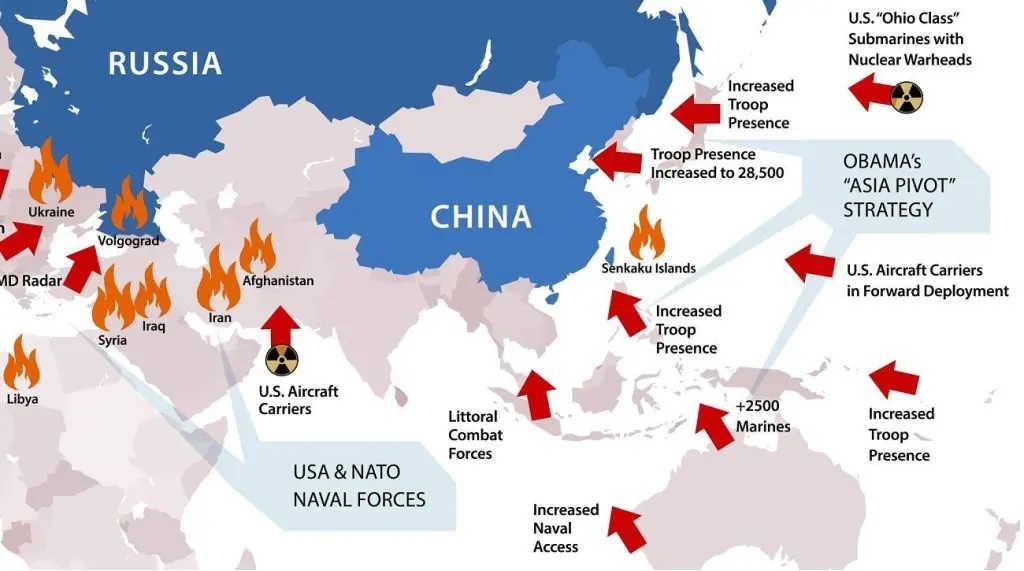
Looking at any map of US military deployments in the “Indo-Pacific” region reveals China as virtually surrounded by the US military by way of South Korea, mainland Japan, Okinawa, and with new basing agreements in the works with Manila, potentially the Philippines as well.
This puts US troops, naval assets, and hundreds of warplanes within striking distance of China, including Taiwan from north, east, and potentially the south.
The US has also poured billions of dollars’ worth of weapons into Taiwan, just as the US did in Ukraine from 2014 onward. The weapons are clearly intended for a Ukraine-style proxy war with China.
Worst of all is the small but growing presence of US military activity on Taiwan itself.
Even as the US State Department claims it does not support Taiwan independence, in 2021 Voice of America in its article, “US Nearly Doubled Military Personnel Stationed in Taiwan This Year,” admits that not only are there US troops on Taiwan, the number is increasing.
The article explains:………………………………….
One could only imagine the reaction in Washington if Beijing and a government in, say San Juan, revealed the presence of Chinese forces in Puerto Rico. Yet as is the case in many instances regarding international relations, American “exceptionalism” not only absolves the US from any penalty for blatant violations of another nation’s sovereignty, it transfers the blame to the nation being targeted itself, in this case, China.
Why US War with China by 2025?
Despite serial provocations, Beijing has exercised exemplary patience and restraint. China has invested heavily in its military and is indeed preparing for conflict with the United States, not because it seeks to wage war with the United States but because the United States has placed its military on China’s doorstep, very clearly seeking war with China.
Taiwan’s full reintegration with the rest of China is inevitable. Already its economy is heavily dependent on access to markets across the rest of China. Harvard University’s Atlas of Economic Complexity reveals that nearly 50% of all exports from Taiwan go to the rest of China. The rest of China also accounts for the largest amount of imports to the island. Many of these imports are crucial inputs for Taiwan’s semiconductor and electronic component production which constitutes, by far, Taiwan’s largest industry.
Only through Washington’s persistent and extensive interference in Taiwan’s local political affairs has gradual reintegration been suspended. Before the US-backed Democratic Progressive Party (DPP) came to power in 2016, the incumbent Kuomintang (KMT) party was on track to sign a trade agreement with the mainland that would have increased already extensive economic integration even further.
Ironically, as the US captured Ukraine politically in 2014, it was also backing opposition protests in Taiwan dubbed the “Sunflower Movement,” paving the way for the DPP’s ascent into power 2 years later. Just like the US-installed client regime in Kiev, the DPP immediately set a course for self-destruction, irrationally rolling back ties with the mainland at the expense of the people living on Taiwan.
More recently, local elections in Taiwan saw the DPP fare poorly, serving as an unofficial referendum rejecting the DPP’s separatist platform, the damage it has consistently done to the local economy, and the instability it has created across the strait with the mainland. However, just as was the case in Ukraine where public sentiment sought peace, Washington and its client regime have every intention of overriding that sentiment in Taiwan, and pushing the island closer still to yet another US-engineered proxy war.
It is clear that it is not China rushing for war with the United States, but precisely the other way around. Time, economics, and proximity favor China. In 10 years, China will be economically and militarily stronger while the US will continue its slow decline. At that point the window of opportunity will have closed for the United States to wage any type of military conflict with China and obtain anything close to resembling “victory.”
Some could argue that the window has already closed.
The Center for Strategic and International Studies (CSIS) recently published the outcome of “wargames” regarding a theoretical Chinese “invasion” of Taiwan in a paper titled, “The First Battle of the Next War: Wargaming a Chinese Invasion of Taiwan.”The paper concludes:
In most scenarios, the United States/Taiwan/Japan defeated a conventional amphibious invasion by China and maintained an autonomous Taiwan. However, this defense came at high cost. The United States and its allies lost dozens of ships, hundreds of aircraft, and tens of thousands of servicemembers. Taiwan saw its economy devastated. Further, the high losses damaged the U.S. global position for many years.
Regarding China, it says:
China also lost heavily, and failure to occupy Taiwan might destabilize Chinese Communist Party rule. Victory is therefore not enough. The United States needs to strengthen deterrence immediately.
In essence, the US will suffer unprecedented military losses and Taiwan itself will be scoured clean of its industry and infrastructure. While CSIS claims that the Chinese amphibious landing was successfully foiled in its wargames thus preserving Taiwan’s political existence, the cost is Taiwan’s physical existence.
Both the CSIS paper together with public comments made by the Pentagon about their own classified wargames indicate disparity between the US and China militarily is narrowing quickly. If there is to be a conflict between the US and China, the sooner it takes place the better chance the US has of achieving a favorable outcome. It is therefore the US racing eagerly toward war, not China. China’s military posture reflects the close proximity of US forces to Chinese territory and their obvious intent to menace China in its own territory, not a China expanding its military capabilities to threaten the United States. In fact, the CSIS paper made a specific note about China’s ability to attack the US “homeland.”
The paper claims:
Because the United States will be striking the Chinese homeland, the base case assumes that the U.S. homeland is not a sanctuary. However, the ability of the Chinese to conduct strikes against the U.S. homeland and thereby affect operations in the Western Pacific is extremely limited. A few special forces might infiltrate and attack a small number of high-value targets but not enough to materially affect military operations in the Western Pacific.
Thus, even in a war between the US and China where the US is conducting strikes on Chinese territory, CSIS admits that China has very limited means to likewise strike at the US. This reveals that US policymakers are not concerned about any real threat China poses to the US, but instead to US “interests” thousands of miles from its own shores and, in fact, within the sovereign territory of China itself.
Potential war between the US and China, if it takes place, will merely be the most recent example of US military aggression in pursuit of global hegemony targeting and attempting to undermine another nation’s sovereignty in violation of international law, not as a means to uphold it. As the US often does, the lead up to this potential war sees the US projecting its own menace toward international law, peace and stability onto the very target of US military aggression, in this case China.
Brian Berletic is a Bangkok-based geopolitical researcher and writer, especially for the online magazine “New Eastern Outlook”.
“No regrets” as UK government portrays nuclear power as “clean” and “green”

Nuclear power to get ‘green’ status as Britain races EU to hit net
zero. Move is part of a bid to unlock billions of pounds of funding for
more power stations. Nuclear power projects such as Sizewell C in Suffolk
will be granted so-called “green” status under plans by Jeremy Hunt to
unlock billions of pounds in funding for the industry. The Chancellor is
expected to announce the change within weeks as part of a broader shake-up
of the UK’s financial rules on green energy.
It would see nuclear power
projects classed as “green” or “sustainable” investments, clearing
the way for more institutional investors and environment-focused funds to
back them. There are also hopes that the Treasury could fund new power
plants with money raised through the Government’s green gilts and green
savings bonds. Generating nuclear power does not produce carbon dioxide, [ if you ignore the total nuclear fuel chain] so the sector is seen as a key plank of Britain’s plans to reach net zero
emissions by 2050.
A recent review by former energy minister and Tory MP
Chris Skidmore said that supporting the construction of more nuclear
reactors was a “no regrets” option. However, the sector has faced
difficulties portraying itself as environmentally friendly in the past
because of concerns about nuclear waste, water usage, and the remote but
catastrophic risk of nuclear accidents. Top fund managers such as Legal &
General and Aviva have previously expressed caution about the green
credentials of nuclear, with Aviva chairman George Culmer last year saying
there was an “ongoing debate”.
Telegraph 14th Feb 2023
Some, but not all, First Nations support small nuclear reactors in New Brunswick

Moltex CEO says company has full support of all 15 First Nations in N.B. to develop SMRs
Jennifer Sweet · CBC News Feb 15, 2023
Companies trying to develop small modular nuclear reactors in New Brunswick are getting some support from an unlikely source.
An energy crisis is looming large, and SMRs have better potential than renewables in the short term, said Chief Terry Richardson of Pabineau First Nation, near Bathurst.
Richardson said he sees nuclear power as consistent with his cultural values.
“As First Nations, we are stewards of the land. Well, when we look at nuclear technology, it’s not a carbon emitter. So it’s not going to cause a problem. It’s going to actually solve the problem of carbon.
“If we don’t do something, we all know what’s happening with climate change.”
Pabineau has signed memoranda of understanding to work with two companies that have SMR projects under way at Point Lepreau — Moltex and ARC, said Richardson.
He describes the MOUs as “non-contractual, binding documents” that state a willingness to work together on development.
Details of exactly how his community and potentially other First Nations in the province may take part in SMR projects have yet to be negotiated, said Richardson.
“There’s going to be an opportunity to be involved on the equity side and that’s where we have to sit down and talk and discuss it and see where we’re going to go.”
After the initial development at Lepreau, ARC is talking about installing more SMRs in Belledune, Richardson noted, which could mean job opportunities in northern New Brunswick.
He also likes that Moltex is looking at reusing spent fuel rods, which it says would reduce the amount of toxic nuclear waste that already exists.
Study looks at SMR waste
A Canadian peer-reviewed study that came out last summer found the volume of waste from SMRs would be between double and 30 fold that from a typical reactor and that its chemical complexity would make it more difficult to manage.
Richardson said he is satisfied that plans are in place to deal with nuclear waste and added that maybe in the future there will be a way to recycle it…..
Moltex CEO Rory O’Sullivan told the legislative committee Wednesday that his company has the support of all 15 First Nations in the province to develop SMRs.
However, some other Indigenous leaders addressed the committee who have concerns about the SMR plans and the public investment in development.
Chief Hugh Akagi represents the Peskotomuhkati Nation at Skutik, which doesn’t have official recognition as a First Nation in Canada. https://www.cbc.ca/news/canada/new-brunswick/first-nations-small-modular-nuclear-reactors-1.6749808
Fukushima: Japan insists release of 1.3m tonnes of ‘treated’ water is safe
Neighbouring countries and local fishers express concern as 12th anniversary of nuclear disaster looms
Justin McCurry, Guardian 15 Feb 23,
“……………….. As the country prepares to mark the 11 March anniversary, one of the disaster’s most troubling legacies is about to come into full view with the release of more than 1m tonnes of “treated” water from the destroyed Fukushima Daiichi nuclear power plant.
The tsunami knocked out the plant’s backup electricity supply, leading to meltdowns in three of its reactors, in the world’s worst nuclear accident since Chornobyl 25 years earlier.
Much has changed since the Guardian’s first visit to the plant in 2012, when the cleanup had barely begun and visitors were required to wear protective clothing and full-face masks. Atmospheric radiation levels have dropped, damaged reactor buildings have been reinforced and robots have identified melted fuel in the basements.
But as the Guardian learned on a recent visit, progress on decommissioning – a process that could take four decades – is being held up by the accumulation of huge quantities of water that is used to cool the damaged reactor cores.
Now, 1.3m tonnes of water – enough to fill about 500 Olympic-sized swimming pools – is being stored in 1,000 tanks that cover huge swathes of the complex. And space is running out.
Two steel pillars protruding from the sea a kilometre from the shore mark the spot where, later this year, the plant’s operator, Tokyo Electric Power [Tepco], plans to begin releasing the water into the Pacific Ocean, in the most controversial step in the Fukushima Daiichi cleanup to date.
The decision comes more than two years after Japan’s government approved the release of the water, which is treated using on-site technology to remove most radioactive materials. But the water still contains tritium, a naturally occurring radioactive form of hydrogen that is technically difficult to separate from water.
The discharge, which is due to begin in the spring or summer, will take place in defiance of local fishing communities, who say it will destroy more than a decade of work to rebuild their industry. Neighbouring countries have also voiced opposition.
The government and Tepco claim the environmental and health impacts will be negligible because the treated water will be released gradually after it has been diluted by large amounts of seawater. The International Atomic Energy Agency says nuclear plants around the world use a similar process to dispose of wastewater containing low-level concentrations of tritium and other radionuclides.
Tepco and government officials who guided a small group of journalists around Fukushima Daiichi this month insisted the science supports their plans to pump the “treated” water – they object to media reports describing it as contaminated – into the ocean………………………………………….
Environmental groups have challenged the Japanese government’s claims that the water will not affect marine life or human health, while the US National Association of Marine Laboratories has pointed to a lack of adequate and accurate scientific data to support its reassurances on safety………………….. https://www.theguardian.com/environment/2023/feb/15/fukushima-japan-insists-release-of-treated-water-is-safe-nuclear-disaster
1 This Month
23 April – WEBINAR – Why new nuclear reactors are the wrong tools for decarbonization Thursday, April 23 • 1 AM – 2 AM AEST
World Nuclear Power. Reactors 1951-2026, 75 Years of Nuclear Power.
Interactive Map– https://dv.worldnuclearreport.org/
Chernobyl: The Lost Tapes – A good documentary on Chernobyl on SBS available On Demand for the next 3 weeks– https://www.sbs.com.au/ondemand/tv-program/chernobyl-the-lost-tapes/2352741955560

of the week–London Campaign for Nuclear Disarmament

Tell the Ukrainian Government to Drop Prosecution of Peace Activist Yurii Sheliazhenko
To see nuclear-related stories in greater depth and intensity – go to https://nuclearinformation.wordpress.com
-
Archives
- April 2026 (231)
- March 2026 (251)
- February 2026 (268)
- January 2026 (308)
- December 2025 (358)
- November 2025 (359)
- October 2025 (376)
- September 2025 (257)
- August 2025 (319)
- July 2025 (230)
- June 2025 (348)
- May 2025 (261)
-
Categories
- 1
- 1 NUCLEAR ISSUES
- business and costs
- climate change
- culture and arts
- ENERGY
- environment
- health
- history
- indigenous issues
- Legal
- marketing of nuclear
- media
- opposition to nuclear
- PERSONAL STORIES
- politics
- politics international
- Religion and ethics
- safety
- secrets,lies and civil liberties
- spinbuster
- technology
- Uranium
- wastes
- weapons and war
- Women
- 2 WORLD
- ACTION
- AFRICA
- Atrocities
- AUSTRALIA
- Christina's notes
- Christina's themes
- culture and arts
- Events
- Fuk 2022
- Fuk 2023
- Fukushima 2017
- Fukushima 2018
- fukushima 2019
- Fukushima 2020
- Fukushima 2021
- general
- global warming
- Humour (God we need it)
- Nuclear
- RARE EARTHS
- Reference
- resources – print
- Resources -audiovicual
- Weekly Newsletter
- World
- World Nuclear
- YouTube
-
RSS
Entries RSS
Comments RSS
 nuclear-news