Final disposal of nuclear waste is “the responsibility of the government”…but is it safe? What is happening in towns and villages in Hokkaido, where a literature review is underway
February 15, 2023
The Fumio Kishida administration is moving forward with the utilization of nuclear power. This time, he has put together a policy to take national responsibility for the final disposal of high-level radioactive waste from spent nuclear fuel. Despite the encouraging tone of the words, distrust is mounting. The government has emphasized “national responsibility” in its response to the accident at TEPCO’s Fukushima Daiichi Nuclear Power Station, but there have been instances in which the government has tended to act arbitrarily. What developments are expected in the future regarding the final disposal of the waste? How will this affect the towns of Sutsu and Kamieuchi in Hokkaido, where literature surveys are underway? (The following is a summary of the report by Yuzuru Miyahata and Naoaki Nishida.)
◆Spent nuclear fuel continues to accumulate
The government will make a concerted and concerted effort toward the final disposal of the spent fuel. A ministerial meeting was held on October 10 to discuss the selection of a final disposal site for high-level radioactive waste. The draft revision of the basic policy presented at the meeting clearly stated the above passage. The policy is currently undergoing public comment, and if it is revised, it will be the first time in eight years, since 2015, that the policy has been revised.
High-level radioactive waste from spent nuclear fuel is also known as “nuclear waste. At present, spent nuclear fuel continues to accumulate in storage pools at nuclear power plants, and vitrified waste, which is made by solidifying liquid waste with glass, is being processed.

Spent nuclear fuel from the new conversion reactor Fugen is stored in a pool at the Tokai Reprocessing Plant in Tokai-mura, Ibaraki Prefecture.
Nuclear waste is a troublesome problem because of its extremely high radioactivity and long life. According to the Final Disposal Law enacted in 2000, the plan is to dispose of nuclear waste in a geological formation deep underground, but due to safety concerns and other factors, a concrete roadmap has yet to be drawn.
The government’s emphasis on its responsibility is a reflection of this situation. Since the enactment of the Final Disposal Law, a nationwide public call for proposals, known as the “hand-picked” method, began, and Toyo Town in Kochi Prefecture applied in 2007, but the application was withdrawn due to the fierce opposition of the townspeople. Currently, only the Hokkaido towns of Sutsu-cho and Kamieuchi-mura have accepted the “literature review,” the first step in the selection process.
According to the Agency for Natural Resources and Energy of the Ministry of Economy, Trade, and Industry (METI), approximately 160 explanatory meetings were held throughout Japan over the past five years, but interest in the project was limited. On the other hand, in the case of the other countries where final disposal sites have been decided, the number of candidate sites was narrowed down from about 10 to only one. The person in charge said, “As a result of the survey, there is opposition from the public and the fact that it cannot be used as a disposal site. We need more candidate sites,” he said.
◆Disbelief in government policy: “Can we really do this?
Under the current system, the Nuclear Waste Management Organization (NUMO), to which the power companies contribute the project cost, is responsible for selecting the disposal site and the disposal itself. However, because of the difficulties in selecting a disposal site, when the basic policy was revised in 2003, the government stepped up to the plate by presenting areas that were considered highly suitable. This time, however, the government “decided to step it up a notch,” according to the person in charge of the matter mentioned above.
While Professor Yo Fujimura of Kanagawa Institute of Technology understands that “the national government is responsible for the nuclear power policy because it is a national policy,” he also has some concerns. The national government must not force the local communities to do something.
At the root of his concern is a distrust of the national government. He wonders, “Have the national government and electric power companies done anything to earn our trust in their response to the accident at the Fukushima Daiichi Nuclear Power Plant? For example, the cleanup of contaminated water at the Daiichi Nuclear Power Plant. When he was prime minister, Yoshihide Suga said that the government would take responsibility for the situation, but he turned a deaf ear to the opposition to releasing the water into the ocean and decided to release it after it had been treated.
Even though the government is moving forward with the final disposal of the waste, some doubt whether it can really be done.
It is said that it will take 100,000 years for high-level radioactive waste to become safe. Hideyuki Hirakawa, a professor of science, technology, and society at Osaka University, said, “Japan is an earthquake-prone country. There are active faults everywhere. If a problem is found after moving the waste deep underground, will it be possible to remove the radioactive waste? I have not lost faith in the technology related to nuclear power plants. And how can we be sure of safety 100,000 years from now?

◆The reason why the survey is not progressing is because of the upcoming election.
Now that the Kishida administration has declared that “the national government will take responsibility for the final disposal of the waste,” what do the people of Sutou Town and Kamieuchi Village, where the literature review is underway, think?
The literature review for both towns and villages, which began in November 2020, is still ongoing. Initially scheduled to take about two years, a NUMO spokesperson said, “It is taking longer than expected. We are in the process of asking a working group at METI for their thoughts on how to evaluate the survey results. We have not yet decided how long it will take,” he said.
Once the literature review using geological maps and academic papers is completed, NUMO plans to move on to an overview survey to examine the geology and ground conditions, based on the wishes of the local community. This is the second phase of the survey.
Masayuki Domon, 69, a member of the Kamieuchi Village Council who announced his opposition to the literature survey three years ago, wonders if the reason the survey has not been completed after two years is because an election is coming up. The “election” referred to here is the village council election scheduled for April. Given the current situation in which many village council members are in favor of the project, he suspects that they do not want to make waves.
Mr. Domon said, “Time has passed without sufficient explanation to the villagers. The governor has clearly stated that he will not accept the summary survey, so we have no choice but to urge the village mayor to keep in step with us,” he told himself.
◆Divided opinions and broken relationships
On the other hand, Kazuyuki Tsuchiya, 74, a member of an opposition group in the town of Sutomachi, said of the Kishida administration, “To put it simply, it’s just infuriating. When they emphasize that ‘the final disposal is the responsibility of the national government,’ it sounds like ‘the national government is pushing hard for the selection of a disposal site in towns and villages where investigations are underway. What the government says cannot be trusted at all.
The town’s ordinance stipulates that a referendum will be held when the town moves from a literature review to an overview survey, but the mayor’s decision is not binding.
The town council’s opinion carries weight, and currently it is split evenly between those in favor and those opposed. However, “I am having a hard time finding a candidate,” he said. In this small town, the people are closely knit, and some of them have lost their relationships with each other because of the split in support of and against the project.
He is also wary of how the proponents of the project will react to the briefing by NUMO representatives, saying, “Even if they call it a ‘place for dialogue,’ the actual situation is different. It has become a place for one side to express its viewpoints. He fears that the NUMO representatives will be more inclusive of the proponents and more likely to cut off opponents.
On October 10, the Kishida administration passed a cabinet decision on the “Basic Policy for the Realization of Green Transformation (GX),” which includes the active use of nuclear power plants. The timing of the decision to present the draft basic policy on final disposal at the time of the outbreak of objections underscored the “responsibility of the national government.
◆ “It is only making the local communities suffer and be troubled.
Tatsujiro Suzuki, a professor of nuclear policy at Nagasaki University, said, “If there is no final disposal site, they will blame us even more. We are only aware of such voices. It has a strong sense of appeal.” He doubts the intention of the government to deflect criticism. He then added, “Even if we say we will focus on the selection of a disposal site, the Federation of Electric Power Companies of Japan (DENJI-REN) will be in charge of the process. There will be no particular change.
While discussion of a final disposal site is inevitable, it would be problematic to proceed without the consent of the local residents, as was the case in the town of Sutsu and the village of Kamieuchi.
Tsunehide Chino, associate professor of environmental sociology at Shinshu University, said, “The government has often used the phrase ‘government-led promotion of understanding’ with regard to the final disposal site, but even looking at the two Hokkaido towns and villages today, there is no consensus of opinion, and in fact, this is causing division. This has only caused distress and pain to the local communities,” he continued. The problem is that the administration has not faced up to the harsh reality of the situation and has taken the easy way out by not trying to gain the public’s understanding. The government should abandon its technological and economic optimism that nuclear power is safe and that the cost of electricity will go down.
◆Desk Memo
When nuclear power plants are operated, waste is generated. But, since a disposal site has not been decided, the amount of waste is accumulating. It is difficult to manage it. It is also hard to find a place to put it. What should be done is obvious. Stop the nuclear power plants, prevent the increase in waste, and in the meantime, discuss where to dispose of the waste. However, the government has a policy of operating nuclear power plants. The more waste we generate, the more trouble we have to clean up. They are irrationally thinking and acting arbitrarily. The situation is too bad. (Sakaki)
Disposing of Fukushima waste proving to be an uphill battle

Hisashi Nitta, a farmer in Tome, Miyagi Prefecture, explains about a hut made with pipes, shown at the back of the photo, which stores designated waste, on Dec. 26.
February 13, 2023
Little progress is being made to dispose of waste created after the Fukushima No. 1 nuclear power plant’s triple meltdown following the Great East Japan Earthquake and tsunami in March 2011.
The meltdowns spread radioactive substances across large areas in northeastern Japan, resulting in what the government calls “designated waste.”
Around 20,000 tons of designated waste is being stored outside Fukushima Prefecture, but disposal has proven difficult.
Local authorities have strongly opposed the central government’s policy that designated waste should be consolidated into one place in each of the local authorities’ areas and stored there for a long period.
Thus, designated waste has been stored in different locations, including agricultural fields or local authorities’ facilities.
Some have voiced concern, however, that the designated waste could leak outside in the event of a disaster.
The 2011 nuclear accident released radioactive substances into the air. The wind then transported the substances to other areas.
The government later decided that contaminated waste, such as incinerated ash or rice straw, were designated waste if their radioactivity concentration exceeded 8,000 becquerels per kilogram.
After the 2011 accident, the Environment Ministry set the threshold of 8,000 becquerels per kilogram as the level at which “the safety of workers can be guaranteed in the typical tasks of disposing of radioactive waste.”
The government decided that it is responsible for disposing of the designated waste and has set a basic policy that it will fund and build final disposal facilities.
Its basic policy also says disposing of designated waste will be carried out in the prefectures where it was generated.
Around 407,000 tons of designated waste were stored in 10 prefectures, including Tokyo, as of the end of September 2022, according to the Environment Ministry.
Nine prefectures, including Tokyo, are storing around 25,000 tons of it.
Of those, five prefectures–Miyagi, Ibaraki, Tochigi, Gunma and Chiba–have around 22,000 tons.
For these five prefectures, the ministry announced a plan to consolidate and dispose of the designated waste at final disposal facilities, one of which would be built in each of the five prefectures.
By 2015, the ministry chose candidate sites for the final disposal facilities in Miyagi, Ibaraki, Tochigi and Chiba.
However, it faced fierce opposition from these areas because of concerns about reputational damage.
The ministry was forced to withdraw its selection of the candidate site in Ibaraki. The task of consolidating designated waste is not making progress in the other prefectures either.
Meanwhile, the designated waste’s radioactivity levels have gradually lowered.
The ministry estimated the radioactivity concentration of between 10,333 tons and 11,633 tons of the designated waste exceeded 8,000 becquerels per kilogram in the five prefectures as of fiscal 2016.
This means the radioactivity concentration of more than 40 percent of the designated waste in the five prefectures was estimated to not exceed 8,000 becquerels per kilogram.
Such waste can be disposed of together with ordinary waste if the ministry decides to lift the designation after discussions with local authorities.
However, local authorities are not eager to lift the designation because they will then be responsible for disposing of such waste.
As of the end of September, the ministry had only lifted the designation of around 2,786 tons in the five prefectures.
Meanwhile, in Fukushima Prefecture, where most of the designated waste is stored, such waste with a radioactivity concentration of 100,000 becquerels per kilogram or under has been transported to a final disposal facility in Tomioka.
Japan watchdog OKs new safety rules to extend reactor life

The Fukushima Daiichi nuclear power plant sits in coastal towns of both Okuma and Futaba, as seen from the Ukedo fishing port in Namie town, northeastern Japan, on March 2, 2022
February 14, 2023
TOKYO (AP) — Japanese nuclear regulators on Monday approved contentious safety evaluation changes and draft legislation to allow aging reactors to operate longer, in a rare split decision in which one of the five commissioners dissented.
The Nuclear Regulation Authority, responding to a new government policy to scrap the current 60-year operating limit for reactors, adopted a new system in which additional operating extensions can granted every 10 years after 30 years of service. No maximum limit is specified. The authority also adopted a draft revision of the reactor regulation law for approval by parliament.
It’s a major change from the current 40-year operating limit with a possible one-time extension of up to 20 years, a rule that was introduced as part of stricter safety standards adopted after the 2011 Fukushima nuclear plant disaster.
Prime Minister Fumio Kishida’s Cabinet adopted a plan last Friday to maximize the use of nuclear energy, including accelerating restarts of halted reactors, prolonging the operational life of aging plants and development of next-generation reactors to replace those designated for decommissioning, as Japan struggles to secure a stable energy supply and meet its pledge to reach carbon neutrality by 2050.
One of the authority’s five commissioners, Akira Ishiwatari, a Tohoku University geologist, opposed the changes.
“We are open to revisions (to rules) if changes are clearly to contribute to greater safety for scientific or technical reasons. To me, these changes do not serve either purpose,” Ishiwatari said at Monday’s commission meeting.
Another commissioner, Tomoyuki Sugiyama, deputy chief of the Japan Atomic Energy Agency’s nuclear safety research center, said he felt the discussion was “rushed” as a result of government pressure and that the regulatory body should have acted more independently.
Authority Chairman Shinsuke Yamanaka denied that the watchdog yielded to government pressure and said he believes the new safety system is adequate.
The authority’s task is “to inspect the safety of (aging) reactors no matter how long their operational lifespan is,” he said. “We simply do not issue safety permits for reactors with progressing deterioration.”
Anti-nuclear sentiment and safety concerns rose sharply in Japan after the Fukushima disaster, in which a massive earthquake and tsunami damaged the plant’s cooling system, resulting in the meltdown of three reactors and the release of large amounts of radiation.
The government has been pushing for a return to nuclear power amid worries of energy shortages following Russia’s invasion of Ukraine and a global push to reduce greenhouse gases.
While maintaining a 20%-22% target for nuclear energy’s share of the energy mix for 2030, the government previously denied it was considering building new nuclear plants or replacing aged reactors in an apparent attempt to avoid triggering criticism from a wary public.
https://mainichi.jp/english/articles/20230214/p2g/00m/0bu/009000c
High bidding rates for decontamination, etc., with many one-party bidders, the Board of Audit pointed out
An investigation by the Board of Audit has revealed that about half of the decontamination and other bidding projects being conducted by the Ministry of the Environment in the wake of the accident at TEPCO’s Fukushima Daiichi Nuclear Power Station had only one bidder participating, and that the success rate tended to be high. The Board of Audit announced the findings on February 3, 2023.

A decontamination site in Naraha Machi, Fukushima Prefecture, which was opened to the press by the Ministry of the Environment in March 2013. In the foreground is a contaminated water treatment facility, and in the background is a temporary storage area for contaminated soil and other materials packed in sandbags
February 14, 2023
The Ministry of the Environment is in charge of nuclear power plant accident countermeasure projects, such as decontamination, treatment of contaminated waste, and construction of interim storage facilities for soil collected during decontamination, as part of the restoration and reconstruction projects following the Great East Japan Earthquake that occurred in March 2011. The total amount of the government budget for these projects amounted to 5.16 trillion yen through FY 2009.
Article 44 of the Special Measures Law stipulates that TEPCO will ultimately bear the costs of nuclear accident countermeasure projects as compensation, with some exceptions. According to the Ministry of the Environment, TEPCO has already compensated 3.1699 trillion yen, about 80% of the 4.209 trillion yen claimed as of the end of December 2010. Although government funds are not the final source of funds, they are subject to inspection by the Board of Inquiry.
At the request of the upper house of the Diet, the inspection office investigated the bids and contract amounts at the time of the order, mainly for nuclear power plant accident countermeasure projects with initial contract amounts totaling 1.854 trillion yen that were ordered by the Ministry of the Environment between April 2004 and September 2009. The decontamination projects, which are divided into those directly under the Ministry of the Environment and those ordered by local governments, mainly covered the former.
The bidding rate for the first project increased by more than 10 percentage points.
Among the projects covered by the survey, the National Audit Office examined the participation and success rates for 735 general competitive bids for construction and operations by the Ministry of the Environment’s Fukushima Regional Environment Office.
In terms of bidding participation, 49.3% of the bids were “one-party bids,” with only one participant; the percentage of one-party bids was particularly high for bids for construction consultant services, at 62.1%. The percentage was relatively low at 29.5% for construction bids involving decontamination work.
The Ministry of the Environment (MOE) was urged to ensure competition in order to reduce the bidding ratio, given the difference of more than 10 percentage points between single and multiple bids: 94.6% for single bids and 81.3% for multiple bids.
The difference in the winning bid rate was relatively small for construction work, at 97.5% for single bidders versus 91.9% for multiple bidders. On the other hand, for construction consultant services, the winning bid rate jumped from 78% for multiple bidders to 94.4% for one bidder.
https://xtech.nikkei.com/atcl/nxt/column/18/00142/01530/?fbclid=IwAR0V0aKWHNbiy3HX7SwPaGtq1L1hkh8WnwDqou7TiUsenmV2NetsDSykQ-I
Post-war Ukraine – a triumphal land owned by Western business corporations.

tough neoliberal policies to be imposed on post-war Ukraine, with calls for cutting labour laws , “opening markets”, lowering tariffs, deregulating industries and “selling state-owned enterprises to private investors”.
Zelensky invited foreign companies to come and exploit its abundant resources and cheap labour and offered Wall Street “a chance to invest … in projects worth hundreds of billions of dollars”.
Along with the nature of the arms being supplied, so have the objectives changed, at least the stated ones. We started, so it seems, to help Ukraine defend itself against Russian invasion, then we began talking about a “Ukrainian victory” to inflict a “strategic defeat” on Russia that would leave it “weakened”, with the fall of the Putin government. We have now reached the point that a former Polish foreign minister, currently a MEP, organised a meeting in the European Parliament on January 31, 2023 to “discuss the prospects for decolonisation and de-imperialisation of the Russian Federation” (i.e., the dissolution of the Russian Federation).
Great Expectations: The Ukraine to come, By Stefania Fusero, New Cold War, Feb 13, 2023:
Originally published in Italian on La Citta Futurà, Feb 11, 2023:
The collective West, increasingly becoming more directly involved in the conflict in Ukraine, has been vague about the objectives of its participation in the war and has repeatedly contradicted itself on the nature and number of weapons to be sent to Ukraine. From another standpoint, however, it has maintained clarity and constancy over time: the total dedication to a neoliberal project for a Ukraine open to Western corporations in which workers have no guardianship or protection.
The Western powers – the USA, NATO and the EU – have maintained a linear, unequivocal and steady standpoint on the management of the conflict in Ukraine, if not a vocal partisan support for one of the parties involved (the post-Maidan Ukrainian government), the demonisation of the Russian Federation and a disdainful rejection of the ancient art of diplomacy.
While French president Macron, a week after the entry of Russian troops into Ukraine stated, “we are not at war against Russia”, after less than a year the German foreign minister Annalena Baerbock declared in front of the EU parliamentarians “we are fighting a war against Russia.” On the other hand, if at the beginning of the Russian military operations Biden pledged to avoid a direct conflict between the US and Russia, US intelligence officials have recently revealed that not only have the CIA and US special forces been conducting clandestine military operations in Ukraine, but that the CIA, together with a spy agency of another NATO country, is engaged in sabotage operations within the Russian Federation itself.
Not to mention the escalation in arms shipments to Ukraine by Western countries – the most striking example is certainly Germany, which at the beginning of the conflict reluctantly announced that it would just send helmets and a field hospital, then, amid the indignation expressed by various allied countries and subjected to ever stronger pressure, after less than a year announced it would send tanks, no less. Thus, in a few months, Germany reneged on the principles of foreign policy pursued after the defeat of Nazism, one of which required Germany not to send weapons to any conflict zones, a policy which can be summed up in the German pledge ‘never again’. Which amounts to a complete reversal of the policy of peaceful coexistence with Russia and Eastern Europe pursued by such statesmen as Willy Brandt, having major implications for the entire European continent, not just Germany.
Just a few years have passed – but it feels like centuries – since, on 7 May 2015, Foreign Minister Frank-Walter Steinmeier solemnly celebrated in Volgograd the 70th anniversary of the end of WW2. “Here in Stalingrad, these people brought about the first decisive turnaround in the war. Here in Stalingrad, these people began Europe’s liberation from Nazi dictatorship. In doing so, they made immeasurable sacrifices. As a German, I bow before these victims in sorrow. And I ask for forgiveness for the infinite suffering that Germans inflicted on others in the name of Germany, here in this city, all over Russia, in the parts of the then Soviet Union that are now Ukraine and Belarus, and all over Europe…”.
No one has described such escalation better than former Ukrainian Defence Minister Oleksii Reznikov as of October last year. “When I was in D.C. in November, before the invasion, and asked for Stingers, they told me it was impossible. Now it’s possible. When I asked for 155mm guns, the answer was no. HIMARS, no. HARM, no. Now all of that is a yes. Therefore, I’m certain that tomorrow there will be tanks and ATACMS and F-16s.”
Along with the nature of the arms being supplied, so have the objectives changed, at least the stated ones. We started, so it seems, to help Ukraine defend itself against Russian invasion, then we began talking about a “Ukrainian victory” to inflict a “strategic defeat” on Russia that would leave it “weakened”, with the fall of the Putin government. We have now reached the point that a former Polish foreign minister, currently a MEP, organised a meeting in the European Parliament on January 31, 2023 to “discuss the prospects for decolonisation and de-imperialisation of the Russian Federation” (i.e., the dissolution of the Russian Federation).
On the other hand, it is not the first time that a plan to dismantle the Russian Federation has been openly talked of, under the guise of an improbable anti-imperialist struggle – see for example a conference organised on June 23, 2022 in Washington by the CSCE, a US government agency otherwise known as the Helsinki Commission. If anything, such initiatives can now be officially held at the institutional seat of the EU parliament.
Whereas the trajectory of Western military involvement in the Ukraine conflict has apparently been confused and cobbled together, the stance on the economic, social and political future of Ukraine has instead remained clear and constant over time.
The table is laid
4-5 July 2022, Lugano: Ukraine Recovery Conference.
Representatives of Western governments and corporations (US, EU, UK, Japan and South Korea) met in Switzerland to plan a series of tough neoliberal policies to be imposed on post-war Ukraine, with calls for cutting labour laws , “opening markets”, lowering tariffs, deregulating industries and “selling state-owned enterprises to private investors”. The URC (Conference on the Recovery of Ukraine) was not a novel initiative, but a continuation of the “Conference on the Reform of Ukraine”(URC) started in 2017. Same acronym, same spirit, i.e., to urge “strengthening market economy”, “decentralisation, privatisation, state enterprise reform, land reform, state administration reform” and “Euro-Atlantic integration”.
September 6, 2022: Volodymyr Zelensky virtually opens the New York Stock Exchange by symbolically ringing the bell via video streaming.
On the same day he had an editorial in the Wall Street Journal in which he launched the neoliberal ‘Advantage Ukraine’ program. Zelensky invited foreign companies to come and exploit its abundant resources and cheap labour and offered Wall Street “a chance to invest … in projects worth hundreds of billions of dollars”.
January 23, 2023: Zelensky delivers a video speech to the US National Association of State Chambers of Commerce meeting at Boca Raton, Florida, entitled After the War, American Business Can Become a Locomotive of Global Economic Growth.
A transcript of the speech is published on the institutional website of the Ukrainian presidency: “And – when we’ll be able to end this war by throwing out the occupiers – in the same manner together we’ll be able to start the difficult work of rebuilding Ukraine – our cities, our economy, our infrastructure. It is already clear that this will be the largest economic project of our time in Europe. It is obvious that American business can become the locomotive that will once again push forward global economic growth.
We have already managed to attract attention and have cooperation with such giants of the international financial and investment world such as Black Rock, J.P. Morgan and Goldman Sachs. Such American brands as Starlink or Westinghouse have already become part of our, Ukrainian, way… And everyone can become a great business by working with Ukraine. In all sectors -from weapons and defence to construction, from communications to agriculture, from transport to IT, from banks to medicine.”
Disaster capitalism
As to now, no one is able to predict what will remain of Ukraine at the end of the war, but the project of the Western actors involved is very clear and has already begun to be put into practice.
Ukraine was already the poorest country in Europe and if, like all the others in the former Soviet Union, it suffered from the brutal shock therapy* that had turned them into market economies, the neoliberal shock therapy imposed was not as devastating to Ukraine as it was to Russia. And there are still some state-owned assets in Ukraine to appeal to Western corporations. Last August Zelensky effectively eliminated the right to collective bargaining and union representation for the majority of Ukrainian workers, thus making them even poorer.
As economist Michael Hudson argues, Ukraine may well be the poorest country in Europe, but it is so for 99% of citizens; for the remaining 1% – the corrupt kleptocrats of the most corrupt country in Europe – it will instead become the richest country. And of course, the invitation to exploit the country’s riches is being extended to investors on the New York Stock Exchange. “Come on in and join the party! Someone’s loss is turned into somebody else’s gain. And that’s what happens in a class war. It’s a zero-sum game. There is no attempt at all to raise living standards.”
Class war has long been declared on the lower classes in the entire collective West, not just in Ukraine, suffice it to recall what French President Macron said last August: “What we are currently living through is a kind of major tipping point or a great upheaval…we are living the end of what could have seemed an era of abundance…”
Professor Michael Hudson comments: “When he said the ‘end of abundance’, what he really meant was the beginning of an IMF austerity program applied to Europe. And the end of the abundance for the 90% is a bonanza of abundance for the 1%, for the financial sector. They’re making huge, huge gains in all of this… Austerity for the population means we’re now going to put the class war in business here…It’s lower wages, enabling higher profit opportunities for the companies. It’s going to be the end of abundance for wage earners, but it’ll be a bonanza for the monopoly owners and for the banks.”
It is class warfare in Europe and the USA, but in Ukraine it is simultaneously a vicious, cynical proxy war that has been mercilessly shredding hapless Ukrainians into cannon fodder.
* the so-called shock therapy was inaugurated in Pinochet’s Chile, then it was implemented in Russia and in the other USSR countries after the end of the Soviet Union to turn them into market economies. Prices were liberalised while eliminating any social guarantees for citizens, causing an increase in excess mortality and a decrease in life expectancy, together with growing economic inequality, corruption and poverty. Assets and companies were sold out at bargain prices to local and foreign speculators who became enormously rich, while the social fabric unravelled causing an exponential increase in disease, suicide and crime.
Sources:
Mission Creep? How the US role in Ukraine has slowly escalated,
Branko Marcetic in Responsible Statecraft, 23 Jan 2023
The dissolution of the Russian Federation is far less dangerous than leaving it ruled by criminals, Anna Fotyga, 27 Jan 2023
German tanks in the Ukraine. Again (Maria Zakharova, Russian foreign ministry spokeswoman)
German tanks in the Ukraine. Again (Maria Zakharova, Russian foreign ministry spokeswoman)
Speech by Foreign Minister Frank-Walter Steinmeier in Volgograd to commemorate the end of the Second World War 70 years ago, Federal Foreign Office 7 May 2015
Decolonizing Russia – a moral and strategic imperative, CSCE 23 June 2022
President of Ukraine’s address to the participants of the meeting of the National Association of State Chambers, President of Ukraine 23 Jan 2023
West prepares to plunder post-war Ukraine with neoliberal shock therapy: privatization, deregulation, slashing worker protections, Ben Norton in Geopolitical Economy, 28 July 2022
Zelensky is literally selling Ukraine to US corporations on Wall Street, Ben Norton in Geopolitical Economy, 9 Sept 2022
Ukraine’s Zelensky sends love letter to US corporations, promising ‘big business’ for Wall Street, Ben Norton in Geopolitical Economy, 25 Jan 2023
Economist Michael Hudson on debt relief, inflation, Ukraine disaster capitalism, petrodollar crisis, Ben Norton in Geopolitical Economy, 8 Sept 2022
EU Commission abandons plans to sanction Russia’s nuclear industry.
EU Commission scratches Russia nuclear sanctions plans
Ukrainian President Volodymyr Zelenskyy had urged the EU to sanction Rosatom, the Russian state nuclear energy company.
The European Commission has abandoned plans to sanction Russia’s nuclear sector or its representatives in its next sanctions package, three diplomats told POLITICO on Thursday.
The EU executive initially told EU countries that it would try to draw up sanctions targeting Russia’s civil nuclear sector. And, ahead of a meeting of EU leaders last week, Ukrainian President Volodymyr Zelenskyy urged the bloc at least to issue sanctions against Russian nuclear energy company Rosatom.
But that plan has failed, the three diplomats said, pointing to the latest sanctions drafts.
The EU’s sanctions packages are divided into multiple parts: New rules that target specific sectors, such as aviation or military, and lists that impose visa restrictions and asset freezes on individuals and companies — but none include the nuclear sector, according to drafts seen by POLITICO and EU diplomats who spoke on condition of anonymity……………
France has also expressed prudence, with a French economy ministry official telling reporters earlier this week that “many nuclear power plants use fuel of Russian energy.”…………………
What We Know About The US Air Force’s Balloon Party So Far

https://caityjohnstone.medium.com/what-we-know-about-the-us-air-forces-balloon-party-so-far-6c59b80e7a3d Caitlin Johnstone, 18 Feb 23
You know, everyone’s always talking about how the US military is only ever used to kill foreigners for resource control and generate profits for the military-industrial complex, but that’s not entirely true. Turns out the US military is also used for shooting down party balloons.
In an article titled “Object downed by US missile may have been amateur hobbyists’ $12 balloon,” The Guardian’s Richard Luscombe reports the following:
The Northern Illinois Bottlecap Balloon Brigade says one of its hobby craft went “missing in action” over Alaska on 11 February, the same day a US F-22 jet downed an unidentified airborne entity not far away above Canada’s Yukon territory.
In a blogpost, the group did not link the two events. But the trajectory of the pico balloon before its last recorded electronic check-in at 12.48am that day suggests a connection — as well as a fiery demise at the hands of a sidewinder missile on the 124th day of its journey, three days before it was set to complete its seventh circumnavigation.
If that is what happened, it would mean the US military expended a missile costing $439,000 (£365,000) to fell an innocuous hobby balloon worth about $12 (£10).
“The descriptions of all three unidentified objects shot down Feb. 10–12 match the shapes, altitudes and payloads of the small pico balloons, which can usually be purchased for $12–180 each, depending on the type,” writes Steve Trimble for Aviation Week, who first broke the Bottlecap Balloon Brigade story.
This information would put a bit of a wobble on Senate Majority Leader Chuck Schumer’s comments to ABC’s This Week on Sunday that all three of the balloons shot down through the weekend were Chinese surveillance devices, saying “the Chinese were humiliated” by the US catching them in their sinister espionage plot. If the US air force did in fact just spent millions of dollars shooting down American party balloons, it wouldn’t be the Chinese who are humiliated.
And it looks like that is indeed what happened. On Tuesday the National Security Council’s John Kirby said the “leading explanation” for the three unidentified flying objects that were shot down is that they were “balloons tied to some commercial or benign purpose.” On Thursday President Biden told the press that “The intelligence community’s current assessment is that these three objects were most likely balloons tied to private companies, recreation, or research institutions studying weather or conducting other scientific research.”
And this all comes out after US officials told The Washington Post that the “Chinese spy balloon” which started this historically unprecedented multi-day frenzy of aerial kinetic warfare over North America was probably never intended for surveillance of the United States at all. Experts assess that the balloon was blown over the continent entirely by accident, trying to reconcile that narrative with the contradictory US government claims of intentional Chinese espionage by suggesting that perhaps the Chinese had intended for the balloon to be used for spying on US military forces in the Pacific or something.
So to recap, the US air force shot down a Chinese balloon which US officials have subsequently admitted was only blown over the US by accident, then went on a spree of shooting things out of the sky which it turns out were probably civilian party balloons. The entire American political/media class has been spending the month of February furiously demanding more militarism and more cold war escalations over what is in all probability four harmless balloons.
And what’s really crazy is that they’re probably going to get those increases in militarism and cold war escalations they’ve been calling for, despite the entire ordeal originating primarily in the overactive imaginations of the drivers of the US empire. The shrieking hysterical panic about “Chinese spy balloons” has dwarfed the coverage of the revelations contradicting that narrative, and China hawks have been using the occasion to argue for increases in military spending. The Atlantic’s Richard Fontaine got all excited and wrote a whole article about how the threat of Chinese spy balloons can be used “to rally public concern and build international solidarity” against China.
These are the people who rule our world. They are not wise. They are not insightful. They are not even particularly intelligent. The US empire is a Yosemite Sam cartoon character who at any time can just flip out and start firing Sidewinder missiles at random pieces of junk in the sky, screaming “I’ll blast yer head off ya varmint!” If the US war machine was a civilian human, their family would be quietly talking amongst themselves about the possibility of conservatorship.
These are the last people in the world who should be running things, and they are the last people in the world who should be armed with nuclear weapons. But that’s exactly where we find ourselves in this bizarre slice of spacetime. God help us all.
____________________
Japan PM Kishida tells ministers to assuage public concerns over nuclear policy
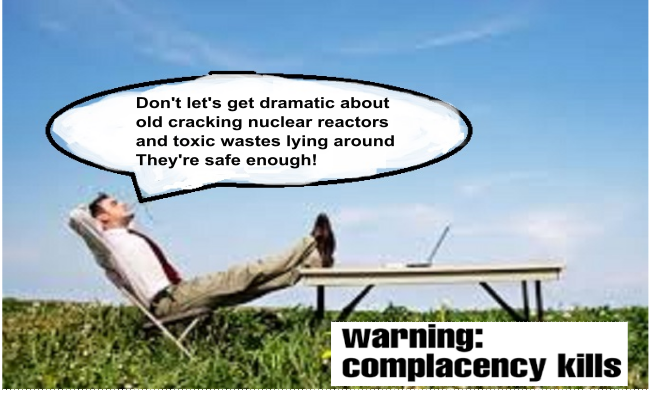
Mainichi, 17 Feb 23, TOKYO (Kyodo) — Japanese Prime Minister Fumio Kishida urged his ministers Friday to assuage public concerns over the government’s planned policy shift that will allow the operation of nuclear power plants beyond the current limit of 60 years.
The instruction came after the country’s nuclear watchdog decided this week to review regulatory standards on the lifespan of nuclear reactors despite one of the five commissioners remaining opposed to the policy in a rare move.
The government plans to submit related bills to parliament during the current session. The revision will enable the operation of reactors for an extended period by excluding the time spent on inspections and other offline periods from their designed service life.
“I was instructed that the Cabinet should decide on the bills after we are ready to provide thorough explanations at the Diet to clear the public’s anxiety,” industry minister Yasutoshi Nishimura told a press conference………………
On Monday, the Nuclear Regulation Authority formally approved the revision by a majority vote after Akira Ishiwatari, a commissioner in charge of earthquake and tsunami countermeasures, opposed it.
The revision “is not based on new scientific or technical findings. It cannot be said to be a shift to the safe side,” Ishiwatari said. Another member also expressed a cautious stance in making decisions too swiftly. https://mainichi.jp/english/articles/20230217/p2g/00m/0na/060000c
EDF’s historic $13.5 billion loss in 2022 – as France became an importer of electricity
Electricite de France SA reported a historic loss for 2022 after repairs
choked its nuclear output, but the utility predicted a significant rebound
in earnings this year as production recovers. The state-controlled
generator swung to a net loss, excluding non-recurring items, of €12.7
billion ($13.5 billion) last year after a profit of €4.7 billion in 2021,
according to a statement on Friday.
The company’s woes exacerbated the
region’s energy crisis by turning France — traditionally a powerhouse
producer — into a net importer of electricity. President Emmanuel
Macron’s government, which is trying to regain full ownership of the
nuclear giant to reassure creditors, wants new Chief Executive Officer Luc
Remont to restore production and prepare the company to start building new
reactors in France and the UK.
Bloomberg 17th Feb 2023
https://www.bnnbloomberg.ca/edf-reports-record-loss-after-nuclear-output-choked-by-repairs-1.1885186
‘Extreme situation’: Antarctic sea ice hits record low

Damian Carrington 16 Feb 23
https://www.theguardian.com/world/2023/feb/15/antarctic-sea-ice-hits-record-low-climate-crisis
The area of sea ice around Antarctica has hit a record low, with scientists reporting “never having seen such an extreme situation before”. The ice extent is expected to shrink even further before this year’s summer melting season ends.
The impact of the climate crisis in melting sea ice in the Arctic is clear in the records that stretch back to 1979. Antarctic sea ice varies much more from year to year, which has made it harder to see an effect from global heating.
However, “remarkable” losses of Antarctic sea ice in the last six years indicate that the record levels of heat now in the ocean and related changes in weather patterns may mean that the climate crisis is finally manifesting in the observations.
Scientists were already very concerned about Antarctic ice. Climate models suggested as far back as 2014 that the giant West Antarctic Ice Sheet (WAIS), which sits on the continent, was doomed to collapse due to the levels of global heating already seen then.
The increasing loss of sea ice exposes ice sheets and their glaciers to waves that accelerate their disintegration and melting, researchers warned. A recent study estimated that the WAIS would be tipped into gradual collapse – and four metres of sea level rise – with a global temperature rise as low as 1C, a point already passed.
“I have never seen such an extreme, ice-free situation here before,” said Prof Karsten Gohl, from the Helmholtz Centre for Polar and Marine Research in the Alfred Wegener Institute, Germany, and who first visited the region in 1994.
Gohl, on board the research vessel Polarstern in Antarctica, said: “The continental shelf, an area the size of Germany, is now completely ice-free. It is troubling to consider how quickly this change has taken place.”
Prof Christian Haas, also at the Helmholtz Centre, said: “The rapid decline in sea ice over the past six years is quite remarkable, since the ice cover hardly changed at all in the 35 years before.”
Scientists at the National Snow and Ice Data Center in the US have also said a new record low has been set. They said Antarctic sea ice extent fell to 1.91m square kilometres on 13 February, below the previous record set on 25 February 2022.
Sea ice melts away in the Antarctic summer before starting to grow again as autumn arrives. “In past years, the annual minimum has occurred between 18 February and 3 March, so further decline is expected,” the NSIDC researchers said. “Much of the Antarctic coast is ice free. Earlier studies have linked low sea ice cover with wave-induced stresses on the floating ice shelves that hem the continent, leading to break up of weaker areas.”
The German scientists said the “intense melting” could be due to unusually high air temperatures to the west and east of the Antarctic peninsula, which were about 1.5C above the long-term average. Furthermore, there have been strong westerly winds, which increase sea ice retreat. The result is “intensified melting of ice shelves, an essential aspect of future global sea-level rise”, the researchers said.
Historical records also show dramatic changes in Antarctica, they said. The Belgian research vessel Belgica was trapped in massive pack ice for more than a year in the Antarctic summer 125 years ago, in exactly the same region where the Polarstern vessel is now sailing in completely ice-free waters.
Prof Carlos Moffat, at the University of Delaware, US, and recently returned from a research cruise in the Southern Ocean, told Inside Climate News: “The extraordinary change we’ve seen this year is dramatic. Even as somebody who’s been looking at these changing systems for a few decades, I was taken aback by what I saw.”
Concerns over the construction of a nuclear power plant in Akkuyu, Turkey, due to its proximity to the 7.8 magnitude earthquake’s epicentre.
Deadly Turkey earthquake stirs debate over nuclear plant construction.
Activists have raised concerns over the construction of a nuclear power
plant in the southern city of Akkuyu, Mersin Province due to its proximity
to the 7.8 magnitude earthquake’s epicentre.
The New Arab 16th Feb 2023
https://www.newarab.com/news/turkey-quake-stirs-debate-over-nuclear-plant-construction
Zelensky is literally selling Ukraine to US corporations on Wall Street.
Ukraine’s Western-backed leader Volodymyr Zelensky opened the New York Stock Exchange telling Wall Street his country is “open” for foreign corporations to exploit it with $400 billion in state selloffs.
ByBen Norton, 2022-09-09
Ukraine’s Western-backed leader Volodymyr Zelensky virtually opened the New York Stock Exchange on the morning of September 6, symbolically ringing the bell via video stream.
Zelensky announced that his country is “open for business” – that is to say, that foreign corporations are free to come and exploit its plentiful resources and low-paid labor.
In a speech launching the neoliberal selloff program Advantage Ukraine, Zelensky offered Wall Street “a chance for you to invest now in projects worth of hundreds of billions of dollars.”
The financial news service Business Wire published a press release from the Ukrainian government in which Zelensky boasted:
The $400+ [billion] in investment options featured on AdvantageUkraine.com span public private partnerships, privatization and private ventures. A USAID-supported project team of investment bankers and researchers appointed by Ukraine’s Ministry of Economy will work with businesses interested in investing.
………………………….. The press release cited executives of US corporate giants Google, Alphabet, and Microsoft, who salivated over the economic possibilities offered by Ukraine.
Reuters noted that the Ukrainian government hired British public relations firm WPP to run the marketing operation for Advantage Ukraine.
Zelensky coordinated his New York Stock Exchange publicity stunt with an editorial in the Wall Street Journal imploring US capitalists to “Invest in the Future of Ukraine.”
“I committed my administration to creating a favorable environment for investment that would make Ukraine the greatest growth opportunity in Europe since the end of World War II,” Zelensky wrote.
Multipolarista previously reported on a meeting by Western governments and corporations in Switzerland in July in which they planned harsh neoliberal economic policies to impose on Ukraine.
The Western participants published documents calling to cut labor laws, “open markets,” drop tariffs, deregulate industries, and “sell state-owned enterprises to private investors.”
In an interview with Multipolarista, economist Michael Hudson compared the new emergency anti-labor laws imposed by the Ukrainian government to the brutal neoliberal policies implemented by Chile’s far-right Pinochet dictatorship after a CIA-backed coup in 1973.
“It’s jaw dropping,” Hudson said of Zelensky’s Wall Street Journal op-ed. “It’s like a parody of what a socialist would have written about how the class war would be put in into action by a fascist government.”
“So of course he was welcomed on the stock exchange for abolishing labor’s rights,” Hudson added. “You could not have a more black-and-white example” of class war………………………………… https://geopoliticaleconomy.com/2022/09/09/zelensky-selling-ukraine-wall-street/
Pro nuclear film
CAN nuclear energy be the answer to the climate crisis? That is the belief
of the subjects at the centre of Irish filmmaker Frankie Fenton’s
provocative new film who assert that it is one of the cleanest and safest
technologies in the world. Thirteen years in the making, Fenton’s
observational documentary which he was director of photography as well as
writing, directing and producing, follows a small group of pro-nuclear
activists as they try to persuade law makers and the public of the virtues
of atomic energy using scientific evidence.
Although on the whole they seem to make a compelling argument (bananas notwithstanding) their assertions are not challenged during the film. Nuclear energy isn’t recognised for its own massive carbon footprint in terms of the huge costs of building new reactors and the toxic waste they produce, as well as the mining of the uranium and thorium needed to fuel them.
Morning Star 16th Feb 2023
Antarctic sea ice level now lowest on record.
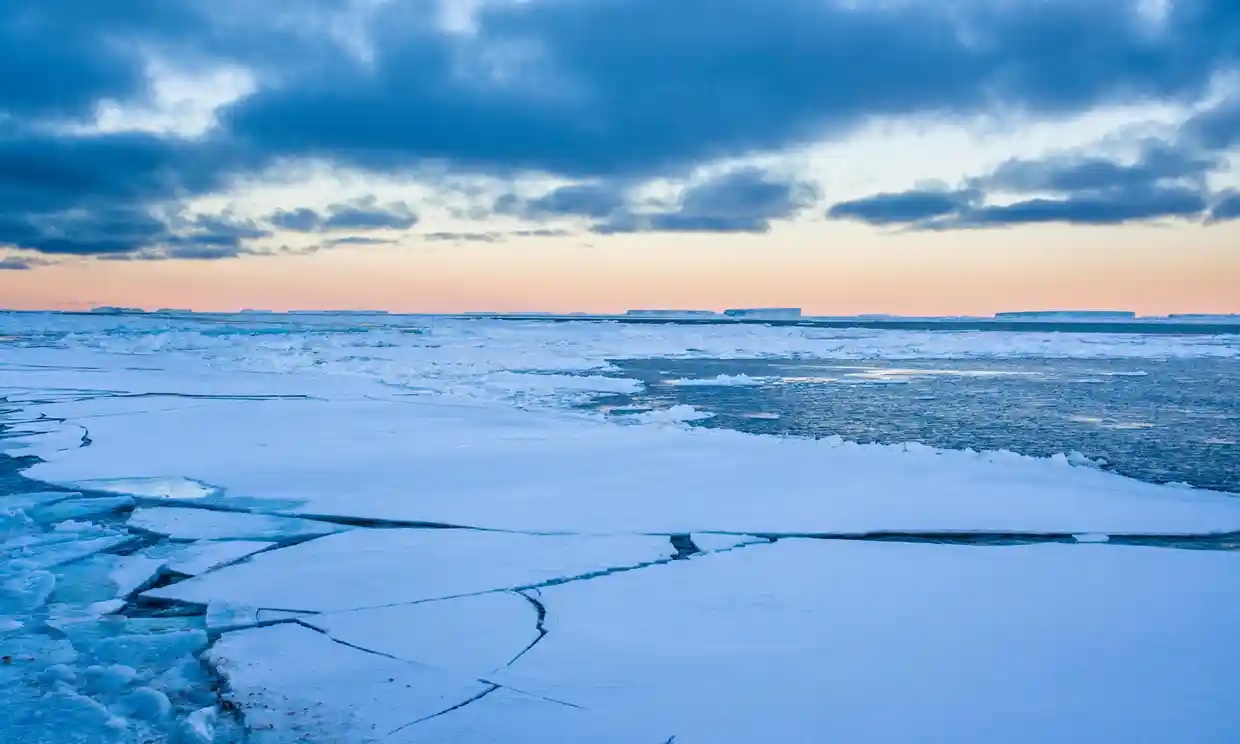
There is now less sea-ice surrounding the Antarctic continent than at any
time since we began using satellites to measure it in the late 1970s. It is
the southern hemisphere summer, when you’d expect less sea-ice, but this
year is exceptional, according to the National Snow and Ice Data Center.
Winds and warmer air and water reduced coverage to just 1.91 million square
km (737,000 sq miles) on 13 February. What is more, the melt still has some
way to go this summer.
BBC 17th Feb 2023
Small scale renewable technology installations being deployed rapidly in Britain without government subsidies.
The installation of small scale clean technologies returned to levels not
seen since government subsidies were axed in 2015, according to new figures
that confirm demand for solar panels and heat pumps surged last year in
response to soaring energy bills.
The Microgeneration Certification Scheme
(MCS), which provides independent quality certification for renewable power
and heating technology installations, yesterday reported that the number of
certified installations rose 65 per cent last year to 163,341.
The performance marks the highest annual deployment since 2015, when just over
200,000 installations were registered, the bulk of which were deployed
ahead of the government’s controversial axing of subsidies for domestic and
small scale renewables installations.
Business Green 16th Feb 2023
1 This Month
23 April – WEBINAR – Why new nuclear reactors are the wrong tools for decarbonization Thursday, April 23 • 1 AM – 2 AM AEST
World Nuclear Power. Reactors 1951-2026, 75 Years of Nuclear Power.
Interactive Map– https://dv.worldnuclearreport.org/

Chernobyl: The Lost Tapes – A good documentary on Chernobyl on SBS available On Demand for the next 3 weeks– https://www.sbs.com.au/ondemand/tv-program/chernobyl-the-lost-tapes/2352741955560

of the week–London Campaign for Nuclear Disarmament


Tell the Ukrainian Government to Drop Prosecution of Peace Activist Yurii Sheliazhenko
To see nuclear-related stories in greater depth and intensity – go to https://nuclearinformation.wordpress.com
-
Archives
- April 2026 (231)
- March 2026 (251)
- February 2026 (268)
- January 2026 (308)
- December 2025 (358)
- November 2025 (359)
- October 2025 (376)
- September 2025 (257)
- August 2025 (319)
- July 2025 (230)
- June 2025 (348)
- May 2025 (261)
-
Categories
- 1
- 1 NUCLEAR ISSUES
- business and costs
- climate change
- culture and arts
- ENERGY
- environment
- health
- history
- indigenous issues
- Legal
- marketing of nuclear
- media
- opposition to nuclear
- PERSONAL STORIES
- politics
- politics international
- Religion and ethics
- safety
- secrets,lies and civil liberties
- spinbuster
- technology
- Uranium
- wastes
- weapons and war
- Women
- 2 WORLD
- ACTION
- AFRICA
- Atrocities
- AUSTRALIA
- Christina's notes
- Christina's themes
- culture and arts
- Events
- Fuk 2022
- Fuk 2023
- Fukushima 2017
- Fukushima 2018
- fukushima 2019
- Fukushima 2020
- Fukushima 2021
- general
- global warming
- Humour (God we need it)
- Nuclear
- RARE EARTHS
- Reference
- resources – print
- Resources -audiovicual
- Weekly Newsletter
- World
- World Nuclear
- YouTube
-
RSS
Entries RSS
Comments RSS
 nuclear-news