40 safety incidents with UK nuclear weapons convoys over past 3 years
The nuclear bomb convoy that regularly criss-crosses the UK by road has
logged 40 safety incidents in the last three years, according to
information released by the Ministry of Defence.
Convoy vehicles crashed
twice and got caught up in other road accidents five times. They also
suffered multiple brake faults, breakdowns and power losses. The convoy,
which carries nuclear warheads, caused the closure of roads or motorway
lanes 11 times. It was delayed by lorry fires, a spillage and two outbreaks
of Covid.
In one case the convoy had to deal with an “erratic driver
interfering with the convoy”. In another, it closed a road after a
motorist caught using a mobile phone tried to run away.
Campaigners
described the safety lapses as “concerning” and argued that small
incidents could easily escalate into something more serious. They said that
the risks being taken by the Ministry of Defence (MoD) were unjustified. An
SNP MP criticised the MoD for keeping the locations, dates and other
details of the incidents secret.
The Ferret 15th Jan 2023 https://theferret.scot/nuclear-bomb-convoys-40-safety-incidents/
Man arrested on suspicion of terror offences after uranium found at Heathrow
Traces of the potentially lethal chemical element were found
within a cargo package on Dec 29. A businessman has been arrested on
suspicion of terrorism over an alleged attempt to import radioactive
uranium into the UK.
The British citizen was detained by counter-terrorism
police after the discovery of traces of uranium at Heathrow Airport just
after Christmas, in a consignment of scrap metal intended for an Iranian
registered business based in the UK.
He was questioned under section nine
of the Terrorism Act 2006, which created an offence “of making or
possessing a radioactive device or possessing radioactive material with the
intention of using it” in the commission or preparation of an act of
terrorism. The use of the section is incredibly rare.
Telegraph 15th Jan 2023
Man arrested on suspicion of terror offence after Heathrow uranium nuclear
scare.
Mirror 15th Jan 2023
https://www.mirror.co.uk/news/uk-news/breaking-man-arrested-suspicion-terror-28960671
Nuclear (and climate) news to 16 January

Some bits of good news. Here are all the positive environmental stories from 2023 so far. How the world fixed the ozone layer. The hole over the pole will be closed by 2066.
Coronavirus. Covid cases in China touch 900 million – study.
Climate. Look – this whole issue is mind-boggling. Glaciers are melting fast. It’s probable that the cleanup of atmospheric pollution by China and others will, for a while, contribute to global heating. I recommend that everyone follow RADIO ECOSHOCK. It’s the best place for getting the most up-to-date and thorough analyses of what is going on with our heating planet.
Nuclear. This week, I’m a bit overwhelmed with the climate stuff – actually more terrible than nuclear. But hey! the big tennis is on in my country – so nobody seems to care. (Except perhaps the flooded-out people). Christina’s notes. NO – Sir Keir Starmer – nuclear power is NOT clean. Strange and contradictory messages from the global nuclear authority IAEA.
……………………………………………….
CIVIL LIBERTIES. Julian Assange denied permission to attend Vivienne Westwood funeral
CLIMATE. Europe recorded its hottest ever summer in 2022. Worlds oceans were the hottest ever recorded in 2022. Extreme weather is pushing more people to flee their homes.
DECOMMISSIONING REACTORS. Lithuania deal to dismantle Soviet-era nuclear reactors could be world first.
ECONOMICS.
Small nuclear reactors: Eye-popping new cost estimates released for NuScale small modular reactor. The PG and E plan to sell non-nuclear generation assets could improperly increase rates, groups tell FERC. UK should not be building Sizewell C, and rollout of small nuclear reactors will be a nightmare – energy boss. Uncertainty over government funding for Rolls Royce’s small nuclear reactors .
The Delusion of Infinite Economic Growth. Slew of companies keeping watch on DOE nuclear cleanup work for small biz. Team Korea to bolster exports of nuclear energy systems.
EMPLOYMENT. The renewable energy transition is creating a green jobs boom.
HEALTH. An unacceptable risk to children.
LEGAL. Pacific states entitled to claims against Japan for discharge of radioactive nuclear wastewater.
NUCLEAR TECHNOLOGY. Shouldn’t a new and experimental reactor deserve a federal impact assessment? Adam Tooze: Why Nuclear Fusion Is Not the Holy Grail. How close are we to developing commercial nuclear fusion reactors? The problem with nuclear energy advocates. Japan and USA to develop small nuclear reactors “within each country and third countries.”
OPPOSITION to NUCLEAR. Scottish campaign groups hit back over claims nuclear power is cheaper and more reliable. Significant environmental victory for Savannah River Site Watch in stopping import of high level nuclear waste from Germany.
POLITICS.
- Trump suggested dropping a nuclear bomb on North Korea and blaming it on someone else in 2017, book claims.
- Holtec seeks $7.4 billion government loan for expansion tied to new reactor. Going nuclear? MPSC to hire outside firm to study Michigan’s energy future (but will the firm have vested interests?) California PUC launches rulemaking to consider extension of Diablo Canyon nuclear plant.
- Australia’s nuclear submarine plan – a source of disagreement in US Congress
- New delay for Hinkley Point C nuclear power – could start operating in 2036. Rolls Royce’s frustration as government holds back on orders for mininuclear reactors.
- Swedish govt to amend law to be able to build more nuclear power plants. Sweden makes regulatory push to allow new nuclear reactors.
- South Korea Curbs Plans for Renewables in Push For More Nuclear.
- Bangladesh puts energy hopes in first nuclear power plant, despite delay, and climate concerns.
POLITICS INTERNATIONAL and DIPLOMACY.
- Ukraine war follows decades of warnings that NATO expansion into Eastern Europe could provoke Russia. Ukraine as a country and its armed forces have become members of NATO: defense minister . Republican Rep Joe Wilson of South Carolina wants the US capitol to have a bust of Ukrainian president Vladimir Zelensky on permanent display. Not all American politicians want to adore Zelensky.
- Nuclear deal between USA and Saudi Arabia sneaked in under the guise of “clean energy”.
- Djibouti the 92nd country to sign the Treaty on the Prohibition of Nuclear Weapons.
- US military deepens ties with Japan and Philippines to instigate proxy war with China like it did with Russia.
- The One-Person Monopoly of Nuclear Launches.
- China’s role in UK nuclear sector poses challenges for net zero push, say think tanks.
- Alarm in Malta over the proposal for a nuclear reactor in Sicily.
- Philippines looking at Chinese investors for cooperation on nuclear energy.
SAFETY. Deal on safe zone for Zaporizhzhia nuclear plant getting harder -IAEA. IAEA plans “continuous presence” at all Ukraine nuclear power plants “to help prevent a nuclear accident” amid Russia’s war . Irish Republic monitoring nuclear risk as a consequence of fighting in Ukraine. Nuclear convoys: 40 safety reports in three years. Terror police investigate after uranium found in package at Heathrow airport. Georgia’s Vogtle nuclear plant startup delayed due to vibrating pipe.
SPACE. Space junk cowboys are ruining our night sky.
WASTES.
- Huge cost for Japanese tax-payers to clean up the botched nuclear waste storage at Tokai reprocessing plant .
- Nuclear waste project in New Mexico opposed in recent poll, company asserts local support.
- Arctic nuclear waste ship gets funding. Nuclear colonialism?
- Nuclear country Canada “helps” Ghana to develop nuclear waste disposal facility.
- Fukushima nuclear disaster: Japan to release radioactive water into sea this year. Fukushima water to be released into ocean in next few months, says Japan . Pacific Island Forum could sideline Japan over nuclear waste plan.
WAR and CONFLICT.The Ukraine War Should Alert Us to The Need to Ban Nuclear Weapons. Ukraine on ‘NATO mission’ – defense minister. NATO to train hundreds of Ukrainian troops in US and Germany, in operating Patriot missile system . Ukraine legalizes foreigners in AZOV neo-Nazi regiment. Gordon M. Hahn: The West has been reckless with Vladimir Putin . Britain sending first NATO nation tanks to Ukraine .
WEAPONS and WEAPONS SALES.
- Nuclear weapons proliferation really just keeps on going. Support Arms Control, Not Nuclear Weapons.
- Brian Toohey -on Australia’s new arms race.
- The U.S. Can’t Make Enough Plutonium Triggers for Its Nuclear Warheads. Savannah River Site, Los Alamos plutonium pit production plan could cost over $30 billion.
- NATO member sending banned cluster bombs to Ukraine – media. German tank deliveries for Ukraine hinge on US. Pentagon backs Poland’s plans for German, other tanks for Ukraine .
- The C-17A Has Been Cleared To Transport B61-12 Nuclear Bombs To Europe.
- Biden Administration Tramples on Japan’s Post-World War II Pacifist Constitution By Pushing Country’s Rearmament.
- In a first, South Korea declares nuclear weapons a policy option.
Huge cost for Japanese tax-payers to clean up the botched nuclear waste storage at Tokai reprocessing plant
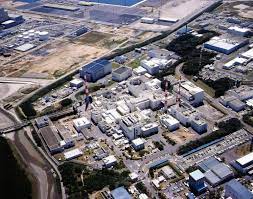
Righting shoddy nuclear waste storage site to cost Japan 36 bil. yen
https://english.kyodonews.net/news/2023/01/a53b75be634e-righting-shoddy-nuclear-waste-storage-site-to-cost-japan-36-bil-yen.html – 16 Jan 23, The Japan Atomic Energy Agency estimates that it will cost taxpayers 36.1 billion yen ($280 million) to rectify the shoddy storage of radioactive waste in a storage pool at the Tokai Reprocessing Plant, the nation’s first facility for reprocessing spent nuclear fuel, an official said Sunday.
Around 800 containers of transuranic radioactive waste, or “TRU waste,” were dropped into the pool from 1977 to 1991 using a wire in the now-disused plant in Tokai, a village in Ibaraki Prefecture northeast of Tokyo. They emit high levels of radiation.
The waste includes pieces of metal cladding tubes that contained spent nuclear fuel, generated during the reprocessing process. The containers are ultimately supposed to be buried more than 300 meters below surface.
The agency has estimated that 19.1 billion yen will be needed to build a new storage facility for the containers, and 17 billion yen for a building that will cover the storage pool and the crane equipment to grab containers.
The 794 containers each are about 80 centimeters in diameter, 90 cm tall and weigh about 1 ton, with many lying on their sides or overturned in the pool. Some have had their shape altered by the impact of being dropped.
The containers were found stored in the improper manner in the 1990s. While the agency said the storage is secure from earthquakes and tsunamis, it has nonetheless decided to improve the situation.
The extractions have been delayed by about 10 years from the original plan and are expected to begin in the mid-2030s.
The Tokai Reprocessing Plant was the nation’s first plant that reprocessed spent fuel from nuclear reactors to recover uranium and plutonium. Between 1977 and 2007, about 1,140 tons of fuel were reprocessed. The plant’s dismantlement was decided in 2014 and is expected to take about 70 years at a cost of 1 trillion yen.
The Ukraine War Should Alert Us to The Need to Ban Nuclear Weapons
It is not entirely the Pentagon’s fault. The web of civilian experts that stretches from inside the bureaucracy to the Senate to the universities to the specialist think tanks to the arms manufacturers to the leading news media produces a hardened force of opinion, almost immune to any counterstrike.
There is no rational argument for their possession apart from some vaguely thought-out military philosophy about the benign use of deterrence. Frankly, we don’t know if deterrence works. It only works until the moment it doesn’t
In Depth News, Viewpoint by Jonathan Power 15 Jan 23
LUND, Sweden (IDN) — In the year 2000, President Vladimir Putin, having just won his first election, made his own contribution to solving the nuclear weapons imbroglio. He said in a speech that Moscow was prepared to drastically reduce its stockpile of nuclear missiles. Putin’s call was not just for further cuts than the US suggested ceiling of 2,500 for each side but for reductions far below Moscow’s previous target of 1,500. (At present, Russia has around 6,000 warheads and the US 5,400.)
Indeed, from the way Putin put it and the terms and phrases he used, commentators at the time suggested that Putin may well have had in mind the same kind of deal that Mikhail Gorbachev and Ronald Reagan hatched at their summit in Reykjavik back in 1986—a stockpile approaching zero.
That momentous unconsummated plan at Reykjavik was Reagan’s brainchild—he foresaw a world with perfect missile defences (the so-called Star Wars concept), side by side with the abolition of nuclear weapons by the superpowers.
But the moment Reagan’s advisors got wind of what he was spontaneously hatching with Gorbachev, they moved to squelch it, arguing its lack of feasibility and rubbishing its practicality, as they did- and still do—regularly with any creative proposal that has wound its way through the labyrinth of inter-agency review.
The only time a major initiative of a unilateral nature did win through was when President George Bush, very strongly placed after the demise of the Cold War, secretly hatched a plan to take US nuclear bombers off alert and remove tactical nuclear weapons from service. No one in the bureaucracy or the Senate had time to try and outmanoeuvre him.
According to George Perkovich, writing in an issue of Foreign Affairs, 1961 was the last time that the US government—led then by John F. Kennedy—took nuclear disarmament seriously enough to explore how to make it feasible.
Although the Clinton Administration called for a “fundamental re-examination” of nuclear doctrine, the initiative suffered from presidential inattention and Clinton’s “reluctance to challenge Washington’s odd couple of Pentagon bureaucrats and myopic and doctrinaire senators”. Indeed, Clinton went the other way by provocatively initiating the expansion of NATO towards Russia’s boundaries.
It is not entirely the Pentagon’s fault. The web of civilian experts that stretches from inside the bureaucracy to the Senate to the universities to the specialist think tanks to the arms manufacturers to the leading news media produces a hardened force of opinion, almost immune to any counterstrike.
As General Eugene Habiger, a retired commander in chief of all US strategic nuclear forces, put it, “We have reached the point where the senior military generals responsible for nuclear forces are advocating more vocally, more vehemently, than our politicians to get down to lower and lower weapons”.
His predecessor General George Lee Butler has gone even further both in wanting to totally eliminate nuclear weapons and in highlighting the savage tactics used by the pro-nuclear lobby to publicly destroy the image and credibility of any high-profile anti-nuclear campaigner.
Public opinion throughout the western world appears to be in a state of serendipity when it comes to nuclear weapons. Something will come along from somewhere and make the world safe from nuclear war. But the reality is far different. Russian nuclear weapons are being flaunted by Putin. There is always the chance of an unauthorised or mistaken launch. There have been well-documented, unchallenged cases of near launches.
The Chinese-Taiwan situation could sometime in the next few years erupt into a major military crisis, pushing the U.S. to confront China, a situation that could lead to two nuclear-armed powers firing missiles at each other.
Nuclear proliferation is becoming more and more likely, and Kashmir and the Middle East remain nuclear tinderboxes. The president of South Korea has already talked about his country building tactical nuclear weapons. (US tactical nuclear weapons were removed from South Korea by President Jimmy Carter.) As for North Korea, the regime continues to push forward, testing ever more sophisticated rockets…………………………………………….
During every minute of 2021, the world spent $156,841 on nuclear weapons, according to the International Campaign to Abolish Nuclear Weapons (ICAN). In just one year, nine nuclear-armed nations—China, the US, Russia, the UK, North Korea, India, Pakistan, Israel and France- spent a total of $82.4 billion on upgrading and maintaining their estimated total of around 13,000 nuclear weapons. (Russia and the US hold 90%.)
The world, by and large, is not short of money. It is a question of how it spends it. With a different outlook, money could easily be found to fund what is needed for climate control, aid for Africa’s development, malaria eradication, medical research for cancer, diabetes and dementia and poverty elimination wherever it is needed. Why should we be investing in weapons that are too dangerous to use?
There is no rational argument for their possession apart from some vaguely thought-out military philosophy about the benign use of deterrence. Frankly, we don’t know if deterrence works. It only works until the moment it doesn’t. As Putin, the erstwhile nuclear bomb cutter, has reminded us, they can be used by Russia if NATO missteps in Ukraine. Moreover, we are as much beholden to mistakes and accidents as we have always been, and the longer things go on, the likelier it is that a mistake or accident will happen.
Somewhere, deep in Putin’s brain, he knows this. So does Biden, who knows he could not avoid the testing teachings of his Catholic faith if his military and national security staff were putting him on the spot by advising him to use them.
So, what is the point of pushing things to that point?
Presidents George W. Bush and Donald Trump did a terrible job in pulling the US out of important nuclear arms control agreements. Putin, when Biden was elected, quickly moved his and the now more forward-thinking American side to renew the big arms-cutting initiative of the Obama and Medvedev years. The cuts took the two sides’ long-range intercontinental warheads down to 1,550 each.
Maybe the messy Ukrainian war will go on for months more, even years. But there is nothing to stop the two biggest nuclear powers from initiating some bold steps towards to elimination of nuclear weapons right now. Otherwise, the unthinkable might happen because we have not been thinking. [IDN-InDepthNews — 15 January 2023]
Jonathan Power was for 17 years a foreign affairs columnist and commentator for the International Herald Tribune, now the New York Times. He has also written dozens of columns for the New York Times, the Washington Post, the Boston Globe and the Los Angeles Times. He is the European who has appeared most on the opinion pages of these papers. https://indepthnews.net/index.php/opinion/5874-the-ukraine-war-should-alert-us-to-the-need-to-ban-nuclear-weapons
Nuclear waste project in New Mexico opposed in recent poll, company asserts local support
Adrian Hedden, Carlsbad Current-Argus, 14 Jan 23,
New Mexicans in every region of the state allegedly opposed storing high-level nuclear waste in their state, according to a recent poll, as a New Jersey company hoped to build a facility to do so near Carlsbad.
The poll, commissioned by Albuquerque-based Southwest Research and Information Center in a partnership with the Center for Civic Policy surveyed 1,015 voters across the state from Dec. 7 to 14.
It found 60 percent of those surveyed were in opposition to the project, with 30 percent supporting and 10 percent undecided.
Holtec International applied in 2017 for a license from the federal Nuclear Regulatory Commission (NRC) to build and operate what it called a consolidated interim storage facility (CISF) in a remote area near the border of Eddy and Lea counties.
Last year, the NRC published its final environmental impact statement (EIS), contending the project would have little impact on the environment, and recommending the license be issued.
The CISF would temporarily store up to 100,000 metric tons of spent nuclear fuel rods, expected to be brought into the site via rail from nuclear power plants around the country through a 40-year license with the NRC.
The 1,000-acre plot of land where the facility would be built was owned by the Eddy-Lea Energy Alliance, a consortium of local leaders from the cities of Carlsbad and Hobbs, and Eddy and Lea counties.
The Alliance recruited Holtec and set up a revenue-sharing agreement with the company once the CISF goes into operations.
Despite the poll, Holtec officials argued the project was largely supported by New Mexico, after spokesman Gerges Scott said representatives traveled to local governments throughout the state.
Ed Mayer, Holtec project manager of the CISF said the company had adequate support for the project, after he and other representatives met with local leaders and first responders both around the site and along the rail lines.
“We are educating the affected populations, not only from the facility perspective in southeast New Mexico, but from a state perspective on the rail lines,” Mayer said. …………………………….
But opponents, including Southwest Research – a frequent critic of Holtec and the nearby Waste Isolation Pilot Plant repository for transuranic (TRU) nuclear waste – maintained the project would bring an undue risk to New Mexicans nearby and Americans along the waste transportation routes.
That’s why opposition was spread across political parties, gender and ethnicity, said Nuclear Waste Program Manager Don Hancock at Southwest Research and Information Center.
The poll showed more than half of those surveyed in the region were against the project, with opposition also coming irrespective of political affiliation. About 70 percent of Democrats polled opposed Holtec, along with 51 percent of Republicans and 55 percent of Independents.
When broken down by gender, more men supported the project than women, according to the poll.
A majority of Republican men polled were in favor at 51 percent, while 61 percent of Republican women were against the project, read the poll
White men were mostly for the project overall at 49 percent of voters polled in favor, while 71 percent of white women were against.
Hispanic men and women both mostly opposed the project at 51 and 78 percent against, respectively read the poll.
Central, northeast and southwest New Mexico showed opposition of 60 percent or more, while more conservative regions in the southeast and northwest showed 57 and 56 percent against, respectively, the poll showed.
Critics argue storing nuclear waste puts undue risk on New Mexico
Hancock said the poll showed temporary nuclear waste storage was not supported by New Mexico voters, arguing it was opposed through decades of proposals like Holtec’s.
“I’m not surprised by the results because for more than 45 years New Mexicans have strongly opposed high-level waste in New Mexico, whether the waste is proposed for the Waste Isolation Pilot Plant in the 1970s and ‘80s, for Mescalero Apache land in the 1990s, or by Holtec,” he said.
Opposition to the project also came from some of New Mexico’s highest-ranking state officials, and its Congressional delegation, with New Mexico Gov. Michelle Lujan Grisham calling the proposal “economic malpractice” for its potential, she said, of imperiling nearby oil and gas and agriculture industries.
U.S. Sen. Martin Heinrich (D-NM) co-sponsored a bill introduced in the U.S. Senate last year to block any federal funds from supporting such a project.
At the state level, New Mexico Sen. Jeff Steinborn (D-36) was a lead opponent of Holtec’s in the Legislature.
While Texas lawmakers recently passed a bill to ban high-level waste storage in their state, Steinborn said New Mexico policymakers should consider a similar measure to prevent the project coming to fruition.
“From the very beginning this has been a dangerous plan pushed on New Mexico, with real risks for all of our communities, and no end in sight,” Steinborn said. “It’s time for this project to be canceled and be replaced by the federal government committing to a true consent based siting process for the permanent storage of this waste.” https://www.currentargus.com/story/news/2023/01/14/nuclear-waste-project-new-mexico-opposed-recent-statewide-poll-holtec-international-energy/69802597007/
Nuclear deal between USA and Saudi Arabia sneaked in under the guise of “clean energy”

Saudi-US partnership to develop clean and nuclear [i.e. dirty] energy
The partnership framework for Clean Energy Development between the two countries has identified the cooperation fields in which Kingdom of Saudi Arabia and the US will work to enhance, in order to achieve their ambitions in spreading clean energy and climate action.
Staff Writer, Saudi Gazett, January 15, 2023
RIYADH – The governments of Saudi Arabia and the United States intend to enhance cooperation between the two countries, in accordance with their respective national laws, through the Partnership Framework for Clean Energy Development.
The partnership framework for Clean Energy Development between the two countries has identified the cooperation fields in which KSA and the US will work to enhance, in order to achieve their ambitions in spreading clean energy and climate action.
The Umm Al-Qura newspaper has published the details of partnership framework and the potential cooperation fields.
…….. This cooperation would strengthen the common interests and strategic goals of each participant, and also to organize cooperation in clean energy field to study innovation, development, financing, and establishing infrastructure for clean energy in KSA and the US.
The partnership has identified several potential cooperation fields between the two countries in terms of civil nuclear energy and uranium, of which are the cooperation in basic researches, and development in the field of civil nuclear energy.
The cooperation fields include the exchange of experiences in various aspects, such as the field of developing advanced reactor technologies……. https://www.zawya.com/en/economy/gcc/saudi-us-partnership-to-develop-clean-and-nuclear-energy-v2ji0cu4
Not all American politicians want to adore Zelensky

House Republican Introduces Resolution to Place Bust of Zelensky in the Capitol
Rep. Marjorie Taylor Greene (R-GA) and other conservative GOP members blasted the ideaby Dave DeCamp Posted onCategoriesNewsTagsUkraine
Rep. Joe Wilson (R-SC) introduced a bill this week that would place a bust of Ukrainian President Volodymyr Zelensky in the House wing of the US Capitol building, an idea that was strongly criticized by more conservative GOP members.
The resolution reads: “Resolved, That the House of Representatives directs the Fine Arts Board to obtain a bust of the President of Ukraine, Volodymyr Zelenskyy, for display in a suitable, permanent location in the House of Representatives wing of the United States Capitol.”
On Twitter, Rep. Marjorie Taylor Greene (R-GA) posted a picture of the resolution and wrote: “Absolutely NOT! We serve AMERICA NOT UKRAINE!”
Rep. Thomas Massie (R-KY) wrote on Twitter that he wanted to believe the resolution was “satire” and linked to an article from the conservative advocacy group FreedomWorks giving five reasons to oppose the bust.
The five reasons FreedomWorks listed are:
- Ukraine is NOT the 51st US State
- The US doesn’t own the conflict or is obligated to continue funding it
- Further payments would encourage US taxpayer-funded reconstruction of Ukraine
- Ukraine is corrupt and this conflict is not about “defending democracy”
- Zero oversight of taxpayer aid to Ukraine
Rep. Andy Biggs (R-AZ) also ripped the resolution on Twitter. “There is now a House resolution that seeks to put a display of Zelenskyy’s head in the US Capitol. Was the $100+ billion to Ukraine not enough?” he wrote.
While Zelensky mostly received a hero’s welcome when he visited Washington DC and was given many rounds of applause when addressing Congress, only 86 out of 213 House Republicans attended his speech, although some of the absences could be explained by the lawmakers getting a head start on Christmas travel.
For now, GOP leadership is incredibly supportive of arming Ukraine and is critical of President Biden for not sending longer-range and more advanced weapons. But there is opposition to the policy among a small but notable number of Republicans, and that opposition will likely grow as the war drags on.
Some Republicans are against arming Ukraine because they think the US should be flooding Taiwan with weapons instead, a policy that could provoke a similar crisis in the Asia Pacific. Sen. Josh Hawley (R-MO) in December wrote a letter to Secretary of State Antony Blinken urging the Biden administration to prioritize arming Taiwan over Ukraine.
Trump suggested dropping a nuclear bomb on North Korea and blaming it on someone else in 2017, book claims.

Yahoo News , Alia Shoaib, Sun, January 15, 2023
- As president, Donald Trump suggested nuking North Korea and blaming someone else, a new book extract says.
- Trump was also reportedly “baffled and annoyed” that he would need congressional approval for a pre-emptive strike.
- It is alleged that Trump made the comments in 2017 around the time he was issuing public threats to North Korea.
In his first year in office, Donald Trump suggested striking North Korea with a nuclear weapon and blaming it on someone else, according to a new section of a book obtained by NBC News.
In this article:
- As president, Donald Trump suggested nuking North Korea and blaming someone else, a new book extract says.
- Trump was also reportedly “baffled and annoyed” that he would need congressional approval for a pre-emptive strike.
- It is alleged that Trump made the comments in 2017 around the time he was issuing public threats to North Korea.
In his first year in office, Donald Trump suggested striking North Korea with a nuclear weapon and blaming it on someone else, according to a new section of a book obtained by NBC News.
The revelation was made in a new afterword to the book “Donald Trump v. The United States” by New York Times Washington correspondent Michael Schmidt, due to be released on Tuesday.
Trump made the alleged comments behind closed doors in 2017 when he publicly warned North Korea that it would “be met with fire and fury like the world has never seen” if it continued to make threats.
The then-president also routinely took to Twitter to taunt North Korean leader Kim Jong-Un, who he had nicknamed “Rocket Man.”
The book suggests that John Kelly, who had started as Trump’s White House Chief of Staff in July 2017, was alarmed by the president’s attitude towards the East Asian nation…………………………………….
Read the original article on Business Insider https://news.yahoo.com/trump-suggested-dropping-nuclear-bomb-103150916.html
Uncertainty over government funding for Rolls Royce’s small nuclear reactors

Concerns have been raised that the rollout of small modular reactors
(SMRs) in the UK could be delayed due to funding challenges. According to
The Times, a funding deal for the first fleet of mini nuclear reactors is
not expected to materialise for at least another 12 months, with a row
ongoing in government over the cost of Britain’s wider nuclear ambitions.
Going forward, SMRs, alongside large-scale nuclear plants, are seen as a
crucial tool in the country’s battle against the energy crisis and drive
towards net zero.

The government established a new body called Great British Nuclear (GBN) in conjunction with the release of its energy
security strategy with the aim of facilitating the growth of nuclear power on the grid.
However, Whitehall sources have now revealed that there
remains uncertainty over the government’s SMR investment plans. Rolls-Royce
has called for ministers to enter funding talks and start placing orders.
The firm is planning on building SMR power stations and recently announced
three shortlisted locations for its proposed factory and four potential
sites for the SMR plants themselves.
New Civil Engineer 9th Jan 2023 https://www.newcivilengineer.com/latest/fears-over-potential-delay-to-small-nuclear-reactor-rollout-09-01-2023/
A plan to build a fleet of mini nuclear reactors across the UK could be
delayed by at least another 12 months amid a row in the government over the
cost of Britain’s nuclear power ambitions. The Sunday Times cited sources
stating that there was still a large degree of uncertainty over the scale
of state investment in small modular reactors (SMRs).
Energy Live News 9th Jan 2023
Space junk cowboys are ruining our night sky

https://www.theage.com.au/national/space-junk-cowboys-are-ruining-our-night-sky-20221212-p5c5kw.html
Virginia Kilborn, Swinburne University chief scientist January 15, 2023
Without action, over the next decade the night sky as we know it will change drastically. Where once we saw constellations of stars, we will see moving constellations of satellites – hundreds and maybe thousands of them moving across the sky. The magic of a shooting star will be lost.
The constellations your parents once pointed out will be harder to find, and as Kamilaroi astrophysicist Krystal De Napoli has explained, the vital reference points that our First Nations astronomers have relied on for tens of thousands of years will no longer be visible.
Astronomers are already dismayed that their view of the universe is increasingly masked owing to optical and radio emissions from the thousands of objects overhead that make it more difficult to conduct paradigm-shifting research.
When it comes to access to space, we are undergoing a technological revolution. Once the domain of multinational companies and government agencies, the new space race is dominated by agile and comparatively young companies taking advantage of small satellite technologies, such as CubeSats – nanosatellites the size and shape of a Rubik’s Cube.
These smaller satellites allow companies to quickly test new technologies in space and take less energy to launch to their lower-altitude orbits. While they offer significant benefits to us on Earth, such as monitoring weather patterns and natural disasters, and providing internet access to remote communities, they are less reliable, have higher failure rates and shorter lifespans than previous satellites.
We’re seeing the advantages of new design and advanced manufacturing technologies reducing the cost of sending satellites into orbit. But we should also be concerned about disposable space hardware going down the same path as other technologies, such as low-cost plastics. Plastics have allowed for the development of low-cost products, but the lack of life-cycle planning means plastic waste pollution is prevalent across the planet. We need to avoid this short-term thinking when it comes to satellites.
Rather than launching satellites designed for decades of use – for example the GPS navigation system, comprised of around 30 satellites – many companies are now planning for the launch of mega-constellations of thousands of small satellites in low Earth orbit. In the US alone, the Federal Communications Commission is approving tens of thousands of satellites for launch.
Astra has applied for 13,000 satellites, SpaceX has more than 3000 satellites already launched and has sought approval for 9000 more (but they’re looking at more than 30,000 in the future). Amazon has plans for over 3000 more satellites, and Telesat plans for about 2000 satellites with just a 10-year life span.
While small low Earth orbit satellites are designed to burn up in the Earth’s atmosphere on the timescale of a decade or so, they deposit a higher concentration of aluminium than meteoroids. Over time, this will change the composition of the atmosphere. While the weight of satellite debris now entering the atmosphere is about 20 times less than that of meteoroids, satellites are mainly composed of aluminium; meteoroids are less than 1 per cent of that element. The long-term effects of this change could include changing the albedo, or reflective nature of the atmosphere.
With so many satellites in finite orbits above us, there is also a growing danger of collisions, which in turn could increase the amount of space debris orbiting Earth. NASA is already tracking more than 27,000 pieces of space junk and estimated there could be half a million pieces larger than 1 centimetre; and over 100 million pieces smaller than a centimetre.
Steps are being taken to tackle some of these issues. Here in Australia, space scientists, lawyers and policy experts from Swinburne University of Technology, EY, CSIRO’s Data61 and SmartCat CRC are working on a regulatory framework for AI-enabled systems that can operate to avoid collisions, while other projects are looking to remove existing debris and defunct technology from orbit.
Further afield, the International Astronomical Union has formed the Centre for the Protection of the Dark and Quiet Sky from Satellite Constellation Interference to work with technology companies and policymakers to ensure we preserve the night sky for research.
There is a new voluntary sustainability rating being promoted by the World Economic Forum and the US Federal Communications Commission has recently changed the regulations regarding low Earth Orbit satellite disposal, requiring a much quicker re-entry into the atmosphere to ensure these items don’t clog up our sky.
These are positive steps, but we need to go further and reconsider whether we need to launch thousands of satellites in the first place.
Finding better ways to do things now means both harnessing space to improve life on Earth and avoiding the destruction of one of our greatest assets – the night sky.
Alarm in Malta over the proposal for a nuclear reactor in Sicily.
A nuclear reactor in Sicily? Malta Independent, 15 Jan 23,
During the recent 2022 electoral campaign, the issue of nuclear energy in neighbouring Italy has resurfaced in the political debate.
Matteo Salvini, currently Minister for the Infrastructure and Transport, in addition to being Deputy Prime Minister of the ruling Italian coalition government, is on record as emphasising that, given the current energy crisis, he considers that it would be expedient to resurrect the nuclear proposal.
talian voters have expressed themselves clearly on the matter twice. The last time was in a referendum in June 2011 in the aftermath of the Fukushima March 2011 nuclear disaster. Then, 94 per cent of those voting, opted in favour of a total ban on the construction of nuclear reactors on Italian soil.
The current energy crisis is pressuring all to find alternative energy supplies at affordable cost. Nuclear energy, however, comes with two hidden costs which are rarely ever factored into the costings presented for public debate: the disposal of nuclear waste and the inherent risks linked to the failure of the nuclear plants. The impacts of the nuclear accidents at Three Mile Island (Pennsylvania USA – 28 March 1979), Chernobyl (Ukraine – 26 April 1986) and Fukushima (Japan – 11 March 2011) are clear enough testimony of what is at stake, when considering the option of nuclear energy.
The disposal of nuclear waste is the subject of an ongoing debate all over the world. It is costly both environmentally as well as financially. In the recent past, closer to home, the eco-mafia dumped various types of waste including nuclear waste in the Mediterranean Sea in 42 different ships sunk in different parts of the Mediterranean. The specific case of the sunken ship Kunsky off the Calabrian coast was revealed by ‘Ndrangheta/Camorra turncoats Francesco Fonti and Carmine Schiavone many years ago in their testimony to the Italian authorities………………
The site which in 2011 was indicated by the Italian authorities as the most probable candidate to host a nuclear reactor in Sicily was along the southern coastline in the vicinity of Palma de Montechiaro. That would be less than 100 kilometres to the North West of Gozo.
As we are aware Sicily is an earthquake prone zone. In addition to the multitude of small earthquakes we hear about and occasionally are aware of throughout the year, the Sicilian mainland was exposed to the two most intensive earthquakes ever to hit the European mainland. The 1693 earthquake centred in South East Sicily had a magnitude of 7.4 while the Messina 1908 earthquake had a magnitude of 7.1 on the Mercalli scale. Both created havoc and had a high cost in human life! In addition, the physical infrastructure was in shambles.
A decision on whether the Italian government will once more attempt to consider the generation of nuclear energy on Italian soil is not due anytime soon. However, once the collection of signatures for a referendum on the matter gathers steam it will only be a question of time when we will have to consider facing the music one more time.
Our interest in Malta is in the transboundary impacts generated from a nuclear reactor sited along the southern Sicilian coast close to Palma di Montechiaro, should the proposed nuclear reactor malfunction.
It would be pertinent to keep in mind that the radioactivity emitted as a result of the Fukushima disaster led to a complete evacuation within a 200 km radius of the nuclear plant. Gozo being less than 100 km away from the Sicilian mainland should trigger the alarm bells of one and all as to what is ultimately at stake. https://www.independent.com.mt/articles/2023-01-15/blogs-opinions/A-nuclear-reactor-in-Sicily-6736248841
Nuclear convoys: 40 safety reports in three years

Sunday Post By Rob Edwards, January 15, 2023,
The nuclear bomb convoy that regularly crisscrosses the UK by road has logged 40 safety incidents in the last three years, according to official figures.
Convoy vehicles have crashed twice and got caught up in other road accidents five times. They have suffered multiple brake faults, breakdowns and power losses.
The convoy has also caused the closure of roads or motorway lanes 11 times and been delayed by lorry fires, a spillage and two outbreaks of Covid. In one case it had to deal with an “erratic driver interfering with the convoy” and in another it closed a road after a driver caught using a mobile phone tried to run away.
Campaigners described the safety lapses as “concerning” and argued that small incidents could easily escalate into something more serious. They said the risks being taken by the Ministry of Defence (MoD) were unjustified……
A convoy of 20 or more vehicles transports nuclear warheads between the Burghfield nuclear weapons factory in Berkshire and the Royal Navy’s armaments depot at Coulport on Loch Long in Argyll and Bute at least six times a year. The warheads require regular maintenance.
In response to a request under freedom of information, the MoD released short summary logs of incidents involving the convoy during 2019, 2020 and 2021. The dates are blacked out and no locations are given.
Of the 40 incidents, 22 are categorised as “operational” and 18 as “engineering”. One of the two crashes involving a convoy vehicle caused “minor injuries” and a delay of two hours and 45 minutes. The other was attended by the police and caused a 32-minute delay.
The Ferret news website reported in 2018 the MoD recorded 157 safety incidents involving the convoy between 2008 and 2017. The number logged in 2017 (44) was a record high…………. more https://www.sundaypost.com/fp/nuclear-convoys-40-safety-reports-in-three-years/
—
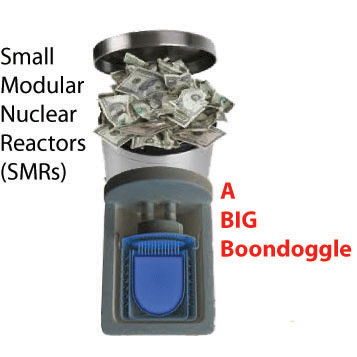
Eye-popping new cost estimates released for NuScale small modular reactor
Key Findings
NuScale and the Utah Associated Municipal Power Systems (UAMPS) announced costs of a 462-megawatt small modular reactor (SMR) have risen dramatically
As recently as mid-2021, the target price for power was pegged at $58 per megawatt-hour (MWh); it’s risen to $89/MWh, a 53% increase.
The price would be much higher without $4 billion federal tax subsidies that include a $1.4 billion U.S. Department of Energy contribution and a $30/MWh break from the Inflation Reduction Act
The higher target price is due to a 75% increase in the estimated construction cost for the project, from $5.3 to $9.3 billion dollars
Last week, NuScale and the Utah Associated Municipal Power Systems (UAMPS) announced what many have long expected. The construction cost and target price estimates for the 462-megawatt (MW) small modular reactor (SMR) are going up, way up.
From 2016 to 2020, they said the target power price was $55/megawatt-hour (MWh). Then, the price was raised to $58/MWh when the project was downsized from 12 reactor modules to just six (924MW to 462MW). Now, after preparing a new and much more detailed cost estimate, the target price for the power from the proposed SMR has soared to $89/MWh.
Remarkably, the new $89/MWh price of power would be much higher if it were not for more than $4 billion in subsidies NuScale and UAMPS expect to get from U.S. taxpayers through a $1.4 billion contribution from the Department of Energy and the estimated $30/MWh subsidy in the Inflation Reduction Act (IRA).
It also is important to remember that the $89/MWh target price is in 2022 dollars and substantially understates what utilities and their ratepayers actually will pay if the SMR is completed. For example, assuming a modest 2% inflation rate through 2030, utilities and ratepayers would pay $102 for each MWh of power from the SMR—not the $89 NuScale and UAMPS want them to believe they will pay.
The 53% increase in the SMR’s target power price since 2021 has been driven by a dramatic 75% jump in the project’s estimated construction cost, which has risen from $5.3 billion to $9.3 billion. The new estimate makes the NuScale SMR about as expensive on a dollars-per-kilowatt basis ($20,139/kW) as the two-reactor Vogtle nuclear project currently being built in Georgia, undercutting the claim that SMRs will be cheap to build.
NuScale and UAMPS attribute the construction cost increase to inflationary pressure on the energy supply chain, particularly increases in the prices of the commodities that will be used in nuclear power plant construction.
For example, UAMPS says increases in the producer price index in the past two years have raised the cost of:
Fabricated steel plate by 54%- Carbon steel piping by 106%
- Electrical equipment by 25%
- Fabricated structural steel by 70%
- Copper wire and cable by 32%
In addition, UAMPS notes that the interest rate used for the project’s cost modeling has increased approximately 200 basis points since July 2020. The higher interest rate increases the cost of financing the project, raising its total construction cost.
Assuming the commodity price increases cited by NuScale and UAMPS are accurate, the prices of building all the SMRs that NuScale is marketing—and, indeed, of all of the SMR designs currently being marketed by any company—will be much higher than has been acknowledged, and the prices of the power produced by those SMRs will be much more expensive.
Finally, as we’ve previously said, no one should fool themselves into believing this will be the last cost increase for the NuScale/UAMPS SMR. The project still needs to go through additional design, licensing by the U.S. Nuclear Regulatory Commission, construction and pre-operational testing. The experience of other reactors has repeatedly shown that further significant cost increases and substantial schedule delays should be anticipated at any stages of project development.
The higher costs announced last week make it even more imperative that UAMPS and the utilities and communities participating in the project issue requests for proposal (RFP) to learn if there are other resources that can provide the same power, energy and reliability as the SMR but at lower cost and lower financial risk. History shows that this won’t be the last cost increase for the SMR project.
David Schlissel (dschlissel@ieefa.org) is IEEFA director of resource planning analysis
Ukraine as a country and its armed forces have become members of NATO: defense minister — Anti-bellum
NoviniteJanuary 13, 2023 Ukraine declared itself a “De Facto Member of NATO” and Warned of a New Russian Offensive “Ukraine has de facto become a member of NATO, and this reality may soon be shaped legally.” Such confidence was expressed by the Minister of Defense of Ukraine, Oleksii Reznikov, in an interview with the Russian […]
Ukraine as a country and its armed forces have become members of NATO: defense minister — Anti-bellum
1 This Month
23 April – WEBINAR – Why new nuclear reactors are the wrong tools for decarbonization Thursday, April 23 • 1 AM – 2 AM AEST
World Nuclear Power. Reactors 1951-2026, 75 Years of Nuclear Power.
Interactive Map– https://dv.worldnuclearreport.org/

Chernobyl: The Lost Tapes – A good documentary on Chernobyl on SBS available On Demand for the next 3 weeks– https://www.sbs.com.au/ondemand/tv-program/chernobyl-the-lost-tapes/2352741955560

of the week–London Campaign for Nuclear Disarmament

Tell the Ukrainian Government to Drop Prosecution of Peace Activist Yurii Sheliazhenko
To see nuclear-related stories in greater depth and intensity – go to https://nuclearinformation.wordpress.com
-
Archives
- April 2026 (231)
- March 2026 (251)
- February 2026 (268)
- January 2026 (308)
- December 2025 (358)
- November 2025 (359)
- October 2025 (376)
- September 2025 (257)
- August 2025 (319)
- July 2025 (230)
- June 2025 (348)
- May 2025 (261)
-
Categories
- 1
- 1 NUCLEAR ISSUES
- business and costs
- climate change
- culture and arts
- ENERGY
- environment
- health
- history
- indigenous issues
- Legal
- marketing of nuclear
- media
- opposition to nuclear
- PERSONAL STORIES
- politics
- politics international
- Religion and ethics
- safety
- secrets,lies and civil liberties
- spinbuster
- technology
- Uranium
- wastes
- weapons and war
- Women
- 2 WORLD
- ACTION
- AFRICA
- Atrocities
- AUSTRALIA
- Christina's notes
- Christina's themes
- culture and arts
- Events
- Fuk 2022
- Fuk 2023
- Fukushima 2017
- Fukushima 2018
- fukushima 2019
- Fukushima 2020
- Fukushima 2021
- general
- global warming
- Humour (God we need it)
- Nuclear
- RARE EARTHS
- Reference
- resources – print
- Resources -audiovicual
- Weekly Newsletter
- World
- World Nuclear
- YouTube
-
RSS
Entries RSS
Comments RSS
 nuclear-news